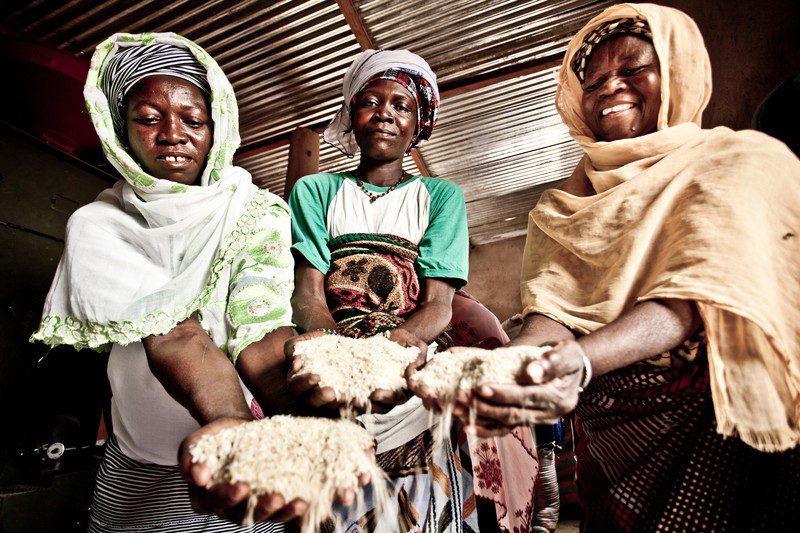
After semi-authoritarian rule for 27 years and the end of the Compaoré regime by a popular insurrection, the people of Burkina Faso had the chance to open the door to a political transition and the creation of a competitive democracy. As a result, Burkina Faso held peaceful elections in November 2015. Since then, the new government and the local communities have been working on addressing the challenges of more inclusive development, transitional justice and a new governance model of security. Here are some updates on SDG 16 in Burkina Faso.
The Sustainable Development Goals (SDGs)
In that same year, all the United Nations’ Member States adopted the 17 Sustainable Development Goals (SDGs), which emerged as an urgent call for all countries to achieve peace and prosperity for humanity and the planet. The SDGs tackle issues as diverse and relevant for today’s world as to end hunger, eliminate poverty and achieve gender equality. Despite this, the Millenium Development Goals (MDGs), the antecessors to the SDGs, demonstrated that to achieve progress in the realms of poverty and development, there must be a greater focus on its root causes. Now, violence, insecurity and conflict play a key role in constraining development.
The SDG 16: “Peace, justice and strong institutions” aims to promote peaceful and inclusive societies for sustainable development, provide access to justice for all and build effective, accountable and inclusive institutions at all levels. In many ways, the SDG 16 is one of the most ambitious goals, since it faces many challenges for its implementation, especially in countries with weak institutions and armed conflicts.
Burkina Faso and the SDGs
Since the two events, both the democratization of Burkina Faso and the creation of the Sustainable Development Goals, occurred at almost at the same time, the country quickly decided to include the SDGs in its political agenda. First, the country implemented a five-year National Plan for Economic and Social Development (PNDES) that was almost 90% SDG compliant. Moreover, numerous reforms are underway to promote human rights, improve the efficiency of the justice system and other public institutions, address corruption and guarantee legal inclusion, all of these to achieve the SDG 16 in Burkina Faso.
Human Rights
In 2016, Burkina Faso established the National Human Rights Commission, as the United Nations’ Office of the High Commissioner of Human Rights (UNOHCHR) recommended and in compliance with the Paris Principles. The members of this commission are administrative and financially independent by law.
Later, in the 2018 Universal Periodic Review, which involved the participation of the government together with the civil society, development partners and U.N. entities (such as UNDP, UNICEF and UNOHCHR), the international community commended the country’s efforts to improve political, social, economic, civic and cultural rights. After the adoption of this report, the Human Rights Council set 184 recommendations that the Ministry of Justice and Human Rights of Burkina Faso quickly implemented.
That same year, the country’s parliament abolished the death penalty and increased the protection of victims and witnesses by law.
Finally, freedom of the press and plurality of media has played a crucial role in making the country’s leaders accountable. The country ranked 38 in the 2020 Press Freedom Index with a value of 24.53 and, although it is lower than the previous year, it is still considered as a positive trend to achieve this indicator of the SDG 16 in Burkina Faso.
Justice and Legal Inclusion
The advocacy efforts of a women-led civil society organization, Association des Femmes Juristes, sprung into a law that ensures vulnerable populations’ access to justice. The establishment of a legal aid fund to support women in need of judicial assistance and cover their legal costs soon followed the adoption of this law. As a result, between 2016 and 2018, the fund has helped close to 600 people.
Additionally, great progress has occurred in modernizing civil registration, mainly ensuring registration of children under 5, displaced populations, migrants and refugees. This prevented the classification of many people at risk as stateless. Later in 2018, Burkina Faso ratified the Convention on the Reduction of Statelessness and adopted a National Action Plan against Statelessness, in which the government collaborated with religious institutions and the U.N. to organize hearings in several regions and allocate citizenship to approximately 40,000 people.
Civic Participation
The government of Burkina Faso created platforms for citizen engagement through annual, two-way dialogues with the civil society to openly discuss numerous policy issues. Some citizen platforms such as Dialogue Citoyen and Presimetre encourage the government’s accountability and the civilian’s interest in public affairs. Since its launch, many political leaders have made appearances on media platforms to respond to civil queries and many surveys have occurred.
The Future is Bright
Overall, there have been significant improvements for sustainable development in Burkina Faso. Specifically, the country has a spillover score (which results from the actions by countries to achieve the SDGs under four dimensions: environment, economy & finance, society and security) of 99.3 out of 100, showcasing that there is Burkina Faso is undergoing a great number of positive actions to achieve the Sustainable Development Goals.
Unfortunately, recent security threats are negatively affecting the country’s political transition and development, such as terrorism and organized crime. Despite this, the new context of insecurity has raised the redesign of security measures at two levels: first, at a central state-level, and second, at the local state-level with non-state security initiatives (LSIs). These new challenges have highlighted the importance of social cohesion and the promotion of peaceful societies to achieve the SDG 16 in Burkina Faso.
Finally, the developments on the SDG 16 in Burkina Faso showcase how new democracies can address their structural and social issues in short periods when the actors involved are willing to do so. Today, these efforts combined with international assistance are imperative to support the country’s sustainable development and prevent these achievements from disappearing due to new threats.
– Helen Souki
Photo: Flickr

The Global Music Project Brings Music to the Poor
It is scientifically proven that music poses many benefits, including improving memory, reducing stress and anxiety and improving heart health. Peter Fosso, a singer, songwriter and founder of Global Music Project, hopes to extend these benefits to the poor.
What is the Global Music Project?
Global Music Project is a nonprofit organization founded in 2002 that works to provide musical instruments to adults and children in poverty all across the globe. The Musical Instrument Donation Program of the Global Music Project gives instruments that volunteers and participants donated to impoverished individuals in orphanages, schools and cities. Global Music Project also organizes music concerts and events to raise awareness and support for local artists in communities around the world. Additionally, the organization helps individuals learn about people and music from different cultures through its music discovery site.
How Does Music Help the Poor?
Studies have shown that learning a musical instrument can minimize stress levels, help develop concentration skills and improve confidence. For people living in poverty, music can pose other benefits as well. Music is an outlet to express creativity and unique cultures. It can also create a sustainable income for growing musicians. A sustainable income allows them to feed their families and make a living.
To help support these musicians, go on Global Music Project’s website. There are links to listen to music from growing artists all over the world.
How is This Organization Changing Lives?
Global Music Project donates instruments to a variety of people globally, including both adults and children. To date, the organization has reached many regions around the world: 53% of instruments donated to Brazil, 23% donated to the United States, 8% donated to countries in Africa and 16% donated to other countries. The organization also sponsors and funds events to help local musicians, small communities and charities around the world.
Stories of People Who the Program has Changed
The Global Music Program’s worldwide reach has changed lives in many different ways. One of the people who received help from the program is a young man from Ghana, Africa named Justice Asante. Justice loved to play the trombone, but he could not afford an instrument of his own. The program stepped up and donated one to him. He now takes part in a jazz band and plays music for his friends and family.
The program also assisted a community of musicians in Bahia, Brazil. A woman named Maestrina Elem Silva started a band called Children of Rocinha when she was just 8 years old. She made the instruments out of old cans, jars or whatever scrap material she could find. She later continued to develop the band in her 20s with the goal of helping children and teens escape the rough cycle of poverty, violence and drug activity. Global Music Project helped fund a film about Elem’s work called “Maestrina de Favela” and donated 30 drums to Elem’s band.
Global Music Project is one of the many organizations that exist to close the gap between the wealthy and those in poverty. The difference is it strives to do so by connecting people around the world through music. The organization has provided many with the means to achieve their dreams as aspiring musicians and hopes to continue doing so.
– Shveta Shah
Photo: Flickr
The Success of Philanthropy in South Korea
Poverty in South Korea
South Korea has evolved tremendously in terms of poverty reduction and economic improvement. In 1945, around the end of the Japanese colonization, South Korea was one of the poorest countries in the world. In the 1950s, after the Korean war, 80% of the urban population was below the poverty line. Today, South Korea’s literacy rate is 96% and its poverty rate is close to 14%. This decrease in poverty and illiteracy is largely due to extensive education policies and NGOs within Korea.
The Beautiful Foundation
In the late 1980s, democracy consolidated in South Korea. Various NGOs promoted humanitarian principles and rights, create a flow of social-political interactions and offer a voice to citizens. In 2002, estimates determined that there were 60,000 nonprofits in South Korea. While many international NGOs such as UNICEF, the Red Cross, UNDP and Planned Parenthood have had chapters and projects in South Korea, there are plenty of organizations in the nonprofit sector native to Korea. Established in 1999, Beautiful Foundation is one of the largest Korean nonprofits.
The Beautiful Foundation dedicates itself to creating an impartial society where people practice sharing by spreading wealth across society. The organization has had a great influence on philanthropy in South Korea. The 1% Sharing initiative, for example, encourages all Koreans to contribute 1% of their salary or income to any campaign or cause they believe in. These contributions are even open to individuals that do not live in Korea. The Beautiful Foundation has used these donations for disaster relief, child hunger and even social issues.
Philanthropy within Corporate Korea
South Korean corporations represent almost 40% of Korean philanthropy while the remaining 60% comes from individuals’ charity. Korean corporations such as Samsung have used social media to promote and inspire others to give through online sites. Samsung has also launched campaigns such as Samsung Hope for Children which helps children access education and medical treatment through donations of products and financial assistance.
Hyundai, another large corporation in South Korea, has launched campaigns such as the Hope on Wheels program, which helps children with cancer. Since it began its philanthropic efforts, Hyundai has given $72 million to pediatric research.
Government Role in NGOs and Philanthropy
Although these organizations are non-governmental, the government still plays a significant role. Most NGOs receive government grants. Additionally, certain government factions or ministries, such as the Korean Department of Health and Welfare, host annual conferences to bring organization leaders, government officials, corporate workers and academic scholars to discuss further development and new philanthropic strategies and ideas.
Many NGOs are also policy-oriented and must meet with government officials to achieve their goals. NGOs can campaign for a range of socio-economic issues such as income disparity and economic inequality. For instance, the Citizens’ Coalition for Economic Justice (CCEJ), which is the oldest NGO in Korean history to address social welfare issues, persuaded the Korean administration in the 1990s to change housing eviction policies. It also lobbied for the construction of more homes which the government agreed to.
South Korea Gives Back to the World
South Korea has evolved from a country receiving international aid, to a flourishing economy ready to give back. The country is the world’s 12th largest economy and began its international philanthropy in the 1990s. The Korean International Cooperation Agency (KOICA), established in 1991, distributes aid to promote economic and social development in poorer countries. Worlds Friends Korea, which is similar to the U.S. Peace Corps, has worked with KOICA to reduce poverty and provide opportunities for growth. Since 1990, World Friends Korea has sent around 50,000 volunteers and has been active in 96 countries.
South Korea has also been involved in security and reconstruction efforts in developing countries such as Afghanistan. In 2010, the Korean Province Reconstruction Team (PRT) worked to strengthen local governments, administrative competence and productivity, as well as provide support for agriculture, education and medical services in the Parwan Province.
South Korea pulled itself out of poverty through strict education policies, massive technological and economic advancements and an abundance of support from NGOs. After seeing poverty worldwide, the people of Korea honed in on the values of sharing and the long tradition of giving. South Korean philanthropy was born out of “self-actualization” and the desire to accept and help others. From giving to its own people to giving worldwide, from corporate philanthropy and NGOs to government-oriented organizations, South Korea has truly encompassed philanthropy.
– Nada Abuasi
Photo: Unsplash
Agricultural Transformation in India
In the last few decades through the process of development, India has experienced structural transformation, with the contribution of the agriculture sector in Gross Domestic Product (GDP) falling to around 15% in 2017 from 51% in 1950. In most developed countries, the change in the share of GDP composition and the share of the labor force engaged in each sector determine the structural transformation. Despite the fall in the contribution of the agriculture sector in GDP, it employs around 50% of the labor force in India. It is imperative to study how agricultural transformation through mechanization in India impacts the productivity in the sector, which further pulls labor to the manufacturing sector.
Agricultural Transformation
Agricultural transformation is the process that leads to increased farm productivity, making farming commercially viable and strengthening interlinkages with other sectors of the economy. For agricultural transformation, there are key areas that require focus. Farmer’s access to financial resources is one of the major challenges that India faces. Even though there has been an increase in the sales of tractors all across India giving rise to mechanization in the sector, it is also important to make mechanized equipment accessible to all farmers, even the farmers with small and scattered land holdings. Mechanization of the agriculture sector is imperative to increase the productivity of the farmers but it should also occur in an environmentally-sustainable manner.
Mechanization in the agricultural sector consists of using machinery, tools and equipment to reduce post-harvest losses, get good quality products and increase the value of the farm product. It helps in increasing the economic benefits for the farmers who can efficiently use their manpower, reduce input costs and increase the value of output, adopt diversification of crops and in turn, improve their welfare.
The focus of mechanization in agriculture is to augment the farmer by increasing their per hectare productivity and replacing the efforts of animal or manual labor with mechanical power. Mechanization can take place in two ways; ‘partially’ when machines only replace a part of the farming activity or ‘completely’ when machinery replaces animals and human labor entirely. In India, there are inter-regional differences in the level of mechanization. The Northern-Indian states like Uttar Pradesh, Punjab and Haryana experience a high level of mechanization due to the presence of highly fertile lands and state-specific policies. In the southern and eastern states of India, the level of mechanization is low due to the hilly topography and high cost of transportation.
Sustainable Technology
In today’s world, it is imperative to make use of sustainable technology which not only increases agricultural productivity but also ensures improvement of social and environmental footprint at every stage. Providing access to farmers with agricultural tools, machinery and modern technology can create a shift for them from subsistence farming to market-oriented farming. In the context of India, where the agricultural sector provides employment to 50% of the labor force and is one of the major producers of rice, wheat, pulses, spices, cotton, meat and sugar, the goal is to enhance food security for a population of 1.3 billion. The shift towards sustainable mechanization in agriculture would not only improve efficiency and agricultural productivity but in developing countries like India, it would also lead to the development of food supply chains.
The Powerland Agro Tractor Vehicle
The Powerland Agro Tractor Vehicle has played an incredible role in the agricultural transformation of India through mechanization by manufacturing all-terrain vehicle (ATV) for farms. It is changing the landscape of the utility and farming industry in India by launching versatile tractors for the Indian farmers which can tow, pull, plow as well as spray and run power tools. During the ongoing fourth industrial revolution, it is imperative to invest and innovate in the domain of automation of traditional manufacturing and industrial practices. To integrate sustainable mechanization in the agricultural sector, Powerland is currently working on developing its autonomous electric vehicle platform with robotic capabilities.
Tej Naik, Co-founder of Powerland, believes that Machine Learning (ML) in conjunction with Powerland’s ATV and internet of Things (IoT) will allow input of data from the field resources, and process it to control how much fertilizer and water goes directly to the soil. This technology can also give rise to satellite crop monitoring of the crops and soil. He also believes that autonomous vehicles will not only help reduce operator stress and fatigue, but will allow farmers to perform efficiently, and in turn improve their productivity.
Concluding Notes
The agricultural sector plays an extremely important role in the overall welfare of farmers as well as ensuring food security in India. Despite the progress in the mechanization of the agricultural sector, the challenges that farmers face due to the high cost of input and machinery acts as an obstacle. To make the agricultural sector more productive, there is an immediate need to focus on sustainable mechanization and make it accessible. India highly subsidizes the agriculture sector, and as a result, it is important to invest in technology that is efficient and environmentally sustainable. Conservation of water and electricity should be a priority and should receive encouragement from the state. The government should also support, encourage and invest in companies that work towards agricultural transformation in India.
– Anandita Bardia
Photo: Flickr
Infertility in Developing Countries: An Overlooked Health Concern
Causes of Infertility in Developing Countries
The most common cause of infertility in developing countries is untreated STDs since treatment is often unavailable or costly. In Africa, more than 85% of women’s infertility resulted from an untreated infection compared with 33% of women, worldwide. The most common STDs involved are chlamydia and gonorrhea. Other risk factors increasing the chance of infertility are poor education, poverty, negative cultural attitudes towards women. Finally, a lack of access to contraception is a huge risk factor.
The Sexist Effects of Infertility
The burden of infertility in developing countries falls on women although male infertility is the cause in 50% of cases. When a woman is unable to conceive, her husband will often divorce her or take another wife if permitted in the country. Women who are deemed infertile also suffer discrimination from the community. In some cultures, society views these women as having a “bad eye”, which can pass on infertility from person to person. This results in infertile women missing important events such as weddings and other social gatherings since they receive no invitations.
Combating Infertility in Developing Countries
A campaign initiated by the Merck Foundation, “Merck More than a Mother,” seeks to heighten access to education and change the stigma for infertile women in developing countries. The program has provided training for fertility specialists and endocrinologists with more than 109 specialists trained since 2016.
Also, the foundation has created music videos, songs and fashion shows in African countries to send the message that women should not be blamed if they cannot have a child. More than 14 songs have featured singers from Gambia, Ghana, Kenya, Rwanda and Sierra Leone.
Women Deliver
In 2016, women’s infertility was a topic of discussion at Women Deliver — the world’s largest women’s health and rights conference held in Copenhagen. There were more than 5,500 conference participants, including government ministers, policymakers, business leaders, NGOs and activists. The WHO brought the topic to the conference, with the Director of Reproductive Health and Research giving a speech about the detrimental effects of infertility.
The WHO and Women Deliver, along with the International Committee Monitoring Assisted Reproductive Technologies and the International Federation of Gynecology and Obstetrics have partnered to increase global advocacy for infertility in developing countries. The partnership aims to achieve this through advancing education and research in the field.
Hopefully, with these increased advocacy efforts, the world will start to recognize the health concern of infertility in developing countries.
– Rae Brozovich
Photo: Wikimedia Commons
Homelessness in Ecuador
There are currently 17.7 million people calling Ecuador home — but a home with a poverty problem. The overall population living on less than $3.20 per day in Ecuador has been decreasing since 2010 but poverty remains an issue. The result is severe homelessness in Ecuador. It is a struggle many who live there have in common. The poverty rate of people who live on $5.50 a day has fluctuated between 24% and 23% since 2015 according to some figures. This has forced many to live on the streets with no place to call home. Natural disasters and unemployment are other risk factors one can point to — causing people to lose their homes.
Natural Disasters
The main natural disasters that play a role in the high rate of homelessness in Ecuador are floods, earthquakes, tsunamis and volcanic eruptions. Natural disasters impact almost 87,000 people in the country, every day. From 1980 to 2010, about 2.6 million people suffered from natural disasters. In 2008, more than 300,000 people required movement to temporary housing due to a flood. In 2016, a 7.8 magnitude earthquake killed 700 people and crushed many buildings — a big portion of them being homes. The earthquake destroyed around 35,000 homes. At the time, it was the worst earthquake in almost three decades. Many people had to leave their destroyed homes, changing their whole lives in just a moment.
Unemployment Rates
An increasing unemployment rate exacerbates the issue of homelessness in Ecuador. The unemployment rate in the country was declining — dropping from 5.21% in 2016 to 3.69% in 2018. Since then, it has increased from 2018 with the current rate being at 6.48%. Taking that percentage out of the current population results in 1.1 million people unemployed. Likewise, these people are prone to having to leave their homes or unable to afford housing.
A big part of this issue is the fact that the economy is not growing at a comfortable or suitable rate. This is due to companies having to leave the country and Ecuador’s inability to manage its resources. These living conditions make it incredibly difficult to afford available housing and provide for children and other life needs.
Solutions
While these problems seem very difficult to improve, some are undertaking projects to bring available housing to Ecuadorians who do not have it. The shelter support volunteer project in Quito, Ecuador is a one to 12-week program where participants travel to Quito and help local shelters feed and support local Ecuadorians. The program places 10 to 20 volunteers per month to help out the communities, five hours per day. Tasks for the volunteers include: serving meals, doing laundry, cleaning, maintenance and other living essentials. Volunteers also help educate the youth and work to provide housing for the children and many other Ecuadorians experiencing homelessness.
The Manna Project International is another organization that focuses heavily on bettering the lives of Ecuadorians. The project has two teams — one that works in Ecuador and the other in Nicaragua. Roles on the team involve an Ecuador Site Coordinator, a community development fellow, program directors and volunteer community advisors. In response to some of the shortcomings such as homelessness in Ecuador, the team puts together professional job development workshops. This way, they educate the people there and develop small businesses to help people find jobs. The end goal is to provide Ecuadorians the ability to gain an income suitable enough to afford housing.
– Dorian Ducre
Photo: Pxhere
Investing in Women: The 2X Women’s Initiative
The DFC works in tandem with the private sector to finance various projects across the globe that relate to development. With the goal of spurring economic development and ensuring global stability, the DFC funds all kinds of industries, from healthcare to agriculture to alternative energy solutions.
What is the 2X Women’s Initiative?
The DFC created the 2X Women’s Initiative with the understanding that women face unique economic challenges and that by investing in women, the global economy would be better off. Across the world, significant cultural, structural and legal hurdles stand in the way of women participating in the economy to the same degree as men. By closing this gender gap, however, global GDP could expand by 26%.
According to Kathryn Kaufman, the DFC Managing Director for Global Women’s Issues, women who make good livings reinvest 90% into their families as compared to men who only reinvest 30%. Therefore, by investing in women, the DFC also invests in families and these women’s communities.
In order to invest in women around the world, the 2X Women’s Initiative funds projects that are run by women, owned by women or empower women. Since its founding in 2018, the initiative has successfully catalyzed $3 billion in investments towards these projects.
Investment Success Stories
The 2X Women’s Initiative has a new goal of an additional $6 billion in private sector investments over the next three years. Based on the initiative’s successes since its launch, the future of investing in women across the world is quite promising.
– Alanna Jaffee
Photo: DFC
Teaching Sanitation Practices in Tanzania with Project SHINE
Tanzania has made considerable strides in decreasing extreme poverty. For example, from 2007–2018, the country’s poverty rate declined from 34% to 26% (of the total population). However, this progress in poverty reduction has not translated as successfully when addressing sanitation. Improving sanitation practices in Tanzania directly relates to decreasing infant mortality and malnutrition. Currently, 23 million of Tanzania’s 57 million residents obtain drinking water from potentially hazardous sources. Acknowledging these disparities and the value of potable water in eradicating poverty, the initiative Project SHINE works in rural communities where low access to clean water and poor hygiene practices are common. The organization is on a mission to improve sanitation by inventing cost-effective, simple solutions that enhance hygiene in Tanzania.
Poor Sanitation and Resulting Diseases
Poor sanitation practices in Tanzania contribute to a host of preventable infections in the country. Tanzania suffers frequent cholera outbreaks, which cause extreme diarrhea and dehydration. Diarrheal disease is one of the largest contributors to child mortality in countries facing extreme poverty. Moreover, those who do survive, suffer developmental obstacles. Cholera, as well as the related disease typhoid, can transmit through drinking water polluted with human feces. Open excretion, a widely spread issue in Tanzania, is easily preventable by developing water sanitation infrastructure.
In terms of parasitic infections, malaria commonly transmits through mosquitoes. This illness and schistosomiasis easily spread due to a lack of proper drainage systems in Tanzania. Finally, skin, eye and oral infections are a common result of the lack of knowledge among Tanzanians regarding proper hygiene practices.
Rural communities in Tanzania learn and influence hygiene practices based on previously established knowledge and cultural practices. Therefore, many children are predisposed to the same habits — and therefore, the same risks as their families. To help combat these norms that often pose significant health risks, Project SHINE is introducing innovations in sanitation and hygiene for Tanzanians.
Sanitation and Hygiene Innovation in Education (SHINE)
Project SHINE uses science to educate children and motivate changes in their hygienic behaviors by cooperating with schools. The program also reaches out to parents and other community members to develop a better understanding of attitudes toward health within this field. Through its educational initiatives, Project SHINE engages pastoralists who, even though many children come from these families, often lack access to resources and are actively involved with livestock. In particular, SHINE highlights the importance of both animal and human health for these audiences.
Education Strategy: Science Fairs
Project SHINE promotes science fairs in its target schools to encourage greater conversation and education about sanitation. These events focus on three subjects: water, sanitation and hygiene. This project’s aim is to help motivate youth, health care workers and community members to adopt improved health care practices. The long-term goal of motivating future generations to permanently incorporate these habits into their daily routines is paramount.
During this process, teachers receive private training in separate workshops where they gain strategies for presenting hygiene and sanitation to students in engaging ways.
Students engage in these science fairs by conducting research and forming hypotheses. One project students can complete, for example, is to create sustainable hand-washing stations using local, low-cost materials. Project SHINE also incorporates a One Health Paradigm that emphasizes the connection between livestock, humans and the environment. Notably, this is a relevant framework for children from pastoral families. Overall, fitting sanitation practices in Tanzania into the school curriculum has become a priority for SHINE.
The Journey Ahead
Progress for hygiene and sanitation practices in Tanzania has been a long, difficult journey for many families who still struggle to obtain clean water. Nevertheless, interventions from Project SHINE have already made significant differences. The initiative is planning to expand to other parts of the community, including out-of-school youth and the disabled. Overall, the work of Project SHINE offers promise for the health and prosperity of thousands across Tanzania.
– Zoe Schlagel
Photo: Wikimedia Commons
Student Philanthropy Can Fight Global Poverty
While strolling through a college campus, one can expect to see bake sales and advertisements for fun runs or raffles, all aimed at raising money for causes the students care about. Global poverty alleviation is one of the many worthwhile causes students often support. Campus chapters of organizations such as Amnesty International and UNICEF rank among the most popular student philanthropy groups in the country. Additionally, many non-philanthropic clubs and campus organizations, including most sororities and fraternities, involve an element of giving back, thus showing that student philanthropy can fight global poverty.
Consequences of the COVID-19 Pandemic on Student Philanthropy
With many U.S. universities making difficult decisions about how to proceed with learning in light of the coronavirus pandemic, many students’ fundraising and philanthropic efforts will have to adapt. Some colleges have decided to operate entirely online, while others are offering a mixture of online and in-person classes.
Regardless of how a university chooses to deliver classes to its students, campus life will not carry on as usual. Clubs will likely have to meet virtually, forcing those with a philanthropic focus to find new ways to conduct their service and fundraising online. This change presents a unique challenge, but a unique opportunity as well.
Student Organizations and Nonprofit Organizations
Ashlyn Stone, a psychology major at Wake Forest University, told The Borgen Project about her efforts to alleviate global poverty. In the fall of 2019, she served as vice president of service in her university’s chapter of Alpha Phi Omega. One of her responsibilities in this role was to coordinate an international hunger relief event with Rise Against Hunger. This organization aligns itself with the United Nations’ Sustainable Goal #2 of Zero Hunger, which is to end world hunger by 2030.
In 2019, Rise Against Hunger packaged more than 538 million meals, serving countries around the world. Much of its focus was on vulnerable regions like Central America, sub-Saharan Africa and Southeast Asia. The efforts of Stone and her chapter resulted in 20,000 meals delivered to Nicaragua. Stone attributed her success to implementing “larger and smaller fundraisers throughout the semester to pay for enough food to be packaged.”
Looking to the Future
Stone noted that wide-scale fundraisers like the one she organized will change if students are not on campus. She admitted, “It’s easier to plan these efforts in person. Communication will be harder. We won’t be able to have as many fundraisers. But I’m hoping there are ways that we can still raise money even if we can’t do the hands-on work.” A key component of continuing the fight against global poverty will be raising awareness and organizing fundraisers online.
In this regard, Stone expressed hope and optimism for the future of online student philanthropy: “Our generation is unique because we have the power of communication at our fingertips and we don’t have to go out of our way to make a statement. We don’t want to just sit back and watch the world change, we want to make a difference.”
– Addison Collins
Photo: Unsplash
Updates on SDG 16 in Burkina Faso
After semi-authoritarian rule for 27 years and the end of the Compaoré regime by a popular insurrection, the people of Burkina Faso had the chance to open the door to a political transition and the creation of a competitive democracy. As a result, Burkina Faso held peaceful elections in November 2015. Since then, the new government and the local communities have been working on addressing the challenges of more inclusive development, transitional justice and a new governance model of security. Here are some updates on SDG 16 in Burkina Faso.
The Sustainable Development Goals (SDGs)
In that same year, all the United Nations’ Member States adopted the 17 Sustainable Development Goals (SDGs), which emerged as an urgent call for all countries to achieve peace and prosperity for humanity and the planet. The SDGs tackle issues as diverse and relevant for today’s world as to end hunger, eliminate poverty and achieve gender equality. Despite this, the Millenium Development Goals (MDGs), the antecessors to the SDGs, demonstrated that to achieve progress in the realms of poverty and development, there must be a greater focus on its root causes. Now, violence, insecurity and conflict play a key role in constraining development.
The SDG 16: “Peace, justice and strong institutions” aims to promote peaceful and inclusive societies for sustainable development, provide access to justice for all and build effective, accountable and inclusive institutions at all levels. In many ways, the SDG 16 is one of the most ambitious goals, since it faces many challenges for its implementation, especially in countries with weak institutions and armed conflicts.
Burkina Faso and the SDGs
Since the two events, both the democratization of Burkina Faso and the creation of the Sustainable Development Goals, occurred at almost at the same time, the country quickly decided to include the SDGs in its political agenda. First, the country implemented a five-year National Plan for Economic and Social Development (PNDES) that was almost 90% SDG compliant. Moreover, numerous reforms are underway to promote human rights, improve the efficiency of the justice system and other public institutions, address corruption and guarantee legal inclusion, all of these to achieve the SDG 16 in Burkina Faso.
Human Rights
In 2016, Burkina Faso established the National Human Rights Commission, as the United Nations’ Office of the High Commissioner of Human Rights (UNOHCHR) recommended and in compliance with the Paris Principles. The members of this commission are administrative and financially independent by law.
Later, in the 2018 Universal Periodic Review, which involved the participation of the government together with the civil society, development partners and U.N. entities (such as UNDP, UNICEF and UNOHCHR), the international community commended the country’s efforts to improve political, social, economic, civic and cultural rights. After the adoption of this report, the Human Rights Council set 184 recommendations that the Ministry of Justice and Human Rights of Burkina Faso quickly implemented.
That same year, the country’s parliament abolished the death penalty and increased the protection of victims and witnesses by law.
Finally, freedom of the press and plurality of media has played a crucial role in making the country’s leaders accountable. The country ranked 38 in the 2020 Press Freedom Index with a value of 24.53 and, although it is lower than the previous year, it is still considered as a positive trend to achieve this indicator of the SDG 16 in Burkina Faso.
Justice and Legal Inclusion
The advocacy efforts of a women-led civil society organization, Association des Femmes Juristes, sprung into a law that ensures vulnerable populations’ access to justice. The establishment of a legal aid fund to support women in need of judicial assistance and cover their legal costs soon followed the adoption of this law. As a result, between 2016 and 2018, the fund has helped close to 600 people.
Additionally, great progress has occurred in modernizing civil registration, mainly ensuring registration of children under 5, displaced populations, migrants and refugees. This prevented the classification of many people at risk as stateless. Later in 2018, Burkina Faso ratified the Convention on the Reduction of Statelessness and adopted a National Action Plan against Statelessness, in which the government collaborated with religious institutions and the U.N. to organize hearings in several regions and allocate citizenship to approximately 40,000 people.
Civic Participation
The government of Burkina Faso created platforms for citizen engagement through annual, two-way dialogues with the civil society to openly discuss numerous policy issues. Some citizen platforms such as Dialogue Citoyen and Presimetre encourage the government’s accountability and the civilian’s interest in public affairs. Since its launch, many political leaders have made appearances on media platforms to respond to civil queries and many surveys have occurred.
The Future is Bright
Overall, there have been significant improvements for sustainable development in Burkina Faso. Specifically, the country has a spillover score (which results from the actions by countries to achieve the SDGs under four dimensions: environment, economy & finance, society and security) of 99.3 out of 100, showcasing that there is Burkina Faso is undergoing a great number of positive actions to achieve the Sustainable Development Goals.
Unfortunately, recent security threats are negatively affecting the country’s political transition and development, such as terrorism and organized crime. Despite this, the new context of insecurity has raised the redesign of security measures at two levels: first, at a central state-level, and second, at the local state-level with non-state security initiatives (LSIs). These new challenges have highlighted the importance of social cohesion and the promotion of peaceful societies to achieve the SDG 16 in Burkina Faso.
Finally, the developments on the SDG 16 in Burkina Faso showcase how new democracies can address their structural and social issues in short periods when the actors involved are willing to do so. Today, these efforts combined with international assistance are imperative to support the country’s sustainable development and prevent these achievements from disappearing due to new threats.
– Helen Souki
Photo: Flickr
China’s Continued Hold on Asia
China is a country with a long cultural history and an equally long and tumultuous political history. Throughout history, there has been a power dynamic due to China’s continued hold on Asia. Power in Asia has shifted many times, not only within China but also with respect to other nations. One can still observe China’s influence in the backbones of other nations.
Vietnam
In recent years, the rate of poverty in Vietnam has gradually been decreasing, bringing it to 9.8% as of 2016. There are plenty of untapped agricultural resources, such as coffee, black pepper and rubber. They exist in the region where Vietnam’s poor population is most concentrated. In harvesting these resources, the hope would be to jumpstart the economy in these impoverished areas. China gained power over Vietnam several times between 111 BC and 1427.
China’s power over Vietnam lasted until the fall of the Tang dynasty in 938 AD. Well into the modern era, China and Vietnam have had governance and structural similarities, due to similar obstacles they have encountered, including the establishment of communist power structures within their governments. Moreover, China has remained Vietnam’s largest trade partner – unsurprising given China’s advancement to the forefront of the global economic stage.
Keeping the Upper Hand
China’s interests in Vietnam stems largely from its want to keep the upper hand regarding disputes surrounding Hanoi, both in keeping Hanoi pro-China on most issues and making Chinese goods the most sought after in the market. Vietnam remains reliant on China to further develop its economy, utilizing China’s trade channels to yield more export growth than import growth, at 16.6% to 11.7% respectively. Vietnam’s top exports are broadcasting equipment and shoes, which are items that put the nation’s large supply of rubber to good use. These exports could potentially infuse more cash into Vietnam’s impoverished areas that are sitting on unused rubber deposits by creating jobs and growing the economy. However, a sustained reliance on China means that China can use its valuable trade channels and own booming economy to leverage its influence on Hanoi.
Mongolia
Currently, 28.4% of Mongolia’s population lives below the poverty line. Mongolia declared its independence from China’s last imperial dynasty in 1911 and established the Mongolian People’s Republic in 1924. China did not recognize Mongolia’s independence until a little over 20 years later. Like Vietnam, Mongolia’s economy is very much reliant on China, primarily concerning foreign trade. With Mongolia benefiting from its neighbor’s wide array of trade routes, China sends out 90% of Mongolian exported goods.
Moreover, China’s choice of trade partners in certain industries has impacted the growth of Mongolia’s mining industry. Mongolia’s economic growth spiked 5.3% from 2016 after China banned North Korean coal, which shifted the demand to favor what Mongolia could supply. China’s influence on Mongolia’s economic growth is an iron grip on a nation still struggling to fully develop and establish a sound infrastructure following a recent tumultuous, political history. This feeds into China’s continued hold on Asia.
Tibet
Today, China is struggling to declare Tibet an independent region. In fact, Tibet still operates as an autonomous region of China. Xi Jinping, the president of China, plans to eradicate extreme rural poverty by the end of 2020. As of 2015, the poverty rate in Tibet’s Autonomous Region (TAR), the western part of historic or ethnographic Tibet, was about 25%. In declaring extreme poverty gone, China has determined that those in TAR make a minimum of $328 a year.
Tibet is heavily reliant on China, with Beijing being a significant investor. Beijing’s investments are inclusive of the dam on the Lhasa River which energizes much of central Tibet, including the capital. Tibet’s reliance on China’s economy and investments only gives China the ammunition to continue its claims to Tibet.
This economic hold on the state inhibits Tibet’s ability to thrive and grow, despite the money it receives from China. This also continues despite China’s claims of having eradicated Tibet’s poverty. China’s political maneuvers included the exile of the 14th Dalai Lama following Tibet’s uprising. China’s continued economic hold on Asia has made way for cultural, political and social influences China’s exacted on Tibet and other nations throughout history.
Buddhist Global Relief
Buddhist Global Relief (BGR) has partnered with Maitreya Charity. It is based in Washington in the U.S. Its goal is to help bring hot meals and educational resources to impoverished children in Mongolia. A relatively new project, BGR’s first run with the Hot Meal Project allowed it to feed 32 kids. This number grew to 34 within the year. With a capacity to serve 50, BGR is looking for ways to get funding and expand its reach in the area, where about 30% of the population lives in extreme poverty.
BGR is not only trying to feed and educate the children but also distributes clothes and daily vitamins. It is also offering games to try and improve the socialization of the children. In looking to grow its operation, BGR enlisted the help of volunteer dental professionals. It knows that dental health is a prevalent issue in the area. BGR hopes to have a well-stocked library accessible to the children, a dish sterilizer and funds for dental checks. These are ways to help mitigate dental hygiene issues in the region.
– Catherine Lin
Photo: Flickr