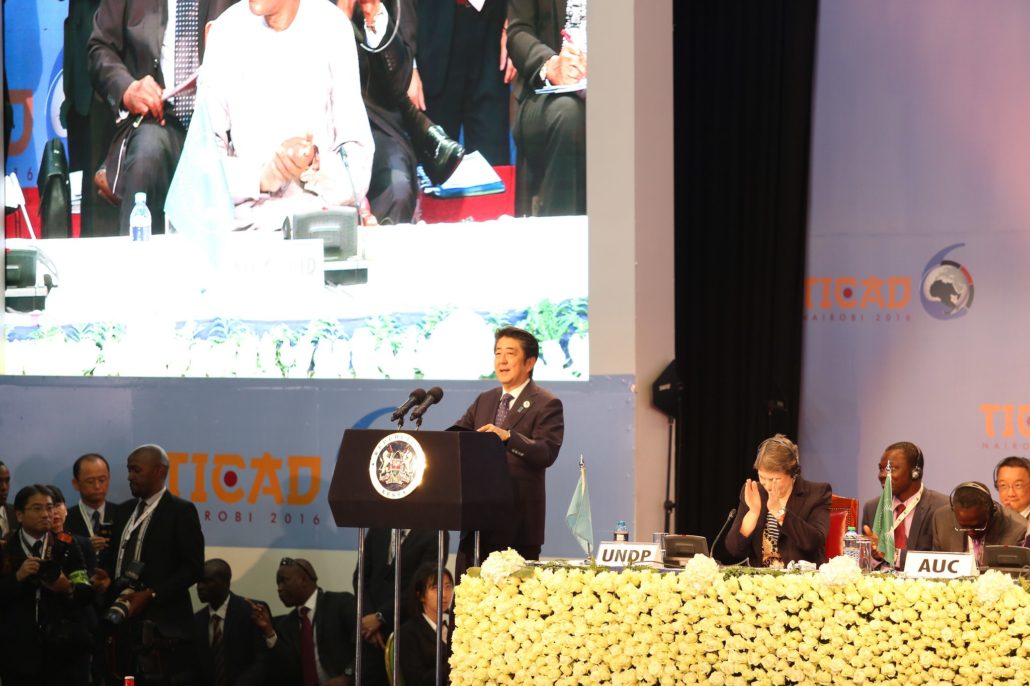
As the world’s third-largest economy, Japan is a global powerhouse. Japan’s foreign aid is also impressive, contributing the fourth largest amount in the world, and the largest in Asia. This article will cover where this aid goes, how effective it is and what Japan plans in its future.
Revising Japan’s Foreign Aid
In tandem with its rise as an economic superpower, Japan became the world’s leading foreign aid donor in the 1980s. However, the international community widely criticized Japan for funding environmentally harmful projects of various corrupt Asian leaders. Japan created its first Official Development Assistance (ODA) charter in 1992, which set out a fairly standard list of goals, such as poverty alleviation and healthcare. Former Prime Minister Shinzo Abe significantly updated it in 2015 by intermingling military and aid funding together, and explicitly linking Japan’s foreign aid projects with the “prosperity of the Japanese people.”
Infrastructure
Japan’s foreign aid strategy is unique. Bilateral aid constitutes 77% of Japan’s ODA, meaning the Japanese government donates directly to the recipient country without a third-party organization.
This is well above the 59% average of other OECD countries, a collection of the world’s largest donor countries. Of this bilateral aid, 60% comes in the form of loans in comparison to an OECD average of 9%. Japan’s prioritization of infrastructure projects explains these differences. Japan favors infrastructure because of the immediate, tangible benefits it provides and also because these projects provide work for Japanese manufacturing companies. In 2018, loans going towards infrastructure projects accounted for over one-third of Japan’s total ODA.
Currently, Japan’s largest infrastructure project is a proposed bullet train from Mumbai to Ahmedabad, a distance of around 330 miles. Besides improving transportation between India’s largest city and one of the country’s most important industrial ports, Indian officials expect the construction to create upwards of 90,000 jobs. Japan has pledged to fund 81% of the construction, equivalent to $12 billion USD, on a 50 year, low-interest loan.
Southeast Asia
Japan considers Asia, especially Southeast Asia, a critical region in which to promote Japanese interests through aid. About 57% of Japan’s ODA went to Asian countries in 2018, with India, Bangladesh and Vietnam being the largest benefactors. In this region, infrastructure, renewable energy and education are the three areas receiving most Japanese aid. Japan’s assistance has been instrumental in improving educational opportunities for women and for people living in rural areas.
Territorial disputes between China, Vietnam and the Philippines have recently intensified in the South China Sea. Abe introduced ‘Japan’s Proactive Contribution to Peace’ in his 2015 update of the ODA charter, which allowed Japan to use its aid budget to fund military operations that work towards “peace and stability” in the region. Recent aid packages to Vietnam and the Philippines included surveillance ships and liberal-arts military training. Japan’s intermingling of its de facto military and foreign aid caused some controversy. However, as long as China stays aggressive and powerful in the region, Japan will continue to provide military aid in Southeast Asia.
Healthcare
Healthcare is a growing priority for Japan, specifically in sub-Saharan Africa. With international pressure to allocate more money to the world’s lowest-income nations and away from Japan’s explicit national interest in the Pacific, Abe responded in 2016 at the Tokyo International Conference on African Development (TICAD) by pledging $30 billion to public and private sector recipients in Africa. At the 2019 conference, Abe launched the Africa Health and Wellbeing Initiative, which aims to improve healthcare using Japan’s extensive healthcare technology.
Japan will give aid through both public and private sectors in what the government calls “Mt. Fuji Shaped Healthcare” that prioritizes basic sanitation before investing in advanced healthcare systems. Japan will customize aid based on the different needs of each country.
On October 3, 2020, Japan gave a $9.4 million grant to Nigeria for medical equipment through the Africa Health and Wellbeing Initiative.
The COVID-19 pandemic refocused international attention on the importance of adequate healthcare. Japan responded in September 2020, committing over $6 billion in both bilateral and multilateral aid (chiefly to UNICEF). This aid will provide healthcare systems, training and vaccine funding for Asian and African countries.
Looking Ahead
The outlook for Japan’s foreign aid is quite positive. Yoshihide Suga, who was elected Prime Minister on September 16, 2020, is not expected to change Japan’s foreign aid policies.
While infrastructure will continue to be the main tenet, Japan’s contributions to poverty reduction and healthcare in sub-Saharan Africa have increased in the past 5 years, and this trend should continue. Additionally, the OECD projects Japan’s total ODA to increase by a modest 3% in 2020. Look for Japan’s foreign aid to grow and diversify, albeit slowly, in the coming years.
– Adam Jancsek
Photo: Flickr

Fighting Hunger in El Salvador
El Salvador, home to more than 6.3 million people, is a middle-income country located in Central America. Despite having made substantial progress in reducing poverty and food insecurity over the past decade, hunger remains an issue for many Salvadorans today. Fortunately, several organizations, including the World Food Programme (WFP) and Feed the Children, are stepping in to fight hunger in El Salvador.
Poverty, Hunger and Agriculture
Poverty in El Salvador has decreased significantly in recent years, dropping from 40.4% in 2016 to 27.5% in 2022. However, this rate remains higher than the Latin America and Caribbean (LAC) average of 24.1%. According to the World Bank, 1.8 million Salvadorans are currently living in poverty and 2.5 million are at high risk of becoming multidimensionally poor.
As such, food security has remained a prevalent issue in El Salvador. Approximately 15.8% of the population was reported to have experienced severe food insecurity between 2021 and 2023. Although this rate is notably lower than it has been for prior years, nearly one million Salvadorans still grapple with acute food insecurity today.
Climate-related vulnerabilities such as deforestation, soil erosion and water pollution are largely responsible for disruptions to the Salvadoran food supply. Increasing temperatures have reduced agricultural production across the country, especially for staple crops and exports. By 2070, maize production is projected to decline by 10%. Climate trends are also likely to increase crop pests and diseases that contribute to post-harvest loss, such as coffee leaf rust, potato psyllid and fall army worm.
Limited progress has been made thus far to combat both poverty and food insecurity. Today, an estimated 2.1% of children under 5 years of age show signs of stunting while 32.1% of adult women and 21.7% of adult men are obese. No progress has been made towards reducing anemia among women of reproductive age, with 10.6% of women currently affected.
The World Food Programme (WFP)
The World Food Programme currently operates several initiatives to eliminate challenges to hunger and build long-term food security in El Salvador. In 2023, the WFP provided 420,000 children in over 5,000 schools with Biofortik, a drink produced with corn and sorghum. By relying on domestic products, Biofortik has been able to support local markets and agricultural production. Similarly, in 2024, the WFP launched a joint project with the Ministry of Education, Science and Technology to supply schools with temporary, solar-powered kitchens called Kitchen-in-a-Box (KIAB). As the majority of schools in the country do not have the infrastructure to safely prepare and store school meals, KIABs have granted schoolchildren the means to safely consume daily school meals and snacks.
Additionally, the WFP has helped farmers in the El Melonal community diversify their yields by teaching them how to grow drought-resistant crops such as sorghum. With more options to sell, farmers are able to earn more income while supplying their communities with affordable produce, working towards a climate-resilient future.
Feed the Children
Since 1987, Feed the Children has had a significant impact on hunger in El Salvador. One of their key programs for adults includes training household leaders in building tilapia farms to help their families become self-sustaining. By providing necessary materials such as nets and concrete, Feed the Children ensures that program participants are supported through the entire lifecycle. Another initiative focuses on empowering children by providing essential resources to help them succeed in school. This includes offering healthy meals, educational supplies and backpacks, ensuring that every child has the tools they need to thrive academically. By creating safe classroom environments, Feed the Children hopes to improve school enrollment and literacy rates throughout the country.
Moving Forward
Despite reported improvement throughout the years, poverty and hunger remain persistent challenges for El Salvador. Climate-related change is one of the leading causes of food insecurity in the country. Moving forward, it is essential that organizations such as the WFP and Feed the Children continue to provide resources and funding towards combating hunger in El Salvador. With their continued support, there may be hope for long-term or permanent progress.
– Amanda Cruz, Moon Jung Kim
Photo: Wikimedia Commons
Updated: October 7, 2024
Foreign Aid to Battle Poverty in Kiribati
In the central Pacific Ocean there lies several small islands, an independent country, called Kiribati. In all of Oceania, it is the poorest country, however, that does not suggest that it is the weakest one. Poverty in Kiribati is prevalent because copra farmers suffer from low incomes and weak infrastructure due to the country’s remote location away from international waters. As a result, it lacks the necessary resources to thrive. Kiribati’s economy is dependent on the export of phosphate rock as well as seaweed and copra farming, and its location on the Equator makes it the ideal place for spacecraft and satellite facilities. With these intriguing assets, there are possibilities to improve both employment and infrastructure. In spite of creating new infrastructure and more employment, the island nation continues to rely on foreign aid for development funds.
Rising Sea Levels
With much of the population of Kiribati being low-income farmers, and the government providing their travel resources, the nation has been seeking help to fight against sea-level rise. About 28.6% of the Gross Domestic Product (GDP) of Kiribati is due to agriculture. As a result, aid is necessary to protect its land so that agriculture can thrive.
The islands of the archipelago are only six feet above sea level with a width of only a few hundred meters, making them vulnerable to rising sea levels. Poverty in Kiribati will exponentially increase if the sea drowns out the farmlands, neutralizing the country’s main source of income. Natural disasters will strike and with the destruction of structures, the country may have to use up the little resources it has to rebuild.
Solutions
Taneti Maamau, the president of Kiribati, intends to raise the islands out of the water to increase the safety of his people. The country will seek foreign aid from China as well as other allies and will elevate the islands through the process of dredging. This is known as cleaning the bed of an area of water by scooping out mud and trash with devices.
Kiribati is developing long-term coastal security with help from New Zealand and is also planning to create elevated bridge roads with funding from China. With these roads, Kiribati will no longer need to use causeways that create beach erosion with the landfill between the islands. This is not universally agreed on because Kiribati has become the center stage for the U.S.’s and China’s competition for control of the Pacific. The U.S. has expressed implications that China will use this opportunity to build military facilities on its large islands. The Kiribati president has assured everyone that there are no plans for this, but Kiribati is vulnerable due to its reliance on foreign aid for 40% of its budget.
Aid from Fiji
The growing sea levels may consume Kiribati, and a neighboring island nation has offered to help. The president of Fiji has stated that the people of Kiribati are welcome to stay in Fiji if their home becomes uninhabitable. There is only so much that people can do in the case of environmental challenges and with Kiribati’s limited resources, seeking aid from a nearby country is a viable option. Kiribati purchased 6,000 acres of land from one of Fiji’s largest islands so that it would be set for food as the ocean covers its cultivable lands. The Kiribati people will not be the only ones seeking asylum as the Banaban people from one of the islands of Kiribati had no other choice but to relocate to Fiji after it was no longer safe to continue phosphate mining.
Foreign aid is partly dealing with poverty in Kiribati. Neither cobra farming nor the mining of phosphate rock provides a high income so Kiribati has received aid from China to help solve its rising sea-level debacle. Meanwhile, Fiji has offered to give the people of Kiribati a new home in the event that their lands become inarable and mining is no longer possible due to flooding. With foreign aid from China to lift Kiribati out of the water and an offer for a new home, Kiribati is in good hands.
– Shalman Ahmed
Photo: Flickr
Certified B Corporation Fights Global Poverty in 2020
Business Fights Poverty, a Certified B Corporation, began in 2005 to provide a network for businesses, organizations and other professionals. This organization believes in the principle of purposeful collaboration. It aims to unite influential businesses to add social change to the list of successes of groups across the world. Business Fights Poverty recognizes the underlying potential of uniting worldwide businesses to battle social issues such as poverty. Business Fights Poverty has implemented several influential actions during 2020. Here are four impressive examples of actions that Business Fights Poverty has taken to combat global poverty:
4 Initiatives of Business Fights Poverty During 2020
The Outcomes
The major outcomes of Business Fights Poverty have been reflected in the businesses and corporations it collaborates with. For example, since its involvement with Business Fights Poverty, Walmart paid its full-time workers $3 above the living wage of an adult in the U.S. in 2019. Also, it has the goal of training millions of employees in career growth strategies by 2025. Since 2015, Visa has assisted over 160,000 lower-income individuals in creating accounts and becoming involved in the financial system. Moreover, Business Fights Poverty has created a network of awareness. The actions of these major corporations set a positive example for customers and smaller businesses. This example urges people to stay aware and improve their strategies to assist those battling poverty, among other personal financial struggles.
Business Fights Poverty recognizes the impact that a Certified B Corporation, large-scale businesses and general corporations can have on battling the poverty crisis. Through education, collaboration and progress towards a common goal — this organization has dedicated itself to making a social change. As the network grows from its already substantial start, businesses can find success in assisting in the fight to combat world hunger and poverty. Finally, as for individuals, the organization’s website offers many ways to get involved that are worth exploring.
– Evan Coleman
Photo: Flickr
Privatizing Healthcare in Saudi Arabia
Saudi Arabia is the largest country in the Middle East, with more than 34 million people, and it is a country highly dependent on oil for income. The Ministry of Health (MOH) operates, controls and manages public health in Saudi Arabia. Here is some information about the challenges and efforts to privatize healthcare in Saudi Arabia.
Challenges in Healthcare in Saudi Arabia
The MOH is responsible for prevention and primary care and sponsors over 3,300 health centers in Saudi Arabia. Saudi Arabia established the department nearly 100 years ago to provide free health services to its citizens. However, the MOH could not meet the population’s healthcare needs, which stimulated and motivated changes in the country’s healthcare systems.
Media reports claimed that the public health system in Saudi Arabia presented deficiencies in maintaining standards. Public health services were more difficult to maintain as public health spending rose due to the aging Saudi Arabian population and higher chronic disease rates.
The government’s challenge in sustaining proper public health services is primarily due to the reduced revenues from oil. But the government was keen on reforming the health sector to fulfill social demands in the country, which ultimately led to the privatization of public health systems. Privatization happens when a publicly-owned business or industry transfers to private ownership and control. In healthcare, privatization involves non-governmental individuals becoming engaged in financing and managing healthcare.
A study in Taif found that only 59% of patients who sought treatment at public healthcare facilities were satisfied in comparison to 77% satisfaction in the private sector.
The New Saudi Health System (NSHS)
The New Saudi Health System (NSHS) allowed local and foreign insurance companies to deal with expatriates and citizens in the private healthcare sector. Additionally, new legislation allowed private healthcare providers to enter the healthcare market. Private healthcare continued to grow after the government introduced interest-free loans to encourage the construction of private facilities. Foreign investment supported the transition, which reached $3.5 billion in 2018.
The Paycheck Protection Program (PPP)
Paycheck Protection Program (PPP) is a loan for a small business that needs help paying its workers. The World Health Organization (WHO) and the World Bank believe PPPs would improve health care services, and the Saudi Arabian government has drawn up a PPP law that aims to boost private healthcare.
Efforts to Privatize
Privatization intends to serve the needs of the rising population. Saudi Arabia will need 5,000 more beds by 2020 and 20,000 more beds by 2035, so the country hopes to privatize 295 hospitals and 2,259 healthcare facilities by 2030. With these changes, experts expect to see life expectancy increase to 78.4 for males and 81.3 for females by 2050. Leaders hope that privatization will reduce government healthcare spending and ultimately produce new funding for the MOH.
Privatization increases the motivation to provide efficient healthcare. Leaders in Saudi Arabia constructed Vision 2030, which is a framework and collection of long-term goals and expectations “to create a vibrant society in which all citizens can fulfill their dreams.” A key factor in the Vision 2030 blueprint is the privatization of healthcare in Saudi Arabia as it aims to improve the lives of those living in the country.
– Rachel Durling
Photo: Flickr
Birth Certificates and Women’s Rights in the DRC
Worldwide, governments register the identity and nationality of 73% of people at birth. In the Democratic Republic of the Congo, 75% of children are without birth certificates. This means that there is no record proving the identity of three in four Congolese children. Political unrest in the DRC has allowed the lack of documentation to go largely unaddressed, but the persistence of this problem deepens injustices that girls and women predominantly face. Here is some information about birth certificates and women’s rights in the DRC.
Child Marriage in the DRC
Thirty-seven percent of girls in the Democratic Republic of the Congo are subject to child marriage. One reason for the survival of this practice is the inability to prove that it has occurred. There is no proof of age for a girl without a birth certificate, which increases the risk that she could marry before the age of 15, the legal age for a girl to marry in the DRC. Child marriages are particularly harmful to women, as sexual violence is prevalent in the DRC. In fact, 52% of women have reported experiencing domestic violence. The DRC Family Code, enacted in 1998, details protections for women against domestic violence, but many women are unaware of the code and do not seek justice in cases of abuse. Instead, they often justify wife-beating. Documenting every child born in the DRC is a small step that could reduce child marriages.
The Benefits of Birth Certificates in the DRC
Birth certificates in the Democratic Republic of the Congo provide access to a wide range of services. For example, education and healthcare are unavailable without any proof of identity. The gender gap already limits the opportunity for women to receive an education with a primary enrollment rate of 54%, and the lack of birth certificates amplifies this injustice. Birth certificates also provide proof of ancestry, which is necessary to claim an inheritance. This flaw in the DRC’s system reinforces the disparity between men and women and the frailty of women’s rights.
Cost and accessibility are two factors that have contributed to the lack of birth certificates in the Democratic Republic of the Congo. Registration is reported as free within 90 days of birth, but the political and economic state of the country has complicated the provision of this service and there is a fee for late registration. Bribery is not uncommon when it comes to obtaining a birth certificate. Registration centers are scarce and many Congolese families find it difficult to travel from rural regions to the urban centers where they can obtain birth certificates, with some women living six miles from the nearest center. Meanwhile, if there are not any financial or geographical barriers to a birth certificate, a woman may find herself unable to register her child because she is a victim of rape and the identity of the father is unknown.
World Vision’s Recommendations
In 2009, World Vision made three recommendations to the DRC to guide the country in addressing the lack of birth certificates issued: removing all administrative costs for registration and having zero tolerance for bribery, implementing mobile registration services and campaigning to spread awareness about the importance of registration. Improvements such as these could lighten the burden of obtaining a birth certificate for a Congolese child and simultaneously make progress in the fight for women’s rights in the DRC. People may be more likely to uphold women’s rights in the DRC if girls receive recognition by the government from birth.
– Payton Unger
Photo: Flickr
5 Facts About Women’s Rights in Russia
Russia is somewhat infamous for its history of oppression and human rights abuses. Often in the news for things like unfair elections or police brutality, gender equality is a less-reported topic, but nonetheless a pervasive and damaging systemic issue. Here are five facts about women’s rights in Russia.
5 Facts About Women’s Rights in Russia
People still need to do more to improve women’s rights in Russia. Nothing less than significant legal reforms are necessary to change the culture of misogyny in the country. Gender equality might be a long way off for Russian women, but because of activists and NGOs fighting for their rights under the law, hope is on the horizon.
– Brooklyn Quallen
Photo: Flickr
What to Know About Japan’s Foreign Aid
As the world’s third-largest economy, Japan is a global powerhouse. Japan’s foreign aid is also impressive, contributing the fourth largest amount in the world, and the largest in Asia. This article will cover where this aid goes, how effective it is and what Japan plans in its future.
Revising Japan’s Foreign Aid
In tandem with its rise as an economic superpower, Japan became the world’s leading foreign aid donor in the 1980s. However, the international community widely criticized Japan for funding environmentally harmful projects of various corrupt Asian leaders. Japan created its first Official Development Assistance (ODA) charter in 1992, which set out a fairly standard list of goals, such as poverty alleviation and healthcare. Former Prime Minister Shinzo Abe significantly updated it in 2015 by intermingling military and aid funding together, and explicitly linking Japan’s foreign aid projects with the “prosperity of the Japanese people.”
Infrastructure
Japan’s foreign aid strategy is unique. Bilateral aid constitutes 77% of Japan’s ODA, meaning the Japanese government donates directly to the recipient country without a third-party organization.
This is well above the 59% average of other OECD countries, a collection of the world’s largest donor countries. Of this bilateral aid, 60% comes in the form of loans in comparison to an OECD average of 9%. Japan’s prioritization of infrastructure projects explains these differences. Japan favors infrastructure because of the immediate, tangible benefits it provides and also because these projects provide work for Japanese manufacturing companies. In 2018, loans going towards infrastructure projects accounted for over one-third of Japan’s total ODA.
Currently, Japan’s largest infrastructure project is a proposed bullet train from Mumbai to Ahmedabad, a distance of around 330 miles. Besides improving transportation between India’s largest city and one of the country’s most important industrial ports, Indian officials expect the construction to create upwards of 90,000 jobs. Japan has pledged to fund 81% of the construction, equivalent to $12 billion USD, on a 50 year, low-interest loan.
Southeast Asia
Japan considers Asia, especially Southeast Asia, a critical region in which to promote Japanese interests through aid. About 57% of Japan’s ODA went to Asian countries in 2018, with India, Bangladesh and Vietnam being the largest benefactors. In this region, infrastructure, renewable energy and education are the three areas receiving most Japanese aid. Japan’s assistance has been instrumental in improving educational opportunities for women and for people living in rural areas.
Territorial disputes between China, Vietnam and the Philippines have recently intensified in the South China Sea. Abe introduced ‘Japan’s Proactive Contribution to Peace’ in his 2015 update of the ODA charter, which allowed Japan to use its aid budget to fund military operations that work towards “peace and stability” in the region. Recent aid packages to Vietnam and the Philippines included surveillance ships and liberal-arts military training. Japan’s intermingling of its de facto military and foreign aid caused some controversy. However, as long as China stays aggressive and powerful in the region, Japan will continue to provide military aid in Southeast Asia.
Healthcare
Healthcare is a growing priority for Japan, specifically in sub-Saharan Africa. With international pressure to allocate more money to the world’s lowest-income nations and away from Japan’s explicit national interest in the Pacific, Abe responded in 2016 at the Tokyo International Conference on African Development (TICAD) by pledging $30 billion to public and private sector recipients in Africa. At the 2019 conference, Abe launched the Africa Health and Wellbeing Initiative, which aims to improve healthcare using Japan’s extensive healthcare technology.
Japan will give aid through both public and private sectors in what the government calls “Mt. Fuji Shaped Healthcare” that prioritizes basic sanitation before investing in advanced healthcare systems. Japan will customize aid based on the different needs of each country.
On October 3, 2020, Japan gave a $9.4 million grant to Nigeria for medical equipment through the Africa Health and Wellbeing Initiative.
The COVID-19 pandemic refocused international attention on the importance of adequate healthcare. Japan responded in September 2020, committing over $6 billion in both bilateral and multilateral aid (chiefly to UNICEF). This aid will provide healthcare systems, training and vaccine funding for Asian and African countries.
Looking Ahead
The outlook for Japan’s foreign aid is quite positive. Yoshihide Suga, who was elected Prime Minister on September 16, 2020, is not expected to change Japan’s foreign aid policies.
While infrastructure will continue to be the main tenet, Japan’s contributions to poverty reduction and healthcare in sub-Saharan Africa have increased in the past 5 years, and this trend should continue. Additionally, the OECD projects Japan’s total ODA to increase by a modest 3% in 2020. Look for Japan’s foreign aid to grow and diversify, albeit slowly, in the coming years.
– Adam Jancsek
Photo: Flickr
How Social Media Helps Reduce Menstrual Stigma
People widely consider period poverty as insufficient access to menstrual products. While this accounts for a major portion of period poverty, the term also refers to issues of shame, menstrual stigma, and the lack of education about menstruation. Around 50% of girls in the U.K. experience menstrual shame and around 70% of girls in Uganda are embarrassed and fearful about menstruating.
Access to Period Products Worldwide
Globally, a minimum of 500 million women experiences period poverty, every month. Among the 355 million menstruators in India, 12% cannot afford period products. Similarly, 65% of females in Kenya are unable to afford menstrual products. Menstruation products are extremely difficult to access because of their high costs. This, even though these products are a necessity. They are perceived as luxury products to millions because many countries still do not accept the products as “daily necessities” and still have not abolished the value-added tax (VAT) on menstrual products. The 2020 tax rate on menstrual products in Hungary marked 27%, followed by Sweden with 25% and Mexico with 16%. Some of the countries that abolished VAT on menstrual products include Malaysia, Lebanon, Tanzania, Ireland among others.
Effects of Menstrual Stigma
Women and girls face period stigma every day. Menstrual stigma causes women and girls to feel embarrassment and shame about their healthy bodies. Furthermore, it keeps them at home when they should be at school — affecting their education and social life. In Nepal, the community expels menstruating women to huts when they are on their period cycles because menstruators are perceived as impure. In Uganda, 70% of girls feel embarrassed to be on their periods and are afraid of menstrual-related accidents. This fear is such that more than 50% of the population skips school to avoid teasing from classmates. In the U.K., 50% of girls feel ashamed of their periods. One anecdote shared that a girl and her classmates suffered great embarrassment when a male teacher taught them about menstruation.
The Pink Protest
Many nonprofit organizations are actively fighting against period poverty. Other than NGOs, period poverty activists create many campaigns that also work toward ending period poverty. Based in the U.K., The Pink Protest works with period poverty activists on the #FreePeriods campaign, to “call on the British government to put an end to British period poverty.” A teenage activist, Amika George, initiated the #FreePeriods campaign in 2017 after she read a report by BBC that 10% of girls cannot afford menstrual products in the U.K. On a winter day in 2017, the campaign gathered 2,000 people to protest. People held up signs saying “bleeding is not a luxury,” “ditch tax on Tampax,” “we are not ovary-acting” along with many celebrities and period poverty activists giving impactful speeches. This included model Adwoa Aboah, Member of Parliament of the United Kingdom Jess Phillips, comedian Deborah Frances-White, period poverty activist Chella Quint, and more.
The Pink Protest has accomplished to become a part of the change of two U.K. laws. Also, they acknowledge that engagement of young people and the utilization of online activism have helped them in this goal. The Pink Protest is a good example of how society can utilize social media to fight period poverty. With their weekly Instagram series ‘On Wednesdays We Wear Pink and Protest,’ The Pink Protest encourages young people across the globe to take one action each week. In this way, young people may become activists, themselves. The Pink Protest hopes that as it provides an exciting and easy way to involve people in activism (through regular campaigns and video series), they can “redefine what activism means to young people”. In this way, they can “create a way for activism to be not just accessible, but also fun.”
The Role of Social Media
According to The Pew Research Center, 70% of Americans use social media and 90% of the people aged 18–29 use at least one social media site. It is also surveyed that 90% of teenagers aged 13–17 have experienced social media and 51% visit social media sites, daily.
The U.N. also discussed the power of social media and how it can help to reduce period poverty. According to the U.N., social media has the power to raise public awareness and get people more involved. As mentioned previously, period poverty is about insufficient access to menstrual products and menstrual stigma. Therefore, openly sharing information about this via social media, which many teenagers and young adults use, can reduce menstrual stigma. Sharing information through posts and infographics alone are good ways to educate others and increase attention to period poverty. Social media engages young people to become period poverty activists. Consequently, this increases the chance that young people become more compassionate and active with menstruators. The millions of women struggling from period poverty around the world stand to benefit greatly.
– Alison Choi
Photo: Wikimedia Commons
The Fight for Women’s Rights in China
For many years, gender equality and women’s rights in China have been a problem, mainly for women. Various restrictions still take place, even today. Income discrepancies and traditional gender roles in the country aimed at placing and keeping women inferior as compared with their male counterparts.
For example, women who have children do not always receive support from their supervisors and often lose their pay when on maternity leave. From occupational rights to issues such as property rights, men in China have always (and unfairly) been the more supported gender for years. Unfortunately, this continues to this day.
Discrimination in the Workplace
Women of the past and present in China, have dealt with unfair employment practices. They have had to jump over unnecessary hurdles just to keep up with their male counterparts. The Chinese government claims to better prioritize the promotion of gender equality, and therefore women’s rights in China. Particularly — in the workplace, however, recent research says otherwise. Of the job listings in the Chinese Government’s civil service job list, 11% stated preferences for men. The percentage was higher in jobs preferring men from 2018 to 2019, at 19%.
This information was identified by the Human Rights Watch, which also discovered that fewer than 1% of these job postings offered offered support to women. This has caused many women to surrender to traditional gender roles. For example, staying at home, not working and being dependent on the male of the house. Notably, only 63% of the female workforce worked in 2017.
Patriarchal Oppression
China’s history has seen a higher focus on men being the core of not just their families but the country’s overall success and growth. Post Confucius era, society labeled men as the yang and women as the yin. In this same vein, society views Yang as active, smart and the dominant half. This, compared with Yin, which is soft, passive and submissive. These ideologies are not as prominent today but persist enough that there is a problem.
The tradition begins at birth with boys being the preferred children compared to girls in China. A consensus opinion in the country is that if one has a male child versus a female child, they believe the son will grow into a more successful member of the family. The sons are more likely favored because the issue of pregnancy is a non-factor and they can choose almost any job they desire. Of course, this is something that does not support efforts for gender equality nor women’s rights in China.
A survey done just last year found that 80% of generation Z mothers did not have jobs outside of the home. Importantly, most of those surveyed were from poorer cities. The same survey found that 45% of these stay-at-home mothers had no intention of going back to work. They simply accepted their role of caring for the house. Gender equality and women’s rights in China have shifted toward cutting into the history of patriarchal dominance within the country.
Women’s Rights Movement in China
Since the Chinese government is not completely behind gender equality in China for women, the feminist movement is still active and stronger than ever. In 2015, the day before International Women’s Day, five feminist activists were arrested and jailed for 37 days. They were just five of an even larger movement of activists fighting against the traditional gender role ideology that has placed females below males. These movements have begun to make great progress towards gender inequality within the country. From 2011 to 2015, a “12th Five Year Plan” had goals of reducing gender inequality in education and healthcare.
The plan also was to increase the senior and management positions and make them accessible for women to apply for said positions. Xi Jinping, the current President of the People’s Republic of China, has proclaimed that the country will donate $10 million to the United Nations Entity for Gender Equality and the Empowerment of Women. During the next five years and beyond, this support will help the women of China and other countries build 100 health projects for women and children. March 1, 2016, the Anti-domestic Violence Law of the People’s Republic of China took effect. This law resulted in the improvement in legislation for gender equality in China. In June of that year, ¥279.453 billion was put forth toward loans to help women, overall.
– Dorian Ducre
Photo: Flickr
Diabetes and COVID-19: South Africa’s Dual Epidemics
Africa has a total of 1,067,573 confirmed COVID-19 cases spanning across 47 affected countries. The continent has not seen a dramatic spike like the rest of the world, but COVID-19 poses a serious complication for Africa’s other prevailing pandemic — diabetes. An estimated 19.4 million adults across 48 sub-Saharan countries have diabetes. This far exceeds COVID-19 cases and persists as a problem for Africans in general. South Africa’s dual epidemics of diabetes and COVID-19 may prove to be a challenge for the country. However, the situation is not completely bleak. Effective actions are taking place to help those suffering from both illnesses.
Diabetes and COVID-19
Diabetics who are well-managed are at a lower risk of suffering from the disease COVID-19. In contrast, patients who do not manage well are more likely to experience fluctuations in blood glucose readings and an increased risk of complications related to diabetes. For those with co-morbidities, such as heart disease — the chance of becoming seriously ill if they develop COVID-19 is much higher. As with most viral infections, the body has a difficult time staving off infections. These infections can cause internal swelling or inflammation, which can exacerbate further complications.
Type 1 diabetics contracting a viral infection are at a higher risk for diabetic ketoacidosis (DKA), which can cause septic shock or sepsis in COVID-19 patients. Moreover, those with type 2 diabetes share this increased risk of getting severely ill.
Impact on South Africa
Even before the COVID-19 pandemic, diabetes ranked among the world’s leading causes of death. In South Africa, the number of diabetics is still unknown, as an “accurate current date on the prevalence of diabetes in South Africa is quite difficult to find as there are no recent robust studies in all provinces in South Africa.”
Since July 16, 2020, approximately 42% of diabetic patients with COVID-19 have died from the virus. While this data does not indicate that diabetes creates a higher risk of contracting the illness, it does demonstrate that a higher risk of becoming severely ill upon infection. In the Western Cape, 52% of COVID-19 deaths were diabetics. Those with inadequate blood glucose control had an increased chance of infection.
One apparent reason that many diabetics in South Africa have succumbed to the virus is due to patients delaying hospital care until becoming seriously ill.
Diabetes Action Plan
The Western Cape has taken significant measures to create more promising outcomes for people living with diabetes. The Department of Health, for instance, has committed to contacting all known diabetics and assisting with COVID-19 symptom monitoring, diabetes management and early admission into hospitals.
This intervention has proven successful. As department spokesman Mark Van der Heever stated, “out of the 63 [patients receiving government intervention], three of the admitted patients have died, 40 of the admitted patients have been discharged and the remaining 20 patients are not in clinical distress.”
Diabetes Focus
Sweet Life, is an NGO at the forefront of the diabetes epidemic in South Africa. Notably, it has amassed a following of 22,000 members in its Facebook Community. The organization aims to deliver information and guidance to those living with diabetes in South Africa. Also, it has created a partnership with the National Department of Health (NDoH) to achieve this goal.
Sweet Life works with the Diabetes Alliance to deliver training and education to those in need. The Diabetes Alliance was formed in September 2019. It has been instrumental in unifying companies, organizations and associations in the fight for effective diabetes management. The Alliance has partnered with the NDoH to create an education project to help healthcare providers and patients learn more about diabetes. Moreover, these initiatives have compiled helpful tips and information for those impacted by diabetes and COVID-19.
Prevention is Key
Diabetics living in South Africa can remain healthy during the pandemic by ensuring their conditions are properly managed and monitored. Maintaining notes of blood glucose readings, regular exercise and healthy diets should be sufficient to stave off serious complications.
South Africa’s dual epidemics of diabetes and COVID-19 have undoubtedly taken a toll on the nation. However, with effective intervention programs from organizations like the Department of Health, there is hope that the country will continue to see improvement among diabetic patients.
– Michael Santiago
Photo: Flikr