Agricultural Transformation in India
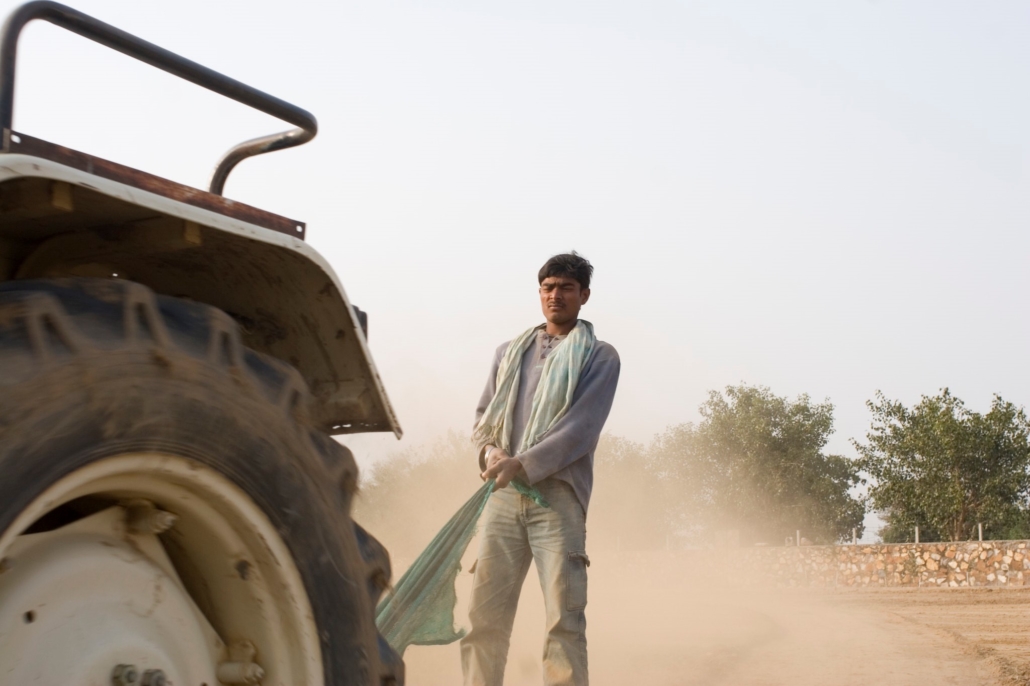
In the last few decades through the process of development, India has experienced structural transformation, with the contribution of the agriculture sector in Gross Domestic Product (GDP) falling to around 15% in 2017 from 51% in 1950. In most developed countries, the change in the share of GDP composition and the share of the labor force engaged in each sector determine the structural transformation. Despite the fall in the contribution of the agriculture sector in GDP, it employs around 50% of the labor force in India. It is imperative to study how agricultural transformation through mechanization in India impacts the productivity in the sector, which further pulls labor to the manufacturing sector.
Agricultural Transformation
Agricultural transformation is the process that leads to increased farm productivity, making farming commercially viable and strengthening interlinkages with other sectors of the economy. For agricultural transformation, there are key areas that require focus. Farmer’s access to financial resources is one of the major challenges that India faces. Even though there has been an increase in the sales of tractors all across India giving rise to mechanization in the sector, it is also important to make mechanized equipment accessible to all farmers, even the farmers with small and scattered land holdings. Mechanization of the agriculture sector is imperative to increase the productivity of the farmers but it should also occur in an environmentally-sustainable manner.
Mechanization in the agricultural sector consists of using machinery, tools and equipment to reduce post-harvest losses, get good quality products and increase the value of the farm product. It helps in increasing the economic benefits for the farmers who can efficiently use their manpower, reduce input costs and increase the value of output, adopt diversification of crops and in turn, improve their welfare.
The focus of mechanization in agriculture is to augment the farmer by increasing their per hectare productivity and replacing the efforts of animal or manual labor with mechanical power. Mechanization can take place in two ways; ‘partially’ when machines only replace a part of the farming activity or ‘completely’ when machinery replaces animals and human labor entirely. In India, there are inter-regional differences in the level of mechanization. The Northern-Indian states like Uttar Pradesh, Punjab and Haryana experience a high level of mechanization due to the presence of highly fertile lands and state-specific policies. In the southern and eastern states of India, the level of mechanization is low due to the hilly topography and high cost of transportation.
Sustainable Technology
In today’s world, it is imperative to make use of sustainable technology which not only increases agricultural productivity but also ensures improvement of social and environmental footprint at every stage. Providing access to farmers with agricultural tools, machinery and modern technology can create a shift for them from subsistence farming to market-oriented farming. In the context of India, where the agricultural sector provides employment to 50% of the labor force and is one of the major producers of rice, wheat, pulses, spices, cotton, meat and sugar, the goal is to enhance food security for a population of 1.3 billion. The shift towards sustainable mechanization in agriculture would not only improve efficiency and agricultural productivity but in developing countries like India, it would also lead to the development of food supply chains.
The Powerland Agro Tractor Vehicle
The Powerland Agro Tractor Vehicle has played an incredible role in the agricultural transformation of India through mechanization by manufacturing all-terrain vehicle (ATV) for farms. It is changing the landscape of the utility and farming industry in India by launching versatile tractors for the Indian farmers which can tow, pull, plow as well as spray and run power tools. During the ongoing fourth industrial revolution, it is imperative to invest and innovate in the domain of automation of traditional manufacturing and industrial practices. To integrate sustainable mechanization in the agricultural sector, Powerland is currently working on developing its autonomous electric vehicle platform with robotic capabilities.
Tej Naik, Co-founder of Powerland, believes that Machine Learning (ML) in conjunction with Powerland’s ATV and internet of Things (IoT) will allow input of data from the field resources, and process it to control how much fertilizer and water goes directly to the soil. This technology can also give rise to satellite crop monitoring of the crops and soil. He also believes that autonomous vehicles will not only help reduce operator stress and fatigue, but will allow farmers to perform efficiently, and in turn improve their productivity.
Concluding Notes
The agricultural sector plays an extremely important role in the overall welfare of farmers as well as ensuring food security in India. Despite the progress in the mechanization of the agricultural sector, the challenges that farmers face due to the high cost of input and machinery acts as an obstacle. To make the agricultural sector more productive, there is an immediate need to focus on sustainable mechanization and make it accessible. India highly subsidizes the agriculture sector, and as a result, it is important to invest in technology that is efficient and environmentally sustainable. Conservation of water and electricity should be a priority and should receive encouragement from the state. The government should also support, encourage and invest in companies that work towards agricultural transformation in India.
– Anandita Bardia
Photo: Flickr
