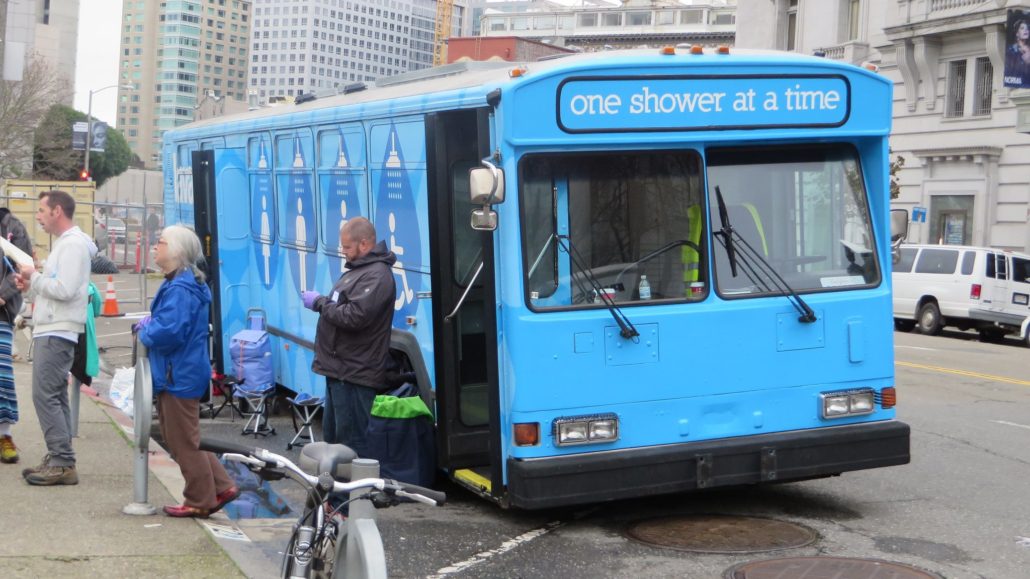
Many people consider showering to be a basic human right – and the United Nations General Assembly certainly agrees. In 2010, the assembly classified The Human Right to Water and Sanitation as a human right. Yet not everyone has equal access to showers and sanitation; individuals who are part of marginalized groups, such as the homeless, often have limited access to showers. Ensuring that all individuals have access to forms of sanitation such as showering is essential to creating a more equal society.
The Importance of Showers
According to a 2017 study in the International Journal of Environmental Research and Public Health, access to sanitation methods such as showering is necessary for good health and hygiene. Individuals who do not have access to showers and thus shower only occasionally are at risk for diseases and infections such as ectoparasite infestations like lice. A study of homeless populations in Europe who took infrequent showers showed that they had a higher risk of developing these infestations, which included scabies, fleas and head lice. In Mexico, a homeless man named Fernando told El Universal that he had not “had a proper shower in 14 years,” saying that he and other homeless individuals near Puente Negro only had access to the unclean, pungent waters of the Tijuana canal in which to bathe themselves.
Though many homeless individuals adamantly seek out showers and other forms of maintaining hygiene, individuals who sleep outdoors or participate in substance use are at greater risk of being unable to regularly access showers and sanitation. In Boston, Massachusetts, homeless individuals who were able to shower regularly usually gained access to showers through a family member’s or friend’s home (20% reported this) or a day shelter (another 20% reported this). Yet those who do not have family or friends whom they can turn to or those who sleep on the streets may have a more difficult time gaining access to showers.
Mobile Showers: A Growing Industry
In June 2014, a nonprofit organization called Lava Mae emerged. Lava Mae founder Doniece Sandoval created mobile showers and toilets for the homeless population of San Francisco out of a retired bus, saying that if food could be delivered through mobile means, “why not showers…?” Since then, Lava Mae has built a “worldwide support network,” and 163 global communities have formed 190 mobile hygiene programs after receiving training and inspiration from Lava Mae.
By 2020, Lava Mae has provided 32,000 homeless people in California with 78,000 showers. Those who receive mobile showers receive shampoo, a towel, soap and socks – and they maintain privacy in a shower stall. Lava Mae has even created a hygiene toolkit that anyone can download if they wish to start their own mobile hygiene service in a community.
Iglesia Ancla (Anchor Church)
Other organizations are providing the homeless with mobile showers as well. In Tijuana, Mexico, a church called Iglesia Ancla (Anchor Church) started a mobile shower service in August 2018 to help homeless individuals have access to showers. Members of the church took an old cargo van and renovated it to contain three bathrooms with a shower, mirror, toilet and sink. This van travels to areas where homeless populations concentrate two times a week and provides them with shampoo, soap, a towel and a change of clothes.
Puente Negro Mexico News Daily reported that one homeless man in Puente Negro experienced shock at hearing that he would be able to take a shower through the church’s mobile shower program, saying that he might be able to “get a job” and that he almost fainted in the heat.
Orange Sky Laundry
Similarly, another organization, Orange Sky Laundry, is working in Australia and New Zealand to give mobile showers to the homeless. With a setup of 21 vans in Australia, the organization, founded in 2014 by Nic Marchesi and Lucas Patchett, is currently managing 15-20 loads of washing and showers daily. About 116,000 Australians are homeless, and in Auckland, New Zealand, where the vans have set up, about 1,000 people sleep outside – a factor that, as mentioned previously, limits people from access to showers and increases the risk of infection.
Next, Orange Sky Laundry plans to expand its operation. Orange Sky Laundry plans to expand its organization to serve the homeless in the U.S., the U.K. and Greece. Marchesi and Pratchett, who have already powered through several hurdles – including broken laundry machines – to successfully deliver mobile showers, hope that their “homeless friends (can) transition back into being connected into the community again.”
Concluding Notes
These mobile shower organizations are imperative in helping the homeless, particularly those who live and sleep on the streets. Increased access to showers links to lower rates of infectious diseases – and helping the homeless around the world is necessary for achieving a greater form of equality. Many homeless individuals, including military veterans, use mobile laundry services such as Lava Mae to shower on a regular basis. Staying clean on the streets is not always possible or easy, as one veteran, Silas Borden, mentioned in Reader’s Digest. Therefore, these mobile laundry services can bring benefits to many communities around the world.
– Ayesha Asad
Photo: Flickr

Farmer Suicide in India: The Crisis of Punjab
Punjab, a northern state in India, which produces 20% of the country’s wheat and 11% of its rice, is largely agrarian. That is, its economy depends primarily on the agricultural sector. Despite being revered as India’s Ann-Daatas (Food Providers), the farmers of Punjab oftentimes struggle to put food on their plates. This, at times, tragically leads to farmer suicide in India.
The Situation
Rising farm debts have been a problem in the state for several decades now. However, in recent years, with higher costs of living, policy change, water scarcity and higher costs of a lease of land rentals — there has been a crisis of farmer suicides in India (particularly in Punjab). Making matters worse, the ongoing climate crisis has resulted in increased crop fires and lower annual precipitation — offering greater devastation.
Punjabi University, Patiala, Guru Nanak Dev University, Amritsar and Punjab Agriculture University (PAU) and Ludhiana’s joint research indicates that the crisis began in the early ’90s and drastically increased over the last three decades.
The Culprit: High Cost of Land
According to the Government of Punjab’s data, 3,300 farmers in Punjab have committed suicide in the years 2000–2019, with 97% of them being reported only from the Malwa region. Of these 3,300 deaths, 1,500 farmers took their lives since 2016, according to data from the Bhartiya Kisan Union (Ugrahan). That is almost 50% of the 19-year total, stretched across just four years; a very clear indicator of crisis.
The Farmer suicide crisis in India (Punjab) centers mainly in Malwa due to the drastically risen costs of lease land rentals. This, in turn, disproportionately affected the farmers in this region as the populous is mainly small or marginal farmers (1–5 acres of land). Reports from the Indian Express indicate that the average annual costs of lease land rentals are 50,000–65,000 Rs/acre in Malwa in comparison with only 30,000–45,000 Rs/acre in the Doaba and Majha regions.
Since the farmers only make roughly 32,000-36,000 Rs/acre per crop, 73–95% of the annual crop earnings are spent on renting the land. Further, it is far more difficult for farmers to take on alternative employment occupations in Malwa than it is in other regions.
Possible Solutions Suggested by Experts
Additional Problems Facing Punjab
Currently, Punjab faces a series of very serious crises. For example, a water scarcity crisis, a farmer suicide crisis, a poor water quality crisis, an inflation crisis and a new policy change crisis that could result in lesser government support for farmers. Perhaps needless to say, Punjab can use all the help it can obtain. The current Covid-19 pandemic only made things worse for farmers in Punjab as a nationwide lockdown resulted in little to no earnings. Moreover, with a piling debt, more cases of farmer suicide in India emerged.
An Organization Offering Help
However, the increasing number of organizations working to provide relief is a sign of hope. Organizations like Sahaita offer programs where you can support a family in Punjab for only $500 per year. If more people in the West supported programs like this, we could help these organizations keep Punjab evergreen.
– Jasmeen Bassi
Photo: Flickr
Women and Microfinance: Empowering Female Entrepreneurs
However, the good news is that microfinance has helped countless underprivileged women pursue their aspirations of business ownership. Together, women and microfinance have the potential to destroy the old customs that have stifled women from entering the workforce.
What is Microfinance?
Microfinance is a lending service that provides small, manageable loans to unemployed or low-income people who would otherwise lack access to financial services. Microfinance has already transformed the lives of many women. With the help of organizations like the Pakistan-based Kashf foundation, which has supported impoverished female entrepreneurs since 1996, and FINCA, financial freedom has become an obtainable goal for many. One narrative from a former client, Shamsha Naveed, represents a common yet important testimony of the abuse numerous poor women suffer in Pakistan. Moreover, Naveed’s narrative highlights as well, the economic promise women now have.
Shamsha’s Story: The Power of Female Entrepreneurship
For years, Naveed’s husband sexually abused their daughter and tortured Shamsha mentally and physically. She eventually realized her only option was to leave her cruel marriage and move back in with her parents. Not wanting to be a financial liability to her mother and father, Naveed began stitching people’s clothes as a means to earn an income.
Since her stitching job required her to travel door-to-door, she often encountered insults that blamed her for her failed marriage and lack of fair payment for her work. Yet, despite this harassment and exploitation, Naveed persevered and eventually found her way to the Kashf Foundation where she enrolled in specialized career classes. Eventually, she obtained a loan. Naveed’s business is now flourishing, employing a staff of more than 20 workers which allows this female entrepreneur to successfully pay for her children’s education.
The Foundation of International Community Assistance (FINCA)
The Foundation of International Community Assistance (FINCA) is another top microfinance lending institution. FINCA has long championed the cause of female empowerment. Since the mid-1980s, more than 4 million women have benefited from the organization’s assistance. Additionally, in April 2018, the microcredit company opened a women-only branch in Afghanistan. Not only does the location provide specific lending services to women, but it also offers targeted financial literacy classes and financial products. The Afghanistan office has a staff consisting of more than 90 female employees, including female branch managers.
It simply makes financial sense for emerging nations to foster and harness the earning power of women. Women’s inclusion contributes to regions’ overall economic growth and stability. Furthermore, diversified workplaces promote heightened employee engagement and creativity. An employer whose business fosters gender equality will appeal to a wide range of talented individuals. This, in turn, demonstrates to potential employees that the company values contributions from all people.
Building Bridges to Prosperity
Lending institutions such as the Kashf Foundation and FINCA are well-aware that women are marginalized in developing countries. However, these organizations also understand that financial investment goes beyond money. The true value these female entrepreneurs bring is felt not just by their families, but also by their overall economies. As women and microfinance continue to build bridges that educate, inspire and cultivate confidence in female entrepreneurship — there is hope for transitioning many from poverty to prosperity.
– Kim Patterson
Photo: Pexels
KPOP Working to Make the World a Better Place
BTS, also known as Bangtan Boys, is a Korean boy band consisting of 7 members. Their style of music, popularly known as KPOP, or Korean Pop music has taken off. Debuting in 2013, BTS immediately gained a faithful and dedicated fanbase that they call ARMY. As BTS grew in popularity, their acts of charity became more frequent. With their popularity and influence, ARMY soon followed in the KPOP group’s philanthropic footsteps.
Hope Delivery Food Bank
In South Korea, nearly 50% of the elderly population is living in poverty. The Organization for Economic Cooperation and Development reports that in 2015, 45.7% of South Koreans over the age of 65 lived in poverty. There is also a large number of children lacking necessities. Poverty and Social Exclusion reported that 13.5% of children in South Korea are living in poverty. To combat these numbers and give back to the community, BTS teamed up with Hope Delivery — a program under Love Food Bank that works to help the elderly and children in poverty by delivering food for them.
Jimin’s Busan School Donation
In April 2019, it was revealed that Jimin, a member of BTS, made a large donation to Busan’s office of education. Notably, the donation of 100 million won equates to about $84,000. Jimin has also made other generous donations. For example, he also donated to his alma mater, Busan High School of Arts, in February 2020. With his donation, he was able to provide 1,200 students with new desks and chairs.
Jin’s UNICEF Honors Club
In 2019, it was announced by UNICEF Korea that Jin became a member of UNICEF Honors Club. Jin had become a member by donating more than 100 million won. He had begun secretly donating in May 2018 and revealed he became a member of the UNICEF Honors Club to encourage others to follow in his footsteps.
Suga’s Hope Bridge Korea Disaster Relief Association
To fight the spread of COVID-19, Suga decided to donate 100 million won to the Hope Bridge Korea Disaster Relief Association. Suga initiated this donation after the cancellation of BTS’s tour, Map of the Soul. Many fans and would-be concert goers drew inspiration from Suga’s donation and followed suit. The outpour of donations from ARMY accumulated about 400 million won over a weekend in March 2020. Fans’ total donation amount may be much higher since not every donation went under BTS or ARMY.
J-Hope’s ChildFund Korea’s Green Noble Club
During August 2020, it was revealed that J-Hope, a member of ChildFund Korea’s Green Noble Club, donated 100 million won. The donation helped vulnerable children, especially those who are facing financial insecurities due to COVID-19. McKinsey & Company conducted a report revolving around the financial impact of COVID-19 on Asian countries. When focusing on the decrease in income in households, the report reveals that South Koreans have great concern. With this level of concern, J-Hope’s donation is likely to alleviate the stress among households.
ARMY Singapore Foodbank Charity
In honor of BTS’s 6th anniversary, fans have come together to do acts of charity. A Twitter handle by the name @btsborahaeteam had revealed on March 6, 2019, that a donation project has been formed. The purpose of the donation was to raise funds through Food Bank SG and distribute it to different charities and food kitchens in Singapore. On June 7, 2019, the fundraiser came to an end and more than $2,000 was raised. With the money raised, people put together 136 bundles of food and distributed it in Bedok North. In the name of KPOP and BTS, ARMY has come together and made a significant, financial impact.
– Ashleigh Jimenez
Photo: Flickr
Struggles Obtaining Convenient Access to Showers
Many people consider showering to be a basic human right – and the United Nations General Assembly certainly agrees. In 2010, the assembly classified The Human Right to Water and Sanitation as a human right. Yet not everyone has equal access to showers and sanitation; individuals who are part of marginalized groups, such as the homeless, often have limited access to showers. Ensuring that all individuals have access to forms of sanitation such as showering is essential to creating a more equal society.
The Importance of Showers
According to a 2017 study in the International Journal of Environmental Research and Public Health, access to sanitation methods such as showering is necessary for good health and hygiene. Individuals who do not have access to showers and thus shower only occasionally are at risk for diseases and infections such as ectoparasite infestations like lice. A study of homeless populations in Europe who took infrequent showers showed that they had a higher risk of developing these infestations, which included scabies, fleas and head lice. In Mexico, a homeless man named Fernando told El Universal that he had not “had a proper shower in 14 years,” saying that he and other homeless individuals near Puente Negro only had access to the unclean, pungent waters of the Tijuana canal in which to bathe themselves.
Though many homeless individuals adamantly seek out showers and other forms of maintaining hygiene, individuals who sleep outdoors or participate in substance use are at greater risk of being unable to regularly access showers and sanitation. In Boston, Massachusetts, homeless individuals who were able to shower regularly usually gained access to showers through a family member’s or friend’s home (20% reported this) or a day shelter (another 20% reported this). Yet those who do not have family or friends whom they can turn to or those who sleep on the streets may have a more difficult time gaining access to showers.
Mobile Showers: A Growing Industry
In June 2014, a nonprofit organization called Lava Mae emerged. Lava Mae founder Doniece Sandoval created mobile showers and toilets for the homeless population of San Francisco out of a retired bus, saying that if food could be delivered through mobile means, “why not showers…?” Since then, Lava Mae has built a “worldwide support network,” and 163 global communities have formed 190 mobile hygiene programs after receiving training and inspiration from Lava Mae.
By 2020, Lava Mae has provided 32,000 homeless people in California with 78,000 showers. Those who receive mobile showers receive shampoo, a towel, soap and socks – and they maintain privacy in a shower stall. Lava Mae has even created a hygiene toolkit that anyone can download if they wish to start their own mobile hygiene service in a community.
Iglesia Ancla (Anchor Church)
Other organizations are providing the homeless with mobile showers as well. In Tijuana, Mexico, a church called Iglesia Ancla (Anchor Church) started a mobile shower service in August 2018 to help homeless individuals have access to showers. Members of the church took an old cargo van and renovated it to contain three bathrooms with a shower, mirror, toilet and sink. This van travels to areas where homeless populations concentrate two times a week and provides them with shampoo, soap, a towel and a change of clothes.
Puente Negro Mexico News Daily reported that one homeless man in Puente Negro experienced shock at hearing that he would be able to take a shower through the church’s mobile shower program, saying that he might be able to “get a job” and that he almost fainted in the heat.
Orange Sky Laundry
Similarly, another organization, Orange Sky Laundry, is working in Australia and New Zealand to give mobile showers to the homeless. With a setup of 21 vans in Australia, the organization, founded in 2014 by Nic Marchesi and Lucas Patchett, is currently managing 15-20 loads of washing and showers daily. About 116,000 Australians are homeless, and in Auckland, New Zealand, where the vans have set up, about 1,000 people sleep outside – a factor that, as mentioned previously, limits people from access to showers and increases the risk of infection.
Next, Orange Sky Laundry plans to expand its operation. Orange Sky Laundry plans to expand its organization to serve the homeless in the U.S., the U.K. and Greece. Marchesi and Pratchett, who have already powered through several hurdles – including broken laundry machines – to successfully deliver mobile showers, hope that their “homeless friends (can) transition back into being connected into the community again.”
Concluding Notes
These mobile shower organizations are imperative in helping the homeless, particularly those who live and sleep on the streets. Increased access to showers links to lower rates of infectious diseases – and helping the homeless around the world is necessary for achieving a greater form of equality. Many homeless individuals, including military veterans, use mobile laundry services such as Lava Mae to shower on a regular basis. Staying clean on the streets is not always possible or easy, as one veteran, Silas Borden, mentioned in Reader’s Digest. Therefore, these mobile laundry services can bring benefits to many communities around the world.
– Ayesha Asad
Photo: Flickr
Women Leaders in Cambodia Fight Against Poverty
Cambodia is a Southeastern Asian country bordering Laos and Thailand with a population of over 16 million. The people of Cambodia have struggled in recovering from immense losses caused by the rule of the Khmer Rouge government from 1975-1979. Despite its challenges, Cambodia has made incredible strides in decreasing poverty rates and enhancing its economy. From 2007-2014, the percentage of the population living under the national poverty line decreased by 34.3%. Despite the country’s successes, the people of Cambodia realize they must unite and put in their best efforts to achieve national prosperity. Behind the scenes, remarkable women leaders in Cambodia are continuing their country’s fight against poverty.
Khong Sokin and Oxfam America
Rural areas in Cambodia account for the majority of populations living in the highest rates of poverty. One of these areas is near the Mekong River in Rogniev Island, where two long-time friends and neighbors are making a difference in their community. In 2019, Chris, an Oxfam America member, interviewed the two women – Tep Srey Neang and Khong Sokin. Srey Neang leads a youth group with the primary goal of promoting efficient utilization of her community’s limited natural resources. By supporting decent management of their resources, the farming and fishing industry in her neighboring areas will greatly improve. With success, Neang and her group can boost the socioeconomic status of families and the agriculture industry of the rural areas surrounding the Mekong River.
Khong Sokin has worked closely with Oxfam America, a nonprofit organization with the goal of alleviating global poverty. Together, they have aided women in Sokin’s surrounding areas by providing educational sessions on cultivation and agriculture. Sokin is aware agricultural knowledge is valuable for Cambodia’s economy and for the prosperity of their future generations. Furthermore, Oxfam and Sokin have empowered the women of their community to find their voices and to speak out, and the men are listening. Members of the community have recognized they could not fully thrive without supporting their women as well. This inclusivity has led to a female holding the position of the village assistant chief and four other female members on the community fishery committee. Srey Neang and Khong Sokin are just two fine examples of women leaders in Cambodia cultivating the future for their country.
Women-Led Organization in Battambang and Siem Reap
In the Battambang and Siem Reap provinces in Cambodia, there is a women-led organization supporting the most impoverished, vulnerable women across five rural districts. The program received support from the UN Women’s Fund for Gender Equality and started in 2016. The local NGO offers valuable training sessions for women to gain skills in agricultural techniques. For example, members have learned how to use non-chemical fertilizers, raise chickens and pigs, properly grow vegetables and use other farming techniques. As of 2017, out of the 100 women that have worked with the organization, about a third increased their incomes by 50%. In addition to personal financial benefits, the organization is empowering and supporting women, which promotes Cambodia’s resources and enhances the country’s economy.
Vannary San and Lotus Silk
Expanding outside of the farming sphere, Vannary San is a Cambodian fashion designer and the founder of the company Lotus Silk. After the Khmer Rouge, the culture’s fine silk industry was almost entirely destroyed. Vannary has worked towards reintroducing and promoting Cambodia’s silk, while also supporting impoverished communities in Cambodia. In every single step of production, Vannary ensures to support the most marginalized women of Cambodia. She supports rural Cambodian silk farmers by utilizing their silk for her clothing production. Vannary is committed to employing only impoverished Cambodian women and provides benefits, accommodations, decent working hours and safe working conditions. In addition, Vannary offers internships for local college students and encourages student members of Global Children Cambodia to apply for jobs with her company. Vannary San has single-handedly revived Cambodia’s silk culture and has inspired others to become women leaders in Cambodia through her preservation and entrepreneurship.
These are only a few stories of the amazing work several women in Cambodia are accomplishing. It is important to celebrate these stories and to acknowledge that there are people quietly working in the background to help others. Cambodia has faced major turmoil and devastation, but these women provide hope and inspiration for the country’s future. Not only are they fighting poverty and improving the economy, but they are also empowering people to join women leaders in Cambodia.
– Bolorzul Dorjsuren
Photo: Flickr
4 Major Accomplishments by Business Fights Poverty in 2020
Business Fights Poverty began in 2005 with the goal of providing a network for businesses, organizations and other professionals. This organization believes in the principle of purposeful collaboration and aims to unite influential businesses to add social change to the list of successes across the world. The poverty-fighting organization also recognizes the underlying potential of uniting worldwide businesses to battle social issues such as poverty. Its actions have been influential during 2020. Here are four impressive examples of actions Business Fights Poverty has taken to combat global poverty.
Global Network
Business Fights Poverty created a network of over 28,000 businesses and organizations fighting poverty: In addition to its staff and content creators spanning across the globe, this organization has a long list of partners with global influence. Among these partners are Walmart, Nestlé, the Mastercard Center for Inclusive Growth and Visa. The poverty-fighting organization has also partnered with content creating organizations to expand the reach of its content and increase collaboration among organizations fighting for social change. This extensive network of partners allows Business Fights Poverty to collaborate their views of organizations with different business goals and different content creators to increase awareness surrounding global poverty.
Educator on Social Inequality and Poverty
The organization also holds free online conferences with influential leaders in business to educate on collaborative impact. Easily accessible from its website, Business Fights Poverty releases a weekly calendar of live-streamed conferences and webinars. A major perk here is that if one is unable to watch these conferences in real-time, they are recorded and uploaded to the website. Previous conferences include discussions with business professors from Harvard University and the University of Oxford about the relation between social inequality and poverty. Future talks include discussions with members of the U.N. General Assembly in New York. Therefore, these free conferences provide an accessible way for people across the globe to educate themselves and learn from influential leaders in business and education.
Individual Contribution Opportunities
The global network also offers opportunities for individuals to contribute to its site through content creation or on discussion forums. The idea of collaboration spans further than collaboration among worldwide businesses. Business Fights Poverty offers numerous ways for any individual to collaborate, such as the ability to apply for freelance work and online forums of open discussion with experts in different fields. This again serves as a way for individuals to educate themselves through discussion with professionals. It also allows them to delve deeper into becoming involved with the organization. The organizations also makes its purposeful collaboration accessible through a few clicks on its websites.
Progress in SDGs
The company also motivates contributors and partners to move towards Sustainable Development Goals. The U.N. developed the 17 Sustainable Development Goals to foster a more sustainable global future. Two of these goals include no poverty and zero hunger. Business Fights Poverty considers one of its challenges as advancing toward a world that reaches these goals. By advocating for this change, the organization is able to contribute to a global plan to combat poverty and hunger. The Sustainable Development Goals remain a focus in the conversation and content present on Business Fights Poverty’s website.
Outcomes
The major outcomes of Business Fights Poverty have reflected in the businesses and corporations it has collaborated with. For example, since its involvement with Business Fights Poverty, Walmart paid its full-time workers $3 above what people consider to be a living wage of an adult in the U.S. in 2019 and has the goal of training millions of employees in career growth strategies by 2025. Since 2015, Visa has assisted over 160,000 lower-income individuals in creating accounts and becoming involved in the financial system. Business Fights Poverty has created a network of awareness. The actions of these major corporations set a positive example for customers and smaller businesses to improve their strategies to assist those battling poverty.
In conclusion, Business Fights Poverty recognizes the impact that large scale businesses and corporations can have on battling the poverty crisis. Through education, collaboration and progress towards a common goal, this organization has dedicated itself to making a social change. As the network continues to grow, businesses can find success in assisting the fight to combat world hunger and poverty. As for individuals, this organization’s website offers many ways to get involved that are worth exploring.
– Evan Coleman
Photo: Flickr
5 Facts About Hunger in Lithuania
Lithuania, located in the Baltic region of Europe, is known for its history of the Crusades, Soviet occupation and interesting dishes — like cold beetroot soup, among others. However, like all countries, Lithuania has to find hunger solutions. Lithuania has a Global Hunger Index score of less than five, but faces increased poverty rates. Additionally, the country’s level of poverty risk was the third highest in the E.U. Yet, the government of Lithuania and organizations like the Red Cross are combating hunger in innovative ways. Below are five facts about hunger in Lithuania.
5 Facts About Hunger in Lithuania
Elevating the Quality of Life
Although hunger in Lithuania is a serious issue, the cooperation between the government, organizations and the people has improved people’s access to food. Lithuania’s new outlook on addressing poverty will ensure that more people’s needs are met. The Lithuanian president not only seeks to provide healthcare and education, but a more elevated quality of life.
– Mia Mendez
Photo: Wikimedia Commons
Policies that Help Alleviate Poverty in Vietnam
Vietnam is one of the most populated Asian countries, with more than 90 million people calling the country home. With such a large population, poverty is unavoidable, especially in the rural parts of the country. Despite the ongoing problem of poverty, rural parts of Vietnam have been able to decrease the amount of poverty with the implementation of certain policies and programs. This article will offer some details of policies and programs helping to alleviate poverty in Vietnam.
Hunger and Poverty Eradication Program
The Hunger Eradication and Poverty Reduction Program (HEPR) focuses on the children of Vietnam. Children and their families benefit from the program with free health insurance. Additionally, the organization is acquiring tuition exceptions, subsidies and loans designated for children living in poverty. With the aid of HEPR, studies have shown that enrollment in early schooling increases to around 9%. This is beneficial to alleviate poverty in Vietnam and its future since the lack of education is one of the most significant poverty risk factors.
In 2010, nearly 75% of households had members who only completed primary school. Six years later, the number decreased to 57%, which happened with the aid of programs like the Hunger and Poverty Eradication Program of Vietnam. Through the focus on gaining educational opportunities for the future of Vietnam, the Hunger and Poverty Eradication Program of Vietnam has worked to support the process of attaining education.
National Targeted Program for Poverty Reduction
The National Targeted Program for Poverty Reduction (NTPPR) is a poverty-reduction initiative that uses an anthropological perspective to target ethnic minorities living in poverty-stricken rural areas. Through this targeting, NTPPR gains insight on how to alleviate the amount of poverty in Vietnam, for example. This program aims to reduce poverty by around 4% yearly, which is double the national target. This goal helps with encouraging the decrease in poverty because it sets higher expectations for the program.
Health insurance is one of NTPPR’s biggest priorities and this program provides free insurance for children that are age 6 and younger. This is especially beneficial for women who have to work to sustain their household incomes. Since mothers no longer need to take hours off to tend to their illness-vulnerable children, they receive a great benefit. The NTTPR is beneficial to impoverished rural areas and helps the neediest population to alleviate poverty in Vietnam or its symptoms.
The World Bank Group Country Partnership Framework in Vietnam
The World Bank is a global program that helps to support countries with low-interest rate loans. It works to improve the farming industry of rural Vietnam by encouraging low-income farmers with profit-making crops. By helping the economic growth of impoverished areas, nearly 1.5 million people join the Vietnamese middle class annually. Vietnam has since reduced its poverty to nearly 10%. For instance, as of 2016 and in 2018, 70% of people living in Vietnam are income-secure. The World Bank has assisted Vietnam’s most disadvantaged population through increasing farming productivity, strengthening the skills of farmers and leveling the playing field for all the gain employment opportunities.
Despite the many economic challenges Vietnam has faced throughout the years, programs and initiatives like the HEPR, NTPPR and the World Bank have supported the growth of Vietnam’s economy by downsizing the amount of poverty in rural areas.
– Karina Wong
Photo: Flickr
Updates on SDG Goal 5 in Saudi Arabia
The U.N. Sustainable Development Goals (SDGs), declared in 2015, are a list of 17 goals of economic and social development upon which each nation has received the call to improve. SDG Goal 5 requires each member state to achieve gender equality and empower all women and girls. This article contains some updates on SDG Goal 5 in Saudi Arabia.
Despite a longtime refusal to challenge embedded cultural hostility towards women, the government of Saudi Arabia has made some modest changes that have lifted some of the restrictions that have historically been placed upon Saudi women. Examples include the 2011 decree allowing Saudi women to vote and the 2018 decision to allow Saudi women to drive.
As per the SDGs, Saudi Arabia must work toward developing a more equitable society for women by the year 2030. The following are updates on SDG Goal 5 in Saudi Arabia.
Women’s Representation in National Politics
One indicator of SDG Goal 5 is women’s representation in the national parliament of a country. Given that Saudi Arabia is an absolute monarchy, it does not have a national parliament. The consultative Shura Council is the closest approximation to a parliament and is responsible for submitting legislative recommendations to the King.
In 2013, Saudi King Abdullah appointed 30 women to the 150-member council for the first time. However, as of 2017, female representation on the Shura Council has remained at 20% and the Saudi King is the one one who can increase it.
Recent Decrees Have Weakened the Male Guardianship System
Another indicator of SDG Goal 5 is the promulgation of legal frameworks that promote equality and non-discrimination on the basis of sex. Any updates on SDG Goal 5 in Saudi Arabia would be incomplete without an assessment of the status of the male guardianship system. By law, Saudi women must be under the authority of a male relative or spouse. Until recently, Saudi women could not apply for a passport or leave the country without their male guardian’s approval. Neither could they register marriages, divorces or their children’s births.
However, in 2019, a series of decrees announced by Saudi Crown Prince Mohammad bin Salman weakened the authority of the male guardianship system.
Today, Saudi women can obtain a passport and travel outside the country without male permission. Moreover, women can now register marriages, divorces and their children’s births. Additionally, employment opportunities for women have also expanded, with law guaranteeing a woman’s right to work.
The male guardianship system does not allow for equality and non-discrimination of women under the law. Despite these recent reforms, the law still upholds certain powers of the male guardianship system. For example, women still need the permission of a male guardian to marry and live independently, and only men can pass on citizenship to their children.
Child Marriage in Saudi Arabia
Child marriage has been a historic issue in Saudi Arabia. However, in January 2019, the government of Saudi Arabia implemented new marriage regulations for children preventing girls and boys as young as 15 from marrying without the consent of a court of law. Although the U.N. does not have publicly available data on the child marriage rate in Saudi Arabia, the fact that child marriage is legal opens the possibility for a high proportion of marriage of girls under age 18.
These updates on SDG Goal 5 in Saudi Arabia demonstrate that although a series of recent reforms have eased the burden on Saudi women and girls, the government of Saudi Arabia continues to uphold certain legal institutions of gender discrimination. Low representation in the Shura Council, an intact male guardianship system and regulations enabling child marriage serve as examples of the challenges that Saudi women still face in 2020.
– John Andrikos
Photo: Flickr
Energy Access for Poverty Eradication in Burundi
Ranked 185th out of 189 countries on the 2019 United Nations Development Program’s human development index, Burundi is amongst the world’s poorest countries with 65% of the population living below the poverty line. Meanwhile, Burundi has the second lowest GDP in the world and the highest hunger score across the globe according to the 2018 World Food Security Report. However, poverty eradication in Burundi is possible through the granting of energy access.
Burundians live a very agrarian lifestyle with 80% of the population having employment in the agricultural sector and more than 87% of the population living in rural areas. Of the population of 11.7 million people, only 3% have access to electricity. Meanwhile, 90% of energy access in Burundi is dependent on biogas via the burning of firewood. This is not sustainable as 50% of the population remains food insecure, and the country’s total annual food production only covers 55 days per person each year.
The Challenges of Burning Firewood in Burundi
Burundian families spend on average four hours each day sourcing firewood for basic tasks like food preparation. However, this practice comes at the expense of:
The Safe Access to Fuel and Energy (SAFE) Initiative
For a more sustainable program, the government joined with the World Food Program (WFP) in 2017 as a part of the Safe Access to Fuel and Energy (SAFE) initiative that introduced fuel-efficient stoves to over 18 countries in the region, promoting energy access for poverty reduction in Burundi.
So far, this development has sparked great progress in Burundi in the following areas:
Still, the country remains primarily dependent on biogas from firewood and this initiative has only lessened its costs to society rather than eliminating firewood dependence. As a result, the Burundian government has now turned towards alternative innovations to promote energy access for poverty eradication in Burundi.
Fortunately, the location and climate of Burundi lend well to renewable energy generation mainly through hydroelectric and solar energy. The government of Burundi is actively partnering with energy investors to build its private sector and grow its other industries, commerce, health, education, tourism, fisheries and transport sectors. Expanding beyond a primarily agrarian society promises substantial growth for the economy of Burundi, providing a framework to lift Burundians out of the poverty cycle.
Hydroelectric Power Energy Access in Burundi
Located in the heart of Africa’s Great Lakes Region, surrounded by far-stretching rivers such as Malagarasi (475 km) and the Ruzizi (117 km), Burundi has only utilized only 32 MW of its 1,700 MW hydroelectric energy potential. With only 29 of 159 potential hydropower sites already explored, Burundi is still relying on outdated hydroelectric power technologies that can only serve 9% of the population. Moving forward, Burundi has begun to make strides in energy access for poverty eradication in Burundi through the following hydroelectric power development projects:
Solar Power Energy Access in Burundi
Being located on the equator, with temperatures ranging from 17 to 23˚C, altitudes varying from 772 meters to 2,670 meters, and an average 2,000 kWh/m2.year of sunshine, Burundi holds unique potential for solar power energy development. The Burundian authorities look forward to exploring this option soon.
Granted success, millions of households and industries in the region will have energy access for poverty eradication in Burundi. Reliable and widespread access to electricity should improve the quality of basic social services like health, education and security services in the region. Additionally, there will be a reduction in carbon emissions, lessening of deforestation from lower dependence on firewood and thereby an increase in the living conditions of the regional population, breaking the poverty cycle in Burundi.
– Rebecca Harris
Photo: Flickr