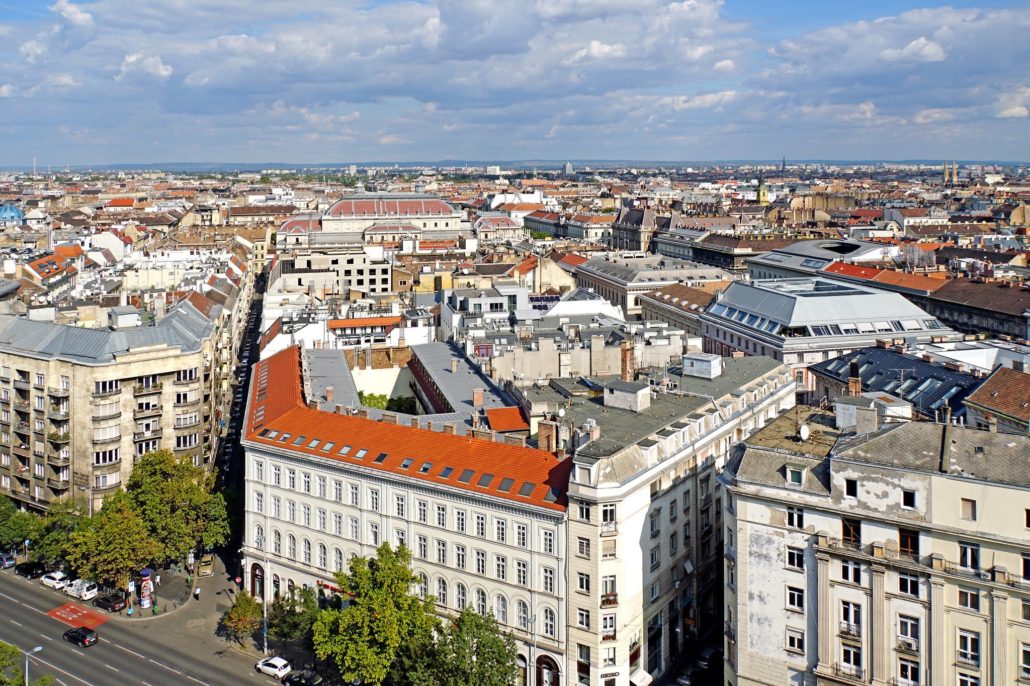
Hungary, a country located in central Europe, has a population of roughly 10 million people. According to Eurostat’s 2016 report, a quarter or exactly 26.3% of Hungarians were at risk of poverty. This translates to about 2.5 million people at risk of poverty in Hungary. In 2008, when the financial crisis created higher poverty and unemployment worldwide, poverty in Hungary was at 28.2%. Upon comparing 2016 figures to those of 2008, trends are improving. Here is some information about poverty eradication in Hungary.
Hungary’s Mandate to Eradicate Poverty
The European Union (E.U.) has created an agenda, the Europe 2020 strategy, marking poverty eradication within the E.U. as one of its key targets. Meanwhile, in September 2015, Hungary adopted the 2030 Agenda for Sustainable Development. The agenda, adopted by all United Nations (U.N.) member states, is committed to eradicating poverty and creating a path towards a sustainable future by 2013 globally.
Yet, Hungary has a plan of its own. Presenting its Voluntary National Review (VNR) at the U.N. High Level Political Forum on Sustainable Development in 2018, Hungary showed its stake in the process of moving forward to achieve sustainable development. The country places a large emphasis on its most vulnerable population—those in poverty. The basis of poverty eradication in Hungary follows that all should have equal access to natural resources, knowledge, information, market and affordable loans, for instance.
Access to Clean Water and Sanitation
Hungary holds a specific emphasis on the human rights aspects as well as a holistic approach to sustainable development. The country looks to create universal access to clean water and sanitation. In effect, Hungary has proposed the issue of water and sanitation as a standalone goal within its VNR. In fact, Hungary’s tap water is of the highest quality according to European standards, in which water quality parameters reach above adequacy in excess of 95%. This means that Hungary’s tap water is safe to drink.
According to Hungary’s policies, the nation plans to put the correct price on water, allocating water and water-related funding more efficiently. This will occur all the while maintaining water-efficient technologies and practices, implementing Europe’s water-saving culture and improving knowledge and data collection regarding water scarcity and drought risk management.
Public Participation
In order to achieve success within Hungary’s implementation of the Sustainable Development Goals (SDGs), the country is targeting public participation. It intends to establish this through stakeholders and local action.
Measures include planning within the national and local-level scale, investing in and implementing social inclusion campaigns and implementing what works after understanding what does not. Additionally, the intention is to not only identify communities’ needs but address them as well.
According to the 2014-2020 financial framework of European Structural and Investment Funds (ESIF), Hungary looks at three dimensions of social inclusion. The first is measuring inclusive growth for enhanced development impact, which looks at methods that monitor development outcomes and better target social investments. The second looks at enabling inclusive growth in the nation, discussing the ample support local planning and implementation will provide on the national level. The third dimension examines the people behind the numbers, which is a handbook implementing local equal opportunity programs, offering practical guidance and tools that empower local stakeholders, a part of local Equal Opportunity Programs, to effectively mold the local social inclusion landscape.
Child Poverty in Hungary and the Family Housing Allowance Program (CSOK)
Hungary’s child poverty rate has risen from 7% to 17% between 2007 and 2012. Children born into poverty in Hungary are often the most disadvantaged. In 2015, Hungary’s government announced a new major policy, the Family Housing Allowance Program (CSOK), which would effectively give families generous subsidies to buy or build new homes. Subsidies increase based on marital status and the number of children families have. However, the country’s tax benefit favors married families with children. Since the policy’s start, Hungary has increased its fertility rate, partly due to tax preferences, cash grants, loan subsidies, constitutional protections and expensive political signaling.
Poverty eradication in Hungary can occur through the country’s plan of working together through the cooperation of science, economy, government and civil society. Because of Hungary’s focus on eradicating poverty, the country’s poverty level is below the E.U. average.
– Danielle Lindenbaum
Photo: Flickr

How Suriname is Changing Amidst the Pandemic
Suriname is among the many countries that COVID-19 has affected, specifically in its health care and political systems. The pandemic revealed the underbelly of Suriname’s existing health system. The country has since been guiding officials toward a more adequate system and the political climate in Suriname is changing. The election on May 25, 2020, brought in Chan Santokhi as the new president succeeding the decade-long leader, Desi Bouterse.
Former President Desi Bouterse
Desi Bouterse tightly held the reins in Suriname for years as an influential political force. Bouterse was a prominent figure in overthrowing the first leader of Suriname, Henck Arron, after the country’s independence. He was chairman of the National Military Council for a majority of the 80s and became president in 2010.
Bouterse has a significant history of controversial actions. In November 2019, Surinamese judges decided that Bouterse was guilty of murder and found him responsible for the death of 15 of his opponents in December 1982 because he commanded his soldiers to kill them. This long-standing trial started in 2007 when he stated that he had “political responsibility” but took no personal responsibility for what had happened. Although he received a 20-year sentence, the police did not issue any arrest warrants for Bouterse. He also denied allegations of smuggling more cocaine into the Netherlands, which the Dutch court convicted him of doing in 1999.
President Chan Santokhi
In 2020, Desi Bouterse saw the end of his long career. Chan Santokhi was victorious over Bouterse in the elections in May 2020. Mr. Santokhi was a former police chief who investigated the past president for his alleged murders in 1982. Although he has won the seat as leader, there are still many obstacles he must overcome after inheriting Bouterse’s Suriname. Suriname is battling a horrible financial crisis, political corruption and the coronavirus.
The new president has much to accomplish, but there may be hope for Suriname. Chan Santokhi may be able to overturn the economic crisis in Suriname by utilizing its newly found offshore oil by 2026.
Health Care Deficiencies
COVID-19 is touching the lives of those in Suriname, and the virus is quickly exposing the deficiencies in its health care system. First, tropical rainforest covers most of the land and houses many Indigenous and marginalized populations. Those who live in these deeply remote areas are unable to receive essential health care.
Second, Suriname has an insufficient workforce in the health care sector at about eight physicians and 23 nurses per 10,000 people. It is also suffering from a lack of specialists who can work in ICUs.
Third, Suriname does not have a structured effective response plan in case of emergencies as the country is not susceptible to natural disasters except for the occasional flooding. With resources going toward COVID-19 treatment, Suriname is recognizing its lack of resources to provide other health services not pertaining to the virus.
Actions to Fight Against COVID-19
At the beginning of 2020, the country’s ministry of health took immediate action and gathered a public health response team to combat the virus. This team worked with the Pan American Health Organization (PAHO), World Health Organization (WHO) and Universal Health Coverage Partnership to bolster the health care system and provide effective plans for current and future disease outbreaks.
The organizations are also working to implement universal health coverage in Suriname. With the help of these organizations and international funding, Suriname is working to effectively save lives through a better health care system, a protected workforce, containment of COVID-19 and preparation for future epidemics. Suriname is changing and improving its current public health system for the present as well as the future.
Regardless of the brutalities many face due to COVID-19, it has also brought positive changes to the people of Suriname. The country was able to take down a controversial leader and new plans to improve its emergency response and public health system are in progress. Hopefully, with the turn of a new post-COVID-19 era, Suriname is changing for the better.
– San Sung Kim
Photo: Flickr
Prince Harry and Meghan Markle’s Global Activism
Meghan Markle’s Activism Before Becoming the Duchess of Sussex
Prior to her marriage to Prince Harry in 2018, Meghan Markle was an outspoken advocate of gender equality in developing countries. She became a U.N. Women’s Advocate for Women’s Political Participation and Leadership in 2015. The following year, Markle traveled to Rwanda and India as an ambassador for World Vision. World Vision is an organization that fights global poverty in children. The experience inspired her to write an op-ed in Time magazine about the effect stigma around menstruation can have on a girl’s future.
Prince Harry and Meghan Markle’s Activism
When she married Prince Harry and became a member of the royal family, Markle stepped down from these roles. However, this does not mean she stopped being a voice for those in need. Now, Harry and Meghan’s activism has launched programs and supported charities around the globe that fight to eradicate global poverty. Additionally, they inspire fans of the royals to become advocates themselves.
Their Trips and Projects in Africa
Prince Harry and Meghan Markle, along with their young son Archie, took a 10-day tour of Africa. They visited South Africa, Botswana, Angola and Malawi in late September and early October of 2019. While there, the couple announced a variety of projects, including protecting forests, investing in technology and ridding the land of dangerous landmines. The Duchess of Sussex additionally announced grants and scholarships from the Association of Commonwealth Universities. This is an international organization that supports higher education and supports African girls in their journey to university and beyond.
During this same trip, Harry and Meghan met with members of the Campaign for Female Education (CAMFED) Association. CAMFED is a group of women advocating for girls’ education and global poverty issues throughout Africa. The royal couple used their platform to support these women. In addition, they shared their work with their 10 million Instagram followers.
Activism Work on Social Media
This was not the first time that Prince Harry and Meghan Markle’s global activism could be seen on their social media accounts. In August of 2019, the official Instagram account for the pair, @sussexroyal, began a series entitled ‘Forces for Change.’ They highlighted 15 organizations that they found inspiring or noteworthy. These organizations include Children International and Plan International United Kingdom. These two groups care and advocate for children living under the poverty line around the world. The simple act of sharing these organizations online spread awareness of the fight against global poverty. It also prompted followers of the Duke and Duchess to support these incredibly important causes.
Prince Harry and Meghan Markle’s global activism continues to inspire their followers and motivates them to take action just as the couple has done time and time again. In April of 2019, weeks before the birth of baby Archie, thousands of fans of the royal family donated to Meghan Markle’s favorite charities as a baby shower gift in what’s now known as the ‘Global Sussex Baby Shower.’ One of these charities is the aforementioned CAMFED. Additionally, this money directly supported global poverty and girls’ education initiatives in Africa.
In April of 2020, the couple announced their new non-profit: Archewell. However, the COVID-19 pandemic has stalled their plans to launch the organization. Once it launches, we can be sure that Prince Harry and Meghan Markle will continue the global activism that has defined their two years as the Duke and Duchess of Sussex.
– Daryn Lenahan
Photo: Flickr
Update on SDG Goal 1 in Canada
Poverty Overview
Canada is the second-largest country in the world by land area. The country has a universal healthcare system and a high standard of living. Despite this, the country is not immune to poverty. In 2018, 5.4% of Canadians were experiencing deep income poverty, which means having an income below 75% of Canada’s official poverty threshold. In addition, Canada’s indigenous population, which make up around 5% of the population, are often subject to extreme political and societal marginalization, making them more susceptible to poverty and homelessness.
Poverty remains a reality in Canada, in spite of its reputable presence on the global stage. The country has not yet met SDG Goal 1 but continues to make efforts toward it. The Canadian Government has developed several initiatives and allocated resources to attempt to meet these goals. In 2018, a budget of $49.4 million spread over 13 years was approved to help meet the SDGs.
Tracking Canada’s Poverty Progress
The Canadian Government has been funding and supporting numerous initiatives to alleviate poverty in the country. In total, since 2015, the Canadian Government has invested $22 billion in efforts to alleviate poverty and grow the middle-class. The results have been positive. In 2015, the Canadian Poverty Reduction Strategy resolved to reduce poverty by 20% before 2020. The 2015 poverty rate was 12% and this strategy aimed to achieve a 10% poverty rate by 2020. Canada achieved this goal in 2017 when the Canadian Income Report reported that the country had reached its lowest poverty rate in history.
These improvements are due to several poverty reduction initiatives. Canada’s Guaranteed Income Supplement, for example, provides monetary assistance to senior citizens with low incomes, preventing them from falling into poverty. The reforms also introduced the Canada Child Benefit, granting families with young children more financial assistance. Additionally, the Canada Workers Benefit was introduced with an aim to lift 74,000 people out of poverty.
The Canadian Government has also resolved to aid its indigenous populations. In 2010, just over 7% of individuals who identified as indigenous were found to make less than $10,000 annually. Recent government initiatives have attempted to remedy these poverty gaps, including the National Housing Strategy’s promise to help indigenous populations.
Looking Forward
While Canada is yet to meet SDG Goal 1, the country has made substantial progress in reducing poverty. As of 2018, the poverty rate was measured to be 8.7%, a decrease from the 12% poverty rate in 2015. Increased poverty-related challenges are apparent as the COVID-19 pandemic threatens people’s economic security. Still, however, the data on Canada’s progress shows just how much the country has done in the fight against poverty and the positive impact of its poverty reduction initiatives.
– Maggie Sun
Photo: Flickr
Bani Mandir: Solving Problems in Rural India
Despite the country’s soaring GDP, India is home to almost a quarter of the world’s poor population. Although India lifted 270 million people out of poverty between 2006 and 2016, 270 million more people continue to live below the global poverty line. The extreme poverty that India’s poor faces disproportionately affects rural populations and women, who receive fewer opportunities in education, healthcare and employment.
Named after the goddess of education, nonprofit Bani Mandir works to elevate people in India’s most vulnerable communities by solving problems in rural India. The organization, based in West Bengal, India, aims to address the root causes of poverty, particularly in rural areas and among women. By providing solutions to education inequality, access to healthcare and women’s opportunities, Bani Mandir empowers India’s rural poor.
Education
One of the root causes of poverty is a lack of education. Access to education is integral to lifting people out of poverty, as education reduces inequality and drastically improves the opportunities students obtain as they age. In India, where 45% of the poor population is illiterate, improving access to education in rural areas is vital.
Girls in India, particularly those living in poverty, face additional barriers when it comes to attending school. India gave girls the right to education in 2009. However, many girls are still unable to attend school due to housework responsibilities, stigma and health concerns. The lack of girls in school contributes to fewer women in the workforce. Women make up only 25% of the labor force in India.
To increase enrollment of girls and students from rural areas, Bani Mandir has provided education for more than 10,000 students, maintaining equal representation between girls and boys. Bani Mandir also helps children receive sufficient nutrition support and trains teachers in effective teaching practices. These advancements are improving the quality of education for a larger number of students.
Access to Healthcare
In India, rural communities receive significantly less access to healthcare. Due to the lack of health facilities and insufficient awareness about the benefits of healthcare, many workers in rural communities are unwilling to sacrifice a day’s wages to attend a healthcare visit. Additionally, women in India receive less access to healthcare than men. In a 2019 study, men and boys were two times as likely to visit a healthcare facility. The study also found that many women who should have seen a doctor did not.
To improve access to healthcare in India’s vulnerable communities, Bani Mandir offers comprehensive healthcare programs. Women make up 60% of those benefiting from Bani Mandir’s health services. Bani Mandir’s 23 health projects served more than 3,500 people living in rural villages and slums. The organization also arranged more than 100 health camps to address immediate medical needs. Finally, Bani Mandir partners with schools to provide health programs to students. Its work is encouraging students to seek healthcare and to grow up in a culture where going to the doctor is standard practice.
Women’s Empowerment
Since many women are often denied access to education and healthcare, their employment opportunities are limited. Furthermore, employment is not a guarantee of equal treatment. In fact, pay inequalities result in men making 65% more than women for the same labor. Although gender equality in India is a constitutional right, many women are unaware of their rights and of the ways they can support themselves financially.
Bani Mandir offers more than 375 self-help groups across 30 villages and supports more than 15,000 women and girls to help eliminate problems in rural India. These women’s empowerment groups educate women about their rights, organize finances and offer loans for small businesses, encouraging female entrepreneurs. Bani Mandir also aims to change societal perceptions and stigmas against women by educating broader communities. Bani Mandir’s programs are educating upwards of 10,000 community members about women’s rights issues.
By addressing the problems in rural India pertaining to poverty, such as education, healthcare and women’s opportunities, Bani Mandir is inciting change across entire communities and improving the lives of rural populations. The organization also offers services that improve sanitation, care for the elderly and support for abandoned children. With its wide scope, Bani Mandir is providing countless examples of concrete ways to create change. To build upon the positive change that Bani Mandir and other nonprofits have inspired, the Indian government should sharpen its laws around gender equality to ensure that women and girls obtain adequate access to employment, healthcare and education.
– Melina Stavropoulos
Photo: Unsplash
Save the Children Tackles Sanitation in Mali
Access to proper sanitation and clean water is a relatively simple yet incredibly important part of protecting public health. For developing nations like Mali, it can be hard to come by. In rural areas, only 30% of people have access to clean water. This puts them at risk for diarrhea, which is responsible for one out of every nine child deaths in the world. Further, most schools do not have proper toilets for their students, and about half lack a clean water source altogether. People must undergo steps to provide safe water and improve sanitation in Mali. Luckily, some organizations, like Save the Children, are attempting to help.
Save the Children
The Save the Children Fund has been supporting kids around the world since 1919. It works to improve communities in many sectors, including healthcare, education, community development and more. Save the Children first arrived in Mali in 1987 and has been on the ground defending the country’s most vulnerable ever since.
Waterborne diseases pose a great threat to children in developing countries. One of the best ways to tackle this crisis is through proper water, sanitation and hygiene (WASH) products and services. Accordingly, Save the Children has made this a center of attention in its work through the Clean Household Approach (CHA) program. The CHA program emphasizes the importance of WASH products and services and is working to reduce the risk of childhood diarrhea and sanitation in Mali.
Previous programs often looked at the issue from a communal perspective. Public resources became the focus rather than looking at what people could accomplish in each individual household. “People care for and maintain personal belongings better than communal property,” Save the Children reported. With this in mind, the CHA program directs efforts at the household level and not at the community level. Instead of providing sanitation equipment at a communal well where people draw water from, the program is making change directly in the homes where people consume the water.
The Clean Household Approach Program (CHA)
The CHA program differs from other programs with similar goals because it does not simply offer financial aid, it also uses a market-based approach. Save the Children recognizes that household sanitation commodities are not something that people tend to prioritize. Families put food and shelter above the often expensive equipment necessary to secure clean water. To circumvent this, Save the Children is making household sanitation commodities both accessible and desirable.
The CHA program provides vouchers that subsidize the cost of WASH products and services. The program typically provides vouchers after a household member attends a meeting on proper handwashing or a visit to a physician. It also uses a variety of incentives to encourage families to invest in WASH products and services. For example, a home can meet “Clean Household” status by satisfying certain criteria pertaining to proper sanitation practices. They then receive the award of a flag to note their success.
The CHA program also uses marketing strategies and social norms to try to emphasize the importance of WASH products and services. Additionally, Save the Children provides training and collaborates with local business owners to ensure that a supply of WASH products and services is always available.
WASH products and services work. The risk of diarrheal infections falls 47% with proper handwashing, 17% with better water quality and 36% with better sanitation. Through projects like the CHA program, Save the Children has been able to keep over 1 million children healthy and nourished in Mali. It continues to change lives around the world and has shown no signs of slowing down in its support for sanitation in Mali.
– Evan Driscoll
Photo: Flickr
Poverty in Nagorno-Karabakh
The news has spotlighted the region of Nagorno-Karabakh once again as conflict has erupted between Armenia and Azerbaijan. Nagorno Karabakh is a landlocked territory in the South Caucasus in Eurasia between Armenia and Azerbaijan. Some also know it as Artsakh, the (unrecognized) Republic of Artsakh or the Republic of Nagorno-Karabakh. Additionally, not everyone views it as a country. For example, Azerbaijan does not recognize Nagorno-Karabakh as an independent state and claims the region is Azeri territory. Here is some information about poverty in Nagorno-Karabakh and its challenges to date.
The Conflict
One can trace the roots of the current conflict between Armenia and Azerbaijan back to before the formation of the Soviet Union. However, tensions resurfaced in the late 1980s and early 1990s after the Soviet Union’s collapse. Prior to this, the Soviet Union had established the region of Nagorno-Karabakh as within Azerbaijan. Around 95% of Artsakh’s population is Armenian and has been resistant to Azeri rule and continues to receive support and backing from Armenia. In 1992, a full-scale war called the Nagorno-Karabakh war broke out, which killed around 30,000 people and displaced a million. Eventually, Russia brokered a cease-fire between the two countries, and by 1994, Armenia had established some amount of control in Artsakh, though it still had international recognition as a part of Azerbaijan. In 2016, skirmishes reemerged and several soldiers lost their lives in an exchange of artillery fire.
Shelling and combat broke out along the outskirts of Azerbaijan and Armenia in late September 2020. Disputes have occurred over who started the hostilities as both parties insist the other was responsible. The violence that ensued has already claimed the lives of more than 200 people, both civilians and soldiers.
Poverty in Nagorno-Karabakh
The National Review on Implementation of the SDGs (Sustainable Development Goals) in the Republic of Artsakh (Nagorno Karabakh Republic) reported the following statistics as of 2019:
There are also positive statistics that have showcased Artsakh’s progress towards achieving the SDGs:
Internally Displaced People and the Economies of Azerbaijan and Armenia
The wars in the region have no doubt played a hand in the quality of life of the locals. The conflict has created thousands of refugees and internally displaced persons. As of 2017, more than a quarter of Artsakh’s population are refugees and IDPs. Displaced people are especially vulnerable as they lack protection from international organizations and, when living in conflict areas, may not have access to humanitarian aid and support. Many of these refugees and IDPs are Armenians who fled Azerbaijan in the 80s and 90s during the Nagorno-Karabakh War. Others have experienced displacement because of subsequent conflict in the region. The current flare-up is likely to increase their numbers.
The Nagorno-Karabakh war, which ended in 1994, also took a toll on the economies of Armenia and Azerbaijan. The United Nations assessed at least $53.5 billion in economic damage. Despite this, Azerbaijan was able to recover and achieve a high GDP growth due to its oil resources and trade. In Armenia, however, poverty increased to 55% in 1996, and its economy was vulnerable and unstable. The disparity between Armenia and Azerbaijan’s economies shifted power in the region and made Azerbaijan a more militarily powerful country.
The Future of the Region
Resolving the conflict between Armenia and Azerbaijan over Artsakh will go a long way to alleviating poverty in Nagorno-Karabakh and ensuring a safer and more secure livelihood for the locals. A potential war makes the future of civilians in Artsakh uncertain. However, mediation efforts seem more plausible and many local organizations are working to provide them with humanitarian relief and financial support. The Armenian General Benevolent Union (ABGU) and the Hayastan All Armenian Fund have launched a global emergency fundraising campaign for Artsakh. The Armenia Fund has also been providing ongoing assistance to the people of Nagorno-Karabakh through infrastructure development and humanitarian aid.
Most of the nonprofit work occurring in Artsakh has involved relief work and humanitarian aid due to the fact that it is a conflict-prone zone and home to many refugees. However, this is changing. In January 2020, World Vision Armenia and the My Step Foundation began working together with vulnerable families in the Republic of Artsakh living in poverty. This is an extension of work that World Vision Armenia had already been conducting in Armenia where it helped families improve their socio-economic condition through life-skills training and coaching from professionals, mentorship and monetary support in order to be more self-reliant.
Months of this social work proved to have positive effects as 48% of the families they worked with were able to overcome extreme poverty and there was a noticeable improvement in the quality of life for 82% of the families. The organizations are hopeful that their partnership will yield similar successful results in Artsakh where its priority is child well-being. The recent conflict has only made the implementation of this program more urgent and has the potential to give many families hope for the future and reducing poverty in Nagorno-Karabakh.
Photo: Flickr
Women’s Rights in Jordan: Why Women Do Not Work
In Jordan, women make up approximately half of the overall population, yet they only contribute to about 15% of the labor force. Their unemployment rates are nearly 10% higher than the male unemployment rates. This is four times as high as the female unemployment rates worldwide. The number of labor force participation rates contradicts the number of educated women. In 2014, more women went to college in comparison to men. So, why do women in Jordan not work? The answers to this question have to do with women’s rights in Jordan.
Women’s Economic Contribution: What is Going On?
Regarding women’s rights in Jordan, there are many contributing factors that made the country rank 144 out of 149 countries in economic participation and opportunity. Ranging from lack of transportation to social norms, here are some reasons why women do not work as much as their male counterparts:
Solutions
Fortunately, there is a current action plan in place that aims to solve these issues regarding women’s rights in Jordan and the country’s workforce inequality. For example, the Jordan government implemented the Women’s Economic Empowerment Action Plan and the Mashreq Gender Facility supports this plan. The overall goal of this plan is to increase women’s participation in the workforce by 24% in a span of five years. After five years, the government hopes the action plan will have increased women’s opportunity to become business owners. The plan also aims to provide safe and inclusive work environments. As a result, more women will be able to successfully join the workforce.
There is a lot that needs to occur for the action plan to be successful. As of now, the action plan is focusing on things such as legislation. It also focuses on constraints that are keeping women out of the workforce, creating a welcoming and comfortable work environment, breaking the social stigmas connected to women working and increasing the female employment rates in the private sector. Certain tasks that the action plan will accomplish in order to get to this point are:
The Women’s Economic Empowerment Action Plan has explained other actions it will take to achieve its goal as well. One can access these actions through the World Bank website to learn more. Hopefully, after the five years are up, women’s rights in Jordan will have made a significant improvement and women will be able to contribute to the economy.
– Sophie Dan
Photo: Flickr
The United States’ Continued Efforts to Combat AIDS
AIDS and the Global Poor
While AIDS is a global problem, it has disproportionately affected poorer regions since its arrival. Africa in particular has a significant number of people living with AIDS. Out of the 1.7 million newly infected people around the world in 2019, 990,000 people resided in Africa alone. The disproportionate numbers in poorer regions as compared to wealthier nations could be attributed to lack of quality healthcare and preventative education. However, continued efforts are being made to address the global AIDS pandemic.
Congressional Efforts to Combat AIDS
The United States has been a leader in progress against the AIDS pandemic. It has made significant efforts to contribute its resources to fight the AIDS pandemic, and tangible results have emerged. For example, the President’s Emergency Plan for AIDS Relief (or PEPFAR) has contributed over $85 billion since its inception in 2003 to AIDS research and prevention, thus preventing millions of infections.
The United States Government has indicated that it has no interest in slowing down support for the cause through efforts to combat AIDS. For example, the Global Health Programs section of Title III in House bill H.R.7608, the State, Foreign Operations, Agriculture, Rural Development, Interior, Environment, Military Construction, and Veterans Affairs Appropriations Act of 2021 specifically outlines Congress’ plans for AIDS-related contributions in the coming years.
Introduced by Rep. Nita M. Lowey [D-NY] on July 13, 2020, the bill appropriates more than $3.2 billion for USAID through 2022. A portion of these funds will be devoted to programs for the prevention, treatment and research of HIV/AIDS, providing assistance to communities severely affected by HIV/AIDS. The bill also appropriates more than $5.9 billion through 2025 for HIV/AIDS research, prevention and treatment efforts, including a $1.56 billion contribution to the Global Fund to Fight AIDS. This all coincides with the billions of dollars already spent in the last decade to combat AIDS globally.
AIDS Progress
As with most issues, funding and resources are necessary to make progress in the AIDS pandemic. The vast majority of new infections occur in countries and regions with weaker finances, poorer healthcare and less quality education, such as Africa and Southeast Asia. It is easy to see that these efforts by the United States and other wealthy nations are invaluable to progress. A particular stride made thus far is that the cost of AIDS treatment drugs has decreased from $10,000 a person to $100 a person in the past 20 years. This has allowed more than 8 million people in impoverished regions access to AIDS treatments. This particular result could be attributed to years of research that the United States and other nations have contributed billions of dollars to maintain. Continued funding will improve the good work that has already been done, such as furthering cost reduction measures on AIDS-related drug treatments as well as further quality education on prevention strategies in regions where AIDS education is sparse.
With continued support and efforts to combat AIDS from wealthier nations such as the United States, even greater strides can be made in combatting AIDS globally.
– Domenic Scalora
Photo: Flickr
Dairy Production in Africa: EU’s Milk Substitute Hurts Farmers
Dairy production in Africa plays a central role in the region’s economic and sustainable development. It contributes to food security, combats malnutrition and reduces poverty in the region. Dairy production in Africa has also created rural employment (nearly 80% of the African population resides in the countryside), and increased the economic potential of pastoral areas. Experts even expect strong production growth in the region due to an abundance of cows, goats and sheep.
Local Milk Production
Local milk production in West Africa has already risen by 50% between 2000 and 2016 to about 4 billion liters in 2019. Producing and selling milk provides an important source of income for locals. Around 48 million nomadic herders and agro-pastoralists participate in the milk sector, while others work in the trading and transportation of products. Additionally, the sector produces jobs in processing and marketing.
Despite substantial growth in recent years, the dairy sector in Africa faces major drawbacks such as high production costs and low yields. This is due to the lack of infrastructure and appropriate equipment in the production process. Another factor is the low-grade feed that affects animal health.
Local production does not yet have the capacity to meet 100% of demands in the sector. Only 50% of consumption comes from local production, and imported milk powder helps meet the remaining needs. On top of existing internal constraints, dairy production in Africa has to compete with cheap milk-based products imported from the European Union (E.U.). These foreign products continue to increase in quantity and threaten to overtake the African market.
Impact of Fat-Filled Milk Powder Imports
In 2018, the European Union exported 92,620 tons of milk powder to West Africa and 276,982 tons of fat-filled milk powder. That is an increase of 234% since 2008. Fat-filled milk mixtures comprise of milk constituents and vegetable oils, such as palm oil, enrich them. This milk derivative sells for 30% cheaper than whole milk powder in African markets, generating unfair competition for African dairy farmers.
For instance, in Burkina Faso, 1 liter of pasteurized local milk costs 91 cents in comparison to only 34 cents for milk made from E.U.-imported powder mixtures. Since competition is almost impossible, local livestock farmers suffer huge financial losses as imports increase. “I’ve tried selling my milk, but most of the time it goes to waste and ends up being poured away,” said Hamidou Bande, the president of Burkina Faso’s National Herders’ Union.
Furthermore, experts say that the milk lookalike does not contain the same nutritional value as whole milk with regards to its fatty acids, minerals and vitamin content. Locals are concerned about the health impact the milk import could have on their community. “It’s a milk that is flooding our schools and is very unhealthy for our children,” said Sommanogo Koutou, Burkina Faso’s minister of animal resources. Nevertheless, these products sell at wide availability because of their large consumer base, who have less purchasing power and thus prefer the cheaper option.
Change is Forthcoming
Members of the E.U., West African governments and private companies have all taken actions to support the local dairy market.
Vétérinaires Sans Frontières is a Belgian NGO supporting agriculture and breeding in eight African countries. It has involved itself in helping farmers improve all stages of production including livestock feed, herd health and animal hygiene, milk collection and processing as well as marketing for their products.
Fairebel, a Belgian milk brand, created the “advocacy brand” Fairefaso. It has partnered with local milk producers in Burkina Faso to support small-scale local farmers by helping them maximize sales and profits.
ECOWAS, short for the Economic Community of West African States, has launched the Regional Offensive for the Promotion of Local Milk. It aims to increase the production and collection of fresh milk.
With cooperation from European producers and institutional support, change is forthcoming for African livestock keepers and farmers. With increased funding and new import regulations, projections have determined that dairy production in Africa will continue growing to meet the needs of the local communities and beyond.
– Alice Nguyen
Photo: Flickr
Innovations in Poverty Eradication in Hungary
Hungary, a country located in central Europe, has a population of roughly 10 million people. According to Eurostat’s 2016 report, a quarter or exactly 26.3% of Hungarians were at risk of poverty. This translates to about 2.5 million people at risk of poverty in Hungary. In 2008, when the financial crisis created higher poverty and unemployment worldwide, poverty in Hungary was at 28.2%. Upon comparing 2016 figures to those of 2008, trends are improving. Here is some information about poverty eradication in Hungary.
Hungary’s Mandate to Eradicate Poverty
The European Union (E.U.) has created an agenda, the Europe 2020 strategy, marking poverty eradication within the E.U. as one of its key targets. Meanwhile, in September 2015, Hungary adopted the 2030 Agenda for Sustainable Development. The agenda, adopted by all United Nations (U.N.) member states, is committed to eradicating poverty and creating a path towards a sustainable future by 2013 globally.
Yet, Hungary has a plan of its own. Presenting its Voluntary National Review (VNR) at the U.N. High Level Political Forum on Sustainable Development in 2018, Hungary showed its stake in the process of moving forward to achieve sustainable development. The country places a large emphasis on its most vulnerable population—those in poverty. The basis of poverty eradication in Hungary follows that all should have equal access to natural resources, knowledge, information, market and affordable loans, for instance.
Access to Clean Water and Sanitation
Hungary holds a specific emphasis on the human rights aspects as well as a holistic approach to sustainable development. The country looks to create universal access to clean water and sanitation. In effect, Hungary has proposed the issue of water and sanitation as a standalone goal within its VNR. In fact, Hungary’s tap water is of the highest quality according to European standards, in which water quality parameters reach above adequacy in excess of 95%. This means that Hungary’s tap water is safe to drink.
According to Hungary’s policies, the nation plans to put the correct price on water, allocating water and water-related funding more efficiently. This will occur all the while maintaining water-efficient technologies and practices, implementing Europe’s water-saving culture and improving knowledge and data collection regarding water scarcity and drought risk management.
Public Participation
In order to achieve success within Hungary’s implementation of the Sustainable Development Goals (SDGs), the country is targeting public participation. It intends to establish this through stakeholders and local action.
Measures include planning within the national and local-level scale, investing in and implementing social inclusion campaigns and implementing what works after understanding what does not. Additionally, the intention is to not only identify communities’ needs but address them as well.
According to the 2014-2020 financial framework of European Structural and Investment Funds (ESIF), Hungary looks at three dimensions of social inclusion. The first is measuring inclusive growth for enhanced development impact, which looks at methods that monitor development outcomes and better target social investments. The second looks at enabling inclusive growth in the nation, discussing the ample support local planning and implementation will provide on the national level. The third dimension examines the people behind the numbers, which is a handbook implementing local equal opportunity programs, offering practical guidance and tools that empower local stakeholders, a part of local Equal Opportunity Programs, to effectively mold the local social inclusion landscape.
Child Poverty in Hungary and the Family Housing Allowance Program (CSOK)
Hungary’s child poverty rate has risen from 7% to 17% between 2007 and 2012. Children born into poverty in Hungary are often the most disadvantaged. In 2015, Hungary’s government announced a new major policy, the Family Housing Allowance Program (CSOK), which would effectively give families generous subsidies to buy or build new homes. Subsidies increase based on marital status and the number of children families have. However, the country’s tax benefit favors married families with children. Since the policy’s start, Hungary has increased its fertility rate, partly due to tax preferences, cash grants, loan subsidies, constitutional protections and expensive political signaling.
Poverty eradication in Hungary can occur through the country’s plan of working together through the cooperation of science, economy, government and civil society. Because of Hungary’s focus on eradicating poverty, the country’s poverty level is below the E.U. average.
– Danielle Lindenbaum
Photo: Flickr