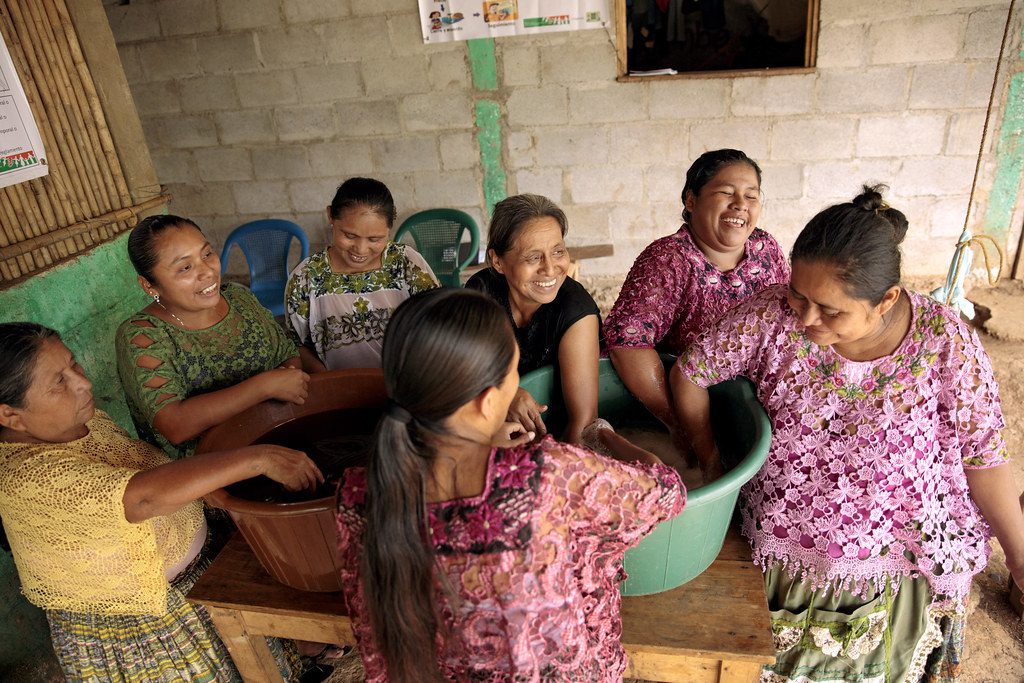
Extreme poverty originates in already disadvantaged groups, particularly women, people with disabilities and indigenous peoples. The impact of poverty disproportionately affects communities that already face challenges dependent upon their gender, ability or cultural background. For those who belong to more than one of these identities, poverty can seem inescapable without direct intervention and change within the systems that limit their ability to self-sustain. Trickle Up is one organization that has provided an intersectional approach to poverty reduction by engaging with these vulnerable groups since 1979 and providing women in impoverished areas the financial resources to build up themselves and their communities.
Identity as a Predictor for Extreme Poverty
Women are more likely than men to live in poverty. Many women face the consequences of gender inequalities as they receive 24% less pay than men worldwide and face job insecurity through the informal economy. Moreover, they spend much of their time invested in unpaid labor, such as caregiving.
The Borgen Project spoke with Trickle Up’s Vice President of Programs, Barbara Jackson, who revealed the importance of targeting the obstacles that hold back women especially from emerging out of extreme poverty. She recognized that impoverished women face stigmatization even in their own communities and experience marginalization through the lack of services available to them. Disparities emerge when “men and boys are often prioritized for schooling,” leaving some women without literacy skills. As a result, women frequently must focus on balancing caregiving and wage-earning instead.
“Women are often not included in decision-making processes because they are not considered the voice of the family,” Jackson went on. They are instead “stigmatized for something that is not of their own volition.” Targeting unjust power dynamics that limit women’s ability to pull themselves out of extreme poverty is a crucial approach to poverty reduction.
The current global data demonstrates that poverty is an intersectional problem that harms those who fall under more than one disadvantaged category. Women who come from indigenous backgrounds face additional challenges. Indigenous peoples make up nearly 15% of the poorest people globally. Being both a woman and an indigenous person couples with the highest malnutrition and poverty rates out of all social groups in Latin America and the Caribbean. For this reason, Trickle Up has built a program to support and empower Guatemalan indigenous women.
Trickle Up’s Graduation Approach
About 767 million people in the world live in extreme poverty, surviving on less than $1.90 per day. Microcredit services, which involve providing small loans to individuals in developing nations, make up important support for millions of the impoverished each year. However, these services frequently overlook the ultra-poor due to the complexity of their challenges.
Referring to the ultra-poor, Jackson emphasized that “it is critical that they learn basic financial skills, learn how to save, gain greater financial stability through a diversity of income-generating activities, and develop the self-confidence they need to persevere and succeed.” Because of the economic and social disadvantages presented to them simply because of their gender, women are the primary recipients of Trickle Up’s specialized savings and social support services.
Of the many challenges of breaking the cycle of poverty, lack of services and geographic and social isolation are most prominent for the focus of Trickle Up’s graduation approach.
How Trickle Up’s Graduation Approach Works
In place of giving out microcredit, Trickle Up intends for its five-step Graduation Approach to help participants of the program “graduate out of poverty.” Each program undergoes implementation in a community and it selects the participants it deems most vulnerable. Trickle Up later approves these participants.
The selected women then receive consumption support, which is the provision of a small stipend to ensure that they may stabilize their families prior to moving forward with developing long-term investments. Trickle Up’s approach to poverty reduction involves giving livelihood coaching in addition to risk-free capital investment. The training allows for women to decide on the activities they can employ to create a sustainable income.
Prior to graduation, it is essential that women have savings and social networks set up. Jackson shared that women in these communities “don’t come together to talk about their problems and talk amongst themselves.” The savings groups provide opportunities for the participants to “sit and work” together in order to build confidence and trust.
The Desde el Poder Local Program
Desde el Poder Local is one of Trickle Up’s current six projects. Located in El Quiché and Alta Verapaz, Guatemala, the project has selected 410 indigenous women between the ages of 15 and 24 to participate over the span of two years so far. This particular program emphasizes reproductive health education and livelihood development.
Women and men receive reproductive health education in the native languages of the targeted communities. The goals of this education initiative include broadening understanding of the implications of early onset pregnancies while also acknowledging the role of parenthood. Jackson noted that there has been a decrease in pregnancies in the last two years, with no pregnancies occurring for women under 18 in El Quiche and Alta Verapaz. Trickle Up’s inclusion of male family members in both reproductive health and financial literacy programs aims to develop a sustainable change in the gender dynamics of the participant’s communities.
As of August 2020, Desde el Poder Local generated 21 savings groups and 77% of participants increased their annual income during the program. Jackson pointed out, “A dollar a week they’re saving. That’s the first time they’re making their own money.” With the support of their families, communities, and municipal authorities, these women obtain the support they need to continue generating a sustainable income once the project concludes.
Maintaining Support During COVID-19
The traditional approach that Trickle Up has undergone disruption during the coronavirus pandemic. Women who work as local artisans have not been able to travel or access markets in order to sell their products. Fortunately, Jackson assured that Trickle Up staff members have continued to work alongside government staff or field extension agents, which are often women. Information on sanitation hygiene and infection prevention has undergone dissemination through cell phones and word-of-mouth.
Trickle Up has demonstrated that an intersectional approach is essential for poverty reduction. Targeting social problems that exacerbate the effects of extreme poverty, including gender inequality and racial discrimination, allows for growth within the target communities and in society as a whole.
– Ilana Issula
Photo: Flickr

Norway’s Prison System Benefits its Economy
Norway has consistently ranked number one on a number of lists entailing the best, most comfortable prisons in the world. Since the 1990s, Norway’s prison system has evolved into spaces that represent comfort, healing and inclusivity. Changing its approach and attitudes towards prisoners, Norway is molding high-functioning members of society. In return, former prisoners are gaining the necessary skills in order to contribute to Norway’s economy. Here is some information about Norway’s prison system.
Norway’s Prison System
As of 2014, Norway’s incarceration rate was at only 75 per 100,000 people. In addition, since developing its new prison system in the 1990s, its recidivism rate has decreased from around 60-70% to only 20% in recent years. The main reason for these statistics is due to a focus on “restorative justice,” an approach that identifies prisons in the same category as rehabilitation facilities. Rather than focusing on the punishment and mistreatment of its prisoners, Norway has the primary goal of reintegrating its prisoners as stable contributors to communities. The first way it is accomplishing this is by creating jail cells that closely resemble small, dorm rooms. Many prisons in Norway have completely banned bars in their architectural design and have “open” style cells. At the maximum-security Halden prison, each prisoner has a toilet, shower, fridge and a flat TV screen with access to kitchens and common areas.
Along with its innovative architectural style, Norway’s prison system ensures that it provides a multitude of programs and courses that one could find at traditional recreational centers. The Halden maximum facility allows its prisoners to enroll in yoga classes and at other places, inmates can choose to learn woodworking or even have access to studios. These programs ensure jails create a peaceful atmosphere, rather than a place for hatred and violence. Furthermore, Norwegian jails highlight the importance of education. Its primary goal is to encourage prisoners to not simply survive, but to live a full life once their sentence time reaches completion.
The Elimination of Life Sentences
Norway has banned life sentences, and one inmate at the Halden facility is serving 15 years for committing murder. In a 2019 interview, Fredrik opened up about his time at the prison and his accomplishments since starting his sentence. He is currently publishing a prison cookbook, received a diploma in graphic design, aced multiple exams, currently studying physics and hopes to pursue higher education once his sentence reaches completion.
At another facility, prisoners spoke of the impact educational programs had on their mental health and hopes for the future. They admitted they had felt a sense of hopelessness because they believed the only real skill they held was selling drugs. However, after taking several courses, they felt accomplished and realized they could master different, proactive skills. Now, through their time in prison, they gained valuable life skills that can assist them in gaining legal jobs that will ensure they do not land back in prison.
The Benefits of Norway’s Prison System
In a research paper published in 2019, the authors focused specifically on the impact of prisoners on the economy. The paper highlighted Norwegian ideologies and the results of their unique prison system. First, reducing the population of prisoners that are reincarcerated means more individuals are able to contribute to Norway’s economy once their sentence is complete. Second, among the prison population that was unemployed prior to being arrested, there was a 34% increase in this group partaking in job training courses and a 40% increase in employment rates. Lastly, Norway’s prison system equips its prisoners with education-based knowledge and labor skills that have long-term benefits to its country’s economy and also improves their personal lives.
With all these positive outcomes, Norway’s prison system may well become the leader for other countries across the globe to follow. One mission that is consistent throughout all of Norway’s facilities is the rehabilitation and reintegration of its prisoners into society. These prisons’ accepting, caring and empathetic approach has paved the way for many prisoners into becoming fine citizens supporting their country’s economy.
– Bolorzul Dorjsuren
Photo: Flickr
4 Innovative Solutions That are Helping Refugees
In the world today, there are nearly 26 million refugees who have been forced to flee their homes due to persecution and ongoing conflict. Refugees are among the world’s most vulnerable populations and are at risk of severe physical and mental health repercussions. Despite the limited access to resources and the substandard conditions that refugees face daily, advancements and innovations in refugee camps have eased these burdens. In times of strife and hardship, people can create something extraordinary and beneficial for society. Here are four innovative solutions that are helping refugees manage life in refugee camps.
4 Innovative Solutions Aiding Refugees
Refugees and allied partners have shown their resourcefulness and resilience when placed in challenging situations. Many refugees do not allow the substandard living conditions they must reside in to hold back their desire to change the unfavorable systems and their circumstances. Refugees have demonstrated that innovative solutions come in many forms and that building community is key to improving refugees’ quality of life.
—Sarah Uddin
Photo: Flickr
Understanding Poverty in Belarus
The Eastern European post-Soviet state of Belarus has had a tumultuous, bumpy ride in the last 30 years. A long-treasured satellite of the Soviet Union for almost the entirety of the 20th century forced the country to adopt massive changes when it broke off from the Soviet Union when it collapsed in 1991. Since then, one man has ruled this small country with an iron grip.
Alexander Lukashenko has been a dictator-like figure masquerading in a phony democratic society. He has been drawing social, economic and political policies in Belarus for the last three decades since the fall of the Soviet Union. Though he did reduce poverty according to official government statistics, there has been a high fluctuation in actual figures related to the poverty rate in Belarus since he took office in the early 1990s. Understanding the underlying causes and remedies of this poverty in Belarus is a complex affair, however, it is clear that certain political, economic and social actions have impacted the country in many ways.
Poverty in Belarus
Being one of the poorest countries in the geographical limits of Europe, the inability to properly take care of its citizens hampered Belarus. Showing its signs of instability, the Belarusian system creaked heavily during a brief two-year recession during 2015-2016. Within a matter of months, the share of the population living below the poverty line increased by three percentage points while in rural areas that number doubled. This fluctuation shows an economy and political system that is not yet resilient to normal market pressures. Additionally, according to a UNDP report, Belarus ranked in the bottom third in countries on the metric “socioeconomic sustainability” which predicts the longer-term impact of economic growth factors and the sustainability of economic output.
Compounding this dilemma, a comprehensive study concluded that much of Belarus’ economic growth in the past 20 years is quite vulnerable, citing both demographic concerns about aging and continuous reforms in the utility sector, which employs much of the workforce of the country. The myriad of challenges facing Belarus is not just abstract downstream economic impacts. President Alexander Lukashenko hampers the prosperity of his own citizenry in many ways through his brash leading style and the specific intricate political decisions that impact his citizens.
Mitchell Orenstein’s Views
According to the University of Pennsylvania professor of Eastern European Studies, Mitchell Orenstein, the Lukashenko regime “is certainly repressive. His regime regularly beats peaceful protesters and threatens and imprisons and tortures opposition presidential candidates.” This type of social order is not conducive to finding the best public policy that helps the most people, but rather a closed-off system that is resistant to change–which is important when advancing important economic interests that lift people out of poverty in Belarus.
Orenstein also noted that many Belurrusians tolerate much of this behavior, as President Lukashenko argues, “Belarus must have a powerful dictator to prevent invasion from outside forces, noting Belarus’s World War II history, and Russia’s desire to undermine Belarusian sovereignty. He also blames NATO for seeking to subdue Belarus.” This provides an underpinning of legitimacy that was successful at holding off dissatisfaction among his people, but as poverty trends stagnate, that dissatisfaction may inevitably boil over.
Improvements in Belarus
Upon examining the raw data, one might come to the conclusion that Belarus has been dealing with its poverty problem quite well since Lukashenko took office. In the year 2000, 41.9% of the population was below the national poverty line while in 2013 that number astoundingly fell 36.2 percentage points to 5.7% below the poverty line in the country. This was due to mass mobilization of the public sector for manufacturing–mainly to fuel the growing Russian economy at the time. Moreover, massive investments from multilateral organizations, such as the World Bank, spurred the production of critical infrastructure all around the country and international investment.
The World Bank’s Efforts
With the 90 million Euro investment from the World Bank in 2019, coupled with numerous other investments like the UNDP project, Belarus is making extraordinary strides in not only fighting poverty but also developing and cultivating the systems that attract foreign investment. Moreover, innovative NGOs are tackling every angle of the poverty cycle in the country. Organizations like Ponimanie are fighting to protect children’s rights and ensure positive outcomes for vulnerable groups of children.
This type of organization is crucial for breaking the cycle of poverty and providing opportunities to succeed in disadvantaged communities in the country. In addition, poverty in Belarus has received aid from the fact that Belarus’ main trading partners–like Russia–have experienced an economic boom as well. This reaction sets a favorable sequence into motion that spurs production in its energy and agricultural sectors lifting people out of poverty.
Looking Ahead
Importantly, while Belarus has made great strides in its ability to fight poverty (as shown by the successful years of positive economic policy and results), many of the trends have leveled off during recent times. Life expectancy, education and GNI per capita all increased dramatically over the course of the first years of the 21st century while then plateauing into the 2010s. This certainly shows progress but also highlights the inability of the Belarussian system to maintain and replicate the growth and prosperity that the country experienced 15 years ago.
While poverty in Belarus is most certainly an ongoing threat, understanding some of the more intricate causes of instability and continued poverty are important for determining the outcome of millions in this Eastern European country in the future.
– Zak Schneider
Photo: Flickr
Women’s Rights in Botswana
Botswana, considered one of Africa’s most politically stable countries, has seen a recent victory in the fight for women’s rights and gender equality. Here is some information about women’s rights in Botswana.
A Recent Victory
In September 2020, President Mokgweetsi Masisi amended the 2015 Land Policy to give married women in Botswana the right to own land. Previously, married women were only eligible to own land if their husbands did not. The policy excluded not only married women but widows and single mothers as well, which left millions of women affected.
Tshegofatso Mokibelo, a 38-year-old widowed financial analyst, received a denial when she applied for a residential plot of land, as her late husband had owned a plot previously and his family had since claimed it. “Women also have the right to own land,” she told the Thomson Reuters Foundation.
This recent amendment gives both men and women equal rights to own land.
More Good News
“Botswana will be a society where all men and women have equal opportunity to actively participate in the economic, social, cultural, and political development of their country.”
Botswana’s Vision 2036, one of its various initiatives towards improving the republic, promises progress for women’s rights. Since the U.N.’s Fourth World Conference on Women, held in Beijing in 1995, the country has made several commitments to gender equality and women’s rights in Botswana. These commitments include its ratification of The Convention on the Elimination of All Forms of Discrimination Against Women (CEDAW) in 1996, The Women’s Economic Empowerment Programme and the adoption of the National Policy on Gender and Development in 2015.
The progression toward women’s rights in Botswana has led to notable successes in education. Botswana has almost equal enrollment rates for girls and boys at every level in school. In fact, a Gender Parity Index report in 2012 favored girls at both the secondary school and tertiary education levels. More recently, UNICEF reported the GPI for primary education in 2014 as favoring girls, indicating improvement. However, according to the Sustainable Development Report, challenges remain in this area.
Other positive strides include equality within the labor force, reported as achieved in the Sustainable Development Report and having one of the lowest adolescent birth rates in Africa at 50 per 1,000 population, ages 15-19.
Gender Equality
According to the Sustainable Development Report, significant challenges remain in the effort to achieve the gender equality goal. Seats that women held in parliament, for example, are reported as stagnating with “major challenges remaining.” According to statistics from the World Bank, the proportion of seats that women held in parliament has decreased from 17% in 2000 to 9.5% in 2018.
The dual legal system in Botswana, a consequence of colonization, also creates complications in achieving gender equality. Customary laws that currently exist in Botswana discriminate against women. However, Botswana’s government has engaged itself in talks with traditional leaders since 2012 on how to bring women’s rights into customary law. This has resulted in several community groups establishing Gender Committees to open discourse around gender inequality.
Gender-based Violence
One of the greatest remaining challenges, which the COVID-19 pandemic has exacerbated, is gender-based violence. In July 2020, the current Minister of Nationality, Immigration and Gender Affairs, Anna Mokgethi, revealed an unprecedented increase in reports of gender-based violence since the April 2020 lockdown.
According to The United Nations Population Fund, over 67% of women in Botswana have experienced abuse. In order to combat this, the UNFPA is working with the Ministry of Health and Wellness and several organizations to provide gender-based violence prevention and access to services for those at risk.
One of the NGOs working to eradicate gender-based violence in Botswana is the Botswana Gender Based Violence Prevention and Support Centre. It offers prevention programs such as community outreach and education, as well as several services that gender-based violence personally affects. Kgomotso Kelaotswe, Counselor Supervisor for the NGO reported that during the lockdown period, 155 clients sought shelter at the organization, 67 clients received hotline counseling services and a further 50 obtained assistance through the short line message service.
Botswana continues to face challenges in the fight for women’s rights. However, the government’s commitment to tackling these challenges remains promising.
– Emma Maytham
Photo: Flickr
Poverty in Congo and What is Being Done About It
The political instability in the Republic of the Congo is necessary for understanding the economic disarray throughout the population. It is also important for understanding why poverty in Congo remains rife despite international aid interventions.
What Poverty Looks Like in the Republic of the Congo
Poverty in Congo is vast and covers all areas of the country. About 50% of the population lives in poverty. The return of natives displaced by war to a weakened Congo led to many facing poverty and disease from poor infrastructure and government.
Rural areas are affected most out of the country, as there are many people who do not have efficient access to clean water sources or sanitation. Artesian wells or unclarified water sources account for over 20% of all water access throughout the entire country. In addition, there is little improvement in urban areas. Much of the population, almost 1.5 million, live in unplanned settlements with little sanitation procedure or adequate housing throughout the two largest cities of the country, Brazzaville and Pointe-Noire. This creates a difficult atmosphere to combat preventable diseases like malaria and various respiratory or parasitic diseases.
Another problem facing is the country is the lack of, and lack access to, education. The primary school completion rate is low and the dropout rate is high. Access to education in rural areas is 42.5% compared to access in urban areas at 82.7%. This impacts the Republic of Congo’s human capital, which makes it harder for people to find jobs domestically or internationally. Further, Congo’s enrollment in secondary school is lower than in other sub-Saharan African countries. Lack of education leads to a lack of opportunity and thus a higher unemployment rate across the country.
The Good News
The Republic of the Congo has been making great strides in trying to counteract its issues since 2001. It created The Future Path project with the aim of modernizing society as a whole. The plan also aims to industrialize the economy to help the Congo gain international footing. Increasing jobs and economic performance through large-scale building projects and international cooperation are the goals of the government.
The World Bank is currently assisting the Republic of the Congo with economics and societal development projects with 10 current national projects worth $562 million. The Country Partnership Framework will help improve the Congo’s economic management, help create “economic diversification and strengthen its human capital and basic service provision, particularly in the areas of health, education and social protection.” Improvement of water sources and better sanitation is a priority of the government and also many initiatives funded by the World Bank. The World Bank is also financing $61.31 million in emergency COVID-19 funding to help combat the pandemic in the country. The current levels of poverty in Congo and the level of disease exposed to people exacerbate the issue of COVID-19.
What Needs to be Done
The number of people in poverty decreased from about 50% in 2005 to about 40% in 2011. In addition, improvements in education account for 14% of poverty reduction as a direct result of improved standards of living. However, rural education slightly deteriorated. This is because the rural population with only primary or no educational achievement increased from 46% to 53%. This highlights how the government needs to focus the fight on poverty in Congo in rural areas. The government needs to focus on encouraging more students into education past the primary level.
Overall, the Republic of the Congo has been making great strides toward leveling its poverty numbers. While the current situation is not perfect, the reduction of poverty in Congo and the improved standards of living are miles away from what the country experienced in 2001.
– Avery Benton
Photo: Wikimedia Commons
Women in Cuba Still Have to Fight for Their Rights
Education
Compared to other nations, Cuba may appear to be far more progressive on women’s rights. According to the Havana Times, women comprise 53% of the congressional body, and they account for 60% of college graduates. These numbers portray a clear female dominance in areas of higher education and are much higher compared to other developed nations.
Women’s Organizations
“Women’s organizations” are still not welcome in the nation. A new state constitution took effect after the 1960s Cuban revolution that barred the legalization of women’s organizations. An exception was made for the already established FMC.
The FMC, the Federation of Cuban Women, is a communist-controlled organization intended for the advancement of the women in Cuba. This is not inherently indicative of any corruption. However, women are prevented from assembling themselves and are dependent upon the state-sanctioned organization due to the lack of organizational options.
The Workplace
Societal standards are still oppressive to women. Numbers depict women moving out of their roles in the household to earn degrees and serve in the congressional body. The caveat is that women are still expected to perform all the duties that come with running a household. This includes cooking, cleaning and childcare.
This “machismo” mindset is heavily prevalent in Latin American nations. Essentially, this relegates women to the stereotypical domestic roles. This is even applied to women who are practicing doctors, lawyers and teachers. This societal standard burdens working women as well as those who choose to not enter the workforce or pursue higher education.
Discrimination in the workplace is another struggle women in Cuba must face. Women still face societal barriers in how they are compensated and employed. Female physicians and professors are typically paid the governmental base wage because most hospitals and universities are state-owned. This means that women are usually earning $30/hour in these typically high-paying fields. Further, the congressional body that women composed the majority of does not have any actual legislative power. That power is found within the Communist Party, which is only 7% female.
A Positive Outlook
The situation for women in Cuba is difficult to navigate. However, there are statutes in place to assist women in their quest to achieve equal rights within their society. For example, the constitution has an article that specifically protects maternity leave as a right for mothers in the workforce. Furthermore, the accessibility of higher education promises benefits to women of all classes that will last for generations. In essence, there is a long way to go, but that does not diminish how far the women’s rights movement in Cuba has come already.
– Allison Moss
Photo: Flickr
Trickle Up’s Approach to Poverty Reduction
Extreme poverty originates in already disadvantaged groups, particularly women, people with disabilities and indigenous peoples. The impact of poverty disproportionately affects communities that already face challenges dependent upon their gender, ability or cultural background. For those who belong to more than one of these identities, poverty can seem inescapable without direct intervention and change within the systems that limit their ability to self-sustain. Trickle Up is one organization that has provided an intersectional approach to poverty reduction by engaging with these vulnerable groups since 1979 and providing women in impoverished areas the financial resources to build up themselves and their communities.
Identity as a Predictor for Extreme Poverty
Women are more likely than men to live in poverty. Many women face the consequences of gender inequalities as they receive 24% less pay than men worldwide and face job insecurity through the informal economy. Moreover, they spend much of their time invested in unpaid labor, such as caregiving.
The Borgen Project spoke with Trickle Up’s Vice President of Programs, Barbara Jackson, who revealed the importance of targeting the obstacles that hold back women especially from emerging out of extreme poverty. She recognized that impoverished women face stigmatization even in their own communities and experience marginalization through the lack of services available to them. Disparities emerge when “men and boys are often prioritized for schooling,” leaving some women without literacy skills. As a result, women frequently must focus on balancing caregiving and wage-earning instead.
“Women are often not included in decision-making processes because they are not considered the voice of the family,” Jackson went on. They are instead “stigmatized for something that is not of their own volition.” Targeting unjust power dynamics that limit women’s ability to pull themselves out of extreme poverty is a crucial approach to poverty reduction.
The current global data demonstrates that poverty is an intersectional problem that harms those who fall under more than one disadvantaged category. Women who come from indigenous backgrounds face additional challenges. Indigenous peoples make up nearly 15% of the poorest people globally. Being both a woman and an indigenous person couples with the highest malnutrition and poverty rates out of all social groups in Latin America and the Caribbean. For this reason, Trickle Up has built a program to support and empower Guatemalan indigenous women.
Trickle Up’s Graduation Approach
About 767 million people in the world live in extreme poverty, surviving on less than $1.90 per day. Microcredit services, which involve providing small loans to individuals in developing nations, make up important support for millions of the impoverished each year. However, these services frequently overlook the ultra-poor due to the complexity of their challenges.
Referring to the ultra-poor, Jackson emphasized that “it is critical that they learn basic financial skills, learn how to save, gain greater financial stability through a diversity of income-generating activities, and develop the self-confidence they need to persevere and succeed.” Because of the economic and social disadvantages presented to them simply because of their gender, women are the primary recipients of Trickle Up’s specialized savings and social support services.
Of the many challenges of breaking the cycle of poverty, lack of services and geographic and social isolation are most prominent for the focus of Trickle Up’s graduation approach.
How Trickle Up’s Graduation Approach Works
In place of giving out microcredit, Trickle Up intends for its five-step Graduation Approach to help participants of the program “graduate out of poverty.” Each program undergoes implementation in a community and it selects the participants it deems most vulnerable. Trickle Up later approves these participants.
The selected women then receive consumption support, which is the provision of a small stipend to ensure that they may stabilize their families prior to moving forward with developing long-term investments. Trickle Up’s approach to poverty reduction involves giving livelihood coaching in addition to risk-free capital investment. The training allows for women to decide on the activities they can employ to create a sustainable income.
Prior to graduation, it is essential that women have savings and social networks set up. Jackson shared that women in these communities “don’t come together to talk about their problems and talk amongst themselves.” The savings groups provide opportunities for the participants to “sit and work” together in order to build confidence and trust.
The Desde el Poder Local Program
Desde el Poder Local is one of Trickle Up’s current six projects. Located in El Quiché and Alta Verapaz, Guatemala, the project has selected 410 indigenous women between the ages of 15 and 24 to participate over the span of two years so far. This particular program emphasizes reproductive health education and livelihood development.
Women and men receive reproductive health education in the native languages of the targeted communities. The goals of this education initiative include broadening understanding of the implications of early onset pregnancies while also acknowledging the role of parenthood. Jackson noted that there has been a decrease in pregnancies in the last two years, with no pregnancies occurring for women under 18 in El Quiche and Alta Verapaz. Trickle Up’s inclusion of male family members in both reproductive health and financial literacy programs aims to develop a sustainable change in the gender dynamics of the participant’s communities.
As of August 2020, Desde el Poder Local generated 21 savings groups and 77% of participants increased their annual income during the program. Jackson pointed out, “A dollar a week they’re saving. That’s the first time they’re making their own money.” With the support of their families, communities, and municipal authorities, these women obtain the support they need to continue generating a sustainable income once the project concludes.
Maintaining Support During COVID-19
The traditional approach that Trickle Up has undergone disruption during the coronavirus pandemic. Women who work as local artisans have not been able to travel or access markets in order to sell their products. Fortunately, Jackson assured that Trickle Up staff members have continued to work alongside government staff or field extension agents, which are often women. Information on sanitation hygiene and infection prevention has undergone dissemination through cell phones and word-of-mouth.
Trickle Up has demonstrated that an intersectional approach is essential for poverty reduction. Targeting social problems that exacerbate the effects of extreme poverty, including gender inequality and racial discrimination, allows for growth within the target communities and in society as a whole.
– Ilana Issula
Photo: Flickr
US Sanctions on Iran Amid the Novel Coronavirus
In a 2018 interview with Stephen Colbert, former president Jimmy Carter said that “sanctions exhaust rulers, and hurt the people.” More recently, the maximum pressure policy on Iran of former President Donald Trump marked a shift from Carter’s view on U.S. sanctions. The Carter Administration did coincide with the collapse of U.S.-Iranian relations. At the time, however, both countries had reasons to be hopeful. Here is some information about U.S. sanctions on Iran amid the novel coronavirus.
The Fall of the Shah and Jimmy Carter
The U.S. was pressuring Tehran to demolish despotism, and the Shah was compliant. The Nixon doctrine, a doctrine that stressed military support for authoritarian proxies as an impediment to the spread of communism, was eroding.
Despite these transformations, shows like “60 Minutes” were exposing the Shah’s human rights abuses. The most salient of these abuses was the SAVAK, a clandestine police and intelligence service devoted to the torture and murder of suspected communists, which the U.S. funded.
Additionally, the shah had more focus on military strength than social and economic reforms. In hindsight, the Iranian revolution and the collapse of U.S.-Iranian relations may seem inevitable. Critics of Carter argue that his failure to save the hostages signaled the death knell of his Administration.
The Obama Sanctions and the JCPOA
Since that time, the chasm between both countries has grown wider. Washington and Tehran have been rapidly heading toward collision; disaster feels imminent. During the Obama Administration, the U.S. imposed sanctions on the sale of oil and the funding of Iran’s nuclear program. The intent was to bring Iranian officials to the negotiating table.
In 2012, Obama deemed the “grinding” of the Iranian economy a success. During this time, the value of Iran’s currency plummeted. From 2011-2012, the rial lost 38% of its value, deterring many corporations from doing business with Tehran and plunging the economy into economic isolation.
In 2015, the P5+1—the U.S., Germany, China, Russia, France and the U.K.—reached an agreement that would ease U.S. sanctions on Iran in return for restrictions on its nuclear program. This agreement became known as the Joint Comprehensive Plan of Action (JCPOA) or colloquially as the nuclear deal. The International Atomic Energy Agency praised the deal. CIA director, John Brennan, and former national security advisor, Zbigniew Brzezinski, voiced their support for it.
Trump’s Withdrawal from the JCPOA
In 2018, President Trump withdrew from the JCPOA, famously calling it the “worst deal ever.” Critics of the deal argue that in spite of the deal Iran continues to provide support to various terrorist proxies, such as Hezbollah, the Houthis and the Badr Corps, in addition to the Assad government. As Iran’s sphere of influence burgeons in the Arab world, Tehran draws nearer to the Saudi Kingdom’s sphere of influence. Saudi Arabia has been an ally of the U.S. since World War II. Critics of the deal also contend that a sunset clause will leave open the possibility of Iran continuing its nuclear program in the future.
Now, after pressuring the U.N. to multilaterally reimpose sanctions, the Trump Administration has prolonged the arms embargo previously scheduled to end on Oct. 18, 2020. The administration has also reinstated U.S. sanctions on uranium enrichment and ballistic missile development.
The Impact of the Sanctions on Iran’s Coronavirus Response
As the value of the rial continues to dwindle and inflation continues to soar, the price of food and medicine is skyrocketing. In addition, U.S. sanctions have impaired Iran’s ability to afford humanitarian supplies amid the novel coronavirus. Relief International is providing tens of thousands of masks, coveralls and test kits to frontline workers, as well as giving thousands of hand sanitizer bottles to Afghan refugee camps in Iran to mitigate this dire situation. At the moment, the death count in Iran due to COVID-19 is over 60,000.
Conclusion
U.S. sanctions impinge on Iran’s response to the novel coronavirus. From the revolution until now, amicability between Iran and the U.S. has deteriorated. The Iranian people are the victims of this decay. Today, the Iranian economy is suffering from the novel coronavirus, while Iranian and U.S. officials continuously make accusations toward one another.
– Blake Dysinger
Photo: Flickr
Combating Child Poverty in Iceland
Popular for its beautiful landmarks and picturesque views, Iceland is now facing an issue that highlights a much darker reality taking place on the nordic island. Iceland has been able to keep poverty at a relatively low percentage for much of its history. However, in the past decade, the country has experienced a drastic rise in poverty and child poverty in Iceland in particular. One can largely attribute this to the economic collapse that the country experienced a little over a decade ago.
The Situation
In 2008, Iceland’s banks defaulted as a result of loans that the country had taken out with many foreign banks. At the time, Icelandic banks were some of the most lucrative banks globally. The country accumulated a massive amount of debt following large loans and grand foreign investments. The intention was to further boost the economy and to take advantage of the financial prosperity taking place in the country at the time. The value of the Icelandic currency, the Krona, was at an all-time high with a 900% increase in value.
The country experienced an economic boom, and citizens received encouragement to take part in the flourishing economy. As a result, many purchased expensive homes, took on multiple mortgages and invested in foreign companies. The country was, unfortunately, unable to pay these large sums back. The result was catastrophic. Banks defaulted on foreign loans leading to a massive national financial crisis. Iceland’s credit was tarnished and almost every business in the country had gone bankrupt. Citizens ended up with large bills with little or no way to pay them. What followed was an extreme rise in poverty.
The Consequences of the Crash
Health care expenses experienced a peak, and with mortgages nearly doubling in cost, the price of living increased exponentially. Many households were unable to afford the basic and vital services required for daily living. According to a report discussing the consequences of the crisis, unemployment rates rose to 7.6%. This was 5% higher than the annual unemployment rates prior to the economic downturn. Inflation was another result of the crash. Mortgage prices increased nearly doubling.
With the national currency, the krona, experiencing a decrease in value, the price of many goods and services suffered an impact as well. Iceland saw a substantial rise in housing insecurity and homelessness. Citizens took to the streets to protest many of the issues taking place at the time, and to express their frustrations with the government’s reactions to the crisis. This resulted in a new left-leaning government that promised to offer support for its struggling citizens.
Child Poverty in Iceland and Government Aid
Child poverty saw a drastic rise during this time of economic downturn. In fact, child poverty increased from 11.2% to 31.6% between 2008 and 2012. Unemployment was on the rise, and families faced immense financial strife that greatly affected the home. Iceland’s government was able to provide its residents with support for regular access to vital resources such as food, housing and health care. Health care programs that Iceland put in place prior to the crash offered much-needed support to Icelandic citizens with health care services during the crash.
The Icelandic government also provided support in many areas. This included welfare services for low-income households, along with a tax decrease for low-income earners and a tax increase for high-income earners. This ensured financial support for the most vulnerable during the crash. Low and mid-income-earning citizens received social benefits and debt relief. Wealth redistribution played a large role in the economic support provided for citizens during this time.
The Case of Child Poverty
The ways in which poverty can present itself differs from nation to nation. One can find many of the challenges most common amongst Icelandic children living in poverty in many nations across the globe. According to a report by Humanium.org, some of the key issues that impoverished Icelandic children face are varying health issues, emotional strife, sexual exploitation and labor exploitation.
Confronting Child Poverty
Throughout Iceland’s history, the country has managed poverty rates well in comparison to other less developed islands. Prior to the financial crisis, Iceland held a relatively low poverty rate. According to a Statistics Iceland report, a total of 9% of the population was at risk of living in poverty in comparison to 16% in other nordic islands and the estimated 23% in the United Kingdom. While poverty existed in the country, it was certainly not as high as during or after the crisis.
Iceland has done tremendous work to repair its economy. The programs that Iceland’s government implemented provided support for many low-income families while also helping to boost its then damaged economy. Unfortunately, citizens who plummeted into poverty as a result of the economic downturn have struggled to find a way out. To combat this, the Icelandic government has implemented many methods of support for citizens facing these challenges. This includes lower-cost health care services, debt relief for mortgage holders and social services for low-income earning citizens. These policies have proven to provide much promise for a reduction in poverty overall in the country. The goal is that with a decrease in general poverty, the child poverty rates will also reduce in Iceland.
– Imani A. Smikle
Photo: Flickr
The Fight Against Child Poverty in Chile
Chile is the most prosperous country in Latin America. However, large wage gaps and wealth distribution continue to be at the forefront of the nation’s problems. As a result, high rates of poverty prevail; approximately 14% of the population live below the poverty line. Moreover, there is a high prevalence of child poverty in Chile
Children, one of the country’s most vulnerable populations, are especially susceptible to the consequences that poverty causes. Those who come from poorer families are more likely to face spillover effects with regard to their education and overall health and well-being. Additionally, indigenous and migrant children face an added level of discrimination. Because of these issues, child poverty in Chile is a growing concern.
Education
In Chile, school is mandatory for all children between the ages of 7 and 16, but there are an estimated 75,000 children who do not attend school. Oftentimes, children may abandon school in order to work and provide for their families.
The inequality with regard to access to education is even more evident in the higher education system, where enrollment costs are among the highest in the world. According to a survey released in 2017, 58% of Chileans believe that a lack of education leads to a lack of opportunities. This further exacerbates overall poverty in Chile.
The good news is that UNICEF is working with the government in order to reduce child poverty in Chile by establishing laws and programs that provide additional protection for children’s right to education. For example, UNICEF helped develop the d the Inclusive Education Act and the New Public Education Act. UNICEF has also supported the Ministry of Education in developing strategies to train teachers. This emerged through a partnership with UNICEF and Fútbol Más, an organization that works to ensure the well-being of Chilean children.
Labor
Related to the lack of access to education, 6.6% of children between the ages of 5-17 are participants in child labor. Additionally, there are gender discrepancies within child labor; 9.5% of boys and 3.9% of girls engage in the workforce. Child labor is often a result of high unemployment rates; families expect and depend on their children to accrue revenue. The most common industries of work are commerce, hotel, restaurants, social services, agriculture and construction.
Moreover, the conditions of the workplace can have a negative impact on children’s overall health; approximately 70.6% of working children work at jobs that are dangerous. Those who work in agriculture are especially susceptible to performing unsafe tasks. The lack of public data available, including how much money goes toward inspection and the number of labor inspectors, further worsens how the country manages child labor.
Still, progress has occurred. In 2017, Chile developed a National Action Plan on Business and Human Rights, updating its list of hazardous occupations prohibited for children, as well as its inspector laws. The government also revised the Anti-Trafficking National Action Plan in 2019. It continues to support programs that address child labor and sexual exploitation.
Abuse
Not only does violence occur within the workplace, but also within the confines of the home. Children who become victims of physical, sexual and psychological domestic violence will frequently turn to the streets in order to escape their alarming home environments. Many end up in cities, surviving day to day and not knowing their next source of water or food. These “street children” lack proper education, as well as many other resources necessary for a developing child.
About 547 adolescents and children lived on the streets during 2018. Fundación Don Bosco is an organization that gives opportunities to both children and adults who live in the street. The organization offers food, housing, psychological and psychiatric assistance to children and their parents, with the hope of rebuilding familial ties and reintegration. Fundación Don Bosco followed and offered professional support to 191 street children and their families in 2019.
Native and Migrant Children
In addition to street children, native and migrant children are two additional marginalized groups that are especially susceptible to child poverty in Chile. Indigenous people comprise 5% of Chile’s population, primarily the Aymara and the Mapuche. These children do not have the same access to education and healthy lifestyles as other children, due to their family’s lower economic status and discrimination. Many Chileans view them as inferior due to their indigenous status.
As a result, indigenous children are likely to engage in labor work, from the fields to the factories, in order to help support their families. Migrant children also face discrimination, especially with regard to their education. As a result, in 2017, the Ministry of Education evaluated migrant children in the education system in order to better assess and understand their role within the system, as well as to help identify barriers related to overall school inclusion.
Looking Ahead
Despite the evident fact that there is child poverty in Chile, economic and social progress has occurred. In 2019, the National Prosecutor’s Office signed an agreement to help improve coordination in providing services to children in need, as well as ensure that both Chile’s standards and reality with regard to children’s rights and development align with those of international expectations and treaties.
– Marielle Marlys
Photo: Flickr