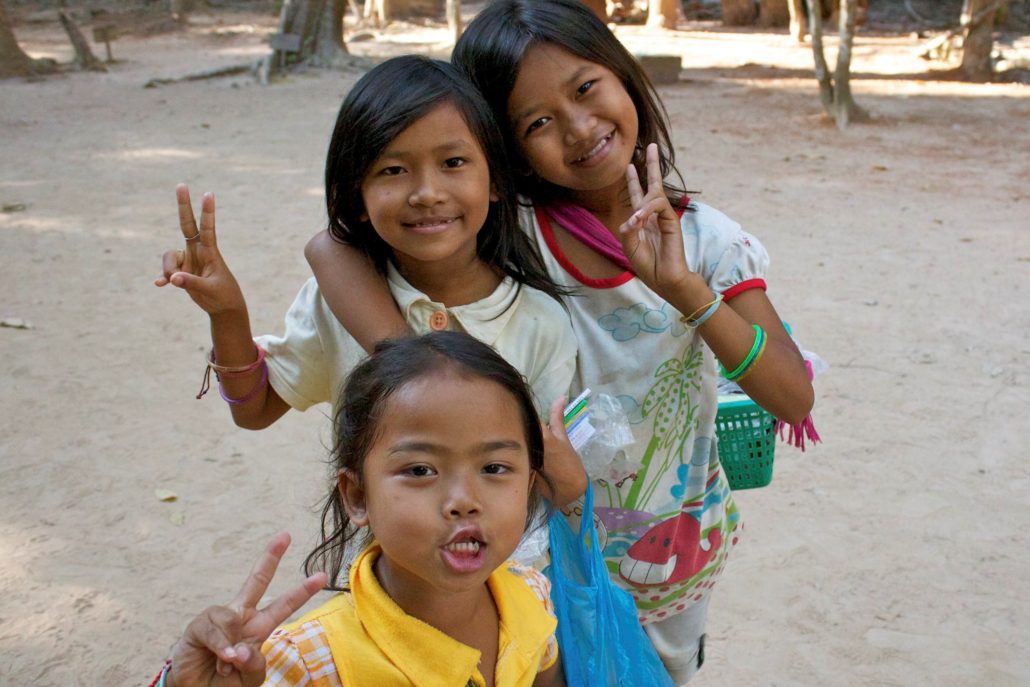
A shocking 30% of the Cambodian population lives under the poverty line, affecting children most of all. The under-5 mortality rate in Cambodia sits at 25% due to the extreme poverty they live in. Here is some information about child poverty in Cambodia.
Malnutrition and Education
Children in Cambodia face malnutrition from conception due to many women experiencing malnourishment while pregnant. Malnutrition occurs when women do not have the right care during their pregnancy. Limited resources in Cambodia contribute to the issue of women not being able to obtain the necessary care to stay healthy during pregnancy. This absence of nutrition does not end once children are born either. If a baby does not receive post-natal care or proper nutrition in the first couple of months, it can lead to stunting in growth or even death.
On top of that, more than 10% of Cambodian children currently do not go to school. Instead of getting a substantial education, around 45% of children aged 5 to 14 partake in labor instead. Though the situation appears dismal for the children of Cambodia, people across the globe are working on solving common problems circling child poverty in Cambodia.
Human Trafficking
Human trafficking has intimate ties to poverty in Cambodia. The four main factors that lead to human trafficking today include mass displacement, conflict, extreme poverty and lack of access to education and jobs. It is extremely common for parents to sell their children to human traffickers or for traffickers to lure children with the prospect of a legitimate job, only for them to enter prostitution. When short on money to provide for their families, parents may sell their daughters’ virginity, as it can give them up to 20 times their household average income a week.
The Rapha House is an organization dedicated to rehabilitating young girls after rescuing them from human trafficking. It started in 2003 after the founder spoke to Cambodian leaders about the threat of human trafficking to Cambodian girls. The organization opened two houses in Cambodia: Battambang and Siem Rep. Each aftercare campus gives child survivors of slavery and sexual exploitation the chance to reclaim their lost childhood. Survivors are treated with love and value instead of abuse and neglect. Volunteers at the houses teach morals and self-love to these girls daily, in hopes of healing them from their trauma.
Educating Children
Though the initial percentages of student enrollment in Cambodia were low, presence in the classroom is rising significantly. The number of children enrolling in primary education increased to more than 97% during the 2017-2018 school year. Enrollment had limitations prior due to the need for manual labor in family businesses. Children worked with, or for, their parents to help earn a livable income.
ChildFund has been working on improving education in Cambodia through fundraising since 2007 and has no plans to stop any time soon. Its official website says that helping children living in poverty fulfill their potential through education is one of its top priorities in the country of Cambodia. The funds raised go directly to helping eliminate child poverty in Cambodia allowing donors to sponsor a child and help pay for their education. Education is key in ending the cycle of poverty. Once people learn essential skills, they can go on to get better jobs and make more money.
Helping the Hungry
The national prevalence of under-5 stunting is 32.4%, which is greater than the developing country average of 25% according to the Global Nutrition Report. Cambodia also struggles with an under-5 wasting prevalence of 9.8%, which surpasses the normal developing country average significantly. Malnutrition in children and their mothers during pregnancy causes this stunting. Child poverty in Cambodia often occurs when children lack the proper amount of food per day to remain healthy. If their bodies have no nutrition, they will not have the energy to grow, causing growth stunts.
Action Against Hunger, an activist group aiming to improve all-around nutrition on a global level, has been taking strides to lower Cambodia’s under-5 statistics. Over the course of 2019, the organization created 5,310 community groups focused on increasing food security through rice banks, farming and home gardens. It also helped 7,139 people reach nutrition and health programs and 6,278 people gain access to food security programs. Action Against Hunger says that it has helped 15,744 people total in Cambodia during 2019.
Alleviating child poverty in Cambodia requires more work, but these organizations show that it is possible to improve the situation. Rapha House, ChildFund and Action Against Hunger are all taking huge steps to help eliminate child poverty in Cambodia whether it be through donations, fieldwork or volunteering.
– Kendall Little
Photo: Flickr

Women’s Rights in Greece
There have been significant, recent developments in the status of women’s rights in Greece. Some Greeks excitedly look toward a future of gender equality. Others are reluctant to certain changes and are holding steadfast to tradition.
The primary debates in the fight for women’s rights are mainly between rural and urban citizens. Women in urban areas are more likely to dismiss traditional notions of domesticity and instead seek opportunities in the workforce. However, women in more rural areas still hold fast to the status quo. They are much more likely to take care of the home and children while a male partner seeks out work to provide for the family.
A Brief History of Women’s Rights in Greece
The Current Situation
Although all of these strides forward have occurred, Greek women still seem to be at a disadvantage. In terms of E.U. countries, Greece is the lowest ranking in the Gender Equality Index, with a score of 0.122. Likewise, the country’s female labor force population, as of 2019, is 44.17%. Additionally, domestic violence rates seem to be on the rise, having increased by more than 30% in the last six years.
Furthermore, migrant and Roma women are, on average, at an even worse economical and educational disadvantage. For example, the typical Romani woman in Greece will spend less than six years in school.
Recent data reports that men make up around 70% of Greece’s total workforce and 80% of the country’s Parliament. Many women in the workforce remain in low-income, service and part-time positions — with only about 33% of part-time positions belonging to men.
In contrast, Greek women have made great strides in academia. More than 50% of Greece’s citizens obtaining university degrees are female. There is hope that these well-educated women will advance in career paths and assume leadership roles. In this same vein, leadership roles are one of the primary areas in which women are currently underrepresented.
Proponents for Women’s Rights in Greece
Many people around the country are in an active fight for gender equality and women’s rights in Greece. There is an ongoing discussion to address gender stereotypes and challenge norms established within the country, in nongovernmental organizations.
The Greek League for Women’s Rights has been fighting for women’s rights since 1920. Notably, it was a strong leader in the fight for a women’s right to vote in 1952. It has also founded the Centre for Documentation and Study of Women’s Problems and is still active today, fighting discriminatory laws and practices.
The National Council of Greek Women, founded in 2008, is a nonprofit fighting for the equality of men and women. The nonprofit recently released a statement from its president who maintains that although legislatively, men and women are equals — the country still has to reach true gender equality in practice.
Katerina Sakellaropoulou became the first female president of the country in January 2020. Many saw the vote for the new president as an optimistic mark of change and growth in Greece.
With an adjustment to public opinion and the presence of female leaders such as President Sakellaropoulou, experts believe that the country is capable of combatting historical barriers to women’s rights in Greece that still affect its culture, today.
– Aradia Webb
Photo: Unsplash
Poverty & Oppression: The Uyghur Muslims in Xinjiang, China
More than 40 different ethnic groups live within China’s Northwest region, known as Xinjiang. The two largest ethnic groups are the Han Chinese and Uyghur Muslims. The two groups do not speak the same language, nor do they share similar traditions. This creates a divide that widens due to the socio-economic disparity between the two factions. The Chinese government’s treatment of the Uyghur Muslims in Xinjiang, through exploitation and other human rights violations, further exacerbated the issue. Unfortunately, fear of the Uyghurs has given the Chinese government a justification to detain and exploit millions.
The Issue of Poverty
The poverty in Xinjiang is most prevalent of any Chinese province at approximately 6%. However, certain regions suffer more than others. For example, Yutian County has a poverty rate of around 25%. Yet, the region has made great strides forward in poverty alleviation during recent years. In fact, more than 2.3 million people escaped poverty between 2014 and 2018. Xinjiang’s resource-rich areas have caught the attention of the Han Chinese. This, in turn, drives migration and economic growth. Additionally, the government has promoted various industries, employment transfers and citizen relocation, further driving down poverty rates.
Despite this, many Uyghur Muslims in Xinjiang suffer exclusion from these benefits. Most prominently, employment discrimination prevents Uyghurs from obtaining jobs in these rising markets. As a result, a disproportionate amount of Han Chinese receives better jobs, furthering the economic disparity between the two groups. Furthermore, the rising number of Han Chinese in the region (currently at 40% of the population) has made the native Uyghurs feel distant from one another. The Uyghur Muslims in Xinjiang fear the loss of their culture.
Conflict
Due to the exclusion and poverty that the Uyghur Muslims in Xinjiang experience, they tend to move closer to Islam. Some even go so far as to commit acts of violence. Regardless of the real reasons for the violence, many Han Chinese believe it is Islamic extremists causing violence. The Han Chinese believe this contributes to instability within the region as the Uyghur’s are fighting for independence. This, in turn, leads to widespread fear and distrust among the population.
The Chinese government responded to these acts of violence by claiming that Islamic extremists caused it. Therefore, the government must “reeducate” the Uyghur Muslims in Xinjiang. Since 2014, China has suppressed the Uyghurs’ culture, language and religion in the name of national security, while claiming that the Uyghurs have full freedom. Police stations now occupy every few blocks and cameras are on every street. Some public areas are inaccessible and many people are stopped on the street for identification. Notably, many Uyghurs have had their passports taken and can no longer leave the region.
Crackdown
Since 2017, the government has been detaining approximately 1 million Uyghurs in reeducation camps, with their only crimes being that they are Muslim. Hundreds of camps are present today with 39, having tripled in size from 2017 to 2018. Construction spending has increased drastically by nearly $3 billion in recent years.
Information on exact conditions in the camps is difficult to discern. However, previous detainees speak of a prison-like environment, sexual assault, forced abortions or contraceptives, extreme surveillance and torture. Some say they witnessed people taking their own lives.
Additionally, many Uyghurs in these camps must work in factories across China. They experience exploitation, completely against their will. The products they produce are widespread. Approximately 83 international companies use this forced labor in their supply chain. Moreover, 20% of cotton products around the world came from this forced labor.
Policy, Legislation and Coalition of Aid
Many U.S. companies benefit from this system. Legislation must pass to prevent forced labor and condemn China’s actions. Most recently, the Senate passed the Uyghur Human Rights Policy Act of 2020 (S3744) in June 2020. It placed sanctions on many officials responsible or complicit in the detainment and abuse of the Uyghurs.
Particularly, the Uyghur Forced Labor Prevention Act emerged in March 2020 but has not passed into law yet. Additionally, many Uyghurs are stuck in U.S. immigration limbo, complicating their ability to seek refuge. Both proposals are crucial in helping significantly reduce the demand for forced labor. Further, people are urging the Chinese government to stop committing human rights abuses.
Many NGOs are working to bring attention to the crisis, as well as aiding the affected Uyghurs. Despite difficulties in offering direct aid, there exists a coalition of more than 250 organizations part of the End Uyghur Forced Labor campaign. The coalition demands companies eliminate any Uyghur forced labor within their production lines, within one year. Companies that agree must sign a pledge — applying pressure to all companies that have not yet signed. Also, the coalition organized advocacy days, began petitions and called on Congress to ban cotton from the Uyghur region. This additional pressure on companies will help end Uyghur forced labor. Hopefully, it will reduce demand for Uyghur labor and prevent their exploitation as well.
Hope Remains
Poverty in Xinjiang has reduced significantly. It will likely continue to decrease in the upcoming years. Additionally, numerous countries have applied pressure on the Chinese government. It is crucial that the U.S. does the same. Many NGOs have worked to raise awareness and apply pressure on governments and companies to eliminate Uyghur forced labor. Despite the many challenges that the Uyghurs have faced, hope remains for conditions to improve, with the support of the global community.
– Elizabeth Lee
Photo: Flickr
5 Facts About Period Poverty in Cambodia
Period poverty affects women and girls around the globe who cannot afford safe, sanitary products or are unable to receive information about safe period practices due to stigma. Poor period hygiene can lead to many health risks, such as urinary tract infections and reproductive infections. About 50% of the people in Cambodia are women, but people do not talk about period poverty as they deem it a taboo subject.
As of 2019, the poverty rate in Cambodia was 12.9%. However, this number could increase to around 20% due to the coronavirus pandemic. This rise in the poverty rate will leave millions of women and girls vulnerable. Here are five facts regarding period poverty in Cambodia.
5 Facts About Period Poverty in Cambodia
An End to Period Poverty
Period poverty in Cambodia is a threat to women’s health as unsanitary period practices lead to infections. Period poverty also affects women’s ability to receive an education as many schools do not have the proper facilities to support menstruating girls. However, as the use of reusable period products becomes more mainstream and continued education and programs in schools develop — hopefully, the stigma surrounding periods will come to an end.
– Rae Brozovich
Photo: Flickr
COVID-19 in Central America & Mexico: How the US is Helping
The COVID-19 pandemic seems to have left no region of the world unscathed. Central America and Mexico have certainly felt the wrath of this virus. Recent outbreaks in the region threaten to compound upon other humanitarian struggles. The U.S. has recognized this challenge and taken action to provide aid, despite facing its own issues fighting the coronavirus — the difficulties of COVID-19 in Central America and Mexico are vast.
An Issue in Central America & Mexico Before COVID-19
COVID-19 poses a health and economic challenge to Central America and Mexico. Yet, before the pandemic, the region was already suffering from poverty. As such, the pandemic has hit this area particularly hard. Our World in Data projected that the extreme poverty rate was about 8.12% in Guatemala, 14.24% in Honduras, 2.79% in El Salvador and 1.96% in Mexico in 2019. The full economic impacts of COVID-19 are not yet known.
Apart from facing extreme poverty — Guatemala, Honduras, El Salvador and Mexico also suffer from high crime rates. In 2017, Guatemala had an intentional homicide rate of about 26.1 per 100,000, Honduras had 41.7, El Salvador had 61.8 and Mexico had 24.8.
Providing sustainable assistance to Central America is particularly important for the national security in the U.S. As of July 2019, the U.S. Global Leadership Coalition explained that there is a correlation between children seeking refuge in the U.S. and murders in Guatemala, Honduras and El Salvador. Aid to these three countries could reduce poverty and crime. Consequently, the number of people searching for safety in the U.S. may potentially decrease.
The US Steps Up
The U.S. has committed to providing more than $22 million for Mexico, Guatemala, Honduras and El Salvador. The aid focuses on key areas of need. For example, the U.S. committed $850,000 in Migration and Refugee Assistance funding in Mexico. This includes funding for the dissemination of hygiene products and assistance creating a remote program to register asylum seekers and hold interviews.
The U.S. also committed to providing almost $6.6 million in aid to El Salvador, more than $8.4 million to Guatemala and more than $5.4 million to Honduras. Notably, these aid packages contain International Disaster Assistance for each country. The assistance also focuses on immediate and long-term health needs.
In recent months, the U.S. has also provided other forms of support to Guatemala, Honduras and El Salvador. Notable aid includes investments in critical infrastructures, such as energy programs. This is an important step in reducing poverty in the region. However, continued aid and investment are necessary to fight COVID-19 in Central America, save lives, reduce poverty and protect U.S. national security.
Global Help
This aid is a substantial sum targeted in areas that most need money to help fight COVID-19. However, there is more than the U.S. could do to protect global health. Global health spending has remained mostly constant for the past 10 years. Now, the future of U.S. global health aid is at-risk. The federal government’s spending on global health could reduce to its lowest point in 13 years if the proposed budget for the 2021 Fiscal Year receives approval. This could exacerbate outbreaks of other diseases that the U.S. has historically fought against. Without aid from the U.S., other nations such as China will have to step in as a global leader during this crisis.
– Kayleigh Crabb
Photo: Pixabay
African Vegetable Staples
Approximately 65% of the African labor force involves itself in agriculture, with the agriculture industry accounting for 32% of the region’s GDP. Governments have attempted to increase crop yield by utilizing agriculture marketing boards in order to provide more stable and standardized prices, credit extension services, technology and improved seeds. Additionally, more companies in the private sector have improved rural marketing and supply lines. These advances in extension services improve land and water management, introduce new farming techniques and provide new, efficient technology.
Essential African Vegetable Staples
Essential African vegetable staples include yams, green bananas, plantains and cassava. There are a plethora of different and unique ways of preparing dishes particular to each region and culture. Vegetables such as beans and lentils accompany almost every meal in order to provide a balanced nutritious diet. People in Africa consider meat a side dish rather than the main dish, and vegetables the main dish. Typical African vegetable staples specific to a region are dependent on the location, land viability, soil richness and water availability. Rice is more common where there is more water whereas cash crops such as groundnut are common in every household.
Many African staple foods provide a base diet for African families. African vegetable staples provide the necessary proteins, vitamins and nutrients that combat the alarming, wide-scale malnutrition issues that run rampant in many small villages that are not connected to large cities. With no access to large-scale trade or industrial resources, villagers take care of each other with personal farms. Additionally, many African vegetables also double as medicinal uses as well, allowing improved community health and nutrition.
Many staple meals accompany African’s rich variety of culture and history. The thousands of various African cultures utilize varieties of spices to prepare the same ingredient to uphold their respective traditional values and ideas. Diverse food choices are unique in each region and can range from fermented beans, sweet potato greens, teff and varieties of dumplings, to corn-based porridges, millet, kenkey, fontou and fonio. The diverse sets of languages within each region also have their own unique menus specific to their culture and certain traditions.
Case Study: The Democratic Republic of Congo
Vegetables grown in the DRC include peanuts, yams, beans, peas and maize. The political instability of the DRC has led to problems of malnutrition and lack of food access for millions of people. However, vegetables are used as an efficient solution because of the mass remote lands DRC controls for horticulture. The agriculture industry supports more than half of the DRC population. Although farming provides less than 10% of DRC’s GDP, land use is minimal to only 3.5% of DRC’s land and accounts for over 50 tons of subsistence foodstuffs.
What Next?
African vegetables have been the bulk of the African diet for millennia. Not only is it an efficient and effective way of utilizing rich soil and plentiful land on the continent, but it is also one of the most viable ways to aid the economy while doing so. Vegetables in Africa are the staple food not just for the famous nutritious diets, but also because they are an important characteristic of African identity and culture. Many African recipes eaten today have passed down generation after generation in an effort to maintain and uphold tradition. The African vegetable staples are one of the most unique characteristics of African culture and are a testament to their devotion to their diverse ideas and traditions.
– Aria Ma
Photo: Flickr
How to Purchase Conflict-Free Diamonds
Twenty years after the international push to ban all conflict diamonds or blood diamonds, they still exist. Conflict diamonds often have a link to rebel insurgencies in diamond-producing countries. Even without the presence of these rebel groups, however, diamond mining and trade remain unethical. Fortunately, alternatives exist, such as conflict-free and ethically sourced diamonds.
The Kimberley Process Certification Scheme (KPCS)
The Kimberley Process Certification Scheme (KPCS), popularly known as the Kimberley Process, began in 2000 in Kimberley, South Africa when diamond-producing states met to discuss the total elimination of conflict diamonds. This effort occurred with the hopes that rebel groups would not sell diamonds to finance their movements. In 2003, the United Nations adopted the resolution to expand the scheme’s reach to the diamond industry internationally.
Today, the scheme has 81 signatories, with 52 nations having ratified the scheme. Countries that cannot prove their diamonds are conflict-free could receive a suspension from the international diamond trade.
The Challenges of KPCS
Many politicians, investigative journalists and diamond traders have expressed that KPCS is a step forward in ending conflict-free diamond trading. The certification, however, contains many loopholes for blood diamonds to mix in with legitimately mined and traded diamonds. For instance, according to The Next Web news site, which did an extensive report on the legitimacy of conflict-free diamonds, “no legitimate company willingly buys diamonds from conflict regions, at least not anymore.” This is a step in the right direction, but is it enough to guarantee a conflict-free diamond? The watchdog group Human Rights Watch wrote in 2018, “The Kimberley Process is narrowly focused on curbing the trade of diamonds whose sales benefit armed groups—not abusive governments or their armed forces.” Thus civilian harassment, child labor and human rights abuses still go unchecked.
There also remains the question of who is creating the conflict. In recent years, the local Zimbabwean government of the Marange mining village has become notorious for creating conflict in their diamond mining villages. The intimidation of the residents with threats and weapons has characterized this conflict, enforcing unethical labor practices, and the like.
Thus, at the very minimum when buying diamonds, the jeweler should be able to state where the diamond came from and if it has KPCS certification. But the buyer will have to do more to ensure the diamond in question is completely conflict-free.
6 Ways to Ensure a Conflict-Free Diamond
Because the systems in place are inconsistent, it is up to the consumer to do extra research. Thankfully, legitimate ways exist to ensure these criteria.
Concluding Thoughts
While it can be challenging to ensure that a diamond emerged from ethical practices, the above steps are an excellent starting point. By knowing where a diamond comes from as well and whether it has the appropriate certification, one can be sure they are purchasing a diamond that is conflict-free.
– Vicki Colbert
Photo: Flickr
3 Ways to Eradicate Child Poverty in South Africa
Situated in the southernmost region of the African continent, poverty plagues South Africa and afflicts around 7 million of its children, accounting for more than 60% of the population. This growing problem owes itself to an increase in low-income families, the urban-rural area divide and decreased access to medical care and necessities of life. But work is slowly being done to turn the tide of this dire situation. In recent years, multidimensional child poverty in South Africa has decreased significantly (by almost 10 percentage points). However, it is possible to do more. Here are three ways to eradicate child poverty in South Africa.
3 Ways to Eradicate Child Poverty in South Africa
The data supports that current government intervention in South Africa’s socio-economic situation has shown positive results. Amplifying the effects of these existing constructs to reduce the disparity between rural and urban populations will gradually shape the country into a society that provides equity for all of its youth. These solutions will help ensure that more children in South Africa will live healthy, sustainable lives in years to come.
– Mihir Gokhale
Photo: Flickr
Alleviating Child Poverty in Cambodia
A shocking 30% of the Cambodian population lives under the poverty line, affecting children most of all. The under-5 mortality rate in Cambodia sits at 25% due to the extreme poverty they live in. Here is some information about child poverty in Cambodia.
Malnutrition and Education
Children in Cambodia face malnutrition from conception due to many women experiencing malnourishment while pregnant. Malnutrition occurs when women do not have the right care during their pregnancy. Limited resources in Cambodia contribute to the issue of women not being able to obtain the necessary care to stay healthy during pregnancy. This absence of nutrition does not end once children are born either. If a baby does not receive post-natal care or proper nutrition in the first couple of months, it can lead to stunting in growth or even death.
On top of that, more than 10% of Cambodian children currently do not go to school. Instead of getting a substantial education, around 45% of children aged 5 to 14 partake in labor instead. Though the situation appears dismal for the children of Cambodia, people across the globe are working on solving common problems circling child poverty in Cambodia.
Human Trafficking
Human trafficking has intimate ties to poverty in Cambodia. The four main factors that lead to human trafficking today include mass displacement, conflict, extreme poverty and lack of access to education and jobs. It is extremely common for parents to sell their children to human traffickers or for traffickers to lure children with the prospect of a legitimate job, only for them to enter prostitution. When short on money to provide for their families, parents may sell their daughters’ virginity, as it can give them up to 20 times their household average income a week.
The Rapha House is an organization dedicated to rehabilitating young girls after rescuing them from human trafficking. It started in 2003 after the founder spoke to Cambodian leaders about the threat of human trafficking to Cambodian girls. The organization opened two houses in Cambodia: Battambang and Siem Rep. Each aftercare campus gives child survivors of slavery and sexual exploitation the chance to reclaim their lost childhood. Survivors are treated with love and value instead of abuse and neglect. Volunteers at the houses teach morals and self-love to these girls daily, in hopes of healing them from their trauma.
Educating Children
Though the initial percentages of student enrollment in Cambodia were low, presence in the classroom is rising significantly. The number of children enrolling in primary education increased to more than 97% during the 2017-2018 school year. Enrollment had limitations prior due to the need for manual labor in family businesses. Children worked with, or for, their parents to help earn a livable income.
ChildFund has been working on improving education in Cambodia through fundraising since 2007 and has no plans to stop any time soon. Its official website says that helping children living in poverty fulfill their potential through education is one of its top priorities in the country of Cambodia. The funds raised go directly to helping eliminate child poverty in Cambodia allowing donors to sponsor a child and help pay for their education. Education is key in ending the cycle of poverty. Once people learn essential skills, they can go on to get better jobs and make more money.
Helping the Hungry
The national prevalence of under-5 stunting is 32.4%, which is greater than the developing country average of 25% according to the Global Nutrition Report. Cambodia also struggles with an under-5 wasting prevalence of 9.8%, which surpasses the normal developing country average significantly. Malnutrition in children and their mothers during pregnancy causes this stunting. Child poverty in Cambodia often occurs when children lack the proper amount of food per day to remain healthy. If their bodies have no nutrition, they will not have the energy to grow, causing growth stunts.
Action Against Hunger, an activist group aiming to improve all-around nutrition on a global level, has been taking strides to lower Cambodia’s under-5 statistics. Over the course of 2019, the organization created 5,310 community groups focused on increasing food security through rice banks, farming and home gardens. It also helped 7,139 people reach nutrition and health programs and 6,278 people gain access to food security programs. Action Against Hunger says that it has helped 15,744 people total in Cambodia during 2019.
Alleviating child poverty in Cambodia requires more work, but these organizations show that it is possible to improve the situation. Rapha House, ChildFund and Action Against Hunger are all taking huge steps to help eliminate child poverty in Cambodia whether it be through donations, fieldwork or volunteering.
– Kendall Little
Photo: Flickr
Updates on SDG Goal 2 in Bangladesh
Since 2015, Bangladesh is one of the many countries that have made remarkable improvements in reducing poverty (SDG 1). For instance, only three years after the implementation of the SDGs, the proportion of the population living below the international poverty line decreased by 8.3% since 2010. In a similar manner, the proportion of the population living below the domestic poverty line decreased by 9.9% from 2010 to 2018. While this is considered an exceptional improvement, much of the Bengali population still suffers from widespread food insecurity. This has been especially apparent since August 2017, where more than 700,000 refugees fled Myanmar, Bangladesh’s neighboring country to the west, due to the violence against the Rohingya population. With that being said, here are five updates on SDG Goal – 2 – achieving zero hunger in Bangladesh.
Updates on SDG Goal 2 in Bangladesh
Along with public sector scientists, Bengali farmers have been working alongside one another to create varieties of high-yielding, nutritious foods. This includes rice that has been enriched with vitamin A and potatoes that are resistant to blight. One of the most notable crops Bengali farmers have incorporated into their diets are eggplants, or better known as brinjal in Bangladesh. Historically, farmers applied a massive amount of pesticide since the eggplants often suffered from severe pest infestation. However, ever since the Bangladesh Agricultural Research Institute (BARI) studied alternate ways to grow the eggplants without as much pesticide usage, more than 30,000 farmers began to grow and distribute it.
Bangladesh’s success in reducing child malnutrition has been the quickest in recorded history. For example, with improved food production and distribution reforms, Bangladesh was able to decrease child stunting rates by 19%.
There are still many improvements to be made to achieve zero hunger in Bangladesh by 2030. Looking at the statistics, approximately 36% of Bengali children under the age of 5 still suffer from this condition because of chronic malnutrition. Within this 36%, over half reside in slums and cannot afford food or other necessities. This means that despite the improvements that have been made, a total of 5.5 million children alone still suffer from hunger.
According to the World Food Programme, Bangladesh’s progress is not quick enough to fulfill the targets it has set out to defeat domestic hunger. As previously described, stunting is a significant issue within Bangladesh that has been decreased by 19% over 18 years. However, in order to achieve its current targets, stunting rates need to decline at least 5.3% per year if the country is to meet its 2021 goals. Thus, according to the 2014 Global Nutrition Report, assuming Bangladesh continues at its current pace, it will not be able to fulfill the 2025 targets agreed upon at the World Health Assembly in 2012.
Around 40 million people or one-quarter of the Bengali population still experience widespread hunger. Of the 40 million, about 11 million suffer from acute hunger.
While it is critical to recognize the success that has been made, it is equally important to acknowledge how a country needs to improve. While there is no denying the drastic improvements Bangladesh has made, the country needs to expand its efforts to fulfill SDG Goal 2.
– Heather Law
Photo: Flickr
8 Facts About Germany’s Foreign Aid
In 2019, Germany followed the U.S. as the second-largest donor to official development assistance (ODA). Historically, Germany’s foreign aid has focused on migration, forced displacement, food security and climate concerns. In its foreign aid policy, Germany aims to create lasting change in the nations it reaches. Here are eight facts about Germany’s foreign aid.
8 Facts About Germany’s Foreign Aid
The nation has proudly taken up the mantle of leadership and will serve as the Presidency of the Council of the European Union from June 2020 until December 2020. Germany promised additional ODA-funds in June 2020, dedicating $3.5 billion for “global health measures, humanitarian assistance, and overall development cooperation.”
– Kelli Hughes
Photo: Flickr