
Notable for their short stature, “Pygmies” or the African Rainforest Hunter-Gatherers are a group of ethnic minorities living in the rainforests of Central Africa, most commonly in the Congo Basin. “Pygmy” is a hypernym to refer to various ethnic groups that reside in the Central African rainforests. In the Democratic Republic of Congo (DRC), the term “indigenous peoples” refers to the Mbati, Batwa and Baka. Indigenous people of the Congolese rainforest consider the term offensive. The DRC is home to around 60% of this indigenous population. According to University College London, Manchester Metropolitan Museum and the University of Malaga, an estimated 960,000 indigenous peoples belonged to this ethnic group in Central Africa in 2016.
Discrimination: Extreme Poverty and Corruption in the Workplace
The African rainforest indigenous people have historically faced oppression in their homeland. In fact, other ethnic and rebel groups ostracize them. In 2011, the Agence-France Presse revealed that the Bantu people of the Congo have been exploiting Pygmies as properties or slaves. In fact, many only saw them as ‘pets’ or extensions of their own property.
Due to rapid modernization, the indigenous people of the Congolese rainforest must abandon their traditional ways of living in exchange for the lowest paying jobs available. Due to their inhumane wages, many do not receive adequate nutrition. When these indigenous people must find work outside of the rainforest, they frequently become ill due to sudden changes in their lifestyle. In 2016, reports determined that working indigenous children received moonshine or other addictive substances instead of money.
Ethnic Cleansing and Murder
Congolese rebel forces are often the culprits behind acts of violence and murder against the Mbati, Batwa and Baka people. In 2003, the United Nations confirmed that the indigenous rainforest people of the DRC have suffered rape, killing or being eaten. One of the most notable instances is the Effacer le tableau, an operation that the Movement for the Liberation of Congo led. Its main goal was to exterminate the Bambuti people of Eastern Congo. The Bambutis experienced mass murder in the span of a few months between 2002 and 2003. The rebels even ate some of the Bambutis due to the belief that ‘Pygmy’ flesh contains supernatural powers. In total, about 60-70,000 total indigenous people experienced killing, which was about 40% of the indigenous population in the eastern Congo region.
In 2017, the ICCN (Institut Congolais pour la Conservation de la Nature) fatally shot a young Congolese Batwa boy named Christian Mbone Nakulire. These guards received an assignment to manage protected regions of the Congo. After this tragic incident, the Batwa people have unsuccessfully pleaded for their right to ownership of their land as they believe that is the only way to prevent future deaths of their innocent people.
Fight for the Forgotten
Former Greco-Roman wrestler and MMA fighter Justin Wren has founded the Fight for The Forgotten initiative. Justin Wren met the Mbuti people of Congo in 2011 and lived with them for a year. Wren, who received the name “Efeosa” (the man who loves us) by the Mbutis made it his mission to help the marginalized community. Fight for the Forgotten has drilled 86 wells, freed 1,500 enslaved pygmies, aided 30,300 overall villagers, granted 3,048 acres of land and provided sanitation and agricultural training. Wren believes that justice for these indigenous people is possible if they “acquire their own land, access clean water, and develop sustainable agriculture” as these three factors aid in ending the cycle of continuous poverty and discrimination.
Currently, the organization is helping the Batwa people of Uganda by providing them with their own land, building wells for clean water, constructing various buildings and educating on agriculture, along with providing literacy training and much more. People can donate to its website, fightforthefortten.org, and even obtain the opportunity to start their own fundraiser to help the cause.
Survival International
This charity organization is attempting to end the World Wildlife Fund’s (WWF) conservation zone project in the Congo Rainforest. Some have accused the WWF of hiring park rangers who have abused and murdered multiple Baka villagers. According to Survival International, eco guards have instigated many accounts of abuse against the Bakas. In 2017, WWF eco guards whipped Baka men, women and children while they crawled on the ground. In 2018, four Baka individuals received accusations of hunting elephants and eco guards beat them although there was no concrete evidence of poaching. Two of those Baka men experienced unlawful arrest and went to prison.
To this day, the Baka people live in daily fear as eco guards frequent their communities to physically abuse villagers and burn down homes. Survival International fights to protect the Baka people as the WWF has continuously denied these abuse cases. Leaked WWF reports have shown major discrepancies between the internal reports on the violence against the Baka people, and the statements it has made publicly.
In February 2016, Survival International submitted a complaint to the Organization for Economic Cooperation and Development. The OECD has admitted its complaint and opened an investigation against the WWF, a major accomplishment for a nonprofit like Survival International.
Taking Action
People can contact the embassy of the Democratic Republic of Congo to express concerns for the Congolese indigenous rainforest people and give suggestions on how things can reform and change. Contact information exists on its website.
Although the indigenous rainforest people of the Congo Basin continue to face extreme economic hardships, violence and ethnic issues, others are beginning to hear their voices. Change and reform, despite its difficulty, is starting to look like a possibility. Hope is not bleak for the indigenous people of the Congolese rainforest, and the light at the end of the tunnel is slowly but surely getting brighter.
– Kelly McGarry
Photo: Wikimedia Commons

9 Facts About NGOs and Healthcare in Dominica
Dominica, a small country in the Caribbean, has a population of about 72,000. Currently, general taxes are what finance healthcare services in Dominica. There are seven healthcare centers and 44 clinics around the country that provide primary healthcare at no cost.
9 Facts About Healthcare in Dominica
Many organizations and hospitals are working to provide effective healthcare in Dominica. The general public can help assist these organizations through donations or volunteering. Learning more about healthcare in Dominica, as well as in different countries around the world, can help one understand both the domestic and global situation of healthcare today.
– Ayesha Asad
Photo: Unsplash
How Tapestry Weaving Empowered Women in Chile
Chilean Women Unite
Mothers united and responded to the oppression and torture that was inflicted upon their loved ones with methods of protests that defied masculine logic, such as publicly banging pots and pans, singing and dancing to songs with political messages and weaving tapestries. These actions challenged the societal norms in Chile, which were embedded with machismo ideology and male superiority.
Tapestry Weaving as a Form of Resistance
The weaving of tapestries was an especially impactful form of resistance that was founded in 1975. Once unified, the Arpilleristas began to construct patchwork tapestries, or arpilleras, that depicted scenes of hardship and violence that people experienced under Pinochet.
The hand-made arpilleras portrayed shantytown community kitchens, which were often families’ only means of feeding themselves, women’s laundry and bread-baking subsistence-level cooperatives, arrests and soldiers beating protesters. It was through the crafting of the arpilleras that women were granted a voice to tell their individual and collective stories.
Economic Empowerment
However, the crafting of the arpilleras was more than just an act of protest and storytelling, it was also a way to generate income. The women weaving arpilleras was a form of advocacy and also a livelihood. The Arpilleristas transformed conventional visions of secluded motherhood and domesticity, all the while eliminating submissive and passive associations regarding women.
With the return of democracy in the 1990s, the oppression f the Pinochet dictatorship has since been eradicated. All individuals are able to enjoy democracy. The women, “do so now, however, with a different consciousness. Women have not forgotten the empowerment they gained when they learned they could change things by taking to the streets and protesting the dictatorship.”
It is this confidence that continues to inspire women as they face problems in Chile, however, they do so in a different manner now.
A Return to Democracy
It was only through the opression of the dictatorship and conservative gender ideology promoted by the dictatorship, Chilean women mobilized as feminists to demand a return to democracy. Though they were not self-identified feminists, the collective act of women uniting in order to defeat oppression has altered and expanded women’s rights in Chile today and recharacterized the very definition of motherhood.
The Arpilleristas’ tapestry weaving has served as an inspiring example of fighting against injustice while empowering women through economic development. By employing an accepted tradition of weaving, the women were able to capitalize and in many cases negate extreme poverty and additional hardships.
– Marielle Marlys
Photo: Flickr
Indigenous People of the Congolese Rainforest
Notable for their short stature, “Pygmies” or the African Rainforest Hunter-Gatherers are a group of ethnic minorities living in the rainforests of Central Africa, most commonly in the Congo Basin. “Pygmy” is a hypernym to refer to various ethnic groups that reside in the Central African rainforests. In the Democratic Republic of Congo (DRC), the term “indigenous peoples” refers to the Mbati, Batwa and Baka. Indigenous people of the Congolese rainforest consider the term offensive. The DRC is home to around 60% of this indigenous population. According to University College London, Manchester Metropolitan Museum and the University of Malaga, an estimated 960,000 indigenous peoples belonged to this ethnic group in Central Africa in 2016.
Discrimination: Extreme Poverty and Corruption in the Workplace
The African rainforest indigenous people have historically faced oppression in their homeland. In fact, other ethnic and rebel groups ostracize them. In 2011, the Agence-France Presse revealed that the Bantu people of the Congo have been exploiting Pygmies as properties or slaves. In fact, many only saw them as ‘pets’ or extensions of their own property.
Due to rapid modernization, the indigenous people of the Congolese rainforest must abandon their traditional ways of living in exchange for the lowest paying jobs available. Due to their inhumane wages, many do not receive adequate nutrition. When these indigenous people must find work outside of the rainforest, they frequently become ill due to sudden changes in their lifestyle. In 2016, reports determined that working indigenous children received moonshine or other addictive substances instead of money.
Ethnic Cleansing and Murder
Congolese rebel forces are often the culprits behind acts of violence and murder against the Mbati, Batwa and Baka people. In 2003, the United Nations confirmed that the indigenous rainforest people of the DRC have suffered rape, killing or being eaten. One of the most notable instances is the Effacer le tableau, an operation that the Movement for the Liberation of Congo led. Its main goal was to exterminate the Bambuti people of Eastern Congo. The Bambutis experienced mass murder in the span of a few months between 2002 and 2003. The rebels even ate some of the Bambutis due to the belief that ‘Pygmy’ flesh contains supernatural powers. In total, about 60-70,000 total indigenous people experienced killing, which was about 40% of the indigenous population in the eastern Congo region.
In 2017, the ICCN (Institut Congolais pour la Conservation de la Nature) fatally shot a young Congolese Batwa boy named Christian Mbone Nakulire. These guards received an assignment to manage protected regions of the Congo. After this tragic incident, the Batwa people have unsuccessfully pleaded for their right to ownership of their land as they believe that is the only way to prevent future deaths of their innocent people.
Fight for the Forgotten
Former Greco-Roman wrestler and MMA fighter Justin Wren has founded the Fight for The Forgotten initiative. Justin Wren met the Mbuti people of Congo in 2011 and lived with them for a year. Wren, who received the name “Efeosa” (the man who loves us) by the Mbutis made it his mission to help the marginalized community. Fight for the Forgotten has drilled 86 wells, freed 1,500 enslaved pygmies, aided 30,300 overall villagers, granted 3,048 acres of land and provided sanitation and agricultural training. Wren believes that justice for these indigenous people is possible if they “acquire their own land, access clean water, and develop sustainable agriculture” as these three factors aid in ending the cycle of continuous poverty and discrimination.
Currently, the organization is helping the Batwa people of Uganda by providing them with their own land, building wells for clean water, constructing various buildings and educating on agriculture, along with providing literacy training and much more. People can donate to its website, fightforthefortten.org, and even obtain the opportunity to start their own fundraiser to help the cause.
Survival International
This charity organization is attempting to end the World Wildlife Fund’s (WWF) conservation zone project in the Congo Rainforest. Some have accused the WWF of hiring park rangers who have abused and murdered multiple Baka villagers. According to Survival International, eco guards have instigated many accounts of abuse against the Bakas. In 2017, WWF eco guards whipped Baka men, women and children while they crawled on the ground. In 2018, four Baka individuals received accusations of hunting elephants and eco guards beat them although there was no concrete evidence of poaching. Two of those Baka men experienced unlawful arrest and went to prison.
To this day, the Baka people live in daily fear as eco guards frequent their communities to physically abuse villagers and burn down homes. Survival International fights to protect the Baka people as the WWF has continuously denied these abuse cases. Leaked WWF reports have shown major discrepancies between the internal reports on the violence against the Baka people, and the statements it has made publicly.
In February 2016, Survival International submitted a complaint to the Organization for Economic Cooperation and Development. The OECD has admitted its complaint and opened an investigation against the WWF, a major accomplishment for a nonprofit like Survival International.
Taking Action
People can contact the embassy of the Democratic Republic of Congo to express concerns for the Congolese indigenous rainforest people and give suggestions on how things can reform and change. Contact information exists on its website.
Although the indigenous rainforest people of the Congo Basin continue to face extreme economic hardships, violence and ethnic issues, others are beginning to hear their voices. Change and reform, despite its difficulty, is starting to look like a possibility. Hope is not bleak for the indigenous people of the Congolese rainforest, and the light at the end of the tunnel is slowly but surely getting brighter.
– Kelly McGarry
Photo: Wikimedia Commons
Snack Against Hunger and Poverty
So what should can each individual consumer do to help those in need and bring these statistics down? They must change daily patterns, so nearly all of their “normal” actions start benefitting someone else. One way is to switch up the food consumers eat. Many brands in a variety of food categories use their profits to fight global poverty and hunger. Switching to one of these brands allows people to effectively snack against hunger and poverty. Below are just a few of the brands aiding in poverty and hunger-reduction.
1. Bobo’s
Bobo’s donates their profits from selling oat-based products to eight organizations. Two of the organizations focus on food security in the U.S. (Community Food Share and Conscious Alliance), and one nonprofit provides housing for low-income families (Habitat for Humanity). Get in a dose of nutritious oats to snack against hunger and poverty.
2. This Saves Lives
This Saves Lives has something for everyone. They have 10 different flavor options, a variety of kid’s options and five types of crispy treats. For each purchase, This Saves Lives provides a calorie-dense packet of paste filled with nutrients to a child in need. So far, over 24 million packets have been sent out!
3. Barnana
Barnana is a company that produces plantain-based chips in normal chip form, tortilla style and flavor bites. All consumers can find a chip that will satisfy whether that’s salty or sweet. The plantains used for the chips are upcycled from those that were deemed not perfect enough for mainstream market standards. By upcycling the produce, Barnana fights food waste and secures extra income for small scale farmers that depend on every sale.
4. Project 7
Project 7 is a healthy candy brand that makes gummies, lollipops and everything in between. They partner with nonprofits to help the seven areas of need: healing, saving, housing, food, drink, teaching and hope. Make chewing a life-giving activity and snack against hunger and poverty.
5. Beanfields
Beanfields is another company that creates chips both sweet and salty, similar to Barnana. The company — centered in a kitchen and not a boardroom — cooks up a variety of bean-based tortilla chips and cracklings. They get creative by producing an environment-conscious snack while also supporting people in need. Beanfields partners with Homeboy Industries, an organization that helps ex-gang members find peace and stability in their new lives. Homeboy Industries partners with many nonprofits fighting hunger and poverty that provide ex-offenders jobs and a sense of community.
Buying snacks and snacking are often mindless activities. Helping people should have that same ease and it does. Yet, it often falls on the back burner and gets forgotten. Buying from companies donating to those in need is one easy solution. People can enjoy their favorite foods in a more effective way. Why just snack when one can snack against hunger and poverty?
– Anna Synakh
Photo: Flickr
Gender Equality in the Dominican Republic: An Update
Gender equality in the Dominican Republic has been shown by the Sustainable Development Report to be on the rise and on its way to achieving and maintaining the SDG quota for achievement. Of the four criteria to meet, the The Dominican Republic has met two. But is the Dominican Republic truly the progressive country it is touting itself to be?
Gender Equality and Domestic Violence
Although by SDG’s empirical data, the Dominican Republic is a progressive country when it comes to gender equality, there are still many cultural norms that keep women being truly equal to the opposite gender. The country has a high rate of violence against girls and women, as well as a high rate of maternal mortality and teen pregnancy. It took until January 2010 for the Dominican Republic to amend its constitution to make it more inclusive and favorable for women. This includes Article 39, which condemns domestic and gender-based violence. Perhaps the most iconic and historic act of gender-based violence occurred when the Mirabal Sisters were murdered under the orders of Trujillo because of their public dissent against the dictator.
Over the past two years, there have been over 15,000 reported cases of domestic violence against women in the capital city of Santo Domingo, this makes domestic violence 23% of the reported crimes in the city – the most reported crime. 46% of the femicides reported in the last year were results of domestic violence. Before January 1997, when the law against domestic violence was enacted, domestic violence was legal and was not considered a violation of human rights. Wealth and social standing do not make women immune to domestic violence. Even women of higher social strata are beaten and abused by their husbands, who use their wealth and power to send them out the country to hide their misdeeds.
Sex Trafficking
Another problem plaguing the women in Quisqueya is sex trafficking. According to a 2019 report from the U.S. Department of State, while the Dominican Republic is making significant efforts to eliminate sex trafficking, it does not meet the minimum standard to eradicate sex trafficking. Like in many other areas of governing, the country has shown effort and improvement but not enough to make significant headway. The efforts included convicting more traffickers and doling out more severe penalties to traffickers, enacting a national action plan and increasing the effort to combat labor trafficking. However, the government did not meet these standards in some areas, such as investigating and prosecuting and then issuing inadequate sentences to those of convicted. Not only did the Dominican government fail at prosecuting the criminals, but it also failed the victims of trafficking. The government did not offer enough specialized services to assist the victims.
Foreign Organizations Stepping In
While the Dominican government itself is failing its women, foreign organizations are attempting to combat domestic violence and sex trafficking. The United Nation’s Women charter (UN Women) has worked to mainstream gender in national planning and policymaking by providing assistance, support and advice to the Dominican government. They have been developing strategies and instruments to interject gender in plans, programming and projects in all levels of government. UN Women also plans on closing gender gaps in social protection and security. Together with the United Nations Development Programme, International Labour Organization, UN Women has contributed to and promoted investigation and analysis into the social protection of women. The purpose of gender protection is to overcome social inequalities. It also promotes gender equality and women’s rights through advocacy campaigns which include the Beijing+20 platform and HeForShe, hosting workshops with civil society organizations, distributing information through social media and national events. UN Women established their training center in the Dominican Republic where it offers high-quality training for gender equality by offering courses, tools and services on topics like gender-based violence, the care economy and masculinity.
United States Government Recommendations
The United States Department of State has recommended various ways to combat sex trafficking. The State Department recommends that the government convict traffickers indiscriminately including government officials, fully fund, and implement a new national action plan. They also need to provide adequate support, resources and training to combat trafficking, especially in areas outside of Santo Domingo. The Department of State recommends implementing protocols to identify adult and child trafficking victims and get them protective services. It suggests that the Dominican government amend the 2003 anti-trafficking law so that proving force, fraud and coercion in victims under the age of 18 are no longer required; thus joining the international stage when it comes to sex trafficking.
The Dominican government’s response when it comes to victims of sex trafficking has been abysmal. The government has reportedly spent $545,500DOM when it comes to victim assistance, this equals to $10,920USD. NGOs have stated that victims’ services were “… ad hoc, minimal, and not well coordinated or specialized.”
Looking Forward
With so many members of the international community offering aid and advice on how to combat sex trafficking, it will be interesting to see of the new PRM administration under President Luis Abinader will continue to reject assistance or finally embrace it.
– Pedro Vega
Photo: Flickr
Project C.U.R.E. Helps Clinics Worldwide
.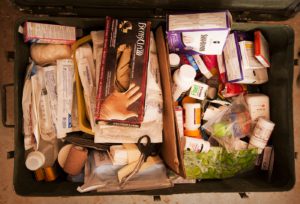
Dr. James Jackson, an international economic consultant, went on a trip to Brazil. While there, he visited an empty, under-equipped clinic near Rio de Janeiro. Inspired to help under-resourced parts of the world, he came back to Colorado to create Project C.U.R.E (Commission on Urgent Relief and Equipment). With a $50,000 donation from his friend, Dr. James Jackson founded his nonprofit in 1987. In just 30 days, he collected $250,000 worth of medical supplies — all in his garage. Now, his son, Dr. Douglas Jackson, runs Project C.U.R.E. as CEO and President. This article will explore how Project C.U.R.E. helps clinics worldwide by providing them with the necessary equipment.
Company Accomplishments
Project C.U.R.E. helps clinics and hospitals around the world by providing them with life-saving medical equipment and supplies. It has shipped 2,078 containers to 132 countries since June 2000. Since its inception over three decades ago, Project C.U.R.E. operations have expanded across the United States. Its distribution centers are located in Chicago, Denver, Houston, Kansas City, Philadelphia, Nashville and Phoenix. Additionally, small collection centers span multiple states. The organization has projects in countries such as Mexico, Nigeria, Uganda, Myanmar and the Dominican Republic.
In 2019, Project C.U.R.E. sent 145 containers to 42 countries with the help of nearly 30,000 volunteers. Forty-two global locations received 322 C.U.R.E. kits, and 12,624 patients received treatment at C.U.R.E. clinics in 2019 alone. From 2017 to 2018, the nonprofit trained 584 medical professionals in six different countries. In most of the countries that the nonprofit has worked in, people earn under $5 per day. People in these communities are often unable to afford basic health care and have a lower standard of living.
Methodology
Project C.U.R.E. does not go into these communities at random. It goes into areas that have suffered natural disasters or other desperate situations only after receiving an invite. Once someone identifies a “want,” someone from the organization personally visits the hospital and meets with the doctors for an 18-page need assessment. This need assessment ensures that Project C.U.R.E. can formulate a customized plan that specifically meets the needs of that hospital. After that, Project C.U.R.E. picks items out from the warehouses and ships them in containers from the distribution centers straight to the hospital.
The nonprofit delivers two to three cargo containers of medical supplies every week. With just $25, one can sponsor a delivery of a box of supplies with a $500 value to any country that Project C.U.R.E. does work in.
Partnership with AmerisourceBergen
Project C.U.R.E. works with the AmerisourceBergen Foundation, an American drug wholesale company that specializes in pharmaceutical sourcing and distribution services. Through this partnership, Project C.U.R.E. is able to make a positive impact on developing countries and their communities through improving access and quality of health care. Together, the partnership has gathered donations of medical equipment from medical facilities in the Chester County area. Distribution centers received the supplies for packaging and will eventually send them out to clinics all around the world.
Current Aid
Due to the pandemic, Project C.U.R.E. has shifted its focus to local needs. It packs and delivers personal protective equipment and ventilators to hospitals.
Yet, its mission remains the same: providing medical equipment and supplies to offer relief and critical resources to under-resourced communities. Project C.U.R.E. helps clinics so that they are able to perform safe medical procedures and offer quality health care to those most vulnerable.
– Mizuki Kai
Photo: Flickr
DouglaPrieta Works: A Self-Sufficiency Co-Op
In many cases of migration, dangers from gangs and community violence force people to leave their homes. Migrants also tend to flee because of economic challenges and persecution. A few women in Mexico who were part of these forced removals did not want to move to a new country. It was important for these women to stay where their families, cultures and traditions existed despite difficulties like finding sustainable jobs in Mexico. As a result, they decided to move to Agua Prieta, Mexico and become a part of the family at DouglaPrieta Works.
The Beginning
DouglaPrieta Work is a self-help organization that women founded to help the poor. Specifically, the founders had the dream of procuring the means to stay in their home country through the creation of a self-sufficiency co-op. To fund this, the women sell handmade goods such as reusable bags, earrings, winter accessories, dolls and more. They sell these beautiful crafts throughout Agua Prieta, neighboring cities and even in the United States. Their efforts all center back to the main goal of promoting “a mutual-aid ethic among community members, with the goal of economic self-sufficiency.”
How it Works
The first step in economic security is education. The women at DouglaPrieta Works understand this and all self-teach. They work together to learn how to sew, knit, craft, cook and read. The women utilize these skills to then sustain themselves, their families and the co-op. To further support themselves, the group incorporated a farm next to their co-op. They use the fruits and vegetables they grow for cooking. The women encourage sustainable food security through culturally-appropriate foods based on the needs of the people in their community. The group also built a woodshop to craft furniture for the community to maximize the benefits of their surrounding resources. The co-op does not exclude the children in all of this work either. Oftentimes, their children learn the skills along with them and work with each other in school.
Actions
In 2019, they led an initiative where people in their town could donate canned goods and receive a handmade reusable bag in return. This program allowed the women of DouglaPrieta Works able to donate hundreds of canned goods to those in need. Additionally, they were able to provide reusable bags to the community in order to encourage limited plastic bag use to better the environment.
DouglaPrieta Works often provides migrants working at its co-op with funds to help them and their families survive the journey of migration. There is a nearby migrant shelter in Agua Prieta, C.A.M.E, to house the travelers. While at the co-op, many migrants work in the woodshop at AguaPrieta Works in exchange for meals, funds and friendship.
Students and groups interested in learning about the U.S./Mexico border are welcome to join the women at DouglaPrieta Works for a meal, as the women provide stories and information about the border. The power of education and inclusivity is a core value at DouglaPrieta Works.
Helping Out
Overall, incredible work is occurring in the town of Agua Prieta, Mexico. These women are sustaining themselves to stay in the country they call home and they are providing food, resources and work for migrants. Their children are able to learn and grow together, as well as eat healthy, organic meals from the garden. To learn more about the co-op, visit its website.
– Naomi Schmeck
Photo: Flickr
The Response to Human Trafficking in Japan
The U.S. Congress released a Trafficking In Persons Report (2020) concluding Japan’s federal response to human trafficking as insufficient. Though the report recognizes Japan’s reformed policies, tightened visa checks and installation of victim shelters, its government has a history of not taking measures to fully criminalize and eradicate human trafficking in Japan.
History of Human Trafficking in Japan
In the early 1980s, human trafficking in Japan was common. Without Japan’s government regulation or extensive protocol, traffickers targeted many social groups including women, international students, foreign laborers and entertainers.
The majority of human trafficking came from the entertainment industry, due to Japan’s lenient authorization of all foreigners applying for the “Entertainer” visa. Women from Thailand and the Philippines migrated to Japan in the 1990s through this specific label, though only 20% were actual singers and dancers.
With a large demand for sexual services, targeted women in the entertainment industry were mostly from red-light districts. Though these cases for human trafficking were prominent, Japan did not take federal action and instead, dismissed them as “foreign cases.”
In other cases, external human trafficking groups traded women into Japan from foreign countries. Given fraudulent passports and tied to the organizations by debt bondage, victims paid off their contracts through sexual labor in Japan.
Activism to Reduce Human Trafficking in Japan
Despite the ongoing rise of human trafficking in Japan, many Japanese activist groups began to form and take action, specifically large organizations such as the Japanese Network Against Trafficking in Persons (JNATIP), established in 2003, or Kyofukai, the Japan Christian Women’s Organization, established in 1886. These advocacy groups provided victims shelter and protection, responding and reacting to women and children who were victims of human trafficking. As non-government organizations took on what the state neglected, tension began to spread throughout the state and human trafficking in Japan began to catch national attention.
The Japanese government’s lack of regulation and foreigner neglect continued these trends from the 1980s to 2000s. In contrast to Japan’s circumstances, other countries began to adopt the UN’s Trafficking Victims Protection Act (TVPA) in response to the globally rising cases. Starting in 2000, the U.S. Congress strongly encouraged and monitored this collective stance, releasing annual reports on the results and efficiency of anti-trafficking measures in each country.
In 2002, Japan agreed to implement the Protocol Against Human Trafficking, which revised immigration protocols and adopted measures to combat human trafficking in Japan. It also signed the Action Plan in 2004, which strengthened immigration processing, provided victims government protection and declared trafficking a federal crime against human rights. Despite its efforts, the U.S. marked Japan as Tier 2, a subcategory that states this country does not fully adhere to the TVPA’s standards.
A Setback in Reducing Human Trafficking
Today, Japan still remains at Tier 2 in 2020, though the U.S. briefly advanced Japan to Tier 1 in 2018-19. Although human trafficking measures and policies are still in place, several factors contribute to Japan’s setback.
For starters, Japan has introduced a steady flow of migrant workers that have led to labor exploitation and debt bondage. The country has steadily dismissed these as “foreign cases,” coincidentally turning to direct its human trafficking policies on domestic cases. This shift in the government’s focus has allowed the state to avert attention from the exploitation of foreign labor.
Japan has also allowed an alarming amount of international students through foreign study-abroad agencies under the “Kaigo” visa. Students under contract are able to work off tuition through legal work, though in some cases, must work against their will. The 2020 Trafficking Report that the U.S. released states that Japan’s foreign student population is more and more at risk for human trafficking due to dishonest work-study contracts in unskilled unmonitored labor sections. The cases of both international students and migrant workers have steadily increased, especially with Japan’s lenient immigration policy change in 2018.
Moving Forward
All things considered, Japan has disregarded the global effort to eradicate human trafficking cases. Despite the state’s continued indifference, non-governmental organizations continue to respond to victims, advocate for further policy changes and attempt to discontinue trends of exploitation in Japan. Though the cases of trafficking have gone down over the last two decades, the insufficient federal response to human trafficking still affects many social groups.
Today, non-governmental organizations continue to protect victims and advocate for better policies to combat human trafficking in Japan. The U.S. 2020 Trafficking In Persons report and labor exploitation stigma have uncovered Japan’s underwhelming policies and scrutinized the country for its lack of completion and insufficient response. The JNATIP remains a major resource group for human trafficking victims, promoting the enactment of laws for trafficking victims. The political fight against human trafficking in Japan continues.
– Linda Chong
Photo: Flickr
Child Hunger in Idlib Grows Amidst Pandemic
The Issue
Child hunger in Idlib — for infants in particular — has become an area of concern as COVID-19 has become more prevalent throughout the country. One big factor is that food has generally become much less accessible. According to The New Humanitarian, “‘An infant needs one container of formula per week, but the price has risen to $12,’ up from $9 three months ago … For many parents, that sum is out of reach.” This increase in price manifests itself often in the form of Severe Acute Malnutrition (SAM). The disease primarily affects children under the age of 5, is highly dangerous and often turns life-threatening. Effects of SAM include a process known as “stunting,” which limits the physical growth in very young children. Stunting and other effects of SAM lead to other problems later in life for these children.
Another frequent issue is malnutrition in pregnant and breastfeeding women. It not only affects them personally but impacts the growth of their infants as well. The New Humanitarian also reports a rise in SAM hospital cases over the summer of 2020. The ratio jumped to 97 out of 1,692 people screened from the January status of 29 out of 2,199. This is likely a lower estimate given the number of people who cannot get screened or don’t have access to testing. Time is of the essence after receiving a SAM diagnosis. Once a child with this condition reaches 2 years of age, they will likely deal with the consequences of SAM for the rest of their life.
Fighting Worsens the Problem
Child hunger in Idlib — and in Syria more widely — is deeply concerning. The issue is compounded by the broader poverty levels and violence that plague the entire country. As a result of the fighting, the majority of Syrians are internally displaced from their homes.
There is no clear end in sight to the fighting between rebel forces and the Syrian state military. Refugee camps are essentially at capacity and can’t withstand an influx of people if the civil war persists. Additionally, COVID-19 continues to ravage the country, which will likely increase the number of Syrian refugees and displaced persons.
In addition to the housing issue, food scarcity is prevalent in the country. Food options are usually unavailable or unaffordable. As such, many Syrians rely on foreign assistance and aid from NGOs as resources for food.
Aid
There are, however, numerous aid organizations and NGOs working to provide food security and address the growing refugee crisis. They are especially targeting the northwest, where Idlib is located. The Syrian American Medical Society (SAMS) is an organization working to expand health care access to those who need it. SAMS also provides meals to both children and adults at risk of food insecurity. Yet another part of their work focuses specifically on care for those with Severe Acute Malnutrition.
SAMS fights against child hunger in Idlib and throughout the rest of the country. They report that in 2019, the last year for which data is available, SAMS performed more than 2.5 million medical services for the Syrian population, at no or greatly reduced cost. Since 2011, they have provided more than $207 million worth of aid and medical resources as well.
SAMS and other similar organizations are vital to the survival of millions of Syrians. However, there is still more to be done. The international community must redouble their efforts to provide resources to those displaced and malnourished. Everyone must work to end the violence that has been a constant in the country for so long.
– Leo Posel
Photo: Flickr
Microfinancing Partners in Africa Shows Success
Microfinancing Partners in Africa is a nonprofit that provides microfinance opportunities to people in Sub-Saharan Africa. Its current programs vary in nature. Some examples include giving loans to subsistence farmers to purchase a cow, providing water filtration systems and educating students on microfinance.
Microfinance is an innovative approach to growing the economies of impoverished nations by giving its citizens access to small loans, usually under $200. It is a way for those in poverty to develop a stable income because they do not have access to traditional loans.
Historically, companies have used high-interest rates to take advantage of impoverished people seeking loans. However, agencies like Microfinancing Partners in Africa counter that practice. It offers options that often require recipients to take financial literacy courses and give them loans without requiring collateral. In this way, Microfinancing Partners in Africa works to actively combat poverty within Sub-Saharan Africa. Here are some of its success stories:
Jane Nalwadda
Jane Nalwadda is a woman from Uganda born with an obstetric fistula. Her condition left her unable to have a child with her husband who consequently left her after three years of marriage. The abandonment left Nalwadda without a reliable source of income. She fell into utter despair until a friend recommended the Kitovu hospital to her. There she would be eligible for a free fistula repair surgery program. Here is where Microfinancing Partners in Africa stepped in.
The nonprofit established the microfinance program The Piglet Project. The program helps women make money post-fistula repair by helping them raise and breed pigs, eventually creating a sustainable business. Jane was able to raise $29 with her first litter of pigs, which enabled her to build a better pen. She now has a steady means of making a living and can build a promising future.
Bujugo Village
Bujugo is a tiny village in Tunisia that has clean water accessibility problems. The village received seven water filters from Microfinancing Partners in Africa in 2019. Villagers then received training to use the filters and developed a time table to maximize the amount of village usage. Now, 49 families receive clean drinking water because of this microfinancing program.
Florence Mbaziira and Joseph Mbaziira
Florence and Joseph Mbaziira are an older couple from Uganda who works on a farm with mostly unproductive land. They tirelessly worked on their farm to support themselves and their four grandchildren. By 2014, the family was still living off a small income that came from selling the produce that they grew. Afterward, they turned to the Cow Project.
Microfinancing Partners in Africa created the Cow Project to support farmers through a “living loan.” The Mbaziiras took full advantage of the program and bought a cow for their land. Microfinancing Partners in Africa trained them to use the cow’s manure to increase crop yields. The couple now grows coffee, bananas and seasonal foods. Thanks to microfinancing, the Mbaziiras are able to support their family through their own farming business.
Saida Juma
Saida Juma is a divorced woman with two children living in Tanzania. Previously, she worked as a maid for $5 a month. However, her passions were elsewhere. She had the desire to start selling fish. Juma worked with Microfinancing Partners in Africa to obtain a microloan of $50. With the money, she was able to go into business for a local fisherman by selling fish. Her earnings are enough to support her children as well as send them to school. Her goal is for her children to be well-educated and take over her business when she retires. She also plans to take out another $100 loan soon to buy a fridge to store unsold fish.
All of these people were struggling to survive. Microfinancing Partners in Africa’s varied programs were able to help inspire and empower them to gain a livable income. Microfinancing Partners in Africa helped increase the quality of life for these people and many others, proving that microfinancing is an effective way of fighting poverty.
– Olivia Welsh
Photo: Flickr