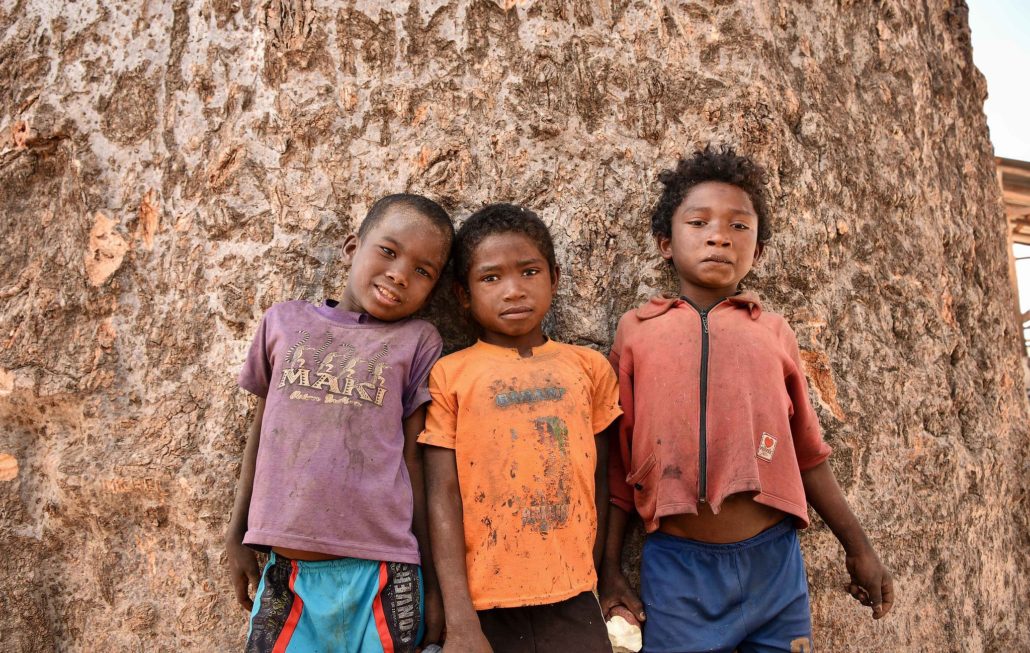
Madagascar is among the developing countries experiencing high rates of poverty. Child poverty in Madagascar remains a pressing issue as the living conditions continue to push children into taking on work. Below are a few facts about how child poverty leads to child labor and what initiatives some have taken to eliminate both child labor and child poverty in Madagascar.
Child Poverty Overview
According to the Global Multidimensional Poverty Index 2020 (MPI), estimates have determined that 70.7% of the Malagasy population is living under the national poverty line. Malagasy children under the age of 18 suffer the most from multidimensional poverty.
Also concluded in the MPI 2020 report, of the 75 countries measured, 60 experienced a reduction in multidimensional poverty which includes Madagascar. However, child poverty in Madagascar showed the slowest reduction compared to other age groups in Sub-Saharan Africa.
Child Poverty Normalizes Child Labor
As a consequence of widespread poverty, Malagasy children must work to support their families. With limited access to education and other social services, the families and children have little choice other than work.
As the Bureau of International Labor Affairs reported, 32% of children between the ages of 5 and 17 work in hazardous conditions. The data also indicates that 68.8% of children aged 5 to 14 attend school and 38.8% of children attending school are also working. The three main sectors in which Malagasy children work are agriculture, mining industry and services such as domestic work and market vending.
According to recent studies, many end up working in agriculture or in mining and brick-making. In the U.S. Department of Labor’s 2020 List of Goods Produced by Child Labor, Madagascar goods appear four times including vanilla, sapphire, stone and mica. Mica first emerged on this list in 2020. The U.S. Department of Labor (USDOL) estimates that 10,800 children work in mica mining and sorting.
Solutions
In terms of policy and regulation, Madagascar has met all international standards on child labor since 2018. Extensive policies such as the National Action Plan to Eliminate the Worst Forms of Child Labor noted the government efforts. Although this is the case, enforcement of such laws and regulations remains weak. The Madagascar Ministry of Mines expressed that it was aware of the problem but lacked the resources for better regulation.
How the International Community Helps Reduce Child Labor
To counteract the lack of resources and weak enforcement, international organization and governments have implemented social programs addressing child labor in Madagascar and other effects of multidimensional poverty throughout the country.
Some notable programs include the Social Support and Reintegration Centers and the UNICEF Country Program. International organizations like the ILO, UNICEF and the World Bank support these projects.
SAVABE
Powerful countries like the U.S. also hold important roles in some of these projects. For example, USDOL funds a $4 million ILO project called Supporting Sustainable and Child Labor Free Vanilla-Growing Communities in the Sava region (SAVABE). SAVABE aims to reduce child labor in the production of vanilla.
To achieve its objectives, the project works with vanilla exporters to implement anti-child labor policies. In addition, the project trains local authorities to enforce child labor laws and develop a child labor database. The community outreach part of the project creates child protection committees to provide educational services. To improve child poverty in Madagascar, the project also provides vocational training programs targeting 15,000 impoverished households.
According to the 2019 SAVABE Project Interim Evaluation, the vocational programs extended to 9,893 households. The programs had 140 children aged 14 to 17 enrolled. Along with collaboration with local authorities on formulating and enforcing child labor policies, SAVABE also implemented local enforcement training, which had 48 participants in 2018.
The evaluation report concluded that the project had insufficient evidence to indicate improvement in living conditions due to incomplete implementation. However, there are enough indications to show that continued effort and complete implementation can lead to a reduction of child labor in Madagascar.
Looking Ahead
Continued support at the international front is evidently critical to the successful implementation of policy and social projects. For example, the operation and continuation of the SAVABE project depend on U.S. foreign aid which demonstrates the importance of funding to global poverty initiatives. International efforts like SAVABE contribute to protection from child exploitation and ultimately toward total eradication of child poverty in Madagascar.
To ensure the continuation of these projects, email Congress now in support of protection of the International Affairs Budget.
– Malala Raharisoa Lin
Photo: Flickr

Freedom Cups: Period Poverty in Singapore
Period poverty in Singapore is not only detrimental to the poor, but it is particularly detrimental for women in poverty. Unfortunately, many do not see period poverty as a substantial issue. Rather than appropriately encouraging and educating adolescent women about their menstrual cycles, many women receive shame for it. Mental health and physical issues are also apparent due to period poverty in Singapore. The lack of access to proper menstrual materials pushes Singaporean women into using unsafe materials for their cycles. As a result, women develop a number of health issues such as bacterial vaginosis, urinary tract infections, green or white vaginal discharge and vaginal and skin irritation.
Mental Health Issues
Mental health issues are also important to consider when discussing period poverty. It is a serious necessity to one’s overall well-being and when overlooked, it can have drastic consequences. Individuals who experience severe aversive conditions such as shame and guilt are more likely to experience negative mental issues such as post-traumatic stress disorder (PTSD). In Singapore specifically, it is taboo to discuss one’s menstruation cycle.
This resulting cultural attitude that egregiously directs shame toward Singaporean women and children can make women more likely to develop PTSD. Even in cases when PTSD is not present, findings have determined that the absence of proper menstrual products is due to higher rates of depression, anxiety and distress. Naturally, the issue with period poverty also has links to issues of other forms of poverty. Vanessa Paranjothy recounts that this is especially arduous in areas where there is a lack of running water, plumbing and electricity. Another issue regarding menstruation mishandling in Singapore involves women’s lack of access to the materials necessary to overcome period poverty.
Freedom Cups Helping Women
However, women in Singapore have found their own ways to address the period poverty crisis. One example includes a group of sisters, Joanne, Rebecca and Vanessa Paranjothy and their creation of Freedom Cups. These devices function as reusable tampons and pads, effectively containing menstrual blood. As long they receive proper washing, these devices are re-usable for a span of up to 10 years, without the high risk of infection as with reusing pads. Moreover, these items are able to gather menstrual fluid for up to 12 hours per individual use.
Due to the reusability of these Freedom Cups, women are able to better afford the product, without furthering their fall into period-related poverty. Additionally, the Paranjothy sisters supply one freedom cup to another woman in need for each cup sold. So far, the sisters have distributed Freedom Cups to more than 3,000 women. This, however, is not the end of the sisters’ efforts. They continue making efforts across the world to end period poverty, such as in the Philippines.
Further Initiatives
Widespread organizational efforts also address period poverty in Singapore. Groups such as The World Federation of United Nations Associations had marked success with its Mission Possible: Singapore or Pink Project. This project involved the mass donation of menstrual and other health products to the Star Shelter as well as the Tanglin Trust School and the advertisement of the issue of period poverty to the areas.
However, of all of the efforts done to alleviate period poverty, foreign aid and involvement are the most crucial. The issues that exist regarding menstruation mishandling in Singapore are reflective of many of the issues across the world. Many women still experience feelings of shame and a lack of adequate care when it comes to their menstrual cycles. Vanessa Paranjothy recounts that, despite their efforts to initially provide Freedom Cups to women in the Philippines, only married women received them.
Without the continued investment into education regarding how to perceive their bodies and access to suitable menstrual materials, women will continue to suffer the adverse effects of period poverty. However, actions involving donation and innovation of feminine hygiene products, such as those the Paranjothy sisters made, and a greater emphasis on sexual education can help alleviate period poverty in Singapore and other developing countries.
– Jacob Hurwitz
Photo: Flickr
The Fight Against Poverty in Honduras
About Poverty in Honduras
The Central American country of Honduras is slowly raising itself out of the depths of poverty. However, it is still facing quite a few challenges. With 60% of its population living in rural areas, its economic divide is significant.
On average, six out of 10 homes live on less than $3.80 a day in rural parts of the country. Moreover, Honduras is a challenging place to establish a business or find work. In fact, it is the 115th country out of 190 on a scale of ease of doing business, meaning success rates are low. In relation, Honduras’ working population primarily consists of young adults and youth. Those between the age of 12 to 30 years old are facing an unemployment crisis. Yet, out of adversity comes innovation, and women in various cities outside of Tegucigalpa are working together to fight poverty in Honduras.
Honduras Threads
Honduras Threads, established in 2002, is a nonprofit organization that the Episcopal Church of the Incarnation in Dallas created. It is a direct result and response to Honduran communities that require help becoming financially stable. Thus, the nonprofit created an enterprise of women-led businesses to fight against poverty in Honduras. So far, there are five locations in the mountains of Central Honduras.
At the Honduras locations, the only volunteers in the initiative are the 10 women in the co-op. Most other volunteers reside stateside. Though there is quite a bit of distance, the connection between the church and the Honduran communities has only grown stronger throughout the 16 mission trips the Honduras Threads has taken each year since it began. Often, the team keeps in touch throughout the year via WhatsApp and email to plan and conduct business.
Supplying Honduras Threads
The organization, alongside the local women, decided on embroidery as the product of choice. As young children, the women learned to sew, embroider and complete applique work. Therefore, they wanted to use their skills to create products that would grow their local economies.
U.S. volunteers collect, donate and send supplies to the villages so that the women can use the resources to make products. With the high-quality fabrics the women receive, the women create one-of-a-kind works. The types of pieces they produce include:
Furthermore, people can buy these items via Honduras Threads’ website, various churches and multiple festivals and markets.
Fighting Poverty in Honduras With Business
Overall, the organization’s goals are to empower women through entrepreneurialism and build a sustainable income source. As a bonus, the nonprofit also works with the communities to educate them on areas like politics and accounting. Thus far, the nonprofit has helped nearly 80 women, 225 families, five villages and around 2,200 people. Additionally, it has sold more than 7,000 items and given more than $300,000 to local communities.
Ultimately, the women of Honduras Threads are working to transform their lives. With their newly acquired knowledge and support, Honduran women have been able to make impressive progress in the fight against poverty in Honduras.
– Sallie Blackmon
Photo: Flickr
The Fight Against Child Poverty in Madagascar
Madagascar is among the developing countries experiencing high rates of poverty. Child poverty in Madagascar remains a pressing issue as the living conditions continue to push children into taking on work. Below are a few facts about how child poverty leads to child labor and what initiatives some have taken to eliminate both child labor and child poverty in Madagascar.
Child Poverty Overview
According to the Global Multidimensional Poverty Index 2020 (MPI), estimates have determined that 70.7% of the Malagasy population is living under the national poverty line. Malagasy children under the age of 18 suffer the most from multidimensional poverty.
Also concluded in the MPI 2020 report, of the 75 countries measured, 60 experienced a reduction in multidimensional poverty which includes Madagascar. However, child poverty in Madagascar showed the slowest reduction compared to other age groups in Sub-Saharan Africa.
Child Poverty Normalizes Child Labor
As a consequence of widespread poverty, Malagasy children must work to support their families. With limited access to education and other social services, the families and children have little choice other than work.
As the Bureau of International Labor Affairs reported, 32% of children between the ages of 5 and 17 work in hazardous conditions. The data also indicates that 68.8% of children aged 5 to 14 attend school and 38.8% of children attending school are also working. The three main sectors in which Malagasy children work are agriculture, mining industry and services such as domestic work and market vending.
According to recent studies, many end up working in agriculture or in mining and brick-making. In the U.S. Department of Labor’s 2020 List of Goods Produced by Child Labor, Madagascar goods appear four times including vanilla, sapphire, stone and mica. Mica first emerged on this list in 2020. The U.S. Department of Labor (USDOL) estimates that 10,800 children work in mica mining and sorting.
Solutions
In terms of policy and regulation, Madagascar has met all international standards on child labor since 2018. Extensive policies such as the National Action Plan to Eliminate the Worst Forms of Child Labor noted the government efforts. Although this is the case, enforcement of such laws and regulations remains weak. The Madagascar Ministry of Mines expressed that it was aware of the problem but lacked the resources for better regulation.
How the International Community Helps Reduce Child Labor
To counteract the lack of resources and weak enforcement, international organization and governments have implemented social programs addressing child labor in Madagascar and other effects of multidimensional poverty throughout the country.
Some notable programs include the Social Support and Reintegration Centers and the UNICEF Country Program. International organizations like the ILO, UNICEF and the World Bank support these projects.
SAVABE
Powerful countries like the U.S. also hold important roles in some of these projects. For example, USDOL funds a $4 million ILO project called Supporting Sustainable and Child Labor Free Vanilla-Growing Communities in the Sava region (SAVABE). SAVABE aims to reduce child labor in the production of vanilla.
To achieve its objectives, the project works with vanilla exporters to implement anti-child labor policies. In addition, the project trains local authorities to enforce child labor laws and develop a child labor database. The community outreach part of the project creates child protection committees to provide educational services. To improve child poverty in Madagascar, the project also provides vocational training programs targeting 15,000 impoverished households.
According to the 2019 SAVABE Project Interim Evaluation, the vocational programs extended to 9,893 households. The programs had 140 children aged 14 to 17 enrolled. Along with collaboration with local authorities on formulating and enforcing child labor policies, SAVABE also implemented local enforcement training, which had 48 participants in 2018.
The evaluation report concluded that the project had insufficient evidence to indicate improvement in living conditions due to incomplete implementation. However, there are enough indications to show that continued effort and complete implementation can lead to a reduction of child labor in Madagascar.
Looking Ahead
Continued support at the international front is evidently critical to the successful implementation of policy and social projects. For example, the operation and continuation of the SAVABE project depend on U.S. foreign aid which demonstrates the importance of funding to global poverty initiatives. International efforts like SAVABE contribute to protection from child exploitation and ultimately toward total eradication of child poverty in Madagascar.
To ensure the continuation of these projects, email Congress now in support of protection of the International Affairs Budget.
– Malala Raharisoa Lin
Photo: Flickr
Examining the Healthcare System in the Congo
Healthcare in the Congo is not guaranteed for its citizens. This is due to long-lasting poverty and a lack of healthcare efficiency in the country. Since there are no hospitals in the Congo that offer free care, each patient must pay. Medical bills can range anywhere from $50 to $100. However, the average annual salary in the Congo is just $400, making the medical costs prohibitively expensive. And, in addition to 71% of the population living in poverty, the law does not require that people have access to healthcare despite their economic standing.
The Healthcare System in the Congo
Armed conflict has consistently damaged the country’s ability to improve healthcare facilities for decades. The lack of stability associated with the conflict has exacerbated the situation.
Per 10,000 people, the nation has 0.28 doctors and 1.91 nurses and midwives. In the Congo, the staff in the healthcare industry and the level of care have declined. There is no coordination structure in place to enable health worker training organizations to take current health system needs into account. In training schools, there is a lack of physical and financial resources. Patients must schedule an appointment with their physicians in order to be evaluated. In most cases, physicians see patients on specific days out of the week. Thus, patients must wait for lengthy periods of time to be treated due to the limited range of health centers with doctors.
There are currently 401 hospitals in the Congo. Moreover, small towns have limited access to primary treatment and, as such, many residents continue to struggle to access appropriate medical care. These hospitals also fail to maintain the tools and supplies needed to meet most of the patients’ health concerns. Because of armed conflict, among other reasons, hospitals often run out of critical prescriptions and materials needed for different services.
Plan for Improvement
The Republic of Congo has successfully developed a draft for a national strategy, Plan National de Développement des Ressources Humaines Pour la Santé (PNDRHS), with the ultimate goal of improving the medical staff development system, training and administration. This plan aims to expand the education programs for health workers and on-the-job practice to meet the community’s medical needs. It also aims to help motivate and encourage health staff to ensure their performance and accessibility.
Cordaid, a credible institution with significant experience in the Congo, gained a GPSA award for strengthening the consistency and accessibility of critical medical facilities in the country. As a result, hospitals and clinics have been able to receive new appliances. Additionally, Cordaid has successfully achieved upgrades to water pumps and prenatal care units for healthcare centers in recent years.
Overall, due to strengthened management, cooperation and investments in critical healthcare issues, the country has made significant progress in recent years. For example, the nation has been polio-free for four years. This is a significant accomplishment considering its scale and lack of healthcare facilities, and a sign of improvement yet to come.
– Rand Lateef
Photo: Flickr
Elderly Poverty in New Zealand
Like many other countries in the developed world, New Zealand has an aging population. Projections have determined that by 2036, one in 4.5 New Zealanders will be 65 and older. Although the COVID-19 pandemic presented a unique set of challenges for New Zealand’s elderly and exacerbated elderly poverty in New Zealand, programs exist to support this growing demographic.
The UN’s Sustainable Development Goal (SDG) 1 calls for an end to poverty in all forms. An important aspect of achieving this goal is addressing the specific issue of elderly poverty. The risk of falling into poverty increases with age because of a decreased ability to work, lack of savings and need for long-term care, among other factors. Public social security pensions and the availability of affordable health care are effective institutional solutions to respond to elderly poverty.
COVID-19 in New Zealand
Elderly Poverty in Indigenous Communities
The Old-age Pensions Act
KiwiSaver
The Better Later Life Strategy
Local efforts such as the one created by Zielinski in the Far North, as well as the government strategies of their longstanding pension program, KiwiSaver, and the Better Late Life strategy, are all steps in the right direction to prevent elderly poverty in New Zealand, ensuring that all New Zealanders, Māori and non-Māori alike, can age with dignity.
Photo: Flickr
How Organizations Are Improving Virtual Learning in the Philippines
Isy Faingold, chief of education at UNICEF, reported that the Philippines already had low reading comprehension scores before the pandemic. Among 79 countries, the Philippines ranked last. According to UNICEF, national emergencies, such as the COVID-19 pandemic, increase the number of students who drop out of school.
Public schools have adopted modular learning and blended learning styles since transitioning to virtual learning in the Philippines. In modular learning, teachers print out class materials for students to fill out at home and turn in later. Blended learning uses both online and offline methods of teaching. Schools are struggling to find a way to efficiently use available resources amid COVID-19. Currently, printing module packets has amounted to $1.9 billion. According to the Teachers Dignity Coalition in the Philippines, a national association for teachers, teachers are unable to meet the printing costs. Communicating with students through Facebook and text messaging also wears teachers out emotionally.
The Philippines Schools Project
Fortunately, the Philippines has organizations helping navigate the difficulties of virtual learning. The Philippines Schools Project is a small charity run by a couple who have family ties to the village of Botao. The couple’s work focuses on two schools in this rural and low-income area. They donate school resources as well as raise funds through various friends and connections from the U.K.
The couple has also provided furniture, equipment, school supplies, clothes and help with home improvement projects. Their charity began when they visited the Philippines on vacation and noticed the need for classroom upgrades and better sanitation in restrooms. When they returned to the U.K., the couple started shipping useful resources to help the schools.
After some time, the couple registered their work as a charity, allowing them to send monetary donations to be used for scholarships to send students to school. As costs grew, they invited their friends to help hold fundraising activities for the couple’s childhood town. The couple has been adamant about funneling all monetary gains back into the area. One of their initiatives included arranging for local craftsmen to build any required furniture, such as stands for computers and chairs for students. In this way, the Philippines Schools Project contributes back to the community in its operations to aid children’s learning.
Read Right Now (RRN)
The Education Development Center (EDC) funds the RRN program in the Philippines. The program provides training for educators in areas where there are few resources and impacted classrooms. The strategies and training modules reach beyond the classroom to connect with communities and students’ families to achieve learning goals. Students’ reading comprehension increased by 24% since the program was implemented, providing the program with quantifiable results. Exams provided additional results. Comparing students who participated in RRN with those that did not, 17% more passed reading fluency exams in the RRN program.
Modular and blended learning come with unforeseen difficulties, but the students’ and teachers’ struggles are mitigated by these sources of aid that supplement their education. Communication between the government and Filipino schools is vital. The added support from the Philippines Schools Project and EDC’s Read Right Now program have contributed fundamentally to virtual learning in the Philippines.
– Alyssa Ranola
Photo: Pexel
Female Genital Mutilation in Egypt
In 2016, lawmakers in Egypt federally criminalized female genital mutilation. Yet, the practice still persists.
Data from the Egypt Health Issues Survey (EHIS) from 2015 shows that the prevalence of FGM among Egyptian girls and women aged 15-49 is 87.2%. As one of the most populous countries in the Middle East and Africa, Egypt likely has the greatest number of circumcised women and girls in the world. To combat the high incidence of female genital mutilation in Egypt, anti-FGM campaigns have gained traction in the past several years.
About Female Genital Mutilation
According to WHO, FGM “involves the partial or total removal of external female genitalia or other injury to the female genital organs for non-medical reasons.” There are four types of female genital mutilation, ranging from pricking or piercing the genitals to removing the clitoral glans, clitoral hood, labia minora and labia major.
There are no health benefits to female genital mutilation. In fact, FGM can cause health issues such as hemorrhaging, urinary problems, vaginal issues, menstruation difficulties, an increased risk of newborn deaths, psychological problems and death. Just in 2020, a 14-year-old Egyptian girl died while undergoing the procedure.
Reasons People Practice FGM in Egypt
The practice of FGM mostly persists due to tradition. Female genital mutilation in Egypt has existed for thousands of years. Evidence of FGM practices even dates back to the second century BCE and experts believe that FGM comes from a desire to guarantee the virginity of enslaved women. Today, people tend to practice FGM in order to keep women pure. Those who agree with the practice believe that removing the clitoris is essential to preventing women from becoming sexually aroused and having sex before marriage. They believe FGM benefits the girl or woman by saving them from impurity or uncleanliness.
While female genital mutilation occurs all over Egypt, girls with lower economic status tend to be more at risk. According to the EHIS data from 2015, 69.8% of women and girls aged 15-49 in the highest wealth quintile in Egypt have experienced FGM in comparison to 94.4% of women and girls in the same age range in the lowest quintile. Furthermore, girls in the highest wealth quintile are only 5.4% likely to undergo FGM, whereas girls in the lowest quintile are 22.8% likely to undergo FGM.
Egypt’s Efforts to End FGM
Egyptian leaders continue to take steps to end the practice of female genital mutilation in Egypt. Along with other world leaders, Egypt vowed to end FGM by 2030. In 2016, Egypt launched the National Committee for the Eradication of Female Genital Mutilation. The group, with support from UNICEF and under the guidance of the National Council for Women and the National Council for Childhood and Motherhood, seeks to end female genital mutilation in Egypt. Since 2016, the group has created campaigns that raise awareness of the dangers of FGM. One such project was the “Budour Month” radio campaign in June 2019.
In December 2020, the committee met with representatives from various medical councils and organizations to create a plan to fight against the medicalization of FGM. The medicalization of FGM instills the belief that female circumcision that a doctor performs is safe or medically necessary. Groups like the National Committee are not alone in fighting this falsehood. In 2020, Randa Fakhr El Deen, the head of the NGOs’ Union Against Harmful Practices on Women and Children, led a group of doctors to campaign against the practice. During this campaign, known as “White Shirts,” the doctors hung up signs that read “No to FGM” and “FGM is a crime” in a Cairo metro station. They also handed out pamphlets explaining the risks of FGM.
Hekayat Nehad
This group of doctors is just one of many citizen groups speaking out against female genital mutilation in Egypt. Artists and advocates have created plays and shows about the dangers of FGM. One popular show called “Hekayat Nehad” (Nehad’s Stories) that the UNFPA backed and Dr. Nehad Aboul Komsan, the chair of the Egyptian Center for Women’s Rights, created, discusses violence against women, including FGM. In just one month, the show’s Facebook page received 7 million views.
Although people still practice female genital mutilation in Egypt, more and more people oppose it. Advocates believe it will take a while to end a practice that is so deeply entrenched in Egypt’s society. However, government-supported education, task forces and harsher legislation are paving the way for a future without female genital mutilation.
– Sophie Shippe
Photo: Wikipedia Commons
The Benefits of Aquaculture for Poverty Reduction
Can aquaculture reduce global poverty while improving ocean health and the renewable energy crises? The short answer is that aquaculture for poverty reduction is possible. Aquaculture is the farming of aquatic animals and plants, such as fish or seaweed. Aquaculture is prominent in coastal communities, particularly in eastern regions of the world. Here is how such a simple concept could resolve the complex aforementioned issues.
Progressing the Sustainable Development Goals
In 2015, the United Nations established the 17 Sustainable Development Goals (SDGs) with the intent to create a “blueprint to achieve a better and more sustainable future for all.”
The first goal is to “end poverty in all its forms everywhere” and the eighth goal is to “promote sustained, inclusive and sustainable economic growth, full and productive employment and decent work for all.”
In order to fulfill both of these goals, countries must prioritize creating decent jobs and incentivizing productive employment to create sustainable economic growth. Aquaculture provides employment opportunities for those impoverished in coastal and rural communities across the globe and provides nutritious food that can often be hard to access without monetary resources. A prime example of aquaculture’s socioeconomic contribution to said communities is that of the Mwenezi district of Zimbabwe. Members of the district were facing decreased employment availability due to severe weather conditions. Their dilemma caught the attention of several NGOs that introduced fish farming as a way to increase employment opportunities. Not only did employment opportunities increase, but household income and food security increased as well.
Ocean Health: Nitrogen
In 2014, between 18.6 and 37.2 million tons of nitrogen that people used for global fertilization ended up in the ocean. As a result, 245,000 square kilometers of the ocean suffered from hypoxia. Hypoxic areas, also known as dead zones, cannot support marine life as there is not enough oxygen dissolved in the water.
If global production of seaweed reaches 500 million tons by 2050, the World Bank estimates that the ocean could absorb 10 million tons of nitrogen. That is just 30% of the predicted amount of nitrogen that enters the ocean. This would undoubtedly improve oceanic conditions for marine life by preventing dead zones.
Ocean Health: Carbon Sequestration
Part of carbon sequestration is the long-term storage of carbon to mitigate the effect of greenhouse gases on the ocean. Excessive carbon dioxide in the atmosphere causes ocean acidification and negatively impacts the health of marine life. Carbon dioxide lowers the pH of the ocean making it more acidic than usual, and in turn reduces the availability of minerals that corals, mollusks and other organisms use to form shells. Increased seaweed production would combat the amount of carbon dioxide added to seawater from greenhouse gas emissions. For example, 500 million tons of seaweed could absorb 135 million tons of carbon. Moreover, due to the positive effect of carbon sequestration, the profitability of seaweed farming could increase.
Renewable Energy
Seaweed farming, a subset of aquaculture, has the potential to create a highly efficient form of renewable energy called biomass. Biomass is material that comes from plants or animals and can be effective for energy production. In 2015, nearly 5% of the United States’ energy came from biomass, making it the largest form of renewable energy. According to the Advanced Research Projects Agency-Energy (ARPA-E), seaweed farming in the United States could reach production levels of up to 500 million tons of algae which would provide more energy than 23 billion gallons of gasoline.
Dry seaweed has a carbohydrate content of roughly 50%, which people can use for biofuel production. In concurrence with ARPA-E, the World Bank stated that if 500 million tons of dry seaweed underwent harvesting annually, it would produce around “1.25 billion megawatt-hour’s worth of methane or liquid fuel.” This amount of renewable energy would equate to 1.5% of the 85 billion megawatt-hours of fossil fuels used worldwide in 2012.
Global Aquaculture Alliance
The Global Aquaculture Alliance (GAA) is an international non-governmental organization (NGO) that began its operation in 1997. Its mission is to “promote responsible aquaculture practices through education, advocacy and demonstration.” The following are successful manifestations of this mission and shows the benefits of aquaculture for poverty reduction.
In 2019, GAA conducted an educational campaign called Aquaculture 101. The purpose was to spread awareness and inform people on the basics of aquaculture, particularly those skeptical of fish farming. GAA has also funded a joint project with the Marine Ingredients Organisation to better understand fisheries in Southeast Asia that are responsible for providing raw material for fishmeal production. While the fishmeal sector has grown exponentially over the course of 50 years, the two organizations seek to better understand the challenges undermining management practices so that they may make informed suggestions. Furthermore, Best Aquaculture Practices, a subset of GAA, has seen a 15% increase in producers operating in 36 countries from 2010 to 2019. Producers include processing plants, farms, feed mills, hatcheries and reprocessors. This is an incredible trajectory that shows the GAA’s impact on aquaculture across the globe.
Aquaculture for poverty reduction has proven to effective while providing decent employment opportunities to create sustainable economic growth. Moreover, it has shown its capacity to improve the health of the ocean and provide new forms of renewable energy so that the world may sustain its current energy standards. Organizations like the Global Aquaculture Alliance and the Marine Ingredients Organisation are working toward these goals so that the world may become a more habitable place for all.
– Mary Qualls
Photo: Wikipedia Commons
Female Genital Mutilation in Ethiopia
In eastern Africa, NGOs are beginning to reverse public opinion on a bloody ritual. Female genital mutilation (FGM), a practice involving the non-medical removal of external female genitalia, is a procedure that roughly 200 million women have undergone worldwide. While the cultural premise for FGM varies depending on the region, the practice stems from broader themes of repressing the female sexuality prevalent in eastern African society. Women experience female genital mutilation in Ethiopia for marital or religious reasons, and the societal precedent for FGM threatens young women with public shame and ostracization if they refuse the operation.
Female Genital Mutilation (FGM)
Female genital mutilation usually involves the complete or partial removal of the clitoris, although the procedure varies in scope and can also include the removal of the labia minora or the closure of parts of the vaginal opening. This physical trauma can result in life-threatening infections and long term problems with menstruation and infertility. Additionally, the permanent disfigurement that FGM causes may instigate depression and low self-esteem.
The United Nations classified FGM as a priority of its Sustainable Development Goals (SDGs) in 2015, but the practice is still a problem in countries such as Ethiopia, where according to a 2016 study, 65% of women and 47% of girls between the ages of 15 and 19 have undergone the procedure. The Ethiopian government banned FGM in 2005, but the criminalization of the ritual has done little to change public support for it. This is due in part to the fact that in Ethiopia, areas that are rural and lack public education resources include the highest prevalence of female genital mutilation in Ethiopia. In these areas, traditional healers usually perform the operation rather than licensed medical practitioners, meaning that legal threats hold less weight than they do in formal medical settings.
Kembatti Mentti Gezimma-Tope (KMG)
One organization, however, is having a profound effect on reversing the prevalence of FGM in Ethiopia. Kembatti Mentti Gezimma-Tope (KMG), is an Ethiopian NGO dedicated to raising public awareness on the harmful effects of female genital mutilation in the region of Kembatta Tembaro. One can translate KMG’s name to “Kembatta Women Standing Together,” and in the 22 years since it began its work, it has reduced public approval of FGM in Kembatta Tembaro from 97% in 1997 to less than 5% today.
KMG employs several strategies to combat public support for FGM, including public education campaigns to uphold women’s human rights and build trust with local communities. It also mobilizes public pressure against FGM, with public weddings for uncircumcised women (who traditionally others would consider ineligible for marriage). Additionally, trained advocates spread throughout the region who inform men of the health risks FGM poses to women and their ability to give birth.
Rohi Wedu
In the Afar region, Rohi Wedu, another NGO focused on public education is having an impact. Pastoral clans characterize the Afar region, of which the majority of the population is Muslim. Rohi Wedu’s campaign to end female genital mutilation has necessarily tailored itself to the dynamics of information sharing between different clans in the area. The organization worked in conjunction with UNICEF to select leaders and prominent figures from different clans to lead “Community Dialogue” sessions, who then learned to understand the harmful effects of FGM. These trusted community leaders then went on to disseminate the information to their respective clans, as well as to provide counseling to young and prospective parents.
Rohi Wedu’s locally-led education campaigns were incredibly successful, with up to 94% of focus group participants believing that practitioners in their area had abandoned FGM. The organization’s success was largely due to the fact that religious leaders led community dialogue sessions, which eliminated the religious precedent for FGM in the Afari clans.
The work that NGOs like Rohi Wedu and KMG are doing is proof of the efficacy of locally-led public awareness campaigns in combating the practice of female genital mutilation in Ethiopia. While millions of young women still experience cutting each year, the cultural shifts taking place in Ethiopia demonstrate that long term change is possible when it happens in accordance with local communities.
– Kieran Hadley
Photo: Flickr
MamaOpe: Child Pneumonia in sub-Saharan Africa
Pneumonia is the greatest cause of death for children globally. About 16% of deaths among children under 5 relate to this deadly condition. Every year, 500,000 cases of child pneumonia in sub-Saharan Africa occur within this age group. Many of these fatalities occur due to incorrect or delayed diagnoses. Brian Turyabagye, a Ugandan inventor, has created a solution for these inconsistencies; enter “MamaOpe,” a biomedical smart jacket.
What is Pneumonia?
Pneumonia is a type of respiratory disease that primarily affects the lungs. Within the lungs are small sacks called alveoli, which fill with air when one is healthy. However, when a person is sick with pneumonia, pus and fluid convolute the alveoli, making it very difficult to breathe. Minor side effects include chest pain, incessant coughing and fever.
Child Pneumonia in Sub-Saharan Africa
Despite the tragic death rates due to pneumonia, medical professionals often misdiagnose it as malaria. Particularly in remote areas, malaria is also common and has similar symptoms to pneumonia. Many times, medical professionals do not discover the pneumonia prognosis until after a child has died. Furthermore, many communities in sub-Saharan Africa lack the proper equipment and medicine to adequately provide treatment. Although pneumonia is the most dangerous disease among children, it receives very low funding. According to UNICEF, “for every global health dollar spent in 2011, only [two] cents went to pneumonia.”
Solution: MamaOpe
Ugandan inventor Turyabagye created a biomedical smart jacket that increases the speed and accuracy of detecting pneumonia. “MamaOpe” means ‘mother’s hope’; the device received the name to honor the 27,000 Ugandan children who die of pneumonia each year. Through the utilization of this jacket, treatment can begin before the patient is too far gone. While Turyabagye invented this jacket, MamaOpe Medicals, of which Turyabagye is a co-founder, represents it. This organization continues to research and create digital solutions for respiratory diseases.
How Does it Work?
The child wears the jacket and a health care worker operates the corresponding controller unit. All it takes is the simple push of a button, and within three minutes, the results display. The device can detect signs unique to pneumonia, such as rate of breath, the sound of lungs and temperature. This technology avoids human error and provides an accurate diagnosis three to four times faster than a medical professional. Eventually, the goal is to program the jacket to work long distance. With this added feature, the patient does not need to travel to a doctor’s office and doctors can monitor the results from a distance.
The Effects
Currently, most major hospitals in Uganda have implemented this jacket. Moreover, expectations determine that the jacket will help at least 50,000 pneumonia patients each year. This invention eventually won first prize at Pitch@Palace Africa in 2017. Moreover, CNN ranked it as one of the top 12 African innovations that could change the world. Ultimately, while pneumonia is a complex disease, MamaOpe is an effective start for lowering rates of child pneumonia in sub-Saharan Africa.
– Ella Kaplun
Photo: Wikipedia Commons