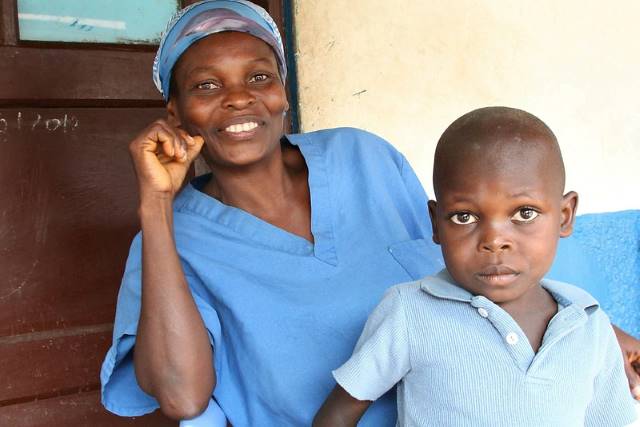
 The Democratic Republic of the Congo, otherwise known as the DRC, is blessed with abundant natural resources, advantageous geographical trade points and a booming youth population. It is also a nation struggling with economic and political tensions that threaten to tear it apart. Conflict within the sub-Saharan African continent is not new, as with many developing regions. Yet when it comes to the DRC, its current conflict takes on several different forms; from systemic economic mismanagement to tense ethnic divisions. The DRC has a series of underlying problems that both its leaders and regional partners need to resolve to make progress. One key issue, however, is the systemic economic decline in the DRC.
As noted by the U.N. Economic Commission for Africa, economic woes point out several grievances against the current government. For example, concerns highlight the hoarding and mismanagement of natural resources and inefficient governmental models. The models focus more on federal power rather than balancing out authority to local government. As the DRC borders conflict-ridden neighbors such as Rwanda and Sudan, it has to deal with incoming migrants and persistent border security threats. When analyzing the economic decline in the DRC, one must also consider the direct implications of the current escalating conflict.
A Flawed Economic Policy and Aid Agenda
One of the central weak points of the DRC is its flawed economic policy. The issues of the policy include the disproportionate distribution of natural resources, lack of adequate investments in capital and infrastructure and lackluster trade agreements. In addition, the DRC has a long way to go before it can overcome its systemic economic woes.
The DRC’s inefficient federal government barely understands the complexity of localized economies. The federal economy and general stock market are important. However, local markets and financial growth are also vital, if not more important. For instance, while the DRC is one of the largest suppliers of natural resources such as diamonds and cobalt, it is one of the top eight countries struggling with hunger and humanitarian assistance deficits.
Analysts argue that conflict and hunger are interdependent. This is due to conflict limiting agricultural production and disrupting one’s income. As a result, it is increasingly difficult for economically challenged nations such as the DRC. Due to recent wars in the Eastern Congo and a series of political conflicts around its borders, the DRC bears a severe brunt in its ability to generate ample economic income.
Violence and Conflict
Violence and conflict contribute to the economic decline in the DRC. Ethnic violence, the spread of Ebola and high levels of corruption hurt the overall economic benefit of cobalt mining. In contrast, it sponsored those who benefit from the current conflicts in the DRC. The U.N. Economic Commission found that despite an increase in prices for rare minerals, the DRC still struggles economically due to inadequate pro-poor development programs and mass unemployment.
Nigerian economist, Dambisa Moyo, argues that the fatal flaw in international aid and intervention is a lack of focus on regional infrastructure projects, targeted educational and job skill programs and communal credit programs. Moyo states further that when it comes to the DRC specifically, the IMF has a history of giving more than $700 million to the developing nation, only for it to be misused by kleptocrats.
The individuals are susceptible to several factors that escalate conflict and increase the influence of conflict entrepreneurs. The economic decline in the DRC creates an environment most profitable for conflict entrepreneurs and profiteers. The mass hunger and poverty in the DRC feed into several factors that contribute to conflict. For example, corrupt warlords who prey on struggling workers to militias who target local villages further worsen the issue.
A prime example is the Allied Democratic Forces (ADF), an armed group that has terrorized the Eastern Congo for years, brutally murdering more than 100 people. The ADF feeds off of two main causes. The first is the lack of governmental authority. The second is the DRC’s insecurity, armed groups with murky agendas and the government’s failure. It is more important than ever that international aid groups take action to put a stop to mass poverty and the violence it causes.
Policy Reforms for the Future
Although the DRC is in a dark spot, the reforms of the government and international community can help improve the situation. First, the DRC needs to localize its credit lines and monetary policy. A big issue for state factions and communal governments is a lack of financial authority. Ensuring a gradual decentralization process will increase income flow and help legitimize local elections and state power.
The International Finance Corporation, a branch of the World Bank, recently started a program that gave small credit loans and financed new investment credit lines in local areas within West Africa. This initiative helps fund hundreds of small and micro-businesses and shake off the potential risks of debt or inflation.
Another potential solution is to focus more directly on local infrastructure investments. Recent studies show the four most effective ways to combat poverty in the DRC. These include emphasizing the accumulation of job creation, macroeconomic stabilization, rehabilitation of key infrastructure and structural reforms for a healthy market environment. Thus, if the government undertakes the following reforms, the aforementioned goals will be within reach.
Economic recovery amid conflict in the developing world is difficult. Oftentimes, nations like the DRC must resolve a series of ethnic and political conflicts before they can become top-tier economies. However, the DRC’s leaders must be aware of the role the declining economy plays in the escalating conflict. They should also acknowledge the necessity of reforming key policies. Reaching out to regional NGOs, the African Union and working with international partners is a step in the right direction. Additionally, supporting bills such as the International Affairs Budget and the Girls Lead Act also promotes transformative growth and provides essential resources and support.
– Juliette Reyes
Photo: Flickr

The Insulated Wonderbag Combats Global Poverty
The Insulated Wonderbag
In developing countries, gendered roles like cooking and tending to the household take up a lot of time. The amount of time spent cooking could be better used on activities that result in the progression of women, such as education and development. Often, women are disproportionately responsible for cooking meals and the labor that goes into the open fires that are required for such cooking. A South African entrepreneur decided to design an invention to help address these difficulties. The insulated Wonderbag is an eco-technology innovation that saves girls and women hours of time and labor and improves indoor air quality and overall health, among other benefits.
How the Wonderbag Began
The idea behind this invention comes from Sarah Collins, a local South African innovator with extensive knowledge of social development and a love for the environment. Collins grew up watching the women before her use cooking tricks to keep food warm when the power went out. One of these tricks, used by her grandmother, was letting hot pans of food sit in cushioned pads to remain warm. A life-changing yet straightforward concept that Collins took and made her own.
The Simple Magic of the Wonderbag
First and foremost, the Wonderbag is a product meant to alleviate women and girls’ daily struggles as caregivers and enable them to pursue education and employment. The Wonderbag works without electricity or gas and is made of upcycled materials such as poly-cotton and chipped-foam. Essentially, it functions similarly to a crockpot or a slow cooker. The insulated Wonderbag allows food, once brought to the boil by traditional cooking methods, to continue cooking for up to 12 hours inside the Wonderbag.
The Benefits of the Wonderbag
The Impacts of the Wonderbag
Since 2008, the revolutionary Wonderbag has been distributed around the world. Thus far, it has had an impressive impact. The introduction of the Wonderbag into communities allows women the chance to build their own businesses and create jobs for others. These businesses range from serving warm meals to sewing new bags. Moreover, every time a Wonderbag is bought, another is donated to women in need in Africa, continuing the cycle of prosperity.
More than 130 NGOs in Kwazulu Natal, South Africa, benefitted from reselling Wonderbags to generate an income, especially during the COVID-19 pandemic. Collectively, these NGOs generated almost two million South African rands to sustain their operations.
Overall, the global need for the insulated Wonderbag continues to grow. So far, there are more than one million Wonderbags worldwide. With every purchase, $1 goes toward subsidizing bags for people in vulnerable communities. The Wonderbag is an innovative solution to combat global poverty.
– Sallie Blackmon
Photo: Flickr
Reforms for Saving the Venezuelan Economy
Saving the Venezuelan Economy
While this economic collapse still ravishes the country, there is certainly hope for the future. Due to both internal and external pressures, the president of Venezuela, Nicolás Maduro, has begun to encourage policies of economic liberalization and privatization that are indicating an economic rebound.
Toward the end of 2019, Argus Media reported the Venezuelan government was beginning to ease economic controls. Specifically, the Maduro government erased most price controls, loosened capital controls, tightened controls on commercial bank loan operations, and most importantly, began to accept informal dollarization. Immediately these policies curbed the levels of hyperinflation that had caused the food crisis across the country. Advisers estimate inflation to be at only 5,500%, a significant improvement compared to the International Monetary Fund forecasts that predicted inflation levels of more than 10 million percent. This is largely in part to the importation of dollars into the Venezuelan economy, pushing out the uselessly-inflated Bolivars. Indeed, a Bloomberg study found Venezuela’s economy is increasingly dollarized, as 54% of all sales in Venezuela by the end of last year were in dollars. Most importantly, food and medicine imports have rebounded, now reaching 15% of the population.
Privatization of the Oil Industry
In addition to the Maduro government relaxing economic controls, the economic rebound in Venezuela has occurred due to increased privatization of the oil industry. Despite being under the control of the military for years, Venezuela’s state-owned oil company has trended toward letting private firms handle operations, aiding in fixing the mismanagement perpetrated by the military’s control of the industry. For the first time in decades, the private sector accounted for more than 25% of GDP in 2019 and likely more by the end of 2020. Consequently, the Panam Post reported that oil production increased by more than 200,000 barrels, a 20% increase following privatization.
Initiatives to Help Venezuelans in Poverty
The South American Initiative, through its medical clinic, provides medical care and medicine to Venezuelans in need, with a special focus on mothers and children. To provide these essential services, it relies on donations that people provide on the GlobalGiving platform.
Fundacion Oportunidad y Futuro addresses hunger and malnutrition with regards to children in Venezuela. It is running in an initiative to provide meals to 800 school-aged children in Venezuela. It also operates through donations via the GlobalGiving platform.
The Future of Venezuela
While there is hope to be found in these reforms, Venezuela has far from recovered. The National Survey of Living Conditions indicates that more Venezuelans are in poverty in 2020 than in 2018, with food security decreasing another 7% over the past two years. The average income of Venezuela remains low at just over 70 U.S. cents a day. These reforms are the foundational steps needed to begin to reverse the economic trend that has relegated millions of Venezuelans to extreme poverty. If the economy is ever to correct itself, liberalization and privatization will be the jumping-off point for an economically thriving Venezuela in the future.
– Kendall Carll
Photo: Flickr
Addressing Migrant and Refugee Health
7 Facts About Migrant and Refugee Health
Refugees are affected by illness and health issues through transit and in their host communities. Most refugees are likely to be in good health in general, according to the CDC, but migrating tends to be a social determinant in refugee health. Health inequities are increased by conditions such as restrictive policies, economic hardship and anti-migrant views. Poor living conditions and changes in lifestyle also play a role.
Refugee health profiles are compiled through multiple organizations to provide information about important cultural and health factors pertaining to specific regions. Refugees from different areas often have very different health concerns. For example, anemia and diabetes are priority conditions in Syrian refugees but parasitic infections and malaria are the focus for Congolese migrants.
About one-third of migrants and refugees experience high rates of depression, anxiety and post-traumatic stress disorders. Mental health is a vital part of all refugee health programs and the priority for youth mental health programming is especially necessary. Forced displacement is traumatic and while there is likely a reduction of high anxiety or depression levels over time after resettlement, some cases can last for years.
Healthcare is often restricted based on legal status within refugee populations. The 1946 Constitution of the World Health Organization articulated that the right to health is an essential component of human rights but many people are limited to claiming this right. Activists for refugee health along with many NGOs call for universal health care and protection for migrant populations.
Important needs in refugee health include the quality and cost of disease screenings. HIV, hepatitis, schistosomiasis and strongyloidiasis are diseases that are prevalent among vulnerable refugee and migrant populations. However, ease and quality of medical screenings are not guaranteed in many centers or camps.
Mothers and children face many barriers due to their unique needs and few refugee health care providers are able to properly address them. There is an increased need for reproductive health services and many of the barriers provide more difficulty than aid to many women. These include language, costs and general stigma.
Prioritizing Vulnerable Populations
The U.N. Refugee Agency (UNHCR) is well known for its work to safeguard the rights and well-being of people who have been forced to flee. Refugee International is another organization that advocates for the rights and protection of displaced people around the world. Awareness of refugee health facts and concerns enables organizations to take a direct stance on improving conditions and procedures. With the growing number of refugees around the world today, addressing migrant and refugee health must be prioritized in order to better protect these vulnerable populations.
– Savannah Gardner
Photo: Flickr
No Water, No Power: Child Poverty in Venezuela
Poverty in Venezuela has reached a historic high during the current crisis. Researchers from one of Venezuela’s top universities found this year that about 96% of the population lives in poverty, while 70% live in extreme poverty. This makes Venezuela the poorest country in the region. With a vast majority of the country living below the poverty line, child poverty in Venezuela is a growing concern.
Child Poverty in Venezuela
Children are often the most vulnerable to poverty. The extent of child poverty cannot be measured through family income alone; the entire context of their living conditions must be evaluated. UNICEF has developed a tool to assess more accurately how children are impacted in settings of poverty through a process called Multiple Overlapping Deprivation Analysis (MODA).
MODA has a defined list of indicators that researchers use to evaluate child poverty in each country. Indicators change based on which are the most relevant to that particular country. Indicator categories include water, sanitation, housing, nutrition, education, child labor and more.
The challenge with analyzing the full extent of child poverty in Venezuela is the lack of reliable information available to researchers. The Maduro regime has continuously hidden figures from international databases to hide the full extent of the Venezuelan crisis. Nevertheless, researchers are examining child poverty with the broad indicators of the MODA tool. Besides low income, hyperinflation and national shortages of foods and products, water and power are two of the main factors causing multidimensional child poverty in Venezuela.
Water
Venezuelans have suffered shrinking access to water. According to a study by nonprofit Venezuelan Observatory of Public Services, 86% of Venezuelans do not have reliable access to water. The same study found that 11% do not have access to a water service at all.
In addition to being crucial for adequate hydration, water is also essential for sanitation. Without access to running water, personal hygiene and health suffer. In 2020, water became even more important to protect from COVID-19. Using the MODA tool, not having access to showers/baths, a protected water source, or a place for handwashing are indications of multidimensional child poverty in Venezuela.
Power
Power outages are becoming more common in Venezuela due to the ongoing crisis. Gas-powered backup generators are available for those who can afford them; for those who cannot, wood and charcoal become imperative for cooking and heating.
Without power, there is also no internet. The internet has been particularly important in 2020, as many children are now attending school online. A lack of access to power has thus affected children’s ability to attend school, furthering the education gap between the rich and the poor. According to MODA, a lack of access to electricity and the internet are indicators of multidimensional child poverty in Venezuela.
Save the Children
In response to the situation, there are many groups looking to help Venezuelan children. The nonprofit Save the Children is one of these groups. In its mission, the organization recognizes the need for clean water, personal safety and access to education.
While the nonprofit does not have access to Venezuela, they have set up centers in Colombia and Peru for families that have been forced to migrate. Entrance into Venezuela remains difficult, as its leader, Nicholas Maduro, is against humanitarian aid. In an attempt to help Venezuelans in need, humanitarian organizations were leaving relief trucks on the Venezuelan-Colombian border, but Maduro rejected this help.
Moving Forward
Whether or not international humanitarian organizations will be able to effectively address child hunger within Venezuela in the coming years remains to be seen. Nevertheless, the existence of such programs is paramount to those Venezuelans seeking relief from the oppressive conditions in the crisis. And, until the government situation changes, programs like Save the Children may be the only way to help ease child poverty in Venezuela.
– Luis Gonzalez Kompalic
Photo: Flickr
Hunger in Cuba: Facing New Challenges
Cuba’s geographic position in the Caribbean leaves it vulnerable to annual natural disasters like hurricanes, earthquakes and heavy rain. Natural disasters have cost Cuba more than 20 billion USD since 2011, a cost that greatly impacts Cuba’s overall food security. Despite this, Cuba has consistently scored “low” (less than 5) on the Global Hunger Index (GHI) since 2005. A GHI score of <5 indicates that less than 10% of the population suffers from hunger, calculated by national rates of undernourishment, child wasting and stunting and child mortality. Hunger in Cuba has stabilized at 2.50% since 2002.
While still under the 10% line and decreasing, Cuba’s child stunting indicators are much higher than its other indicators. In 2005, child stunting was 4.8% higher than the next-highest indicator, child wasting, and still 2.7% higher in 2019. According to Cuba’s Food Security and Nutrition Monitoring System, 31.6% of two-year-olds suffered from anemia in 2015.
Social Programs in Cuba
Many social programs in Cuba rely heavily on food importation and foreign aid from Venezuela and the U.S. Up to 80% of Cuba’s food is imported. The majority of food importation, about 67%, goes toward government social programs. This leads to long distribution lines for basic food products like rice, vegetables, eggs and meat. These lines for individual food products can last up to five hours as people wait to purchase groceries with government-issued ration books. Waiting for one ingredient at a time leads to some households choosing certain food products over others and reducing their nutrient diversity.
Fortunately, international and local organizations are also stepping in to help. Here are four organizations working to addressing hunger in Cuba.
Political and Economic Context
Recent political fighting and economic hardships have led to food shortages and new government-issued rations. These go beyond the already-existing food rations allotted per family. Since 2000, Cuba has relied on Venezuelan oil, but economic collapse in Venezuela caused the aid in oil exports from that region to be cut in half. Cuba relied on selling Venezuelan oil for hard currency to trade internationally for products like food.
Additionally, after Cuba affirmed diplomatic support for Nicolas Maduro of Venezuela, the U.S. imposed strict sanctions. The U.S. sanctions have caused food prices to soar as Cuba seeks new, more expensive suppliers. Additionally, the national production of food fell in response to the economic crisis, exacerbated by COVID-19 and plummeting tourism.
Improving Food Security
Cuba is seeking to improve its future food security by asking citizens to grow their own gardens and produce their own food. Due to how much of food is imported from abroad, very little food is produced in Cuba itself. For example, Cuba missed the mark of 5.7 million domestic demand for eggs by 900,000 eggs in March 2019, while Cuba’s main homegrown agricultural exports are luxuries like sugar and tobacco. Havana reportedly already produces 18% of its agricultural consumption, while other areas are only starting to begin farming and gardening initiatives. As agricultural supplies are also largely imported, Cubans must rely on organic farming techniques like “worm composting, soil conservation and the use of biopesticides.”
In conclusion, while Cuba has a long track record of preventing widespread hunger, the country needs to find new solutions to combat hunger in Cuba in the face of recent challenges like COVID-19 and faltering foreign aid. With the help of economic creativity like microloans and improving competitive bean prices, sustainable farming techniques taught by WFP, CARE and others and measures already in place to reduce Cuba’s reliance on food imports, Cuba has shown that it already has the infrastructure in place to meet these challenges.
– Elizabeth Broderick
Photo: Flickr
Human Trafficking In Malaysia
As of 2019, the Global Slavery Index indicates that Malaysia has more than 212,000 people trapped in situations of slavery, a facet of human trafficking. The government has vowed to take action to address this, but as of 2020, efforts to control trafficking have not seen tremendous success. According to Reuters, Malaysia has made only 140 convictions concerning human trafficking out of 1,600 investigations between 2014 to 2018. People come to Malaysia from Indonesia and Bangladesh in hopes of a promising future but end up experiencing exploitation in unpaid labor or sex trafficking. Often, traffickers lure victims with the promise of a decent-paying job such as domestic work and then the traffickers force them into sex trafficking.
Prosecution of Traffickers
Malaysia launched its separate trafficking court in 2018 to help reduce the prevalence of this crime. However, as of March 2018, it cleared only 26 cases within the first 15 months. Yet, in 2017, a court addressing sex trafficking cases among children saw more than 300 cases in one year.
In 2020, a significant increase in efforts to stop human trafficking in Malaysia occurred. These efforts involved numerous changes, including summoning the help of two volunteer victim assistance specialists to work with more than 100 victims. Prime Minister Muhyiddin Yassin even hosted the first-ever national conference on anti-trafficking in 2019. The nation made stronger efforts to identify more victims than in previous years while increasing the level of traffic specialist prosecutors and creating a victim processing standard. Overall, in 2020, Malaysia saw an increase in identifying victims — 2,229 potential victims and 82 confirmed victims, with adult women accounting for 55 of these confirmed victims.
Malaysia and TVPA Recommendations
Even with this significant improvement, the government’s efforts are still lacking, resulting in the conviction of fewer traffickers in 2020. The number of investigations that authorities in Malaysia pursue is significantly low in comparison to the scale of the problem. The government has failed to prosecute those complicit with human trafficking and instead, chose to allow for release due to corruption in the government. Malaysia did not make it public that it was investigating this problem. Additionally, inadequate victim services resulted in victims not staying in Malaysia for court proceedings, causing authorities to drop their cases.
Through the Trafficking in Persons Report, Malaysia received a ranking as a Tier 2 Watchlist country. This means that while the nation has not successfully eliminated human trafficking, it is taking significant steps to do so. If a country shows that it is making significant efforts to meet the minimum requirements of the Victims of Trafficking and Violence Protection Act (TVPA) of 2000, it will remain at its current tier. These tiers indicate how much effort a country puts toward stopping human trafficking.
Tier 1 ranked countries consist of nations whose governments fully comply with the TVPA’s minimum standards. Tier 1 countries make a continuous effort to prevent human trafficking. Meanwhile, for Tier 2 countries, governments do not fully comply with the minimum standards but are making significant efforts to bring themselves into compliance. Finally, Tier 3 countries do not comply with TVPA’s standards and are not making an effort to do so.
Tiers can negatively affect countries. For example, Tier 3 countries often do not receive aid and other support that can better the country, which motivates many countries to improve their rankings.
Malaysia’s Standing
Malaysia is currently on the Tier 2 Watchlist on TVPA’s scale because it is continuing to prove that it is willing to work on the issue. According to TVPA standards and the U.S. State Department, the Malaysian government should take various steps to help reduce human trafficking in Malaysia.
The Malaysian government needs to provide the funding and training necessary to have more government-sanctioned officials available. If Malaysia has more government officials, it should be able to lower victim counts. More work is necessary regarding victim identification and Malaysia should place more emphasis on locating potential traffickers.
It is also important for victims to be able to promptly leave special housing. Malaysia implemented the Anti-Trafficking in Persons and Anti-Smuggling of Migrants (ATISOM) Act in 2007, which allows victims court-ordered protection where they end up receiving a placement for 21 to 90 days depending on their situation. Malaysia is working on allowing victims to leave shelters unchaperoned and enabling victims to contact others outside shelters through telephone. This should allow victims the opportunity to slowly integrate back into their normal lives.
Several changes are occurring to stop human trafficking in Malaysia. Crackdowns on corrupt officials will allow Malaysia to help protect victims. Hopefully, these efforts will also help track down more potential victims and bring them to safety.
– Claire Olmstead
Photo: Flickr
Addressing Human Trafficking in the Marshall Islands
The Marshall Islands, located in the northwestern Pacific Ocean, has had its fair share of organized crime. Many in this country are in danger of human trafficking. Fortunately, the government is stepping in to address human trafficking in the Marshall Islands.
Human Trafficking
Human trafficking is modern-day slavery. Victims are often swindled for labor and sexual abuse. The International Labor Organization estimates that 12.3 million people globally have been forced into involuntary labor, involuntary child labor, bonded labor and sexual subjugation.
In order to combat this, the U.S. Congress created the Trafficking Victims Protection Act to end worldwide human trafficking. A specific tool utilized is the annual Trafficking in Persons Report, which evaluates the government response in countries with reputations of human trafficking. The governmental endeavors to end trafficking are the foundations for the annual country report of three tiers.
The Marshall Islands rank in Tier 3, which means they do not entirely act in accordance with the minimum guidelines for the abolishment of trafficking and there are no major efforts to accomplish this. Sex trafficking in the Marshall Islands is of particular concern, with many women of Marshallese and East Asian descent being targeted.
Recent Example
In late 2019, Paul Petersen, a public official in Arizona, was arrested for the trafficking of Marshallese women. The multi-million dollar scheme involved smuggling pregnant women into the U.S. and then profiting from their newborns.
As the owner of an adoption law firm, Petersen falsified documentation on the mothers’ residency and then charged parents in the U.S. tens of thousands of dollars for the newborns. According to Duane Kees, the U.S. attorney for the western district of Arkansas, “Many of these mothers described their ordeal as being treated like property.”
While this case is being addressed in the U.S., efforts to prevent women from being taken from the Marshall Islands are also needed. One of the difficulties of human trafficking, however, is that it often occurs internationally, making it hard to find traffickers and their victims.
Government Efforts
The Republic of the Marshall Islands’ government is taking action to eliminate human trafficking. These actions include starting their first trafficking prosecution in just under a decade while also initiating an investigation on an immigration officer for reputed trafficking collaboration. Due to increased efforts, the Marshall Islands have recently risen to Tier 2.
Efforts to address human trafficking in the Marshall Islands can be categorized as prevention, protection or prosecution. To help prevent human trafficking, the government banned unregistered visitors on foreign fishing boats in Majuro. It also required crewmen to bring their ships in by nightfall.
To protect victims of human trafficking, the government created a network of safe houses for women aged 14 to 18. Other protection services provided by the government include legal assistance, counseling and examinations for sexually transmitted diseases.
In terms of improving prosecution, the government has been establishing more specific punishments for human trafficking. The Prohibition of Trafficking in Persons Act criminalized labor and sex trafficking and authorized punishments of up to 15 years in prison as well as a fine of $10,000.
Moving Forward
Human trafficking in the Marshall Islands has decreased, but more work needs to be done to eliminate it completely. Moving forward, the government and other humanitarian organizations must prioritize addressing the root causes of trafficking, protecting victims and finding and prosecuting traffickers. Hopefully, human trafficking will continue to be on the decline in the coming years.
– Shalman Ahmed
Photo: Flickr
The Link Between Poverty and Inflation
Inflation refers to an increase in the prices of goods and services. Poverty and inflation have a close relationship in that a country with high inflation is likely to have high poverty rates as well. An inflation rate measures how much the prices of goods and services change over a year. Many countries struggle with high inflation rates. Most countries have experienced high inflation at some point in history. The U.S., for example, has maintained an inflation rate of around 0%-3% for over a decade. During World War I, however, the U.S. reached an inflation rate of nearly 20%. Today, some countries have negative inflation rates while others have inflation rates over 100%.
Highest Inflation Rates in the World
As of August 2020, the 10 highest inflation rates in the world ranked as follows:
*There are varying estimates between experts, as inflation can be difficult to measure at higher rates.
Consequences of High Inflation
Dr. Prince Ellis, a professor of economics at the University of Cincinnati, spoke with The Borgen Project about the relationship between poverty and inflation. He explained that Zimbabwe and Venezuela have some of the highest inflation rates in the world. “These are two extremes,” he notes. “The price of goods and services can increase almost about 200% a day.” He used the example of a gallon of milk. If the milk is $2 one day, the very next day, the same gallon could be $6.
Dr. Ellis shared his own experience with inflation in Ghana, where he grew up. “I remember my mom had a store, like a convenience store at my house… And we used to sell general convenience items – bread, rice and milk and stuff like that… We are changing prices each week… She goes to the wholesaler… They change the price [of the goods] like price goes up by 20%. We have to also change it by 20%.” Unsurprisingly, this upsets consumers. Consumers may go to the market expecting an item to cost the same as it did last week. Of course, this is not the case, and they may find themselves suddenly unable to afford the item.
Causes of Inflation
Economists use the term aggregate demand to describe the total amount of demand in an economy. Sometimes the aggregate demand in a country increases too quickly for the country’s production. Because there is so much demand for goods and a scarcity of goods, prices increase. This type of inflation is called demand-pull inflation. Demand-pull inflation is often the result of central banks rapidly increasing the money supply.
Another type of inflation is cost-push inflation. This type of inflation comes from a decrease in aggregate supply. The term aggregate supply describes the total amount of goods or services that people are selling in an economy. When the cost of inputs (resources a producer uses to create the final product they sell) or wages increase rapidly, cost-push inflation may occur. This type of inflation was occurring in Dr. Ellis’s anecdote about his mom’s store. Dr. Ellis said that this type of inflation is common in developing countries because “they rely too much on international markets.” In fact, countries overseas import most of the resources developing countries use for production. If a spike in the prices of international goods occurs, a developing country that relies on the goods will experience a severe drop in aggregate supply.
How Inflation Contributes to Poverty
Poverty and inflation have a connection due to the fact that money has value, and its value can grow or diminish. Poverty is a lack of financial resources, leading to an inability to afford basic needs. In other words, as the cost of basic needs increases, the amount of financial resources necessary to afford those needs also increases. Dr. Ellis described this concept as “purchasing power.” He explained how increasing costs lead to decreasing purchasing power. If a person’s income level does not increase at as high a rate as the inflation increases, they will become poorer.
Poverty and Inflation Inequality
One of the issues regarding poverty and inflation is that high inflation has a disproportionately large negative effect on those struggling with poverty. Inflation inequality describes the disparities between the effects inflation has on middle and upper-class people and lower-class people. There are multiple reasons why inflation affects people with lower incomes more than those with higher incomes. One of the main reasons has to do with the types of jobs these two types of people have. Lower-income people often don’t have much opportunity to negotiate their wages. When prices rise, wages for these individuals tend to stay stagnant for a while. Consequently, their purchasing power plummets. Higher-income people, on the other hand, tend to have jobs with inflation-adjusted benefits. When inflation occurs, these benefits limit the decrease in the individuals’ purchasing powers. This disparity is why during inflationary periods, income gaps widen.
Lessening the Effects of Inflation
There are two important ways entities can decrease the negative effects of inflation.
Permanent solutions to high inflation require drastic changes to fiscal and monetary policy. Political instability, dependence on foreign nations and unpopular side effects are some of the many reasons countries struggle to curb inflation. However, nations can recover from hyperinflation. One of the most well-known examples of this is Germany after World War I. For 16 months, Germany’s prices quadrupled every month. Now, Germany maintains a yearly inflation rate of just under 2%.
– Jillian Reese
Photo: Flickr
Global Economy Could Expand by 4% in 2021
In 2020, the global economy plummeted 4.3% as poverty, death and illness afflicted millions. But, according to January’s Global Economic Prospects, 2021 bears better news. The World Bank states that the global economy could expand by 4%. This economic growth relies on policymakers’ ability to widely and rapidly distribute the COVID-19 vaccine. It also depends on the ability to contain this virus in the following months, but this alone will not be enough. David Malpass, The World Bank President, said “there needs to be a major push to improve business environments, increase labor and product market flexibility, and strengthen transparency and governance” in order to reach economic recovery. Here is some information regarding how the global economy could expand in 2021.
The 2020 Economic Collapse
The COVID-19 pandemic and the restrictive measures to prevent the spread resulted in a severe contraction of the global economy. In a report by The World Bank in June 2020, predictions initially determined that this contraction would be 5.2%, which would have resulted in the deepest recession since World War II.
However, experts are now saying it may have been less severe than some previously projected due to a more robust recovery in China and shallower contractions in advanced economies overall. Experts predicted that these advanced economies would shrink by 7% in 2020 because of disrupted domestic demand, supply, trade and finance while others anticipated that emerging markets and developing economies (EMDEs) would contract by 2.5%. Luckily, the impact on EMDEs was also more acute than estimates determined.
Economic Growth 2021
Currently, it is not certain if the global economy will increase by 4%. With delayed rollouts of the COVID-19 vaccine and increasing infection rates, this increase could be as low as 1.6%. That amount is not nearly enough to reach a recovery status in 2021. However, if the vaccine process proceeds at a rapid rate and governments control the pandemic, economic growth could reach almost 5%.
In the United States, GDP decreased by 3.6% in 2020. In the Eurozone, this contraction was 7.5% and activity in Japan shrunk by 5.3%. However, 2021 brings hope. Predictions have determined that the United States’ GDP will increase by 3.5%. Meanwhile, in the Eurozone, experts anticipate that output will grow 3.6%. Meanwhile, in Japan, forecasts have determined that its economy will grow by 2.5%.
In China and other emerging markets and developing economies, aggregate GDP could grow by 4.2% in 2021, after a 2.6% decrease in 2020. On the other hand, EMDEs could expand 3.5%, after a 5% contraction in 2020. This means that a 1.6% increase is necessary to reach economic recovery. Meanwhile, in 2020, China’s economy grew by 2% and may expand an additional 7.9% in 2021. Also, low-income economies may not only economically recover, but also grow by 3.3% after a contraction of only 0.9% in 2020.
Long-Lasting Effects
According to The World Bank’s press release, unless policymakers issue a series of reforms to improve the fundamental drivers of sustainable and equitable economic growth, the next decade could experience growth disappointments due to underemployment, labor force declines in several advanced economies and underinvestment.
To reduce these adverse effects, “policymakers need to continue to sustain the recovery, gradually shifting from income support to growth-enhancing policies. In the longer run, in emerging market and developing economies, policies to improve health and education services, digital infrastructure, climate resilience, and business and governance practices will help mitigate the economic damage caused by the pandemic, reduce poverty and advance shared prosperity.”
Fortunately, it looks like 2021 will bring hope due to the fact that the global economy could expand. Even with the expansion of the global economy, however, much work is necessary to eliminate long-lasting effects and fully recover.
– Victoria Mangelli
Photo: Flickr
Economic Decline in the DRC Due to Conflict Escalation
As noted by the U.N. Economic Commission for Africa, economic woes point out several grievances against the current government. For example, concerns highlight the hoarding and mismanagement of natural resources and inefficient governmental models. The models focus more on federal power rather than balancing out authority to local government. As the DRC borders conflict-ridden neighbors such as Rwanda and Sudan, it has to deal with incoming migrants and persistent border security threats. When analyzing the economic decline in the DRC, one must also consider the direct implications of the current escalating conflict.
A Flawed Economic Policy and Aid Agenda
One of the central weak points of the DRC is its flawed economic policy. The issues of the policy include the disproportionate distribution of natural resources, lack of adequate investments in capital and infrastructure and lackluster trade agreements. In addition, the DRC has a long way to go before it can overcome its systemic economic woes.
The DRC’s inefficient federal government barely understands the complexity of localized economies. The federal economy and general stock market are important. However, local markets and financial growth are also vital, if not more important. For instance, while the DRC is one of the largest suppliers of natural resources such as diamonds and cobalt, it is one of the top eight countries struggling with hunger and humanitarian assistance deficits.
Analysts argue that conflict and hunger are interdependent. This is due to conflict limiting agricultural production and disrupting one’s income. As a result, it is increasingly difficult for economically challenged nations such as the DRC. Due to recent wars in the Eastern Congo and a series of political conflicts around its borders, the DRC bears a severe brunt in its ability to generate ample economic income.
Violence and Conflict
Violence and conflict contribute to the economic decline in the DRC. Ethnic violence, the spread of Ebola and high levels of corruption hurt the overall economic benefit of cobalt mining. In contrast, it sponsored those who benefit from the current conflicts in the DRC. The U.N. Economic Commission found that despite an increase in prices for rare minerals, the DRC still struggles economically due to inadequate pro-poor development programs and mass unemployment.
Nigerian economist, Dambisa Moyo, argues that the fatal flaw in international aid and intervention is a lack of focus on regional infrastructure projects, targeted educational and job skill programs and communal credit programs. Moyo states further that when it comes to the DRC specifically, the IMF has a history of giving more than $700 million to the developing nation, only for it to be misused by kleptocrats.
The individuals are susceptible to several factors that escalate conflict and increase the influence of conflict entrepreneurs. The economic decline in the DRC creates an environment most profitable for conflict entrepreneurs and profiteers. The mass hunger and poverty in the DRC feed into several factors that contribute to conflict. For example, corrupt warlords who prey on struggling workers to militias who target local villages further worsen the issue.
A prime example is the Allied Democratic Forces (ADF), an armed group that has terrorized the Eastern Congo for years, brutally murdering more than 100 people. The ADF feeds off of two main causes. The first is the lack of governmental authority. The second is the DRC’s insecurity, armed groups with murky agendas and the government’s failure. It is more important than ever that international aid groups take action to put a stop to mass poverty and the violence it causes.
Policy Reforms for the Future
Although the DRC is in a dark spot, the reforms of the government and international community can help improve the situation. First, the DRC needs to localize its credit lines and monetary policy. A big issue for state factions and communal governments is a lack of financial authority. Ensuring a gradual decentralization process will increase income flow and help legitimize local elections and state power.
The International Finance Corporation, a branch of the World Bank, recently started a program that gave small credit loans and financed new investment credit lines in local areas within West Africa. This initiative helps fund hundreds of small and micro-businesses and shake off the potential risks of debt or inflation.
Another potential solution is to focus more directly on local infrastructure investments. Recent studies show the four most effective ways to combat poverty in the DRC. These include emphasizing the accumulation of job creation, macroeconomic stabilization, rehabilitation of key infrastructure and structural reforms for a healthy market environment. Thus, if the government undertakes the following reforms, the aforementioned goals will be within reach.
Economic recovery amid conflict in the developing world is difficult. Oftentimes, nations like the DRC must resolve a series of ethnic and political conflicts before they can become top-tier economies. However, the DRC’s leaders must be aware of the role the declining economy plays in the escalating conflict. They should also acknowledge the necessity of reforming key policies. Reaching out to regional NGOs, the African Union and working with international partners is a step in the right direction. Additionally, supporting bills such as the International Affairs Budget and the Girls Lead Act also promotes transformative growth and provides essential resources and support.
– Juliette Reyes
Photo: Flickr