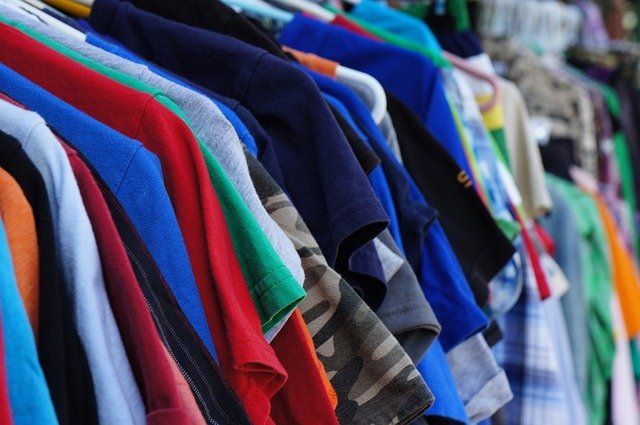
 “My favorite part of Helping Hand packing days is seeing everyone work together. The entire group helps each other with deciding which category an item should go into and where to find that category’s box.” In an interview with The Borgen Project, Bisma Ahmed talked about her experience participating in the packing events organized by Helping Hand for Relief and Development (HHRD). “It makes me feel great knowing that children in need across the world will be wearing the very clothes I am packing.”
Helping Hand for Relief and Development
Helping Hand for Relief and Development (HHRD) is a nonprofit organization that fights global poverty by improving access to clean water, feeding the hungry, providing healthcare and rebuilding places affected by natural disasters. In addition to emergency relief, it also has long-term development programs. These include efforts to promote education and literacy, orphan support campaigns and rehabilitation and disability programs. In the 15 years that it has been in service, Helping Hand has worked in more than 85 countries across the globe.
Focusing on the Vulnerabilities of Asia and Africa
The main areas that Helping Hand addresses are countries in Asia and Africa as most of the 689 million people living below the poverty line are in these two continents. A few notable countries that have benefited from Helping Hand’s work include Pakistan, the Philippines, Bangladesh, Lebanon, Somalia, Tunisia, Kenya and Haiti. The organization also provides benefits to refugees including the refugees of Rohingya, Syria and Palestine.
In 2019, through the long-term empowerment program, Helping Hand assisted 6,140 vulnerable people with skills development training in Pakistan, Jordan, Afghanistan and Kenya. In 16 different countries, 19,100 children, including orphans and refugees, received an education through Helping Hand scholarships and education programs. The organization also provided daily healthcare to 160,900 Rohingya refugees and benefited 1.2 million people through its water, hygiene and sanitation programs.
The organization’s recent campaigns include the Beirut Relief Fund, the HHRD COVID-19 Crisis Response, and most recently, Global Winter Revisions, a campaign allowing donors to send winter packages to places where they are needed most.
Packing Day: The Mid-Atlantic Region
Every year, the U.S. regions of Helping Hand set a goal for how many containers of clothes to send as aid overseas. The 2020 goal was to send 10 40-foot containers.
Now and then, the U.S. Mid-Atlantic region of Helping Hand has packing days where volunteers come together and sort donated clothes for shipment to the needy all around the world. Naveed Ahmed, the regional manager for Helping Hand’s Mid-Atlantic area, explained the benefit of the Helping Hand packing days. “The purpose is many, in my opinion. We’re engaging the local community and we’re opening our doors to show what Helping Hand is all about.” According to Naveed Ahmed, most of the success of the packing days comes from the organization’s personal connections with local donors, including large businesses and companies.
Helping Hand packing days have been going on in all of its U.S. regions since its founding in 2005. In 2019 alone, the $55 million worth of clothing items or in-kind gifts benefited 12 million people in 10 different countries.
The clothing items go wherever the team believes the need is. Helping Hand holds offices in Jordan, Pakistan, Afghanistan, the Philippines, Haiti and Kenya, making the organization fully part of the clothes distribution process. The teams in those areas inform the U.S. national team of the amount and types of clothing that are needed. The U.S. regions then start collecting, packing and sending the clothes out.
Typically, the packing events surround a specific global issue or national relevance. For example, the last packing event that the Mid-Atlantic region had was for Giving Tuesday. The packed donations went toward the Helping Hand Winter Relief Campaign. A week later, they had another packing event, this time dedicated to loading the boxes into the containers.
Packing for Martin Luther King Jr. Day
The Mid-Atlantic region has a packing day for Martin Luther King Jr. Day in January. “We usually like to have a day of service on that day,” Naveed Ahmed said. “Usually, students and volunteers from all over the state will come out and be part of the packing day. It is a great day to show appreciation to a great leader like MLK and for us all to do the part of service he and many others have done over decades.”
The efforts of Helping Hand give hope for the future, ensuring that the lives of struggling people around the world are made a little easier.
– Maryam Tori
Photo: Flickr

The Impact of Spain’s Foreign Aid
Spain is a great example of a country with a diverse and organized foreign aid plan. The European nation provides aid in many different sectors to a diverse set of recipients and its population places a high value on international support. Spain’s foreign aid expenditure was a total of $2.9 billion USD in 2019, making it the 13th-largest provider of foreign aid in the world. While Spain’s foreign aid allocations fluctuate due to economic trends and fortune, the nation displays a strong commitment to development across the world.
Spain’s Aid Strategy
Spain’s foreign aid primarily goes towards Sub-Saharan Africa and Latin America as a whole, but there are some exceptions. Some of the main countries Spain gives aid to have a long history or a strong relationship with the country. The top 10 nations that receive aid from Spain are:
Spain’s foreign aid is diverse and targets many different sectors for development. The primary sector Spain invests in is governance and security, followed by education, industry and trade, humanitarian aid and health care. This makes up about half of the aid that Spain sends out, with the rest unspecified or in smaller sums going to sectors like water and sanitation, infrastructure and debt relief. Spain has recently made crucial contributions in these sectors to donor countries. For example, Spain sent €2 million in aid to Venezuela during its economic crisis, which Spain’s foreign aid agencies spent getting food and medical supplies to the most impoverished.
Aid in the Past Decade
Unfortunately, Spain’s commitments to foreign aid have dropped in recent years, mainly due to economic considerations. The economic crisis of 2008 hit Spain hard, and the country’s foreign aid budget mirrors its economic troubles. Spain currently contributes 0.21% of its GNI (Gross National Income) to foreign aid. This is down from a high of nearly 0.5% in 2009 when the effects of the crisis first hit. While foreign aid commitments suffered in the past decade, Spain has a strong plan to revamp its foreign aid budget in the coming years.
Still, in recent years, Spain has put its foreign aid to good use. The Spanish Agency for International Development Cooperation’s Humanitarian Action Office identified five current crisis areas that Spain’s current foreign policy plan for 2018 to 2021 emphasized. These are the Syrian regional crisis, the Sahel and Lake Chad, the Palestinian Territories, the Sahrawi Refugee Camps and Latin America and the Caribbean. Spain also participated in various emergency responses to natural disasters. These include the 2018 earthquakes in Indonesia, the 2018 Fuego volcano eruption in India and Cyclone Idai in Mozambique in 2019. The aid Spain provided included on-the-ground disaste
Public opinion towards foreign aid in Spain remains remarkably strong despite the recent downturn in the foreign aid budget. According to a 2018 Eurobarometer survey, Spaniards attached the greatest importance to international aid of any European nationality. It also ranked highest in Europe regarding citizens’ belief that their government should give more emphasis to international aid.
Looking to the Future
The future of Spain’s foreign aid is bright and signifies a return to the country’s previous strong commitments to foreign aid. Spanish Prime Minister Pedro Sánchez supports a target of 0.5% GNI contribution to foreign aid and included it as a part of his governing coalition’s agreement.
Spain has been displaying a commitment to a new future of foreign aid recently, especially during the COVID-19 crisis. The country’s foreign development agencies released the Spanish Cooperation Joint Strategy to fight COVID-19, which included an extra $2 billion budget for foreign aid in 2020 and 2021. It also announced that it will prioritize global health and epidemic prevention in its development cooperation policy.
Since 2020, Spain has pledged to contribute hundreds of millions of dollars to multilateral institutions such as the Global Fund to Fight AIDS, TB and Malaria, the Green Climate Fund, the U.N.’s Sustainable Development Goals Fund and the Global Agriculture and Food Security Program. These contributions, its balanced aid policies and the populace’s enthusiasm for foreign aid indicate that Spain will continue to be a global leader in this area.
– Clay Hallee
Photo: Flickr
WHO’s Plan to Address Neglected Tropical Diseases
Neglected Tropical Diseases (NTDs)
Neglected tropical diseases are commonly defined by global health organizations such as the WHO and the National Institute of Allergy and Infectious Diseases as a group of diseases that primarily affect those living in tropical and subtropical climates and disproportionately spread in remote areas or regions afflicted by poverty. Among the 20 diseases that the WHO categorizes as neglected tropical diseases are dengue, rabies, leprosy, intestinal worm and sleeping sickness.
Tropical and subtropical regions include Central America and the northern half of South America in the Western Hemisphere, most of sub-Saharan Africa as well as island nations in the Indian and Pacific Oceans. Many of the countries in this range are developing or impoverished nations. A lack of development and healthcare infrastructure in nations that lie in tropical regions, such as lack of access to clean water and health education, creates a more fertile breeding ground for the spread of dangerous diseases.
The reason that these diseases are considered “neglected” is that regions where neglected tropical diseases cause the most damage are populated by people with little political power or voice, a result of widespread poverty, location and other socioeconomic factors. As such, the spread of these diseases goes largely unnoticed and there is little incentive at the international level to take measures to combat these ailments. Though NTDs do not receive high-profile attention in the larger medical community, the WHO estimates that more than one billion people are affected by NTDs. The WHO sees the urgency to address neglected tropical diseases.
WHO’s 2021-2030 Road Map
The WHO outlined a set of “overarching global targets” that it will pursue over the course of the next decade in work with foreign governments, community organizations and NGOs. These overarching goals, to be accomplished through achieving a number of “cross-cutting targets” are the primary effects the WHO hopes to achieve by 2030:
Ending Neglected Diseases
To address neglected tropical diseases, the fulfillment of the goals outlined in the WHO’s road map will require a multilateral and thorough implementation as well as cooperation and leadership from each of the partner countries affected. The WHO seeks to encourage each tropical and subtropical nation to take ownership of their healthcare programs, which will create a sustainable, international network to strengthen global health in some of the world’s most vulnerable regions. Putting the fight against neglected tropical diseases in the spotlight as well as dedicating time and resources to taking on these diseases, can remove the “neglected” from neglected tropical diseases and put the global community on a course toward eradicating these diseases.
– Kieran Graulich
Photo: Flickr
Côte d’Ivoire Health Care Post-COVID
Côte d’Ivoire health care has faced challenges in recent years and even more so during the COVID-19 pandemic. According to a 2020 Helen Keller International report, Moriame Sidibé, a mom and homemaker from northern Côte d’Ivoire was a “Vitamin A Hero” because every six months for the past three years she spent three full days walking door to door and village to village to give young children Vitamin A and deworming pills. Sidibé faced challenges because sometimes she needed to convince mothers of the importance and safety of the pills, coax the children to swallow the pills and mark the children’s fingers with black ink so she would not accidentally give them a second pill.
Sidibé left her own four young children to do this, but it was worth it to her because she has training as a community health volunteer who is part of a collaboration between the Ivorian government, Helen Keller International, the United Nations International Children’s Fund (UNICEF) and Nutritional International fighting the extreme form of malnutrition in children called micronutrient deficiency or “hidden hunger.”
The Situation
Twenty-five percent of Ivorian children get enough calories, but not foods with sufficient Vitamin A, zinc, iodine or iron. That “hidden hunger” puts one in four Ivorian children at risk of blindness, impaired brain development and some fatal infections. Deworming pills kill the parasites that prevent children from absorbing micronutrients including Vitamin A, and together the deworming pills and the Vitamin A can save children’s lives. In December 2019, the campaign reached 5 million children or 98% of all Ivorian children, an incredible accomplishment of a ministry of health working with international non-governmental organizations (NGOs) and trained community health volunteers.
Côte d’Ivoire, the West African nation of 25 million, enjoyed a strong 8% average GDP growth between 2011 and 2018. According to the World Bank, the country had one of the strongest economies in sub-Saharan Africa due to an expanded middle class that supported demand in industry, agriculture and services. The Côte d’Ivoire health care indicators, however, lagged behind other less-developed nations, and in 2018, Côte d’Ivoire ranked 165 of 189 countries on the U.N. Human Development Index.
As noted in a 2020 Oxford Business Group report, planned increases in health care spending should improve these indicators. Côte d’Ivoire spent $1.8 billion on health care in 2016, $2 billion in 2019 and intends to spend $2.3 billion in 2021. The country invested in access to services, renovation and building of medical facilities, and development of technical platforms aligned with international health standards. The Ivorian government worked with a number of programs like the Helen Keller International Vitamin A Heroes; however, then the COVID-19 pandemic hit.
Despite COVID, Côte d’Ivoire Health Care Initiatives Regroup to Persevere
Based on the World Health Organization COVID-19 transmission guidance, the Vitamin A Heroes collaboration discontinued its door-to-door campaign. Nevertheless, during the pandemic, the campaign has resolutely distributed Vitamin A and deworming pills at local health clinics when children come with their families for other reasons. Once the pandemic subsides, it will renew its crucial Vitamin A Heroes campaign.
Predicted to Rebound Post COVID and Target Health Care
Côte d’Ivoire’s pre-COVID targeted investment in health care services, facilities and technical innovation gives Côte d’Ivoire health care a positive outlook according to the Oxford Business Group report. The International Monetary Fund predicts that Côte d’Ivoire’s GDP growth will climb back up to 8.7% in 2021 as the new investment in Côte d’Ivoire health care parallels the successful investment in other sectors.
Moving Forward, Côte d’Ivoire to Roll Out Planned Health Care Initiatives
One example of a Côte d’Ivoire health care collaboration of governmental, NGO and local organizations that launched during the COVID-19 pandemic in 2020 is Harness the Power of Partnerships. Harness the Power of Partnerships is a Côte d’Ivoire health care initiative to use faith-based organizations in the HIV response. Faith-based leadership is working with the President’s Emergency Plan for AIDS Relief (PEPFAR) and the Joint United Nations Programme on HIV and AIDS (UNAIDS) on long-term strategies to reduce the stigma of HIV/AIDS and to keep Ivorians on their antiretroviral therapies. This PEPFAR/UNAIDS program exemplifies how the Ivorian government continues to partner with non-government groups, including local groups, in order to improve Côte d’Ivoire health care indicators.
Improving Côte d’Ivoire health care will not be an easy task, but creating collaborations with international powerhouses like PEPFAR, UNAIDS, Helen Keller International and local nonprofits and community leaders is definitely a strategy worth watching as COVID-19 subsides and the Ivorian economy rebounds.
– Shelly Saltzman
Photo: Wikipedia Commons
Timidria’s Fight Against Human Trafficking in Niger
Niger has experienced slave-based exploitation due to the border crossing between it and Libya, a key launching point for human traffickers. However, the Nigerien borders are not the root issues. A Nigerien anti-slavery organization, Timidria, found that various Niger officials, who the country chose to combat human trafficking in Niger, may have slaves in their own households.
Overview
Ilguilas Weila, a Niger native, founded Timidria in 1991. Together with Anti-Slavery International, Timidria has been standing at the forefront seeking to protect more than 40,000 lost, unidentified and identified victims of inherited slavery and trafficking. This is its printed testimony:
“It clearly emerged from this review that the failure of slavery prosecutions had less to do with litigation itself than to external elements, particularly the influence of traditional chiefs and social hierarchies on judges’ decisions and disputations between customary and statutory law.”
This is a credible statement depicting the Nigerien government’s failure to identify, prosecute and convict traffickers, as it has failed to identify the ones among them.
Timidrias’ Success
In 2003, the anti-slavery organization gained much praise for its contributions to the Nigerien Anti-Slavery enacted Law 2003-25. Timidria also promoted efforts to fund a governmental 2019 Child Protection Committee in each commune in order to eliminate the worst forms of child labor. In 2019, Niger’s supreme court ruling also declared wahaya, the traditional practice of selling and trading young girls as fifth wives, an illegal act in 2019. Unfortunately, the news is yet to reach the majority of Nigerien citizens, a concern that left many victims trembling. Critics report that the government has made no efforts to identify and prosecute families who practice such practices.
What Makes Niger Vulnerable to Human Trafficking?
Niger underwent conflicts relating to the criminalization of traditional slavery that wealthy Tuaregs most invoke, some of whom serve in government seats. This includes Prime Minister Rafini who shares a Tuareg descent although no indication claims that he practices slave-ownership. The Tuareg tribe participates in various traditional and slave-based practices against children. A known practice is wahaya where little girls become trafficking victims by ending up in marriages as fifth wives or slavery. Meanwhile, talibés are young boys who traffickers place in slavery and extreme labor such as mining and cattle herding. Despite the 2003 slavery abolition, Timidria adduced that “children in {descent-based} slavery are considered to be the property of their master and face a lifetime of forced, unpaid labour and abuse.” Out of the thousand Wahaya crimes that underwent identification over the years, Timidria is only aware of one single conviction.
Government’s Role in Human Trafficking in Niger
The anti-slavery organization stated that “the implementation of the law criminalizing slavery has been inadequate and prosecutions for slavery are rare. Government alliances with the religious and political elites among the Tuareg tribes (traditionally slave-owning) is the root cause of Niger’s vulnerability.” The current President of Niger, Mahamadou Issoufou, and current Prime Minister, Brigi Rafini have both been in office since April 2011, serving 10 years as lawmakers. The 2020 Human Development Index ranked Niger at the bottom of the list caused by Niger’s late criminalization of slavery.
Similarly, reporters have described events involving seeing “women displaying the heavy brass anklets they had been forced to wear to prevent them from escaping.” Oftentimes, these women’s knowledge of laws and rights is limited in their areas, especially with no education or help in sight.
The Niger government has strained the workload of Timidria by the failure to identify government officials’ role in slavery-ownership. Despite this, Timidria is present all throughout Niger. It has over 680 offices in villages and camps, 182 offices in rural and urban communities and a growing legal team among its 300,000 members and supporters. This makes it crucially important for the organizations, with or without government assistance, to raise awareness of slavery that lingers underneath the heavy stigma of oppression.
– Ayesha Swaray
Photo: Flickr
The Progression of Women’s Rights in Samoa
The Samoan Woman’s Voice
Within the islands of the Pacific, where Samoa is located, the lowest rates of women’s participation in politics are found. Women within the Samoan culture are not encouraged to discover a sense of independent thought that they are willing to express. Because of this, women’s representation in governmental positions is a mere 10%. This minimum of 10%, however, will remain consistent due to an amendment of the Samoan constitution that was passed in 2013. The amendment states that women’s seats will be added into parliament if women are not elected, in order to ensure that at least 10% of parliamentary representation is women.
There are many cultural structures that greatly impact women’s rights when it comes to the expression of political opinions. One of these structures is the Matai councils that are in charge of local decision-making. Although women are allowed to join the Matai council, it is mainly considered a male council because of the low level of female members. The cultural family structures in Samoa also discourage women from reaching for political positions like becoming a Matai. Women mainly answer to their husbands within households so they feel a disconnect between having a desire for political power and their familial positions.
Violence Against Samoan Women
Only 22% of women that live in Samoa have not been a victim of some kind of domestic violence within their lifetime. Within the 78% of women who have experienced abuse, 38% said that the abuse was physical. Overlooked violence is one of the largest setbacks to obtaining more holistic women’s rights in Samoa. Women believe that the violence they face is not of importance. This can be justified by the fact that domestic violence was only reported to the police by 3% of women who experienced it.
3 Programs Improving Women’s Rights in Samoa
As many setbacks as there have been in gaining women’s equality in Samoa, U.N. Women has set up programs in order to empower women in Samoa.
Overall, women’s rights in Samoa are progressing with the help of organizations like U.N Women fighting for the well-being and empowerment of women. Samoa has come a long way with regards to gender equality and the future looks hopeful for women in the country.
– Olivia Bay
Photo: Flickr
Smiles Forever: Restorative Dentistry in Bolivia
Dental Care in Developing Countries
Most dental care within developing countries is given at hospitals that are either centralized or regional. This dental care does not do much to prevent or restore dental issues within the general population of a country. The dental care staffing is so low in many developing countries that trained dental professionals are forced to do the work that would normally be the job of dental assistants. This creates an ever-increasing cycle of dental worker unavailability. The creation of programs to train dental hygienists has been identified as a major solution to the extreme lack of restorative dentistry and dental care within struggling countries.
Major Dental Issues in Developing Countries
Throughout impoverished countries, there are a few dental issues that are seen most often and are in need of the greatest amount of restoration and prevention. These issues are dental caries, periodontal disease and tooth or gum abscesses.
The Mission of Smiles Forever
Smiles Forever is a nonprofit dental organization mainly working in Bolivia to provide free preventative and restorative dentistry. Its mission is to allow for a better quality of life, specifically for children growing up in Bolivia. Smiles Forever hopes that its work will act as a model for increased dental care in poor countries within South America.
Sandy Kemper, a dental hygienist from Seattle, is the founder of this nonprofit. She was inspired by a service trip that she took to Bolivia in 1999 in order to provide free dental work in the Madre de Dios shelter. A couple of years after her trip she returned to Cochabamba, Bolivia, in order to develop the Smiles Forever program after seeing how desperately in need the citizens were of restorative dentistry.
Programs Created by Smiles Forever
Smiles Forever has three main programs that it runs in Bolivia. These programs are its dental hygiene training program, its community partnering programs and its public fee-for-service clinic.
The dental hygiene training program was created in order to teach and train selected indigenous women to become dental hygienists. Each of the women is offered a full scholarship and the materials needed in order to become properly trained. The program is only conducted for half of each day so that the women can use the other half to support their families while being trained. Not only does this program allow for an increase in dental professionals in Bolivia but it also helps raise indigenous women and their families out of poverty by giving these women the opportunity to find full-time professional jobs.
The community partnering that Smiles Forever does is where a lot of its free dental work is provided. This organization works with other nonprofits throughout Bolivia that provide life-improving services. Through this partnering, it has been able to have a more widespread influence in providing dental care throughout Bolivia as its partners are very influential.
The public fee-for-service clinic was set up as a way to provide hands-on experience for individuals working in the dental hygiene training program and as a means of income to support the free community outreach efforts of the nonprofit. Individuals who attend the clinic pay in order to receive necessary preventative and restorative dentistry care.
Smiles Forever and Women’s Empowerment
Smiles Forever greatly supports the reduction of poverty and the provision of essential services through the uplifting of indigenous women. It recognizes that economic growth greatly increases when women play an empowered part in society. So far, 37 indigenous women have successfully completed the dental hygiene raining program and some have gone on to fully complete dental school. Overall, Smiles Forever has an all-around positive effect on the communities of Bolivia not only from a health standpoint but from a social and economic standpoint as a result of its efforts to empower women.
– Olivia Bay
Photo: Flickr
Combatting Human Trafficking in El Salvador
Over the last decade, Central America has been notorious for drug cartels and a hotspot for human trafficking. The country also has an enriching culture with people who deserve a fighting chance at eradicating human trafficking in El Salvador.
According to the 2020 Trafficking in Persons Report, El Salvador has a Tier 2 status, meaning the government is striving to eradicate human trafficking but does not fully meet the minimum standards for complete elimination. El Salvador recorded 124 victims in comparison to 74 victims in 2019. The main demographic of human trafficking victims in El Salvador are minors and women, or more specifically, minors and women who are immigrants and have no legal documents.
Improving Investigations into Human Trafficking in El Salvador
In November 2019, the “Reginal Seminar on Investigation Techniques and Protection of Victims of Trafficking in Persons” met with experts from Guatemala, Honduras, El Salvador and the countries that make up the Northern Central America Triangle. The main goal was to improve practices regarding investigations into human trafficking, especially in relation to its transnational nature.
Training includes a manual that organizations such as Save the Children, World Police Agency Interpol, UNICEF, the International Organization for Migration and others provide to inform officers of what a typical victim may look like and how to assess the situation so as to prevent others from becoming trafficking victims. The officers also receive training on how to report trafficking so as to eradicate it.
According to the Trafficking in Persons Report for 2020, the anti-trafficking council implemented 19 offices in 15 municipalities to inform about human trafficking and aid victims. Additionally, El Salvador’s 2018 Inter-Institutional Action Protocol for the Immediate Comprehensive Care of Trafficking Victims provided an outline regarding what government agencies’ responsibilities in responding to trafficking victims should be.
Continuing Efforts
Aid continues to flow towards eradicating human trafficking in El Salvador. Officials received training in order to educate and equip each officer with the right tools to handle any situation that may involve a trafficking victim. They are aiming to provide legal frameworks around protecting minors who are child laborers or trafficking victims.
El Salvador, and many Central American countries, are continuing their fight against human trafficking. Eradicating human trafficking seems like a long-haul but setting preventative measures as well as post-care can encourage others to educate and help those who may be victims of trafficking.
“According to El Salvador’s national child protection council, the country’s capital only has one shelter exclusively for underage trafficking victims. Across the country, there are 15 offices that deal with human trafficking cases in different provinces. There are few places where survivors of human trafficking can receive specialized attention in the Northern Triangle,” said Jaime Armando Lopez and Xiomara Orellana of Insight Crime.
Steps to eradicate human trafficking in El Salvador should be more aggressive as victims have become widespread between those who are minors, undocumented women and victims of domestic abuse. El Salvador has limited shelters, but it is essential that more are within reach for victims.
– Vanessa Morales
Photo: Flickr
Examining Mental Health in Malaysia
Populations of people who suffer from mental illness exist in every country in the world. Some countries, like Malaysia, have a more prominent number of mental illness cases than others, having an equal ratio of one in five cases in comparison to the United States. Malaysian Medics International (MMI) pointed out that Malaysia has a national average of 1.27 psychiatrists per 100,000 people, a stark contrast to the World Health Organization’s (WHO) recommendation for a ratio of one psychiatrist per 10,000 people. Here is some information about mental health in Malaysia and efforts to treat it.
About Mental Illness in Malaysia
Mental illness can have a large variety of causes. Moreover, pre-existing circumstances such as poverty can make cases of mental illness worse. Such cases tend to make it difficult for patients to maintain a steady lifestyle due to mental health symptoms that make full functionality difficult. The poverty that is already prominent often means that a support system is not present to give the patients the time they need to recover. In 2020, the police reported that 25% of recent suicides related to pressures of debt.
Stigma exists in Malaysia regarding mental health. Some Malaysians perceive mental illness as a natural phenomenon or a kind of divine punishment; this viewpoint often exists within families who have more religious inclinations. Many cases see these families attempting to ‘purge’ such conditions through spiritual means that have not always received medical approval and may not have positive effects.
Mental Health Among Youth
Prior to 2014-2015, few investigations into the statistics of mental health of the youth of Malaysia occurred. With the inclusion of mental health in the National Health Morbidity survey, the country is now taking the numbers more seriously and believes it should observe mental health numbers in order to preserve future generations.
In 2015, the National Health Morbidity Survey stated that mental health illnesses and conditions were likely to become the second most prominent illness after heart disease in Malaysia by 2020. In 2017, the National Health Morbidity Survey showed that one in five adolescents has depression while two in five have anxiety. At that time, 11.2% reported suicidal tendencies or intentions, and 10.1% reported that they have attempted suicide. Now in 2021, that statistic has increased since the start of the COVID-19 pandemic, which has caused an increasing report of cases of mental health problems. Worldwide, the increase of those who suffer from mental illness has risen by an estimated 10 million.
Treatment for Mental Health Issues
Not everyone has access to treatment. Some are unable to afford it and certain areas lack proper clinics. Even in cases where there are professionals who can help, it can be difficult to make a consistent appointment. The WHO revealed statistics that showed that the ratio of psychiatrists to patients is 1:200,000 in Malaysia. On the chance that a person would be able to get a consultation, the aid they need may not always be available or open to them.
The Mental Illness and Support Association (MIASA)
There are organizations that are already working to offer as much support as possible for those who may not have access to resources like therapy or medication. Beginning in 2017, the Mental Illness And Support Association (MIASA) made it its mission to promote awareness on the importance of mental health in Malaysia. Its charities and services seek to provide aid for patients and caregivers alike. It offers a holistic solution by also encouraging spirituality alongside medical treatment, which is to give patients empowerment and autonomy.
The Malaysian Communications and Multimedia Commission (MCMC)
Certain companies are also working to make it easier for those with mental illnesses to reach out if there are no professionals available to them. In August 2019, the Malaysian Communications and Multimedia Commission (MCMC) worked with eight phone operation companies in order to waive call charges for people making calls to the Befrienders helpline, which is a mental health helpline that provides services such as counseling and emotional support over the phone. With the right aid, it is working to ensure that anyone can get the support they need for a healthy, functioning lifestyle.
It is the hope of the Malaysian government that with greater advocacy, the rise of mental illness in the growing youth will level out. The medical studies that have made this rise clear have helped to erase doubts about the prominence of mental illness and prove the need for treatment for mental health in Malaysia. In order to preserve future generations, the country will continue to take measures in order to give patients the support they need to live functioning and healthy lifestyles.
– Seren Dere
Photo: Flickr
The END Fund: Treating Neglected Tropical Diseases
The END Fund
The END Fund is a nonprofit organization that seeks to protect the lives of people at risk of NTDs. It delivers treatments by working with local partners, understanding that these groups have regional expertise and know the needs of their area best.
The END Fund helps its partners design programs so that they can expand their capacity to collect important data regarding NTDs. Further, the END Fund provides technical support and monitors progress so its partners can fight disease in the most effective way possible.
It also collaborates with non-governmental organizations and seeks to involve all stakeholders in order to improve the lives of those at risk of contracting NTDs. The END Fund is active across many countries in sub-Saharan Africa as well as India and Afghanistan. It has programs in Nigeria, Ethiopia, the Democratic Republic of the Congo, Somalia and others.
NTDs in Nigeria
The country with the greatest prevalence of NTDs in Africa is Nigeria. With a population of 195 million people, five of the most common NTDs are present: intestinal worms, lymphatic filariasis, river blindness, schistosomiasis and trachoma. These diseases can cause severe pain that inhibits people from going about their daily lives. Children miss out on their education and adults miss out on economic opportunities. NTDs can cause the already impoverished to sink even deeper into poverty.
In 2013, the END Fund arrived in Nigeria. Two years later, it partnered with Helen Keller International to support local partners, the Amen Foundation and Mission to Save the Helpless (MITOSATH). It has since helped build the capacity of these groups so that they can respond to the issue of NTDs even stronger. It engaged with local leaders across many levels to make people aware of the treatment plans that are available. Among traditional groups, leaders took medication in front of many people to show that it was safe.
The End Fund’s Impact
In 2019 alone, the END Fund was able to treat 121 million people. The END Fund also trained 2.7 million healthcare workers between 2012 and 2019. Its workers have performed almost 31,000 surgeries during that same time period, with the treatments valued at more than $1 billion.
NTDs pose a great threat to people in developing countries. The END Fund has been able to accomplish a lot through its collaborative projects in Nigeria and across other countries. The END Fund will continue to work toward its vision of ensuring that people at risk of NTDs can live healthy lives.
– Evan Driscoll
Photo: Flickr
Humanitarian Aid: Helping Hand Packing Days
Helping Hand for Relief and Development
Helping Hand for Relief and Development (HHRD) is a nonprofit organization that fights global poverty by improving access to clean water, feeding the hungry, providing healthcare and rebuilding places affected by natural disasters. In addition to emergency relief, it also has long-term development programs. These include efforts to promote education and literacy, orphan support campaigns and rehabilitation and disability programs. In the 15 years that it has been in service, Helping Hand has worked in more than 85 countries across the globe.
Focusing on the Vulnerabilities of Asia and Africa
The main areas that Helping Hand addresses are countries in Asia and Africa as most of the 689 million people living below the poverty line are in these two continents. A few notable countries that have benefited from Helping Hand’s work include Pakistan, the Philippines, Bangladesh, Lebanon, Somalia, Tunisia, Kenya and Haiti. The organization also provides benefits to refugees including the refugees of Rohingya, Syria and Palestine.
In 2019, through the long-term empowerment program, Helping Hand assisted 6,140 vulnerable people with skills development training in Pakistan, Jordan, Afghanistan and Kenya. In 16 different countries, 19,100 children, including orphans and refugees, received an education through Helping Hand scholarships and education programs. The organization also provided daily healthcare to 160,900 Rohingya refugees and benefited 1.2 million people through its water, hygiene and sanitation programs.
The organization’s recent campaigns include the Beirut Relief Fund, the HHRD COVID-19 Crisis Response, and most recently, Global Winter Revisions, a campaign allowing donors to send winter packages to places where they are needed most.
Packing Day: The Mid-Atlantic Region
Every year, the U.S. regions of Helping Hand set a goal for how many containers of clothes to send as aid overseas. The 2020 goal was to send 10 40-foot containers.
Now and then, the U.S. Mid-Atlantic region of Helping Hand has packing days where volunteers come together and sort donated clothes for shipment to the needy all around the world. Naveed Ahmed, the regional manager for Helping Hand’s Mid-Atlantic area, explained the benefit of the Helping Hand packing days. “The purpose is many, in my opinion. We’re engaging the local community and we’re opening our doors to show what Helping Hand is all about.” According to Naveed Ahmed, most of the success of the packing days comes from the organization’s personal connections with local donors, including large businesses and companies.
Helping Hand packing days have been going on in all of its U.S. regions since its founding in 2005. In 2019 alone, the $55 million worth of clothing items or in-kind gifts benefited 12 million people in 10 different countries.
The clothing items go wherever the team believes the need is. Helping Hand holds offices in Jordan, Pakistan, Afghanistan, the Philippines, Haiti and Kenya, making the organization fully part of the clothes distribution process. The teams in those areas inform the U.S. national team of the amount and types of clothing that are needed. The U.S. regions then start collecting, packing and sending the clothes out.
Typically, the packing events surround a specific global issue or national relevance. For example, the last packing event that the Mid-Atlantic region had was for Giving Tuesday. The packed donations went toward the Helping Hand Winter Relief Campaign. A week later, they had another packing event, this time dedicated to loading the boxes into the containers.
Packing for Martin Luther King Jr. Day
The Mid-Atlantic region has a packing day for Martin Luther King Jr. Day in January. “We usually like to have a day of service on that day,” Naveed Ahmed said. “Usually, students and volunteers from all over the state will come out and be part of the packing day. It is a great day to show appreciation to a great leader like MLK and for us all to do the part of service he and many others have done over decades.”
The efforts of Helping Hand give hope for the future, ensuring that the lives of struggling people around the world are made a little easier.
– Maryam Tori
Photo: Flickr