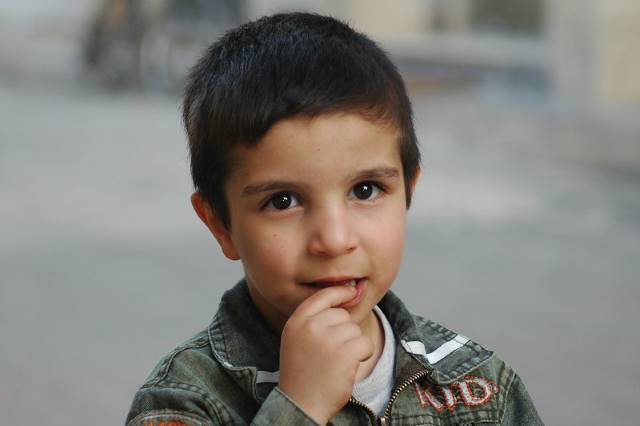
 When Alfin Nur was 11 years old, he lost his mother, father and one of his siblings in the 2004 Indian Ocean tsunami. Two years later, the GiveLight Foundation found Alfin and began to invest in his life. He studied at a boarding school in Banda Aceh, Indonesia, which GiveLight fully sponsored, while also providing him with love and emotional support. In 2015, he graduated from Al-Azhar University in Cairo.
The GiveLight Foundation
GiveLight Foundation is a nonprofit organization that provides orphans with stability so that they can rise out of the cycle of poverty. Its mission is to build quality homes for these children and support them in receiving proper education that will serve them long-term. It emphasizes raising children in a loving and supportive environment and providing a sense of belonging.
“GiveLight Foundation is one big home for all orphans,” described Fatima Jaber, the founder of the GiveLight Baltimore Chapter, in an interview with The Borgen Project.
The same disaster that destroyed Nur’s family, hit and devastated the hometown of Dian Alyan, in Aceh, Indonesia. The tsunami killed a quarter of a million people overall, leaving many orphans. Alyan decided to build an orphanage called Noordeen Orphanage. A year later, with the help of friends, family and generous donors, the orphanage was housing 50 orphans. Through that, the GiveLight Foundation was founded.
It now has orphanages in many countries including Pakistan, Bangladesh, Indonesia, Morocco, Sri Lanka and Cambodia, providing a loving home for around 1000 children.
The Baltimore Chapter
GiveLight provides opportunities for people to start “chapters” in their own city. The chapters focus on raising funds and sponsoring the orphans of GiveLight. Most of these chapters are located within the United States in cities like Chicago, Southern California, Seattle, Baltimore, New Jersey and Orlando. GiveLight is also beginning to focus on opening chapters internationally. Currently, there is one in South Africa, Paris and Toronto and there are efforts to open chapters in Istanbul, Sydney, Brussels and Dubai, UAE.
Jaber, the founder of the Baltimore Chapter, talked about how she opened up the chapter in Baltimore around three years ago. “I heard Dian Alyan’s story when I lived in California in 2012 and knew I wanted to be involved. After moving to Baltimore and meeting supportive friends and a generous community, I thought it would be great to start a chapter here.”
Raising Funds for Orphanages
The Baltimore Chapter raises funds by hosting galas, game nights, scavenger hunts and walkathons. Soubia Balkhi, one of the other members of the Baltimore Chapter, told The Borgen Project in an interview that the last two galas had been very successful, with the team raising more than $10,000.
Because the cause is so broad, beforehand the team decides which GiveLight project the funds will contribute to. They typically like to focus on where the need is the most for that year. “For example, this year Bangladesh needs it the most and so the money from this year’s fundraiser will go to building an orphanage in Bangladesh,” said Balkhi.
The funds are then sent to the headquarters which has on-site representatives distribute the money specifically where it is needed.
Despite the limits due to COVID-19, the Baltimore Chapter continues to raise funds. Jaber discussed its latest event, taking place next month. “I’m excited to announce our next virtual scavenger hunt event! It is a fun and interactive social event where families can join, create teams and still follow all COVID-19 protocols.”
Empowering Orphans Alleviates Poverty
GiveLight is not a typical orphanage that solely provides children with a place to stay. It ensures that the orphans under its care are given a home and a proper life. The strategy that GiveLight uses allows the orphans to become self-sufficient through education, enabling them to be independent and to be able to give back. This is especially important considering that education is proven to positively contribute to reducing poverty.
Alfin Nur was not the only orphan who was able to graduate due to the opportunities that GiveLight provided for him. Rahmat Mico is now on his way to become a scientist and Nursawami is a working mother who continuously gives back to GiveLight.
With more time, orphanages, chapters and supporters, GiveLight will be able to broaden its support in the qualitative manner that it has been doing since the very beginning.
– Maryam Tori
Photo: Flickr

Addressing the Deaths of Native American Women
Violence Against Indigenous Women
Where poverty is the greatest, indigenous women experience domestic violence rates 10 times higher than the national average for all races. In addition, 84% of Native American women experience violence in their lifetimes or one in three each year. The perpetrators are most often non-Native men outside the jurisdiction of tribal law enforcement.
Murdered indigenous women numbers rose to 500 in 2018, which is a low figure compared to the actual number of missing persons on reservations. Women have silently died and gone missing, underreported, for years. This is due to the discordance that exists between tribal, federal and local law enforcement. However, changes are being made ever since the 1978 ruling of Oliphant v. Suquamish, where it was ruled that Indian courts have no criminal jurisdiction over non-natives. In November of 2019, President Trump signed an executive order to investigate the matter of unsolved cases of missing or murdered Native Americans.
Legislatively Addressing the Issue
Several major changes have since been underway. For example, the Not Invisible Act of 2020 will increase national focus on violent crime against indigenous people and intergovernmental coordination on the high death rate of Native American women. This bill began in 2019 as the Not Invisible Act of 2019; the first bipartisan bill in history to be introduced by four tribal representatives: Deb Haaland, Tom Cole, Sharice Davids and Markwayne Mullin.
To complement the Not Invisible Act, Savanna’s Act became public law in October 2020. Named after Savanna LaFontaine-Greywind, a murdered young indigenous woman whose fetus was cut from her womb, Savanna’s Act will ensure the Justice Department reports statistics on all missing/murdered native women and reform law enforcement. In addition, the National Institute of Justice has created the National Baseline Study which is a study on the health, wellbeing and safety of Native American women, to also provide more accurate data on femicide.
Safe Women, Strong Nations
In addition, the Safe Women, Strong Nations project partners with native nations to combat abductions and murder. The project provides legal advice to the tribes in restoring authority and holding perpetrators responsible. The project works to raise awareness to gain federal action to eliminate the violence against native women.
Poverty makes it easier for native women to be overlooked. One in three Native Americans suffer from poverty, living off on average $23,000 a year. “Poverty is both the cause and the consequence of all the ills visited upon Native Americans.” It is common knowledge that poverty provides leeway for criminality, and with Native American reservations being economically disadvantaged, this is no exception. Addressing systemic poverty instead of turning a blind eye will help lower the death rate of native women. The reservations only need opportunity and U.S. juridical attention. It is hopeful to see that the United States’ legislative representatives are addressing violence against minority groups but more work needs to be done to protect the well-being of Native American women.
– Shelby Gruber
Photo: Flickr
Ending Female Genital Mutilation in Sudan
Female Genital Mutilation
FGM is defined as procedures that deliberately alter or cause injury to female genital organs. It is mostly carried out on young girls between infancy and adolescence and occasionally performed on adult women. These procedures are nonmedical and provide no health benefits, only harm to the female. It involves removing and damaging healthy and normal female genital tissue, therefore, it interferes with the natural functions of the female body.
The reasons behind FGM vary between regions due to a mix of sociocultural factors. The procedure is routinely executed by a midwife without anesthesia. There are four types of FGM. Type one is the partial or total removal of the clitoris. Type two is the removal of the clitoris and inner labia. Type three is the removal of all the external genitalia or narrowing of the vaginal opening. Type four is any other type of damage to the female genitalia, such as burning, scraping or piercing.
Females experience either short-term or long-term effects. The short-term effects include severe pain, excessive bleeding (hemorrhage), genital tissue swelling, fever, infections, wound healing issues. The more dangerous and life-altering long-term effects include urinary problems, menstrual problems, increased risk of childbirth complications, the need for later surgeries or psychological problems.
According to UNICEF, 87% of Sudanese women aged between 14 and 49 have undergone a form of FGM. FGM is also more prevalent among the poorest women.
Actions to End Female Genital Mutilation
In 2008, the National Council of Child Welfare and UNICEF joined together to launch the Saleema Initiative, which focused on abandoning FGM at a community level. The initiative educated women about the health risks and encouraged females to say no to the procedure.
Additionally, the United Nations General Assembly took action in 2012 by calling on the international community to enhance efforts to end FGM. In 2015, the global community agreed to the Sustainable Development Goals (SDGs), which include a target under Goal 5 to eliminate all harmful practices, such as child marriage and female genital mutilation by 2030.
The World Health Organization (WHO) is addressing the issue by implementing guidelines, tools, training and policy to allow healthcare providers the opportunity to offer medical care and counseling to females suffering the effects of FGM. The WHO also aims at generating knowledge to encourage the abandonment of the FGM procedures. One final measure by the WHO is increased advocacy through publications and tools for policymakers.
Criminalizing Female Genital Mutilation in Sudan
In May 2020, the Sudanese Government criminalized FGM and made it punishable by up to three years in prison. But, experts remain concerned that a law is not sufficient in ending the practice due to religious and cultural ties to the procedure.
The sociocultural and religious ties surrounding female genital mutilation in Sudan complicate attempts to end the practice. Criminalizing FGM in Sudan may not be enough to end the practice. The National Council of Child Welfare, UNICEF, the United Nations General Assembly and the WHO are taking major steps to eliminate FGM or assist those already affected by the practice.
– Rachel Durling
Photo: Flickr
Global Issues: The Debt Crisis During COVID-19
The Global Debt Crisis
Half of low-income developing countries entered the pandemic with high public debt. The U.N. hoped to raise $10.19 billion to help the poorest countries during COVID-19 but only managed to raise $2.8 billion. With 150 million people threatened to fall into extreme poverty, experts are worried about the long-term economic effects of the debt crisis.
The debt crisis is becoming increasingly more destructive in many countries. The borrowing of money is occasionally controversial because citizens are not always aware of the purpose of a loan or its terms and conditions. Sometimes these loans are used to benefit a small group of people in the country. In 2020, low-income nations were expected to pay at least $40 billion to service debts. The 76 countries with the lowest incomes owe at least $573 billion in debt. These economies are forced to handle massive amounts of debt while facing rising domestic demands, dwindling tax revenues and shrinking economies.
Consequences of Defaulting on Debt
Failure to repay a debt, including interest or principal on a loan, is called debt default. According to research from the International Monetary Fund (IMF), waiting to restructure debt until after a default is associated with larger declines in GDP, investment, private sector credit and capital inflows. Several studies have suggested that debt crises result in a substantial drop in economic growth. For example, failure to repay debts will decrease a country’s rating. Debt defaults affect a country’s ability to borrow money, exclude countries from international capital markets and increase borrowing costs. Furthermore, since international debts have to be paid back in the creditors’ currencies, it could force governments to mine their natural resources to generate hard cash, thus continuing harmful environmental practices.
The Debt Service Suspension Initiative (DSSI)
The World Bank has proposed a new idea for countries suffering from “unsustainable” debt. The Debt Service Suspension Initiative (DSSI) is a tool that global institutions have created to stave off the debt crisis, which would allow countries to pause debt repayments to creditors interested in participating. According to The New Humanitarian, if all eligible countries join the initiative, it will free up approximately $11 billion for social spending by governments. Those who sign up for the DSSI will be expected to open its books, reveal its debt and refrain from taking more commercial loans on the side. Debt intervention for the poorest countries is, however, not a new idea.
The debt crisis affects a wide group of people, many of whom already face extreme poverty. The Debt Service Initiative may be expanded at future World Bank meetings. According to analyst and executive director for global policy, David McNair, “Countries need money now to respond to the pandemic and the quickest way to do that is to basically stop debt repayments.”
Pausing Repayments to Prioritize Pandemic Recovery
The debt crisis demands attention, especially as the COVID-19 pandemic interferes with access to resources while highlighting weaknesses in developing countries’ institutions. The World Bank is focused on using a new initiative to pause repayments in hopes of freeing up money for social spending. The initiative will also steer countries away from the consequences of debt default, such as declines in investments, capital inflows and lowered ratings. The goal is to see leaders in developing nations using the pause from payments to access resources necessary for solving prominent issues in the country.
– Rachel Durling
Photo: Flickr
GiveLight Foundation: Empowering Orphans Globally
The GiveLight Foundation
GiveLight Foundation is a nonprofit organization that provides orphans with stability so that they can rise out of the cycle of poverty. Its mission is to build quality homes for these children and support them in receiving proper education that will serve them long-term. It emphasizes raising children in a loving and supportive environment and providing a sense of belonging.
“GiveLight Foundation is one big home for all orphans,” described Fatima Jaber, the founder of the GiveLight Baltimore Chapter, in an interview with The Borgen Project.
The same disaster that destroyed Nur’s family, hit and devastated the hometown of Dian Alyan, in Aceh, Indonesia. The tsunami killed a quarter of a million people overall, leaving many orphans. Alyan decided to build an orphanage called Noordeen Orphanage. A year later, with the help of friends, family and generous donors, the orphanage was housing 50 orphans. Through that, the GiveLight Foundation was founded.
It now has orphanages in many countries including Pakistan, Bangladesh, Indonesia, Morocco, Sri Lanka and Cambodia, providing a loving home for around 1000 children.
The Baltimore Chapter
GiveLight provides opportunities for people to start “chapters” in their own city. The chapters focus on raising funds and sponsoring the orphans of GiveLight. Most of these chapters are located within the United States in cities like Chicago, Southern California, Seattle, Baltimore, New Jersey and Orlando. GiveLight is also beginning to focus on opening chapters internationally. Currently, there is one in South Africa, Paris and Toronto and there are efforts to open chapters in Istanbul, Sydney, Brussels and Dubai, UAE.
Jaber, the founder of the Baltimore Chapter, talked about how she opened up the chapter in Baltimore around three years ago. “I heard Dian Alyan’s story when I lived in California in 2012 and knew I wanted to be involved. After moving to Baltimore and meeting supportive friends and a generous community, I thought it would be great to start a chapter here.”
Raising Funds for Orphanages
The Baltimore Chapter raises funds by hosting galas, game nights, scavenger hunts and walkathons. Soubia Balkhi, one of the other members of the Baltimore Chapter, told The Borgen Project in an interview that the last two galas had been very successful, with the team raising more than $10,000.
Because the cause is so broad, beforehand the team decides which GiveLight project the funds will contribute to. They typically like to focus on where the need is the most for that year. “For example, this year Bangladesh needs it the most and so the money from this year’s fundraiser will go to building an orphanage in Bangladesh,” said Balkhi.
The funds are then sent to the headquarters which has on-site representatives distribute the money specifically where it is needed.
Despite the limits due to COVID-19, the Baltimore Chapter continues to raise funds. Jaber discussed its latest event, taking place next month. “I’m excited to announce our next virtual scavenger hunt event! It is a fun and interactive social event where families can join, create teams and still follow all COVID-19 protocols.”
Empowering Orphans Alleviates Poverty
GiveLight is not a typical orphanage that solely provides children with a place to stay. It ensures that the orphans under its care are given a home and a proper life. The strategy that GiveLight uses allows the orphans to become self-sufficient through education, enabling them to be independent and to be able to give back. This is especially important considering that education is proven to positively contribute to reducing poverty.
Alfin Nur was not the only orphan who was able to graduate due to the opportunities that GiveLight provided for him. Rahmat Mico is now on his way to become a scientist and Nursawami is a working mother who continuously gives back to GiveLight.
With more time, orphanages, chapters and supporters, GiveLight will be able to broaden its support in the qualitative manner that it has been doing since the very beginning.
– Maryam Tori
Photo: Flickr
3 Key Facts on Child Refugees in Mexico
Child Refugees in Mexico
People are arriving in Mexico from El Salvador, Guatemala, Honduras, Nicaragua and Venezuela in search of safety, local integration, Mexican residency and a pathway to U.S. citizenship. In 2020, one in five refugees were children. With such alarming demographics, it has been essential for Mexico to address its overwhelming influx of asylum-seekers and find solutions to protect those vulnerable, especially children.
COVID-19 has heightened poverty among child migrants. Child refugees in Mexico are escaping forced recruitment, gang violence and crime that is a daily reality in their Central American countries. This has resulted in displacement, food scarcity and poverty. Since the COVID-19 pandemic, levels of insecurity amongst these children have only increased, with about 5,000 children (60% unaccompanied) returning to El Salvador, Guatemala, Honduras and Mexico.
COVID-19 has devastated children and families as extended lockdowns, school closures, stalled essential economic activities, neglected migrant reparations and rising violence has escalated vulnerability. Children seeking asylum are most affected by the virus due to the lack of access to safe water, sanitation and other essential services. Restricted access to international protection and regular migration pathways are other obstacles they are facing as they search for safety.
UNICEF has responded with efforts guided by the Core Commitments for Children in Humanitarian Action that focus on providing 2.3 million children and their families, including children affected by human mobility, protection from the exposure of COVID-19.
Trump Policy Endangers Child Refugees
Since the Trump administration’s 2019 Remain-in-Mexico program, 70,000 non-Mexican refugees have been waiting in asylum camps for their U.S. court hearings in northern Mexico. Within this group, 700 children have crossed the U.S. border alone as their parents wanted them to escape the terrible camp conditions and show themselves to U.S. border officials since unaccompanied minors cannot be returned to Mexico under U.S. policy and law.
CBS News reported that the Office of Refugee Resettlement has been able to house all children who had left their parents in Mexico and 643 of them have been released to family members in the U.S. Although this is good news, the Justice Action Center has filed a lawsuit against the Trump administration for its plan to deport children with circumstances like these, threatening their safety if they go back to their home country. The NGO, Human Rights First, has complied more than 1,300 reports of murder, rape, kidnapping, torture and assault against migrants returned by the U.S.
Mexico Enlists Reforms to Protect Child Refugees
As of November 2020, Mexico has approved reforms that apply to children in all migration contexts, accompanied or not. The reform will put an end to immigration detention centers for boys and girls and instead will be referred to alternative accommodation. It will also allow international protection and eligibility for temporary humanitarian visas to prevent deportation or return until the migrant child’s best interest can be resolved.
The U.N. Refugee Agency (UNHCR) is collaborating with associated government agencies, U.N. sister agencies and civil society organizations to certify that referral procedures and appropriate shelter capacity are arranged.
Mexico’s Solidarity Plants Seeds for Progress
For a country that has been overwhelmed by the influx of migrants desperately seeking asylum, Mexico has responded with compassion and an assertion to reform its immigration policy. This combined with other humanitarian efforts will provide monumental aid and help eradicate the suffering of child refugees in Mexico.
– Alyssa McGrail
Photo: Flickr
Struggles of Refugees: Books Raising Awareness
Kiss the Dust
Published in 1994, this historical fiction book by Elizabeth Laird takes place in 1991. Tara is a 12-year-old Kurdish girl living in Iraq during a time when conflict was high between Saddam Hussein and the Iraqi Kurds. After her father’s involvement with the Kurdish resistance movement, Tara and her family are forced to flee to Britain, where her whole world changes completely. Though “Kiss the Dust” is more about Tara and her family’s struggles as refugees living in London, there is also a lot of focus on the Kurdish resistance movement in 1991 and the trauma that many experienced because of it. There is also an emphasis on overall trauma from war-ridden areas, something that has lasting effects on refugees.
The Red Pencil
“The Red Pencil” was written by Andrea Davis Pinkney and published in 2014. Inspired by a true story, it revolves around 12-year-old Amina living in Darfur, Sudan, in 2003. She nearly loses everything when her village is attacked, and after, she and her family are forced to find a refugee camp on foot. This book describes the struggles of her journey to the refugee camp in Kamal as well as her struggles while living in the camp. Due to the trauma, Amina stops speaking. Eventually, one of the relief workers gives her a red pencil which she uses to begin her journey of recovery. While describing Amina’s journey, the book also highlights Sudan and its prolonged conflicts and wars, showing how many Sudanese people have been forced to flee their homes throughout the years, making Amina and her family only one of many Sudanese refugees.
The Bone Sparrow
Written by Zana Fraillons and published in 2016, “The Bone Sparrow” follows a young boy named Subhi who was born in an immigration detention center in Australia. His mother and sister were part of the flood of Rohingya refugees who escaped their homeland due to the genocide of their people. Because he spent his entire life behind fences, Subhi struggles to curb his curiosity about the outside world. His only access is through his mother’s stories and his imagination. Eventually, he meets a girl on the other side of the fence who contributes to his journey of freedom, imagination and knowledge about the world. Through Subhi’s struggles, the author illustrates the refugee struggle of not having a place to truly call home. The story also shines a light on the Rohingya genocide and the number of refugees created as a result, a conflict still going on today.
In the Sea There Are Crocodiles
Enaiatollah Akbari was 10 years old when his mother sent him to Pakistan from Afghanistan, to protect him from the Taliban, portraying the many years the Taliban have been creating conflict in areas around Pakistan and Afghanistan. Published in 2010, the novel by Fabio Gada revolves around Akbari’s five-year journey as he travels through Iran, Turkey and Greece, eventually ending up in Italy at the age of 15. Throughout his journey, he encounters many hardships. This story highlights a refugee’s journey of loss and rebuilding.
The Good Braider
Published in 2012 by Terry Farish, this book is about a Sudanese family escaping war in their homeland and eventually ending up in Portland, Maine, a place with a lot of other Sudanese immigrants. The community of Sudanese refugees in the United States portrayed in this book shows the impact of the current and previous conflicts in South Sudan. The main character, Viola, struggles to balance the differences between her Sudanese heritage and the culture of the United States. By portraying Viola’s struggles within a Sudanese immigrant community, this book highlights the communal struggles of refugees and immigrants living in the United States.
The Unique Struggles of Refugees
Though the characters are fictional, all of these stories are based on real-life events that forced thousands of people to flee their homes. From war to genocide, each book highlights a unique yet similar set of events that the characters experience, based on their history, setting and context. These different perspectives not only allow people to empathize with victims of history but also bring more of an understanding about the lives of refugees and encourage more humanitarian efforts to address this global issue.
– Maryam Tori
Photo: Flickr
Mobile Technology: Viamo’s Services Improve Lives
The 3-2-1 Service
This toll-free service offers educational content and interactive training through interactive voice response (IVR). IVR is an automated system that communicates with the listener through prerecorded or synthetic speech, thus removing the need for literacy. Furthermore, Viamo translates all content into local languages so it can reach the largest number of people.
Many of the partner projects that Viamo undertakes end up on the 3-2-1 Service once completed. For example, Viamo’s partnership with the International Maize and Wheat Improvement Center (CIMMYT) to create Link It, a mobile service meant to connect farmers to markets in Nepal, saw the finished product integrated into the 3-2-1 Service platform.
Another example comes from Mozambique, where Viamo partnered with a coalition of groups including Chemonics and USAID to create a storm warning system. This system has been a part of Mozambique’s 3-2-1 Service since its creation in 2016.
Besides these, Viamo’s services through 3-2-1 include audio dramas, news and children’s educational programs.
The diversity of the 3-2-1 Service has garnered it more users than Facebook in some countries, with thousands of people utilizing it at any point in the day.
Wanji Games
With the help of Viamo, Peripheral Vision International established Wanji Games. These edutainment games feature branching path narratives, where listeners role play scenarios ranging from navigating gender-based violence (GBV) to managing money. By exploring a scenario’s different endings, the player can gain a deeper understanding of the subject matter to apply it to their lives. Since these are accessible via the 3-2-1 Service, these games are free to play.
Engagement Campaigns
Viamo helps its partner organizations transmit information to the general population through its comprehensive mass messaging system combining IVR, chatbots, SMS, mobile apps and social media. For example, in the past, Viamo had remotely trained Rwandan healthcare workers on mental health using IVR.
Surveys, Polls and Call Centers
Viamo’s relationship with network operators grants it the benefit of having access to customers’ demographic information. As such, Viamo can distribute surveys and polls to achieve a sample representative of the general population. Furthermore, since network operators disclose a customer’s geographical location to Viamo, it can map the results.
Due to the conflict in South Sudan, the government has prohibited journalists from reporting in the country. To bypass this issue, Viamo and Forced Out created a phone survey to measure the displaced population in South Sudan. The survey found that the war had displaced more than 40% of the nation’s population. This provided the international community with statistics to properly gauge the scope of the refugee crisis.
Viamo also has a variety of call centers integrated into the 3-2-1 Service. One instance of this is Legal Aid Forum Rwanda. Victims can call the call center to get legal advice and possibly get connected to a lawyer who could represent them for free.
Viamo’s Reach and Future Impact
Viamo’s services have reached more than 10 million people. With plans to expand into new areas, such as Latin America, Viamo will continue to have an impact in the foreseeable future.
– Riley Behlke
Photo: Flickr
Human Trafficking in Mozambique
The Situation
Human trafficking involves the movement of victims across borders and forced labor–particularly child labor. Without parental support to protect them, orphaned children frequently live in constant fear of exploitation. According to UNICEF, the orphan population in Mozambique numbers roughly 2 million children, and another 700,000 children live fearing abandonment due to a variety of causes. Even in light of its substantial progress, Mozambican society consists of historically rooted gender roles. Thus, orphaned girls live with the highest levels of instability, vulnerable to forced marriages or transactional sex at young ages. Most of the young victims of human trafficking in Mozambique work in agriculture, mining or forced domestic work. Traffickers lure children from rural areas with promises of education and employment enticing families to send children away with hope in the opportunities available in urban life.
The U.S. Department of State recognizes Mozambique as a “source, transit, and destination” for trafficked victims with the city of Maputo linked to rings reaching South Africa. In addition to the orphaned population, individuals with albinism identify as the most threatened population.
Improving Education Standards
One government strategy involves developing new education standards, which requires a transformation of national infrastructure and policy. From 2014-2015, around 46.1% of the population lived in extreme poverty, an improvement from 2003 with 58.6% impoverished. Yet after two major tropical cyclones in 2019, UNFP reported that the economic situation had worsened considerably. Furthermore, the lack of economic security often results in the utilization of child labor to increase profits. While the solution to this issue is multifaceted, the nation is developing new ways to address it.
As the World Bank noted, Mozambique has begun a results-based approach to finance improvements with the intention of enhancing education and health through workforce development and the extension of education. Ideally, this will incentivize cities to implement these new educational strategies to send their children to school and equip them for the future. By providing Mozambican children with education and encouraging them to recognize that they are capable of more, they will have the ability to evade the common lures of human traffickers. When children attend school, they are less likely to feel forced into accepting any form of employment for survival and thus become less vulnerable targets for human trafficking rings.
Child Labor
In 2019, the U.S. Department of Labor stated that 22.5% of Mozambique’s population between the ages of 5 to 14 are working, while only 69.5% of children within this age group attend school. Of this 69.5%, only 52% complete their education. While the government has enacted policies such as the Prohibition of Child Trafficking in the most recent Penal Code that Mozambique enacted in June 2020 to push back against the predatory nature of human trafficking, the country has consistently struggled to adapt the infrastructure necessary to enforce these policies. The lack of manpower in the justice system limits its effectiveness and leaves a gap in Mozambique’s ability to prevent further trafficking.
Improving Female Education
Expanding education for women is one promising method of inclusion that has the potential to increase literacy. The disparity between the opportunities that men and women receive often leaves women vulnerable and void of choices regarding the direction of their lives. As many in Mozambique still consider child marriage a socially accepted practice, Girls often marry between the ages of 15 and 18, and after marriage, education is no longer an option. To encourage more consistent female enrollment in schools, the government must address child marriages and protect the rights of women to pursue academic careers. According to UNESCO, educating women builds lasting change because they can invest the money they earn into their children and prepare them for a more prosperous future.
– Katherine Lucht
Photo: Unsplash
The Role of CBI in Poverty Eradication in Dominica
In a significant step towards poverty eradication, the Caribbean country of Dominica is using the funds it garnered through a program called Citizenship by Investment (CBI) in order to become the world’s first climate-resilient nation. This effort would both prepare the island for the future while addressing poverty in the present. Dominica’s poverty rate is 39%, higher than that of neighboring countries, due in large part to its economy’s reliance on banana exports, an industry that extreme weather events increasingly impact. In the wake of Hurricane Maria in 2017, the government committed to the construction of affordable, weather-resistant housing that strengthens the social safety net, the expansion of its health care infrastructure and the support of its jobs program, all with CBI funding. Here are seven facts about CBI and poverty eradication in Dominica.
7 Facts About CBI and Poverty Eradication in Dominica
Looking Ahead
The rise in GDP is an indicator of the country’s economic upside, but one will soon be able to see whether it will correlate with the eradication of poverty in Dominica. The country is still rebuilding and the people are still getting back on their feet. If poverty rates do tick down over the coming years, then the investment of CBI funds into community-based, climate-resilient infrastructure and jobs could serve as a blueprint for other developing countries as they work to lift their people from poverty while investing in their future.
– Greg Fortier
Photo: Flickr
Examining Human Trafficking in South Sudan
The Republic of South Sudan is a nation that has continuously dealt with longstanding conflict and instability. As a result, conflict-related, sexually violent crimes throughout the country have had an unwavering presence while human trafficking in South Sudan is also prevalent. The United Nations Mission in South Sudan (UNMISS) documented 224 cases of sexual violence affecting 133 women, 19 men, 66 girls and six boys in 2019. Past violent incidents in the country, taking place between 2014 and 2018, affected 55 women and 26 girls, according to the Conflict-Related Sexual Violence Report of the United Nations Secretary-General.
The Republic of South Sudan has yet to make significant progress in eliminating the human trafficking problem that threatens the country. This has caused the nation to remain in the Tier 3 category according to the United States Department of State’s Trafficking in Persons report for 2020. Countries that fall within the Tier 3 category risk possible restrictions and the loss of U.S. assistance. The following are five facts about human trafficking in South Sudan that can help motivate action, as well as raise awareness of the threats and dangers that so many throughout the country experience.
5 Facts About Human Trafficking in South Sudan
Looking Ahead
Despite persistent challenges, progress in combating the human trafficking problem in the Republic of South Sudan occurred in 2019. With support from the United Nations Mission in South Sudan, over 700 officers of the South Sudan People’s Defence Forces, as well as 150 SPLA-IO/RM (the pro-Riek Machar Sudan People’s Liberation Army in Opposition) officers, received training focused on legal frameworks prohibiting the use of sexual violence. The SPLA-IO/RM also issued four command orders, with one of these orders instructing its commanders to form committees to investigate cases of sexual violence.
UNMISS continues to work with local commanders to encourage the release and referral of abducted women and children to appropriate support structures. Political advocacy is persistent and ongoing to secure the release of all female and child trafficking victims and reduce human trafficking in South Sudan.
– Elisabeth Petry
Photo: Flickr