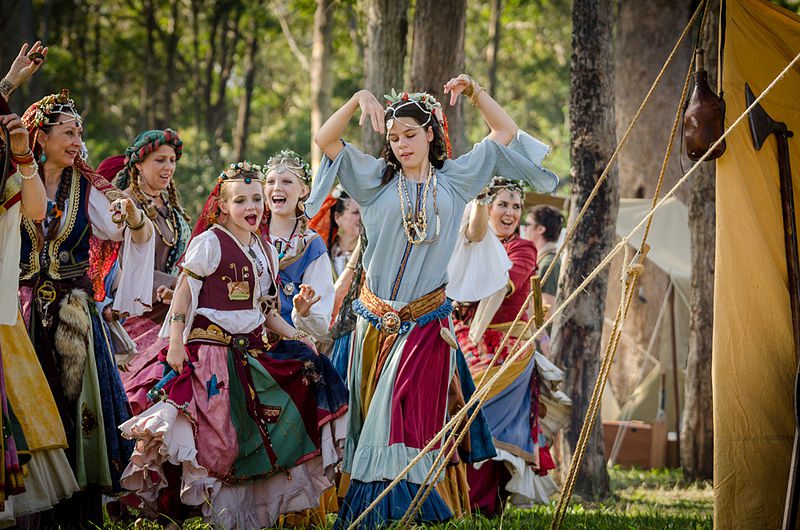
Today, human trafficking in Bulgaria exploits both foreigners and Bulgarian citizens in an ongoing trade for sex, free labor and forced begging. This small Eastern European country is one of the main sources of human trafficking in the entire E.U. Traffickers transport people, mostly women, from Bulgaria to Sweden, France and other countries in Western Europe.
The Status of Human Trafficking in Bulgaria
The Office to Monitor and Combat Trafficking in Persons tracks countries’ efforts to eradicate this form of “modern slavery,” and sets worldwide standards to follow. A 2020 report noted that while Bulgaria does not yet meet the minimum international standards to eliminate trafficking, the country is making immense progress. As a result, Bulgaria has a Tier 2 standing.
According to the Trafficking Victims Protection Act, the tier system comprises of three tiers:
- Tier 1: A government complies fully with the minimum requirements to eliminate severe forms of human trafficking.
- Tier 2: A government does not comply fully with minimum requirements, but is making significant efforts to do so.
- Tier 3: A government does not comply and is not making efforts to do so.
The People’s Struggle
The majority of victims of human trafficking in Bulgaria are from marginalized communities, most often Bulgarians of Turkish and Romani descent. These communities are more vulnerable than other groups because of their minority status, prolific poverty and history of discrimination in the country.
Even now, many European countries discriminate against Roma in particular. Reliable numbers of Roma and other marginalized communities are difficult to find, as these populations are often disincentivized from self-identifying. Estimates put the current percentage of Roma in Bulgaria anywhere from 5% to 21%. However, Bulgaria has one the largest populations of Roma in the world.
Despite this exposure to the culture, anti-Roma attitudes are prevalent and widely accepted. The prejudice against them exacerbates poverty and restricts access to health care and education, leading to higher rates of incarceration and greater vulnerability to crimes such as human trafficking.
Fighting for Human Rights
While the Bulgarian government struggles to initiate policies that ensure due process for human traffickers, accountability for corrupt law enforcement and proper victim identification, other contenders do their best to pick up the slack. NGOs and nonprofit organizations across Europe recognize the human rights crisis in Bulgaria and are stepping up to the plate.
In 1994, two women founded the Animus Association to support women who survive traumatic and violent events. Today, it organizes projects aimed at successful communication and gender equality in Bulgaria.
In a recent project dubbed TOLERANT, the Animus Association partnered with programs in Greece, Romania, Italy and Austria to promote employment opportunities for women who experienced sex trafficking. This project, though set back with the emergence of COVID-19, inspired the installation of a permanent program called the National Program for Prevention and Counteraction to Human Trafficking and Protection of Victims.
The Bulgarian Helsinki Committee, Bulgaria’s largest human rights group, runs a variety of projects and campaigns prioritizing respect, the protection of vulnerable populations and informing the public on important issues. In some cases, the committee provides free legal aid to victims of human rights violations. In 2019 alone, the committee represented people in 64 different cases. One of these was a case representing a minor victim of gang rape. It also closely monitors human rights violations in the country for documentation and research.
These organizations, along with many others, are the people’s tools for abolishing human rights crises like human trafficking in Bulgaria and all of Europe. Similar to the ACLU or NAACP of the U.S., programs that begin as small grassroots movements can grow to influence governments on a national and even international scale.
Power to Heal
While some organizations focus directly on the issues at hand, others take a more nuanced and preventative approach. Programs like the European Roma Institute for Arts and Culture (ERIAC) support disadvantaged communities by giving them a voice. ERIAC regularly provides opportunities for jobs and access to symposiums and events specifically for Roma. Through the celebration of art, history and culture, individuals become empowered to affect change and positive development in their own communities.
As communities begin to heal from the generational and ongoing trauma, the hope is to continue that healing outwards. ERIAC founders believe that exposure to art, personal narratives and examples of success will decrease prejudice and ignorance by educating the wider population. In addition to providing a platform for artists, all membership fees go directly to the winner of the Tajsa Prize. ERIAC awards this prize annually to an emerging artist who embodies the aspirations of ERIAC, using their art to lift up their communities.
There is a long way to go before Bulgaria eradicates human trafficking, but in the meantime, Bulgarian citizens are finding their own ways to combat this violence. Nonprofits and nongovernmental organizations are emerging to do the work that needs doing, advocating for the country’s citizens in a myriad of ways. Healing can happen even in the midst of adversity, and the amplification of the voices and culture of survivors is an essential part of this process.

The Connection Between Prison and Poverty
In many societies around the world, mass incarceration is rampant and disproportionately affects those living in poverty. In 2013, reports determined that more than 10 million impoverished people have undergone incarceration. This has led to a dampening of upward social mobility because even after prison convicts face the stigma of being a former felon, individuals who believed that their best option to rise from poverty was a life of crime will likely return to a community where their best survival option is criminal. A connection between prison and poverty emerges in developing countries where cyclical policies keep people at the bottom of the social hierarchy with no way out.
The Connection Between Prison and Poverty
Former U.N. Special Rapporteur on extreme poverty and human rights Philip Alston studied this prison-poverty connection. In 2018, he released his findings in a report that documented how overly harsh government policy can have a pronounced effect on impoverished offenders. Alston notes, “so-called fines and fees are piled up so that low-level infractions become immensely burdensome, a process that affects only the poorest members of society, who pay the vast majority of such penalties.” If someone fails to pay their debts, the government will often place restrictions on their driver’s license, making recidivism far more likely.
Pre-Trial Detention in Brazil
Brazil ranks as the country with the third-highest rate of incarceration, behind China and the U.S. Its prison population rises above 755,000. Like the United States, the developing country engages in pre-trial detention. Pretrial detention is the act of holding a person suspected of a crime without rights until a court date. However, poor people often stay in detention facilities longer than the wealthy. This is because they cannot afford the exorbitant cash bail that the wealthy can. A 2010 study found that hundreds stayed in jail several years past their planned release. Additionally, “irregularities” lead to the mistaken detainment of over 16,000 Brazilians. Pretrial detention inmates currently overcrowd Brazil’s prisons, which make up nearly a third of the inmate population.
The War on Drugs in Thailand
With the number of people incarcerated at 344,161, Thailand ranks as number six in the world when it comes to mass incarceration. Similar to Brazil, the country has its own struggles with prison and poverty. An unexpected explanation for Thailand’s overcrowded prisons is the American War on Drugs. In 1997, a financial crash forced many Thai people into unemployment. This economic despair led to an increase in the number of drug users. In 2003, the government chose to heavily police these now-impoverished citizens. While Thailand has backed away from violent crackdowns, the majority of arrests are still primarily drug offenses. To evade time in prison, wealthier people can pay the $1,300 in drug charges. In 2016, only 27% of first-time offenders managed to avoid recidivism, as those in poverty could not afford bail.
Penal Reform International
While the connection between prison and poverty seems deep-rooted, it is still capable of transformation. Organizations have worked to alleviate the flaws of prison systems throughout the globe through educational, political and relief efforts to break the cycle. Penal Reform International is one such group.
Founded in 1989 with a focus on rehabilitation, Penal Reform International (PRI) works with the United Nations and other organizations to advocate for fair treatment of people in the criminal justice system. PRI observes detention centers and offers solutions to systemic abuse. For example, PRI studied the lives of the female offender population in the country of Georgia. The report found that they detained over a third for non-violent drug offenses. About 40% of those questioned committed crimes for financial reasons, while 80% were also mothers. Among those who received a release from prison, more than half had trouble finding employment due to their record, while most never obtained any kind of rehabilitative assistance. Between 2016 and 2019, PRI created a project providing services to Georgian women prisoners. Services included legal aid, counseling, business grants and healthcare assistance. Respondents expressed that the project has greatly improved their mental wellbeing, preparedness and self-esteem.
Prison and poverty can intertwine when the prison system values money over people. Nevertheless, learning about these issues surrounding developing countries can shed light on the flaws in one’s own.
– Zachary Sherry
Photo: Flickr
The Anglophone Crisis in Cameroon
Since November 2016, the Anglophone Crisis in Cameroon has been ongoing, which is an issue that links to its population’s identity. A section of the English-speaking minority population of the country, originally from the northwest and southwest regions of the country, is protesting against the current government. Their claims mostly focus on the marginalization of the English language, the lack of access to English education, the common law system and even jobs for native anglophone Cameroonians. The conflict started with a peaceful protest from anglophone lawyers and teachers and escalated with the emergence of an anglophone separatist movement. As the situation remains tense, the attention of the international community is necessary.
The State of Affairs
Beyond the language and identity claims, this conflict collides with other threats, such as Boko Haram, that have significantly weakened the economy of the country, especially in the northwest and southwest regions. In 2018, the National Organization of Employers, Gicam, reported that about 45% of the cocoa produced in the country is in the southwest, and 75% of Cameroonian arabica coffee comes from the northwest. Export earnings from these two commodities have fallen by 20% due to the conflict in the English-speaking area, where a fifth of the total population lives. Moreover, an increase in unemployment and the shutting down of businesses has occurred. Human Rights Watch estimates nearly 300 Cameroonians have died since January 2020 in regions of concern, and over 1 million have experienced internal displacement. In such a context, foreign aid could be particularly beneficial, but things are not that simple.
The Challenges of Foreign Aid
Through time, Cameroon has received foreign aid from countries and institutions such as France, the United States and the World Bank. In September 2020, Cameroonian Foreign Minister Lejeune Mbella Mbella asked for increased international cooperation in support of the country’s ongoing struggle against “terrorism.” Moreover, the UN OCHA has launched a Humanitarian Response Plan (HRP) that identified 3.9 million people in need. Estimates determined that the initiative would provide $320.7 million USD.
Despite some previous successes of foreign aid programs in Cameroon, challenges remain, especially in the context of the current Anglophone Crisis. Firstly, aid and humanitarian workers are highly at risk, which slows down their work. In January 2020, pro-independence fighters kidnapped seven aid workers from the Martin Luther King Jr. Memorial Foundation and the COMINSUD. Although they later released all staff, the abductions resulted in several organizations restricting their area of operations.
Secondly, cooperation with the government tends to be difficult sometimes. Indeed, Cameroonian authorities have publicly charged NGOs such as Human Rights Watch, Amnesty International and the Think Tank International Crisis Group – among other organizations – of working to “destabilize state institutions.” Resistance also comes over concerns of aid distribution, as Cameroon ranks 152 out of 180 countries in the 2018 Transparency International corruption perceptions index, and it ranks 166 out of 190 economies in the World Bank’s Doing Business 2019 report.
Good News and Solutions
Despite remaining challenges and perceptions, foreign aid has had some success in Cameroon in the past, which keeps some humanitarian workers optimistic, even during the Anglophone Crisis. Indeed, the poverty rate has dropped from 53% in 1996 to 37.5% in 2014. As many organizations continue to provide humanitarian aid to Cameroon, some experts remain optimistic that the living conditions of Cameroonians will continue to improve. The work of state and nonprofit actors continues to reap positive results, though the improvements cannot always occur easily. The United States Agency for International Development (USAID) is one of the organizations providing support to the country.
To improve these good results, it appears important to address the different obstacles to the redistribution of foreign aid in Cameroon. For this purpose, both the state and civil society level initiate actions. Indeed, at the civil society level, international organizations such as the World Bank have developed a performance-based system – Country Policy and institutional Assessment – that allows the institution to evaluate the qualification of a country to receive aid while reducing the risks of corruption.
This kind of mechanism can be a standard for international NGOs providing financial assistance to Cameroon. At the state level, the Cameroonian government has made another step towards its decentralization process. Indeed, regional advisors have undergone recent election. Their role is to foster the development of their localities while remaining accountable to the people. These new authorities can increase transparency and can use their knowledge of the local dynamics to help humanitarian workers in the distribution of aid.
– Jules Sombaye
Photo: Flickr
Human Trafficking in Bulgaria
Today, human trafficking in Bulgaria exploits both foreigners and Bulgarian citizens in an ongoing trade for sex, free labor and forced begging. This small Eastern European country is one of the main sources of human trafficking in the entire E.U. Traffickers transport people, mostly women, from Bulgaria to Sweden, France and other countries in Western Europe.
The Status of Human Trafficking in Bulgaria
The Office to Monitor and Combat Trafficking in Persons tracks countries’ efforts to eradicate this form of “modern slavery,” and sets worldwide standards to follow. A 2020 report noted that while Bulgaria does not yet meet the minimum international standards to eliminate trafficking, the country is making immense progress. As a result, Bulgaria has a Tier 2 standing.
According to the Trafficking Victims Protection Act, the tier system comprises of three tiers:
The People’s Struggle
The majority of victims of human trafficking in Bulgaria are from marginalized communities, most often Bulgarians of Turkish and Romani descent. These communities are more vulnerable than other groups because of their minority status, prolific poverty and history of discrimination in the country.
Even now, many European countries discriminate against Roma in particular. Reliable numbers of Roma and other marginalized communities are difficult to find, as these populations are often disincentivized from self-identifying. Estimates put the current percentage of Roma in Bulgaria anywhere from 5% to 21%. However, Bulgaria has one the largest populations of Roma in the world.
Despite this exposure to the culture, anti-Roma attitudes are prevalent and widely accepted. The prejudice against them exacerbates poverty and restricts access to health care and education, leading to higher rates of incarceration and greater vulnerability to crimes such as human trafficking.
Fighting for Human Rights
While the Bulgarian government struggles to initiate policies that ensure due process for human traffickers, accountability for corrupt law enforcement and proper victim identification, other contenders do their best to pick up the slack. NGOs and nonprofit organizations across Europe recognize the human rights crisis in Bulgaria and are stepping up to the plate.
In 1994, two women founded the Animus Association to support women who survive traumatic and violent events. Today, it organizes projects aimed at successful communication and gender equality in Bulgaria.
In a recent project dubbed TOLERANT, the Animus Association partnered with programs in Greece, Romania, Italy and Austria to promote employment opportunities for women who experienced sex trafficking. This project, though set back with the emergence of COVID-19, inspired the installation of a permanent program called the National Program for Prevention and Counteraction to Human Trafficking and Protection of Victims.
The Bulgarian Helsinki Committee, Bulgaria’s largest human rights group, runs a variety of projects and campaigns prioritizing respect, the protection of vulnerable populations and informing the public on important issues. In some cases, the committee provides free legal aid to victims of human rights violations. In 2019 alone, the committee represented people in 64 different cases. One of these was a case representing a minor victim of gang rape. It also closely monitors human rights violations in the country for documentation and research.
These organizations, along with many others, are the people’s tools for abolishing human rights crises like human trafficking in Bulgaria and all of Europe. Similar to the ACLU or NAACP of the U.S., programs that begin as small grassroots movements can grow to influence governments on a national and even international scale.
Power to Heal
While some organizations focus directly on the issues at hand, others take a more nuanced and preventative approach. Programs like the European Roma Institute for Arts and Culture (ERIAC) support disadvantaged communities by giving them a voice. ERIAC regularly provides opportunities for jobs and access to symposiums and events specifically for Roma. Through the celebration of art, history and culture, individuals become empowered to affect change and positive development in their own communities.
As communities begin to heal from the generational and ongoing trauma, the hope is to continue that healing outwards. ERIAC founders believe that exposure to art, personal narratives and examples of success will decrease prejudice and ignorance by educating the wider population. In addition to providing a platform for artists, all membership fees go directly to the winner of the Tajsa Prize. ERIAC awards this prize annually to an emerging artist who embodies the aspirations of ERIAC, using their art to lift up their communities.
There is a long way to go before Bulgaria eradicates human trafficking, but in the meantime, Bulgarian citizens are finding their own ways to combat this violence. Nonprofits and nongovernmental organizations are emerging to do the work that needs doing, advocating for the country’s citizens in a myriad of ways. Healing can happen even in the midst of adversity, and the amplification of the voices and culture of survivors is an essential part of this process.
– Kari Millstein
Photo: Wikipedia Commons
5 Facts about Human Trafficking in Germany
Human trafficking remains a major element of the world economy, despite the efforts of governments and international organizations to eradicate it. Traffickers traffick humans for a wide range of reasons, from forced manual labor to sexual slavery. In countries like Germany, a major European hub for immigration, human trafficking is particularly problematic. Here are five key facts to know about human trafficking in Germany.
5 Facts About Human Trafficking in Germany
Looking Ahead
Despite Germany’s status as a standard-bearer for the E.U., it has a checkered record regarding human trafficking. While Germany’s protocols on human trafficking exceed the basic United States standards for the elimination of trafficking, there are areas in which the country could manage human trafficking better. Particularly, Germany’s large immigrant population provides a vulnerable target group for human traffickers.
– Leo Ratté
Photo: Wikipedia Commons
How Private Sector Businesses Help Achieve SDGs
The U.N. Sustainable Development Goals
In 2015, the U.N. created 17 Sustainable Development Goals to be achieved by 2030. The overarching aim of the SDGs is, “peace and prosperity for people and the planet.”
The goals principally involve less discrimination worldwide, eliminating poverty, giving more individuals more economic and educational success, increased justice, prioritizing the environment, improving global health and more.
The SDGs are meant for everyone to tackle, from the average person to national governments and major corporations such as private sector businesses.
The Need for SDG Funding
Reaching all 17 SDGs by 2030 will cost between $5-7 trillion per year, according to the United Nations. Although in 2016, development assistance funds hit a high of $142.6 billion, there is still a need for a much greater infusion of funds and a significant need for the support of private sector businesses.
The lack of available funds from the public sector, specifically, is the main reason why there has not been more progress toward the SDGs. Public sector sources of funding are predominantly national governments and government organizations.
Referencing this lack of funding, Guterres lamented the lack of progress made toward the SDGs and urged business leaders in the private sector to step up. “We need business leaders to use their enormous influence to push for inclusive growth and opportunities,” states Guterres. “No one business can afford to ignore this effort and there is no global goal that cannot benefit from private sector investment.”
Businesses Leading Change Through SDGs
Because there is an apparent need for more corporations to invest in SDGs, it is important to recognize those businesses fighting poverty through a commitment to achieving the SDGs.
The U.N. and 30 leaders of multinational companies created the Global Investors for Sustainable Development Alliance in September 2019. They immediately began supporting initiatives for clean energy in Latin America, Africa and Asia, among other goals.
The United Nations Environment Programme Finance Initiative drafted the Principles for Responsible Banking to serve as guidelines for banks to commit themselves to the SDGs. Worldwide, more than 200 banks have committed to these principles. This figure represents more than one-third of the global banking industry. The signatory banks must report on their achievements, goals and growth regarding the principles. They must also accomplish all principle requirements within a set timeline. This ensures tangible strides toward actualizing the SDGs.
The company, PepsiCo, is also making good strides with the SDGs. It is committed to multiple projects in agreement with specific SDGs. The company established a “Green Bond” worth $1 billion in 2019 to do so.
A notable project is the company’s aspiration to restore 100% of the water it uses for manufacturing to areas that are “high water risk.” It aims to do this by water reuse and recycling initiatives, supplying smallholder farmworkers with “water-saving technologies” and sustainable agricultural techniques. PepsiCo cites SDG 6, “Clean Water and Sanitation,” SDG 15, “Life on Land” and SDG 12, “Responsible Consumption and Production,” as aligning with this particular objective.
The Contribution of Foundations
Private sector businesses fighting poverty go beyond business transactions and profitable decisions. Many companies commit to progressing the SDGs by supporting foundations. Top contributing foundations include the Bill and Melinda Gates Foundation, Fidelity Investments Charitable Gift Fund and Gothic Corporation. Total global funding for the SDGs from foundations is upwards of $216 billion.
All these examples of private sector businesses committing to the SDGs prove it is a worthwhile endeavor that needs support on a broad scale. In the words of Guterres, “Corporate leadership can make all the difference to creating a future of peace, stability and prosperity on a healthy planet.”
– Claire Kirchner
Photo: Flickr
3 Movies Bringing Awareness to Honor Killings
“A Girl in the River: The Price of Forgiveness” (2015)
In this 40-minute-long documentary, director Sharmeen Obaid-Chinoy tells the story of Saba, a Pakistani woman who was sentenced to death for falling in love and marrying a man who was once promised to her. Her story of survival is harrowing and heart-wrenching and the aftermath offers one of the most scathing indictments of honor killing in recent years. This Oscar-winning short film is undoubtedly one of the best stories about honor killings in the cinematic canon and is a must-see for anyone interested in international women’s rights.
“Sairat” (2016)
This popular Indian film tells the story of two star-crossed lovers on opposite sides of the economic and social spectrum. Parshya is the son of a fisherman while Aarchi is the daughter of a powerful politician who will not sacrifice his status in the caste system under any circumstances. This romantic tragedy is a slightly more macabre adaptation of Shakespeare’s Romeo and Juliet but accomplishes more than simple entertainment. The film takes place in the progressive state of Maharashtra, disrupting the common narrative that honor killings occur exclusively in traditional states.
“A Regular Woman” (2019)
Based on a true story, “A Regular Woman“ follows a young, self-determined German woman of Turkish descent. Her deeply patriarchal family frequently stands in the way of her living her own life, rejecting her lifestyle as improper. Eventually, tensions escalate to the point where she no longer feels safe at home so she runs away with her child. She then reports her brother, the chief agitator, to the police. While primarily a story about an honor killing, the film also examines the greater threat of patriarchal oppression and a women’s struggle to be heard.
Artistic expression plays a pivotal role in giving voice to people silenced by oppressive forces in the world. It offers perspective and situates observers in a world that they would not otherwise understand. Cinema offers viewers visceral and visual experiences which become more and more important as we hear stories about the unimaginable. These three films are examples of how artistic expression can bring awareness to honor killings and give voice to victims as well as survivors.
– Matthew Hayden
Photo: Flickr
Eliminating Poverty: Update on SDG 1 in Mozambique
Poverty in Mozambique
According to Mozambique’s Household Budget Survey, 46.1% of the population lives below the poverty line. There exists multidimensional poverty measured by the quality of family, nutrition, education, work, health, sanitation and hygiene (WASH), resulting in 46% of children 17 years and below living in poverty.
The country’s location makes it vulnerable to many natural disasters that often stunt its economic growth, making it difficult to eliminate poverty in Mozambique. Mozambique faces a combination of tropical and dry climates, an abundance of natural resources ranging from renewable energy sources to agro-ecological regions, forests and wildlife. The Gross Domestic Product (GDP) growth rate fell from 7.4% to 3.7% between 2007 and 2017 as a result of drought, flood and cyclone natural disasters.
Barriers to Eliminating Poverty in Mozambique
The recent COVID-19 pandemic has brought an additional burden to Mozambique, coming just as the country was recovering from major economic shocks related to its recent debt crisis and the devastating 2019 cyclones. Since the onset of the pandemic, Mozambique has already experienced a 4% decline in its economic growth expectations with significant adverse effects on its already struggling economy. Mozambique is expected to feel the lasting effects of this shift in the coming years, facing even larger external and fiscal financing gaps than previously anticipated. Further, there is concern that large numbers of Mozambicans are on the verge of re-entering poverty, erasing much past progress and setting the country back on the SDG to eliminate poverty.
One of the main barriers to eliminating poverty in Mozambique is its long-standing exclusion regarding gender and other vulnerable groups and regional public policy imbalances. In order to have sustainable poverty reduction, Mozambique must give special attention to eliminating these key issues.
Current Efforts and Solutions
The Nation Basic Social Security Strategy (ENSSB) was developed to help achieve the government’s five-year plan (2015-2019) to implement actions aimed at reducing poverty and vulnerability. Between 2016 and 2024, it seeks to ensure impending economic growth is of benefit to all its citizens, particularly the most vulnerable. A strategy based on the Agenda 2063 of the African Union and the U.N.’s SDGs, the ENSSB was designed to build an efficient and effective social security system in Mozambique. It directly aims to sustainably support and strengthen Mozambique’s most impoverished population’s capacity to defend themselves against social risks such as violence, abuse, exploitation, discrimination, and social exclusions due to their elevated vulnerability.
The World Bank Group (WBG) currently supports a wide and diverse lending portfolio for the benefit of eliminating poverty in Mozambique. Focusing on Mozambique’s most vulnerable and underserved populations, the WBG has lent its resources to 27 operations with contributions of $3 billion funded by the International Development Association (IDA). The International Finance Corporation additionally has existing investments of up to $176 million, with $15 million in advisory services alone as of June 2020. The WBG’s portfolio consists of two Multilateral Investment Guarantee Agency exposures of up to $89.1 million as well.
Such large and varied contributions and investments have the following primary goals: diversification for economic growth and development, human capital development, and increased sustainable development, prosperity and resilience.
COVID-19 Relief Support in Mozambique
As a result of the onset of the pandemic, Mozambique is struggling with a growing fiscal gap and economic fallout. In order to prevent deepening long-term economic effects, the WBG approved a $100 million grant from the IDA on October 22, 2020. This funding aims to mitigate the pandemic’s adverse impact by providing emergency government financing, supporting affected businesses and households and improving fiscal sustainability reform.
This effort of the WBG will serve as part of its existing plans to aid Mozambique in post-crisis recovery in the form of improving health services, access to water and sanitation, extending social protection and labor, improving business, job creation and retention and economic management. These goals will help push Mozambique forward, improve Mozambicans’ quality of life and lift people out of poverty. These investments will be implemented through a two-pronged approach. First, the health sector will be addressed, along with social security, safety and water access for all Mozambicans, with a particular focus on the urban poor and vulnerable populations. Secondly, supporting small and medium enterprises’ (SME) access to financing and liquidity will help catalyze economic growth in the financial sector and industry reform and strengthen Mozambique’s fiscal and debt framework.
Though Mozambique has faced many setbacks in its economic development in recent years, the above strategies will hopefully set the country on its way to achieving the very first Sustainable Development Goal of eliminating poverty in Mozambique.
– Rebecca Harris
Photo: Flickr
Disability and Poverty in Egypt
When people think of Egypt, they may conjure up images of the grand ancient sphinxes guarding towering pyramids or pharaohs dripping with golden threads. While this is certainly a part of the Egyptian story, it does not paint a comprehensive picture. Unfortunately, there are also strikingly high rates of disability and poverty in Egypt. While the 2006 Egyptian census determined that around 1.4 million Egyptians have disabilities, the U.N. estimates that approximately 12 million people— or almost 15% of the population– are disabled.
Statistics on Disability and Poverty in Egypt
Here are some statistics regarding disability and poverty in Egypt:
The Vicious Cycle of Disability and Poverty
As with many developing countries, disability and poverty in Egypt create a vicious cycle. Consequences of poverty, such as unsanitary living conditions, poor access to clean water, malnutrition and diseases regularly precipitate disabilities, especially for children. These disabilities include but are not limited to blindness, developmental and cognitive disabilities, stunting and physical deformities. Additionally, early pregnancies and high fertility rates (which correlate with high poverty rates) often result in disability. This is true for the mothers who become weak and illness-prone from so many pregnancies, and for the children born to exceptionally young and old mothers.
To make matters worse, stigma and prejudice around disabilities tend to perpetuate poverty among the disabled population, because they make it harder to find good work, if at all. Specifically, 82% of women and about 35% of men with “narrow disabilities” are not in the workforce. Many of the women who are in the workforce work in the informal sector, meaning they may do their work from home and are not on official payrolls. This puts them at a further disadvantage because they do not receive health insurance and rarely have legal labor contracts. Even employers who hire people with disabilities to official roles tend to disincentivize them from coming to work or pay unfair wages.
Policy Not-in-Action
Technically, the Egyptian government has taken steps to ensure the rights of disabled citizens. For example, article 81 of the constitution states that disabled persons must have the same rights and opportunities as all other citizens. It also promises that the State will work to provide jobs and accessibility to accommodate special needs. Egypt also ratified the United Nations Convention on the Rights of Persons with Disabilities (UNCRPD) and the U.N. 2030 Agenda on Sustainable Development. Both agreements require countries to regularly report what their government has done to help those with disabilities.
Despite this, Egypt has scarcely done anything to implement laws or policy, nor has it reported to the U.N. committees. Prejudices, such as the belief that disabilities are punishments from God or malevolent spirits called jinn, have meant officials rarely follow through with the policies’ promises.
Help is on the Way
Lack of governmental action does not mean that there is no hope for disabled Egyptians. Many organizations are giving individuals with disabilities the tools to succeed in the workplace and minimizing the stigma around disability in general. For example, the Egyptian nonprofit Helm has equipped more than 1,500 disabled people with the skills they need for a variety of jobs. They also train employers to create accessible and equitable workplaces and have already trained more than 5,000 corporate employees. The nonprofit has also won multiple awards and gained support from American institutions, such as MIT and Harvard for the work they have done. From curb ramps to corporate guidance, NGOs like Helm are creating inclusive work environments so that people with disabilities can avoid or transcend poverty.
Corporations are also joining in the fight to empower disabled workers and erase the stigma around disability. One such corporation, the mobile phone company Orange, is partnering with the Smile Foundation, a nonprofit that has already provided skills training to hundreds of neurodivergent Egyptians. The Smile Foundation also recognizes the connection between socio-economic status and disability, so it focuses its efforts on people coming from poverty. These efforts mean many disabled Egyptians can become equal members of the workforce and work their way out of poverty. Additionally, the Smile Foundation has organized multiple campaigns that convince the public that people with disabilities are capable employees and hard workers who deserve respect and equal rights.
The Positive Perfect-Storm
Disability and poverty create a negative feedback loop that can seem inescapable. However, a nonprofit advocacy and government policy can also work together to create a positive self-reinforcing cycle. First, many groups are already working to minimize the stigma around disability in Egypt. Less stigma will make authorities more likely to intervene when there are breaches of disabled people’s rights. Moreover this, in turn, will give current government policies more power to improve the lives of people with disabilities. These improvements — specifically equal treatment in the workforce and quality education — provide clear paths away from the spiral of disability and poverty in Egypt. As a result, while the present may seem bleak, change is emerging right over the horizon.
– Elyssa Nielsen
Photo: Flickr
The Plight of Human Trafficking in Yemen
The story of Yemen has been more bitter than sweet in recent years. A multinational proxy war that has become disguised as a civil war has landed the country into the illustrious label of “worst humanitarian crisis.” While many experts understand the deep-rooted complexity of the Yemeni disaster, few acknowledge the many equitable woes, such as human trafficking, that have emerged from the other larger issues. The numbers on human trafficking in Yemen are very unclear due to the lawlessness throughout the country but NGOs reported many Yemeni populations being at risk because of the armed conflict and economic conditions. Whether it be a migrant in search of work or a soldier fighting in the conflict, the voyage is dangerous and the process is unfair.
Human Trafficking and African Migrants
Saudi Arabia has the largest economy out of all the Arab states due to its large petroleum reserves. This attracts many migrants from east Africa, specifically Somalia and Ethiopia, who are searching for opportunities that are harder to come by in their own countries. In order to reach Saudi Arabia, they have to cross the Red Sea into Yemen and travel north to the border which requires a complex network of smugglers to organize travel and get them entry into the Saudi Arabian border. Approximately 138,000 people, mostly Ethiopians, crossed the Red Sea in 2019. However, those numbers reduced in 2020 due to the COVID-19 pandemic.
The conflict in Yemen has allowed these smugglers to thrive from the lawlessness. But the conflict adds an increased level of danger and those individuals who decide to make the trek across the Red Sea and through Yemen must put themselves at the mercy of a smuggler. Additionally, the fighting along the border, as well as road closures due to the COVID-19 pandemic, have made it difficult to get into Saudi Arabia. As a result, many end up having to stay in Yemen with no money or communication with family back home.
Houthi Control
Some migrants get close to reaching the Saudi Arabian border in Houthi-controlled northern Yemen but if Houthis catch them, they frequently have to remain in Yemen with very few ways of leaving. Migrants that Houthis catch experience arrest and must pay an “exit fee” for which they can then go back down south to the edge of Houthi control. At this point, they do not have money or work and thus become stuck in Yemen.
Some migrants face even worse fates if Houthis catch them. Upon arrival, many go to Yemeni detention centers where they wait for their family back home to send a ransom while they experience torture and abuse.
Human Trafficking and Soldier Recruitment
Internationally denounced, many Yemeni end up fighting in the ongoing conflict, with Saudi Arabia having a large role in the recruiting. Recruiters receive pay for each person they send to the Saudi Arabian border, but oftentimes those who undergo recruitment are young soldiers who live in tough circumstances making it easy for others to exploit them. The situation has received the description of “a trafficking of youth souls at the port, just like livestock.”
Recruits end up in terrible conditions and they have to fight to survive. Once they arrive at the recruitment camp, they can only leave if they obtain an injury or participate in a collective protest. Additionally, they can experience detention in prisons if they try to escape. At one point, Houthi forces bombed a prison with detainees that attempted to escape the fighting, resulting in the detainees’ deaths. For many, the only option for escape is to pay a smuggler. This dangerous cycle for a recruited soldier makes human trafficking in Yemen a lucrative business.
Actions to Stop Human Trafficking in Yemen
Because of the lack of control Yemen has over its own country due to the conflict, poor economy, lack of basic institutions and many other problems, it is not taking enough tangible steps to help curb the business of human trafficking. However, one small group battling the problem is the Yemen Organization for Combating Human Trafficking, which emerged in 2009.
Responses from the international community and the U.S. government are the most crucial in helping stop the problem. UNICEF published a paper focused on the issue and the policy proposals that it has determined would be the most effective. Those proposals focused on eliminating the supply and demand of the trafficking business as well as recommending governmental responses both regionally and around the world that would target families vulnerable to trafficking.
The Yemeni government repeatedly recognizes this as a problem and has made anti-trafficking law enforcement efforts but it is clear that it requires more attention. Until more international involvement with a focus on diplomatic steps to bring peace to Yemen emerges, human trafficking will thrive under the chaos. President Biden recently announced the U.S. would be ending support to Saudi Arabia for its offensive efforts in Yemen. One will have to wait and see whether that will have any significant impact on bringing peace to the country and curbing the demand for human trafficking. However, at least it is one positive stride in comparison to other approaches thus far.
– Stephen Blake Illes
Photo: Flickr
5 Facts About Denmark’s Foreign Aid
When it comes to foreign aid, one of the most widely-commended countries is the small nation of Denmark. The Danes are well-known for their generous aid spending and both donor and recipient nations recognize Denmark as a highly effective partner in the fight against global poverty. Here are five facts about Denmark’s foreign aid.
5 Facts About Denmark’s Foreign Aid
One of the most effective ways developed governments can help to improve conditions in poverty-stricken nations is by properly funding and managing healthy foreign aid budgets. By taking Denmark’s example, more countries should seek to meet the U.N.’s 0.7% GNI target and implement this aid in a manner that best fits the needs of impoverished individuals in low-income countries.
– Calvin Melloh
Photo: Flickr