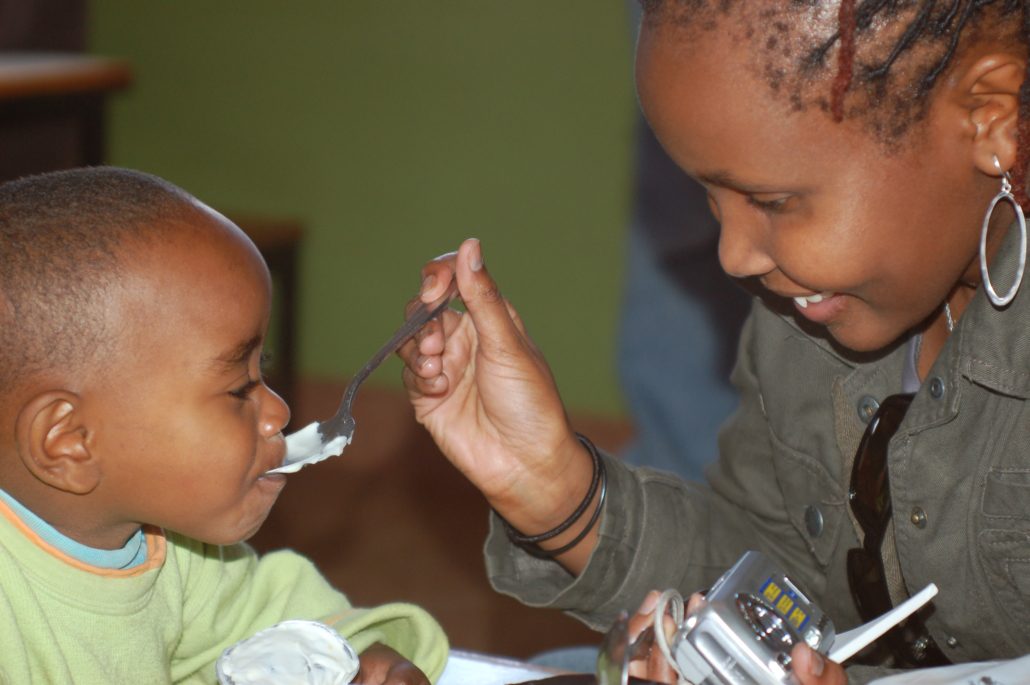
Scofield Orphanage, located in rural Kenya, is home to about one hundred orphans. Ben and Emily Okello, the Kenyan founders, instill in each child that they are capable and worthy. They dedicate their lives to this ethical endeavor and invest in the self-sustaining future of each child despite the ongoing difficulties caused by food shortages and the pandemic.
A Self-Sustaining Future
The Borgen Project spoke with Patty Congdon, a longtime volunteer who works alongside Ben and Emily Okello. Concerning the start of Scofield Orphanage, she said “Most of them, the parents have died of HIV, and therefore, they are seen as unclean, and people just leave them to die, and so, he just couldn’t stand it anymore…he said, ‘Emily, can I bring ten children home?’ And she said yes… and that was the start of Scofield.” After starting the orphanage, Ben and Emily realized that they would need to provide an education to the children. By doing so, they invest in each orphan’s self-sustaining future.
A population-based survey conducted in Kenya found that 93.9% of school-aged single orphans had never attended school. Orphans in rural parts of Kenya struggle to complete an education, and many of them never have an opportunity to attend school; without passing the national exam and acquiring a university degree, orphans struggle to acquire a job that lifts them out of poverty. Additionally, without a supportive community, orphans are at risk for exploitation, life-threatening food insecurity, medical complications and a variety of other dangerous circumstances.
Education in Kenya
In Kenya, students must pass eighth-grade national exams to advance into high school education. From there, they must pass twelfth-grade national exams to acquire university education. Patty Congdon shares that over this past decade, every single student at Scofield Orphanage has had a 100% pass rate in the eighth and twelfth-grade national exams. During the pandemic, children in Kenya faced school closures and many lost access to educational resources.
The loss of education especially affected vulnerable children in rural areas. This is attributable to the fact that remote learning is not an option in many isolated locations. Vulnerable children in rural areas are at much higher risk for food insecurity as well as exploitation. This is especially true when they lose access to the resources provided to them by schools. The pandemic heightened the struggle for children located at Scofield Orphanage in Kenya. However, they continue to find ways to provide education, food and shelter to each vulnerable child they house.
Fighting Educational Disparities
Due to the influx of young people pursuing higher education, many universities have increased their standards for grade point averages. Whereas students could previously apply to college with only a C+ average, many universities now require a B average. This heightened expectation has not diminished the opportunities available to the industrious orphans at Scofield.
Patty Congdon said, “Right now, not only are our kids going to university, but they are going to university for engineering, for medical, for computer science. They are going for high-level professional skills, which has just been the other thing that has just been unbelievable because Ben sets such a high standard for them from the minute they can walk on that they are capable. He just instills in them that they are capable, each to their own skills, and that they are to be professionals, and so, they don’t just want to be successful, they want to be successful at an incredibly high level, and it’s just amazing. So, every kid that we have right now who’s in school is going for all these advanced professional degrees on top of it and doing well.”
More than 90% of Kenya’s orphans do not attend school; meanwhile, the orphans housed at Scofield Orphanage have a 100% pass rate on both eighth and twelfth-grade national exams. Furthermore, those that have advanced to university are studying in prestigious fields. This is a meaningful step toward ensuring the self-sustaining future of each child. It also proves that, with proper support and education, the lives of orphans in Kenya can realistically improve.
The Challenges of 2020
Though Scofield Orphanage continues to succeed, it faced significant difficulties during the pandemic and locust invasion of 2020. Kenya’s government shut down all motor vehicle travel. As a result, no vehicles could come in and out of towns and villages. Additionally, Scofield Orphanage’s teachers were sent home; Ben and Emily Okello oversaw approximately one hundred children’s education.
Concerning the food shortages and travel bans, Patty said, “Ben had to go by foot to try to find food in villages that had been decimated by flood, drought and locusts.” She continued, “He had been able, in the past, to go over the border to Tanzania to try to get food. Borders were closed, and as he tried to go wider and wider—he’s doing all of this by foot— someone finally gave him a donkey cart. Can you imagine going forty miles with a donkey cart to look for grain? And then finding it and coming forty miles by foot with a donkey cart with, you know, ninety pounds of grain? It’s a lot, and everything is very expensive. So, everything’s been really difficult. Thankfully, none of the children have come down with COVID.”
Scofield Orphanage endured the food shortages as well as the pandemic, but Patty Congdon continues to advocate for consistency on the part of donors who contribute to Scofield Orphanage. Scofield needs consistent support so that they can afford food, necessities, medical treatment, teachers’ salaries and education.
The Need for Support
When asked, “What are the biggest needs facing Scofield right now?” Patty Congdon said, “Consistency in funding and at levels that are sustainable is still the number one challenge. A big goal that we still have is trying to get them solar power because they still don’t really have lights. They don’t have running water, and from a health perspective, running water would be a game-changer, and being able to have things like computers to study, it all goes back to electricity, and right now they don’t have that.” She continued, “Basics like lights and running water and being able to plug in a computer, those things don’t exist. Those are the big challenges right now.”
Scofield Orphanage faces immense difficulties and is in need of consistent support. Nevertheless, it continues to transform the lives of orphans in rural Kenya by investing in the self-sustaining future of each child. The ethical role model it provides demonstrates how to effectively help vulnerable children.
– Hannah Brock
Photo: Flickr

Human Trafficking in Lesotho
The most recent Trafficking in Persons Report, which the Department of State of the United States issued in 2020, asserts that the government of Lesotho does not meet the minimum requirements for the elimination of human trafficking and is not acting significantly enough to reach them. Aided by the severe lack of financial resources in the African nation, crime and violence can proliferate at a significant pace.
Overview of Lesotho’s Economy
The latest estimates by The World Bank place Lesotho among the poorest countries in the world with a nominal per capita gross domestic product (GDP) of $1,299. Meanwhile, expectations have determined that real GDP growth will average 0.6% between 2019 and 2021 down from the average 1.6% that the country experienced between 2015 and 2019.
Over the last few years, a myriad of factors has contributed to the slow growth of the economy. The overall sluggish global economic growth, especially in emerging markets, the grave instability within the political sphere, the COVID-19 pandemic and the economic woes of South Africa, a country which encircles Lesotho land-wise while being its major trade partner, are the main culprits for the current predicament.
Unemployment remains high at 22.83% in 2020 but the country has made improvements in recent times. Namely, the national poverty rate decreased from 56.6% in 2002 to 49.7% in 2017, led by a 13% reduction in urban poverty. Meanwhile, the extreme poverty rate decreased from 34.1% to 24.1% over the same period.
Overview and Root Causes of Human Trafficking in Lesotho
Despite the lack of consistently reliable data, recent studies show that Lesotho is principally a country of origin where traffickers target women and children to traffick them both internally (from rural areas to urban areas) and externally. Due to the particular geography of the region, most victims end up in the bordering nation of South Africa.
The economic conditions that the last section described greatly influence the occurrence of this type of crime. Impoverished communities, high unemployment, low levels of education and pronounced gender imbalances overlap with an ever thriving demand for cheap labor, thus generating an optimal environment for the spread of human trafficking in Lesotho.
Lesotho offers particular allure to traffickers due to the monetary rewards that human trafficking offers along with Lesotho’s particularly lenient penal prosecutions. In the case of sex trafficking, Lesotho punishes with fines instead of imprisonment. Occasionally, victims themselves voluntarily cross the border on false hopes of employment and ameliorated living conditions only to fall prey to violence and abuse.
Government’s Response
The U.S. Department of State classifies countries within four tiers in its Trafficking in Persons Report. The Tier rating does not reflect simply the size of the problem of human trafficking in particular places but also the effectiveness of governments’ responses to it. The latest Report downgraded Lesotho to Tier 3, the worst possible classification. This means that the U.S. Department of State did not witness sufficient efforts from Lesotho’s government to mitigate the level of human trafficking during the previous year. The report urged Lesotho’s officials to further investigate, prosecute and convict traffickers through fair trials, adequately invest in shelters and protective services for victims and fund its Child and Gender Protection Unit (CGPU), which is responsible for handling trafficking cases within Lesotho law enforcement.
However, the report noted that some were taking steps to address human trafficking in Lesotho. The government partnered with an international organization and an NGO to conduct awareness-raising activities, it continued to participate in a regional data collecting tool and trained 27 diplomats on trafficking in persons. The state is also backing several projects with the aim of boosting economic growth, such as the Lesotho Highlands Water Project (LHWP II) and the improvement of service roads, therefore aiming to solve the root causes behind criminal activity.
– José Miguel Neves
Photo: Flickr
Scofield Orphanage: Investing in Children’s Futures
Scofield Orphanage, located in rural Kenya, is home to about one hundred orphans. Ben and Emily Okello, the Kenyan founders, instill in each child that they are capable and worthy. They dedicate their lives to this ethical endeavor and invest in the self-sustaining future of each child despite the ongoing difficulties caused by food shortages and the pandemic.
A Self-Sustaining Future
The Borgen Project spoke with Patty Congdon, a longtime volunteer who works alongside Ben and Emily Okello. Concerning the start of Scofield Orphanage, she said “Most of them, the parents have died of HIV, and therefore, they are seen as unclean, and people just leave them to die, and so, he just couldn’t stand it anymore…he said, ‘Emily, can I bring ten children home?’ And she said yes… and that was the start of Scofield.” After starting the orphanage, Ben and Emily realized that they would need to provide an education to the children. By doing so, they invest in each orphan’s self-sustaining future.
A population-based survey conducted in Kenya found that 93.9% of school-aged single orphans had never attended school. Orphans in rural parts of Kenya struggle to complete an education, and many of them never have an opportunity to attend school; without passing the national exam and acquiring a university degree, orphans struggle to acquire a job that lifts them out of poverty. Additionally, without a supportive community, orphans are at risk for exploitation, life-threatening food insecurity, medical complications and a variety of other dangerous circumstances.
Education in Kenya
In Kenya, students must pass eighth-grade national exams to advance into high school education. From there, they must pass twelfth-grade national exams to acquire university education. Patty Congdon shares that over this past decade, every single student at Scofield Orphanage has had a 100% pass rate in the eighth and twelfth-grade national exams. During the pandemic, children in Kenya faced school closures and many lost access to educational resources.
The loss of education especially affected vulnerable children in rural areas. This is attributable to the fact that remote learning is not an option in many isolated locations. Vulnerable children in rural areas are at much higher risk for food insecurity as well as exploitation. This is especially true when they lose access to the resources provided to them by schools. The pandemic heightened the struggle for children located at Scofield Orphanage in Kenya. However, they continue to find ways to provide education, food and shelter to each vulnerable child they house.
Fighting Educational Disparities
Due to the influx of young people pursuing higher education, many universities have increased their standards for grade point averages. Whereas students could previously apply to college with only a C+ average, many universities now require a B average. This heightened expectation has not diminished the opportunities available to the industrious orphans at Scofield.
Patty Congdon said, “Right now, not only are our kids going to university, but they are going to university for engineering, for medical, for computer science. They are going for high-level professional skills, which has just been the other thing that has just been unbelievable because Ben sets such a high standard for them from the minute they can walk on that they are capable. He just instills in them that they are capable, each to their own skills, and that they are to be professionals, and so, they don’t just want to be successful, they want to be successful at an incredibly high level, and it’s just amazing. So, every kid that we have right now who’s in school is going for all these advanced professional degrees on top of it and doing well.”
More than 90% of Kenya’s orphans do not attend school; meanwhile, the orphans housed at Scofield Orphanage have a 100% pass rate on both eighth and twelfth-grade national exams. Furthermore, those that have advanced to university are studying in prestigious fields. This is a meaningful step toward ensuring the self-sustaining future of each child. It also proves that, with proper support and education, the lives of orphans in Kenya can realistically improve.
The Challenges of 2020
Though Scofield Orphanage continues to succeed, it faced significant difficulties during the pandemic and locust invasion of 2020. Kenya’s government shut down all motor vehicle travel. As a result, no vehicles could come in and out of towns and villages. Additionally, Scofield Orphanage’s teachers were sent home; Ben and Emily Okello oversaw approximately one hundred children’s education.
Concerning the food shortages and travel bans, Patty said, “Ben had to go by foot to try to find food in villages that had been decimated by flood, drought and locusts.” She continued, “He had been able, in the past, to go over the border to Tanzania to try to get food. Borders were closed, and as he tried to go wider and wider—he’s doing all of this by foot— someone finally gave him a donkey cart. Can you imagine going forty miles with a donkey cart to look for grain? And then finding it and coming forty miles by foot with a donkey cart with, you know, ninety pounds of grain? It’s a lot, and everything is very expensive. So, everything’s been really difficult. Thankfully, none of the children have come down with COVID.”
Scofield Orphanage endured the food shortages as well as the pandemic, but Patty Congdon continues to advocate for consistency on the part of donors who contribute to Scofield Orphanage. Scofield needs consistent support so that they can afford food, necessities, medical treatment, teachers’ salaries and education.
The Need for Support
When asked, “What are the biggest needs facing Scofield right now?” Patty Congdon said, “Consistency in funding and at levels that are sustainable is still the number one challenge. A big goal that we still have is trying to get them solar power because they still don’t really have lights. They don’t have running water, and from a health perspective, running water would be a game-changer, and being able to have things like computers to study, it all goes back to electricity, and right now they don’t have that.” She continued, “Basics like lights and running water and being able to plug in a computer, those things don’t exist. Those are the big challenges right now.”
Scofield Orphanage faces immense difficulties and is in need of consistent support. Nevertheless, it continues to transform the lives of orphans in rural Kenya by investing in the self-sustaining future of each child. The ethical role model it provides demonstrates how to effectively help vulnerable children.
– Hannah Brock
Photo: Flickr
Mental Health Emergency Care Services for Women
Mental health emergency care services are a necessity for women across the globe. One in three women experiences a physical or sexual violation in their lifetime. The mental health implications of sexual and physical abuse against women are staggering. According to the World Health Organization (WHO) and the U.N., “Women who experience physical or sexual abuse are twice as likely to have an abortion.” It claims “the experience nearly doubles their likelihood of falling into depression,” as well as “[makes] them more likely to acquire HIV” and “have alcohol disorders.” Sustainable Development Goal (SDG) 5 is to “achieve gender equality and empower all women and girls.” Through this Sustainable Development Goal, the United Nations seeks to end gender-based violence.
In the meantime, many women suffer under the impact of the violence they have already endured. However, there are mental health agencies, emergency care centers and programs that help women after they suffer physical trauma. Here is some information about mental health emergency care services for women.
Samburu Girls Foundation
Doctor Josephine started the Samburu Girls Foundation after rescuing her cousin from a forced marriage and subsequently saving 20 other children. Samburu now rescues at-risk girls in four different counties in Kenya: Samburu, Marsabit, Isiolo and Laikipia. Samburu Girls Foundation helps girls escape child marriage, beading and female genital mutilation (FGM). Pro-bono counselors work to provide safe living conditions and psychological help to young girls who have suffered from sexual and physical abuse. The foundation also seeks to equip the children with a valid education. This occurs through the Schools End FGM program. This program educates communities on the harm that practices such as female genital mutilation induce. Over 1,183 girls have received help from this organization.
Forgotten Women Sexual Trauma Clinic
The organization, Forgotten Women, has a sexual trauma clinic that serves over 105,000 women per year. Its clinic primarily reaches Rohingya women who experienced sexual assault. Many of these women suffer from internal tearing and infections, thousands of whom have become pregnant. Since 2017, over 900,000 people have escaped from Myanmar to Bangladesh refugee camps. Unfortunately, a change in environment has not resolved the trauma that lingers with thousands of the brutalized women. Forgotten Women’s clinic offers several mental health services, such as one-to-one trauma therapy and group counseling sessions. These are necessary services that invest in the healing and well-being of women who have endured sexual, physical abuse and trauma.
The Spotlight Initiative
The Spotlight Initiative is a collaborative effort between the United Nations and European Union. It focuses on eradicating violence against women and girls, specifically in the following areas: Africa, Asia, the Caribbean, the Pacific and Latin America. In Southeast Asia, The Spotlight Initiative provides counseling support via telephone to women in need. According to the initiative, “Since [April 2020], the hotline has received seven times the number of calls it did during the same period in 2019.” The counselors accept calls from women who are suffering from violence. They are responsible for collaborating with local authorities, and referring women to counselors when necessary and supplying legal support.
The pandemic has also worsened violent conditions for women in Mexico. The violence against women and girls (VAWG) caused a spike in phone calls to an additional 53% at the start of 2020. Through the aid of the Spotlight Initiative, alongside the support of the government and private sector, Grupo Posadas hotels now provide seven costless nights to women and children in need of protective services. After their stay, they receive direction to justice centers and other helpful resources.
Collaboration
Working alongside the United Nations on the Sustainable Development Goals is a powerful way to end violence against women and girls. Violence has increased due to the conditions that the pandemic brought on. The services provided by organizations operating under The Spotlight Initiative, such as Forgotten Woman’s Sexual Trauma Clinic and Samburu Girls Foundation, are vital resources. They provide meaningful, mental health support emergency care services to women and girls that have already experienced violence and need help.
– Hannah Brock
Photo: Flickr
Developing Education in MENA
MENA, which refers to Middle Eastern and North African countries, has long struggled with promoting the value of education. Many children begin their lives with an intellectual disadvantage. This creates difficulties compounded by a drop in oil prices and the devastating effects of the COVID-19 pandemic. Therefore, many depend on education reforms, particularly in developing technology, to increase employment rates and stabilize the economy.
Low Education Rates in MENA
While the average adult literacy rate is 86% globally, the United Nations Educational, Scientific and Cultural Organization (UNESCO) identified that only 75% of the population in Arabic regions can read and write. This is a 30% increase from the 1970s. However, when considering elderly individuals above the age of 65, UNESCO found that the global average literacy rate is 78%, but a mere 38% in Arabic regions.
There is a rising concern about the literacy rates of young children and their education in MENA. The onset of COVID-19 closed schools as a safety precaution. An estimated 100 million students between the age of five and 17 stopped attending school. Additionally, around 14.3 million children do not attend school due to conflicts in Syria, Iraq and Yemen after the destruction of 8,850 of their institutions.
Girls’ Education in MENA
Around 67% of the Levant’s younger population think that they are not being taught enough. However, it is much worse for adolescent girls. Blatant gender discrimination controls the lives of many women, leading them to have an illiteracy rate of 42%, compared to 22% for their male counterparts.
Rates of women and girls acquiring education in MENA increased over the past half-century. The largest jump in registration was 7 million between 1950 and 1975. Nonetheless, a report published by the Organisation for Economic Co-operation and Development (OECD) stated that women in Egypt, Jordan and Libya must still obtain permission from the dominant male figures in their life to work independently. With the help of the United States’ Middle East Partnership Initiative (MEPI), programs to fund literacy campaigns, conferences and business training sessions have also expanded the support women and girls receive in relation to their education.
Education in MENA During COVID-19
To date, the pandemic closures affected more than 100 million tertiary school students and around 830,000 school staff. These students lack access to WIFI, computers, online courses and direct contact with teachers. There are increasing probabilities that less than half of students will meet the bare minimum requirements for math and language skills.
Luckily, some tertiary schools have reformed the education system. Through the Virtual University of Tunis (VUT) in Tunisia, nearly 110,000 students have started taking classes with the 18,000 professors that are aiding the initiative. In Morocco, 12 hours of daily lectures were also agreed to be broadcasted on sports channels that regularly play on television.
UNICEF updated its 2015 MENA Life Skills and Citizenship Education (LSCE) Initiative to match these unprecedented times. The organization strives to change the teaching methods presented through in-person and remote learning. Its methodology focuses on learning and teaching, promoting multiple pathways and enabling the environment. UNICEF wants to connect education to the labor market by becoming more skills-oriented. This initiative will also address the issue that the youth unemployment rate in MENA is 25%, the highest in the world.
These approaches and more can develop the future of children in MENA. Fostering a curiosity-filled environment will stimulate a productive generation and revolutionize the working sectors in the region. Transitioning to online courses and being more inclusive of gender and financial backgrounds will increase employment rates. With governments allocating 15% to 20% of total public funds on education, MENA can prosper.
– Sylvia Vivian Boguniecki
Photo: Flickr
Tackling COVID-19 in Tanzania
The COVID-19 pandemic has caused economies to slow, governments to scramble to respond and confined people to their homes. However, many countries have found ways to adjust to the limitations the illness brought on. New Zealand, South Korea and Australia are three countries that have successfully limited the spread of the virus. As a result, the nations were able to reopen and keep their people safe. On the other hand, Tanzania is one country that is struggling to contain the virus within its borders. As a result, there is no end in sight for COVID-19 in Tanzania.
Epidemics in Africa
Deadly diseases frequently spread throughout Africa. For example, the consistent recurrences and escalation of Ebola ravaged Africa from 2014 to 2016. Moreover, the Democratic Republic of the Congo has experienced the spread of diseases on and off since the 1970s. Furthermore, Africa had 229 million cases of illnesses and diseases in 2019. Of these cases, about 94% of them were malaria cases and deaths.
Excluding Antarctica, Africa has the second-lowest transmission rate. As a result, COVID-19 has not affected many African countries as much as other nations. Many African nations took appropriate measures and provided vaccines effectively. Recently, Africa engaged in many preventative measures to prevent the spread of disease. Furthermore, the World Health Organization (WHO) and the Alliance for International Medical Action (ALIMA) constructed treatment centers throughout Africa. In addition, protective equipment such as PPE and CUBE units have emerged.
COVID-19 in Tanzania
However, the implementation of such measures has not occurred regarding COVID-19 in Tanzania. Tanzania has the highest number of COVID-19 cases in the African continent. Furthermore, the government was hesitant to release the data for transmission and death rates within the nation. As a result, it was difficult to identify weak points in Tanzania’s response to the crisis. In addition, it is challenging for Tanzanians to be aware of specific risks of the virus.
However, Tanzania is making steady progress to combat COVID-19. The government has implemented strict measures to deter the spread of COVID-19. Furthermore, a greater sense of political accountability and acknowledgment of the virus exists compared to a few months ago. Additionally, the government has placed restrictions on super spreading events in Tanzania such as weddings and funerals. The CDC has also made efforts to bring in a surplus of protective equipment to help safely solve this crisis.
Tanzania has struggled greatly amidst the COVID-19 pandemic. However, administrative efforts to acknowledge and react to the virus have successfully slowed the spread of COVID-19. There is hope for solving this crisis with support from the CDC and self-governmental acknowledgment.
– Jacob Hurwitz
Photo: Flickr
Examining Women’s Rights in Pakistan
A lot of progress has occurred to achieve women’s rights in Pakistan. However, gender inequality still remains a prominent issue. According to the World Economic Forum, the Global Gender Index Report ranks Pakistan second to last in domestic violence.
Fortunately, the government has taken significant action. In December 2020, Pakistan instilled a new anti-rape law to speed up convictions and toughen sentences. According to White Ribbon Pakistan, an estimated 4,734 women faced sexual violence between 2004 and 2016. Furthermore, there were over 15,000 cases of registered honor crimes and more than 1,800 cases of domestic violence. However, conviction rates remain low. Only 2.5% of all cases result in convictions. The new law requires sex offenders to be nationally registered. Additionally, the courts will protect the identity of victims.
Domestic Abuse
Pakistan ranks as the sixth most dangerous country for women in regards to domestic violence. Patriarchal and cultural norms greatly impact women’s rights in Pakistan.
Honor killings and violence within the home are prevalent. Recently, social media model and activist Qandeel Baloch’s brother strangled her to death. According to her brother, she had ruined the family’s image and honor. Fortunately, Pakistan has made progress to prevent violence within the household. For instance, the court denied Baloch’s parents’ wishes and convicted Baloch’s brother of murder. Additionally, more than 1,000 domestic violence cases appeared in court in June 2019.
Furthermore, Ms. Quandeel wrote, “I wonder how long it will take us to recognize that we shouldn’t let ourselves off the hook, that our social structure is rotten and works against people like #Qandeel who wish to make something of themselves on their own terms.” The death of Qandeel Baloch generated a movement for gender equality in Pakistan.
The Good News
The good news is that Pakistani women are fighting back. Since 2018, women have demanded economic and environmental justice, reproductive rights and better access to public spaces. On International Women’s Day, thousands took to the streets to demonstrate their commitment to bettering women’s rights in Pakistan. However, conservative groups criticized the movement and labeled it as a “western campaign.”
One of the main slogans of the march was “mera jism, meri marzi” (my body, my choice). Many said it was a promiscuous demand that did not empower women. Yet, women continue to defend their objectives, raise awareness against sexual harassment and gender-based violence and promote bodily autonomy.
Additionally, women began riding bikes in order to accentuate their presence in public spaces. Girls at Dhabas organized a bike ride to promote certification in all public events and fight against restrictions that prohibit women. One cyclist said, “We have an advantage with this lockdown and corona and all. The cycling has become really common among the girls in Islamabad.”
Various organizations are spreading awareness of domestic violence. Additionally, the government continues to implement new laws to protect women. Although women’s rights in Pakistan are lacking in many ways, the government and organizations continue to strive for gender equality.
– Marielle Marlys
Photo: Flickr
Lawyers Create Fair Solutions Against Global Poverty
Lawyers and organizations are creating fair solutions against global poverty. The Junior Lawyers Against Poverty (JLAP) is one organization that aims to eradicate global poverty. University students and junior lawyers participate in seeking the betterment of justice and legal education on a global scale. Additionally, JLAP fundraises and donates to the LAP’s Justice Fund to promote access to justice and the rule of law. Its students and junior lawyers build real-world skills and careers through global projects that focus on human rights, sustainable development and reducing poverty. Furthermore, the organization works with many universities in Afghanistan, England and Uganda.
JLAP and LAP
Lawyers Against Poverty (LAP) is another organization finding fair solutions against global poverty. It believes that injustice and inequality are two large factors that result in poverty. Therefore, LAP focuses on issues such as women’s rights. The organization created a project to provide women living in rural Tajikstan with economic and legal support. Additionally, LAP focuses on issues such as land rights and refugee rights.
Legal Aid for Migrants, Refugees and Asylum Seekers
Morocco is one country that offers legal assistance for migrants, refugees and asylum seekers. Lawyers work to educate people on their rights within new countries. Oftentimes, people seek refuge in Morocco or European countries. Eventually, these refugees search for job opportunities. Thus, lawyers use their expertise to aid migrants, refugees and asylum seekers.
However, migrants often succumb to deportation due to governmental policies that control illegal migration. Individuals experience starvation and even death in their journey to safety. There were more than 900 deaths among migrants in the Mediterranean and more than 200 deaths along the Morrocan Coast and the Canary Islands in 2020.
The 2030 Agenda and Justice
The United Nations 2030 Agenda for Sustainable Development works for fair solutions against global poverty. It focuses on many crucial areas including legal assistance and aid for the poor. In addition, the United Nations Secretary-General states that the agenda’s goal is to end poverty in all forms and to ensure that no one is left behind. Unfortunately, the 2000 Millenium Development Goals did not accomplish as much as intended. Thus, the 2030 agenda is focusing on building more on justice and governance. The 2030 agenda’s 16th goal prioritizes rule of law and access to justice.
More countries, law firms and organizations are realizing the importance of finding solutions against poverty. It is crucial to offer legal assistance to improve opportunities and quality of life. Furthermore, programs motivate more individuals to study and practice law all around the world.
– Amanda Ortiz
Photo: Flickr
Ghanaian Man Invents Solar-Powered Sink
The Ghanaian government was quite successful in controlling the spread of the coronavirus. Some individuals took on innovative measures to combat the spread of the virus as well, such as how a man in Ghana created a solar-powered sink.
When Ghana reported its first cases of COVID-19 on March 12, 2020, Ghanian president Akufo-Addo was quick to announce the relief plan that would go on to make Ghana one of the most well-adapted countries to fight the pandemic. This relief plan included containing the virus spread, implementing lockdowns, mitigating social and economic impacts of the pandemic and expanding medical facilities. The country paired this quick response to the virus outbreak with efficient testing and contact tracing. It featured pooled testing, a method where samples from multiple individuals undergo testing together to expand testing abilities. In addition, his plan used contact tracing apps to using drones to transport COVID-19 samples.
COVID-19 in Ghana
However, as the first peak of COVID-19 cases came and went and Ghana lifted safety guidelines, cases rose again. In turn, the Ghanaian government implemented the original relief plan. This brought about a short respite in the major Ghanaian cities. Yet, it was unlike the first bout of COVID-19 cases that infected the cities in the early summer of 2020. This new influx of cases largely afflicted the remote and rural parts of the country. In these regions, populations neither had access to the medical resources present in the large cities nor the economic means to quarantine away from their jobs. Consequently, cases in remote areas have soared. President Akufo-Addo explained how Ghana “treatment centers have gone from having zero patient to now being full because of the upsurge in infections,” and how the influx has resulted in the healthcare facilities being overwhelmed.
Sustainable Solutions
To combat the rapid spread of COVID-19 in the vulnerable, rural regions of Ghana, one young man took action. He saw a lack of accessibility to basic hygiene care and an ever-increasing amount of land pollution in his rural village. As a result, Richard Kwarteng Aning decided to solve two issues with one sustainable solution. By gathering used metal barrels, recycled plumbing materials and motion sensors, Mr. Aning was able to invent a solar-powered sink! His invention allowed those without hygiene necessities to cleanse their hands, destroy bacteria and mitigate the spread of COVID-19. This invention hugely benefited Ghanaians living in rural areas who would otherwise not be able to have proper cleaning resources. Anning invented his solar-powered handwashing sink to “help solve the COVID-19 problem.” He believed that the sink “will attract people to wash their hands” because placing sinks throughout villages makes them easily accessible to all.
How it Works
Anning’s solar-powered sink ingeniously solved both a need to combat the pandemic and a need to be more sustainable. He composed the sink out of solely recycled supplies and solar energy materials. The sink receives power through a solar panel disk located at the top of the sink; meanwhile, motion sensors control it. When the motion sensor detects a nearby hand, the first of two taps releases antibacterial soap. Seconds later, an alarm alerts the user that water will soon come out at a constant rate for 25 seconds. Since the sun powers the sink and people can handle it without any direct contact, the sink further mitigates any surface spread of the virus.
Government Support
Anning’s solar-powered sink quickly drew the attention of the Ghanian government and Ghana’s Ministry of Environment, Science, Technology and Innovation offices. They patented the invention so that people can produce and sell it throughout Ghana and all of West Africa. President Akufo-Addo acclaimed the invention as stating that the “Ghanaian sense of enterprise and innovation is beginning to be felt” as a result of Anning’s hard work.
– Caroline Largoza
Photo: Flickr
Healthcare in Montserrat: Sustainable Development Plan 2008-2020
Montserrat is a territory of the United Kingdom residing in the eastern Caribbean. According to the United Nations, about 5,375 people live in Montserrat. Poverty plagues the territory. Thus, the need for adequate healthcare in Montserrat is more evident than ever.
Poverty in Montserrat
According to the Country Poverty Assessment, about 36% of Montserrat’s population falls below the poverty line. Additionally, a third of those living in poverty are under 15 years of age. Henceforth, children in Montserrat fall victim to the harshest reality of poverty. Moreover, about 10% of Montserrat citizens living in poverty are above 30 years of age. Montserrat’s National Sustainable Development Plan of 2008-2020 is the key to advancing the development within the territory. This development has enriched the economy and improved living conditions for citizens.
The Necessity of Universal Healthcare
In October 2020, the need to implement universal healthcare was evident. John Allen spoke at a Financial Informational Month Symposium. He implored that universal healthcare is key to maintaining every citizen’s health. Poverty consumes the majority of the population. Thus, the high price tag on healthcare services limits people’s ability to seek help.
Illnesses accounted for the top three leading causes of death for children ages 5 and younger in 2010. There were 601 cases of acute respiratory infections, 132 cases of influenza and 94 cases of gastroenteritis. Furthermore, a large portion of children is at risk of being underweight, overweight and obese. About 28.4% of adolescents suffered from anemia as well. In addition, about 12.5% of all childbirths were from adolescent pregnancies from 2006 to 2010. Adults are hospitalized primarily due to obstetrics delivery, urinary tract infections, influenza, diabetes, gastroenteritis and hypertension. The elderly population particularly suffers from hypertension and diabetes. Although communicable diseases have received effective treatment, diseases such as HIV/AIDS are still prevalent. On the other hand, chronic diseases such as malignant neoplasms, diabetes and hypertension continue to be a major concern for Montserratians.
Sustainable Development Plan 2008-2020
About 9.4% of Montserrat’s general revenue goes into the Ministry of Health and Social Services. The Sustainable Development Plan also contributes to accelerating Montserrat’s economic development. This plan aims to implement short-term goals every five years. The framework of these policies includes at least one of the following: economic management, human development, environmental management and disaster mitigation, governance and population.
Today, Montserrat is focusing on the Medium Term Economic Policy for 2017-2021. The Medium Term Economic Policy’s mission statement is to foster sustainable growth with benefits for all. The goal of this policy is to reduce Montserrat’s dependence on the United Kingdom by building upon its local economy. Utilizing these economic growth strategies helps the economy recover from disasters such as volcanic eruptions.
While Montserrat’s current primary healthcare system is effective, individuals who seek secondary care struggle to locate such services. Unfortunately, only one hospital in Montserrat offers secondary and tertiary healthcare services. The Ministry of Health and Social Services set a goal to lower the cost of secondary and tertiary healthcare services by 2020. Additionally, full-time university students, senior citizens, children under 16 years of age, multifarious public servants and prisoners receive protection the 2002 Public Health Act. Thus, they are exempt from paying healthcare bills. Also, the Civil Service Association Health Insurance plan covers families of public servants.
Developing New Hospitals
In February 2020, the government signed a contract joining Article 25, an international architectural organization that is based in the United Kingdom. Montserrat has set architectural advancements in motion to improve hospitals. Furthermore, the government stated that Montserrat has become globally competitive in the market of medical technology and supplies. The Ministry of Health and Social Services oversees new designs for hospitals based on health facility architecture portfolios located within Article 25.
The New National Hospital Project of Montserrat began construction in late 2020. New healthcare initiatives are bringing the hope of better health and economic growth to those living in poverty. As a result of government action and organizations’ outreach, healthcare in Montserrat is improving steadily.
– Lauren Tabor
Photo: Flickr
How Mobile Money Accounts Can Transform Africa
Mobile Money in Sub-Saharan Africa
There are more than one billion registered mobile money accounts worldwide and sub-Saharan Africa makes up nearly half of those accounts. The implementation of digital finance has the capability to boost an emerging nation’s GDP by 6% ($3.7 trillion) by 2025. Boosting sub-Saharan Africa’s economy by this amount would be the same as adding an economy the size of Germany to the global market.
COVID-19 Accelerates Mobile Money Usage
African governments have worked to increase the use of mobile money accounts to stimulate the national economy by reducing barriers to sign up. Rwanda implemented lockdown restrictions in response to the COVID-19 pandemic and mobile money transfers doubled within a week after the placement of these restrictions. Other African nations followed Rwanda’s lead and also eased restrictions on mobile money accounts, hoping to accelerate economic growth amid the global crisis.
The Success of Mobile Money in Africa
Roughly one in 10 African adults utilize mobile money accounts, which equates to about 100 million active accounts. This is more than double the number of accounts in the second-biggest region for mobile money, South Asia. MTN, the largest mobile telco in Africa, has 171 million customers, far outweighing leading African banks such as Ecobank and Barclays Africa, which have between 11 million and 15 million customers.
Mobile phone penetration in Africa is on average 80%, whereas banking penetrates approximately 40% of Africa. Telcos have found ways to create client experiences that are attractive to African consumers, with minimal restrictions and time investment necessary to set up mobile money accounts. There are often no transaction fees on bill payments and merchant acceptance is widespread, making mobile money an attractive way for African citizens to build wealth and manage their finances.
How Mobile Money Reduces Poverty in Africa
Studies predict that by 2025, 84% of Africans will have access to a mobile SIM card connection. Furthermore, mobile money payments will be crucial to the success of individuals, businesses and the overall African economy. Mobile payment technology allows people to manage their money securely, regardless of credit history. It also removes the barriers that people typically experience with bank account access. Mobile money essentially allows for financial inclusion. Mobile money transactions have the potential to reduce poverty in Africa and financially include millions of previously excluded people.
A study by the Gates Foundation found that mobile money directly impacts an African household’s ability to deal with shocks and extreme poverty. For example, in Uganda, mobile money increased food security by 45% for households far from a bank. In Kenya, mobile money account holders who experienced a shock had no decrease in consumption level, compared to a 7% decrease in consumption for households without a mobile money account.
The Future of Mobile Money
Mobile money fosters financial resilience and thus reduces poverty levels. Households with mobile money accounts are able to respond to unforeseen events. For example, if there is a flood, a household with access to mobile money can rely on the easy transfer of money from friends and family to support them even if they live far away. Since mobile money account usage increases per capita consumption and savings, it thus reduces the rate of poverty.
Mobile money has long-term impacts on poverty, especially in female-headed households. It has the power to empower millions of women. Digital payment platforms can give women in male-headed households more financial independence and can help them increase their savings.
According to research, increased consumption rates due to mobile money account utilization drove 196,000 households out of extreme poverty in Kenya. The ability of mobile money to lift African households out of poverty is impressive and shows promise for the continent’s future economic development.
– Tatiana Nelson
Photo: Flickr