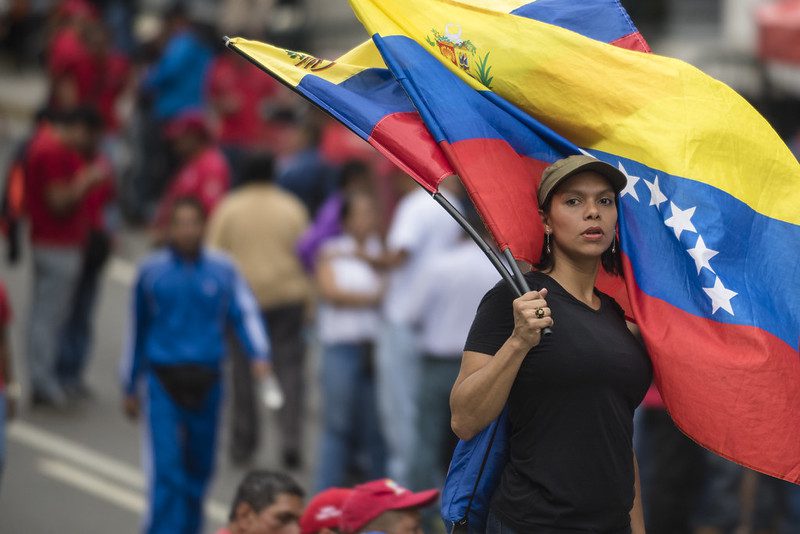
Heavily armed with automatic weapons, hand grenades and military equipment, meta-gangs in Venezuela are unlike typical street gangs. Often, they have more weapons than the police, launching attacks against law enforcement and driving officers from gang territory. Numbering anywhere from 50 to more than 200 members each, the mega-gangs of Venezuela rule over the fearful civilians in their territory with impunity.
The gangs have lost some of their power in recent years, but the political and economic crises in the country are driving people to join them, increasing their influence. Some of the most notorious gangs are “El Koki’s” gang, Los 70 del Valle, Tren de Aragua and El Picure.
El Koki’s Gang
In the Venezuelan capital of Caracas, El Koki and his allies had full control of neighborhoods such as El Valle and Cota 905 until July 2021, the latter of which served as his gang’s stronghold. El Koki is distinct from other gang leaders. He never served jail time and is running his gang outside of prison. Additionally, he has already lived to the age of 43 when the average criminal in the country’s poorest areas does not live past 25. He has also had an outstanding arrest warrant since 2012.
In 2012, the Venezuelan government developed the “peace zones” policy. It began negotiations with hundreds of gangs from all over the country. The government offered a truce in which police would stay out of designated neighborhoods if the gangs ceased criminal activity in addition to providing financial incentives for gangsters to disarm. One such incentive was the use of money and other resources meant for starting legitimate businesses.
The policy backfired, however, when gangs like El Koki’s gang began using the money to discretely acquire heavier weaponry, as reported in El Pais. El Koki and other gang leaders also took advantage of Venezuela’s criminal organizations gathering for negotiations to bolster the size of their gangs. Merging with these other groups, they formed the numerous mega-gangs of Venezuela that followed the implementation of peace zones.
The “Peace Zones”
One of the established peace zones was Cota 905. El Koki seized the opportunity there due to the lack of a permanent police presence. He strengthened his control as he killed off rival gang leaders and made alliances with others. For four years prior to June 2021, the police did not cross into Cota 905 once to enforce the law, something El Koki’s connections to the military and government may have had a hand in. In June, however, the truce between El Koki’s gang and law enforcement fully broke down. The two sides entered a war when the gang invaded the La Vega neighborhood southwest of Cota 905.
Demonstrating how empowered the mega-gangs of Venezuela have become, El Koki’s gang launched an attack on central police headquarters. The government retaliated by sending roughly 800 troops into Cota 905, where they went door to door battling the gang. According to InSight Crime, El Koki’s whereabouts are unknown. However, some have said that he may be in Cúcuta, Columbia, a common sanctuary for Venezuelan gangsters where he can continue to run his gang.
Tren de Aragua
In the state of Aragua, the mega-gang Tren de Aragua operates out of Tocorón prison. With nearly 3,000 members in groups spread across the country and expanding into nations like Columbia and Peru, Tren de Aragua, once a railroad workers’ union, is the most powerful criminal organization in Venezuela. Last spring, the gang made headlines with the completion of a baseball stadium it constructed within the prison it occupies. Reportedly possessing other luxuries such as a swimming pool and a disco hall while brandishing greater firepower than the police, the gang has demonstrated its financial success to an impoverished nation enduring an economic crisis.
Using its large arsenal, vast numbers and extreme wealth, Tren de Aragua has been able to expand rapidly as it repeatedly clashes with police and the military. Like other mega-gangs, it is alluring to people in poverty who do not get enough help from the government, have limited opportunities and are lacking in police protection. According to Mirror, to entice youths and build rapport with communities, it offers food packages at a time when much of the population faces starvation due to poor economic conditions that the COVID-19 pandemic has worsened.
Police Brutality
It is not strictly poverty and recruitment efforts that motivate people to join and comply with the mega-gangs. Police brutality is another contributing factor and extrajudicial killings in retaliation for gang violence are all too common. As El Pais reported, in July 2021, more than 3,000 officers responded to gun violence between police and El Koki’s gang. There were reports of the police committing extrajudicial executions and robberies, and the circumstance resulted in 24 victims. When police assume the role of executioner and their responses to gang activity cause innocents to die, people end up in the mega-gangs for membership and protection.
The Work of NGOs
Currently, various NGOs and nonprofits are working to alleviate the situation in Venezuela. One such nonprofit is InSight Crime, which conducts investigative journalism, data analysis and makes policy suggestions for governments regarding organized crime in Latin America and the Caribbean. InSight Crime speaks with police and officials when doing on-the-ground research. It also interacts with people involved in illegal activity to gain their perspective.
The International Crisis Group organization advises governments on preventing, managing and resolving deadly conflicts. Additionally, the Hebrew Immigrant Aid Society is an organization that operates in Ecuador and provides shelter and supplies to migrants who the ongoing turmoil and violence displaced. There are also local organizations such as Mi Convive, a nonprofit that feeds thousands of hungry children a week. Nonprofits providing food to children like Mi Convive are essential in preventing mega-gangs from bribing them with food.
Other Solutions
The Venezuelan government is addressing the high levels of gang violence with police reform and crackdowns to kill or drive gang leaders out of their territory. However, to put an end to organized crime and dismantle the mega-gangs of Venezuela, the government must take a complex, multifaceted approach. Corruption in politics and the military has led to impunity and the mega-gangs becoming better armed than the police. Eliminating financial incentives for organized crime is important. Otherwise, materially motivated criminals will continue to organize for profit. The police and other local public institutions should receive empowerment to rally their communities. They should act against the mega-gangs while scaling back military involvement.
The Venezuelan government, NGOs and foreign nations must work together. They have to ensure there is funding for robust social programs and that Venezuelans have economic opportunities where they live. They should be doing sufficient community outreach to sway people from the criminals and meta-gangs of Venezuela should be facing appropriate consequences.
– Nate Ritchie
Photo: Flickr

A One-Stick Hospital Stay to Promote Safety
Needles pose a serious risk for people in developing countries, but nearly every hospital stay requires the use of needles in some way, whether it be for IV lines, blood draws or simple injections. One of the top medical technology companies in the world has a new plan for a “One-Stick Hospital Stay” that could change the safety and experience of global health care for everyone.
What is the Danger of Needles?
Because of poor access to medical equipment, hospitals in developing countries must routinely reuse needles. This unsafe practice leads to the transmission of bloodborne pathogens such as Hepatitis B and C, HIV and other unrecognizable infections. In many countries dealing with poverty, more than 60% of injections are unsafe, meaning that the needles may undergo use multiple times on multiple patients before people throw them away or sanitize them. The probability of transmission from unsafe needle use varies within different locations, but Hepatitis B, Hepatitis C and HIV are the most common bloodborne pathogens that occur through needles.
Along with infections, needles can cause anxiety for patients. Estimates have determined that trypanophobia, the fear of needles, affects 20% to 30% of adults. It has many possibly detrimental consequences, such as fainting, nausea, difficulty breathing, hypersensitivity and avoidance of necessary hospital visits. However, new technology could soon be on the way to eliminating these risks and the anxiety that goes along with needles and injections.
Becton, Dickinson and Company’s New Innovation
Becton, Dickinson and Company’s (BD) goal is to create a “One-Stick Hospital Stay” to eliminate the need for multiple needle sticks in a single hospital visit. As a result, it will reduce discomfort and anxiety and increase safety for patients. BD has been working towards this vision for the past 70 years. The company provides doctors with the tools they need to utilize needles correctly on each individual. This assistance helps to ensure success on the first needle stick as well as success with IV insertion and care. Recently, BD has entered into a partnership with Velano Vascular to continue approaching this one-stick goal.
Velano Vascular allows clinicians to go virtually needle-free by drawing blood through peripheral intravenous catheter lines (PIVC lines). This technology brings BD one step closer to achieving a “One-Stick Hospital Stay.” Velano Vascular is currently one of the most rapidly expanding medical device companies. In hospitals, 90% of patients receive IV therapy. About 95% of that therapy uses PIVC lines. Inserting these lines and performing venipuncture are some of the most common operations in hospitals. Reducing the number of needlesticks in these procedures can reduce the risk of stress, fear and possible infection and pain, creating an overall safer and more comfortable healthcare experience for everyone.
Future Repercussions
BD is present in nearly every country striving to enhance healthcare experiences for everyone. It is working to expand access to this new technology, and as it becomes available around the world, the impact will be significant. A “One-Stick Hospital Stay” can reduce the risk of unsafe injections, decrease bloodborne pathogens, provide more comfort and less stress to patients and assist countries in poverty that do not have access to large quantities of sterilized needles for each patient.
– Delaney Gilmore
Photo: Flickr
The Threat of Hunger in Ethiopia
Researchers have directly linked quality nutrition to a reduction in the risk of chronic diseases including cardiovascular disease, diabetes, cancer, and in some areas, malnutrition. In less developed countries like Ethiopia, this reality is even starker. The threat of hunger in Ethiopia is extremely prevalent, requiring significant attention.
According to USAID data in Ethiopia, more than half of infant deaths are a direct result of malnutrition. Children who survive past the age of 2 years old experience irreversible threats to their physical growth and delays in their cognitive development. This lack of proper nutrition places children at a disadvantage within schools, leading them into the same cycle of poverty wherein the food systems in Ethiopia continue to perpetuate their malnutrition. As of 2021, more than 70% of Tigray’s population is still hungry with 400,000 individuals facing hunger on a fatal level.
The high rates of malnutrition in Ethiopia are a result of several factors, with food insecurity and less access to nutritious services being among the most prominent determining factors. Increased incidence rates of infectious diseases and inadequate maternal and child feeding practices follow closely behind. A combination of household wealth and income, education levels and a family’s ability to plan long-term drive all of these factors. Despite the threat of hunger in Ethiopia, some organizations are providing help.
The World Food Programme (WFP)
Within the past decade, several programs and organizations dedicated to fighting world hunger have worked within countries in Eastern Africa to not only provide food to its civilians but to support local farmers. The World Food Programme (WFP) is among one of the most active of these organizations in Ethiopia. The WFP has worked in many areas, donating resources, helping smallholder farmers develop better climate resistance and implementing school feeding programs. Most recently, the World Food Program has called for action from governments and their constituents while articulating how they will respond to the crisis.
The World Food Programme’s three main objectives now and in the coming months are to:
These goals aim to increase the quality of life for families in Ethiopia, and, since late September 2021, the World Food Programme has succeeded in doing just this. According to recent news and press releases, the WFP has helped communities in Ethiopia in one leading way.
Progress in Ethiopian Food Systems
The World Food Programme’s largest success in Ethiopia has been creating a system for farmers to access and manage their own finances. Having the ability to save money and apply for loans supports sustainable farming while empowering working women and providing a sense of self-sufficiency for many adults. The WFP has worked closely with villages in Ethiopia by helping small farmers pair up with the Village Savings and Loan Associations (VSLA), allowing communities to buy materials for personal businesses and ensure financial protection from the future. In 2002, the World Bank approved a loan of $85 million to Ethiopia’s food security program, all of which have contributed to these efforts of helping small farmers learn to support themselves. The WFP also aids Ethiopia in dealing with urgent issues by directly providing communities with emergency food. Since July 2021, the WFP has provided over 135,000 individuals with emergency meals.
USAID has also worked to promote agriculture and secure food systems in Ethiopia over the last decade. The implementation of its Feed the Future initiative has focused on supporting sustainable agriculture-led growth, bolstering resilience and improving nutrition. USAID has estimated a 19% decrease in poverty because of its efforts in the areas where it has worked from 2013 to 2018. In 2019, USAID’s Feed the Future initiative recognized its achievements of reaching 5 million children under the age of 5 years old with nutritional aid as well as tending to 131,000 hectares of improved land. This is due to improved technologies and practices provided by nonprofit organizations. Moving forward, USAID is seeking to continue working on strengthening resilience programs for farmers who rely solely on agriculture.
Collective Vision is the Future’s Hope
While the world continues to face many challenges, hunger may be one of the most pressing humanitarian concerns at the moment. Additionally, while it is important to sufficiently nourish everyone, it is even more important to ensure that each person has the knowledge and resources they need to continue healthfully providing for themselves moving forward. Organizations like the World Food Programme have already taken a strong initiative to achieve this goal in the countries that need it most, like Ethiopia. Other hands-on organizations like USAID have also spread their assistance to reach more countries, including attempting to strengthen the food systems in Ethiopia.
While the threat of hunger in Ethiopia may seem like a challenge that is far too expansive for any individual to tackle alone, organizations have shown how collective thought and collaboration can make a world of difference in reaching those most in need. With the continued support of governments and more specifically, involved constituents, countries can set aside their differences and work together towards achieving this common goal.
– Chloé D’Hers
Photo: Flickr
The Mega-Gangs of Venezuela
Heavily armed with automatic weapons, hand grenades and military equipment, meta-gangs in Venezuela are unlike typical street gangs. Often, they have more weapons than the police, launching attacks against law enforcement and driving officers from gang territory. Numbering anywhere from 50 to more than 200 members each, the mega-gangs of Venezuela rule over the fearful civilians in their territory with impunity.
The gangs have lost some of their power in recent years, but the political and economic crises in the country are driving people to join them, increasing their influence. Some of the most notorious gangs are “El Koki’s” gang, Los 70 del Valle, Tren de Aragua and El Picure.
El Koki’s Gang
In the Venezuelan capital of Caracas, El Koki and his allies had full control of neighborhoods such as El Valle and Cota 905 until July 2021, the latter of which served as his gang’s stronghold. El Koki is distinct from other gang leaders. He never served jail time and is running his gang outside of prison. Additionally, he has already lived to the age of 43 when the average criminal in the country’s poorest areas does not live past 25. He has also had an outstanding arrest warrant since 2012.
In 2012, the Venezuelan government developed the “peace zones” policy. It began negotiations with hundreds of gangs from all over the country. The government offered a truce in which police would stay out of designated neighborhoods if the gangs ceased criminal activity in addition to providing financial incentives for gangsters to disarm. One such incentive was the use of money and other resources meant for starting legitimate businesses.
The policy backfired, however, when gangs like El Koki’s gang began using the money to discretely acquire heavier weaponry, as reported in El Pais. El Koki and other gang leaders also took advantage of Venezuela’s criminal organizations gathering for negotiations to bolster the size of their gangs. Merging with these other groups, they formed the numerous mega-gangs of Venezuela that followed the implementation of peace zones.
The “Peace Zones”
One of the established peace zones was Cota 905. El Koki seized the opportunity there due to the lack of a permanent police presence. He strengthened his control as he killed off rival gang leaders and made alliances with others. For four years prior to June 2021, the police did not cross into Cota 905 once to enforce the law, something El Koki’s connections to the military and government may have had a hand in. In June, however, the truce between El Koki’s gang and law enforcement fully broke down. The two sides entered a war when the gang invaded the La Vega neighborhood southwest of Cota 905.
Demonstrating how empowered the mega-gangs of Venezuela have become, El Koki’s gang launched an attack on central police headquarters. The government retaliated by sending roughly 800 troops into Cota 905, where they went door to door battling the gang. According to InSight Crime, El Koki’s whereabouts are unknown. However, some have said that he may be in Cúcuta, Columbia, a common sanctuary for Venezuelan gangsters where he can continue to run his gang.
Tren de Aragua
In the state of Aragua, the mega-gang Tren de Aragua operates out of Tocorón prison. With nearly 3,000 members in groups spread across the country and expanding into nations like Columbia and Peru, Tren de Aragua, once a railroad workers’ union, is the most powerful criminal organization in Venezuela. Last spring, the gang made headlines with the completion of a baseball stadium it constructed within the prison it occupies. Reportedly possessing other luxuries such as a swimming pool and a disco hall while brandishing greater firepower than the police, the gang has demonstrated its financial success to an impoverished nation enduring an economic crisis.
Using its large arsenal, vast numbers and extreme wealth, Tren de Aragua has been able to expand rapidly as it repeatedly clashes with police and the military. Like other mega-gangs, it is alluring to people in poverty who do not get enough help from the government, have limited opportunities and are lacking in police protection. According to Mirror, to entice youths and build rapport with communities, it offers food packages at a time when much of the population faces starvation due to poor economic conditions that the COVID-19 pandemic has worsened.
Police Brutality
It is not strictly poverty and recruitment efforts that motivate people to join and comply with the mega-gangs. Police brutality is another contributing factor and extrajudicial killings in retaliation for gang violence are all too common. As El Pais reported, in July 2021, more than 3,000 officers responded to gun violence between police and El Koki’s gang. There were reports of the police committing extrajudicial executions and robberies, and the circumstance resulted in 24 victims. When police assume the role of executioner and their responses to gang activity cause innocents to die, people end up in the mega-gangs for membership and protection.
The Work of NGOs
Currently, various NGOs and nonprofits are working to alleviate the situation in Venezuela. One such nonprofit is InSight Crime, which conducts investigative journalism, data analysis and makes policy suggestions for governments regarding organized crime in Latin America and the Caribbean. InSight Crime speaks with police and officials when doing on-the-ground research. It also interacts with people involved in illegal activity to gain their perspective.
The International Crisis Group organization advises governments on preventing, managing and resolving deadly conflicts. Additionally, the Hebrew Immigrant Aid Society is an organization that operates in Ecuador and provides shelter and supplies to migrants who the ongoing turmoil and violence displaced. There are also local organizations such as Mi Convive, a nonprofit that feeds thousands of hungry children a week. Nonprofits providing food to children like Mi Convive are essential in preventing mega-gangs from bribing them with food.
Other Solutions
The Venezuelan government is addressing the high levels of gang violence with police reform and crackdowns to kill or drive gang leaders out of their territory. However, to put an end to organized crime and dismantle the mega-gangs of Venezuela, the government must take a complex, multifaceted approach. Corruption in politics and the military has led to impunity and the mega-gangs becoming better armed than the police. Eliminating financial incentives for organized crime is important. Otherwise, materially motivated criminals will continue to organize for profit. The police and other local public institutions should receive empowerment to rally their communities. They should act against the mega-gangs while scaling back military involvement.
The Venezuelan government, NGOs and foreign nations must work together. They have to ensure there is funding for robust social programs and that Venezuelans have economic opportunities where they live. They should be doing sufficient community outreach to sway people from the criminals and meta-gangs of Venezuela should be facing appropriate consequences.
– Nate Ritchie
Photo: Flickr
How Africa’s Tech Industry Could Reduce Poverty
Cryptocurrencies, online banking and mobile phones are the tools of the 21st century to combat global poverty. For Africa, these technological innovations may be the help necessary to get the world’s most concentrated area of impoverished people out of poor living conditions. Here is some information about Africa’s tech industry.
Tech Hubs in Africa
Africa’s tech industry has picked up pace in development over the last few years as international companies invest in local start-ups, creating technological hubs throughout the continent. With these tech hubs sprouting up throughout Africa, some of the poorest countries in the world are now able to access the internet, online banking and other digital enterprise advantages. There are more than 600 tech hubs across Africa providing jobs, resources and digital technologies. The three largest tech hubs in Africa are in Lagos, Nigeria; Cape Town, South Africa; and Nairobi, Kenya.
In Nigeria, there are 90 tech hubs providing internet to 122 million people accounting for 20% of all of Africa’s internet use. South Africa is home to 78 tech hubs with nearly 30 million people having access to mobile internet. As for Kenya, there are 50 tech hubs within the country, where more than 200 startups are operating with a total combined value of more than $1 billion.
The Necessary Basics
Although tech hubs provide internet access to many areas in Africa, the International Monetary Fund (IMF) reports that some countries like Rwanda and Nigeria have a high percentage of access to the internet. However, only 28% of Africa’s overall population uses the internet.
This hurts the potential benefits that people can gain from these advancements because with all the innovations sprouting up throughout the world today, the first tool necessary in technological economic advancement is access to the internet. Without internet access, many programs such as online banking apps or AgTech innovations could not function. For Africa to utilize the growing tech industry on its home front, basic technological infrastructure must undergo intercontinental establishment.
Technology, Not Poverty
With such a large number of developing countries on one continent, the issues surrounding global poverty are ever-more pertinent. Africa is home to the top impoverished nations in the world, with nearly 70% of all the world’s poor people living in sub-Saharan Africa.
“Innovation, and the digital information technology that accompanies it, has become a necessary component of any effort to address such challenges as food security, education, health, energy, and competitiveness,” IMF reported. “Africa must shift its focus to retaining and creating wealth, better managing its resources, fostering inclusiveness, moving up on global value chains, diversifying its economies, optimizing the energy mix, and placing human capital at the center of policymaking.”
In many African nations, the poverty rates are increasing due to COVID-19. However, the pandemic has also provided the opportunity for these countries to accelerate their technological advancement in areas such as health, education and financial technology. As the pandemic pushes Africa’s acceleration in technological advancement, it has affected FinTech.
New Tech Programs to Help Develop Africa
One of the most significant investment programs happening in pan-Africa’s technological ecosystem is through the Global Innovation Initiative Group (GIIG), which recently started a $100 million program funding local tech start-ups in Africa. It aims to bring Africa up to speed in global network connectivity within the borders of Africa.
IBM, a global powerhouse in Information and Communication Technologies (ICT), has recently expanded its operations for cloud services in Africa, working with the pan-African bank, Ecobank, to provide online banking services to 33 countries.
A blockchain currency banking start-up in Africa, called KamPay, will soon launch in seven countries allowing more than 50 million potential users to make daily transactions with businesses and individuals. The company will be launching an “e-voucher system” for farmers to access means for growing crops more affordable, as a recent Forbes article has explained.
With the push from outside investors, international monitoring and local support, Africa’s tech industry is beginning to implement into the lives of the poor, giving them the tools and resources to lift themselves into a better standard of living. Only time and future investments and development into Africa’s tech world will prove how its innovative solutions in the fight against global poverty will spread.
– Ali Benzerara
Photo: Flickr
Gastromotiva Fights the Effects of COVID-19 in Brazil
COVID-19 devastated Brazil. The country lost 600,000 lives to the pandemic. In addition, COVID-19 in Brazil has had significant adverse effects on the economy. With few to no opportunities for work and businesses thrust into bankruptcy, Brazil’s population’s quality of life has also greatly diminished. For example, COVID-19 in Brazil thwarted tourism, subsequently affecting its festive, vibrant Carnaval season. In addition, Brazil is also one of the nations with the most significant disparity in both wealth and class, and COVID-19 in Brazil exasperated those gaps. With COVID-19 bringing such monumental difficulties to Brazil, the prospect of Brazil’s financial stability post COVID seems slim. However, one man’s organization seeks to alleviate some of the hunger-based sufferings from COVID-19 in Brazil.
COVID-19’s Effect on Poverty and Hunger in Brazil
COVID-19 in Brazil has had an undeniably terrible impact on the families living in poverty. The country had been in a recession since 2014 and had not recovered when COVID-19 hit. That is part of the reason why in 2020, food insecurity threatened approximately 117 million citizens, more than half of the country’s population. That was an increase from 85 million in 2018. That is why the Brazilian government introduced emergency programs to keep families afloat. However, when payments reduced in 2021, even more people started to go hungry. In fact, about 19 million Brazilians have gone hungry in 2021 compared to 10 million in 2018. Brazil’s COVID-induced food insecurity and hunger prompted David Hertz to launch the Gastromotiva Solidarity Kitchen Program.
The Development of Gastromotiva
Local leaders, microentrepreneurs and cooks operate the Gastromotiva Solidarity Kitchens. Community kitchens distribute meals to individuals and families at risk for food insecurity. However, the Gastromotiva Solidarity Kitchen Program does more than just build kitchens and donate food. First, Gastromotiva provides a monthly income to Solidarity Kitchen employees. It also provides guidance in logistics and menu planning. Third, Gastromotiva runs Social Cooking,” a course that teaches employees how to create businesses, projects and initiatives with social impact. In other words, not only is Gastromotiva providing direct hunger relief, but it also seeks to create more long-term opportunities for financial stability.
Solidarity Kitchen Success
Since launching in 2020, Gastromotiva has opened more than 70 Solidatarity Kitchens in key communities including Rio de Janeiro, São Paulo and Manaus. The Solidarity Kitchens provide more than 70,000 meals each month. Often, recipients get their only meal each day at a Solidarity Kitchen. As Hertz comments, “Right now half the population in Brazil doesn’t know if they are going to have lunch or dinner. That’s the size of the problem. We are not only feeding those people once a day, we are providing nutrition with dignity that is deserved.”
Post-Pandemic Outlook
Although Hertz created the Gatromotivia Solidarity Kitchen Program as a response to COVID-19 in Brazil, he hopes to continue the program beyond the pandemic. He is developing a new, self-sustaining version of the Solidarity Kitchen, and ultimately, Hertz envisions 1,000 Solidarity Kitchens across Brazil.
– Maia Nuñez
Photo: Flickr
Irish Aid For Afghans
Colm Brophy, Minister for Overseas Development Aid and Diaspora, announced an additional €2 million in Irish Aid support less than two months after the initial €1 million, crediting the severity of the “rapidly deteriorating humanitarian [need] in Afghanistan” as the reason for the additional support. In children under the age of 5 years old, there is a high level of food insecurity and the risk of malnutrition. Minister Brophy stated in the press release that “One in three Afghans is facing crisis levels of food insecurity and more than half of all children under five are at risk of acute malnutrition.”
Ireland Aid Can Make International Changes
The aid that Ireland is providing has the potential to save lives and serve as a model for other countries to follow. Showing the actual impact of aid on Afghan refugees can also spark a positive reflection on the Afghan community, rather than the negative connection from recent conflicts.
Only a month prior, Minister of Foreign Affairs Simon Coveney announced €1 million in Irish aid for humanitarian needs in Afghanistan. This initial assistance was in addition to the €2 million that the HALO Trust, Afghanistan Humanitarian Fund (AFH) and Concern Worldwide received at the start of 2021.
The funds will go to UNICEF and the Afghanistan Humanitarian Fund (AFH). The AFH assists with the health, education and nutrition of the Afghan people.
Changing Visa Policies
On top of the Irish Aid support, Ireland has extended its refugee visas policy for up to another 150 Afghan people under the Irish Refugee Protection Program (IRPP). Ireland strongly condemns the violent action against the people of Afghanistan, especially the attacks against women and children.
It has called for safe and reliable access to humanitarian needs in Afghanistan for Aghani citizens and those who work with U.N. agencies and humanitarian partners, without exemptions. This means that even those across conflict lines must get the humanitarian access they need for safety.
Refugee Visas to Make a Difference
Ireland, which many know for its strong advocacy for women and girls, is attempting to play a role in relocating some Afghan women and girls to Ireland. There will be a priority for those who work in human rights issues and those who work with NGOs, including European and international organizations. Family reunification is also at the top of Ireland’s list in regard to the 150 refugee visas.
This is not the only way for Afghans to obtain refugee visas. There are a few protocols in place that help Afghans obtain refugee visas as long as they meet or find a way to meet the criteria. According to the 2015 International Protection Act, if an Afghani person already knows someone in Ireland who can handle their international protection application or if they have someone who will meet them at the border, they are exempt from the application fee. Deportation has also experienced less strict enforcement since COVID-19. Given the current state of Afghanistan, there is no clear answer to whether someone would experience deportation.
At the end of the day, Ireland is doing everything it can to assist with the humanitarian need in Afghanistan. In this time of crisis, it uses funds, policies and aid to do what it can. By expanding its visa list to accept more refugees, Ireland demonstrates that it will do everything possible to assist another country’s crisis.
– Veronica G. Rosas
Photo: Unsplash
The Importance of Olive Trees to Palestinian Farmers
Olive trees hold symbolic, agricultural and economic meanings for Palestinian farmers. In a nation where almost one-third or 1.6 million people face food insecurity and do not have access to “nutritious food,” essential crops, like olives, are vital for many communities’ survival. Here is some information about the importance of olive trees in Palestine.
Harvesting Crops Despite Denial of Access
The rise of Israeli forces and conflict on Palestinian lands in May 2021 forced Palestinian farmers from their olive tree harvesting grounds. However, after the olive harvest season started earlier in 2021, a cohort of Palestinian olive farmers decided to take the risk of returning to their farmlands despite the armed Israeli guards in their path.
Residents and landowners from the small Palestinian town in the Northern West Bank of Palestine returned to Jabal Sabih, Mount Sabih, to handpick olives from their trees. Israeli guards are still present at the site. However, the Palestinian farmers successfully harvested their trees despite the Israeli presence.
Impact of Growing Tensions
Tensions between Israeli and Palestinian communities have remained high throughout history, but escalated tensions between the two occurred in May 2021. Israeli settlers attempted to take over Palestinian lands, and 50 Israeli families set up camp on the Palestinian olive farming grounds in May. Israeli families then evacuated in July. Palestinian farmers said these farming lands have passed through generations of family members and the trees are “part of their souls and more.”
The farmers emphasized that olive trees are one of only a few arbors that can grow in their mountainous farming areas. The trees do not need water, which means they can grow in drought conditions. Farmers said that transporting water into the region would be extremely difficult due to the terrain.
The Many Uses of Olives
The production of olives is a main source of income for more than 80,000 families in Palestine, showing the importance of olive trees to the country. More than 90% of the oil that farmers harvest from olive trees goes toward making olive oil, with them allocating the remainder to making olive soap, table olives and pickles. In the West Bank, farmers have planted more than 12 million olive trees. The nation exports some of the olives to Jordan but the rest are for local consumption.
Following the second Palestinian uprising in 2000, the Israeli army began destroying or uprooting olive trees in farmlands. The army stated that it needed to use the grounds for military operations and to provide pathways between villages. However, later reports suggested that the military specifically targeted the farmers to make it difficult for them to earn a living.
Foundations Wanting to Help
Some local organizations are helping olive tree farmers. The Arab Group for the Protection of Nature started a campaign after the severe removal of the olive trees. In 2011, AP Nature replaced 1 million olive and fruit trees. To date, the campaign has planted more than 2.5 million trees.
The Near East Foundation, an organization with a focus on building more sustainable communities in the Middle East and Africa through education, community organizing and economic development, directly supports Palestinian communities through three programs. These include early childhood education and school feeding, support for the olive oil groups and support for women’s economics.
The Near East Foundation renovated and upgraded 18 olive oil mills in Palestine and Israel due to the importance of olive trees and olive oil production to the Palestinian economy. The organization also facilitated training for oil producers to increase their production and quality of olive oils.
The ongoing tension between Israel and Palestine has extreme effects on Palestinians’ ability to access their crops to provide food for themselves and earn a living. Though permits for Palestinian farmers are available to access the lands that the Israeli army now dominates, these permits are hard to obtain and there is still no guarantee Palestinian farmers can access their land even with a permit. A group of Palestinian olive farmers had the bravery to enter into Israeli military grounds to harvest their olives, but tensions between the two nations must subside before Palestinian farmers can have full access to their own lands once again.
– Makena Roberts
Photo: Flickr
How Trimble MX7 is Working in Colombia
Natural disasters are detrimental to impoverished regions, and countries like Colombia, where approximately 36% of its population subsists in poverty are no exception. Recent efforts from the World Bank’s Global Program for Resilient Housing have led to the genesis of a Trimble MX7 vehicle-mounted mobile-mapping system that can improve responses to natural disasters in Colombia.
Poverty-Natural Disaster Nexus in Colombia
Colombia has experienced six major earthquakes, four volcanic eruptions, annual major landslides and recurrent extensive flooding in the past 30 years, stunting sustainable development efforts. According to historical records, inadequate land use management and insufficient housing standards account for 80% and 20% of damage and loss, respectively. Impoverished communities lack choice mobility and circumstances force them to settle in areas that are vulnerable to extreme weather. Farming and agriculture, common occupations among working-class people, also lie bare in the face of natural disaster, and above all, such people receive less government and community support for poverty than their wealthier counterparts.
Trimble MX7
The World Bank’s Global Program for Resilient Housing (GPRH) has employed a potential game-changer for natural disaster confrontation and poverty reduction in Bogota, potentially aiding the 27.5% of Colombia’s population that live in monetary poverty. Machine learning algorithms are useful for scanning images that a Trimble MX7 vehicle-mounted mobile-mapping system captures aerially and terrestrially of infrastructure and urban areas that would suffer the most in the event of a natural disaster. The GRPH conceived the idea to capture imagery to detect infrastructure weaknesses and vulnerabilities due to concerns about “soft story” buildings — structures with windows, wide doors and other openings that cannot withstand earthquakes. The “soft story” risk played out on September 19, 2017, when a 7.1 magnitude earthquake struck Mexico, taking 40 buildings from their foundations, one of which was the Enrique Rebsamen school where seven adults died along with 19 children.
The Role of Policy
Policy gets to structure the usage of innovation such as Trimble MX7 to preclude preventable damage from natural disasters. Fortunately, Colombia’s government has recognized this in its National Development Plan and the Ministry of Finance and Public Credit’s (MHCP) Strategic plan, where the latter must develop strategies to reduce liabilities and regulate fiscal risk. The MHCP has identified three policy goals to solidify fiscal risk and give rise to and support a better economy: identification and understanding of financial risk due to disasters, financial management of natural disaster risk and catastrophe risk insurance for public assets.
Conclusion
Natural disasters are a serious concern in Colombia, with the country’s impoverished communities suffering the most from the aftermath. The Trimble MX7 is a promising new technology that will save lives and prevent people from falling into extreme poverty in the wake of natural disasters.
– Mohamed Makalou
Photo: Flickr
How COVID-19 has Affected Child Labor in Ghana
The COVID-19 pandemic and resulting lockdowns have hurt economies and workers worldwide, disproportionately affecting the world’s most impoverished citizens. Data has indicated that these rising levels of poverty link to increased levels of child labor in Ghana and across the world. Since 2000, the world has made notable and significant progress in reducing the number of children exposed to child labor: this number has reduced by 94 million, according to the International Labour Organization (ILO). However, the pandemic is hindering, and perhaps even reversing, this child labor progress in impoverished countries like Ghana. Here is how COVID-19 has affected child labor in Ghana and other countries.
Poverty in Ghana
According to Opportunity International, of the 30.4 million people living in Ghana, 13.3% survive on less than $1.90 a day. In other words, there are more than 4 million Ghanaians living in extreme poverty. Despite these numbers, Ghana holds the title of a progressive West African country in terms of its significant economic advances. In fact, between 2010 and 2019, annual economic growth averaged 6.8%, according to the Brookings Institution, a public policy nonprofit organization. Unfortunately, many deem this progress unsustainable for both the planet and the people as mineral and crude oil production are responsible for this growth.
According to Opportunity International, even those who live at or above the poverty line are not far from falling below it as one small financial setback can draw many Ghanaian families back into poverty. When families lack money for basic necessities, children often end up in child labor to help provide for their families. Although there is no official data pinpointing the rise of child labor in Ghana, amid COVID-19, the International Labour Organization estimates that millions more children will be subject to child labor, “which could lead to the first rise in child labor after 20 years of progress.”
The Realities of Child Labor in Ghana
Although in 2018, 93% of children in Ghana completed their primary education, today, they still face the threat of child labor, especially with many schools closing in the wake of the pandemic. On top of this, due to pandemic-induced job losses and salary cuts, the rise of child labor in Ghana poses a serious threat to these children.
In a report on child labor during COVID-19 in Ghana, Nepal and Uganda, researchers conducted interviews with “81 working children.” The children reported working in dangerous and hazardous conditions, with some breathing in toxic fumes and others enduring cuts from sharp tools, among other hazards. In each of the three nations, more than 33% of children worked a minimum of 10 hours per day, sometimes “seven days a week.” Several Nepalese children report working “14 hours a day or more in carpet factories.” In return, these children earn little money, if anything. Exploitative employers sometimes even withhold pay.
Actions to Reduce How COVID-19 Has Affected Child Labor in Ghana
Before the onset of the pandemic, several nations addressed child labor by supplying “cash allowances to help families and reduce pressure on children to work.” In the wake of the COVID-19 pandemic, Human Rights Watch emphasizes that “As millions of families struggle financially due to the pandemic, cash allowances are more important than ever to protect children’s rights.”
Ghana stands as “the first to ratify the U.N. Convention on the Rights of the Child.” Today, Ghana’s second phase of the Nation plan of Action for the Elimination of the Worst Forms of Child Labour in Ghana (NPA2) began in 2017 and runs until the close of 2021. NPA2 intends to “build on the gains made” by NPA1, “utilizing good practices and lessons learned to address [child labor] in a more effective and sustainable manner.”
In particular, NPA2 intends to “mobilize more resources, focus action in local communities and strengthen educational outcomes so that children are enrolled and retained in school.” With international support, the government can strengthen this plan further by providing cash allowances to struggling families so that children are not obligated to earn an income.
Though this situation is dire, it is far from unfixable. As long as the world continues to keep child rights at the center of legislation, advocacy and broader policies, child labor is a solvable problem. With continued international support to the countries that COVID-19 hit hardest, incidences of child labor can dramatically reduce.
– Cameryn Cass
Photo: Flickr
The Impact of COVID-19 on Poverty in Cyprus
Cyprus Before the Virus
Poverty existed in Cyprus before the COVID-19 pandemic. This is due in part to the country’s political divisions, which include the Northern Republic of Cyprus, a Turkish de facto state that has controlled one-third of the island since 1974, and the Southern Republic of Cyprus. With such a stark division, the Cypriot government has found it difficult to track its impoverished population and provide assistance where it is needed.
A recent survey found that in 2019, just one year before the advent of the pandemic, “194,400 Cyprus residents were living in households with disposable income below the at-risk-of-poverty line.” Cyprus’s ethnic division also accounts for this, in that dense Greek-Cypriot populations in the South have tight-knit familial relationships. If one person in these families falls into financial difficulty, they are likely to not have another stable family member to fall back on. This leaves unsupported people like immigrants, single mothers and the elderly most vulnerable to poverty.
Impact of COVID-19 on Poverty in Cyprus
As one of the most popular destinations in Europe, tourism is a vital component of Cyprus’s economy. Prior to COVID-19, Cyprus had three consecutive record years of tourist arrivals, topping 4 million annual tourists. International travel bans that were implemented in March 2020 stagnated the country’s economy and exacerbated the impact of COVID-19 on poverty in Cyprus. In that vein, domestic quarantine restrictions also halted the progression of potential reunification talks between Turkish-Cypriot President Ersin Tatar and Greek-Cypriot President Nicos Anastasiades.
Cyprus also saw a surge in unemployment rates at the height of the pandemic. According to the most recent data on Cyprus’s unemployment rate, unemployment rates were at a low of 6.3% in July 2019, but jumped to 10.2% a year later, just a year after the pandemic hit.
Taking Initiative: Caritas Cyprus
Despite these drawbacks, fellowships have been able to make a dent in combating the impact of COVID-19 on poverty in Cyprus. Organizations like Caritas Cyprus were among the first to do so.
Since its inception in 1986, Caritas Cyprus, a member of the Caritas Internationalis confederation, has worked at the grassroots level. It aims to end poverty, promote justice and restore dignity by “responding to humanitarian needs on the island with the aim of providing compassionate care and support to the poor, dispossessed and marginalized.”
Caritas Cyprus primarily works through local parish initiatives as well as cross-island programs that focus on migrants, local needs (diaconia) and youth engagement. The Migrant Sector typically affords support to hundreds of refugees, asylum seekers and migrants through the operation of two centers. In light of the COVID-19 pandemic and quarantine restrictions, these two centers weren’t able to operate at full capacity. Nonetheless, the organization still provided sufficient aid through its two other sectors.
The Diaconia Sector provided extensive relief for Cyprus’s unemployed population amid the pandemic. Job Search Program connected jobseekers with potential employers using networks within the community.
Following the relaxation of quarantine restrictions, the Youth Sector encouraged the country’s youth to participate in volunteering, fundraising, social events and other humanitarian efforts to raise awareness for groups that bore the brunt of the pandemic’s poverty.
Looking Ahead
As of October 2021, Cyprus has administered more than 1.1 million doses of COVID vaccines; assuming that every person requires two doses, that’s enough to have vaccinated nearly half of the country’s population. Though the impact of COVID-19 on poverty in Cyprus has posed an acute setback on the country’s economic progress, hope still exists that the country can recover. The rapid distribution of vaccines, assistance from organizations and potential reunification talks between Northern and Southern Cyprus can not only suppress the spread of COVID-19, but ultimately make headway in eradicating poverty.
– Tiffany Grapsas
Photo: Flickr