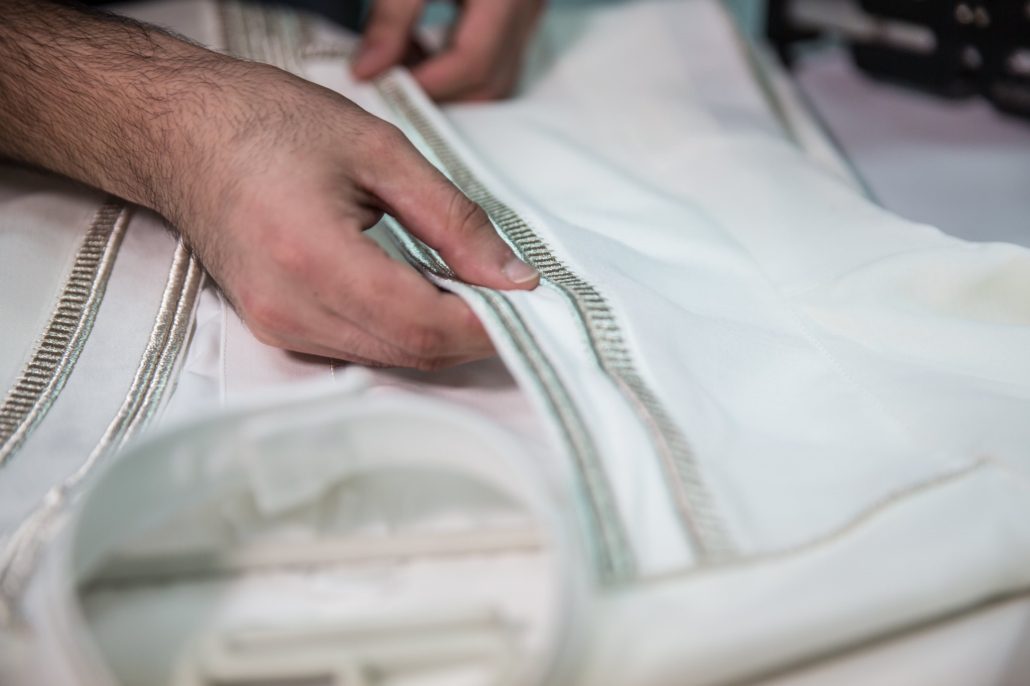
Blue denim jeans, preppy polo shirts and black leather have nothing in common, but their founders do. Levi Strauss, the creator of blue jeans, Ralph Lauren, the creator of the polo shirts, and Versace, known for their iconic black leather and Medusa logo, are just some of the fashion labels that give back to combat current issues. They donate money, clothes and masks for issues such as poverty and the COVID-19 pandemic.
Who They Are
Ralph Lauren has dominated the fashion world with its vibrant colors and iconic polo player logo, which stems from the designer’s love of sports and is embroidered on the company’s polo shirts. People also know Ralph Lauren for blending the American style with European fashion. As for its founder, he built his company from the ground up without ever attending fashion school. As of November 2021, Forbes listed Ralph Lauren’s worth at $7.3 billion.
Gianni Versace worked alongside his mother in the fashion industry, before starting to freelance designs for Italian designers. He sprung his own collection in 1978. His fashion house, Versace, received credit in the 1990s for being the first to feature supermodels in its ad campaigns. Not only that, the Italian company pioneered displaying models with noticeable personalities. Black leather and gold jewels accompany its iconically sensual style to give more of an edgy punk look.
Levi Strauss wanted to strike gold during the California Gold Rush in 1853, but it was not gold that would make him rich. In 1872, tailor Jacob Davis wrote to Strauss, sharing his new way of making pants that made them last longer. In the letter, he asked Strauss to be a business partner. Strauss agreed, and thus blue jeans were born.
![]() All three fashion designers started out small, which eventually led to their success. Despite that success, these fashion labels advocate for private organizations, implement poverty reduction efforts and sponsor those combating COVID-19 relief and support the arts and culture.
All three fashion designers started out small, which eventually led to their success. Despite that success, these fashion labels advocate for private organizations, implement poverty reduction efforts and sponsor those combating COVID-19 relief and support the arts and culture.
COVID-19 Hospital Relief: Versace
In 2020, COVID-19 took a negative toll on everyone and their health. Cases increased and hospitals ran out of rooms to place their patients in. Donatella Versace, the chief creative officer of Versace, decided to contribute to pandemic relief by donating to hospitals in her home country of Italy. At that time, Italy had the highest number of COVID-19 cases with a total of 17,660 as of March 14, 2020. Versace donated €200,000 ($222,890) to San Raffaele hospital’s ICU after it requested aid due to the increase of pandemic patients. She explained, “In times like this, it is important to be united and support however we can help all those who are in the front lines, fighting every day to save hundreds of lives.”
Millions Donated: Ralph Lauren
Ralph Lauren has created and funded nonprofit organizations that differ from Versace’s. However, these two fashion powerhouses share one goal: to help their community. The Ralph Lauren Corporate Foundation has donated a total of $10 million in donations and resources to its workers and communities worldwide. The Foundation recently donated a value of $1.5 million in clothing to frontline workers and families. These interventions build on the precedent that emerged decades ago when the Foundation started a cancer-combatting campaign in 2000 called the Pink Pony Campaign.
Ralph Lauren provided grants for any employee who needed accommodations during the pandemic, such as health or childcare needs. Additionally, it partnered with the CFDA/Vogue Fashion Fund for COVID-19 relief and donated 250,000 masks and 25,000 isolation gowns to health care workers. As Ralph Lauren said, “This includes helping to fund necessary hospital resources—ranging from personal protective equipment and patient navigation programs to meals and childcare support.”
Advocate for Poverty Reduction: Levi Strauss
As of 2018, 10% of San Francisco residents lived in poverty. To combat this, Levi Strauss Foundation donated a total of $100,000 to a local poverty-fighting NGO called The Tipping Point Community. This organization combats poverty in the area and raises funds for communities that the pandemic hit hardest.
The Tipping Point Community funds economic support for people dealing with or at risk of poverty. Its funding has paid for food, housing and hospital bills. It also aids in paying bills for workers who lost their jobs due to the pandemic. The Tipping Point Community’s goal of $30 million is ambitious, but foundations like Levi Strauss agree that stabilizing the area’s ecosystem and improving the lives of individuals in need is well worth the investment. To date, the NGO has raised more than $18 million of that goal.
Fashion Labels That Give Back
Ralph Lauren loved sports so much that he created an empire. Versace wanted women to feel comfortable in their skin, so he designed clothes that accentuated their bodies. Levi Strauss made a partnership and, in the process, created blue jeans that better-accommodated workers. These three designers grew up differently and had different inspirations when it came to making clothes. However, these fashion labels share one thing: they give back. All three created and funded organizations that helped to fight issues such as poverty, providing funding during the pandemic and helping their workers receive financial aid.
– Maria Garcia
Photo: Flickr

Investing in Smart Meter Systems in Kenya
In September 2021, Kenya’s largest telecommunications business, Safaricom, proposed a deal to Kenya Power to install “a $300 million smart meter system” at Kenya Power’s site. Furthermore, Safaricom will bear the cost of installing “330,000 consumer, transformer and feeder smart meters” in communities experiencing high power leakages or electricity theft. These leaks put an added economic burden on individuals and Kenya Power. Safaricom and Kenya Power’s partnership to install smart meter systems in Kenya will also lead to more job opportunities for Kenyans.
Power Leakages and Electricity Theft
Power leakages can occur when a current is not entirely insulated or the electrical equipment is not fully grounded, meaning there may be no safe way to discharge electricity in case of a malfunction. The energy needs somewhere to go and grounding sends electricity outside the building and into the ground through the insulated wiring. This lost energy costs Kenya Power revenue that often exceeds what the company earns. Safaricom anticipates that the new smart meter system will save Kenya Power more than $89 million of losses due to power leakages.
Kenya Power is the primary company in Kenya responsible for producing and distributing electricity to Kenyans across the country. Kenya Power holds the responsibility of delivering electricity to almost 70% of Kenyans with electricity access, however, this figure means more than 16 million Kenyans still lack electricity access.
Electricity theft is a common occurrence in Kenya. It happens when a person attempts to bypass the standard electrical meter on a power line in order to obtain electricity without payment. Thieves then bypass any electrical data tracking and effectively steal power from the company and the homes in the area. Annually, Kenya Power loses about $163 million due to electricity theft alone. Safaricom’s smart meter systems in Kenya will help prevent both leakages and electricity theft.
Smart Meter Systems Save Money
Smart meters involve real-time information of voltage usage and fault reports and detect theft and potential meter tampering. In the event of power theft, the meter sends alerts to the main computer in its system, and then, the company will have the option of shutting down the power line and sending the police to apprehend the thief.
The smart meters constantly monitor two wires, the neutral wire and the live wire and the current going through the wires. Smart meters continuously compare the two wires’ energy outputs. If the output of the live wire seems excessively high while the neutral is lower, then, there may be possible tampering or leakage.
The smart meter systems in Kenya will cost approximately $300 million to install. Safaricom and Kenya Power will split the revenue earned in the first eight years with the smart meters in place.
Creating Job Opportunities
Smart meters in Kenya seem to be a small addition to everyday lives, but their financial impact is significant. Kenya Power is a relatively small enterprise in the nation. The expected revenue to come in with the installation of the smart meters in Kenya is 71.7 billion KES ($651.23 million). This has the potential to increase earnings company-wide across all salary levels. Furthermore, the project will create job opportunities for Kenyans.
How Will the Initiative Help Kenyans?
In Kenya, the cost of electricity increased in September 2021. Those with access to electricity began paying 26.57 KES (0.25 USD) per electricity unit. The last monthly pricing was 2 KES less, making this spike in cost “the highest in five years.” This price hiking has continued as Kenya Power grapples with issues of power leakages and electricity theft.
The average annual salary after taxes in Kenya based on the average job is about 2,026,995 KES ($18,536). However, the more typical salary is 765,481 KES ($7,000). Furthermore, 26.3% of workers in Kenya survive on less than $2 of income per day. If the electricity prices continue increasing, many Kenyans will lose their ability to afford electricity and first-time users will struggle to gain access to electricity.
The introduction of smart meter systems will prevent severe revenue losses for Kenya Power. The smart meters in Kenya will benefit Kenya Power, Safaricom, workers and ordinary citizens. Preventing energy theft offers economic benefits for energy companies and workers, but it can also benefit energy consumers. Large-scale changes in security and energy efficiency could strengthen Kenya’s energy sector and infrastructure.
– Clara Mulvihill
Photo: Flickr
USAID Programs in Lebanon
USAID Lebanon celebrated World Teacher’s Day 2021 by recognizing the 35,000 Syrian and Lebanese students who received basic literacy and numeric skills through USAID’s summer catch-up program. By partnering with Lebanon’s Ministry of Education, USAID equipped 3,500 teachers with mentorship, curriculum and school supplies. This is just a glimpse of the impact of USAID programs in Lebanon.
USAID Programs in Lebanon
The United States’ relationship with Lebanon began as early as 1951. Since USAID’s commitment to assist Lebanon’s development in 2006, USAID has supported Lebanon with more than $1.3 billion worth of foreign aid. USAID’s work in Lebanon focuses on three main sectors: education, “local development and governance” and economic development. In 2021 alone, USAID contributed $41 million to fund COVID-19 relief and economic development programs in Lebanon. This funding continues to impact the lives of millions amid rising poverty levels in Lebanon.
It is important to note that Lebanon has not always needed this level of support. Once a continental trade center, Lebanon has a rich development history, complete with rising income levels and GDP growth. A 15-year civil war ending in 1990 disrupted the value of the Lebanese pound, creating a snowball effect of economic casualties. With the compounded effects of COVID-19, a global recession and a refugee crisis, 82% of the Lebanese population lives in multidimensional poverty in 2021.
Improving Education in Lebanon
USAID programs in Lebanon focus on improving education systems, acknowledging that education is a proven tool for long-term poverty reduction. The current state of the Lebanese public education system is poor. Noting the dilapidated school infrastructure in Lebanon, USAID aims to provide rehabilitation support to Lebanon by “helping to renovate nearly a third of all Lebanese public schools. “Additionally, USAID is supplying all 256 public high schools with “science lab equipment.” To improve the quality of education, USAID is “training 75 English-speaking teacher trainers from the Ministry of Education on the methodologies of teaching the subjects of English, science and math.”
The Reaching all Children with Education (RACE) program ran from 2013 to 2016. The second phase of the program will reach conclusion at the close of 2021. RACE aims to enhance “access to formal education for 460,000 Syrian refugee children and underprivileged Lebanese children in the country.” RACE’s phase 2 aims to accomplish this “by expanding equitable access to schooling, improving conditions for learning and strengthening management of the education system.”
To promote higher education as a means to decrease poverty, USAID has supplied full university scholarships “to more than 1,300 Lebanese and refugee students.” USAID also helps 12 higher education institutions in Lebanon “to better prepare their graduates” for success in the job market after their studies.
Local Development and Governance
USAID programs in Lebanon work with local governments to build better civil services, increase access to drinking water and modernize technical infrastructure. The water and sanitation program has invested $180 million since 2006 in order to rehabilitate water infrastructure. This program has increased drinking water access for 620,000 Lebanese citizens and 120,000 Syrian refugees. Since 2012, more than 1.3 million Lebanese people have experienced the positive impacts of USAID’s “almost $200 million investment to improve basic services, including renewal back-up power generation and clean water provision.”
Beyond funding, USAID also works to provide local governments with technical training and resources. Through this work, 270,000 individuals experienced increased earnings through job creation and technical development. USAID predicts that the number of beneficiaries will reach 645,000 by 2022.
Economic Growth
Finally, USAID programs in Lebanon provide funding, training and resources to improve economic development. Over the last seven years, $113 million in funding has benefitted more than 20,000 companies, startups and small businesses. Additionally, this assistance has led to the creation of thousands of new jobs and tens of millions of dollars in leveraged funding. By investing in economic development, USAID works to kickstart long-term poverty reduction.
Looking Ahead
By funding education, local governance and economic development, USAID programs in Lebanon improve the lives of millions of impoverished Lebanese people. The programs provide both short and long-term relief, bolstering Lebanon’s ability to bounce back from decades of economic disruptions.
– Aiden Marina Smith
Photo: Flickr
Maiti Nepal Tackles Human Trafficking in Nepal
Nepal, landlocked between the global superpowers of China and India, is one of the most impoverished countries in South Asia, due in part to poor infrastructure, corruption and natural disasters. Staggering poverty rates and unemployment have created a crisis at the India-Nepal border, a hotspot for human trafficking. Women and girls are especially at risk of sex trafficking, especially girls in rural communities far from the capital city of Kathmandu. Maiti Nepal aims to address the growing issue of human trafficking in Nepal.
Women and Girls at Risk
Women and girls make up about “71% of modern slavery victims” worldwide. Illiteracy, poverty, unemployment and geography all contribute to the human trafficking crisis. Faced with few prospects, many girls are lured into the hands of traffickers with the promise of work and prosperity abroad.
Traffickers transport these girls to urban centers, either to Kathmandu or various cities in India. These girls must work in brothels, massage parlors, dance clubs, circuses and private homes. If the girls are lucky enough to make it back home, they then face additional discrimination and struggle to reintegrate into society.
COVID-19 Worsens the Trafficking Crisis
The COVID-19 pandemic is exacerbating the risks of human trafficking for girls. As unemployment rises, desperate families are more likely to believe traffickers can provide a better life for their children. In a society that views girls’ education as less important than boys’, extended school closures leave girls at heightened risk of falling victim to trafficking. It is imperative that global actors and the government of Nepal take immediate action to protect girls and women during the pandemic.
Neither India nor Nepal requires documentation for citizens to cross their shared border, allowing traffickers to move people across without detection. Dealing with the COVID-19 crisis has further depleted the resources and ability of anti-trafficking officials to adequately monitor border crossings. Estimates indicate that traffickers move 54 women and girls into India every day.
Maiti Nepal Spearheads Anti-Trafficking Efforts
Anuradha Koirala founded Maiti Nepal in 1993 with the goal of addressing the trafficking of women and children. Named a CNN Hero in 2010, Koirala has devoted the majority of her life to rehabilitating survivors of trafficking and implementing prevention efforts. Maiti Nepal recognizes that without improving conditions in Nepal, trafficking will continue to persist.
Though the Nepali government attempts to monitor the border, women and girls continue to slip through the cracks. Maiti Nepal supplements the government’s efforts to guard the busy border between India and Nepal. Volunteers directly intercept traffickers at the border and safely return the victims to their homes or a transit center. To date, Maiti Nepal has intercepted more than 42,000 girls at the border and convicted 1,620 human traffickers.
Maiti Nepal began as one rehabilitation home to house survivors. Now, its programs include prosecution and legal counseling, transit homes, education sponsorships, job training, advocacy efforts, rehabilitation and HIV/AIDS treatment programs, among others. Maiti has provided rehabilitation services to about 25,000 women and children. The nonprofit spearheads multiple efforts to provide direct aid as well as prevention and advocacy efforts throughout the country.
Looking Ahead
The continued efforts of Maiti Nepal and the Nepali government safeguard impoverished girls and women from the lures of human trafficking. Understanding the links between poverty and human trafficking, a broader focus on poverty reduction can accelerate efforts to combat human trafficking in Nepal.
– Elizabeth Long
Photo: Unsplash
How Small-Town Rotary Clubs Fight Global Poverty
The rotary sign is a common sight alongside the parks and roads that rotary clubs maintain. However, what many people may not realize is that even the smallest rotary clubs are part of an international organization that unites 1.2 million Rotarians across 35,000 clubs worldwide. These rotary clubs contribute to Rotary International’s efforts to serve communities, beginning more than 110 years ago. Small-town rotary clubs fight global poverty by supporting international service programs, such as Rotary Community Corps, Rotaract and Rotary Peace Fellows. These programs teach leadership skills and address global humanitarian issues. As a result, small-town rotary clubs’ service activities promote world peace, fight diseases, protect the environment, provide clean water, support women and children and grow developing economies. Here is how three small-town rotary clubs are fighting global poverty.
How 3 Small-Town Rotary Clubs are Fighting Global Poverty
How to Help Small-Town Rotary Clubs Fight Global Poverty
One of the ways to help small-town rotary clubs fight global poverty is to become a member. Rotary membership is “by invitation only.” An individual can receive an invitation to join a club by someone who is already a member or one can attend a meeting as a guest and fill out a membership application form. If one is unsure of which club to join, Rotary International’s membership page has a questionnaire to assist in this regard.
However, one does not have to become a Rotary member to support a local rotary club. There are many opportunities to volunteer services, from canned food drives and park maintenance to tax preparation and building houses. Rotary International is part of a searchable database that helps potential volunteers find projects within their respective locations.
Whether one becomes a member, volunteers locally or travels abroad for one of rotary’s many international service activities, it is important to remember that every humanitarian effort of a rotary club contributes to reducing global poverty and empowering the most disadvantaged people at every corner of the globe. Every individual can help small-town rotary clubs fight global poverty simply by involving themselves in their initiatives.
– Jenny Rice
Photo: Flickr
What to Know About Taiwan’s Vaccine Rollout
Many consider Taiwan’s response to the COVID-19 pandemic to be a success story. Even with a population of 23 million and proximity to China, the island nation managed to avoid aggressive lockdowns and to date has reported only 846 deaths. The success of Taiwan is due in large part to the government’s immediate and effective response that in turn demonstrated a sense of seriousness in the public’s response to mask mandates and contact tracing protocols. Additionally, Taiwan’s vaccine rollout is well on its way in order to help curb the spread of COVID-19.
A Successful Approach
After the first confirmed case on January 21, 2020, Taiwan implemented a contact tracing program that tracks the travel and contact history of each patient. Using strict quarantine procedures for travelers coming into the country, health officials can rapidly identify and separate the at-risk and infectious individuals.
To ensure its citizens have easy access to personal protective equipment (PPE), the Taiwanese government increased the production of surgical-grade masks by 850% and shipped them to stores nationwide at a low cost. Taiwan also benefited from its public health campaign that informed the public twice a day of changes to travel and quarantine policies, along with healthcare response efforts and other relevant information.
Vaccination Rates At a Glance
As of September 8, 2021, 45.2% of Taiwan’s population has received at least one dose of the COVID-19 vaccine, while 4.3% have received both doses. Data indicates that vaccines administered per 100 people from July 5 to August 12, 2021, remained above 0.4%.
The number of vaccine doses administered continues to climb as Taiwan’s vaccine rollout widens. Similar to their pandemic response, the Taiwanese government has taken several steps to assure its citizens have access to the vaccine.
Homegrown Fight
On Monday, August 23, 2021, Taiwan kick-started its vaccine rollout for the domestically developed coronavirus vaccine after President Tsai Ing-wen received her first dose. The Medigen Vaccine Biologics Corp developed the vaccine, which received emergency approval on July 19, 2021.
Phase 2 clinical trials showed no major safety concerns and produce 3.4 times the level of antibodies compared to the AstraZeneca vaccine. Phase 3 trials had received confirmation to begin by July 2021, in hopes of having the vaccine receive international recognition.
To date, Taiwan’s government has purchased 5 million doses of the Medigen vaccine, with large numbers of younger Taiwanese citizens and foreigners signing up for vaccination.
International Help
Taiwan has not been alone in its effort to vaccinate its population. International allies like Japan and the U.S. have donated roughly 5 million vaccines to date. Poland and Lithuania have also donated 400,000 and 20,000 doses of the AstraZeneca vaccines respectfully.
The Taiwanese government has also signed contracts to purchase 20 million vaccines including 5.05 million doses from Moderna, 10 million of AstraZeneca and 4.76 million doses through the COVAX initiative. As a result of Taiwan’s effective pandemic response and vaccine rollout, life in Taiwan has been able to maintain some normalcy. Not surprisingly, many hail Taiwan’s response as a pandemic success story.
– Sal Huizar
Photo: Flickr
5 Organizations Aiding Earthquake Victims in Haiti
On August 14, 2021, “a 7.2 magnitude earthquake” hit Southern Haiti, killing more than 2,200 people and injuring more than 12,000 others. Additionally, nearly 137,000 homes suffered either damage or destruction. The United Nations Children’s Fund estimates that the impacts of the earthquake affected 1.2 million Haitian people, with children accounting for 540,000 of these victims. Considering the extent of damage and destruction in Haiti, several organizations are working to provide assistance to affected Haitians. In particular, there are five main organizations providing food aid to earthquake victims in Haiti.
5 Food Organizations Providing Food Aid to Haiti
The Road to Recovery
Though these are notable examples of organizations providing food aid to earthquake victims in Haiti, several others are also stepping in to help Haiti recover from this catastrophic incident. With continued aid and support, Haiti can successfully rebuild and recover from the impacts of the most recent earthquake.
– Eshaan Gandhi
Photo: Flickr
How WFP is Providing Aid During Angola’s Drought
The drought in Angola is the worst the country has seen in four decades. Angola’s drought has initiated widespread food shortages and hunger among Angolans, touching as many as 1.3 million people in late September 2021. The World Food Programme (WFP) has recognized the dangers of the drought and its impact on Angola. As a result, it has begun to provide nutrition support in the country.
The Drought in South-West Angola
Angola’s rainy season typically occurs from November through April. The remaining months of the year are the “colder” season, and rainfall dwindles during that time. However, during the 2020-2021 rainy season, fewer than 100 millimeters of rain fell per month.
Based on averages from previous years, the predicted rainfall shows little to no rain predicted in December, which was often one of the months to receive the most rain in Angola. The Cunene, Huila and Namibe provinces have been bearing the brunt of Angola’s drought’s impacts. Climate experts have predicted that Angola’s drought will persist, and it already began impacting the agricultural and livestock sectors in Angola in April 2021.
The Impact of Drought in Angola
Angola’s drought has caused a loss of up to 40% of agricultural output. Most of the farms in Angola are small, communal farms designed to serve communities. The farms typically produce vegetables and fruits, such as cassava, bananas, potatoes, maize, sweet potatoes, citrus and pineapples. All these crops require low-to-medium levels of water, which under normal conditions, is not an issue.
The drought has increased food insecurity across Angola. The diminished crops and livestock have left more than 100,000 children under the age of 5 years old hungry. The number could increase over the next year.
Many in the workforce work in the agricultural sector, accounting for more than half of the labor force at approximately 50.2%. The lowest pay for an agricultural worker in Angola is 66,100 AOA, roughly $110 USD per month.
Many live in extreme poverty in Angola. With the low agricultural output, farmers are often unable to earn wages. As a result, poverty, which reached 88.5% in 2018, could rise further by the close of 2021.
The World Food Programme’s Assistance
Angola’s drought has brought distinct challenges to the country, but even though the situation seems dire, the World Food Programme (WFP) has outlined plans to provide resources to the country, such as food and nutrition support. The WFP will likely set up food distribution centers. Additionally, the organization has analyzed the regions that the drought most impacted in order to organize relief efforts.
When Angola’s drought began, the WFP saw that its assistance would be necessary and initially collaborated with schools to provide food and nutrition to children, easing the burden for parents. However, the issue of food has extended beyond school. In fact, almost daily, children in Angola struggle to secure food.
The WFP is working with the officials representing the Angolan provinces to expand nutrition activities and outreach to maximize the effectiveness of their work. The WFP is a branch of the United Nations (U.N.), serving as the world’s largest aid relief organization. With funding from the U.N., WFP plans to secure $6.3 million to pay for the services and supplies to assist Angola.
The WFP’s aid will not undergo strict coordination and organization by WFP alone. The assistance will help Angola’s government regulate food security and nutrition mechanisms within each province to limit the necessity of WFP’s assistance later.
The WFP’s work in response to Angola’s drought will help the Angolan government build resilience and hopefully become less reliant on aid from organizations, such as the WFP.
– Clara Mulvihill
Photo: Flickr
India’s Cinema and Poverty
India is a country that has strived to combat its rampant poverty over the past few decades. It is also one of the most well-known countries on earth, not just because of its population, but also because of its cultural influence. India’s poverty and cultural significance intertwine with its massive and diverse film industry, which comprises several languages and genres and which has an extensive history within the country. There are several smaller “sub-industries” within India, the most profitable and recognizable among them being Bollywood, which caters to a Hindi-speaking audience. There is also Parallel cinema, which is more of a movement than an industry. This article is going to examine various aspects of Bollywood and Parallel cinema relating to poverty. Here is some information about the relationship between India’s cinema and poverty.
Bollywood’s Impact
Bollywood represents mainstream Indian cinema, and as a result, has more influence regarding Indian poverty and its representation. Bollywood represents 15% of India’s film industry and produces 40% of the entire industry’s income, meaning that it is a significant driver of economic growth. Since it is almost as large as Hollywood, Bollywood provides plenty of opportunity for people from low-income backgrounds to find within the industry a job that can lift them out of poverty. Some prominent examples would be actors such as Johny Lever, who had to drop out of school in seventh grade and had to work odd jobs until he found resounding success in Bollywood comedy films.
Exploitative or Ground-Breaking?
Parallel cinema represents India’s independent, arthouse cinema and strives for more realistic portrayals of poverty. While its content generally attracts a limited audience, Parallel cinema can still have a tangible effect on poverty in India. A prime example of this would be the film “Salaam Bombay!” (1988), the debut of filmmaker Mira Nair. This film takes place in the slums of India and focuses on the daily lives of the children living there. The film features real children living in these slums instead of child actors, adding to the film’s social realism and commentary. The film became an internationally recognized work of Indian cinema and went on to win several awards in film festivals worldwide.
A much older Parallel film is “Awara” (1951), which Raj Kapoor directed. This film tells the story of a man who turns to crime so that he can financially support his mother, but then he attempts to lead a better life when he falls in love. Parallel films like “Awara” and “Salaam Bombay!” might not be able to influence India’s economy on the same level as Bollywood, but they do an important job by not only bringing global attention to poverty in India but also by representing it through realism as well.
Despite the awareness India’s film industry has raised for the country’s poor, there have been concerns about the exploitative and reductionist nature of such films. This criticism focuses mainly on Bollywood, but some Parallel filmmakers have garnered attention for this as well. Bollywood’s films have represented poverty, but have often received accusations of romanticizing it because of the use of dance numbers in numerous films. There are also films, such as “Slumdog Millionaire” (2008), which make poverty peripheral to the plot.
Parallel Cinema’s Depiction of Poverty in India
Whereas Bollywood has received accusations of exploitation, people have called out Parallel filmmakers for cultivating an image of a poverty-stricken India. Nargis Dutt, a contemporary of the late Indian filmmaker Satyajit Ray, criticized his Apu Trilogy films for his depictions of poverty. She argued that they were only popular because Westerners “want to see India in an abject condition.”
To summarize, the relationship between India’s cinema and poverty has a long history and many tangible consequences. In addition to raising awareness and bolstering the economy, Indian cinema is also capable of misrepresenting poverty in India by either trivializing it or exaggerating it.
Photo: Flickr
Fashion Labels That Give Back
Blue denim jeans, preppy polo shirts and black leather have nothing in common, but their founders do. Levi Strauss, the creator of blue jeans, Ralph Lauren, the creator of the polo shirts, and Versace, known for their iconic black leather and Medusa logo, are just some of the fashion labels that give back to combat current issues. They donate money, clothes and masks for issues such as poverty and the COVID-19 pandemic.
Who They Are
Ralph Lauren has dominated the fashion world with its vibrant colors and iconic polo player logo, which stems from the designer’s love of sports and is embroidered on the company’s polo shirts. People also know Ralph Lauren for blending the American style with European fashion. As for its founder, he built his company from the ground up without ever attending fashion school. As of November 2021, Forbes listed Ralph Lauren’s worth at $7.3 billion.
Gianni Versace worked alongside his mother in the fashion industry, before starting to freelance designs for Italian designers. He sprung his own collection in 1978. His fashion house, Versace, received credit in the 1990s for being the first to feature supermodels in its ad campaigns. Not only that, the Italian company pioneered displaying models with noticeable personalities. Black leather and gold jewels accompany its iconically sensual style to give more of an edgy punk look.
Levi Strauss wanted to strike gold during the California Gold Rush in 1853, but it was not gold that would make him rich. In 1872, tailor Jacob Davis wrote to Strauss, sharing his new way of making pants that made them last longer. In the letter, he asked Strauss to be a business partner. Strauss agreed, and thus blue jeans were born.
COVID-19 Hospital Relief: Versace
In 2020, COVID-19 took a negative toll on everyone and their health. Cases increased and hospitals ran out of rooms to place their patients in. Donatella Versace, the chief creative officer of Versace, decided to contribute to pandemic relief by donating to hospitals in her home country of Italy. At that time, Italy had the highest number of COVID-19 cases with a total of 17,660 as of March 14, 2020. Versace donated €200,000 ($222,890) to San Raffaele hospital’s ICU after it requested aid due to the increase of pandemic patients. She explained, “In times like this, it is important to be united and support however we can help all those who are in the front lines, fighting every day to save hundreds of lives.”
Millions Donated: Ralph Lauren
Ralph Lauren has created and funded nonprofit organizations that differ from Versace’s. However, these two fashion powerhouses share one goal: to help their community. The Ralph Lauren Corporate Foundation has donated a total of $10 million in donations and resources to its workers and communities worldwide. The Foundation recently donated a value of $1.5 million in clothing to frontline workers and families. These interventions build on the precedent that emerged decades ago when the Foundation started a cancer-combatting campaign in 2000 called the Pink Pony Campaign.
Ralph Lauren provided grants for any employee who needed accommodations during the pandemic, such as health or childcare needs. Additionally, it partnered with the CFDA/Vogue Fashion Fund for COVID-19 relief and donated 250,000 masks and 25,000 isolation gowns to health care workers. As Ralph Lauren said, “This includes helping to fund necessary hospital resources—ranging from personal protective equipment and patient navigation programs to meals and childcare support.”
Advocate for Poverty Reduction: Levi Strauss
As of 2018, 10% of San Francisco residents lived in poverty. To combat this, Levi Strauss Foundation donated a total of $100,000 to a local poverty-fighting NGO called The Tipping Point Community. This organization combats poverty in the area and raises funds for communities that the pandemic hit hardest.
The Tipping Point Community funds economic support for people dealing with or at risk of poverty. Its funding has paid for food, housing and hospital bills. It also aids in paying bills for workers who lost their jobs due to the pandemic. The Tipping Point Community’s goal of $30 million is ambitious, but foundations like Levi Strauss agree that stabilizing the area’s ecosystem and improving the lives of individuals in need is well worth the investment. To date, the NGO has raised more than $18 million of that goal.
Fashion Labels That Give Back
Ralph Lauren loved sports so much that he created an empire. Versace wanted women to feel comfortable in their skin, so he designed clothes that accentuated their bodies. Levi Strauss made a partnership and, in the process, created blue jeans that better-accommodated workers. These three designers grew up differently and had different inspirations when it came to making clothes. However, these fashion labels share one thing: they give back. All three created and funded organizations that helped to fight issues such as poverty, providing funding during the pandemic and helping their workers receive financial aid.
– Maria Garcia
Photo: Flickr
Expanding Renewable Energy in Russia
Russia is the world’s second-largest producer of natural gas and the third-largest producer of oil. These are powerful sources of energy that are not renewable. However, there is great potential to convert to renewable energy in Russia. Further, if Russia follows the trends in the United States, there is also potential for Russia’s poverty rates to decline by expanding renewable energy industries and the jobs they could bring.
Russian Oil and Natural Gas Industries
The oil and natural gas industries accounted for about 36% of Russia’s federal budget revenues in 2016. In 2020, Russia produced an average of 10.7 million barrels of oil a day. With this sort of abundance, Europe depends on Russia’s oil production as a chief energy source. In fact, in 2016, Russia provided more than one-third of the oil that European countries imported. As for natural gas, in 2020, the Russian company Gazprom produced more than 431 billion cubic meters of natural gas.
Though as an energy source, oil and natural gas can damage the environment, there is a major benefit to maintaining these industries: they provide so much revenue and so many jobs. Russia’s unemployment rate is low at about 4.5% in 2021. It seems to follow then that without the oil and natural gas industry, the Russian economy could crash. More broadly, arguments have stated that countries that depend on their nonrenewable energy sources could risk increased poverty if they convert to renewables.
Russian Wind and Hydropower Potential
Though they are much less prevalent than their nonrenewable counterparts, there are sources of renewable energy in Russia. Scientists say that renewable resources have even distribution throughout Russia’s large territory. Also, because Russia is so large and has a variety of climates and terrains, it is ripe for the development of renewable energy sources (RES).
Scientists believe that the two RES with the most potential in Russia are wind and hydropower. The electricity that these sources produce would not only provide enough power for Russia but also allow Russia to be able to export to European countries. Unoccupied land in Russia is ideal for new wind and hydropower plants.
This fall Russia began a two-stage solicitation for clean energy projects. It aims to build capacity for up to 6.7 gigawatts (GW) in solar, wind and hydropower. In particular, with 4.7 GW for wind power, this would increase Russia’s wind capacity severalfold from its current 1.4 GW.
Renewable Energy Job Potential
One of the most promising effects of Russia’s transition to renewable energy is the jobs it could bring. To understand that potential, it makes sense to look at what’s happened in the United States. A recent Clean Jobs America report noted that there were more than 3.3 million workers in clean energy in the U.S. which is more than three times that of the number of workers in the fossil fuel industries. Further, the United States Bureau of Labor and Statistics projects that through 2026, the two fastest-growing occupations will be solar installer and wind technician.
The oil and gas industries currently dominate the Russian economy and job market. However, the recent push for renewable energy in Russia could be very beneficial in terms of environmental improvements and also through job creation.
– Andra Fofuca
Photo: Flickr