How Charities Are Responding to Flooding in Kenya
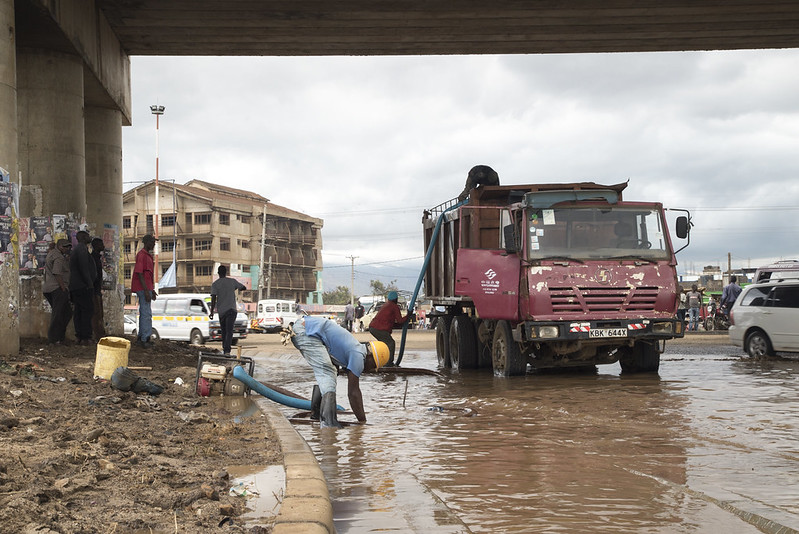 Flooding in Kenya has displaced more than 412,000 people since September 2025. Unprecedented levels of rainfall, following the El Niño rainy season, triggered the flooding, recording one of the heaviest rain seasons in Kenya’s history. These torrential rains have now led to floods across 33 out of Kenya’s 47 states, and the situation has only been worsened by the prolonged drought that has resulted in ruined infrastructure and farmland, almost irreparably damaging thousands of people’s livelihoods. These extreme weather events are not just extraordinary occurrences, but evidence of how natural disasters can affect the country.
The Effects of Flooding in Kenya
The flooding in Kenya has resulted in displacement, deaths, damaged or lost infrastructure and farmland, with destruction across all sectors: 11,311 losses in livestock, submergence of 61 key roads and the destruction of nearly 2,000 schools and 62 health centres nationwide, according to Help.NGO.
One personal testimony comes from Felista, who states: “Flooding has taken away my livelihood source.” Felista is a displaced mother and business owner as a herbalist, who looks after her daughter and grandchildren owing to her daughter’s mental health issues, and now “[she] can no longer access herbs.”
Unfortunately, the combination of flooding in Kenya and the ensuing fast-onset drought has not only hurt individuals’ and families’ incomes, but also people’s health and access to basic necessities such as food, water, and education.
Public Health Concerns
According to Dr Pius Mutuku, a medical epidemiologist from the Ministry of Health, flooding made 14 facilities close down and affected a major water treatment facility, resulting in a shortage of clean water for 3,000 people. Tana River County alone reported 44 cholera cases, which is one of the most flood-affected regions and in displacement camps that are rapidly filling up, medical emergencies such as this are significant worries to public health.
Poverty is a multidimensional issue, affecting not only the economy but also creating a poverty of knowledge and independence. Schools across the country have closed due to water damage, postponing term for two weeks due to the disruption and lost infrastructure that prevents staff and students travelling to school. The Kenyan government has chosen to demolish houses, specifically informal settlements near the major rivers – the worst affected flood zones- to reduce future flood damage. However, this means destroying nearby infrastructure also, which puts families in the worst socio-economic situations at greater risk, removing their access further to facilities for health care or education.
The Response
Kenya Red Cross (KRCS) has traditionally been the centre of emergency response efforts, but the organization found itself stretched beyond capacity in this crisis and in need of additional man-power and financial support. County emergency funds had been depleted, and local authorities were unable to respond to the flooding in Kenya alone until Help NGO joined KRCS, offering field support and new technology.
The United Nations Central Emergency Response Fund (CERF) has also contributed to the crisis team, allocating $3 million US dollars to humanitarian partners to support the assistance of 190,000 people across 10 counties severely ruined by the flooding in Kenya.
Funding is a silent but crucial element of resolving national and international crises like this one, and this money from CERF went toward organizations like the World Food Program (WFP), which is providing cash assistance to affected families, to help them meet their most urgent needs in the time of disruption and loss. This cash assistance aimed to reach those most vulnerable in society, and those most harshly affected by the floods and drought, such as the disabled, chronically ill, or the urban poor population.
Another method of cash assistance and funding is the Adaptation Fund, which finances projects worth more than $49 million to reshape infrastructure so it can withstand natural disaster-influenced events like shock floods and droughts. This aid is especially significant to those living in urban poverty, whose informal settlements are most vulnerable to extreme weather events.
The Results
Part of Help.NGO’s action has been providing new advanced drone technology to work alongside satellites, and survey the extent of damage done to Kenya’s landscape. Without this level of surveillance, the government would not be able to accurately implement aid to the regions and communities that are most in need. These drones have provided invaluable data for “recovery and reconstruction,” according to a Help NGO spokesperson.
The images and data from Help.NGO’s technology helped a multitude of missions, including organizing medical assistance. The Ministry of Health has immensely benefited from this information, and have been able to set up medical camps with the support of KRCS for continuity of services for the more than 4,000 people hurt by hospital closures.
In addition, WHO deployed more than 720 first responders to flood-affected zones to offer on-site recovery and attention, and attend to patients across Kenya’s 192 medical camps. The mission also distributed cholera kits and treated approximately 10,000 people.
The Future
Funding can change an individual’s life, like Felista, who has now been able to reopen her business and return her grandchildren to school. CERF provided her with KES 10,000- equivalent to $80, which has enabled her to pay school fees, buy food, and, significantly, the herbs and materials she needs to get her business up and running again. With the help of KRCS and Help NGO, financial aid and technology are reshaping Kenya, socially and physically, building a safer and more stable country for generations to come.
– Jaya Noonan
Jaya is based in London, UK and focuses on Good News and Global Health for The Borgen Project.
Photo: Flickr
