Francis Kéré’s Survival Architecture and Health Care in Burundi
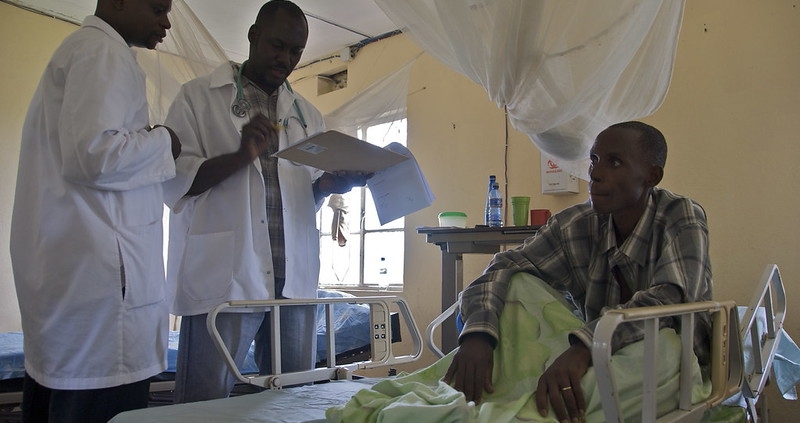 Late in 2025, Helen Clark, the head of the United Nations Development Program (UNDP), gave a speech at the G20 Health Ministerial in South Africa. She said that the architecture underpinning collective health is under immense strain, but also that health is connected to every aspect of shared security and prosperity.
The architecture of health can take both literal and metaphorical forms. Global poverty is one of the biggest threats to a person’s health, and East Africa has historically been one of the poorest regions in the Global South. As a result, many countries in the region are spending more on debt repayments than on health care. Alongside cholera epidemics and vaccine inequality, countries such as Burundi have extremely low health ratings, with a poverty rate of 74.2% and a high maternal mortality rate.
Emmanuel Niyonkuru, a nurse at a local health facility in Burundi, stated that more funding for infrastructure, more training for doctors and nurses and a reliable supply of essential medicines are needed to make the necessary progress.
The Architect
As of March 2026, a new health care facility is underway in Burundi’s Bubanza region, and Francis Kéré, African laureate and winner of the 2022 Pritzker Prize, is the figure behind it. Kéré, often referred to as the “Nobel of Architecture” recipient, was praised by judges for his efforts to change unsustainable patterns of production and consumption and for helping to develop new infrastructure that prioritizes sustainability.
Kéré’s work demonstrates a commitment to Africa and its topography. He was raised in Burkina Faso in West Africa and has received global recognition for his work. He currently has large-scale projects in countries such as the United States (U.S.), Brazil and Germany. The ethos of his architecture is survival, and he has said that everything he does is born out of necessity.
This new clinic will focus on maternity care and specialized surgical treatment, taking into account the absence of electricity in the region and the acute challenges facing Burundi’s health as one of Africa’s poorest countries.
The Architecture
In 2001, Kéré set out to build the Gando Primary School in the Boulgou area. Different from the concrete and glass buildings of Europe, the primary material involved in the construction of the school was mud bricks. In areas without electricity, these clay bricks are heat-absorbent, allowing the school to remain cool. Kéré aims to use regional knowledge in his architecture, showing commitment to local resources and local techniques.
The Burundi health care facility will follow this pattern, reducing costs through using locally sourced bricks, clay and stone, along with traditional building skills. Alongside providing health care to the region, this approach will also support the regional economy by training local workers. Beyond the building itself, Kéré is building systemic networks of support and stability for the communities that need them.
Looking Ahead
Recent United Nations (U.N.) reports note that the health sector in many African countries remains highly dependent on foreign funding. Funding can take different forms, and addressing global poverty involves both small-scale support for individuals and the larger-scale infrastructure that facilitates it.
Nana Biamah-Ofosu, a Ghanaian British architect and critic, has called Kéré the leading figure of an African renaissance of architecture. She has also stated that learning from Africa as a place of deep knowledge is important for the survival of humanity.
The 3,000-square-meter complex is expected to open in 2026, improving access to health care in Burundi.
– Grace Sandall
Grace is based in Madrid, Spain and focuses on Business and Technology for The Borgen Project.
Photo: Flickr
