Emergency Backpacks and Flood Relief in Bangladesh
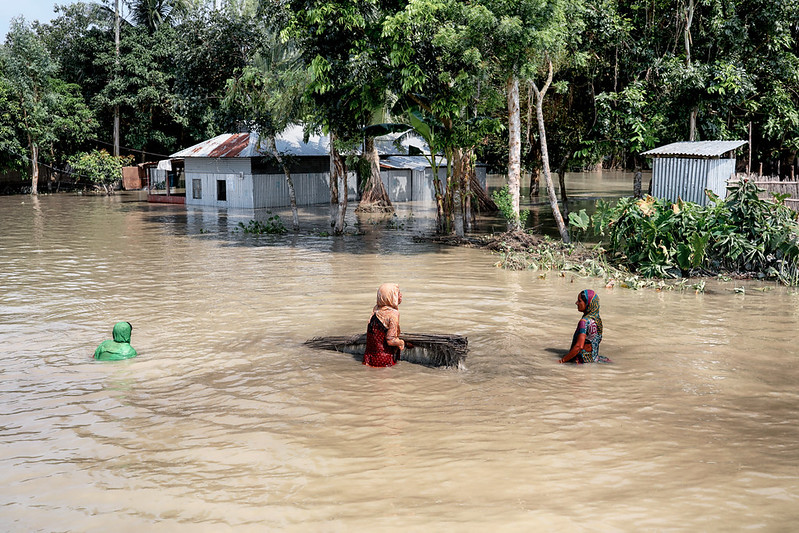 On March 31, 2025, the day of Eid al-Fitr, a massive flood hit Satkhira, Bangladesh, covering seven villages in the region and displacing more than 15,000 people. Many citizens, still in their Eid clothing, built makeshift dams and dug holes to divert the water, but the tide was too overwhelming, and all 15,000 people in the area became stranded. In addition, most businesses were not working due to the holiday, so almost no local emergency services were available to help. CARE, an anti-poverty organization and a pioneer in flood relief in Bangladesh, foresaw this potential disaster and was still able to make life-saving materials available to the flood victims
Flooding and Poverty in Bangladesh
Bangladesh has a poverty rate that has fluctuated significantly in recent years. In 2022, the poverty rate dropped to 18%, but as of 2025, it has risen to 28%. More than a quarter of the population suffers from increasing amounts of infrastructure vulnerability, food insecurity and chronic illness. A huge reason for this recent rise in poverty rate is due to floods brought about by climate change.
In recent years, Bangladesh has been the country that became significantly vulnerable to natural disasters, since its geographical location makes it particularly prone to floods. This is due to nearby basins that receive massive amounts of rain year-round. The rain pools in basins and then washes through Bangladesh into the Bay of Bengal. Plus, the location of the country’s residential infrastructure is placed right in the way of the flood path. The facts make Bangladesh’s future seem daunting, but hope is not lost.
CARE and Emergency Backpacks
In the midst of the flood, no help could get in to those in need because of the harsh conditions, except CARE, which had planned ahead of time. It placed 500 emergency backpacks in easy-to-access places, so that when the need arose, emergency tools would be available. In addition, CARE operated to distribute more packages to those most in need, even during holiday hours.
These CARE packages are compact, lightweight tube-shaped backpacks that consist of essential hygiene products, first aid materials, and emergency equipment personalized to the needs of each individual. They may contain any of the following:
- Water purifiers, purification tablets, and collapsible buckets
- Stoves and kitchen utensils
- Menstrual pads, soaps, and underwear
- A solar-powered light and solar-powered chargers
- Tarps and ropes
- An instruction packet that explains how to optimize each tool
During post-effort surveys, CARE recorded some inspiring metrics. Women specifically reported that the menstrual hygiene products provided were extremely helpful, improving their wellbeing in ways beyond just cleanliness. 66% of women used the kits mainly because of their hygiene products. Solar-powered technology was also among the most used items; 72% of households used solar power to restore use of their mobile devices to contact help and find crucial information. Sixty four percent of people reported that solar-powered lights helped them remain safe and calm at night.
Overall, backpacks helped 336 households, and 99% of those who received the packages reported their satisfaction with the tools provided. Thanks to this success, CARE has been able to implement CARE packages in Nepal, Malawi, the Philippines, and Mozambique in addition to Bangladesh. CARE has even partnered with The Coca-Cola Foundation to expand the production and distribution of the packages.
CARE’s flood relief aid in Bangladesh is a beacon of hope for poverty eradication. If projects like this continue to be well-funded and backed by influential donors like Coca-Cola, positive change is on the horizon.
– Lucas Cain
Lucas is based in Pittsburgh, PA, USA and focuses on Good News and Technology for The Borgen Project.
Photo: Flickr
