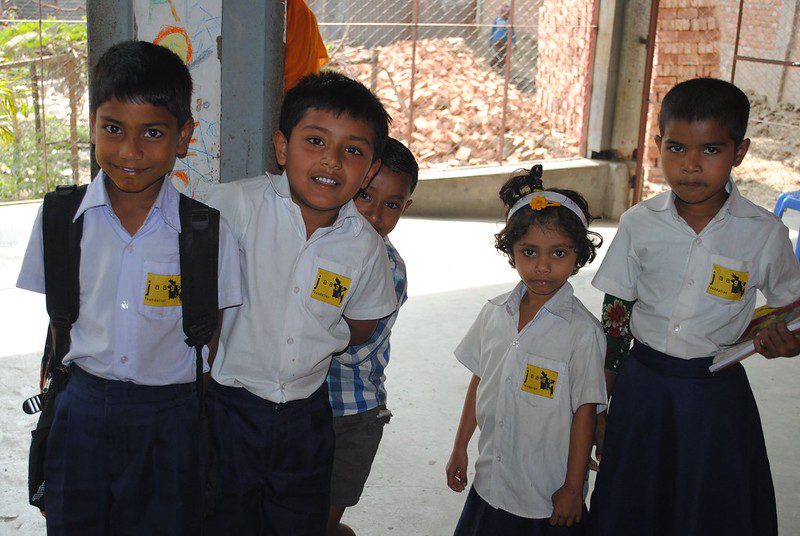
 Bangladesh has made significant strides from poverty to becoming one of the world’s fastest-growing economies. The poverty rate has gone from 41.6% to 18.7% in the past decade. While improvements in health care and education are notable, many areas still lack essential resources. Bangladeshis living in poverty-stricken areas have inadequate access to healthcare, education and food, with about 25% of the country being food insecure.
In addition, Bangladesh has the fourth highest child marriage rate in the world, primarily affecting rural populations living in poverty. These populations often turn to child marriage as they are unable to provide for their daughters. Despite progress, disparities persist, leaving some regions underserved.
To address these challenges, several charities are actively working on the ground in Bangladesh. They aim to ensure equitable access to vital resources for all citizens. These organizations play a crucial role in bridging the gap and empowering communities through supporting health care, education and poverty alleviation. Here are five charities operating in Bangladesh:
Save the Children
Save the Children is a global nongovernmental organization (NGO) that stands as a vigilant guardian for children worldwide, committed to shielding them from potential harm. Operating in Bangladesh since 1970, its initiatives encompass essential programs such as health, education and protective measures.
Noteworthy achievements include spearheading the United States Agency for International Development (USAID) MaMoni Maternal Care Strengthening Project, a five-year program that began in 2018. It aimed to increase access to quality maternal and newborn health care and to reduce the maternal and neonatal mortality rate for marginalized communities.
Additionally, there’s the Reading Enhancement for Advancing Development (READ) project, a five-year program that took place from 2013 to 2018. This initiative provided training for teachers and reading materials for students, impacting more than one million learners. Moreover, Save the Children’s efforts extend to aiding Rohingya refugees residing in southeastern Bangladesh by building facilities such as toilets, health care centers and learning centers, exemplifying its unwavering commitment to the well-being and production of vulnerable children in the region.
Jaago Foundation
Jaago Foundation is a nonprofit organization founded in 2007 that is dedicated to empowering underprivileged individuals across Bangladesh, with a focus on education, youth development and women’s empowerment. Currently, its endeavors include blistering technological skills among students and expanding access to education through digital platforms.
In addition, it provides scholarships to women, ensuring they can pursue and continue their education, thus fostering a more inclusive and equitable society. Through its efforts, it has helped provide access to education to more than 3,500 students and engaged 16,000 children in reading initiatives. Through these initiatives, the Jaago Foundation is catalyzing transformative change and paving the way for a brighter future for all.
Thrive Global
Thrive Global has been on a mission to combat child hunger in Bangladesh by providing nutritious meals to schools. It has collaborated with local NGOs since 2012. USAID approximates that 25% of Bangladesh remains food insecure, including 36% of kids under 5 years of age. Children remain one of the most vulnerable populations to malnutrition.
Thrive Global’s targeted efforts are concentrated in underprivileged areas, particularly urban slums, where access to adequate nutrition is often scarce. Each day, it provides meals to about 2,100 students at 11 different schools across Bangladesh; 20 more schools are currently on the waiting list to receive daily meals.
Recently, Thrive Global has extended its reach to the Philippines, expanding its impactful initiatives beyond borders to address the pressing issue of childhood malnutrition in more communities. Through dedicated work, the nonprofit is sowing seeds of hope and nourishment for a brighter future for children in need.
Girls Not Brides
Another of the charities operating in Bangladesh is Girls Not Brides, an international organization that is at the forefront of the global movement to eradicate child marriages. Launched in Bangladesh in 2013, it focuses on nurturing youth leadership and empowering young activists, as well as advocating for increased investment in programs aimed at ending child marriage.
In 2017, the organization was involved in the technical revision of the Child Marriage Restrain Act, a law intended to make sure that girls under the age of 18 and boys under the age of 21 are protected from unlawful marriage. It continues to lobby the government for the enforcement of the act while simultaneously striving to raise public awareness throughout the country.
Girls Not Brides has reached nearly 50,000 girls across Bangladesh through its efforts to end child marriage. This nonprofit is driving meaningful change toward a future free from child marriage in Bangladesh and beyond.
Brackett Refugee Foundation
Brackett Refugee Education Fund is a nonprofit foundation established in 1997 and dedicated to providing education for refugees, particularly internally displaced children. It supports children in poverty-stricken regions by providing financial contributions so they can go to school. With a focus on Burma, Bangladesh, India and Thailand, it supports students at various levels, including to hundreds of university students, offering them a chance at a brighter future amid adversity.
In Bangladesh, the organization supports educational assistance to Rohingya refugees in Cox’s Bazar through the Children on the Edge program, which sets up learning centers and digital initiatives. By focusing on providing access to education, it empowers these vulnerable populations to foster resilience and opportunities for a brighter future.
Looking Forward
Bangladesh’s progress in tackling poverty is evident, but challenges persist, particularly regarding regional disparities in access to essential resources. Charities operating in Bangladesh play a vital role in bridging these gaps and fostering a more equitable society. As Bangladesh continues to develop, ongoing efforts to address inequality are essential for ensuring that all citizens have the opportunity to thrive in the country’s evolving landscape.
– Adrita Quabili
Photo: Wikimedia Commons

Addressing Mental Health in Lesotho
These problems compromise the state of mental health in Lesotho. In fact, the latest report shows that the country had one of the highest rates of suicide in the world for that year, with 87.5 suicide-related deaths for every 100,000 deaths. These numbers are alarming and justify claims that state that there is a mental health crisis in Lesotho. The existence of such a severe mental health crisis serves as a testament to the challenges and stressors endured by the Basotho people.
Despite the acknowledgment of such a crisis, many Basotho will not seek help, whereas many others cannot afford to do so. Lesira Rampa, a Lesotho native, wrote, “Unfortunately, there are numerous challenges in accessing mental health treatment in Lesotho, as evident from the alarming suicide statistics. Despite facing stigma, we encounter several problems, including a shortage of mental health care services and limited financial resources to afford expensive treatments.” In light of these obstacles that prevent Lesotho citizens from accessing mental health services, many organizations such as Help Lesotho, Dolen Cymru and Sentebale are working within the country to assist those in need.
Increasing the Number of Mental Health Care Providers
Lesotho has been suffering from what experts call a “brain drain,” which is the emigration of trained professionals from their country of origin to other countries in order to find jobs. This brain drain has made it difficult for Lesotho to retain a stable number of health care workers, causing a great amount of strain on the physicians and nurses who choose to stay. This shortage has detrimentally impacted the quality and quantity of mental health services available to those suffering from mental illnesses.
Paul Myres, Vice-President of the nonprofit organization Dolen Cymru, told The Borgen Project in an interview that, currently, there are no psychiatrists in Lesotho. In order to remedy this issue, Dolen Cymru administers mental health training, which was developed by the World Health Organization (WHO), to upskill general health care providers within the country. Myres describes the training program as a WHO-designed, multi-professional training program that Dolen Cymru was tasked with implementing. It involved just five days of instruction and relied heavily on algorithms, with a structured approach of asking questions to gather patient information and proceeding accordingly based on the responses.
More than 100 health practitioners received this training, which has aided in improving the understanding of mental health among general Lesotho nurses and doctors. Myres says that the philosophy of Dolen Cymru is to capacitate rather than to provide direct care. Such a unique and innovative philosophy can prove effective in empowering citizens to seek out more information on mental health concerns while preserving their dignity.
One-On-One and Group Counseling
There are a generous number of organizations working in Lesotho to provide help during this mental health crisis, each with its unique approach. Help Lesotho is an organization that focuses on providing one-on-one and group counseling to those in need. Help Lesotho offers a range of non-intensive and long-term intensive self-help and life-skills programs. Its variety of programs is designed to benefit parents, children and communities. These programs address mental health concerns stemming from issues such as poverty, grief and loss, HIV/AIDs and much more.
In 2023, Help Lesotho’s long-term intensive programs had more than 2,000 participants and the organization had one-on-one psychosocial support conversations with more than 960 people. Those who received assistance and guidance from Help Lesotho noticed an increase in confidence, a new-found sense of belonging and a desire to inspire others.
Stigmas: Obstacles To Providing Mental Health Support
Although several organizations are addressing the need for mental health services in Lesotho, certain obstacles can stand in the way of their efforts. It is especially difficult to reverse the effects of the social stigmas surrounding mental health in Lesotho. Meyers mentioned in his interview with The Borgen Project that mental health issues are often seen as a punishment in Lesotho, either for the individual or even their parent’s behavior.
Ms. Mota, a psychiatric nurse at Mohlomi Hospital, has spoken out about these stigmas, stating that “Because of misconceptions and stigma surrounding mental health issues, people sometimes suffer in silence and do not seek treatment for their conditions.”
Thankfully, training and programs such as the ones offered by Dolen Cymru can help reduce the influence of such stigmas. Meyers says that when trainers ask doctors to come up with a list of words describing their initial response to mental health, fear is always at the top of the list. “The good news,” he says, “is that by the end of the week, we ask the same question and that’s all gone.”
Conclusion
Lesotho, just like any country, has its own unique set of stressors and difficulties. Fortunately, organizations such as Dolen Cymru and Help Lesotho are going to great lengths to provide Lesotho with the assistance it needs. However, there is definitely still work to be done.
– Kimber Peters
Photo: Pexels
Cultivating Hope: Urban Farming in São Paulo
Urban Farming in São Paulo
Urban farming refers to growing fruits, vegetables and herbs within urban areas, utilizing limited space such as rooftops, vacant lots and community gardens. In São Paulo, where access to fresh, nutritious food can be scarce in low-income neighborhoods, urban farming initiatives are playing a crucial role in addressing food deserts and improving food security. By bringing agriculture closer to urban dwellers, these initiatives reduce the distance food needs to travel from farm to table, thereby lowering costs and increasing accessibility.
Despite the numerous benefits of urban farming, it still faces challenges and limitations. Land tenure issues, limited access to resources and bureaucratic hurdles can hinder the scalability and sustainability of urban farming initiatives. In addition, the unequal distribution of wealth and resources within the city exacerbates existing disparities, making it difficult for some communities to fully engage with urban farming efforts.
Environmental Impact of Urban Farming
Urban farming in São Paulo has environmental benefits that extend beyond its economic and social impacts. By converting vacant lots into green spaces, urban farms help mitigate the urban heat island effect, improve air quality and promote biodiversity. Additionally, these initiatives often employ sustainable farming practices such as composting, rainwater harvesting and organic cultivation methods, thereby reducing the city’s ecological footprint and enhancing its resilience to climate change.
Hortelões Urbanos
The Hortelões Urbanos network or Urban Horticulturists, stands out as a leading initiative in São Paulo. Its members champion food autonomy and strive to lessen reliance on traditional farming practices, agribusiness and large retailers. Key principles of the network include fostering equal partnerships between rural and urban communities and opposing the adverse effects of agribusiness on natural resources, transportation, excessive packaging, waste production and labor exploitation.
Nagib and Nakamura report that initiatives like these promote the sharing of experiences and information about urban agriculture, whether at the household or community level. Involving residents in the cultivation process fosters a sense of ownership and empowerment within these communities.
Urban farming in São Paulo offers economic opportunities for vulnerable populations, thereby contributing to poverty alleviation. Through training programs and cooperatives, individuals living in impoverished areas are equipped with the knowledge and resources to grow their food or even start small-scale agricultural businesses. By selling surplus produce at local markets or participating in community-supported agriculture (CSA) programs, urban farmers can potentially generate additional income, thus reducing their reliance on expensive store-bought groceries and improving their financial stability.
Looking Ahead
Urban farming offers significant potential as a strategy for reducing poverty and developing communities in São Paulo. The ongoing initiatives enhance access to fresh food, generate economic opportunities and promote environmental sustainability, presenting a comprehensive solution to the intricate issues urban populations encounter. As São Paulo expands and progresses, urban farming is poised to play a crucial role in the city’s endeavors to create a more equitable and resilient environment for all residents.
– Rhys Woodward
Photo: Flickr
5 Charities Operating in Bangladesh
In addition, Bangladesh has the fourth highest child marriage rate in the world, primarily affecting rural populations living in poverty. These populations often turn to child marriage as they are unable to provide for their daughters. Despite progress, disparities persist, leaving some regions underserved.
To address these challenges, several charities are actively working on the ground in Bangladesh. They aim to ensure equitable access to vital resources for all citizens. These organizations play a crucial role in bridging the gap and empowering communities through supporting health care, education and poverty alleviation. Here are five charities operating in Bangladesh:
Save the Children
Save the Children is a global nongovernmental organization (NGO) that stands as a vigilant guardian for children worldwide, committed to shielding them from potential harm. Operating in Bangladesh since 1970, its initiatives encompass essential programs such as health, education and protective measures.
Noteworthy achievements include spearheading the United States Agency for International Development (USAID) MaMoni Maternal Care Strengthening Project, a five-year program that began in 2018. It aimed to increase access to quality maternal and newborn health care and to reduce the maternal and neonatal mortality rate for marginalized communities.
Additionally, there’s the Reading Enhancement for Advancing Development (READ) project, a five-year program that took place from 2013 to 2018. This initiative provided training for teachers and reading materials for students, impacting more than one million learners. Moreover, Save the Children’s efforts extend to aiding Rohingya refugees residing in southeastern Bangladesh by building facilities such as toilets, health care centers and learning centers, exemplifying its unwavering commitment to the well-being and production of vulnerable children in the region.
Jaago Foundation
Jaago Foundation is a nonprofit organization founded in 2007 that is dedicated to empowering underprivileged individuals across Bangladesh, with a focus on education, youth development and women’s empowerment. Currently, its endeavors include blistering technological skills among students and expanding access to education through digital platforms.
In addition, it provides scholarships to women, ensuring they can pursue and continue their education, thus fostering a more inclusive and equitable society. Through its efforts, it has helped provide access to education to more than 3,500 students and engaged 16,000 children in reading initiatives. Through these initiatives, the Jaago Foundation is catalyzing transformative change and paving the way for a brighter future for all.
Thrive Global
Thrive Global has been on a mission to combat child hunger in Bangladesh by providing nutritious meals to schools. It has collaborated with local NGOs since 2012. USAID approximates that 25% of Bangladesh remains food insecure, including 36% of kids under 5 years of age. Children remain one of the most vulnerable populations to malnutrition.
Thrive Global’s targeted efforts are concentrated in underprivileged areas, particularly urban slums, where access to adequate nutrition is often scarce. Each day, it provides meals to about 2,100 students at 11 different schools across Bangladesh; 20 more schools are currently on the waiting list to receive daily meals.
Recently, Thrive Global has extended its reach to the Philippines, expanding its impactful initiatives beyond borders to address the pressing issue of childhood malnutrition in more communities. Through dedicated work, the nonprofit is sowing seeds of hope and nourishment for a brighter future for children in need.
Girls Not Brides
Another of the charities operating in Bangladesh is Girls Not Brides, an international organization that is at the forefront of the global movement to eradicate child marriages. Launched in Bangladesh in 2013, it focuses on nurturing youth leadership and empowering young activists, as well as advocating for increased investment in programs aimed at ending child marriage.
In 2017, the organization was involved in the technical revision of the Child Marriage Restrain Act, a law intended to make sure that girls under the age of 18 and boys under the age of 21 are protected from unlawful marriage. It continues to lobby the government for the enforcement of the act while simultaneously striving to raise public awareness throughout the country.
Girls Not Brides has reached nearly 50,000 girls across Bangladesh through its efforts to end child marriage. This nonprofit is driving meaningful change toward a future free from child marriage in Bangladesh and beyond.
Brackett Refugee Foundation
Brackett Refugee Education Fund is a nonprofit foundation established in 1997 and dedicated to providing education for refugees, particularly internally displaced children. It supports children in poverty-stricken regions by providing financial contributions so they can go to school. With a focus on Burma, Bangladesh, India and Thailand, it supports students at various levels, including to hundreds of university students, offering them a chance at a brighter future amid adversity.
In Bangladesh, the organization supports educational assistance to Rohingya refugees in Cox’s Bazar through the Children on the Edge program, which sets up learning centers and digital initiatives. By focusing on providing access to education, it empowers these vulnerable populations to foster resilience and opportunities for a brighter future.
Looking Forward
Bangladesh’s progress in tackling poverty is evident, but challenges persist, particularly regarding regional disparities in access to essential resources. Charities operating in Bangladesh play a vital role in bridging these gaps and fostering a more equitable society. As Bangladesh continues to develop, ongoing efforts to address inequality are essential for ensuring that all citizens have the opportunity to thrive in the country’s evolving landscape.
– Adrita Quabili
Photo: Wikimedia Commons
Foreign Aid to Ukraine
Humanitarian Aid
Humanitarian aid is an incredibly important resource that serves as a crisis response to poverty and disease. It helps save lives and often provides the most basic needs to survive, such as housing, food and medical supplies. Currently, more than 40% of the Ukrainian population (14.6 million people) are in need of humanitarian aid in 2024. However, with the collective aid efforts directed toward Ukraine, millions can access vital necessities, including water, food, cooking fuel, heating for homes and health care services.
The U.S. has sent $1.6 billion in humanitarian aid to Ukraine to cover health care, emergency food assistance and refugee support. Additionally, the U.S. government offers family reunification support to Ukrainians who have been separated from their loved ones. The war has also caused significant destruction to public utilities. In response, the United States Agency for International Development (USAID) and the United Nations Children’s Fund (UNICEF) have provided:
Economic Aid
In February 2024, the Rapid Damage and Needs Assessment (RDNA3) revealed that it would cost approximately $486 billion for Ukraine to recover from the destruction of war in the next decade. The most important needs consist of housing, transport and commercial industries. Ukraine’s government feels the financial burden not only on its citizens but also on the country. Currently, social assistance is being used to combat economic distress due to a 15.9% rise in inflation in 2022 and low earnings from a lack of available jobs. Additionally, the Ukrainian government is capping the cost of energy and reducing the price of public transport to help households and businesses.
Loans, grants and technical assistance are the most common ways for countries to send economic aid. An example of financial aid comes from The European Investment Bank (EIB). In July 2023, the “EU for Ukraine” initiative was passed to finance an approximately $2 billion recovery effort that included transport, renewable energy and corporate innovation. Foreign aid to Ukraine will help contribute to Ukraine’s long-term stability, financial dependence and economic growth in the aftermath of conflict.
Military Aid
The U.S. currently provides the largest amount of military aid to Ukraine, totaling $46.3 billion. Military assistance includes weapons, logistics support, training and additional grants and loans. On March 12, 2024, the U.S. announced that it would send a new military aid package worth about $300 million to Ukraine. This is the first aid package from the U.S. since December 2023. Further, Denmark will be providing $336.6 million, which includes artillery systems and ammunition. The EU is also set to agree to a $5.46 billion fund to help with military finances.
While the main objective of such aid is to support Ukraine’s military and deter further hostility from Russia, its implications extend beyond that. Investments in defense contribute to economic growth and poverty reduction by creating stability and national security. Helping Ukraine defend itself helps prevent further destabilization of social welfare systems such as educational institutions, pensions, social assistance and housing.
Conclusion
Foreign aid to Ukraine plays a crucial role in its success against Russia. Despite major contributions from multiple nations, it’s evident that the current foreign aid assistance is falling short. Nonetheless, there remains hope that Ukraine will emerge stronger than before. With continued solidarity and collaboration, Ukraine will be able to succeed in its journey toward independence.
– Gabrielle Schwartz
Photo: Flickr
The Cure Tuberculosis Project In The Kyrgyz Republic
The Struggle with Drug-Resistant TB
TB ranks among the most lethal infections, causing 1.3 million deaths in 2022 alone. It disproportionately affects those in lower-income households, exacerbating the cycle of poverty. Infected individuals often face reduced earning capacity, leading to diminished access to health care and increasing health issues.
In addition, people with TB often spend more time indoors, heightening the risk of spreading the illness among both adults and children. This transmission within households can perpetuate a cycle of poverty across generations. Moreover, drug-resistant TB poses a growing global concern as certain treatments lose effectiveness. In 2022, about 410,000 individuals contracted drug-resistant TB, but only 43% received treatment, highlighting the urgent need for more effective interventions.
The Kyrgyz Republic faces a significant challenge with drug-resistant TB, with 29% of new drug-resistant TB cases compared to the global average of 3.3%, according to the World Health Organization (WHO). In addition, several factors contribute to this high incidence, including ineffective health care services, a shortage of medical resources and widespread difficulties in accessing medication for drug-resistant TB.
Addressing Drug-Resistant TB
The U.S. Agency for International Development (USAID) supported the Kyrgyz people by funding the Cure Tuberculosis Project from 2019 to 2024. This initiative aimed to assist the Kyrgyz government in identifying and treating individuals diagnosed with drug-resistant TB. Additionally, the project focused on ensuring rapid diagnosis for drug-resistant TB patients and facilitating their access to treatment, collaborating closely with the Ministry of Health of the Kyrgyz Republic. Moreover, the Cure Tuberculosis Project focused on four key areas for improvement:
Impacts of the Cure Tuberculosis Project
The Cure Tuberculosis Project achieved success in all four targeted areas.
Looking Ahead
The Cure Tuberculosis Project has laid a strong foundation for ongoing efforts to fight drug-resistant TB in the Kyrgyz Republic. This marks a significant stride toward health security and poverty reduction. Furthermore, sustained collaboration and innovation could be essential in consolidating these gains and ensuring a healthier future for the Kyrgyz people.
– James McAlinden
Photo: Flickr
Nonprofits Address Elderly Poverty in Georgia
Elderly Poverty in Georgia and Medical Accessibility
Social programs, such as government-provided subsidies and universal health care, have created optimistic results in the last quarter century. However, poverty is still a large burden for many Georgians. Though life expectancy has risen, the quality of life for the aging population has not improved satisfactorily.
The government offers retired Georgians a pension, but this rarely covers all of their expenses. In recent efforts, Georgia has invested in a universal health coverage plan. Despite this, the policy is not widely accessible and the cost of co-payments is still too high for many working-class households: “The high cost of outpatient medicines is the biggest barrier to accessing care for the lowest income households.”
Poverty is least prevalent in the elderly population (14.4%) compared to children (25.5%) and the working-age population (19.5%). However, as a vulnerable population, older people suffer disproportionately from a lack of medical accessibility and unemployment, especially in rural areas. Challenges in health care accessibility include low pension, job scarcity and an inability to commute.
Proposed Solutions
A large issue in modern-day Georgia is that people do not see elderly workers as valuable. This view is due to the idea that age causes physical deterioration and a lack of skill. In addition, there is a belief in Georgia that the youth should have uninhibited access to the job market and that the older generations should not be impeded. However, this has created a rise in the poverty of older adults in Georgia. Older Georgians are not expected to partake in the workforce. However, because health care and other social services are not widely accessible to them, especially in rural areas, many still require an income.
Many older Georgians also require more health care than the average citizen due to their age, which increases medical expenses. Despite this, employers are hesitant to hire older Georgians due to age-related discrimination. The United Nations (U.N.) suggests that the Georgian government establish programs that aid older workers through education and training. It also notes that the government could create more jobs suitable for older workers, as well as provide tax-related incentives to employers hiring older workers.
In addition, the U.N. stresses that government-provided pensions are not sufficient means to live off of and that citizens be encouraged to accumulate private savings earlier in life. As discrimination against the elderly population is prevalent in the workforce, the U.N. notes that the Georgian government could implement stricter measures to forbid workplace and hiring discrimination. The U.N. necessitates a shift in this negative view of older generations: “Awareness-raising should target employers, helping them to understand the benefits of an age-balanced workforce, encouraging them to employ and retain older workers and to provide age-friendly workplaces.”
Beacons of Positive Change
A key way that Georgia has improved health and wellness accessibility for elders is by establishing free senior care centers. Though these are largely independent, nonprofit organizations, they have tremendously impacted communities. They provide resources to meet the needs of aging citizens and combat elderly poverty in Georgia.
One such provider is Catharsis: The House of Charity. A pioneer in its field, it was established in 1990 as the economy took a hit. Unfortunately, this affected various social services and worsened poverty rates. It focuses primarily on senior care and offers free medical assistance, food, clothing and other enrichment resources. The organization advocates elderly independence and expression by cultivating a “warm, family-like setting.” It has multiple branches operating in several regions of Georgia and has helped more than 1500 individuals since its establishment.
Another essential elderly care provider is American Friends of Georgia, working out of Tbilisi. It is a nonprofit organization that provides free care to vulnerable populations. This includes the sick, the disabled, children and the elderly. It is also focused on furthering education and aims to diversify accessibility through technology donations, higher-education scholarships and a basketball academy. For older patients, the initiative has created a hospice program and in-home care. It has tended to more than 800 elderly patients since 2003. It also focuses on empowering elderly Georgians in their careers through skill-building and job training.
The Future
Though there are barriers to job and social service accessibility in Georgia, steps are being taken to care for the growing elderly population and to ensure their wellness. Though organizations specializing in these efforts are largely privatized, normalizing programs that aid in elderly welfare will instigate the growth of such resources. Finally, there are several plausible solutions, as suggested by the U.N., to help alleviate financial disparities among Georgians, thus alleviating elderly poverty in Georgia.
– Anna Williams
Photo: Flickr
Child Soldiers in Sudan
Across Sudanese conflicts, child soldiers are a consistent humanitarian concern, with most nongovernmental organizations (NGOs) emphasizing their recruitment in the South. However, according to the United Nations Children’s Fund (UNICEF), approximately 6,500 children served in armed groups in northern Sudan during the civil war, with around 70% serving in Darfur alone. This trend continued with armed groups recruiting more than 400 children between 2011 and 2020 and an 11% increase in recruitment just in 2023.
The Multi-Faceted Reality of Child Soldiers in Sudan
Children become soldiers for a variety of reasons. While some are forced into service by armed groups, many, especially those separated from their parents, do so “voluntarily.” Sudan’s conflict has caused extreme poverty and widespread violence, leaving children with few alternatives than to turn to the armed forces simply out of a need for their resources and protection.
Though some children may become soldiers consensually, such activity is still a violation of international humanitarian law. It can have severe long-term consequences on child soldiers, ranging from physical to psychological illness. The experiences of child soldiers, which are often the drivers of such trauma, are characterized by violence during an age when development is most vulnerable.
Child soldiers are not only combatants but may, in fact, serve a variety of roles. Recruitment may mean a child is utilized in the armed forces as a cook, porter, messenger or spy; many sexually exploit children, too. Limiting the scope of what a child soldier is to exclude these distinct forms of abuse can leave certain victims out of the reintegration process.
Understanding this nuance is crucial not only for grasping how child soldiers in Sudan serve but also for pinpointing where they serve. Though initially conscripted in areas like Darfur, many armed groups train child soldiers in Sudan for the sole purpose of being sent to combat zones elsewhere. Several reports indicate that dangerous conflicts ranging from Yemen to Libya may employ child soldiers from Sudan.
Solutions
Several organizations have played key roles in aiding child soldiers in Sudan and Darfur. In 2007, the United Nations (U.N.) initiated the African Union-United Nations Hybrid Operation in Darfur (UNAMID) to mediate hostilities, aiding child soldiers’ transition back into society through a process known as Disarmament, Demobilization and Reintegration (DDR). UNAMID oversaw several releases of child soldiers for reintegration. In 2011, The Sudan Liberation Army / Historical Leadership (SLA/HL) released 70 child soldiers, of which 24 were girls. Similarly, the Sudanese government released 21 child soldiers in 2016. Following the 2020 peace agreement, UNAMID ended its operations.
Subsequently, the United Nations Integrated Transition Assistance Mission (UNITAMS) was created to uphold the peace agreement and oversee Sudan’s transition to democratic rule. Continuing much of UNAMID’s goals, UNITAMS had “a strong child protection mandate,” which allowed for the monitoring of any human rights violations against children and the further facilitation of DDR. However, a military coup stopped the democratic transition in 2021, preventing UNITAMS from fulfilling this mandate. UNITAMS ultimately ended its operations on Feb. 29, 2024.
NGOs have also been essential to ending the recruitment of child soldiers in Sudan, with one of them being War Child. War Child is known for many campaigns, but in 2019, it launched its Can’t Wait to Learn program in Sudan, intervening in children’s education as early as possible to dissuade them from becoming soldiers. This targets the issue of recruitment at its source, bringing quality education to an impoverished population. War Child reached 2,667 children in 2019 alone but ended its operations following the resumption of conflict.
Final Remark
Despite the challenges, supporting organizations working toward ending poverty and the recruitment of child soldiers remains one of the best strategies to ensure the future of reintegration and demobilization in Sudan.
– Jacob Rampino
Photo: Wikimedia Commons
Landesa: Breaking the Poverty Cycle Through Land Rights
About Landesa
Established as the “Rural Development Institute,” Landesa is a unique nongovernmental organization (NGO) aiming to tackle poverty through the power of formally and legally recognized Land Rights for individuals in the Global South. Worldwide, its valued work has helped to secure land rights for hundreds of millions of families. The NGO is a true inspiration, setting exceptionally high standards for working with and understanding the regional contexts in which it operates.
Landesa in Liberia: Land Rights Act 2018
One case highlighting the lengthiness and success of Landesa’s work is Liberia and the Land Rights Act, described as “one of the most progressive pieces of land rights legislation on the African continent.” Landesa began work in 2010 and, eight years later, had helped garner support for the Act through approval and ratification, “working alongside Liberian civil society, NGOs and the government.”
The significance of the Act was multidimensional, granting land rights to all Liberians for the first time and including strong provisions for women’s land rights. This was hugely significant since Landesa finds that “when women have stronger rights to land, they have more access to household resources, the family budget and decision making both within the household and in their local community.”
Furthermore, “women have unique insights into how land can be sustainably managed based on the types of responsibilities that they have in farming and growing food.” A large body of literature from credible organizations worldwide supports the idea that more land rights provisions for women specifically lead to increased gender equality, improved living conditions, food security, economic empowerment and reduced rates of domestic violence.
Landesa in Liberia: Post-Reform Work
Landesa’s work does not end with the successful passing of groundbreaking legislation. In fact, “after the passage of the Land Rights bill, even more work begins because now the law is in place, it needs to be implemented.” In many developing countries, a lack of education and low literacy rates can hinder land rights. So, Landesa’s next task in Liberia was to raise awareness about the new law. The Amplio Talking Books program does exactly that.
The talking book is a “durable, handheld audio device technology, developed by a Seattle-based partner, that has pre-recorded messages in local languages,” containing information about the newly found land rights and how individuals can utilize these. Community members will use and share these devices for several weeks before Landesa returns to assess what individuals have learned and answer questions. The Talking Books are then collected and taken to the next community. They have become “a really successful way to educate communities about their new rights.”
Landesa’s comprehensive education and support methods help promote peace, stability and sustainable economic development that will benefit all Liberians. Beyond the Talking Books, the organization is “supporting community land formalization, offering ongoing technical assistance for law and policy reform, strengthening government and community implementation capacity and building an evidence base to disseminate lessons to broader stakeholders.”
Projects for the Future
Roush explained to The Borgen Project that Landesa is an optimistic and bold organization that goes above and beyond in multiple regions. Another exciting effort is the Coastal Livelihoods and Mangroves Project, which “strengthens coastal land rights and promotes policies in six countries to reduce overuse of mangrove resources and protect both community livelihoods and ecosystems indispensable to confronting climate change.”
The significance of these mangrove forests is clear for both locals and non-locals, with more than 120 million individuals depending on the highly productive ecosystems for their livelihoods. Additionally, the ecosystems act as natural carbon sinks and shoreline protection from natural disasters. Landesa’s initiative is building momentum, with the organization working alongside “six countries, as well as with the Association of Southeast Asian Nations (ASEAN), on improving law and policy around coastal access, coastal use rights for communities and helping to conserve and restore mangrove forests.”
Conclusion
Landesa is setting the standards of cultural understanding and sensitivity toward potentially divisive issues with a wholehearted commitment to the demanding work. The organization has assisted “720 million people in just the past five years.” With continued patience, hard work and long-term planning, there is no reason why the organization can’t help many more in the next five years.
– Arshiya Eslamdoust
Photo: Flickr
Educational Programs Combat Extreme Poverty
Educational Disparities
For many citizens, a lack of education could be the source of many factors, including marginalization and poverty. Inequalities arise according to an individual’s socioeconomic status and how far-developed a country is. In developing and developed countries, it varies whether or not the ruling government is stable enough to sustain an equitable education system for its citizens.
Poverty remains one of the more persistent barriers, a seemingly neverending cycle. Poverty perpetuates lower literacy rates and such limitations reap consequences. According to the United Nations Children’s Fund (UNICEF), more than “600 million children worldwide are unable to attain minimum proficiency levels in reading and mathematics, even though two-thirds of them are in school.” This is attributed to a need for more developed foundational skills, a direct result of poverty.
Educational Programs in Mitigating Extreme Poverty
Extensive measures from both government and community-based organizations are necessary to mitigate the direct effects of inadequate education on poverty. Such initiatives from the ground are critical because these communities work directly with those impacted by the effects of poverty. Nonprofit organizations provide educational materials and programs to the country’s most vulnerable and marginalized populations. That said, here are some educational initiatives working to end extreme poverty.
SEED Madagascar
Sustainable Environment, Education & Development (SEED) in Madagascar is a British nonprofit organization operating in Southeast Madagascar. According to its mission statement, this organization builds community and environmental resilience by focusing on critical elements, including education. One project the organization prioritizes is education infrastructure. In the Anosy Region, where the organization completes most of its projects, the chances of children completing primary school could be higher. Through its work, SEED Madagascar has already completed educational projects: repairing existing buildings, building new schools and providing facilities and furniture to schools that lack them.
What makes this organization stand out is the implementation of better health practices for the students who attend these schools. Students can expand and build their literacy skills while learning how to improve their health. According to a 2023 report conducted by the organization, “Programme Sekoly,” increased access to water, sanitation and hygiene resources and education for more than 400 students and more than 10 teachers in Sainte Luce Primary School. This action was taken to curb the spread of diseases and fatalities associated with inadequate access to water, sanitation and proper hygiene facilities, all of which are connected to poverty.
Pratham USA
This organization was founded in 1995 to provide education to Mumbai slums. It is recognized as one of India’s largest and most successful nongovernmental agencies. Pratham works extensively in developing initiatives that help bridge the gaps in the education system. Filling such gaps includes solutions based on technology, where children are experiencing increased access to digital learning options in their curriculum. According to an evaluation conducted by the program, around 80% of children could do basic arithmetic after six to eight weeks of instruction provided through a learning camp. Ultimately, the nonprofit has reached more than more than 75 million children and youth since its inception.
Looking Ahead
Government infrastructure is often severely limited in most underdeveloped countries. Recognizing and acknowledging organizations’ ground-level work in combating poverty may help increase awareness of education’s role in breaking poverty cycles. Just as a lack of education can cause poverty, education can also drastically change it. Education opens windows of opportunity related to achieving higher education and an increase in economic resources and jobs.
– Dominic Samaniego
Photo: Flickr
How Investments Are Improving Kenya’s Health Care System
Despite this achievement, Kenya’s health care system is still facing obstacles to meeting its goal of having Universal Health Coverage (UHC) by 2030. The World Health Organization (WHO) defines UHC as being able to provide people with access to quality and essential health services (treatment, prevention, rehabilitation etc.) without subjecting the user to financial hardship. Currently, investments play a crucial role in helping accomplish this goal.
U.S. Trade and Development Agency
The U.S. Trade and Development Agency (USTDA) study grant to the Kenya Hospital Association (KHA) will expand and improve Kenya’s health care infrastructure. The project will increase access to more than 96,000 patients annually. It will support the building of five medical centers with advanced equipment. Furthermore, it will expand cancer treatment services at the Nairobi Hospital and digitize its health care services and operations.
World Bank Vaccine Facility
The World Bank announced in February 2024 that it will be financing Kenya’s first vaccine production facility. The facility is expected to be built and operational in 2029 and will be able to meet Kenya’s growing vaccine demand. The population of Kenya is increasing steadily by approximately 2% a year. Currently, the vaccine demand is 16 million people. However, it is expected to reach upwards of 25 million people in the coming years.
This investment will help decrease the mortality rate from preventable diseases through immunizations. Finally, with this new facility, Kenya will be able to catch up with South Africa in producing vaccines and successfully avoid vaccine shortages by producing locally.
$215 million Resilient Health Systems Project
Kenyan citizens, refugees, the counties of Garissa and Turkana (host communities) and women and children who are considered low-income will be able to receive an improved quality of health care. This project will play a crucial role in furthering UHC and care. It will increase the capacity of people that they can care for, addressing geographical challenges, financing and worker shortages.
The financial management of Kenya’s Medical Supplies Authority (KEMSA), which provides health products and technology, will be improved by enhancing accountability and transparency. The lack of health care delivery and services will be addressed for about 1.8 million people in host communities. Additionally, this will aid 590,000 refugees living in Garissa and Turkana. It will support the transition and operation of the Social Health Authority (SHA). In collaboration with UHC, it will provide “efficient, affordable and non-discriminatory health care services to all Kenyans.”
Final Remark
With investments like these, Kenya’s health care system is set to make a transformative step toward achieving its dream of UHC. Increasing access to quality health care for rural, low-income individuals, refugees, mothers and children will help improve socioeconomic inequalities in Kenya. These investments help ensure that Kenya is able to maintain a leadership role in health care. They guarantee access to health care as a fundamental right, as defined in its constitution.
– Gabrielle Schwartz
Photo: Flickr