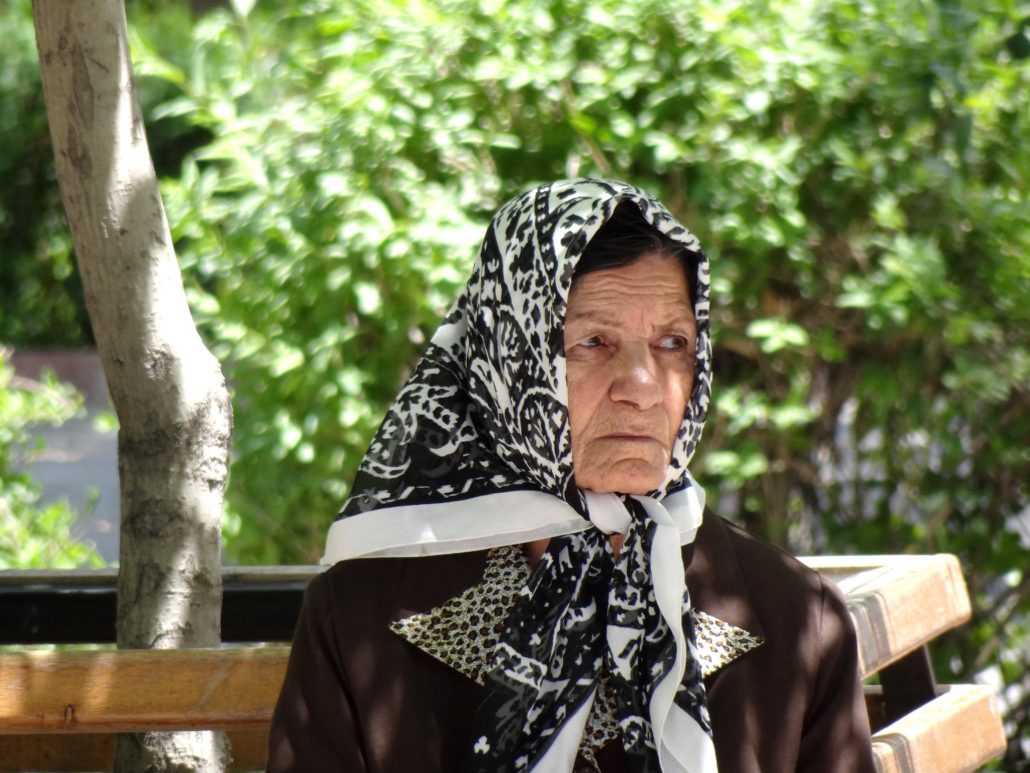
 Iranian officials are warning the country’s people of a rising “tsunami,” a term they have coined to express the sudden wave of elderly individuals flooding the country’s general population. This mounting endemic challenges economic growth and highlights the Iranian government’s lack of preparedness regarding its retired residents. Mismanagement within the government’s finances has blocked more than 55% of Iranian elders from receiving pension funds and more than 35% of elders from living below the poverty line. Though an aging population seems to be their concern, the Iranian government must also tackle the surging rate of elderly poverty in Iran.
The Rise of the Grey-Haired Tsunami
Since 2022, the percentage of Iranian individuals over 60 has encompassed 10% of the total population. Iranian officials cite that this number will only continue to increase and argue that it will attain 33% by 2050. Saber Jabari, head of the Health Ministry Youth Department, ascribes this trend to the recent decrease in the country’s fertility rates. He states that many young Iranians are opting for later marriages and some are even doing away with having children altogether.
While fertility rates among Iranian youths are decreasing, the average life expectancy has increased among men from 57 years to 76 years and among women from 55 years to 78 years, according to Anadolu Agency.
In 2021, Iran’s Population Studies Centre had previously alerted government officials of the gravity of this situation. The center had cautioned that if officials continue to ignore these demographic trends, Iran would go down an irreversible path of aging, according to the Middle East Institute (MEI).
As the percentage of Iranians above the age of 60 increases, officials fear that, in years to come, the retired population could exceed that of the working population. The speed at which its residents are aging threatens the economic and social state of the country and puts into question the efficiency of its programs, i.e. the health care system and pension plan. Discrepancies within the government’s budgeting also explain the mounting poverty rate amongst the Iranian elderly.
Inadequacies in Iran’s Treatment of the Elderly
The Iranian elderly population relies heavily on a traditional family support system as well as a pension plan. Studies report that, as of 2023, nearly 50% of Iranian households live below the poverty line. Many experts attribute this cause to the Iranian government’s mismanagement of its priorities. The government’s prioritization is on foreign policy and international sanctions rather than their pension fund. Internal corruption and mismanagement have also impeded the government from developing a strong pension fund, according to MEI.
A Saba Institute study shows that 86% of retirees covered by pension funds are unable to maintain their living expenses, thus forcing many to seek a bank loan or borrow from a willing relative, Zamaneh Media reports. Improper funding is due to the government’s fiscal policy, which aims at reducing social welfare programs. This reduction has forced the Social Security Organisation and its supporting pension funds into a permanent risk state.
As poverty rates amongst Iranian households continue to mount, many families have begun to abandon their elderly members in parks in an attempt to rid themselves of financial burden. Mohammad Esmaeili Mahjoub, head of Tehran Municipality’s department for managing social issues, reports that, since the start of 2024, 25 cases of elderly abandonment have already occurred.
Elderly Abuse
Abuse among the elderly is increasing at an alarming rate. According to a study by Maziyar Mollaee from Beheshti University of Medical Sciences, 30.7% of elders were reported to have been subject to emotional abuse; 25.4% were victims of psychological abuse; 25.1% suffered from neglect; 19.7% were financially abused; 13.1% were victims of physical abuse; and, 11.7% were abandoned.
Fatemeh Abbasi, deputy responsible for rehabilitation affairs at the National Welfare Organization, stipulates that there has been a recent rise in homelessness among the elderly. Currently, more than 60% of Iranian elders do not have proper support, while 40% are in poverty.
Nearly 1.5 million elderly Iranians receive aid from the Imam Khomeini Relief Foundation, and Iranian charitable organization that aids those in poverty, while another 15,000 are under 24-hour care at various elderly residents. This increases the possibility of an elder being subject to abuse since two in three staff members in care homes report that they have committed abuse.
Reclaiming One’s Independence
Due to the current economic situation elderly poverty in Iran seems bleak, however, various social programs have been put into place to aid the people and reduce elderly poverty in Iran. Bonyadeh Farzenegan is a non-profit organization the elderly created and currently lead. By taking on a leading role, members of the organization are fostering the development of their health and prolonging their sense of independence.
Since its founding in 2010, the organization has expanded its doors to more than 120 locations and has supported more than 200,000 elderly individuals across Iran. Many of their locations offer various forms of mentally and physically stimulating activities, such as aerobics, painting and theatre, according to Financial Tribune. Mostafa Seraj, a representative of Iran’s State Welfare Organisation, clarifies, “Our strategy behind Bonyadeh Farzenegan is to empower the elderly and delegate services and activities,” Financial Tribune reports.
Other organizations similar to Bonyadeh Farzengan have also been put into place by the Iranian government in collaboration with the United Nations Population Fund (UNPFA) to help tackle this issue and promote the betterment of the overall quality of life of the Iranian elderly.
The Future
Zeinab Nasri, the head of the Tehran Mayor’s Health Office, proclaims, “We have a long way to go before Tehran becomes an age-friendly community and that worries me. The key is for everyone who is a part of this effort to believe that change is necessary, to keep pushing forth, and accept this big responsibility,” Financial Tribune reports.
– Yasmine Nowroozi
Yasmine is based in Quebec, Canada and focuses on World News for The Borgen Project.
Photo: Wikimedia Commons

Foreign Aid to Rwanda
Major Donors to Rwanda
The major foreign country donors to Rwanda are the U.S., Germany, France and Japan. As of 2021, Rwanda’s biggest donor was the U.S., donating $174 million. In total in 2021, Rwanda received $1.3 billion in foreign aid. The country receives some of the largest aid per capita compared to its regional neighbours. In 2021, Rwanda received $98 in aid per capita, greater than $55 for Uganda, $37 for the Democratic Republic of Congo (DRC) and $47 for Burundi during the same year.
Foreign aid to Rwanda has come under more scrutiny lately as international donors have expressed concern over the country’s role in supporting human rights abuses and conflict in the DRC with its reported support of the rebel military group M23. Rwanda’s reported involvement in the current conflict in the DRC. culminated in the U.S. suspending aid in 2012. Currently, Rwanda is still facing international pressure from countries like France to stop its support of M23 and is threatening to reduce foreign aid to Rwanda if it continues to support the conflict.
Health Care Aid
Most foreign aid to Rwanda from the U.S. goes to improving the population’s health by investing in preventative HIV/AIDS measures and basic health, such as malaria prevention. According to BMJ, “Rwanda was among the first African countries to document AIDS cases in 1983, and subsequent HIV/AIDS surveillance has confirmed that Rwanda’s HIV epidemic is longstanding and severe in many settings.”
There has always been a massive divide between the prevalence of HIV/AIDS in rural and urban settings. At its peak in 1986, the urban prevalence of HIV was 17.8%, while the rural prevalence was 1.3%, according to BMJ. The investment into preventative HIV/AIDS measures has resulted in a 56% reduction in new HIV infections over the last 15 years, a dramatic decrease among the population in the country that is on track to remove the HIV epidemic in the country.
U.S. supports Rwanda’s fight against HIV/AIDS through the President’s Emergency Plan for AIDS Relief (PEPFAR). This program is a global initiative that aims to fight the HIV/AIDS epidemic in countries by funding antiretroviral therapy, supporting prevention programs, and investing in health care infrastructure.
Education
Another significant investment Rwanda makes using foreign aid is in primary education for children. The great priority the government has given to education has enabled Rwanda to sustain near-universal access to primary education for over a decade. The focus on education has allowed more children to get an early start to learning through schooling with gender parity. Early education is the first step for Rwanda to develop its economy, reduce poverty and increase its quality of life. Aid from foreign countries has been integral to Rwanda’s impressive economic development since the 1994 genocide. Rwanda has consistently had positive GDP growth, except for the COVID-19 pandemic in 2020. However, Rwanda has seen a recovery in 2022 as the GDP grew by 8.2%.
Rwanda has an ambitious goal of being a middle-income country by 2035 and a high-income country by 2050. Policy decisions in Rwanda consider these goals and are highly influential in how it uses the foreign aid it receives. Foreign aid to Rwanda is necessary for its development to reach these goals, and it can not succeed by its production alone. Rwanda has positively utilized foreign aid to rebuild the country after the devastating 1994 genocide. In many respects, it is quite remarkable how much the country has developed after the genocide and how much it has exceeded people’s expectations for the country. While there are concerns about a decrease in future aid because of human rights concerns, foreign aid remains an essential source of support for Rwanda’s development goals and increasing the quality of life.
– Mathieu Paré
Photo: Unsplash
The Atacama Desert Clothing Dump: A Global Fashion Crisis
In 2021, Chile imported approximately 126,000 million tons of secondhand and unsold clothing from China, the United States (U.S.) and the Republic of Korea. From 2000 to 2004, clothing production doubled and three-fifths of this clothing was estimated to end up in landfills. These imports often consist of fast fashion items, known for their low quality and quick obsolescence. Despite efforts to resell the items locally or in other South American markets, much remains unsold and contributes to the massive clothing dump in the desert. This practice has resulted in environmental and public health issues increasingly becoming a global concern.
Environmental Contamination from Fashion Waste
The chemical composition of discarded garments is a primary issue. Synthetic fabrics and chemical dyes found in fast fashion items do not decompose easily and often leach hazardous chemicals into the environment. Over time, this can result in significant soil and water pollution. Given the arid nature of the Atacama Desert, contamination of limited groundwater resources can disproportionately impact local ecosystems and nearby communities, as access to clean water is crucial in such an environment. Furthermore, the gradual breakdown of these synthetic fibers releases microplastics into the ecosystem. Wildlife ingests these microscopic particles, which can travel through the food chain, potentially reaching human populations and causing health issues such as gastrointestinal and reproductive problems. While the long-term impacts of microplastic ingestion are still under study, initial research suggests they may contribute to various health complications.
Impact on Air Quality and Community Health
The Slums of Kibera
The Rise of Slums and the Impact
By 2030, projections suggest that one in four people worldwide will reside in slums, highlighting the extensive growth of such areas including Khayelitsha in Cape Town, South Africa and Dharavi in Mumbai, India. Kibera in Nairobi, Kenya, stands as the largest, housing 700,000 individuals according to Habitat for Humanity. The slum structures often lack adequate infrastructure, hindering equitable access to clean water, proper sanitation and hygiene. The resulting overcrowding and high-density conditions in these environments foster the rapid spread of airborne diseases caused by poor sanitation, severely impacting residents’ health.
The Kenyan government currently lacks a comprehensive plan to assist the slum dwellers in Kibera. Typically, the government sells this land to landlords, profiting at the expense of the residents. Historically, the government has failed to recognize these settlements officially and has even withheld funding for essential services. Consequently, charities and various nonprofit organizations bear the primary responsibility for addressing these ongoing issues.
Characteristics of Slums
Slums are settlements where housing fails to meet health, safety or building regulations. These areas feature homes that are unsafe and unhealthy, often lacking windows and constructed with dirt floors and materials unsuitable for sturdy walls or roofs. A critical issue within these slums is overcrowding, with families packed into cramped spaces. Residents in these areas endure life with limited access to essential services such as water, plumbing and electricity. Furthermore, issues with property rights persist, as slum dwellers typically have little to no control over the land they inhabit.
Shining Hope for Communities
Shining Hope for Communities (SHOFCO) is a nonprofit organization based in Kibera that delivers transformative services to urban slum residents. These services include educational leadership, community advocacy and health and wellness. SHOFCO coordinates water, sanitation and hygiene education by uniting community health workers to spread safe wellness practices. The program ensures accessible and affordable sanitation and clean water. In 2016, SHOFCO introduced an aerial piping system that significantly increased clean water distribution in Kibera. This system now includes about 41 clean water kiosks that serve 37,541 users, providing them with an average of 200,000 liters of clean water daily.
Looking Ahead
Government infrastructure could play a critical role in addressing the housing crisis, especially in areas like the slums of Kibera. Supporting organizational ground-level efforts to provide more stable housing infrastructure is vital during government shortfalls. U.N. Habitat asserts that everyone has a fundamental human right to housing, ensuring access to a safe, secure, habitable and affordable home. This provision transcends mere shelter, enhancing economic and social opportunities for improved living conditions and a brighter future in regions such as Kibera.
– Dominic Samaniego
Photo: Flickr
How Renewable Energy in Croatia Can Reduce Energy Poverty
Politics and Renewable Energy
Recent and upcoming political changes could impact the renewable energy share in Croatia and have important impacts on those living in energy poverty. The 2024 election year has been deemed a “super-election.” In April, the country’s long-dominating center-right party, Croatian Democratic Union (HDZ), won the Parliamentary Election on April 17, but change could still occur with the European Parliament Election taking place in June and the Presidential seat being up for reelection at the end of the year.
In a recent survey conducted for Croatia’s 2024 election, 70% of people expressed concerns about rising costs of living accompanying inflation. While the focus of this year’s election is economic, discussions surrounding renewable energy initiatives play a role in growing Croatia’s economy and helping those living in energy poverty. Making investments in renewable energy is an economic endeavor.
This is important because typically, renewable energy discussions are pushed to the side in Croatia in favor of issues the population finds more pressing such as food safety, economic growth and youth unemployment, Clean Energy Wire reports. Renewable energy in Croatia only enters the political discourse when severe weather events occur and brings attention to the impacts of changing weather patterns. Bringing attention to the economic advantages of independent renewable energy in the election will bolster initiatives for renewable energy in Croatia and benefit initiatives targeting energy poverty.
Economic Opportunity
Currently, Croatia imports the majority of fossil fuels it uses: 100% of coal, 80% of oil and 40% of gas, according to Clean Energy Wire.
Dependency on importation makes Croatia “particularly vulnerable to the rise in fossil fuel prices” contributing to the country’s high energy prices, Clean Energy Wire stats. This shows that developing renewable energy sources could help stabilize energy prices and allow more people access to consistent energy.
Renewable energy is growing as the cheapest option for electricity. The cost of solar power electricity has been declining – falling 85% from 2010 to 2020. Similarly, wind energy has seen dramatic declines in cost. Expanding renewable energy sources in Croatia could offer cheaper energy to more people, allowing those who cannot afford the high and volatile fossil fuel prices to access this essential resource.
Renewable Energy Policy
Initiatives to combat energy poverty in Croatia are underway in legislation through the expansion of renewable energies.
New drafts of Croatia’s National Energy and Climate Plan (NECP) include language targeting energy poverty in the country. Under this Plan, an Energy Poverty Program aims at achieving the following objectives from 2021 to 2030 with an overall goal to define criteria for energy poverty:
Currently, 9.4% of the population cannot heat their homes adequately and is living in energy poverty. NECP plans to implement monitoring and allow the Country to identify at-risk populations, target policy accordingly, and ultimately lead to effective structural policy combating energy poverty.
Closely tied with the Energy Poverty Program, a 2020 initiative targeting energy poverty through the expansion of renewable energy use assists in renovating homes. The Program for Renovation of Family Houses has provided 100% funding for these renovations for qualifying houses in addition to free energy auditing. As of summer 2020, the program received more than $4 million.
The upcoming 2024 elections could spur change in Croatia’s priority on renewable energy and help to drive out investments in fossil fuel. This, in accordance the ongoing renewable energy initiatives, give hope to decreasing the levels on energy poverty in Croatia.
– Carlee Unger
Photo: Flickr
Circular Economy Innovations and Poverty in Ethiopia
Poverty in Ethiopia
Ethiopia is among many African countries that face pervasive poverty. According to estimates by the World Bank, more than 20% of Ethiopia’s population lives below the poverty line and has little access to clean water, education and health facilities. Furthermore, rapid population growth and climatic changes raise the difficulty of the already existing challenges, making sustainable development a matter of high priority.
The principles of circular economies stress the use of resources in ways that are more regenerative, wasting little and reaping full value. It is within this argument that the circular economy opens a promising pathway for poverty alleviation in Ethiopia by inspiring economic growth while at the same time protecting the environment.
Zero-Waste Initiatives
Zero-waste initiatives aim to eliminate waste through redesigning production, reusing and promoting responsible consumption. In Ethiopia, organizations like the Zero Waste Ethiopia project pioneered such waste management strategies, with the core of reuse and recycling. By diverting waste away from landfills and incinerators, these initiatives effectively reduce environmental pollution while creating employment opportunities in the waste collection and recycling sectors.
An example of this progress is the Addis Ababa Waste-to-Energy Facility, which commenced operations in 2018. This facility converts municipal solid waste into electricity, offering a sustainable energy source to the capital while reducing methane emissions at landfill sites. In addition, community-based initiatives like the “Clean and Green Ethiopia” campaign encourage citizen participation in waste segregation and recycling, promoting environmental stewardship and community empowerment.
Resource Recovery Programs
Resource recovery programs tap into innovative technologies that release value from waste materials. Such initiatives in Ethiopia include producing biogas from organic waste and wastewater treatment plants, reducing environmental pollution and producing renewable energy and organic fertilizers. These programs empower locals by providing them with access to clean energy sources and enhanced agricultural productivity for poverty reduction.
With the support of international organizations, the Ethiopian Biogas Program began in 2009 and has since installed more than 42,000 biogas digesters in rural households, substituting traditional sources of biomass fuels and hence improving indoor air quality. The same applies to the wastewater treatment plant of the Hawassa Industrial Park, which recycles and treats industrial effluent to prevent water pollution of Lake Hawassa, sustaining the industrial development of the region in an environmentally friendly way.
Upcycled Ventures
Upcycled ventures give otherwise discarded material a high-value new life, creating a circular economy where waste represents a valuable resource. In Ethiopia, social enterprises like Sabahar and SoleRebels typify transformational potential through upcycling. Sabahar produces exquisite textiles from recycled materials, which gives artisans sustainable livelihoods while preserving traditional weaving techniques. Similarly, SoleRebels transforms old tires into fashionable footwear, offering opportunities for employment among marginalized groups while reducing waste in landfills.
These businesses not only help reduce poverty but also promote social inclusion and cultural conservation. These enterprises combine traditional craftsmanship with innovation in design, projecting cultural heritage to the world while generating income for their local communities.
Final Remark on Poverty in Ethiopia
The impacts of circular economy innovations extend into environmental sustainability dimensions, such as social and economic benefits, by creating new markets for recycled materials, employment opportunities and efficiency in resource use that contribute to poverty reduction and inclusive economic growth. However, such scaling up would involve a collaborative partnership among government, private sector and civil society stakeholders, coupled with investment in research, infrastructure and capacity building.
For a country like Ethiopia, which faces huge challenges regarding poverty and environmental issues, embracing circular economy innovations could show the way toward sustainable and inclusive development. The potential of zero-waste initiatives, resource recovery programs and upcycling enterprises can secure resilience in communities, protect natural resources and uplift the most vulnerable populations in Ethiopia.
– Honorine Lanka Perera
Photo: Flickr
Mental Health in Georgia
In 2009, Global Initiative on Psychiatry (GIP) reported that social exclusion, mental ill health and poverty were all correlative; the mental well-being of residents in poorer, more remote regions of the country proves a focal point for discussion. It was not until the Ministry of Labour, Health and Social Affairs (MoLHSA) introduced the 2011-2015 National Health Care Strategy that there was a key turning point in Georgian mental health services. The status of mental health underwent a momentous transformation, both in the realm of primary health care and in the community. This is a chronological breakdown of the reformation roadmap thus far.
1995-2009 Programs and Laws
The establishment of the 1995 mental health assistance program meant that officially registered mentally ill patients, according to the national psychiatric register, received free services, according to PLOS Medicine. These people received treatment at various hospitals as well as outpatient clinics. PLOS Medicine records show that six psychiatric clinics provided hospital care to these patients and have housed and cared for more than 1,000 people.
In 2007, a newly introduced law on psychiatric services resulted in the illegalization of the involuntary hospitalisation of mentally ill patients in Georgia, PLOS Medicine reports. A court decision was mandatory if one viewed institutionalization as the only remaining viable option. The EU has repeatedly berated Georgia on torture for the poor conditions of the country’s mental institutions; the violation of human rights was a huge motivation behind the upheaval of its mental health services.
In 2009, Georgia replicated the 2007 law on psychiatric care alongside several adaptations, carried out by psychiatric experts. This included the proposal of treatment management techniques such as physical restraint as well as treatment options relevant to forensic psychiatric treatment and prison mental health, PLOS Medicine reports.
2011-2015 National Mental Health Care Strategy
In 2010, Georgia announced the 2011-2015 National Mental Health Care Strategy with a specially curated team of psychiatrists prepared to implement these reforms. At the time of the strategy’s introduction, MoLHSA officially recorded approximately 80,000 mentally ill civilians but also admitted that they viewed this as an underestimation, PLOS Medicine reports. The program emphasized the importance of mental well-being; the strategy’s overarching objective was to improve the general population’s mental health by 2015.
By 2013, 18 outpatient psychiatric clinics were already in use but there was a negative correlation between the increased presence of available services and poorer, more remote regions; citizens of poorer regions could not access mental health services of the same quality, according to PLOS Medicine. The principal reform within this entire process was deinstitutionalization which occurred in early summer 2011 via the closing of the largest psychiatric institution at the time, the Asatiani Psychiatric Hospital.
2015-2020 Mental Health Care Strategy Plan
The country announced the plan in 2014 and prioritised the improved accessibility of mental health care services to the Georgian population. Georgia declared its obligations to care for all disabled civilians and safely keep their rights and freedoms. The strategy emphasized the destigmatization of mental health treatment and mental illness. The World Health Organization (WHO) report stated that, at this time, neuropsychiatric disorders were behind 22.8% of the country’s fatalities.
In 2016, there was an increase in funding for more mobile teams; 11 mobile teams received funding for their work across the country by 2018. The implementation of a separate scheme in this same year attempted to ensure the rights of mentally ill Georgian prisoners, specifically.
2022-2030 National Mental Health Strategy
This national plan aims to emphasize child and adolescent mental health. The strategy further champions deinstitutionalization and the importance of community-based care for mentally ill patients. In 2022, 8.4% of the mentally ill population received treatment in a mental hospital with the remaining populace receiving care at a community-based service.
Moving Forward
Treatment for mentally ill patients has transformed in various manners since the Georgian state obtained its independence. Firstly, however, it appears that treatment is geographically discriminatory with only civilians who reside in the country’s capital being prioritized; citizens who reside in poorer, more remote regions find treatment is less accessible to them.
Secondly, it seems that treatment for mentally disabled prisoners is immensely stagnated, especially in comparison to services which are accessible to non-incarcerated civilians. The Public Defender’s Office (PDO) of 2022 noted the sub-standard conditions available for mentally ill inmates and reported a severe lack of services specifically for those with disabilities. The former Soviet Union state has made major progress since the early 1990s and will hopefully continue to make further steps to ensure all Georgian civilians, irrespective of their geographical location and incarcerated status, can access adequate mental health services.
– Naomi Finapiri
Photo: Unsplash
Addressing Elderly Poverty in Iran
The Rise of the Grey-Haired Tsunami
Since 2022, the percentage of Iranian individuals over 60 has encompassed 10% of the total population. Iranian officials cite that this number will only continue to increase and argue that it will attain 33% by 2050. Saber Jabari, head of the Health Ministry Youth Department, ascribes this trend to the recent decrease in the country’s fertility rates. He states that many young Iranians are opting for later marriages and some are even doing away with having children altogether.
While fertility rates among Iranian youths are decreasing, the average life expectancy has increased among men from 57 years to 76 years and among women from 55 years to 78 years, according to Anadolu Agency.
In 2021, Iran’s Population Studies Centre had previously alerted government officials of the gravity of this situation. The center had cautioned that if officials continue to ignore these demographic trends, Iran would go down an irreversible path of aging, according to the Middle East Institute (MEI).
As the percentage of Iranians above the age of 60 increases, officials fear that, in years to come, the retired population could exceed that of the working population. The speed at which its residents are aging threatens the economic and social state of the country and puts into question the efficiency of its programs, i.e. the health care system and pension plan. Discrepancies within the government’s budgeting also explain the mounting poverty rate amongst the Iranian elderly.
Inadequacies in Iran’s Treatment of the Elderly
The Iranian elderly population relies heavily on a traditional family support system as well as a pension plan. Studies report that, as of 2023, nearly 50% of Iranian households live below the poverty line. Many experts attribute this cause to the Iranian government’s mismanagement of its priorities. The government’s prioritization is on foreign policy and international sanctions rather than their pension fund. Internal corruption and mismanagement have also impeded the government from developing a strong pension fund, according to MEI.
A Saba Institute study shows that 86% of retirees covered by pension funds are unable to maintain their living expenses, thus forcing many to seek a bank loan or borrow from a willing relative, Zamaneh Media reports. Improper funding is due to the government’s fiscal policy, which aims at reducing social welfare programs. This reduction has forced the Social Security Organisation and its supporting pension funds into a permanent risk state.
As poverty rates amongst Iranian households continue to mount, many families have begun to abandon their elderly members in parks in an attempt to rid themselves of financial burden. Mohammad Esmaeili Mahjoub, head of Tehran Municipality’s department for managing social issues, reports that, since the start of 2024, 25 cases of elderly abandonment have already occurred.
Elderly Abuse
Abuse among the elderly is increasing at an alarming rate. According to a study by Maziyar Mollaee from Beheshti University of Medical Sciences, 30.7% of elders were reported to have been subject to emotional abuse; 25.4% were victims of psychological abuse; 25.1% suffered from neglect; 19.7% were financially abused; 13.1% were victims of physical abuse; and, 11.7% were abandoned.
Fatemeh Abbasi, deputy responsible for rehabilitation affairs at the National Welfare Organization, stipulates that there has been a recent rise in homelessness among the elderly. Currently, more than 60% of Iranian elders do not have proper support, while 40% are in poverty.
Nearly 1.5 million elderly Iranians receive aid from the Imam Khomeini Relief Foundation, and Iranian charitable organization that aids those in poverty, while another 15,000 are under 24-hour care at various elderly residents. This increases the possibility of an elder being subject to abuse since two in three staff members in care homes report that they have committed abuse.
Reclaiming One’s Independence
Due to the current economic situation elderly poverty in Iran seems bleak, however, various social programs have been put into place to aid the people and reduce elderly poverty in Iran. Bonyadeh Farzenegan is a non-profit organization the elderly created and currently lead. By taking on a leading role, members of the organization are fostering the development of their health and prolonging their sense of independence.
Since its founding in 2010, the organization has expanded its doors to more than 120 locations and has supported more than 200,000 elderly individuals across Iran. Many of their locations offer various forms of mentally and physically stimulating activities, such as aerobics, painting and theatre, according to Financial Tribune. Mostafa Seraj, a representative of Iran’s State Welfare Organisation, clarifies, “Our strategy behind Bonyadeh Farzenegan is to empower the elderly and delegate services and activities,” Financial Tribune reports.
Other organizations similar to Bonyadeh Farzengan have also been put into place by the Iranian government in collaboration with the United Nations Population Fund (UNPFA) to help tackle this issue and promote the betterment of the overall quality of life of the Iranian elderly.
The Future
Zeinab Nasri, the head of the Tehran Mayor’s Health Office, proclaims, “We have a long way to go before Tehran becomes an age-friendly community and that worries me. The key is for everyone who is a part of this effort to believe that change is necessary, to keep pushing forth, and accept this big responsibility,” Financial Tribune reports.
– Yasmine Nowroozi
Photo: Wikimedia Commons
Ending Period Poverty in Benin: How Innovation is Building Dignity
Understanding the Depth of the Problem
A complex web of interrelated factors beyond just physical hardship causes period poverty. Social taboos surrounding menstruation create a culture of silence that prevents open dialogue and access to reliable information. Traditional beliefs that portray menstruation as dirty or shameful contribute to a lack of support for girls and women during their periods.
This silence leads to poor sanitary practices. Unable to afford sanitary pads or lacking access to proper sanitation facilities, many women and girls have to use unsanitary substitutes. These practices increase the risk of infections, urinary tract issues and reproductive health problems.
Period poverty also compels girls to miss school. Fear of leaks, inadequate sanitary facilities and a lack of knowledge about menstrual hygiene management can all contribute to school absences. This disrupts their education and potentially widens the gender gap in educational achievement around the world and in Benin.
According to the World Bank, Benin’s national poverty rate in 2021-2022 was 36.2%. This widespread poverty creates significant challenges for women and girls to afford necessities, including sanitary products.
Eco-Friendly and Community Education Initiatives
Organizations like Ilewa recognize the need for sustainable solutions that address both environmental concerns and period poverty in Benin. It produces and markets reusable sanitary pads made from sustainable, locally sourced materials. Its 2021 fundraising drive provided reusable pads to 500 underprivileged girls in Parakou. By promoting a dignified approach to menstrual hygiene, these initiatives empower women. Additionally, they promote environmental sustainability by reducing reliance on disposable products.
Long-term change requires breaking the taboo surrounding menstruation. Organizations like Action Education organize community seminars and awareness campaigns. These campaigns go beyond educating girls and women, also including men and boys in the conversation about menstrual hygiene. These initiatives strive to dispel stigma and create a more supportive environment for menstruating women and girls by fostering empathy and compassion.
Impact and the Road Ahead
Benin’s creative solutions are showing positive results. Increased access to sanitary products, improved hygiene facilities and educational efforts are empowering women and girls to manage their periods effectively. This improves their health and overall well-being, while also promoting educational opportunities and social inclusion.
Challenges remain, however. Reaching remote areas, ensuring program sustainability, and addressing the broader social and cultural aspects of menstruation all require ongoing efforts. Scaling up these programs and advocating for legislative changes that prioritize menstrual health is crucial to achieving menstrual equity for all in Benin.
Conclusion
Period poverty is a complex problem, but a combination of innovative thinking and unwavering commitment can solve it. The programs and organizations working in Benin offer hope for a future where menstruation is not a source of shame or a barrier to opportunity. By shattering the taboo, promoting education, and providing practical solutions, these initiatives are laying the groundwork for a future where period power enables women and girls to thrive.
– Taiwo Makanjuola
Photo: Flickr
Child Poverty in Djibouti
A Debrief of Djibouti’s Malnutrition Crisis
Djibouti’s record of food insecurity traces back to its heavy dependence on foreign aid and struggles with “persistent droughts and food shortages.” The weather in Djibouti instigates consistent agricultural production with conditions of 130 mm of rainfall per year, according to the World Bank, and recurring droughts. As one of Africa’s smallest countries, Djibouti’s limitation in arable land impedes the ability to produce food, the World Bank reports. The insufficient production of food resources is disproportionate to the necessary nutritional needs of a human being, significantly impacting 42% of the population of Djibouti that is living in extreme poverty, according to the World Food Programme (WFP). As a result, the country imports 90% of food production through global markets instead.
The increment in pricing for commodities such as housing, electricity and water fuels financial pressure on lower to middle-income families. Household expenses in addition to the inflated international food import prices render it difficult for parents to protect children and adolescents from nutritional deficiency. Due to limited economic opportunity for lower-income Djiboutian families, the financial prioritization of basic household requirements leaves little room for imperative dietary coverage.
Djibouti holds one of the highest cases of child malnutrition compared to other countries within the Middle East and North Africa regions. Due to the exacerbated food shortages, weather conditions and economic setbacks, one in three Djiboutian children are severely malnourished, according to the SOS Children’s Villages. More than 10% of Djiboutian children aged between 6 and 59 months are living in households with food insecurity and are suffering from acute malnutrition, according to a 2011 report. The high occurrence of malnutrition due to limited feeding practices for Djibouti’s children comes with deterioration in physical development such as stunted growth and critically underweight.
Susceptibility to Child Labor
Due to the financial strain on families, children have to be a part of the workforce from an early age. Djiboutian children are more likely to work at the age of 5 than to be attending school or other childhood services, according to the World Bank report. Often, these children struggle with aggressive workplace conditions to attend school or contribute to their family income. From caring for livestock to street work such as polishing shoes or washing cars, Djiboutian children in the workforce partake in diverse roles. However, Djibouti’s children are also vulnerable to illicit activities such as human trafficking. Commercialized sexual exploitation occurs due to the absence of labor inspectors.
While Djibouti’s Ministry of Labor has enacted laws that provide standardized guidelines on child labor; there yet exists legal gaps in protection from sexual exploitation. The country proposed the national labor inspection Strategy in 2020, however, it has been ineffective in applying adequate protection against child labor. Children’s exploitation occurs due to the absence of labor inspectors, according to Humanium. The financial strain on Djibouti’s government prohibits further law enforcement protocol to protect vulnerable children from unethical forms of labor. Child labor tends to compromise a child’s engagement with education due to physically and psychologically demanding circumstances that they are subjected to.
Going Forward With International Effort
International organizations alongside the Djiboutian government are in motion to develop policies and services to secure food, proper housing and educational opportunities for children living in harsh conditions. For example, the SOS Children’s Villages has been providing support in Djibouti for children without parental care since 2011. SOS Children’s Villages have immensely supported 190 Djiboutian children and families living in poverty within the city of Tadjourah.
Additionally, UNICEF and the WFP are simultaneously strategizing to reduce acute malnutrition through policy advocacy. UNICEF has appealed for $2.5 million from the U.S. government where 36% would go to water, sanitation and hygiene, around 8% would be allocated for education, and around 17% for food security. UNICEF has also partnered with Djibouti’s government to provide accessible water and nutritional goods for more than 6,000 children.
In 2022, the World Bank approved a $30 million International Development Association (IDA) grant for Djibouti to provide financial means to protect families that are exposed to sudden economic disparities. Due to the recurrence of severe droughts, pricing in Djibouti has had a significant impact on lower-income households. The Social Protection Emergency Crisis Response Project is on a mission to generate social safety nets for households in Djibouti struggling with multiple crises.
A Secure Childhood
This form of financial protection could shield vulnerable families from national crises, and those that cannot be substantially supported by the government. By ameliorating the scarcity of resources for families living in poverty, children in Djibouti are pushed even further to attain a secure childhood as every child should. A safe environment for children in Djibouti begins with quality education, access to nutrition, and relief from labor exploitation. International focus has been a remarkable contributor to protecting the rights and freedom of the young generations of Djibouti and preventing further child poverty in Djibouti.
– Abigail Lobo
Photo: Flickr
The Transformative Impact of Minga Peru in the Peruvian Amazon
Challenges in Loreto
The Loreto region in the eastern Peruvian Amazon, home to a rich tapestry of indigenous cultures, confronts considerable challenges. High rates of poverty, disease and domestic abuse plague this largely inaccessible area. Women are disproportionately affected by these ongoing issues, suffering more significantly than their male counterparts.
Minga Peru’s Innovative Program
Minga Peru has launched innovative programs to tackle the challenges in the Loreto region. Among these, the “Bienvenida Salud” radio program stands out as a cornerstone initiative. Broadcasting since Minga Peru’s inception, it reaches more than 120,000 listeners per episode throughout the Amazon. The program addresses taboo topics such as domestic violence, HIV/AIDS, gender equality, human rights and biocultural preservation. It is highly interactive, engaging listeners through community feedback, questions via letters and direct interactions. To date, the program has received more than 40,000 confidential letters, underscoring its success in fostering community dialogue.
Empowering Women Leaders
Central to Minga Peru’s success is its focus on empowering women. By prioritizing women in its development model, the organization advances gender equality and social justice. Minga Peru trains women as “promotoras,” community leaders who spread crucial information and support their peers. These women receive comprehensive training in human rights, disease prevention, civic participation and environmental stewardship at Minga’s training center. After completing their training, promotoras return to their communities to educate and mobilize others, thereby amplifying the impact of their knowledge and empowerment.
Success Stories: Emira Montes Zuta
An inspiring example of Minga Peru’s impact is the journey of Emira Montes Zuta. Initially a listener of the Bienvenida Salud program, Emira became one of Minga Peru’s earliest promotoras. She now leads regionally, manages the radio, writes scripts and announces. Emira’s work reaches hundreds of thousands of listeners, promoting health, gender equality and social justice. Reflecting on her journey, Emira recalls, “The first time I participated in my village meeting, they introduced me as a community promotora… For everyone there it was very strange to see and hear a young woman talking about these topics in a village meeting… But eventually I was able to help the community on a voluntary basis.” Her story illustrates the transformative power of education and community support through Minga Peru.
Broader Impact and Recognition
Minga Peru plays a vital role in addressing critical health challenges in the region. The organization has educated 600 women on preventive measures and early detection of breast and cervical cancer, essential in areas with limited health care access where diseases often remain undiagnosed until advanced stages. Beyond individual impacts, Minga Peru has trained more than 1,200 promotoras. These leaders educate and mobilize networks across the Amazon, initiate community projects, secure local government funding and launch sustainable income initiatives like fisheries, agroforestry and handicrafts. Additionally, Minga Peru’s innovative solutions to human rights challenges in Latin America gained the organization finalist status in the Ashoka Changemaker competition.
Building a Sustainable Future
Minga Peru’s initiatives foster well-being, identity transformation and emotional recovery, thereby creating a supportive community environment. The Minga Tour, an educational tourism program, successfully promoted markets featuring locally-made artisanal products, boosting economic opportunities for the community. Through collaboration, education and empowerment, Minga Peru is not merely creating change but is building a future where every voice is heard and every community thrives. The organization is transforming the narrative for women in the Peruvian Amazon and paving the way for sustainable social justice.
– Malaikah Niyazi
Photo: Flickr