Addressing Elderly Poverty in Iran
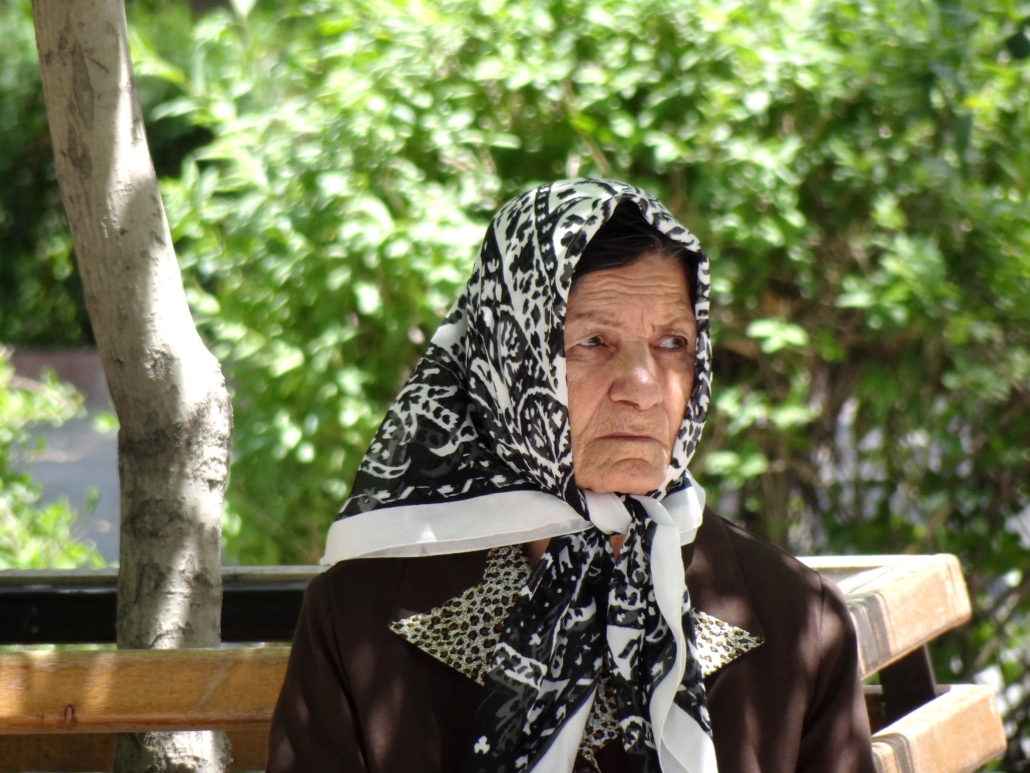 Iranian officials are warning the country’s people of a rising “tsunami,” a term they have coined to express the sudden wave of elderly individuals flooding the country’s general population. This mounting endemic challenges economic growth and highlights the Iranian government’s lack of preparedness regarding its retired residents. Mismanagement within the government’s finances has blocked more than 55% of Iranian elders from receiving pension funds and more than 35% of elders from living below the poverty line. Though an aging population seems to be their concern, the Iranian government must also tackle the surging rate of elderly poverty in Iran.
The Rise of the Grey-Haired Tsunami
Since 2022, the percentage of Iranian individuals over 60 has encompassed 10% of the total population. Iranian officials cite that this number will only continue to increase and argue that it will attain 33% by 2050. Saber Jabari, head of the Health Ministry Youth Department, ascribes this trend to the recent decrease in the country’s fertility rates. He states that many young Iranians are opting for later marriages and some are even doing away with having children altogether.
While fertility rates among Iranian youths are decreasing, the average life expectancy has increased among men from 57 years to 76 years and among women from 55 years to 78 years, according to Anadolu Agency.
In 2021, Iran’s Population Studies Centre had previously alerted government officials of the gravity of this situation. The center had cautioned that if officials continue to ignore these demographic trends, Iran would go down an irreversible path of aging, according to the Middle East Institute (MEI).
As the percentage of Iranians above the age of 60 increases, officials fear that, in years to come, the retired population could exceed that of the working population. The speed at which its residents are aging threatens the economic and social state of the country and puts into question the efficiency of its programs, i.e. the health care system and pension plan. Discrepancies within the government’s budgeting also explain the mounting poverty rate amongst the Iranian elderly.
Inadequacies in Iran’s Treatment of the Elderly
The Iranian elderly population relies heavily on a traditional family support system as well as a pension plan. Studies report that, as of 2023, nearly 50% of Iranian households live below the poverty line. Many experts attribute this cause to the Iranian government’s mismanagement of its priorities. The government’s prioritization is on foreign policy and international sanctions rather than their pension fund. Internal corruption and mismanagement have also impeded the government from developing a strong pension fund, according to MEI.
A Saba Institute study shows that 86% of retirees covered by pension funds are unable to maintain their living expenses, thus forcing many to seek a bank loan or borrow from a willing relative, Zamaneh Media reports. Improper funding is due to the government’s fiscal policy, which aims at reducing social welfare programs. This reduction has forced the Social Security Organisation and its supporting pension funds into a permanent risk state.
As poverty rates amongst Iranian households continue to mount, many families have begun to abandon their elderly members in parks in an attempt to rid themselves of financial burden. Mohammad Esmaeili Mahjoub, head of Tehran Municipality’s department for managing social issues, reports that, since the start of 2024, 25 cases of elderly abandonment have already occurred.
Elderly Abuse
Abuse among the elderly is increasing at an alarming rate. According to a study by Maziyar Mollaee from Beheshti University of Medical Sciences, 30.7% of elders were reported to have been subject to emotional abuse; 25.4% were victims of psychological abuse; 25.1% suffered from neglect; 19.7% were financially abused; 13.1% were victims of physical abuse; and, 11.7% were abandoned.
Fatemeh Abbasi, deputy responsible for rehabilitation affairs at the National Welfare Organization, stipulates that there has been a recent rise in homelessness among the elderly. Currently, more than 60% of Iranian elders do not have proper support, while 40% are in poverty.
Nearly 1.5 million elderly Iranians receive aid from the Imam Khomeini Relief Foundation, and Iranian charitable organization that aids those in poverty, while another 15,000 are under 24-hour care at various elderly residents. This increases the possibility of an elder being subject to abuse since two in three staff members in care homes report that they have committed abuse.
Reclaiming One’s Independence
Due to the current economic situation elderly poverty in Iran seems bleak, however, various social programs have been put into place to aid the people and reduce elderly poverty in Iran. Bonyadeh Farzenegan is a non-profit organization the elderly created and currently lead. By taking on a leading role, members of the organization are fostering the development of their health and prolonging their sense of independence.
Since its founding in 2010, the organization has expanded its doors to more than 120 locations and has supported more than 200,000 elderly individuals across Iran. Many of their locations offer various forms of mentally and physically stimulating activities, such as aerobics, painting and theatre, according to Financial Tribune. Mostafa Seraj, a representative of Iran’s State Welfare Organisation, clarifies, “Our strategy behind Bonyadeh Farzenegan is to empower the elderly and delegate services and activities,” Financial Tribune reports.
Other organizations similar to Bonyadeh Farzengan have also been put into place by the Iranian government in collaboration with the United Nations Population Fund (UNPFA) to help tackle this issue and promote the betterment of the overall quality of life of the Iranian elderly.
The Future
Zeinab Nasri, the head of the Tehran Mayor’s Health Office, proclaims, “We have a long way to go before Tehran becomes an age-friendly community and that worries me. The key is for everyone who is a part of this effort to believe that change is necessary, to keep pushing forth, and accept this big responsibility,” Financial Tribune reports.
– Yasmine Nowroozi
Yasmine is based in Quebec, Canada and focuses on World News for The Borgen Project.
Photo: Wikimedia Commons
