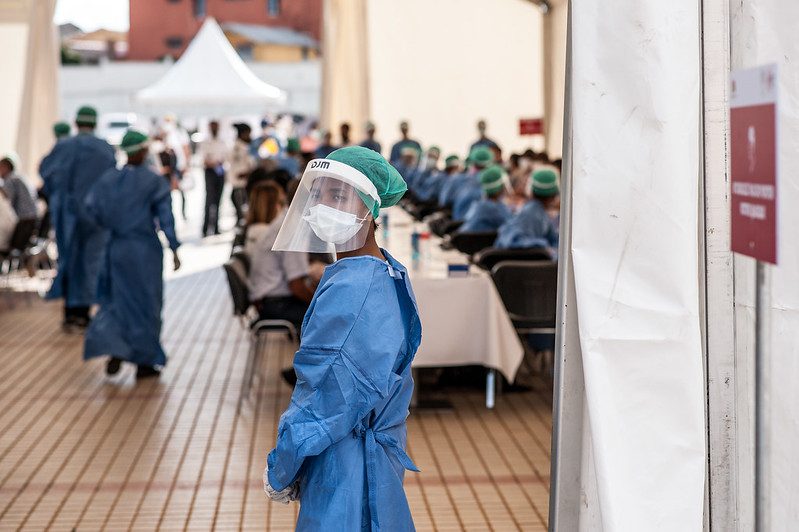
 Health care in Madagascar faces significant challenges due to a high poverty rate of more than 75%. The primary concerns are infectious diseases, malnutrition and the environment. Madagascar is currently in a malaria epidemic, particularly in rural coastal areas that experience flooding, which leads to an increase in the mosquito population.
Furthermore, approximately 1.31 million people in Madagascar face high levels of food insecurity and 40% of children face chronic malnutrition. This is often because of natural disasters such as droughts, hurricanes and floods, which negatively impact agriculture growth, increase food prices and loss of jobs, as 80% of the population’s primary source of income is agriculture. Despite these challenges, here are five organizations that are helping advance health care in Madagascar.
The Improved Nutritional Outcomes Project
This organization, established by the United Nations Children’s Fund (UNICEF), provides free health care to mothers and children in Ambositra, a rural area of Madagascar where the nearest health center is often two kilometers away or farther. It has hired 11,000 community health workers to provide care at community sites.
A community worker is a volunteer who promotes health in a village and monitors the health of pregnant, postpartum or breastfeeding mothers. They also track the health of children aged less than 5 by weighing, measuring and diagnosing malnutrition. Community workers also treat children diagnosed with malnutrition and mild diseases; however, in severe and more complicated cases, they transfer children to the nearest health center. The volunteers also promote nutrition education in the communities.
WHO Mobile Health Clinics
The World Health Organization (WHO) uses mobile clinics and epidemiologists to help provide free health care to remote areas. The mobile health clinics provide health services such as vaccinations, medications (for diarrheal diseases, malaria, cholera and more) and health kits. After the devastation of the 2022 hurricane season in Madagascar, the global charity built a storage warehouse for medication to help prevent a repeat of the disaster. It is helping strengthen the country’s preparedness in case of emergencies while simultaneously improving the primary health care structure of Madagascar.
PIVOT
PIVOT is a nongovernmental organization (NGO) that has partnered with Madagascar’s Ministry of Public Health to help improve the health care system in the Ifanadiana district. This charity aims to eventually scale up and provide universal health care to Madagascar and other countries. It works by collecting and analyzing data, identifying gaps in health care and implementing a science-based solution. It employs social workers, doctors, nurses, midwives and other health staff.
PIVOT started in the Ifanadiana district, home to more than 200,000 people and incredibly isolated by mountainous terrain. The nonprofit chose this location because of the more than doubled maternal and less than 5 mortality rates compared with the national estimate. The organization uses a data-driven strategy to create a resilient health care system that can address the community’s immediate needs while also building its long-term goal of gaining trust within a community that once viewed hospitals as where people went to die.
Since its start in 2014, it has brought universal health coverage to 95,000 people in seven communities. It continues to advocate for free universal health care, decent wages for health workers and science-focused solutions in Madagascar.
ACF or Action Against Hunger
This organization was started in 1979 as an international nongovernmental organization used to fight hunger. Currently, it is in Madagascar in response to the severe droughts and cyclones in the Southeast regions and the worsening nutritional and food situation in the Grand Sud. With the help of its partners, Action Contre la Faim (ACF) is implementing an emergency intervention and development strategy. This will include medical and malnutrition support, such as creating mobile health teams to address acute malnutrition, childhood illnesses, gender-based violence and psychosocial support.
The nonprofit will also rebuild the water supply and provide drinking water with tanker trucks. Next, it will provide 80,000 people with emergency food aid through cash transfers. Finally, agricultural recovery will be supported for next season’s harvest and a crisis exit strategy will be implemented to help anticipate crises like hurricanes and floods. At the same time, ACF is also doing multiple developmental programs to help support the health system, reducing chronic malnutrition in children aged less than 5 and enhancing food security in Madagascar. An example is the CONFLUENCES 2 Project, which supports the health system in the Atsimo-Andrefana region of Grand Sud.
CARE International
CARE International first arrived in Madagascar in 1992 to reduce poverty. One of its key programs focuses on the right to health. This program aims to enable 50 million people to exercise their right to health and dignity by 2030. It emphasizes building equitable and resilient health care systems that can resist and respond to shocks and crises.
CARE International takes an equity and rights-based approach to advancing health systems by collaborating with community groups, leaders and health authorities. It emphasizes supporting marginalized groups, increasing access to quality health care in Madagascar and being prepared to respond to public health emergencies.
CARE International also promotes vaccinations with its Fast and Fair Vaccine campaign. It has successfully vaccinated 126 million people while informing 263 million people about accurate vaccination information.
Conclusion
Madagascar’s health care system still faces significant challenges in achieving affordable and effective medical services, yet the efforts of these five organizations could one day enable health care in Madagascar to provide accessible and high-quality medical care to all its citizens.
– Gabrielle Schwartz
Gabrielle is based in Pembroke Pines, FL, USA and focuses on Global Health for The Borgen Project.
Photo: Flickr

Poverty Reduction in Uzbekistan
The Economy of Uzbekistan
Rich in natural resources with a fruitful agricultural industry, much of Uzbekistan’s economy relies on exports, leaving them vulnerable to fluctuations in international commodity prices. Additionally, the agriculture industry is particularly vulnerable to weather changes. The Aral Sea, an important source of water for agriculture in the region, has faced damages such as drought and salinization.
Foreign remittances also make up approximately 20% of the country’s GDP, which could become a source of economic insecurity if future generations become more distanced. The road to guaranteeing long-term economic security and reducing poverty must involve economic diversification and the improvement of quality of life. Recognizing this, the UNDP has sought to develop an approach which addresses poverty-related issues in a multi-faceted way.
Approach to Poverty Reduction in Uzbekistan
Bringing together a group of representatives for a roundtable discussion, the UNDP of Uzbekistan defined its approach to poverty reduction as one that tackles “the complexities and multiple dimensions of poverty beyond just income,” according to the UNDP Deputy Resident Representative. This involves the strengthening of social protection systems and the effective channeling and distribution of resources to those most in need. This approach recognizes poverty’s multiple dimensions and the importance of a sustainable and holistic approach to improving quality of life in the long term.
One particularly socially engaging scheme saw the UNDP working alongside the Westminster International University in Tashkent. This initiative encouraged university students to design practical poverty reduction strategies which they later pitched to experts. The two winning pitches designed schemes for improving Mentorship Support and Financial Literacy. This scheme is a highly effective example of how governments can engage the knowledge and work of young people in the service of national poverty reduction, improving the country’s quality of life.
Support for Small Businesses
One initiative that has proven particularly successful in improving both quality of life and economic diversity in the region is the provision of funds for local entrepreneurs and small-business startups. The provision of a $30 million loan to support local businesses from the OPEC Fund for International Development is one such initiative that recognizes the importance of SMEs in driving economic growth and boosting economic self-reliance. Recent support for local enterprises correlates with the overall direction of poverty reduction in Uzbekistan. According to Uzbekistan’s Center for Economic Research and Reforms, where the income from local small businesses has risen from 0.7% in 2021 to 2.9% in 2023, national poverty rates have fallen from 17% in 2021 to 11% in 2023.
Support for small and local businesses does not only benefit the country economically but can encourage social inclusion and improve quality of life at an individual scale. Investment and funding for SMEs can be channelled towards, say, sustainable and eco-friendly businesses, providing an incentive for the growth of future enterprises of this nature. The European Bank for Reconstruction and Development, for example, has directed funding to female entrepreneurs and female-run businesses. This initiative supports women in business and designs an effective model for long-term economic growth, assisting individuals in developing new professional skills that they can apply in different industries. These schemes are not only economically beneficial for the country, but can also be tailored to encourage inclusion and create opportunities, taking an integrated and sustainable approach to poverty reduction.
Multi-Dimensional Approach
An integrated and multi-dimensional approach, which concerns itself with both income and quality of life, has proven highly effective in aiding the process of poverty reduction in Uzbekistan. The UNDP’s approach emphasizes the importance of future-led planning to ensure the most effective resource distribution to address economic imbalances in the nation. By providing economic support and teaching people new skills, strategies such as funding business startups help to facilitate the reduction of poverty in both the immediate and long-term future.
– Aimee Masters
Photo: Unsplash
Everything You Should Know About Poverty in the Philippines
The Extent of Poverty in the Philippines
Poverty in the Philippines declined to 22.4% in 2023, down 1.3% from the same period in 2021. However, despite this decrease, the current state of poverty and inequality is startling. The poverty incidence was 22.4% in the first semester of 2023, affecting approximately 25.24 million Filipinos. The poverty incidence refers to the proportion of Filipinos whose per capita income is insufficient to meet their basic needs. On average, a family of five needs at least PhP 13,797 monthly to cover their basic needs, according to the Philippine News Agency. Additionally, the subsistence incidence or the proportion of Filipinos whose income is insufficient to buy basic food needs stood at 8.7%, meaning approximately 9.79 million Filipinos are unable to fulfil basic food needs.
These statistics demonstrate the extent of poverty in the Philippines and provoke the question of why the Philippines continues to struggle from poverty despite its growing economy. The Philippines struggles with a huge disparity in wealth equality. According to the World Bank, the Philippines holds one of the highest Gini Coefficients in the East Asian and Pacific region, sitting at 40.7% as of 2021. This means that, despite economic improvements, those most susceptible to poverty may not see the benefits of economic growth.
The Affected Population
Poverty affects the unemployed and underemployed and those who lack education most in the Philippines as they are unable to find opportunities or jobs which pay a sufficient wage. Environmental instability is also an issue, in regions most vulnerable to natural disasters schools have to shut down, disrupting education. In April 2024, hundreds of schools in the Philippines had to close due to extreme heat, an issue which annually rising global temperatures will exacerbate.
The World Bank estimates that 60% of the land in the Philippines is vulnerable to multiple natural hazards. This causes severe damage to homes and transport infrastructure, interrupting business and education and costing billions to repair. This has been an issue in Mindanao recently, where flooding caused more than 411,000 people to flee.
The State of the Economy
Despite the pessimism surrounding poverty in the Philippines, there is reason for optimism. The Philippine economy grew by 5.5% in 2023, making it one of the best-performing economies in Asia, according to the Philippine News Agency, but high inflation has offset the benefits of income growth on poverty reduction. To overcome inflation, growth must remain consistently high. Currently, economic growth for 2024-2025 could be at an average of 5.8% if growth in the domestic market is achieved. The World Bank expects this domestic market to grow due to the thriving tourism sector and the information technology-business process outsourcing industry. This indicates a bright future for the Philippine economy. For the poorest Filipinos to benefit from the projected growth in 2024, income gains from economic growth must be guided towards reducing inequality.
Positive Progress in Poverty Alleviation
The reduced poverty rate from 2021 to 2023 is a move in the right direction. The government achieved this through initiatives such as the fuel subsidy and the one-time rice allowance, according to the Philippine News Agency. However, greater income equality must still be strived for if President Marcos wants to reach his goal of a single-digit poverty rate by 2028. The Philippine Development Plan of 2023-2028 is one initiative which can help achieve this goal. This plan aims to bring economic and social transformation by reinvigorating job creation and accelerating poverty reduction. It aims to be the mechanism of implementation of the Sustainable Development Goals (SDGs) and includes programmes to improve education and to upskill the workforce. If The Philippines achieves this plan, it can make further poverty reductions by addressing the key areas where inequality thrives.
To relieve the problem of environmental instability, the government is building new infrastructure under The Metro Manila Flood Management Project. This benefits the Metropolitan Manila area but fails to help other areas susceptible to flooding. This only furthers the issue of inequality, benefiting the city of Manila instead of reaching more deprived areas. More deprived areas struggle to recover from natural hazards, weakening their ability to become more prosperous and resistant to annually occurring hazards. Last year, Bulacan was placed under a state of calamity due to the damage that typhoons and subsequent flooding caused.
Looking Ahead
Despite projected economic growth and current initiatives being in place to address poverty, there remains a significant proportion of Filipinos who are vulnerable to poverty. While there is room for improvement, the country has great potential to reduce poverty further. The progress made in 2023 and the current economic growth projections are a testament to this. The persistence of inequality requires greater attention from the government in addressing areas of education and environmental relief. Initiatives to help those most vulnerable to poverty must be used to ensure more people can benefit from the coming economic growth. In this way, the Philippines can continue to progress in reducing poverty.
– Lauren Alkhalil
Photo: Unsplash
Solutions in the Fight Against Child Marriage in Somalia
Causes of Child Marriage
Girls Not Brides is a nongovernmental organization committed to action against child marriage by mobilizing communities and drafting solutions. According to the organization, high rates of child marriage can be attributed to many factors, including gender inequality. Somalian girls are often married young to protect family honor. The social norms in the country emphasize the protection of young girls before marriage.
These young women are married for increased protection measures, mitigating instances of sexual violence or abuse. However, gender inequality is only one small portion of a larger problem: poverty. Often, in times of crisis and disaster, families use child marriage as a solution to cope with severe economic hardship.
The European Civil Protection and Humanitarian Aid Operations, a commission that supports countries based on international humanitarian law, reports that at least 6.9 million individuals in Somalia need humanitarian aid this year alone. Nearly half of the population is in severe need. Child brides are one solution to cope with such hardship. Higher rates of child marriage are further exacerbated by food insecurity and droughts, among other significant issues that the county faces.
Government Action and Legislation
The Somali Ministry of Women and Family Affairs created legislation to protect children from marriage. One of these initiatives included the Child Rights Bill. The bill prohibits the marriage of young children and the abuse of children in any form.
Furthermore, the Ministry of Women and Human Rights Development has developed other laws currently in the drafting stage that aim to protect children and implement elements of the Convention on the Rights of the Child into Somalia’s national laws. Adopted in 1989, the Convention on the Rights of the Child is an expansive treaty on the social, political and cultural rights of children worldwide.
The Humanitarian Relief and Development Council
The Humanitarian Relief and Development Council is a nonprofit, woman-led organization in Somalia supporting women, children and other minority groups facing conflict, poverty, violence and injustice. The organization works directly on the ground to provide community-based mobilization campaigns to spread knowledge and awareness on the harmful effects of sexual gender-based violence and child marriage.
In addition, families also receive health insurance. The nonprofit prioritizes women and children, a vulnerable population, by mobilizing community members to raise their concerns to government officials.
Looking Ahead
According to the Sustainable Development Goals (SDGs), Somalia has committed to eradicating child marriage by 2030. According to Girls Not Brides, global progress varies by country. However, the practice continues to decline globally. The organization reports that around 68 million cases have been prevented in the last few years. Progress has been linked to socioeconomic status, meaning economic growth plays a key role in reducing rates of child marriage.
In conjunction with humanitarian aid organizations, government initiatives are one of the few solutions to stop this slowly but surely decreasing problem. Child marriage prevention in Somalia starts with ensuring the rights of children and supporting families in economic hardship.
– Dominic Samaniego
Photo: Flickr
Poverty in the Hindu Kush-Himalayas
ICMOD Study
The International Center for Integrated Mountain Development (ICMOD) has identified distinct patterns in poverty in the Hindu Kush-Himalayas region. ICMOD characterizes its analysis of poverty in the HKH region by looking at Afghanistan, Bangladesh, Bhutan, China, India, Myanmar, Nepal and Pakistan, looking solely at the country’s mountainous regions and how poverty manifests in the mountainous areas. ICMOD studies identified that more than 60 million people live in poverty in the Hindu Kush-Himalayan region, noting that this figure did not include China and Myanmar due to insufficient data. Its examination showed that poverty in the mountains was higher than in the nonmountainous regions other than India.
Poverty in Mountainous Regions
The ICMOD study looked at the different impacts that poverty has on people living in these mountainous regions. One significant finding was that one common determiner of mountain-specific poverty was limited access to resources due to physical determinants, such as access to resources up in the mountains. This can lead to inaccessibility to basic plumbing, adequate food resources and clean water.
The data also shows the region to have inadequate access to infrastructure such as markets, hospitals and bus stops. This lack of access makes it more difficult to address health issues, education and other institutional resources. These challenges have made it really difficult to assess different dimensions of poverty in mountainous regions. It’s not as simple as funding but rather accessibility to the resources themselves.
Combating These Issues
Several initiatives are being taken to combat these inequalities in access and difficulties for the population in the mountainous regions. The ICMOD has enacted an initiative called AdaptHimal, which aims to improve the livelihood of the rural poor in the HKH region through environmental and socioeconomic changes. It enables those living in these regions to integrate themselves into loan projects better and introduce institutions that can target their specific needs.
In addition, the organization has partnered with the United Nations Capital Development Fund (UNCDF) to help developmental needs in this area by medicating risks attributed to environmental effects in the HKH. The Asian Development Bank (ADB) has also provided funding and risk assessment to these regions to help them acclimate better and adapt their investments and networks to environmental changes.
Final Remark
Despite work being done to improve infrastructure and resources in the HKH region, there is still more to be done in terms of allocating adequate resources to hard-to-reach areas and mountainous regions in the HKH. This will aid in the decline of poverty and provide better living standards for those in the Hindu Kush-Himalayas.
– Adrita Quabili
Photo: Unsplash
The Work of The British Red Cross in Afghanistan
Ultimately, this has contributed to the collapse of Afghanistan’s health care systems at a time when Afghans need it the most. According to the United Nations Development Programme (UNDP), more than 34 million Afghans live in poverty. As a result of a rapid increase in the crisis in Afghanistan due to the security crisis, 23.7 million Afghans will require emergency assistance to survive in 2024.
For more than 30 years, the British Red Cross has been aiding Afghanistan through crises by responding to conflicts, natural disasters and individual emergencies. A part of a global volunteer network, the charity aids Afghans by helping them prepare for and withstand emergencies in their communities. Following is how the British Red Cross is aiding Afghanistan through times of crisis.
Support for Individuals Affected by Earthquakes
The humanitarian crisis in Afghanistan has become one of the world’s most severe. A country riddled with many burdens, one major hazard for the people of Afghanistan is earthquakes, which the government cannot compensate for due to a high prevalence of poverty. Statistics show that in 2016, more than 56% of Afghanistan’s population lived below the national poverty line; there is no doubt that the presence of frequent earthquakes has had a detrimental effect on the lives of many poverty-stricken Afghans.
In 2023, four large earthquakes measuring a magnitude of 6.3 each struck Afghanistan, claiming more than 2,000 lives, injuring 9,240 and seriously damaging and destroying 1,320 homes. In addition, hospitals have been overwhelmed, education has been interrupted due to school closures and vital resources have become scarce. Ultimately, this has resulted in the need for emergency humanitarian assistance for Afghans who have been injured and displaced.
In response, the British Red Cross is providing emergency resources for people affected by earthquakes. Providing Afghans with vital resources has enabled them to feel secure once again. The charity has provided 10,000 blankets, 4,000 tarpaulins, 6,000 jerrycans and food parcels for 2,000 households. In addition, local Afghan Red Crescent teams responded to the emergency immediately by helping with search and rescue, providing continuous aid to those seriously affected by earthquakes. Long-term support, especially for women and girls, is also provided.
Providing Medical Care
While health care in Afghanistan has always been scarce, recent statistics show that due to factors such as conflict as well as the devastating effects of earthquakes, there has been an alarming increase in the need for humanitarian aid in Afghanistan. Challenges in the health care system include a shortage of professionals, limited supplies and difficulty reaching remote and conflict-ridden areas.
As a direct result of underfunding in the health care system, eight million Afghans will lose access to life-saving health care, nearly 450,000 will lose access to life-saving trauma care and more than 1.6 million will have little to no access to mental health care and psychological support. This is detrimental as the recent effects of conflict have caused a spike in the need for health care.
In response, the British Red Cross has established 140 health teams in collaboration with other nonprofits, reaching nearly 330,000 people nationwide. These teams have provided health care services, such as routine immunizations, in areas other organizations cannot reach.
Looking Forward
Factors such as earthquakes and conflict and an underfunded health care system make it evident that Afghans still struggle to afford medicine and transportation to reach health services. The humanitarian crisis in Afghanistan necessitates continuous support from organizations to keep Afghans safe and healthy. With support from the British Red Cross, millions of Afghans have begun to rebuild their lives through the emergency aid provided by the organization. Despite these efforts, conflict and environmental disturbances remain severe issues for the people of Afghanistan.
– Emily Whatley
Photo: Flickr
Hotel Con Corazón Has Heart for Latin America
Hotel Con Corazón’s Heartfelt Journey to Nicaragua
Oostveen and Zuidhof traveled to Nicaragua during a holiday in 2006. While there, they noted the lively potential for tourism and the lack of funding for education. By 2008, the pair had moved to Nicaragua and decided to support the local community by opening Hotel con Corazón. The pair now employs a fantastic team that supports the hotel and even employs teachers for schools.
Empowering Youths in Nicaragua, One Stay at a Time
Hotel con Corazón mission is to provide accessible education for children in need within Latin America. The World Bank has reported that 70% of 10-year-olds in Nicaragua cannot read or understand basic texts. The lack of education for children may result in a lack of earnings in the future. More than 60% of children in Nicaragua are living in educational poverty. Hotel con Corazón aims to give back the chance of a bright future for the youths of Nicaragua. It hopes that youths can stop the cycle of poverty for themselves and their families by doing this.
Since its first hotel opened to the public in Granada, Nicaragua, the hotel company has assisted 250 children annually through primary and higher levels of education. In 2024, the hotel group will have supported an estimated 4,000 children in completing their education. Hotel con Corazón invests 100% of its profits into local education. The hotel is aesthetically designed and boasts a swimming pool and a bar where guests can buy drinks and food. It also has two patios where visitors can relax and enjoy breakfast or lunch. Additionally, it provides free Wi-Fi and entertainment for guests.
Guest profits provide the hotel with funding to support extracurricular activities for youth and parental workshops. In addition to helping youth through education, Hotel con Corazón offers development and income opportunities to several Nicaraguans each year. It further supports the local economy by buying produce from the community and running a commercial business. The hotel group can support 22 employees in its Nicaraguan hotel, where it also offers development programs so that employees have access to further education for themselves or their children. The hotel has made several positive impacts on Nicaragua, supporting the country through poverty in as many ways as it can.
Outreach to Oaxaca
In 2018, the hotel group decided to expand its social impact. Therefore, it opened the first Hotel con Corazón in one of the poorest cities in Mexico. According to the World Bank, 26% of Mexican children are not enrolled in pre-primary education and only 57% of 10-year-olds can read. Oaxaca is rated the second lowest city in Mexico for its education levels. Hotel con Corazón’s Oaxaca branch continues a similar vision as it does in Nicaragua.
The company invests all profits from guest stays and purchases made in bars and its hotel shop into education at all levels in Oaxaca. The hotel supports the Oaxaca Learning Center, which runs a motivational program for 60-70 youths and funds educational costs for those who most need it. Hotel con Corazón is also partnered with Mundo de Talentos, a nonprofit organization that provides children with free occupational guidance. Mundo de Talentos originated in Chiapas, Mexico. In 2023, Hotel con Corazón funded the nonprofit to expand its reach to Oaxaca. This funding enabled the nonprofit to begin its annual program in Oaxaca with 40 students enrolled.
Additionally, Hotel con Corazón has created a learning space within Oaxaca, where young people can learn trading skills that they can use in hospitality work. It offers apprenticeships to unemployed youths who are also not in education and aims to help them find work they can enjoy. For the youths already in education, Hotel con Corazón offers apprenticeships where young people have the potential to train in its Oaxacan hotel.
The Final Resort
Hotel con Corazón has made impressive impacts in changing the lives of youths through education and supporting the countries it operates in through poverty. The hotel group’s latest mission is spreading love in Latin America. It plans to open 10 more hotels in the next 10 years. The aim is to regenerate its educational and motivational schemes for the poorest parts of Latin America that need the most help. It has already begun building three branches in Costa Rica and Mexico. By 2025, its newest branch will open for guests in Monteverde, Costa Rica.
– Raquel Smith
Photo: Hotel Con Corazón
One Home at a Time: Building Generational Wealth in Colombia
Background and Expansion of Mi Casa Ya
Mi Casa Ya is a government assistance program that serves to aid low-income families with the purchase of their first property by granting housing subsidies. Originally, Mi Casa Ya only served in three cities: Barranquilla, Bogota and Cali. However, under the Petro administration, the MVCT announced that starting in 2024, the program would expand nationwide and prioritize the country’s most vulnerable populations, particularly the homeless.
Eligibility and Benefits of the Program
To qualify for Mi Casa Ya, the applicant must meet the following criteria. First, the applicant must not own a home in Colombia. Second, they must not have previously received any sort of housing subsidiary. Third, the applicant must have been approved for a mortgage credit. Finally, they must be registered in the Sisbén IV, the System of Identification of Potential Beneficiaries of Social Programs, which classifies Colombian citizens based on their socioeconomic status.
Sisbén IV separates individuals into four groups: A (extreme poverty), B (moderate poverty), C (vulnerable population) and D (nonpoor, nonvulnerable). An applicant’s ranking in the Sisbén IV determines how much monetary assistance they will receive with the most economically vulnerable granted the highest amount of financial aid.
Once deemed eligible for the Mi Casa Ya grant, the applicant receives a downpayment subsidy that varies anywhere between 26 million COP and 39 million COP, roughly $6,000 to $10,000. To reduce monthly payments, during the first seven years, Mi Casa Ya grantees will also obtain interest rate coverage of their mortgage credit.
Impact and Importance of Housing Wealth
Since its inception in 2015, the MVCT has allocated 50,000 Mi Casa Ya subsidies annually. This initiative aims to provide the impoverished with the opportunity to own homes and build generational wealth in Colombia. About 90% of the recipients fall under the Sisbén IV categories of extreme poverty, moderate poverty and vulnerable populations.
According to a 2004 study by the U.S. Department of Housing and Urban Development’s Office of Policy Development and Research, low-income families significantly increase their wealth accumulation after purchasing a home. For the impoverished, “housing wealth is total wealth,” meaning it constitutes their entire net worth. Thus, by expanding homeownership opportunities, governments not only tackle poverty and homelessness but also boost generational wealth for their most vulnerable citizens.
Looking Ahead
The expansion of Colombia’s Mi Casa Ya program marks a promising step toward addressing long-standing housing disparities. By focusing on the country’s most vulnerable populations, this initiative is set to empower countless families through homeownership, fostering stability and economic advancement. As the program rolls out nationwide, there are hopeful expectations for the housing crisis resolution and the creation of more generational wealth in Colombia.
– Naima Rasheed
Photo: Flickr
Elderly Poverty in Grenada
Elderly poverty in Grenada can be attributed to the difficulty elderly individuals often face in finding employment due to ageism within the workforce, health concerns and varying levels of ability that may prevent them from working. In addition to the risks of unemployment and health concerns, many elderly people in the Caribbean can not afford adequate retirement plans and must rely on support services as income.
However, Grenada’s growing population of older people impacts support services like pensions by limiting its ability to provide aid due to the large number of individuals who must rely on them. Because Grenada is a developing country, social protection systems can only offer minimal assistance to older people, which is not enough to maintain a good standard of living. The amount of financial support that Grenada’s National Insurance Scheme (NIS) can provide is currently struggling to keep up with the number of older adults who qualify for aid.
Limited Access to Health Care
In addition to limited support from pensions and retirement benefits, the elderly in Grenada have limited access to affordable health care services. Because of the lack of access to health care and healthy lifestyle options, some of the leading causes of death among the elderly in the Caribbean are ischaemic heart disease, cerebrovascular disease and diabetes. While primary health care is available to individuals in Grenada, access to specialized care for specific health concerns is disproportionately accessible to those with higher incomes. Medications are subsidized for individuals more than 60 years old in Grenada to address this issue. However, when specific medications are unavailable in the public health system, individuals must pay out of pocket for them in the private sector and those who can not afford them usually go without.
Potential Solutions
With that being said, the NIS proposed solutions to address elderly poverty in Grenada and the challenges they have faced in continuing to provide financial support to elderly citizens. These solutions include gradually increasing the pension age to 65 by 2029 and increasing the contribution rate from 500 to 750 by 2028. While these reforms being made to the pension scheme seem exclusive, the NIS still plans to take care of the Grenadian elderly who do not qualify by offering a government grant. By making these changes, the NIS could continue to support the elderly in Grenada rather than ultimately diminish due to the economic issues associated with a rapidly growing population.
Furthermore, the Economic Commission for Latin America and the Caribbean suggests addressing health care financing, increasing accessibility to specialized health services and limiting out-of-pocket spending would increase accessibility to health care in Grenada. Expanding social health insurance to all workers could also limit out-of-pocket expenses and reduce government expenditures on social welfare by allowing workers’ contributions to fund their own health insurance. Additionally, it would be highly beneficial for non-governmental organizations to advocate for health protection for all citizens of Grenada, especially the elderly.
One nongovernmental organization working to reduce elderly poverty in Grenada is the Grenada Association of Retired Persons (GARP), established in 2010 to offer learning opportunities, social activities and support to elderly individuals in Grenada. In recent years, with the help of other organizations, it has provided food and financial assistance to the elderly.
Final Remark
Since Grenada is a developing country, elderly poverty is caused by various risk factors associated with aging and the government’s limited ability to provide social support services. Individuals aged more than 60 in the nation are among the most vulnerable to poverty, as they must navigate issues associated with aging, such as unemployment, disability, ill health and isolation.
– Elaina Irving
Photo: Wikimedia Commons
Poverty and Mental Health in Djibouti
Understanding the Link
Poverty in Djibouti is pervasive and much of the population lives below the threshold level of subsistence. The economy remains unstable, with scarce educational facilities and high unemployment rates. In such conditions, individuals and families have to endure many stressors emanating from lack of access to basic needs, housing insecurity and food insecurity. Stressors of this nature affect not only physical but also mental health.
According to the World Bank, “Using the lower middle-income poverty line, it is found that about two-fifths of the population lives below $3.20 a day. As the pace of economic growth declines due to the spread of COVID-19, the pace of poverty reduction is under threat.” Mental health problems are among the most common in Djibouti. Yet, they are barely noticed: depression, anxiety and trauma-related disorders. Among other causes, it is underreported and underdiagnosed because of the stigma, cultural beliefs and the lack of mental health professionals.
In addition, the deficit of reachable and affordable services for mental health increases the burden on individuals who already bear the burden of poverty. Organizations like the United Nations Children’s Fund (UNICEF) have led by example. According to the organization, in Africa alone, “nearly 37 million adolescents (aged 10–19) live with a mental disorder.” In Djibouti, UNICEF has found that 10.8% of boys and girls aged 10 to 19 are victims of mental disorders.
Multifaceted Approaches
Therefore, approaches that consider the complex interplay between mental health and poverty are essential. Poverty reduction strategies, in particular, reduce stressors that contribute to poor mental health outcomes. Similarly, improved access to education provides the tools for breaking out of the poverty cycle and enhances resilience against mental health problems. Furthermore, opening job opportunities, particularly for the most disadvantaged, improves economic prospects, builds self-esteem and increases the social integration necessary for better mental health.
In addition, social safety nets, which include cash transfer programs and food assistance schemes, make essential support for vulnerable households less burdensome on the pocket and ensure stability. These poverty reduction interventions could actually prevent risk factors that lead to poor mental health. At the same time, cultural sensitivity in mental health services will be supported by investment in the infrastructure for mental health. This will include training and deploying more mental health professionals, such as psychologists, psychiatrists and counselors, to build a strong workforce in the field of mental health.
De-stigmatizing mental illness will also help develop local support systems, including peer support groups and community health centers, helping mental health services reach unserved, far-flung areas. Therefore, the process has to consider reducing the stigma associated with mental illness. This is basically to ensure that people seek help without much stress or feeling embarrassed. Targeted awareness campaigns to dispel misconceptions and increase mental health literacy can reduce stigma and empower people to seek help openly in their communities. It is equally crucial for partnerships between the government, nonprofit sectors and international partners to share resources and expertise and coordinate efforts.
Combating Stigma and Fostering Collaboration
Reducing stigma around mental illness is the foremost strategy for enhancing help-seeking behavior and early intervention. In this regard, awareness campaigns like UNICEF’s #OnMyMind campaign can challenge misconceptions while improving mental health literacy. This can help lower stigma and increase open dialogue at the community level. Moreover, fostering the collaboration of government agencies, nonprofit organizations and international partnerships is vital to pool resources and expertise and harmonize efforts.
Given the strengths of government institutions, civil society organizations and humanitarian agencies, holistic and sustainable solutions can be devised. This collaboration could, therefore, ensure the elaboration of comprehensive policies on mental health, mobilization of resources for mental health programs and setting up mechanisms for monitoring purposes to ensure accountability.
Conclusion
The intricate relationship between mental health and poverty in Djibouti necessitates integrated and coordinated responses that address the social, economic and health aspects of the issue. Combining efforts to reduce socioeconomic stressors with initiatives to increase mental health services and reduce stigma will facilitate a pathway toward holistic and sustainable solutions for Djibouti. Ultimately, by placing human well-being at the top of the agenda, Djibouti can build resilient communities that succeed both economically and in mental health.
– Honorine Lanka Perera
Photo: Flickr
5 Organizations Advancing Health Care in Madagascar
Furthermore, approximately 1.31 million people in Madagascar face high levels of food insecurity and 40% of children face chronic malnutrition. This is often because of natural disasters such as droughts, hurricanes and floods, which negatively impact agriculture growth, increase food prices and loss of jobs, as 80% of the population’s primary source of income is agriculture. Despite these challenges, here are five organizations that are helping advance health care in Madagascar.
The Improved Nutritional Outcomes Project
This organization, established by the United Nations Children’s Fund (UNICEF), provides free health care to mothers and children in Ambositra, a rural area of Madagascar where the nearest health center is often two kilometers away or farther. It has hired 11,000 community health workers to provide care at community sites.
A community worker is a volunteer who promotes health in a village and monitors the health of pregnant, postpartum or breastfeeding mothers. They also track the health of children aged less than 5 by weighing, measuring and diagnosing malnutrition. Community workers also treat children diagnosed with malnutrition and mild diseases; however, in severe and more complicated cases, they transfer children to the nearest health center. The volunteers also promote nutrition education in the communities.
WHO Mobile Health Clinics
The World Health Organization (WHO) uses mobile clinics and epidemiologists to help provide free health care to remote areas. The mobile health clinics provide health services such as vaccinations, medications (for diarrheal diseases, malaria, cholera and more) and health kits. After the devastation of the 2022 hurricane season in Madagascar, the global charity built a storage warehouse for medication to help prevent a repeat of the disaster. It is helping strengthen the country’s preparedness in case of emergencies while simultaneously improving the primary health care structure of Madagascar.
PIVOT
PIVOT is a nongovernmental organization (NGO) that has partnered with Madagascar’s Ministry of Public Health to help improve the health care system in the Ifanadiana district. This charity aims to eventually scale up and provide universal health care to Madagascar and other countries. It works by collecting and analyzing data, identifying gaps in health care and implementing a science-based solution. It employs social workers, doctors, nurses, midwives and other health staff.
PIVOT started in the Ifanadiana district, home to more than 200,000 people and incredibly isolated by mountainous terrain. The nonprofit chose this location because of the more than doubled maternal and less than 5 mortality rates compared with the national estimate. The organization uses a data-driven strategy to create a resilient health care system that can address the community’s immediate needs while also building its long-term goal of gaining trust within a community that once viewed hospitals as where people went to die.
Since its start in 2014, it has brought universal health coverage to 95,000 people in seven communities. It continues to advocate for free universal health care, decent wages for health workers and science-focused solutions in Madagascar.
ACF or Action Against Hunger
This organization was started in 1979 as an international nongovernmental organization used to fight hunger. Currently, it is in Madagascar in response to the severe droughts and cyclones in the Southeast regions and the worsening nutritional and food situation in the Grand Sud. With the help of its partners, Action Contre la Faim (ACF) is implementing an emergency intervention and development strategy. This will include medical and malnutrition support, such as creating mobile health teams to address acute malnutrition, childhood illnesses, gender-based violence and psychosocial support.
The nonprofit will also rebuild the water supply and provide drinking water with tanker trucks. Next, it will provide 80,000 people with emergency food aid through cash transfers. Finally, agricultural recovery will be supported for next season’s harvest and a crisis exit strategy will be implemented to help anticipate crises like hurricanes and floods. At the same time, ACF is also doing multiple developmental programs to help support the health system, reducing chronic malnutrition in children aged less than 5 and enhancing food security in Madagascar. An example is the CONFLUENCES 2 Project, which supports the health system in the Atsimo-Andrefana region of Grand Sud.
CARE International
CARE International first arrived in Madagascar in 1992 to reduce poverty. One of its key programs focuses on the right to health. This program aims to enable 50 million people to exercise their right to health and dignity by 2030. It emphasizes building equitable and resilient health care systems that can resist and respond to shocks and crises.
CARE International takes an equity and rights-based approach to advancing health systems by collaborating with community groups, leaders and health authorities. It emphasizes supporting marginalized groups, increasing access to quality health care in Madagascar and being prepared to respond to public health emergencies.
CARE International also promotes vaccinations with its Fast and Fair Vaccine campaign. It has successfully vaccinated 126 million people while informing 263 million people about accurate vaccination information.
Conclusion
Madagascar’s health care system still faces significant challenges in achieving affordable and effective medical services, yet the efforts of these five organizations could one day enable health care in Madagascar to provide accessible and high-quality medical care to all its citizens.
– Gabrielle Schwartz
Photo: Flickr