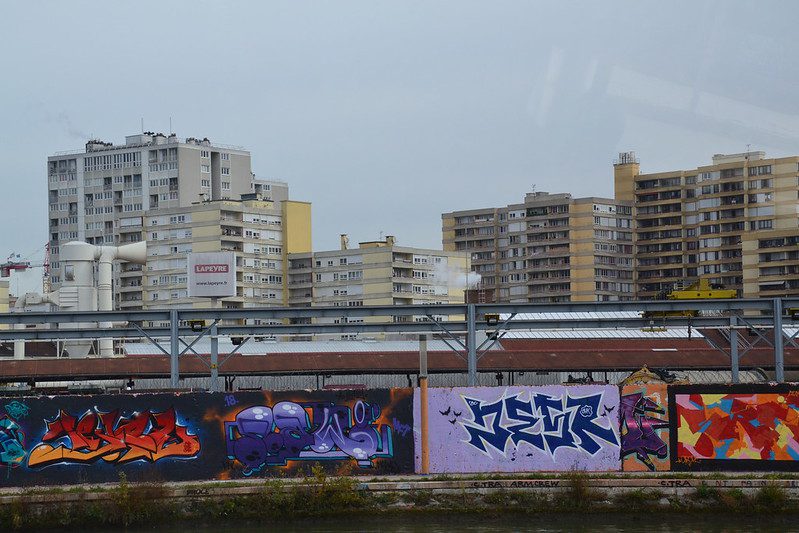
 The word ‘banlieue’ is unique to French society in meaning. Stripped of culturally-formed connotations, it translates into ‘suburb’ in English. However, it has also come to refer to specific urban communities associated with pervasive poverty, soaring crime rates and smoldering social tensions. These neighborhoods lie on the fringes of large cities and, subject to extreme stigma, are peripheral in every way possible.
An Issue Decades in the Making
A complex lattice of past events lies behind the present reality of France’s banlieues. In the 1950s, the French government funded the construction of Habitations à Loyer Modéré (HLM) or low-cost housing, on the outskirts of cities. These apartment complexes housed mostly working-class families and were considered a rung on the ladder to home ownership. Over the following decades, numerous waves of immigrants, primarily from ex-colonies like Algeria and Tunisia, settled on French shores. Discrimination forced many into ‘bidonvilles’ (meaning shantytowns). However, in the 1970s, the government took action to dissolve these informal settlements. By then, the initial occupants were moving out of HLM and it is there that many immigrants were re-housed.
Over time, these neighborhoods ceased to be ports in the passage to progress and became vacuums for France’s most impoverished populations. The banlieues were born.
A Social Chasm
Currently, poverty in France’s banlieues is rampant. These communities suffer from a significant lack of public investment and stark shortfalls in services, leading to unemployment rates three times higher than the national average. Furthermore, the intense stigma associated with living in a banlieue often hinders residents’ ability to participate in mainstream society, particularly in securing employment.
Banlieues also host a large minority and immigrant population (their inhabitants are twice more likely to be immigrants than the average) and have become incredibly politicized, situated at the focal point of French political discourses surrounding immigration and integration.
Over the years, feelings of state neglect and discrimination amongst the banlieues’ youth have repeatedly exploded into riots, catalyzed by police violence. In 2005, when riots raged across the country for several weeks, France declared a state of emergency. More recently, in 2023, the deadly shooting of 17-year-old Nahal M. by a police officer in Nanterre sparked renewed unrest and led the United Nations Human Rights Office to urge that France “seriously address the deep issues of racism and discrimination in law enforcement.”
Espérance Banlieues: Looking to the Future
Espérance Banlieues is a nongovernmental organization (NGO) addressing the inequalities in France’s education system that mark the beginning of long-term social tensions and lead to high rates of unemployment among underprivileged young people. Since 2012, the charity has opened 17 schools delivering high-quality teaching to children from underserved neighborhoods across France.
The organization views school as a place where children develop their first societal ties and treats education as a way of easing the crisis in the banlieues. It fosters integration by entrusting students with responsibilities in the school’s daily running, building within every child a sense of being a valuable part of their community’s fabric. It also strives to ensure no sense of exclusion from the French identity by providing access to cultural experiences that build the student’s relationship with the country’s culture and reinforce their status as its inheritors. Recent activities include a music discovery event at the Hôtel des Invalides museum in Paris and participation in a rugby tournament at the renowned Stade Français club.
With the guiding conviction that “chaque enfant est une promesse” (“every child is a promise”), Espérance Banlieues employs an approach that prizes individuality and autonomy, which has led to impressive results. In 2020, 94% of students finishing the first grade demonstrated a satisfactory reading level, compared to a 66.7% average for schools in the Réseau d’Education Prioritaire, which the government considers to serve an underprivileged student body.
Banlieues Santé: Healing a Wounded Society
Banlieues Santé is an NGO increasing access to health care and improving living conditions in the most underserved neighborhoods of Paris and Marseille. Since its inauguration in 2018, it has gathered 1,200 volunteers and serves 60,000 people annually. It partners with both on-the-ground organizations and large private corporations to operate its programs.
Through its ‘Bien-Aînés’ program, elderly residents can access support in navigating medical services and become more proactive and informed regarding their health. The program also involves events designed to engage elderly people and focuses especially on retired immigrant workers. Furthermore, the organization distributes hygiene kits throughout impoverished communities. In 2022, an incredible 80,000 people benefited from the initiative, and 1,500 volunteers and 185 organizations were mobilized.
The empowerment of women from these communities is another of Banlieues Santé’s major focuses. The ‘Papillon’ program develops women’s soft skills and coaches them throughout the professional insertion process. Participants can also access training in specific sectors through the organization’s partner companies. Additionally, Banlieues Santé invests in women as agents of development by training them as ‘health ambassadors’. The participants work toward becoming community educators, learning about various contributors to health. In 2022, 26 women graduated from the program.
Closing the Gap
In nurturing its students’ self-confidence and sense of identity, Espérance Banlieues aims to promote a spirit of inclusion. Banlieues Santé’s commitment to the dignity of those experiencing poverty in France’s banlieues and efforts to equalize opportunity demonstrate the same dedication to human potential. The present situation of poverty in France’s banlieues is the manifestation of a complex historical context. What is certain, however, is that there are people working determinedly to erode the cycle of poverty and violence that has long kept these neighborhoods stagnated and to usher in a more prosperous and peaceful future.
– Leila Powles
Leila is based in Cheltenham, Gloucestershire, UK and focuses on Global Health for The Borgen Project.
Photo: Flickr

Elderly Poverty in Botswana
Elderly Poverty in Botswana
Many elderly are impoverished but unable to take part in productive economic activity comfortably. Some force themselves to partake in hard labor like land tilling and alcohol brewing to keep afloat. Caregiving further strains those who suffer from non-communicable age-related health problems, like arthritis, according to the Journal of Nursing Scholarships. These issues, however, are not restricted to caregivers. They are symptomatic of the wider condition of the Botswanan elderly.
More and more people are reaching old age in Botswana, with the number of older people (60+) as a proportion of the population reaching 7% in 2020. Yet, socio-economic development has not kept pace with this increase. Elderly poverty in Botswana is a salient issue, with 91% of the older population living below the poverty datum line, or the level of income needed by a household to achieve minimal levels of well-being across different parameters.
Vulnerability to Poverty
One answer is that many Botswanans tend to leave the labor force relatively earlier, beginning at age 50. This is often because of ill health, participation in lower-productivity activities like subsistence farming, and obligations to undertake unpaid care work, as outlined above. This significantly reduces the period over which their retirement savings can build up. It also increases the number of years that such savings must provide for, according to the 2022 UNFPA report.
For those who do not exit the workforce so early, the legal retirement age is 60, according to the Journal of Nursing Scholarships. The five-year gap between this and the state pension age – 65 – leaves many in financial insecurity.
Households headed by older persons in Botswana tend to have relatively lower per capita income and more dependents than wage-earners, UNFPA reports. A more detailed individual-level analysis finds that the elderly show higher levels of multidimensional poverty than any other age group.
Although the old-age public pension scheme mentioned above is a step in the right direction, many have trouble accessing benefits. This is because of lengthy commutes to pay points and delays in processing life certificates.
Inadequacies in Public Health Care
Botswana has an effective public health care system, with minimal out-of-pocket expenses for citizens. Recent advances have reduced the incidence of communicable diseases. But it is yet to adapt to the increasing burden of non-communicable diseases: for example, 36% of 50 to 59-year-olds now self-report hypertension. Close to 34.5% of older men and 65.8% of older women are overweight or obese.
BMC Proceedings reports that there is a lack of expertise in treating such diseases across health care providers, especially in rural areas. National health care guidelines are not adhered to strictly. It follows that those who already suffer because of elderly poverty in Botswana are hit even harder by the uneven access to high-quality health care.
Additionally, studies estimate that only 3% of older adults have a good diet. Assessment scores show poor intake of dairy, fruits and vegetables. Many older people also report irregular access to drinking water, according to the 2022 UNFPA report.
Support and Empowerment
The government has responded to these difficulties by developing a National Healthy Ageing strategic programme, in collaboration with the World Health Organization (WHO). This includes a more thorough public health response to the needs of the elderly population. According to WHO, it also adopted the WHO’s Integrated Care for Older People guidelines to roll out a comprehensive health monitoring tool in 2022.
Masego Leepile’s Beno Society, founded in 2004, focuses on empowering the elderly to be self-reliant. Along with providing palliative care, it also encourages their social well-being by organizing “community wellness days, festivals and campaigns.”
The Sisters of the Charity of Nazareth administer the Pabalelong Hospice close to the capital city of Gaborone. Its experienced team provides home care to more than 90 patients nearby, and accessible palliative care services to people throughout the country.
Botswana has witnessed remarkable economic growth since its independence and has successfully lifted thousands of citizens out of poverty.
– Shiveka Bakshi
Photo: Flickr
Poverty in France’s Banlieues: Organizations Bridging the Divide
An Issue Decades in the Making
A complex lattice of past events lies behind the present reality of France’s banlieues. In the 1950s, the French government funded the construction of Habitations à Loyer Modéré (HLM) or low-cost housing, on the outskirts of cities. These apartment complexes housed mostly working-class families and were considered a rung on the ladder to home ownership. Over the following decades, numerous waves of immigrants, primarily from ex-colonies like Algeria and Tunisia, settled on French shores. Discrimination forced many into ‘bidonvilles’ (meaning shantytowns). However, in the 1970s, the government took action to dissolve these informal settlements. By then, the initial occupants were moving out of HLM and it is there that many immigrants were re-housed.
Over time, these neighborhoods ceased to be ports in the passage to progress and became vacuums for France’s most impoverished populations. The banlieues were born.
A Social Chasm
Currently, poverty in France’s banlieues is rampant. These communities suffer from a significant lack of public investment and stark shortfalls in services, leading to unemployment rates three times higher than the national average. Furthermore, the intense stigma associated with living in a banlieue often hinders residents’ ability to participate in mainstream society, particularly in securing employment.
Banlieues also host a large minority and immigrant population (their inhabitants are twice more likely to be immigrants than the average) and have become incredibly politicized, situated at the focal point of French political discourses surrounding immigration and integration.
Over the years, feelings of state neglect and discrimination amongst the banlieues’ youth have repeatedly exploded into riots, catalyzed by police violence. In 2005, when riots raged across the country for several weeks, France declared a state of emergency. More recently, in 2023, the deadly shooting of 17-year-old Nahal M. by a police officer in Nanterre sparked renewed unrest and led the United Nations Human Rights Office to urge that France “seriously address the deep issues of racism and discrimination in law enforcement.”
Espérance Banlieues: Looking to the Future
Espérance Banlieues is a nongovernmental organization (NGO) addressing the inequalities in France’s education system that mark the beginning of long-term social tensions and lead to high rates of unemployment among underprivileged young people. Since 2012, the charity has opened 17 schools delivering high-quality teaching to children from underserved neighborhoods across France.
The organization views school as a place where children develop their first societal ties and treats education as a way of easing the crisis in the banlieues. It fosters integration by entrusting students with responsibilities in the school’s daily running, building within every child a sense of being a valuable part of their community’s fabric. It also strives to ensure no sense of exclusion from the French identity by providing access to cultural experiences that build the student’s relationship with the country’s culture and reinforce their status as its inheritors. Recent activities include a music discovery event at the Hôtel des Invalides museum in Paris and participation in a rugby tournament at the renowned Stade Français club.
With the guiding conviction that “chaque enfant est une promesse” (“every child is a promise”), Espérance Banlieues employs an approach that prizes individuality and autonomy, which has led to impressive results. In 2020, 94% of students finishing the first grade demonstrated a satisfactory reading level, compared to a 66.7% average for schools in the Réseau d’Education Prioritaire, which the government considers to serve an underprivileged student body.
Banlieues Santé: Healing a Wounded Society
Banlieues Santé is an NGO increasing access to health care and improving living conditions in the most underserved neighborhoods of Paris and Marseille. Since its inauguration in 2018, it has gathered 1,200 volunteers and serves 60,000 people annually. It partners with both on-the-ground organizations and large private corporations to operate its programs.
Through its ‘Bien-Aînés’ program, elderly residents can access support in navigating medical services and become more proactive and informed regarding their health. The program also involves events designed to engage elderly people and focuses especially on retired immigrant workers. Furthermore, the organization distributes hygiene kits throughout impoverished communities. In 2022, an incredible 80,000 people benefited from the initiative, and 1,500 volunteers and 185 organizations were mobilized.
The empowerment of women from these communities is another of Banlieues Santé’s major focuses. The ‘Papillon’ program develops women’s soft skills and coaches them throughout the professional insertion process. Participants can also access training in specific sectors through the organization’s partner companies. Additionally, Banlieues Santé invests in women as agents of development by training them as ‘health ambassadors’. The participants work toward becoming community educators, learning about various contributors to health. In 2022, 26 women graduated from the program.
Closing the Gap
In nurturing its students’ self-confidence and sense of identity, Espérance Banlieues aims to promote a spirit of inclusion. Banlieues Santé’s commitment to the dignity of those experiencing poverty in France’s banlieues and efforts to equalize opportunity demonstrate the same dedication to human potential. The present situation of poverty in France’s banlieues is the manifestation of a complex historical context. What is certain, however, is that there are people working determinedly to erode the cycle of poverty and violence that has long kept these neighborhoods stagnated and to usher in a more prosperous and peaceful future.
– Leila Powles
Photo: Flickr
3 Organizations Helping the People of Vanuatu
Progress Pikinini
Progress Pikinini is a charity dedicated to giving the children of Vanuatu a brighter future. Founded in 2015 after Cyclone Pam’s devastation, it provided schools and children with essential education tools and everyday items such as clothes, shoes, bed linen and toys. The organization also donates school supplies, arts and crafts materials and funds for special projects. Since the COVID-19 pandemic, it has focused on country-wide initiatives, including building play equipment and libraries, educational resource projects for schools and providing clean drinking water.
CARE Australia
CARE Australia is an international nonprofit organization that assists people experiencing poverty, empowers women and girls in their local communities and helps them achieve social justice and break the cycle of poverty. It works with local communities to provide equal opportunities for women, such as earning an income, gaining access to a fair share of resources, leading and participating in decisions affecting their lives and aiding climate disasters and other crises.
In Vanuatu, CARE’s Leftemap Sista project aims to help girls live without constant fear of violence, earn an income and make decisions about their lives. Operating in Tafea and Shefa, the project focuses on young single mothers, girls who have not finished school, survivors of violence and women living with disabilities.
CARE also helps communities in Vanuatu prepare for future disasters and the impacts of varying climatic conditions by establishing and training local disaster committees, conducting disaster simulations, providing First Aid training and trialing new disease-resistant crop varieties. Due to the drought and water shortages caused by El Niño in 2016, CARE has been working with local communities to rehabilitate water systems. It has also constructed toilets and run hygiene and sanitation classes in schools, focusing on menstrual hygiene for girls.
Save the Children
Save the Children is an international organization founded in 1919 that focuses on children’s rights. It supports health, education, child protection, emergency response to natural disasters, adverse weather adaptation and disaster risk reduction. Operating in Vanuatu for 40 years, Save the Children has worked with the government to strengthen the education system.
Save the Children has partnered with the Global Partnership for Education to ensure schools are well-resourced and effective learning environments for all children, including those with disabilities. The organization provides life-saving food, shelter kits and learning resources in natural disasters. It collaborates with the government to strengthen disaster response and preparedness. Additionally, Save the Children has introduced health care initiatives that include training local health care providers, strengthening health care systems and promoting preventive care, such as providing vaccinations for curable diseases.
In March 2023, Vanuatu was hit by category four cyclones that destroyed food gardens and homes, prompting the government to declare a six-month state of emergency. In response, Save the Children launched a food preservation project involving the growing, harvesting and exporting of local foods to Vanuatu’s capital, Port Vila. There, the food is transformed into shelf-ready ration-pack meals that can be stored for up to two years, ensuring preparedness for future natural disasters.
Looking Ahead
Vanuatu is working toward ending poverty with the help of international organizations and innovative approaches to disaster response and preparedness. Nonprofits such as Progress Pikinini, CARE Australia and Save the Children Australia have significantly contributed by offering support and providing vital resources for the people of Vanuatu to thrive. As a result of international aid and help from the government of Vanuatu, the country is on a path toward a more prosperous future for its citizens.
– Kimran Gill
Photo: Flickr
Beatrice Ayuru and Education in Uganda
Ayuru has made a significant impact on education for children in Uganda, particularly those from impoverished backgrounds. As the first in her family to attend university, she was determined to improve education in Uganda. She founded a successful school that has helped thousands of students acquire skills to lift themselves out of poverty.
The Life of Beatrice Ayuru
Ayuru was born into a polygamous family of 16 children in rural Uganda. She left school at 16 after the birth of her first child. However, she later received a second chance at education, becoming the first university graduate in her family. Motivated by her own experiences, she aimed to create a school that not only combats illiteracy but also addresses poverty and advocates for girls’ rights.
Although raising money at the start was tough, Ayuru defied norms and traditions by building a business selling cassava. With support from her father, who gave her a piece of land, she used her profits to lay the first bricks for the school. She invested the money in teachers and resources. Ayuru established the Lira Integrated Nursery, Primary and Secondary School, which is a testament to her vision and determination.
Ayuru has received several awards for her ventures, including the United Nations Conference on Trade and Development (UNCTAD) Empretec Women in Business Award in 2010. In addition, the Federation of Uganda Employers honored her with the Employer of the Year award in 2011.
The Local School and Benefits to Uganda
The Lira school was founded in 2000 and offered teaching to children from low-income families and those affected by war and HIV/AIDS. The school provides nursery, primary, secondary, vocational and agricultural classes to more than 1,000 students. The school is partly funded by local business and agriculture ventures, allowing students to learn entrepreneurial skills. Additionally, Lira School offers financial aid to more than 100 families, recognizing that fees can be prohibitive for some. This support ensures that more children have the opportunity to attend school. The school has been recognized for its excellent teaching. It has earned a three-star rating from AFRO EDUCARE, the highest ranking for a private school in the district.
Conclusion
Ayuru is a remarkable example of someone creating long-lasting change for impoverished people. Ugandan children benefit from someone who was once in their position. Despite Ayuru acknowledging that the fight for universal education is far from over, her case demonstrates how quickly things can change when someone is willing to make a difference. Ayuru has shown Uganda that local-level poverty can be addressed by creating opportunities for local children.
– Rosie Miller
Photo: Flickr
Elderly Poverty in Guinea
Reasons behind Elderly Poverty
Most of the elderly population live in rural areas (65%) and have not received education (82%). As they age and become less able to perform labor, it is hard for older adults to earn income. Deterioration in body function also leads to malnutrition, diseases and illness. Formally, in a traditional family, family members and offspring cared for older people.
However, recently, Africa has been going through a change initiated by colonialism. With development and modernization, change was made toward a Western family structure of a nuclear family or young people moving to urban areas and leaving older people behind. As a result, older adults are often left vulnerable. They have little or no support they would otherwise have had in a traditional setting.
Strategy of Governance
Some solutions to combat poverty emphasize the need for stronger governance and a more effective social pension system. A study that simulated pension systems in 15 low-income sub-Saharan African countries found that considering fiscal capability and operational feasibility, a non-contributory pension program targeting poor elderly individuals was ideal. A targeted social pension was deemed more practical than a universal pension system.
A “Poverty Reduction Strategy Paper” by the Guinean government in 2013 stated that the urban-rural divide and low-income distribution to the poor contribute negatively to national poverty. While the paper does not exclusively cover the topic of elderly poverty in Guinea, it emphasizes efforts regarding policy-making, governance and economic development to combat issues of regional growth, employment and poverty.
A Pan-African Way
However, there is another way of dealing with issues, especially in regard to older people. It is to embrace the African culture and approach rather than implement Western values and modernized social structures. Pan-Africanism is a term that calls for unity within the African region and criticizes colonialism. The book “Aging in Africa” emphasizes the importance of providing support to older adults through family generations. It writes that “this is how Africa had its strength in the decades past and this should be where it draws its strength in the future.”
Conclusion
While there are nongovernmental organizations such as the World Food Program and Helen Keller International operating inside Guinea for poverty allegations, there are not many significant measures taken to deal with elderly poverty. Continuous interest and an in-depth understanding of elderly poverty in Guinea are required. A Pan-African approach, embracing and preserving the African culture of valuing older people, can be implemented to deal with poverty.
– Minji L. Kim
Photo: Flickr
Addressing Child Poverty in Andorra
Data Behind Child Poverty in Andorra
As of 2022, 14% of under 18-year-olds and 14.7% of under 16-year-olds are at risk of poverty and social exclusion. This is an increase from 2018 when 13.3% of those under 16 were at risk of poverty (living with an expenditure below 60% of the national median). However, what is interesting is that when looking at single-parent families with one or more dependent children the proportion of those at risk of poverty increases significantly. In 2019, 24.4% of under 16s in a single-parent household were at risk of poverty, with 17.4% of single-parent households struggling with severe material deprivation.
While there is limited data on hunger or malnourishment in children, data does show that around 0.7 to 1% of children are underweight or thin. However, Andorra boasts a 100% literacy rate, making education’s prevalence very high. This is likely due to Andorra making public schooling free, reducing the impact of poverty on a child’s education.
Tackling Child Poverty in Andorra
Although child poverty is still present in Andorra the general poverty rates are still lower than the EU average of 24.8%. The Andorran Government has also implemented multiple initiatives to tackle child poverty and its sources. One example of an initiative that has helped reduce child poverty in Andorra is the Parròquies Amigues de la Infància (Child-Friendly Parishes) initiative. UNICEF Andorra runs the initiative, operating at the regional level and it promotes children’s participation through child Councils; a dedicated “child-friendly budget;” childhood data collection; and “the development of a national plan for children in conjunction with the state government.”
UNICEF Andorra measures the progress of the individual parishes under this initiative. If reviewed positively it grants the parish “the Child Friendly Parish Recognition”. This initiative has been so successful that UNICEF has claimed that “[a]s of 2023, all the seven parishes in the country are involved in the initiative, reaching almost 14,000 children, making Andorra in effect a child-friendly country.” The effectiveness of the initiative is due to its partnership with organizations such as the Community Association and Ministry of Education, facilitating its focus on educating children about their rights so they are empowered to be able to defend their rights and alter their future circumstances.
Promoting Child Rights
The Andorran Government also plans to carry out dissemination campaigns about child rights so that people are aware of these rights, are less likely to violate them and are more likely to guarantee them. The Child-Friendly Parishes initiative has also been key in involving the voices of children in decision-making so that political decisions affecting them are more likely to take into account their wants and needs, allowing these children to help shape their future.
From 2021 to 2022, 80 children from 9 to 12 years old have been elected as councillors from their respective parishes, and 611 students of the same age have participated in workshops promoting participation. Furthermore, 28 people aged 14 to 16 take part each year in the General Council of the Youth where they discuss and debate different proposals for laws on topics that interest them, replicating the operation of the General Council. All seven communal children’s councils have also maintained Child-Friendly Parish Recognition. according to a 2022 report.
Although there is a significant lack of data on the SDG trackers with 35 out of the 48 child-related SDG trackers lacking data the government still demonstrates effective measures and initiatives to reduce child poverty in Andorra. The most effective means of achieving this is through education, which includes multiple initiatives, such as the Child-Friendly Parishes Initiative. Children have been effectively involved in decisions about their future, educating them on how to change their circumstances and future for the better, enabling them to escape child poverty in Andorra.
– Archie Day
Photo: Wikipedia Commons
Poverty in Upper Egypt
Poverty in Upper Egypt
Also known as the “Sa’id,” Upper Egypt refers to the southern part of Egypt and the Nile River valley, extending from the area south of Cairo to Aswan. Despite its rich heritage of ancient Egyptian civilization, poverty in the region is prevalent, characterized by higher rates of unemployment, illiteracy, limited access to adequate health care and underdeveloped infrastructure. Although comprising only 25% of the population, it is home to 40% of the nation’s poor, totaling 12.6 million people. UNICEF findings reveal that a child in rural Upper Egypt is only half as likely to survive to the age of five compared to a child in Lower Egypt.
Access to clean and safe water is a challenge in Egypt and negatively impacts children. In areas without a piped water network, children, especially girls, are often tasked with fetching water, compromising their education and leisure time and further perpetuating the cycle of poverty.
Barriers to Education
Educational attainment in Upper Egypt has involved challenges; it is often difficult for children, particularly girls, to access schools. Families in this region often reside in small, rural hamlets, which are frequently located far from central village primary schools. Prevailing social influences and the lack of transport facilities has hindered children, especially young girls, from reaching these public schools. In Egypt as a whole, issues such as grade repetition, absenteeism and dropout rates reduce the efficiency of the education system. Consequently, approximately 46% of the working-age poor have not completed primary education, and less than 4% possess a university degree. Upper Egypt particularly shows lower intergenerational improvements in education than the remainder of the country, in 2015, approximately only 38.9% of those aged 25 years or older attained a higher level of education than their parents did.
Agricultural Challenges
In Upper Egypt, the governorates with the highest poverty rates see more than 30% of their workforce engaged in agriculture. The local economy relies heavily on subsistence agriculture, which, with unreliable weather conditions and changing weather patterns, is becoming increasingly unsustainable. Indeed, the country’s 1,000 poorest villages, located in three of these governorates, have 74% of households facing food insecurity. More than 55% of employment in Upper Egypt is agriculture related. Small farms, which fall short of international standards and which use traditional practices dominate this sector. Consequently, the region grapples with significant and persistent challenges, including food and water insecurity and climate variability, resulting in unsustainable livelihoods and hindering economic and social development.
The Ishraq Program
The Ishraq program focuses on out-of-school girls in Upper Egypt representing the most underprivileged, disadvantaged and often overlooked group in the country. When compared to their Lower Egypt and Urban governorate counterparts, they are at a much higher risk of early marriage, poor health outcomes and inter-generational poverty. Through the Ishraq program, Save the Children, in collaboration with the Population Council, provides safe spaces for girls who have dropped out of school helping them learn, socialize and develop life skills. “For more than a decade, Ishraq has served 3,321 girls and 1,775 boys in 54 villages across five of the most disadvantaged governorates of Upper Egypt,” according to the Population Council.
The program was met with high demand at the community level and resulted in improved literacy skills, financial management and health education. The program was launched in 2001 and a 2013 report by Population Council detailed plans to continue expanding the program, for which community demand remains high, and to encourage the development of further programs which support graduate girls as they become young women, who require greater life and livelihood opportunities.
Copts In Need
As a U.K. based charity dedicated to reducing extreme poverty in Upper Egypt, Copts In Need (CIN) undertakes various projects to help the poor communities of Upper Egypt, focusing on housing, child development and microfinance projects. In 2023, CIN constructed 200 houses in Upper Egypt and supported 800 members in starting their own businesses.
Another of their notable projects is ‘Eyes of Assiut’ which aims to address the high prevalence of visual impairment and blindness in the region, particularly among women. CIN has established an eye specialist hospital in the Abnoub district, providing treatment and training to local ophthalmologists and nurses, with support from highly qualified U.K. consultants. In the past year, the hospital has continued to be an effective referral and treating center for all Egyptians within Assiut and its peripheries.
Despite Upper Egypt’s rich cultural heritage, it remains one of the poorest and most underdeveloped regions in the country, exacerbated by ineffective government policies. However, initiatives by organizations like Save the Children and Copts In Need offer hope by focusing on education, health and sustainable development. For real progress, stronger government action and support are crucial to transform this region and improve the lives of its vulnerable populations.
– Asma Issa
Photo: Flickr
Addressing Homelessness in Tajikistan
Additionally, civil wars affected the speed of housebuilding, leaving many stranded on the streets. For those who did have access to a home, warmth and comfort were usually absent as huge families had to live in small dwellings and human beings had no choice but to sit upon hard, cold brick and dirt. Even though the economy was beginning to improve, natural disasters like earthquakes quickly reversed the progress this country had made as they damaged more and more houses and left many homeless, according to Habitat for Humanity. As of 2023, 21.2% of the population in Tajikistan remains in poverty, which is almost 1.25 million people.
Habitat for Humanity
Habitat for Humanity is a nonprofit organization that has helped countries worldwide including Tajikistan. Since 1999, this organization has been aiming to end homelessness in Tajikistan by building and repairing houses and assisting more than 7,800 families with finding a home.
Earthquakes have always been a constant problem in Tajikistan. The power of this natural disaster is so strong that it destroys the windows and doors of people’s homes, many of which still have not been fixed. With Habitat for Humanity’s help, many people were given loans to build safer buildings and receive training on how to make their structures more stable, allowing families to better withstand earthquakes and other harsh conditions, according to its Country Profile.
Momajon and Karim completely rebuilt their house with the help of Habitat for Humanity. Typically, housebuilding was an extremely long and complicated process: one would have to wait years before constructing another wall due to the rising prices and declining wages. However, these individuals successfully built their houses from scratch, sharing their newly prized possessions with the rest of their family members through low-interest loans from banks and insurance provided by Habitat Tajikistan. The help they received from the organization did not solely help the process of house building but also provided them with a comfortable life.
UNICEF
The United Nations International Children’s Emergency Fund (UNICEF) is another organization that has helped tackle the health challenges in Tajikistan. Especially for small children, undernutrition has been a significant problem even to this day. According to UNICEF, “As many as 21 percent of children under five are stunted (have chronic malnutrition), including 6 percent who are severely stunted.”
To aid this issue, UNICEF has made investments in care facilities and hospitals, bringing them medicine, equipment and instructions on how to better help the Tajikistan community. Instead of death being the only option for families to face, the people of Tajikistan now have a form of hope to come to after many fall ill due to malnutrition. To further aid families with younger children and infants, this organization also promotes child care through maternal and child services such as increasing child feeding practices in hospitals and giving out more necessary items to household parents. Additionally, because of this organization’s help, 1.4 million children were able to improve on the status of their health, such as with diseases like polio.
Shelter for Life
Shelter for Life (SFL) is an international development organization that is working to provide humanitarian assistance to developing countries, especially through shared local involvement. Specifically in Tajikistan, there was many harsh weather conditions like flooding that hurt property security for many families, leading to a deterioration of many homes. To address the issue of homelessness in Tajikistan and the destruction caused by natural disasters, SFL created innumerable amounts of shelters and latrines and even created a school building as a form of shelter. Additionally, because of the low funding in Tajikistan, the quality of the houses are poor, allowing for a greater chance of destruction when natural disasters like earthquakes hit. Even though this organization cannot directly stop an earthquake, it can and did implement preparedness training to allow many to better recover from the trauma from earthquakes, allowing the effect of homelessness to take a lesser toll.
There is Hope
As seen through the above organizations, much work has been done to address homelessness in Tajikistan. Though problems of malnutrition, health care, lack of shelter and more may continue, these organizations are making a significant difference.
– Linda Yoonseo Lee
Photo: Flickr
FGM in Somalia and The National Development Plan
Reasons for Persistence
The National Development Plan
The Ninth National Development Plan (NDP9) is a comprehensive governmental framework designed to guide Somalia toward sustainable economic growth and poverty reduction between 2020 and 2024. This plan addresses politics, improved security, economic growth and social development. Furthermore, gender equality and women’s empowerment are pivotal objectives of NDP9. A significant focus is placed on combating harmful practices like FGM.
NDP9 incorporates strategies to combat FGM through laws, public awareness campaigns and education programs targeting both men and women. This includes the Ifrah Foundation’s “Dear Daughter” campaign, which hopes to reduce FGM by promoting personal empowerment and asking parents to pledge that they won’t cut their daughters. The aim is that a three-pillar approach of education, advocacy and action will begin to lay sustainable foundations for FGM eradication.
Comparison with Kenya
With previously high rates of FGM, similar initiatives and legislation in Kenya have seen FGM drop to approximately 15% among women aged 15-49. Effective grassroots activism, education and support from nongovernmental organizations (NGOs) have led to significant reductions in FGM prevalence, as well as the criminalization of those practicing. Organizations like the Kenyan anti-FGM Board and Amref Health Africa have been instrumental in these efforts. This comparison suggests that increased governmental stability and specific FGM groups can facilitate a quicker eradication of FGM in Somalia.
Activism, Advocacy and Advice
Activists like Shamsa Sharawe have played a crucial role in the fight against FGM in Somalia and Europe. By bringing the attention of international communities to the issue, Sharawe’s advocacy highlights the physical and psychological harm caused by FGM. Her efforts and those of various NGOs have been instrumental in pushing for more robust policies and community-based interventions. They display that this is not an issue of the past. FGM is a continual injustice and attack on female autonomy, dignity and freedoms.
Survivors of FGM, like Ifrah Ahmed (founder of “Dear Daughter“), have become vocal advocates for ending the practice. They emphasize the importance of education, community dialogue and international cooperation. Additionally, by sharing their stories, survivors help break down stereotypes and stigmas associated with female genital mutilation, advocating for survivor support and defending women’s dignity and integrity.
– Olivia Howard
Photo: Flickr
Water Rights: How NGOs Respond to Tanzania’s Water Crisis
Tanzania’s Water Crisis
Tanzania is an extremely dry country, with one-third considered arid to semi-arid. Several large lakes surround Tanzania that provide water for those who live nearby. However, the reality is that many do not have access to freshwater and instead must resort to contaminated groundwater from wells or bacteria-infested surface water. According to the Water Project, water-borne illnesses account for more than half of the population’s diseases due to the lack of sanitary water options, with malaria and cholera being the most common.
Alleviating the Pressure on Children
According to WaterAid, 25.7 million people in Tanzania lack clean water near their homes. That means that two out of five people in Tanzania are required to travel long distances to collect safe water. This task is predominantly placed on women and children.
One young girl, 11-year-old Tausi Katambarai from the Kigoma Region of Tanzania, was tasked with trekking 10 kilometers daily to collect 20 liters of water from a well she would need to carry on her head to carry home. Her responsibility to collect water for her family meant that she could only attend class twice a week, which had an extremely negative effect on her education.
To combat this, the United Nations Children’s Fund (UNICEF) partnered with Water Mission Tanzania to drill boreholes in the Kigoma Region and piped water to schools and villages. This is part of a larger program of 15 projects that has “significantly transformed the lives of vulnerable groups, including women, girls and children,” according to Eng: Denis Arbogast, Project Manager at Water Mission. Teachers at Tausi Katambari’s school have praised the initiative and reported that class attendance has improved significantly since gaining nearby water access.
The #ClaimYourWaterRights Campaign
End Water Poverty is a “global civil society coalition” that campaigns to fulfill people’s human rights to sanitation and safe water. It works at different levels to advocate for governments to respect and protect what it calls “water rights,” a shorthand for the human rights to water and sanitation.
The #ClaimYourWaterRights campaign was first launched in 2019 and aimed to provide various groups with knowledge and confidence to advocate for water rights using the international human rights framework. The campaign focused on informing governments of their duties and educating vulnerable communities whose rights had been violated and their entitlements as holders of water rights.
Additionally, each year, the NGO grants $1,200-$6,000 to projects that support the campaign through advocacy and community mobilization.
The WaterCredit Solution
Another NGO that hopes to solve Tanzania’s water crisis is Water.org, which has been piloting water and sanitation programs in the country since 2017. According to the initiative, the country’s high demand for water and sanitation has created a dynamic market for water products such as storage tanks, rain harvesting devices and pipes.
The WaterCredit Initiative is Water.org’s loan program, which provides financing and resources to individuals facing water scarcity. Since its inception in Tanzania, the charity has disbursed 13,000 loans, granting more than 230,000 people access to household water and toilet solutions.
Hope for the Future
While the water crisis in Tanzania continues to impact millions of people daily, there is hope that the work of NGOs such as UNICEF, End Water Poverty and Water.org can go some way toward safeguarding individuals’ water rights.
– Carla Messinger
Photo: Flickr