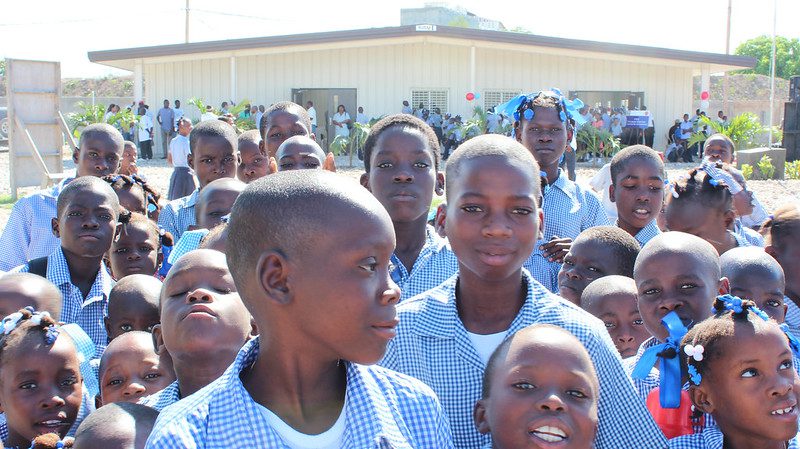
 Education in Haiti has faced significant challenges in recent years, from socio-economic issues to natural disasters, leaving the education system struggling to keep pace. Statistics reveal that more than 78% of students drop out after primary school and more than 40% of the population is illiterate. Most schools in Haiti are private and charge tuition, making education inaccessible for many. Only 29% of students advance to secondary school and the average age for girls dropping out is 7 years old. However, there is a positive shift occurring. Several charities have introduced education programs in Haiti that are transforming the educational landscape. Here are some innovative education programs in Haiti that have made a considerable impact.
Locally Haiti
Locally Haiti is a charity centered on community-driven, locally-led volunteer work in the Nippes region of Haiti. It manages several impactful projects, including hospitals, agriculture and women’s empowerment. A flagship educational program of the charity is St. Paul’s School, founded in 1989, which has educated more than 5,000 students from pre-K through high school. The curriculum includes basic academic subjects and emphasizes agricultural education in areas such as botany and horticulture.
Entrepreneurship also plays a critical role in the curriculum. Professor Vladimy, a St. Paul’s alum, teaches courses in business and economics, equipping students with a comprehensive education that prepares them for various career paths. St. Paul’s enrolls more than 54% female students, reflecting the school’s commitment to providing a safe and supportive environment for all attendees. Locally Haiti has awarded scholarships for higher education to more than 25 students and built a school facility that doubles as a relief center and community hub, further fostering a strong connection between students and their local community.
Blue Butterfly
Blue Butterfly is an innovative charity that creates engaging and informative media programs for schools in developing countries. It blends local culture and traditions with professional consulting to produce videos tailored to the needs and interests of children. The organization produces content locally, enabling children to use their mother tongue and connect with cultural figures familiar to them. Not only is the content rigorously researched, but it is also widely distributed to reach as many children as possible.
A notable educational program from Blue Butterfly in Haiti is the video series “Lakou Kajou,” which follows a brother and sister experiencing adventures around their family’s courtyard. This program includes episodes on math, science, literacy and problem-solving. The episodes, which feature animation, Haitian fables, live-action documentaries and artwork by local Haitian artists, are designed to be accessible. Blue Butterfly also partners with Université Quisqueya in Port-au-Prince, which helps extend the charity’s reach to schools in areas with limited internet and electricity.
Summits Education
Summits Education is a charity that supports schools in remote parts of Haiti. Established in 2015, the organization is dedicated to transforming education through teacher development and community engagement. In Haiti’s Central Department, where literacy rates are particularly low, the charity operates 40 schools in an area predominantly inhabited by farmers earning around $2 a day. For many residents, education represents a pathway out of poverty, enhancing community life, health and gender equality.
Summits Education emphasizes the crucial role of teachers in education. Instead of primarily investing in buildings and supplies and allocating leftover funds for teachers, the charity prioritizes its spending on educators. It adopts a ‘whole child approach,’ ensuring every child feels supported in their environment. This approach includes intensive training for the teachers and principals of their schools. Summits Education collaborates with the Haitian Ministry of Education and together they have trained 350 administrators and educated 10,000 students, to improve education programs in Haiti.
Model School Network
In 2016, the Model School Network was established to create a sustainable solution to the problem of underperforming schools in Haiti. Furthermore, three years earlier, education representatives in Haiti had convened three networks—EFACAP-Mirebalais, BDE-Hinche and Summits Education—to develop a strategy for improving the country’s educational system. These networks formed the Model School Network.
A key initiative of this network is the Longitudinal Benchmarking and Evaluation Systems (LBES), which aims to establish a data management system to monitor and enhance learning outcomes. The project has built a skilled team of managers and field agents who collect, process and analyze data on learning outcomes. It focuses on outcome-based measures to guide educational decisions and boost student performance. By gathering this data, the Model School Network can set precise future goals. Ongoing data analysis enables accurate progress evaluation, leading to data-driven decision-making and robust long-term solutions. The mission of MSE is straightforward: to recognize the potential of children and support it fully. “As long as we all come together and commit to helping one another look in all the right directions, we will find all the answers.”
The Haiti Project
The Haiti Project is a nonprofit organization that collaborates with students from Vassar College to support six primary initiatives: Art, Education, Water Access and Purification, Reforestation and Women’s Cooperative. Based in Chermaitre, Haiti, its education program enables 250 children to access primary education and provides scholarships for 10-20 students to pursue further education. These scholarships cover food, books, housing and enrollment fees, crucial support since the nearest secondary school is a four-hour journey from the village.
This initiative began as an effort to enhance the lunch program at École St. Paul. Additionally, The Haiti Project is launching an Adult Education program proposed by the Women’s Committee. The aim is to improve adult literacy and math skills to help start small businesses or pursue further education. Beyond these, the charity is developing a range of other programs including anti-trafficking classes, a breakfast program, a summer program, a medical fund, health and sexual education and a textbook-lending library.
Looking Forward
Education in Haiti has faced significant challenges. Despite the ongoing difficulties, several organizations have implemented innovative education programs in Haiti that are making a substantial impact on the country’s educational landscape. These ongoing initiatives, ranging from locally-led schools to digital learning resources, are providing critical support to students and teachers, helping to improve educational outcomes and offering hope for a brighter future in Haiti.
– Sofia Hattiangadi
Sofia is based in New York City, NY, USA and focuses on Good News for The Borgen Project.
Photo: Flickr

Oxfam International and Ahmad Tea
The History of Oxfam International
The organization started during World War II, a time when conflicts were widespread. Much of its initial work focused on providing support to communities devastated by the war. Oxfam International’s first major initiative, “Greek Week,” saw British citizens unite to donate funds to the Greek Red Cross. This marked the beginning of Oxfam’s broader mission. It began providing support to developing countries and helping in times of disaster. The Oxfam shops started selling handmade items from developing countries, giving buyers unique crafts while also raising money for these countries.
In 1963, Oxfam turned international with its first campaign outside of the United Kingdom (U.K.) being in Canada. Oxfam continued to grow, eventually reaching Latin America and other developing areas. Currently, Oxfam International has 21 organizations in 90 countries around the world.
Oxfam’s Partners
Oxfam International partners with many other organizations and groups also working to fight against poverty. Whether these are local organizations or other international programs, the progress has been tremendous. Oxfam has partners that are local in areas that need more help. These local partners know the ins and outs of poverty, which provides valuable guidance and experience in trying to help combat these ongoing issues.
Oxfam also collaborates with campaign and corporate partners. Campaigning allies actively support the organization and help bring issues to larger audiences to increase awareness of the efforts that Oxfam International and other organizations are undertaking. Corporate partners, located in the U.K. and globally. These partners help in a variety of ways including donating a percentage of their income to Oxfam.
Oxfam’s Partnership With Ahmad Tea
Since 2010, Ahmad Tea has partnered with Oxfam International in hopes of ending the water crisis in Niger, a landlocked country where a majority of the population lack access to safe and clean drinking water. Some people also lack access to proper sanitation facilities. Upon learning about Niger’s severe water issues and humanitarian crisis, Ahmad Tea decided to partner with Oxfam and fund projects that provide access to clean water. Since their partnership, the two have provided clean water to rural areas by supporting existing water systems and building new ones. Their initiatives have made it possible for more girls to go to school, seen an increase in agriculture and income and caused a drop in waterborne diseases. These efforts are not the only impacts of their program.
Ahmad Tea also aimed to introduce better water management techniques. Studies revealed an underground water source deep beneath Niger. Although drilling for this water is costly, it promises to be an invaluable resource for communities struggling with water insecurity. On World Water Day, Danny Sriskandarajah, CEO of Oxfam Great Britain, discussed the partnership with Zahra Afshar, Head of Charity at Ahmad Tea. During their interview, Sriskandarajah shared his proudest moments, saying “I have lots of moments.” He also added that Oxfam is operating in some of the toughest areas.
Oxfam In Nepal
Nepal, a small country in Asia, faces significant with clean water access. According to UNICEF, more than three million people in Nepal lack access to clean water and services. Since arriving in Nepal, Oxfam International has worked to repair and establish new water supply schemes in two specific areas of the country, the Hills and Terai. During these efforts, Oxfam has teamed up with two other companies to best implement their strategies.
The water systems in Nepal face significant sustainability issues, with many of the water pumps requiring repairs that often cost more than the actual benefits that people are getting out of them. To try and combat this issue, Oxfam International has introduced five new techniques aimed at increasing efficiency and effectiveness. These strategies are currently in implementation and are continuously being developed to better support the people of Nepal. With these frameworks in place, Oxfam and its partners are positioned to build on this success and implement newer technologies that may better suit Nepal.
Looking Ahead
Oxfam International’s commitment to addressing the root causes of poverty continues to drive its global efforts. Through partnerships and targeted initiatives, Oxfam has provided essential support in areas like Niger and Nepal, improving access to clean water and sustainable resources. As the organization expands its reach and refines its strategies, it remains dedicated to fostering resilience and equality in vulnerable communities worldwide.
– Dorothy Howard
Photo: Flickr
Tackling Poverty, Transforming Lives: Child Poverty in Romania
Child Poverty in Romania
According to UNICEF, during 2019-2021, 29% of Romanian children were living in relative income poverty, the highest of all member states of the EU. It also noted that Romania had the most cases of persistent child poverty, which amounted to 25% of all children. UNICEF explains that prolonged periods of poverty throughout childhood can exacerbate the disadvantages already created by poverty and provide particularly negative outcomes for children in the future.
One of the reasons for this particularly high rate of child poverty may be the limited impact of social protection benefits on the issue, according to UNICEF. Eurochild calls for investments in social infrastructure to address the needs of vulnerable children in Romania, especially those belonging to minority groups such as Roma.
FARA
FARA, which means “without” in Romanian, is an NGO focusing on breaking the cycle of poverty experienced by children in Romania. Jane Nicholson founded the organization in 1991 and was appalled to find out about the extreme cruelty inflicted within state-run orphanages during the dictatorship of Nicolae Ceaușescu, FARA states on its website.
Since its founding, all of the services FARA provides continue to match her initial ethos that abandoned children should have access to quality education and live in places that resemble families, not institutions.
FARA believes that to break the cycle of poverty, children must complete their education. According to UNICEF via FARA, an extra year of school attendance could increase a child’s future income by 8% to 9% and reduce their risk of unemployment by 8%. FARA has identified key groups that currently face barriers to their education. These include children from poor families and communities such as Romani, vulnerable children and children with disabilities.
Tackling Poverty Through Education
Tackling Poverty Through Education is FARA’s flagship program which assists 300 children and their families in nursery and primary schools in rural communities across Northern Romania. To help children start and stay in school, FARA offers a free program that employs teachers, catering staff and social workers in schools across rural communities, according to its website.
As part of this program, FARA provides children from poor families with free school meals which both fuels them for a day of learning and encourages their parents to send them off to school. In addition to appropriate nutrition, the program also provides pastoral care and support to children and their families to strengthen family ties and prevent school dropouts. The organization hopes to expand beyond the 300 children it assists in the next decade.
FARA Family Homes
According to FARA, “Romania has one of the largest alternative care systems in the EU.” Figures from the Romanian Government and UNICEF show that over 56,000 children receive some form of support, with 18,000 living in foster care, 13,900 in kinship care and 18,500 in state-run institutions. According to UNICEF via FARA, for a child under the age of three, spending three months in an institution can delay their physical development by one month and may also pose a risk to their cognitive and language development.
As one of few NGOs providing an alternative to state care in Romania, FARA’s children’s homes are modeled on the principle of giving a “family for those without.” FARA’s current home, St Nicholas, which can accommodate 12 children and three students, provides a caring and loving environment for children over the age of three. The children get accommodation until their mid-20s to ensure that they receive support in their pursuit of further education and have the best chance of finding a future career. Over the years, more than 70 children have received support through FARA Family Homes, according to its website.
Therapy for Children with Disabilities
There are approximately 72,000 children registered as disabled in Romania, many of whom are unable to access mainstream education. Children with disabilities face negative attitudes, daily discrimination and costly health care, causing them to be one of the most marginalized groups in Romanian society. The combination of these barriers to success significantly endangers the development and life of disabled children and their families.
FARA offers a lifeline of support for isolated children and their families through their three therapy centers in Bucharest and Suceava District in the northeast of Romania. According to FARA, every week the centers support 228 children by providing them with physio, speech and sensory therapies for various disabilities. It also provides social support for their families, ensuring they can meet their children’s needs. In the last decade, 630 disabled children have accessed therapy in FARA centers, with 67% of those children going on to enroll in kindergartens and mainstream schools.
In addition to these three main groups, FARA also helps “youth at risk and adults with learning disabilities.”
A Brighter Future
Although child poverty remains a prevalent issue in communities across Romania, NGOs such as FARA are working hard to ensure that every child has the best chance at life. Hopefully, going forward, the government can improve the social infrastructure to create more effective welfare solutions to ensure every child receives the education and support they need, which could further help alleviate child poverty in Romania.
– Carla Messinger
Photo: Flickr
Addressing Health Crisis in Mali: Efforts and Challenges
Current Health Crisis in Mali and Barriers
A 2024 UNICEF Health Crisis in Mali report states that 5.4 million people require health assistance and 2.5 million need nutritional support. In a special interview with The Borgen Project recently, an International Medical Corps field operator discussed several challenges in providing health care in Mali. These include a lack of quality infrastructure and medical equipment, insufficient electricity and difficulties accessing remote areas.
UNICEF’s Response
Amid the conflict, UNICEF stepped in to assist, particularly during roadblocks, by deploying community health agents who acted as frontline responders, equipped to combat diseases such as diarrhea, pneumonia and malaria. In 2018, UNICEF achieved significant milestones, including eliminating maternal and newborn tetanus in six regions. Throughout the year, Mali also maintained its polio-free status. It continued to strengthen the national health system’s capacity to deliver life-saving emergency health interventions and services, including vaccination services in the northern conflict-affected regions.
Health Mobile Clinics in Mopti
In the Mopti region, the European Union (EU) and its humanitarian partner Save the Children provide free health care to vulnerable individuals through mobile clinics. Each month, more than 1,500 people benefit from services that include consultations, prenatal check-ups and immunizations tailored for displaced individuals. These clinics treat various diseases and malnutrition and educate patients through sessions that raise awareness about good health practices. These sessions cover COVID-19 prevention, sanitation, vaccinations and more.
Novartis Foundation’s Contribution
Consulting a doctor typically costs around 1,000 CFA, valid for a week, while a prenatal consultation might cost about 2,500 CFA, which is quite expensive. The comprehensive survey on household living conditions (EICVM 2018 – 2019) reveals that 51% of Malians skip health care due to financial reasons.
The Novartis Foundation has significantly transformed health care in the region of Ségou. Covering 13 health areas and reaching a population of 200,000 people across 210 villages, the foundation’s commendable efforts include strengthening health insurance schemes, providing microcredit to women’s saving groups, investing in small businesses, diversifying farmers’ incomes and more.
Strengthening Health Care in Mali: The PACSU Initiative
The government of Mali, with funding from the World Bank, launched a four-year initiative called the Accelerating Progress toward Universal Health Coverage Project (PACSU). This project not only strengthens community health services but also establishes a robust emergency fund allocation system for responding to disasters and crises. Strengthening health infrastructure, ensuring accessibility and promoting economic stability are crucial for Mali’s future. As the world focuses on this nation, a collective effort is necessary to address the health crisis in Mali and solidify its health care system.
– Malaikah Niyazi
Photo: Flickr
Reducing Poverty in Egypt: Balancing Tradition and Modernity
Traditional Approaches to Poverty Alleviation
Egypt’s history of community-based support systems and charitable giving, rooted in Islamic traditions, plays a significant role in poverty reduction. Zakat, one of the Five Pillars of Islam, mandates Muslims to give a portion of their wealth to the less fortunate. This practice, deeply embedded in Egyptian society, has historically provided a safety net for many impoverished families.
Nongovernmental Organizations (NGOs) like the Misr El Kheir Foundation, driven by these traditional values, have been pivotal in offering food, clothing, education and health care to those in need. These organizations operate through local networks, ensuring aid reaches even the most remote areas. The emphasis on community and familial bonds further reinforces the support system, making it a resilient method of reducing poverty in Egypt.
Modern Initiatives and Government Programs
While traditional methods form the backbone of poverty reduction efforts, modern initiatives spearheaded by the government and international agencies are indispensable. The Egyptian government has launched several programs for economic reform and social protection. These include:
Challenges and the Path Forward
Balancing tradition with modernity in poverty reduction efforts comes with challenges. The initial impact of economic reforms, such as inflation and subsidy cuts, strained many families. Additionally, ensuring that aid reaches those in need without getting lost in bureaucratic inefficiencies remains a concern.
To address these challenges, Egypt continues to refine its strategies. Enhancing transparency and accountability in government programs ensures more effective distribution of resources. Integrating technology, such as digital cash transfers and mobile banking, further streamlines aid delivery and widens access to financial services for people experiencing poverty.
Education and vocational training are critical for equipping the youth with skills needed for the modern job market. Investing in quality education and aligning curriculum with market needs can prepare future generations to contribute to and benefit from economic growth.
Conclusion
Egypt’s efforts to reduce poverty demonstrate a nuanced approach, respecting traditional values while embracing necessary modern reforms. The synergy of these efforts, bolstered by community spirit and innovative government programs, is essential for sustainable poverty alleviation. By continuing to adapt and evolve, Egypt can ensure a harmonious future where economic progress and cultural heritage coexist, providing a better quality of life for all its citizens.
– Rika Mokal
Photo: Pixabay
Disability and Poverty in Cuba
In 2023, more than 360,000 people with disabilities lived in Cuba and they were all impacted by these economic challenges. The Data Disability Initiative published that women with physical disabilities experience a higher level of multidimensional poverty than women without physical disabilities. Despite these challenges, the Cuban government has made efforts to develop education policies that better cater to children with disabilities. International organizations like the United Nations Children’s Fund and Humanity and Inclusion (HI) have been helping improve the quality of life for people living with disability and poverty in Cuba.
Challenges
According to Human Rights Watch (HRW), Cuba has not established its domestic laws in agreement with the United Nations (U.N.) Convention on the Rights of Persons With Disabilities, nor has the nation’s government developed effective disability rights policies related to accessibility, legal capacity, education, independent living and employment. As of 2022, Cuban law suggests that public buildings, health services and transportation services should all accommodate people with disabilities. However, the government generally has not enforced this law effectively, resulting in the needed facilities and accommodations being rarely available for people with disabilities.
According to the 2019 Multiple Indicator Survey 6 results, 10% of women ages 18 to 49 with much functional difficulty have less than primary school as their highest level of education received, while only 1% of women with some functional difficulty and 0% of women with no functional difficulty have less than primary school as their highest level of schooling. Significant differences exist in the number of women with adequate housing and asset ownership. Women who have some functional difficulty are less likely to have these resources and women with much difficulty have even lower rates of access to these resources. Women with some functional difficulty and much functional difficulty were also more likely to report being discriminated against or harassed based on any ground, with rates of 3% and 15%, respectively.
Government Support for Education
Cuba’s 2012 Population and Housing Census took note of 41,374 children and adolescents with disabilities and many live in rural areas. About 57% of this total are visually impaired children and children with intellectual disabilities. Cuba has 355 schools for children who have disabilities, with 33,975 children and students enrolled in these schools in the 2017-2018 school year. Also, 1,978 mainstream schools at all levels educate 11,037 students with disabilities.
Education is state policy in Cuba. The government puts much effort into financing education, resulting in residual illiteracy of 0.2%, an average of 10.1 years of schooling and 10% of the GDP being used for school funding since 2004. Cuba has special and inclusive schools that work together to educate children with disabilities. In 2019, out of 10,598 schools, 342 (3%) of the total schools in the country were special schools. Special schools use the same teaching materials and curriculum as mainstream schools. However, they are flexible so that they can adapt to the specific needs of each student.
Special schools were established as resource centers with exit strategies that help students with disabilities smoothly transition into mainstream schools. In 2019, the number of students attending different centers was 102,477 in mainstream schools, 33,639 in special schools, 1,070 in technical and professional education and 180 in higher education. According to data collected from UNICEF Cuba in 2020, 15% of the students who attended trade schools were graduates of special schools.
Nonprofit Aid
HI is an international nonprofit that focuses on helping vulnerable populations, especially people with disabilities. It has been working in 60 countries around the world, including Cuba. This nonprofit helps Cubans with disabilities, especially women and young people, find employment by giving them kits with the necessary tools to become economically self-sufficient. HI’s teams also raise awareness about disability issues for local employers and help develop new adapted activities and jobs. In 2016, HI’s project helped more than 1,400 people with disabilities in Cuba. The organization’s project partnered with 800 health professionals and community officers, further assisting people with a disability and reducing poverty in Cuba.
Similarly, in 2019, UNICEF helped train 548 specialists across all 16 provinces of Cuba to provide the necessary care for students with disabilities who attend mainstream schools. UNICEF has been working on improving the capacities of teachers, principals and families in rural areas to ensure that students with intellectual disabilities attending mainstream schools receive the educational services they need. UNICEF also uses a communication-for-development strategy to encourage social and academic inclusion for children with disabilities.
Summary
While there seems to be further work to do to strengthen the country’s policies on transportation, employment and independent living for people with disabilities, progress has been made in addressing the needs of children and adolescents through institutions like special schools. International organizations like UNICEF and HI have also been helping to fill the gaps in providing the resources citizens living with disability and poverty in Cuba need.
UNICEF is improving education for children with disabilities by training teachers, principals and families in rural areas to understand intellectual disabilities better. HI’s program in Cuba supports people with disabilities by helping them find employment and providing materials for economic self-sufficiency. Overall, progress is being made in supporting people with disabilities in Cuba and continued support will be crucial for sustaining this advancement.
– Elisabeth Nwasokwa
Photo: Unsplash
Addressing Poverty in Madagascar
As a result of these factors, poverty remains a consistent problem within Madagascar. Marks Jacobs, managing director of SEED Madagascar, weighs in his knowledge on the effects of poverty within the nation and its people. “Poverty is a highly complex issue and there can be many types of poverty. It encompasses various deprivations beyond income, including education, health, living standards and access to services,” Jacobs said, “it’s most evident in Madagascar; people are monetarily incredibly poor.”
The Causes of Poverty in Madagascar
Homelessness is one of the major causes of poverty in Madagascar. The nation has a housing shortage of approximately two million. Homelessness exacerbates poverty by eliminating access to stable employment opportunities and essential services, thereby trapping individuals in a cycle of economic instability. Without a permanent address, securing jobs, health care and other critical resources becomes increasingly difficult, perpetuating the cycle of poverty.
The biggest issue is food security. In the past 35 years, more than 50 natural disasters have struck the island nation and, in their wake, have left major food shortages. Responses to food shortages target the most vulnerable and undernourished communities by creating income opportunities for rural households. However, only some households are lucky. “Most recently, this monetary poverty has played into dire food security, particularly in the South,” Jacobs said, “This (year) has seen mashed to the edge of famine in some areas where families lack financial resilience to compensate for poor agricultural outcomes,” he further added.
The effect of poor agriculture is mainly due to much of Madagascar’s infertile soil and scarce water resources. Government and road services are inadequate and access by humanitarian agencies to communities in need is extremely difficult.
The Long-Term Solutions
However, organizations such as the World Bank believe the country can break the vicious cycle of poverty by receiving a sustained period of robust economic growth spanning multiple years. Jacobs, however, believes there is more to this theory. “Though extremely poor and low on the human development index, Madagascar does have a democratic government,” Jacobs added, “and a relatively stable currency with strong elements of international trade, which could argue that Madagascar was already, in fact, stable but poor.”
Madagascar needs to build a pro-growth coalition that prioritizes a strong institutional framework to foster a competitive sector. Addressing the urgent need for robust economic growth has long been a focus and to effectively reduce poverty, the country has to implement a strategic approach to development. Organizations trying to induce growth in Madagascar have attempted to implement a stable, reliable and effective public administration that can provide infrastructure and services that meet regulatory requirements. Some of these organizations include the International Organization for Migration (IOM), which helps the country slowly recover from a political crisis. However, the development challenges remain vast.
International Organization for Migration
A solution from IOM is careful migration, which can help explore possible employment opportunities and gain new resources. A base of operation in Antananarivo provides programs to channel the provision of capacity-building and advisory for those seeking to grow their communities with safe economics. IOM advocates for careful migration, which can help individuals explore employment opportunities and acquire new resources. With a base of operations in Antananarivo, the capital of Madagascar, IOM offers programs that provide capacity-building and advisory services to support community growth through safe and sustainable economic practices.
On the other hand, another nonprofit organization, GlobalGiving, believes that a holistic approach to poverty can transform the lives of local inhabitants. In partnership with SEED Madagascar, it is working toward a $250,000 goal to fund product development and market access projects. This initiative aims to enhance the resilience of local flora and fauna suffering from poverty. By addressing these issues, the long-term impact will help people in Southeast Madagascar rise out of poverty and improve the quality of life for both the people and the vulnerable ecosystems they depend on.
Final Remark
Madagascar is a country in need of extensive support as it recovers from decades of adversity, including natural disasters and infertile soil that hindered crop growth. Despite these challenges, global organizations are committed to helping the country rebuild and create new opportunities for its inhabitants.
– Jacob Barker
Photo: Flickr
Everything You Need to Know about Health Care in Bangladesh
Life Expectancy in Bangladesh
Life expectancy in Bangladesh has increased significantly, from 65.6 years in 2000 to 73.1 years in 2021. This compares favorably to Southeast Asia’s overall life expectancy, which rose by 5.01 years from 63.4 years to 68.4 years in the same period. Bangladesh has improved the accessibility of health care, but there is more to be done.
Smiling Sun Clinics
Smiling Sun Clinics has been a prominent part of health care in Bangladesh since 1997. It is the world’s largest nongovernmental organization (NGO) network of maternal and child health clinics globally. The NGO Health Services Delivery Project supports the Smiling Sun network, allowing millions of Bangladeshis to access health care. This network is composed of 25 NGOs and 399 clinics that are located in both urban and rural areas.
The services provided include emergency obstetric care and maternity care. More than 10,000 part-time clinics also operate and refer clients to full-time clinics if they believe more care is required. This allows community health workers to offer personal health care to their communities and helps to ensure universal health coverage.
The World Bank and USAID’s Roles in Health Care in Bangladesh
By 2025, one in every 10 people in Bangladesh will be 60 or older and this figure is expected to rise to one in five by 2050. In response, the World Bank organized a workshop in August 2023 to bring together health experts, stakeholders and policymakers. The goal is to foster progress in shaping health care to better address the needs of an aging population in Bangladesh.
Additionally, in August 2023, the World Bank approved $200 million to support primary health care in the country. This pledge benefited the Urban Health, Nutrition and Population Project, which will help 2.5 million children and provide 250,000 pregnant women with at least four antenatal checkups. Furthermore, in 2019, the United States Agency for International Development (USAID) programs in Bangladesh provided more than 46 million health service consultations. Technological improvements included developing solutions to detect deadly drug-resistant TB within two hours and digitizing national health information.
UNICEF’s Role
UNICEF’s immunization programs in Bangladesh have reached 3.5 million newborns with the Measles and rubella vaccine (MR1). Additionally, its nutrition interventions have improved the health and growth of countless children. The organization also helps strengthen health care infrastructure and train health workers to enhance service delivery for vulnerable populations.
– Amy Fox
Photo: Flickr
5 Innovative Education Programs in Haiti
Locally Haiti
Locally Haiti is a charity centered on community-driven, locally-led volunteer work in the Nippes region of Haiti. It manages several impactful projects, including hospitals, agriculture and women’s empowerment. A flagship educational program of the charity is St. Paul’s School, founded in 1989, which has educated more than 5,000 students from pre-K through high school. The curriculum includes basic academic subjects and emphasizes agricultural education in areas such as botany and horticulture.
Entrepreneurship also plays a critical role in the curriculum. Professor Vladimy, a St. Paul’s alum, teaches courses in business and economics, equipping students with a comprehensive education that prepares them for various career paths. St. Paul’s enrolls more than 54% female students, reflecting the school’s commitment to providing a safe and supportive environment for all attendees. Locally Haiti has awarded scholarships for higher education to more than 25 students and built a school facility that doubles as a relief center and community hub, further fostering a strong connection between students and their local community.
Blue Butterfly
Blue Butterfly is an innovative charity that creates engaging and informative media programs for schools in developing countries. It blends local culture and traditions with professional consulting to produce videos tailored to the needs and interests of children. The organization produces content locally, enabling children to use their mother tongue and connect with cultural figures familiar to them. Not only is the content rigorously researched, but it is also widely distributed to reach as many children as possible.
A notable educational program from Blue Butterfly in Haiti is the video series “Lakou Kajou,” which follows a brother and sister experiencing adventures around their family’s courtyard. This program includes episodes on math, science, literacy and problem-solving. The episodes, which feature animation, Haitian fables, live-action documentaries and artwork by local Haitian artists, are designed to be accessible. Blue Butterfly also partners with Université Quisqueya in Port-au-Prince, which helps extend the charity’s reach to schools in areas with limited internet and electricity.
Summits Education
Summits Education is a charity that supports schools in remote parts of Haiti. Established in 2015, the organization is dedicated to transforming education through teacher development and community engagement. In Haiti’s Central Department, where literacy rates are particularly low, the charity operates 40 schools in an area predominantly inhabited by farmers earning around $2 a day. For many residents, education represents a pathway out of poverty, enhancing community life, health and gender equality.
Summits Education emphasizes the crucial role of teachers in education. Instead of primarily investing in buildings and supplies and allocating leftover funds for teachers, the charity prioritizes its spending on educators. It adopts a ‘whole child approach,’ ensuring every child feels supported in their environment. This approach includes intensive training for the teachers and principals of their schools. Summits Education collaborates with the Haitian Ministry of Education and together they have trained 350 administrators and educated 10,000 students, to improve education programs in Haiti.
Model School Network
In 2016, the Model School Network was established to create a sustainable solution to the problem of underperforming schools in Haiti. Furthermore, three years earlier, education representatives in Haiti had convened three networks—EFACAP-Mirebalais, BDE-Hinche and Summits Education—to develop a strategy for improving the country’s educational system. These networks formed the Model School Network.
A key initiative of this network is the Longitudinal Benchmarking and Evaluation Systems (LBES), which aims to establish a data management system to monitor and enhance learning outcomes. The project has built a skilled team of managers and field agents who collect, process and analyze data on learning outcomes. It focuses on outcome-based measures to guide educational decisions and boost student performance. By gathering this data, the Model School Network can set precise future goals. Ongoing data analysis enables accurate progress evaluation, leading to data-driven decision-making and robust long-term solutions. The mission of MSE is straightforward: to recognize the potential of children and support it fully. “As long as we all come together and commit to helping one another look in all the right directions, we will find all the answers.”
The Haiti Project
The Haiti Project is a nonprofit organization that collaborates with students from Vassar College to support six primary initiatives: Art, Education, Water Access and Purification, Reforestation and Women’s Cooperative. Based in Chermaitre, Haiti, its education program enables 250 children to access primary education and provides scholarships for 10-20 students to pursue further education. These scholarships cover food, books, housing and enrollment fees, crucial support since the nearest secondary school is a four-hour journey from the village.
This initiative began as an effort to enhance the lunch program at École St. Paul. Additionally, The Haiti Project is launching an Adult Education program proposed by the Women’s Committee. The aim is to improve adult literacy and math skills to help start small businesses or pursue further education. Beyond these, the charity is developing a range of other programs including anti-trafficking classes, a breakfast program, a summer program, a medical fund, health and sexual education and a textbook-lending library.
Looking Forward
Education in Haiti has faced significant challenges. Despite the ongoing difficulties, several organizations have implemented innovative education programs in Haiti that are making a substantial impact on the country’s educational landscape. These ongoing initiatives, ranging from locally-led schools to digital learning resources, are providing critical support to students and teachers, helping to improve educational outcomes and offering hope for a brighter future in Haiti.
– Sofia Hattiangadi
Photo: Flickr
The Togolese-German Program: Togo’s Path to Development
According to the United Nations Human Development Index (HDI), Togo is one of the most impoverished countries globally. Years of autocratic rule have exacerbated corruption and hindered development. Amid these challenges, Togo’s move toward democratization is reflected in its new partnership with the German Federal Ministry for Economic Cooperation (BMZ).
The Togolese-German Program
This collaboration aims to achieve food security and provide job opportunities. Initiatives include loan programs, infrastructure funding for rural roads and vocational training programs, such as motor vehicle mechanics courses. The aim is to attract private investment and boost the economy.
The Togolese-German program focuses on creating jobs suited to the local market and attracting private investors. Vocational training, including motor vehicle mechanics courses, equips young people with skills to repair motorcycles and engines. Recognizing agriculture’s economic potential, the BMZ program supports the sector with school-based and industry-based training in six cities, enhancing skills nationwide.
Ensuring Food Security While Expanding Opportunities
Agriculture is vital to Togo’s economy. However, it remains largely traditional, with widespread poverty in rural areas driving youth to cities due to limited job prospects. To address this, Germany supports improving key agricultural value chains like coffee, cocoa and fruit through tailored farmer training, which boosts yields, reduces costs and creates income opportunities.
Efforts also include developing financial products for smallholders, improving rural infrastructure and enhancing national food security under the “Transformation of Agricultural and Food Systems” initiative. From 2012 to 2020, more than 80,000 farmers received training, leading to increased incomes for most, the creation of thousands of jobs and significant improvements in food security and rural infrastructure.
Enhancing Local Infrastructure and Services
Germany is focused on strengthening local infrastructure and services in Togo by enhancing public service delivery, increasing municipal revenues and promoting civic participation. Efforts include supporting the construction of markets, town halls and citizens’ affairs offices, modernizing civil registration and training municipal workers.
These initiatives empower local communities, ensure more responsive governance and provide citizens with better access to essential services. As a result, millions of Togolese now benefit from improved public services, active participation in community development and greater access to education through streamlined civil registration processes.
Final Remark
Germany is committed to empowering local communities in Togo by improving infrastructure, enhancing public services and promoting civic participation. These efforts ensure better governance, increased municipal revenue and greater access to essential services, benefiting millions of citizens nationwide.
– Lydie Udofia
Photo: Flickr
The Girl Generation: Organization Helping FGM Survivors in Kenya
In Kenya, where prevalence rates of FGM are high, various forms of therapy are being used to help girls and women deal with the lasting consequences of FGM on their mental health. Art therapy has been proven to be an effective way of processing the trauma survivors of FGM in Kenya have experienced.
What Is It?
The World Health Organization (WHO) defines FGM as “all procedures that involve partial or total removal of the external female genitalia or other injury to the female genital organs for nonmedical reasons.” There are many serious risks to these procedures, including short-term issues like shock, infection and serious bleeding. Furthermore, long-term issues include urinary problems, complications in childbirth (increasing the likelihood of newborn death) and psychological trauma.
FGM is considered a violation of human rights. It is most often performed on girls and so can also be a violation of the rights of the child. More than 200 million girls and women alive today are survivors of FGM. It is estimated that around 3 million people are at risk annually. In Kenya, FGM remains a significant issue, with a prevalence rate of 15%. While this marks progress from 21% in 2014 to 38% in 1998, more work is needed to reduce the rates further. In the meantime, it is crucial to support survivors of FGM in Kenya.
Lasting Impacts
After undergoing “the cut,” many girls leave education to marry, meaning the number of girls who remain in education is very low. Out of 80.8% of girls in rural areas who attend primary school, only 14.3% enroll in secondary school. FGM perpetuates poverty for girls by obstructing their access to education and pathways out of poverty.
With one-third of Kenyans living below the national poverty line, FGM exacerbates education gaps, excludes women from the workforce and imposes health care costs due to the procedure’s immediate and long-term effects. This prevents the country from achieving full prosperity.
Support for Survivors
The Girl Generation, in partnership with the U.K. Aid, is providing counseling services for survivors of FGM in Kenya. This initiative helps survivors cope with trauma and rebuild their lives. Since 2022, the organization has helped more than 500 survivors in Kenya. The Girl Generation also supports girls who dropped out of school to continue their education. Indeed, this allows them to escape the cycle of poverty.
Summary
Many girls and women remain silenced after experiencing FGM, with their suffering often ignored or dismissed. Art therapy and counseling provide a platform for these women to express their struggles and receive the support they need. The Girl Generation is one organization delivering these services to FGM survivors in Kenya.
– Eryn Greenaway
Photo: Flickr