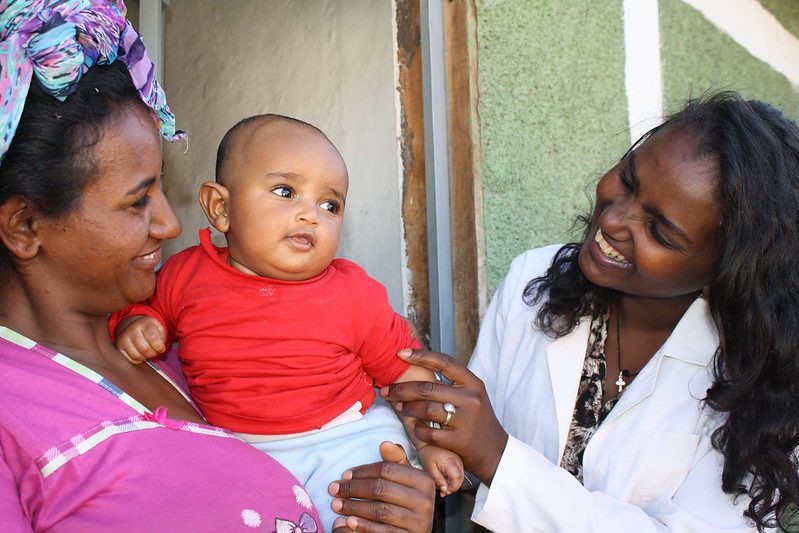
 According to a National Library of Medicine study, health care systems in low-income countries remain as fragile as ever. The COVID-19 pandemic put such these systems under immense pressure. An example of this is the health care system in Ethiopia.
COVID-19 and Health Care Infrastructure
The pandemic highlighted many flaws and shortcomings in the health care infrastructure. Global leaders underestimated the need for health care reform and it was only after the pandemic claimed millions of lives that such leaders recognized the need for reorganization and restructuring to ensure adequate procedures and the anticipation of failures.
A 2022 study reviewed measures taken during the pandemic, offering an alternative means of control based on analysis. Researchers provided a more efficient model for managing deadly diseases and outbreaks, reformulating emergency response measures based on management, protection and containment via control and suppression of transmission, information and support.
The Impact on Ethiopia
Deadly diseases significantly impact global health security. Researchers have found that in countries with limited access to health care services, high poverty rates, and prevalent comorbid diseases, the effects of the pandemic intensified. From early March 2020 to July 2022, Ethiopia reported a total of 491,917 COVID-19 cases and 7,568 deaths, figures that are partly attributable to ongoing poverty-related conditions. Additionally, families experienced significant economic impacts, with about 8.4% of households reporting job losses between March and Oct. of 2020.
Ethiopia’s Response
Following the policymakers’ decision in Ethiopia, the government did not implement a pandemic lockdown like many other countries. Instead, it instated pandemic-preventive measures to reduce the spread of the virus. While somewhat successful, such an approach posed obstacles in implementing community-based services and initiatives to provide additional support to communities. Researchers proposed scaling up community-based resources and approaches as essential support elements.
Like some other low-income countries, Ethiopia could not initiate a country-wide lockdown. Instead, it immediately implemented measures such as thermal screening, contract tracing and isolation, which proved successful. Authorities tailored these measures specifically to the health care system in Ethiopia, weighing the pros and cons. The government demonstrated a strong commitment to addressing the shortage of essential medicines, effectively utilizing resources to produce critical medicine and prioritizing medicinal efforts.
Financing for Health Measures in Ethiopia
Financing is critical to supportive measures enacted to assist countries affected by health crises. It was found that funding for health initiatives and measures in Ethiopia had increased only after the pandemic. Such financial constraints the government of Ethiopia faced during the pandemic led to unprecedented circumstances, such as a shortage of protective equipment.
According to the Institute of Medicine Committee on the United States (U.S.) Commitment to Global Health, low-income country revenues amount to only 18% of their gross domestic product (GDP), which limits their ability to finance health services, proving consequential in the face of severe health crises. Studies have shown that the level of investment needed to deliver extensive care and improve health care systems requires significant and sustained investment by outside agencies and sources. Additional aid from other organizations is therefore essential.
Launch of the Response Project in Ethiopia
According to the World Health Organization (WHO), as of Jan. 2024, the Ethiopian government launched the Ethiopian Pandemic Multi-Sectoral Prevention, Preparedness and Response Project. This extensive project aims to address pandemic-related response measures and preparedness. Such analysis is specific to Ethiopia’s specific socioeconomic landscape. In addition, the project will also examine factors like communication and alerts, enhancing the surveillance of outbreaks in some regions of the country.
Dr. Dlamini Nonhlanhla, WHO’s Ethiopia Representative, discussed the initiatives, noting, “The key components and project activities are aligned with the national plans, including Ethiopia’s Health Sector Transformation Plan, the Ethiopia Public Health Institute’s Strategic Plan, the Ethiopian National Health Emergency Preparedness and Response Plan and the Ethiopian Antimicrobial Resistance (AMR) National Action Plan.” Additionally, Nonhlanhla explained that funding would strengthen Ethiopia’s health care systems and other government structures crucial to public health protection. “This fund will enable us to mobilize resources, strengthen health systems and support critical sectors such as agriculture, environment, antimicrobial resistance and animal health, ensuring a holistic approach to safeguarding public health,” Nonhlanhla added.
Role of Government Leadership and Foreign Aid
Since July 2021, the U.S. has donated 10,095,170 COVID-19 vaccine doses to the citizens of Ethiopia, increasing aid to a severely affected country. In a public health crisis, government leadership, as well as foreign aid, is especially critical in mitigating both the economic, health and social consequences of a deadly viral outbreak, proving essential in assisting countries with poorly structured health care systems.
Looking Ahead
The Ethiopian government, with support from international organizations, has taken significant steps to strengthen the health care system in Ethiopia in response to the COVID-19 pandemic. The launch of the Ethiopian Pandemic Multi-Sectoral Prevention, Preparedness and Response Project marks a critical move toward improving the country’s ability to manage future health crises. With continued investment in health systems and targeted foreign aid, Ethiopia aims to enhance its pandemic preparedness and safeguard public health.
– Dominic Samaniego
Dominic is based in Fullerton, CA, USA and focuses on Global Health for The Borgen Project.
Photo: Flickr

Health Care Access: Telemedicine in the Amazon
However, telemedicine has begun to bridge this gap, offering a lifeline to those who would otherwise be left without critical medical care. Telemedicine allows doctors to connect with patients through video calls and online platforms, offering medical care from a distance. This approach is especially beneficial for people in remote areas, allowing them access to health care, receiving diagnoses and managing treatments.
Health Care Vulnerabilities in the Amazon
The Amazon Rainforest is home to diverse Indigenous populations living in remote areas without access to essential health services. The region faces various health issues, including infectious diseases, malnutrition and chronic conditions. Common diseases like malaria and respiratory infections are widespread and the lack of proper health care worsens these conditions.
The infant mortality rate among male Indigenous infants is 27 per 1,000 live births, significantly higher than the urban male average of 13 per 1,000. Most of the data mirrors this one, with a significant difference between the groups, even getting up to double.
Innovative Telemedicine Projects in the Amazon
The Amazon Hope Project is a nonprofit organization that provides essential health care services to remote communities along the Amazon River using mobile clinics. These floating medical units are equipped with telemedicine technology, allowing health care providers to consult with specialists in larger cities.
The project offers various services that may not be available locally, including maternal care, vaccinations and chronic disease management. In addition to addressing immediate health needs, the project emphasizes preventive care through health education and routine check-ups. The Amazon Hope Project collaborates with local churches in Brazil to help deliver these services and resources.
Partnerships
The success of telemedicine in the Amazon depends greatly on technological advancements. Satellite internet is essential for connecting remote areas that lack traditional telecommunications infrastructure. Vivo, the leading telecommunications provider in Brazil, has partnered with the Brazilian government to extend mobile network coverage and boost internet connectivity in remote regions.
This infrastructure development supports telemedicine platforms, enabling remote health consultations and efficient data sharing between local clinics and urban specialists. The combined efforts of these sectors have effectively addressed the challenges of providing health care in isolated areas, illustrating the success of their joint approach in bridging the health care gap.
Economic and Social Impact
The impact of telemedicine on health care access in the Amazon goes beyond medical outcomes. Economically, it reduces the financial burden on patients who would otherwise incur high costs traveling to urban centers for care. Socially, telemedicine improves health literacy and empowers local health workers with the tools and knowledge needed to manage complex cases.
Conclusion
Telemedicine is transforming health care in the remote Amazon Rainforest by overcoming geographical barriers and delivering essential services to isolated communities. With technological advancements and strong partnerships, these initiatives make a tangible difference, improve health outcomes and support sustainable development. The ongoing success of telemedicine projects highlights its critical role in bridging the health care gap. It offers hope for a future where every individual can access quality care regardless of location. As these solutions grow, they support Amazon communities, leading to better health outcomes and a more promising future.
– Danica Lourdu Nelson
Photo: Flickr
Ethiopian Mental Health: Challenges and Progress
Ethiopian Mental Health Issues
Ethiopia has been looking for ways to improve mental health for years. As recently as 2021, it had included mental health services in the health extension package but had not implemented any changes. The lack of any action was due to many factors. Some include “low political commitment, lack of resources, non-functional referral system, lack of interest from private health care organizations,” stigma within the culture and poor reporting, according to Dove Medical Press.
One of the biggest factors is the stigma and discrimination of mental health issues in Ethiopia. A majority of the people in Ethiopia follow Ethiopian Orthodox Christianity. Some followers of this form of Christianity believe demonic possession is the cause of mental health issues, which could prevent people from speaking up on these issues. This presents a huge hurdle into addressing Ethiopian mental health.
The Ethiopian government is currently using the media for advocacy of mental health issues. Its strategy is to reach the Federal Ministry of Health, general and mental health physicians, mental health service users and providers and the general population.
The battle against the stigma is just half the battle. Even if the stigma issue was removed, Ethiopia does not have enough physicians to sustain an increased volume of patients. In 2022, Ethiopia had 1.08 physicians per 10,000 people.
Solutions
The Federal Ministry of Health in Ethiopia along with the World Health Organization (WHO), European Union and Foundation d’Harcourt have worked together to implement the Mental Health Gap Action Programme (mhGAP). This program aims to help low and middle-income countries scale up their mental health services.
Dr Tedla Wolde-Giorgis, Mental Health Advisor in the Office of the Minister of the Ethiopian Federal Ministry of Health explains that the program’s goal is “to integrate mental health in the existing primary health-care system by leveraging the existing health delivery platforms. The strategy that we developed emphasizes the training of health staff on mental health issues using the mhGAP programme and making sure that they are provided with close supervision and oversight at the different health centres. To this end, the mhGAP training materials and approach was very helpful to us.”
The program has made some huge progress quickly. As of March 2023, a total of 1,230 general health care workers received training from mhGAP.
The Future
The progress in the Ethiopian mental health landscape illustrates the challenges and opportunities that many low- and middle-income countries face. While there are many obstacles like stigma, resource constraints, and limited healthcare infrastructure, the collaboration between the Ethiopian government, international organizations and local communities shows that meaningful change is possible. By continuing to build on these efforts and fostering a more inclusive and understanding society, Ethiopia can pave the way for a healthier future. Furthermore, this is an example for other nations facing similar struggles. The journey is long, but with sustained commitment and international support, the vision of comprehensive mental health care in Ethiopia can become a reality.
– Matthew Mendives
Photo: Unsplash
CARE: Addressing the Crisis in Venezuela
Economic Decline
Venezuela, home to the world’s largest oil reserves, has become highly dependent on its fossil fuel income since the discovery, evolving into what is known as a petrostate. As the nation’s reliance on oil increased, political power concentrated increasingly in the hands of an elite minority, which weakened political institutions and led to widespread corruption. However, starting in 2014, oil production began to decline due to inadequate investment and maintenance. Between 2014 and 2021, Venezuela’s Gross Domestic Product shrank by three-quarters, leading to severe economic distress.
CARE’s Involvement in Crisis Management
Since 1945, CARE, a nonprofit organization, has been actively working to address the crisis in Venezuela at a local level and build lasting institutions that support Venezuelan citizens and refugees. Operating in 109 countries, CARE has implemented more than 1,600 development projects aimed at fighting poverty. As of 2024, its work has reached 167 million people. CARE focuses on creating and funding long-term development projects that aim to reduce poverty, rather than merely alleviating immediate needs.
CARE focuses on six main issues: crisis, food and water, health, education and work, climate and equality. The organization addresses these issues through advocacy, innovation, women’s economic justice, strengthening social systems and enhancing local partnerships. In crisis response, CARE aims to deliver gender-focused and localized humanitarian assistance to 10% of people affected by major crises by 2030, impacting at least 50 million people. In Venezuela, CARE is actively implementing crisis response programs to support citizens and refugees affected by the humanitarian crisis.
Regional Refugee Support and CARE’s Response
The crisis in Venezuela has forced approximately 20% of the country’s population to become refugees, with CARE heavily focusing on providing aid to these individuals in surrounding countries. Most Venezuelan refugees find themselves in Colombia, Ecuador and Peru. However, Ecuador curtailed its influx of refugees in 2019 by requiring entry visas from Venezuelan citizens, whereas Colombia has welcomed nearly 1.7 million Venezuelan refugees. Since 2018, CARE has expanded its operations in Latin America, specifically in Ecuador, Colombia and southern Venezuela, to respond to this mass exodus.
CARE offers cash vouchers for food and accommodation, transportation tickets, phone SIM cards and sanitary kits for women. In Colombia, new arrivals also receive legal counseling and information services through CARE. Nearly one million Venezuelans have fled to Peru, where CARE provides food and cash assistance and refurbishes shelters and health clinics. Additionally, CARE collaborates with local partners and leverages international support to help refugee host countries promote long-term integration. This includes providing education, health services, social protection, legal advice and entrepreneurship opportunities.
CARE’s Community and Gender-Specific Initiatives
In Venezuela, CARE organizes awareness campaigns and activities to combat gender-based violence and is initiating efforts to address child malnutrition in Caracas. Currently, CARE operates in Caracas and Miranda, collaborating with intervention partners to support vulnerable families, female-headed households, families with children under 5 and the elderly. It provides water, sanitation, hygiene, food and nutrition security, shelter, sexual and reproductive health education and cash voucher assistance. In all its programs, CARE aims to engage 30% of the community to foster social cohesion.
CARE allocates 90% of its expenses to fund programs like those addressing the crisis in Venezuela, but it has only raised 54% of the funds needed to assist everyone currently in crisis. Spreading these funds across all the countries it serves means that many projects cannot reach everyone it aims to help. CARE encourages people not only to donate but also to speak out about these issues. It provides resources where people can help, attend awareness and fundraising events, organize local events and stay connected with the CARE community.
Looking Ahead
The ongoing crisis in Venezuela has resulted in the displacement of millions and severe humanitarian challenges. CARE continues to play a vital role in supporting Venezuelan refugees and citizens, providing essential services like food, shelter and legal assistance across Latin America. Despite limited funding, CARE remains committed to addressing the crisis, emphasizing the importance of community engagement and gender-specific initiatives to foster long-term recovery and stability.
– Anna Thibodeau
Photo: Flickr
WFP Assists Caribbean Communities Affected by Hurricane Beryl
The World Food Program’s Response
A hurricane of this magnitude has never struck the Caribbean so early in the year. As Hurricane Beryl began to form, the World Food Program (WFP) put its rapid response teams on standby, anticipating requests for assistance from multiple nations and states. By collaborating with local governments and the Caribbean Disaster Emergency Management Agency (CDEMA), the WFP successfully delivered food and other aid to the affected regions.
The storm directly hit the islands of Saint Vincent and the Grenadines and the WFP reported “total devastation and isolation” due to its impact. In response, the program quickly assembled 5,000 food kits designed to sustain 15,000 people for 10 days while awaiting the arrival of additional shipments. The swift action was crucial in addressing immediate needs and preventing further humanitarian crises after the storm.
The WFP response team encountered blocked roads and power outages in Union Island. However, they took a ferry to deliver government food and are now on the ground providing nonfood assistance to those affected and displaced by the storm. In Jamaica, more than half a million people are without power and many are relocating to shelters as the government and WFP work to provide food and water aid.
The WFP is not only providing food assistance but, through its partnership with CDEMA, has also delivered relief items such as generators, water testing kits, hygiene kits, temporary shelters and trucks and forklifts to aid in the handling and distribution of relief supplies. This comprehensive approach ensures that communities receive essential resources to address immediate and ongoing needs. The collaboration with local agencies enhances the effectiveness of the relief efforts, helping to expedite recovery in the hardest-hit areas.
Final Remark
The WFP will continue to work on the ground in affected areas throughout the Caribbean as they recover from the storm’s impact. It collaborates with local governments and programs to identify ongoing needs for assistance. Since Hurricane Beryl was the first storm of the 2024 hurricane season, the WFP’s response teams in the Caribbean will remain on standby in preparation for potential future storms.
– Nicolas Mezzaucella
Photo: Flickr
A Deep Dive Into the Health Care System in Ethiopia
COVID-19 and Health Care Infrastructure
The pandemic highlighted many flaws and shortcomings in the health care infrastructure. Global leaders underestimated the need for health care reform and it was only after the pandemic claimed millions of lives that such leaders recognized the need for reorganization and restructuring to ensure adequate procedures and the anticipation of failures.
A 2022 study reviewed measures taken during the pandemic, offering an alternative means of control based on analysis. Researchers provided a more efficient model for managing deadly diseases and outbreaks, reformulating emergency response measures based on management, protection and containment via control and suppression of transmission, information and support.
The Impact on Ethiopia
Deadly diseases significantly impact global health security. Researchers have found that in countries with limited access to health care services, high poverty rates, and prevalent comorbid diseases, the effects of the pandemic intensified. From early March 2020 to July 2022, Ethiopia reported a total of 491,917 COVID-19 cases and 7,568 deaths, figures that are partly attributable to ongoing poverty-related conditions. Additionally, families experienced significant economic impacts, with about 8.4% of households reporting job losses between March and Oct. of 2020.
Ethiopia’s Response
Following the policymakers’ decision in Ethiopia, the government did not implement a pandemic lockdown like many other countries. Instead, it instated pandemic-preventive measures to reduce the spread of the virus. While somewhat successful, such an approach posed obstacles in implementing community-based services and initiatives to provide additional support to communities. Researchers proposed scaling up community-based resources and approaches as essential support elements.
Like some other low-income countries, Ethiopia could not initiate a country-wide lockdown. Instead, it immediately implemented measures such as thermal screening, contract tracing and isolation, which proved successful. Authorities tailored these measures specifically to the health care system in Ethiopia, weighing the pros and cons. The government demonstrated a strong commitment to addressing the shortage of essential medicines, effectively utilizing resources to produce critical medicine and prioritizing medicinal efforts.
Financing for Health Measures in Ethiopia
Financing is critical to supportive measures enacted to assist countries affected by health crises. It was found that funding for health initiatives and measures in Ethiopia had increased only after the pandemic. Such financial constraints the government of Ethiopia faced during the pandemic led to unprecedented circumstances, such as a shortage of protective equipment.
According to the Institute of Medicine Committee on the United States (U.S.) Commitment to Global Health, low-income country revenues amount to only 18% of their gross domestic product (GDP), which limits their ability to finance health services, proving consequential in the face of severe health crises. Studies have shown that the level of investment needed to deliver extensive care and improve health care systems requires significant and sustained investment by outside agencies and sources. Additional aid from other organizations is therefore essential.
Launch of the Response Project in Ethiopia
According to the World Health Organization (WHO), as of Jan. 2024, the Ethiopian government launched the Ethiopian Pandemic Multi-Sectoral Prevention, Preparedness and Response Project. This extensive project aims to address pandemic-related response measures and preparedness. Such analysis is specific to Ethiopia’s specific socioeconomic landscape. In addition, the project will also examine factors like communication and alerts, enhancing the surveillance of outbreaks in some regions of the country.
Dr. Dlamini Nonhlanhla, WHO’s Ethiopia Representative, discussed the initiatives, noting, “The key components and project activities are aligned with the national plans, including Ethiopia’s Health Sector Transformation Plan, the Ethiopia Public Health Institute’s Strategic Plan, the Ethiopian National Health Emergency Preparedness and Response Plan and the Ethiopian Antimicrobial Resistance (AMR) National Action Plan.” Additionally, Nonhlanhla explained that funding would strengthen Ethiopia’s health care systems and other government structures crucial to public health protection. “This fund will enable us to mobilize resources, strengthen health systems and support critical sectors such as agriculture, environment, antimicrobial resistance and animal health, ensuring a holistic approach to safeguarding public health,” Nonhlanhla added.
Role of Government Leadership and Foreign Aid
Since July 2021, the U.S. has donated 10,095,170 COVID-19 vaccine doses to the citizens of Ethiopia, increasing aid to a severely affected country. In a public health crisis, government leadership, as well as foreign aid, is especially critical in mitigating both the economic, health and social consequences of a deadly viral outbreak, proving essential in assisting countries with poorly structured health care systems.
Looking Ahead
The Ethiopian government, with support from international organizations, has taken significant steps to strengthen the health care system in Ethiopia in response to the COVID-19 pandemic. The launch of the Ethiopian Pandemic Multi-Sectoral Prevention, Preparedness and Response Project marks a critical move toward improving the country’s ability to manage future health crises. With continued investment in health systems and targeted foreign aid, Ethiopia aims to enhance its pandemic preparedness and safeguard public health.
– Dominic Samaniego
Photo: Flickr
Organizations Fighting Inequality in the Philippines
United Nations Industrial Development Organization
The United Nations Industrial Development Organization (UNIDO), in addition to surveying the Philippines and identifying developmental hurdles for the nation, has also accomplished a great deal of work of its own in the nation. UNIDO’s new Global Quality and Standards Programme (GQSP) which has been in effect since 2022 is an example of its continued efforts in the nation.
Since 2022 alone, UNIDO spent $428,785 to encourage systematic trade development and strengthen quality infrastructure in the Philippines and countries like Costa Rica and Moldova, with a further $2,366,419 budget for the program, which will last until 2027. Aside from UNIDO’s efforts, however, there are many NGOs with operations based within the Philippines itself, with programs of their own that are fighting inequality in the Philippines by providing for the nation’s Indigenous community
Philippine Task Force for Indigenous Peoples
The Philippine Task Force for Indigenous Peoples (PTFIP) is an NGO primarily basing its operations in the Philippines, with support from Germany’s Protestant Development Service. Formed to advocate for the needs of the Philippine Indigenous Peoples, while spreading awareness and educating others on the knowledge and practices of these peoples, the PTFIP uses many methods to accomplish this goal.
The PTFIP’s work towards preserving the history of indigenous peoples has been recognized, with the organization earning the Heritage Education and Interpretation award of the Philippine Heritage Awards. Covering the stories of indigenous peoples is critical for combating inequality, spreading awareness of the struggles and advocating for the needs of the Philippines’ indigenous population allows not only the general population to know how they can pitch in and help but also political figures and company leaders so that they are aware of the goings on in these communities.
FundLife International
FundLife International is another NGO fighting inequality in the Philippines, founded on a simple mission statement – “no child should be denied quality education and equitable opportunities to reach their fullest potential.” Through many different approaches towards tackling this goal, it has shown utmost dedication towards fulfilling its mission statement, taking on the challenge of combating inequality in different sectors, including efforts focused on Education, Infrastructure, and Gender Equality. In addition to these efforts, it also provides relief aid during natural disasters and organizes charity events within The Philippines to raise awareness and funding towards these causes.
Another key way it accomplishes its goal is through its empowerment initiative. In The Philippines, four in 10 of the nation’s youth work in the informal sector. Informal employment often entails unregulated work, and that pays below minimum wage. This type of work can be entrapping for those living in poverty, often lacking opportunities for career progression. Since 2014, Fundlife has directly helped over 80,000 people in the Philippines, providing them with opportunities to escape inequality and empowering them to find long-term careers.
Closing Thoughts
Although many organizations are working to combat inequality in The Philippines domestically, tackling the nation’s inequality is no small task. The efforts of the NGOs mentioned in this article cannot be understated, but progressing towards eradicating inequality in the Philippines is no small task. Though the work of FundLife, UNIDO, and PTFIP has already impacted the lives of thousands across the Philippines, there are still many within the nation that still require support. Though progress will be gradual, the impact of the efforts of these and many more NGOs is invaluable.
– Malik Vega
Photo: Unsplash
Empowered Young Women In Zimbabwe are Changing Their Futures
Empowering Women
Zimbabwe and many other developing nations struggle with gender equality on many fronts. Women’s involvement in politics is comparatively low, at just 35%, with an even lower statistic in local government at 16%. U.N. Women’s study shows that the reasons for the lack of participation in such roles include dangerous working conditions, unfair wages, sexual violence and lack of employment.
These issues need addressing if women are to improve their prospects. This is a mission that YES Trust has taken up, demonstrating how empowered young women in Zimbabwe can allow them to change their futures with the vision of a society of equality.
The YES Trust aims to provide youths in the country with information, giving them the education they need to freely determine their futures. Its objectives are to mobilize multimedia and edutainment strategies to give people an understanding of social protection, health, safe migration and gender-based violence. By recognizing the talents and potentials of young people, the YES Trust helps them to engage in their community and provides them with the faculties necessary to utilize their strengths in a productive way for themselves and their country.
The task is not an easy one; creating equal opportunities for all citizens, especially for women and girls, will take time. However, YES Trust believes it can make meaningful changes by 2026, according to its 2021 Brief Overview. The board of trustees and secretariat administrators govern the organization aiming to maximize its productivity and reach its goal.
Creating a Space for Young People
To reach its goal, YES Trust hosts several activities, including storytelling competitions, sporting tournaments, music competitions and school quizzes, according to the 2021 Brief Overview. These all aim to create a space for young people to enter into a larger dialogue concerning crucial issues, especially surrounding gender equality. By emphasizing the importance of access to information and the education of young people, there comes increased accountability and inclusivity that could help improve the poor statistics of women in leading roles. Empowered young women in Zimbabwe are taking action, actively seeking the transformation they wish to happen.
The Youth Edutainment Services Trust partners with several like-minded organizations that share the same goals. One of these partners is U.N. Women, whose ambitions align with those of the YES Trust, according to the 2021 Brief Overview. Together, they strive to end violence against women and girls while endeavoring to inspire women’s political participation in leadership roles.
Alongside this, the HER Voice Fund also works with YES Trust and shares similar aspirations of empowerment, with a focus on advocacy. By positioning themselves with such homogenous organizations, they further define and strengthen their mission statement, pointing towards a larger-scale movement that seeks the same end as YES Trust.
YES Trust, coupled with the organizations that have also identified the same problems, reflects how empowered young women in Zimbabwe are taking a practical approach rather than suffering as a result of deeply ingrained inequality
– Molly Ralph
Photo: Flickr
Anirban Helping Trafficking Survivors in Bangladesh
Trafficking in Bangladesh
Women and children can be subject to recruitment fraud. Traffickers promise jobs to these vulnerable groups and exploit them in sex trafficking upon arrival at the location. According to the U.S. Department of State, 40% of Bangladeshi children become victims of sex trafficking victims and face exploitation abroad. Men are subject to forced labor. Forms of labor exploitation include discrepancies in wages or work hours, low or unpaid wages and fraudulent contracts. The U.S. Department of State report has shown passport retention, physical abuse and death due to inadequate protections in working environments.
The reason why these groups of people become vulnerable to exploitation stems from debt-based coercion, absence of adequate legal protection, lack of formal contracts and homelessness. Children become subject to hazardous forms of child labour and serve as collateral for their parents’ loans. Traffickers tempt rural people with alleged good employment opportunities and ultimately become victims of exploitation, the U.S. Department of State reports.
Helping Trafficking Survivors in Bangladesh
Anirban (the flame that never dies), is Bangladesh’s first trafficking survivors’ group. Founded in 2011 with the help of Winrock International, an NGO based in the United States, and USAID, Anirban continues to actively advocate for the rights of trafficking survivors in Bangladesh. Survivors manage Anirban groups and take the lead in helping other trafficking survivors in Bangladesh to build self-confidence and identity. Under the USAID Fight Slavery and Trafficking activity (2021-2026), Winrock International has supported them to become a nationally registered, self-sustaining organization that continues to advocate for the needs of these survivors.
Anirban groups work toward changing public perception of these trafficking survivors in Bangladesh, especially the stigmatization of trafficked people as victims. Sessions and meetings take place in schools with civil society organizations, journalists, the local government and survivors. The main agenda for these sessions is to promote human rights, women’s rights and “safe migration days” for the people, according to Winrock International.
The Flame That Never Dies
Saiful Islam’s story continues to inspire many individuals. An active member at Anirban, Saiful uses his experience as a cautionary tale to spread awareness of the hardships of migrants. Due to being unable to find a job and subsequently being unable to support his family and falling victim to poverty, Saiful began looking for jobs abroad. He comes across a job in Singapore with a two-year contract and a monthly salary of $1,600, Winrock International reports.
The recruiters receive a lump sum amount from Saiful to emigrate to Singapore. Saiful experiences severe hardships in Singapore. He does not secure a published job, does not receive his salary and faces threats. It is only after one year abroad he can return to Bangladesh. Saiful’s woes do not end. He no longer has a job, has lost his family property and has no money.
Through the support from the Bangladesh Counter Trafficking-in-Persons project, funded by USAID and implemented by Winrock International, he was able to get back on his feet. As a member of Anirban, he conducts outreach efforts and spreads awareness about the risks of child marriage and its illegality in Bangladesh. In cases where families are in entanglements with traffickers or suspected traffickers, Saiful guides these communities to develop practical alternatives and solutions. He emphasizes the importance of education and helps trafficking survivors in Bangladesh with social and support programs. Saiful is a beacon of hope for the trafficking survivors in Bangladesh. He uses his funds to support migrants in Bangladesh. With Saiful’s funds, he has been able to help 13 vulnerable families and uplift them from having the same plight as himself, according to Winrock International.
Looking Forward
The work of Anirban continues to be exemplary. The focus on participatory action research ensures addressing the needs of victims of child marriage and human trafficking. The continuous promotion and conversation on safe migration and survivor reintegration within these communities contribute to an effective bottom-up systemic change. Survivor networks have been effective in leading changes in local conditions such as poverty, which drive vulnerable groups to the risk of exploitation.
– Caren Thomas
Photo: Unsplash
Inequality and Unemployment in South Africa
South Africa has a long history of structural inequality. In the early 20th century, Apartheid legally systematized racial inequality with laws that limited Black people’s productive ownership of land and specified which schools, houses and jobs were available to people based on their race. Though South Africa ended Apartheid in 1994 and eradicated most discriminatory policies of the era, those policies are still impacting society today. This article will focus on how structural inequality exacerbates poverty and unemployment in South Africa.
Unemployment in South Africa
South Africa has an unemployment rate of 32.9%. There could be two main reasons for this: a lack of jobs to accommodate the nation’s growing labor force and structural inequality of opportunity.
Economic growth and employment opportunities are closely related — typically, greater economic growth results in lower unemployment. South Africa’s slow economic growth is thus a major contributor to high levels of unemployment. As of 2023, its economy grew by only 0.6%, and despite the addition of 790,000 new jobs that same year, the rate of job creation was not sufficient to account for the growing labor force, causing the unemployment rate to rise.
Structural inequality of opportunity also reinforces unemployment — this is particularly noticeable when examining the racial demographics of South Africa’s unemployed. In the first quarter of 2024, people of color had noticeably higher rates of unemployment — for example, Black South Africans had an unemployment rate of 36.9%, compared with 9.2% for their white counterparts.
Racial Inequality and Unemployment
In 2022, the World Bank labeled South Africa one of the most unequal countries in the world, based on its levels of economic and educational inequality of opportunity, among other factors.
Economic inequality is a major problem in South Africa. The nation’s income distribution consists of a large number of low-income earners, a small middle class, and only a few high-income earners, according to the World Bank. Al Jazeera reports that the wealthiest 10% of South Africans accounted for 80% of all wealth in 2022.
The World Bank then cited race as a major driver of inequality in South Africa, given its influence on economic and educational opportunity. According to Amnesty International in 2020, Black households in South Africa earned roughly 20% less than white households, and nearly half of the Black population lived below the poverty line, compared with less than 1% of the white population.
Education
Inequality is also pervasive in schools. Students in the top 200 schools achieve more mathematics distinctions than children in the next 6,600 schools combined. The nation’s child literacy rate is equally worrying: more than three-quarters of children aged nine cannot read for meaning.
These numbers are closely tied to racial inequality. An article in Oxford Academic notes that, while South Africa legally abolished segregation in 1994, most schools are still segregated on racial and socioeconomic lines. According to Amnesty International, “schools serving white communities” tend to be more properly resourced than those designed for (and predominantly attended by) students of color.
De facto segregation in South African schools prevents many children of color from accessing quality education. This, in many cases, serves as an obstacle for their attending university and acquiring skills to help them secure jobs. It also exacerbates the unemployment rate. The majority of South Africa’s population are people of color, many of whom come from disadvantaged backgrounds due to Apartheid-era policies and, as a result, do not have access to key economic and educational opportunities. This makes the demand for certain jobs overwhelming.
Fighting Unemployment in South Africa
Several organizations are working to address South Africa’s high unemployment rate, focusing specifically on communities with disadvantaged socioeconomic backgrounds.
Ikamva Labantu is a nonprofit organization that supports community-led projects to harness the nation’s potential and improve the lives of its citizens. It works in townships across South Africa and holds the firm belief that communities can and should lead themselves — the organization only provides the support and resources they need to accomplish their goals. Ikamva Labantu consists of roughly 100 field workers who work at the individual level, focusing specifically on early child development and the well-being of the elderly. The organization partners with other NGOs, community-based organizations, government departments and donors to further their goals.
Siyabonga Africa also aims to reduce South Africa’s poverty rate, focusing specifically on employing disadvantaged people in need. It offers programs and courses to teach its clients the skills and knowledge they can use to become self-supported. Over the past year, Siyabonga Africa has provided 600 households with food vouchers, offered 700 training courses, established 100 home food-gardens and created 242 new jobs. It supports entrepreneurship at the grassroots level to alleviate poverty and unemployment rates in South Africa, creating more jobs for people in need.
Looking Ahead
Inequality and unemployment in South Africa are multifaceted problems rooted in a complex history. But with organizations like Ikamva Labantu and Siyabonga Africa working at the grassroots level to help disadvantaged South Africans become self-supported, the nation can reduce its high unemployment rate and close its gap of income inequality.
– Lana Swindle
Photo: Unsplash
A Look at Yellow Fever in Gabon
Yellow Fever Transmission and Risks in Gabon
Yellow Fever is a viral disease transmitted by mosquitoes and can spread in three primary ways. The intermediate cycle, most commonly observed in Africa, involves semi-domestic mosquitoes that contract and spread the disease. Although a vaccine is available, Yellow Fever is a fast-spreading illness that poses a significant danger and has the potential to spread internationally, making it a global threat. Effective management is crucial whenever outbreaks occur.
Health Infrastructure and Yellow Fever Preparedness
Currently, Gabon does not have any active Yellow Fever outbreaks, but the country remains at high risk for potential outbreaks. Gabon’s health system receives minimal government funding, amounting to only 3% of the country’s GDP. The World Health Organization (WHO) reports that vaccination rates for Yellow Fever in Gabon are suboptimal, with less than 85% coverage nationwide. The risk of Yellow Fever has increased since the COVID-19 epidemic, which disrupted immunization services. Although the disruption was brief, it has increased the number of people susceptible to otherwise preventable diseases.
Yellow Fever Epidemics Strategy in Gabon
The WHO has designated Gabon as a high-priority target within its Eliminate Yellow Fever Epidemics (EYE) strategy. WHO and its partner organizations are focusing primarily on maximizing vaccination rollout as part of this strategy. Alongside vaccinations, vector control measures have been implemented in urban centers across Gabon to eliminate potential wildlife carriers of the disease. WHO is also committed to educating travelers about the risks of Yellow Fever. Entry into Gabon requires a Yellow Fever vaccination and travelers are informed about the symptoms and signs to ensure prompt treatment if infected. This proactive approach helps prevent the international spread of the disease, which is one of the most critical aspects of managing Yellow Fever. The EYE strategy has proven effective not only in reducing cases in Gabon but also across Africa.
Looking Ahead
Gabon faces significant challenges in managing the risk of Yellow Fever due to unequal wealth distribution and a health system with limited funding. Although the country has no current outbreaks, it remains highly vulnerable. WHO’s Eliminate Yellow Fever Epidemics strategy focuses on increasing vaccination coverage and implementing vector control measures to mitigate this risk. These ongoing efforts aim to safeguard Gabon’s population and prevent the potential spread of Yellow Fever beyond its borders.
– Tyra Brantly
Photo: Flickr