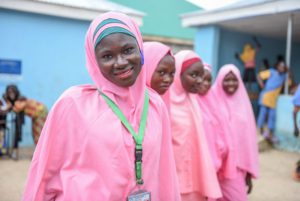
 According to the United Nations’ (U.N.) latest global gender gap index, Nigeria ranks 130 out of 162 countries in the gender inequality index. Many women, particularly those in rural areas, are being denied access to education and employment, unlike their male counterparts. Additionally, youth unemployment remains high in Nigeria, with more than 50% of young people either unemployed or underemployed, contributing significantly to poverty. Furthermore, PWDs face systemic barriers to education, employment and health care, further deepening impoverishment across communities.
Preston Development Foundation
Preston Development Foundation (PDF-Africa) is a nonprofit organization committed to improving the lives and well-being of individuals, especially women, young adults and PWDs, through sustainable and strategic initiatives. With a mission rooted in sustainable and impactful societal change, the organization focuses on four strategic pillars: Education, Health, Gender Equality and Financial Inclusion. These issues require a multi-faceted strategic methodology. Thus, PDF-Africa adopts a holistic, community-centered approach to tackling challenges in education, health, gender equality and financial inclusion. Its methodology is anchored in collaboration, sustainability and empowerment, focusing on community-driven solutions that encourage individuals and stakeholders to take an active role in community development.
The significance of PDF-Africa works lies in the widespread impact of these changes. Limited access to education, inadequate health, gender discrimination and financial exclusion continue to hinder the progress of vulnerable groups across Nigeria and Africa as a whole. By developing tailored interventions in these areas, PDF-Africa seeks to bridge these gaps, create equitable opportunities and improve overall quality of life. Through a holistic approach, the organization empowers individuals through capacity building and skill acquisition. PDF-Africa aims to help them break free from cycles of poverty and marginalization, fostering long-term development and resilience.
A Combination of Approaches
PDF-Africa implements targeted programs such as training, health education programs and digital literacy programs to address gaps and increase employment opportunities and career choice pathways for adolescents. In addition, the organization conducts public awareness campaigns and outreaches to raise awareness and increase knowledge gain, ensuring that individuals and the community are well-informed to act and make informed decisions.
By utilizing a combination of approaches, PDF-Africa not only addresses the issues in society but also empowers individuals and communities to thrive, act and make informed decisions for themselves. This approach enables PDF-Africa to drive sustainable change within the communities it serves.
Improving Lives
Through targeted interventions in health, education and empowerment, PDF-Africa has made significant strides in improving the lives and well-being of women. These initiatives include enhancing functional literacy, providing young adolescent girls with menstrual hygiene products and awareness and offering training to boost digital literacy in today’s evolving world. As a result, PDF-Africa is expanding opportunities and increasing employability rates among its beneficiaries.
In recent years, PDF-Africa has made strides in expanding access to STEM education for women and girls of color. It has reached more than 180 participants through initiatives like the Yan Matan Arewa Hackathon Initiative and Search Engine Training. Through partnerships with individuals, public schools and tech companies, PDF-Africa has provided participants with resources, materials, computers and financial support to enhance their learning experience and open pathways in STEM fields.
Additionally, PDF-Africa has made a significant impact on the lives and health of girls and women in vulnerable communities within the Federal Capital Territory (FCT). Between 2018 and 2024, PDF-Africa reached more than 4,000 young women and girls across 10 secondary schools and Internally Displaced Persons (IDP) camps in Abuja, providing essential support and resources. In 2023, the nonprofit organization extended its efforts beyond distributing menstrual hygiene products to include educational campaigns in schools lacking menstrual health knowledge.
Conclusion
PDF-Africa’s comprehensive, community-centered approach is making strides in reducing gender inequality, improving youth employment prospects and fostering inclusion for marginalized groups in Nigeria. Through targeted interventions in education, health, gender equality and financial inclusion, PDF-Africa empowers individuals and communities to break cycles of poverty and marginalization. By equipping women, young adults and PWDs with the skills and resources they need to thrive, the initiative is not only enhancing lives but also driving long-term, sustainable development across Nigeria.
– Staff Reports
Photo: Flickr

The Top 5 Charities Operating in the Dominican Republic
With approximately one in four living under the poverty line and 40% being at risk of falling into poverty, the Dominican Republic suffers from a plethora of social issues. In particular, women and children are at most risk. For women, there are sharp increases in maternal mortality, with 107 women dying for every 100,000 births. Whereas for children, seven out of 10 have been pregnant at least once. The Dominican Republic is also prone to natural disasters which put infrastructure, food and water at risk. However, in recent years, five key charities have been operating in the Dominican Republic. They primarily focus on women and children but also improve healthcare, education and accessibility to food and water. Here are the five charities operating in the Dominican Republic.
Project Hope
Since 1996, Project Hope has worked in the Dominican Republic to respond to those most vulnerable: women and children, according to its website. It continues to improve care within maternity hospitals, distribute crucial medicines and supplies and partner with international universities to establish medical programs for staff training. Within its work, the organization has provided 2,300 children with health services and workshops covering pregnancy prevention and HIV/AIDs.
For the last 20 years, Project Hope has founded three maternal and child health clinics providing care for 150,000 patients each year. October 2019 report found that the charity had contributed to a 31% decrease in maternal mortality and a 25% drop in neonatal mortality.
World Vision
World Vision is an international charity whose work in the Dominican Republic has responded to food accessibility problems, educational issues and natural disasters. In response to Hurricane Fiona in 2022, the charity provided urgent support. Distributing more than 3,200 food and hygiene kits to survivors helped bring the country closer to stability, especially when inflation increased food prices, putting more families at risk of poverty. Donations to World Vision are concentrated on specific project areas, and once established, can work in the chosen community for 15-20 years.
Caritas Internationalis
Established in 1961, Caritas Internationalis has worked in the country to provide support for health care, housing, water, hygiene and cases of emergency. The international organization consists of 162 Catholic relief organizations working in 200 countries. In the Dominican Republic, the organization works with local governments to ensure that they follow policy and regulations. After Hurricane Noel in 2007, the charity provided humanitarian aid through helping those affected access clean water, and also participated in the rebuilding of houses and schools.
The Mariposa DR Foundation
The Mariposa DR Foundation runs the “Unleash the Leader in a Girl” program aiming to empower girls most at risk of poverty and pregnancy. The foundation seeks to end generational poverty by educating women so that they can reach adulthood with a substantial education and avoid child pregnancy. In 2023, the Foundation raised $1,367,152 to support the program. In the same year, the program also opened a Culinary School, helping to improve nutrition for the girls and their families.
The organization puts an emphasis on attending summer programs. As the summertime can be a risk for young girls due to more time at home, there is an increased threat of early marriage or pregnancy. The time spent away from home, helps girls transition from childhood to adulthood safely.
Save the Children
Save the Children operates in 120 countries to guarantee children access to sufficient healthcare and education. In the Dominican Republic, the charity has helped to protect 1,665 children from harm, 3,765 children during the crisis, and provided 27,318 children with a healthy start. In several cases, the charity has provided portable water supplies, assisted with crop planting and animal breeding, and created community based vegetable gardens so that families can grow their own in times of short supplies.
These five key charities operating in the Dominican Republic have crucially helped with reducing poverty, the prevention of maternal mortality and child pregnancy. While there are still ongoing issues with many families still at risk of falling below the poverty line, these organizations continue to relieve pressures on those most vulnerable.
– Ellie Western
Photo: Flickr
Revitalising Private Sector Growth in Sierra Leone
Challenges for Private Sector Growth in Sierra Leone
Entrepreneurs and private businesses in Sierra Leone face multiple challenges, from limited access to capital and restricted market access to structural infrastructure issues. Political instability further deters foreign investment and creates an uncertain environment for growth. In this context, U.K. aid is supporting initiatives like Invest Salone and BII’s Africa Resilience Investment Accelerator (ARIA) to help the private sector overcome these barriers and foster sustainable growth in key sectors, including agriculture, manufacturing and services—areas pivotal for job creation and poverty reduction.
In partnership with local organizations, the U.K. has implemented the Invest Salone project, which offers grants, technical support and market access tailored to the Sierra Leonean business environment. By targeting sectors with substantial growth potential, Invest Salone aims to help local businesses build resilience, expand into larger markets and support the broader economic recovery through increased employment and improved infrastructure, according to its website.
British International Investment
British International Investment (BII), the U.K.’s development finance institution, has played a crucial role in strengthening private sector growth in Sierra Leone. Through ARIA, BII provides risk-sharing facilities and access to capital, allowing local financial institutions like Ecobank to lend more freely to SMEs in high-impact sectors. BII’s strategic investments focus on boosting local employment, generating economic opportunities and fostering a more resilient economy, according to Ecobank. By focusing on industries that drive sustainability and self-sufficiency, BII helps Sierra Leonean businesses access larger markets and improve production capacity.
Catalysing Growth in Key Sectors
Through U.K. aid initiatives, several businesses in Sierra Leone’s high-impact sectors have successfully expanded their operations and contributed to economic resilience.
The Water and Sanitation Promotion Company (WaSAP) participated in Invest Salone’s investment-readiness bootcamp, which enabled it to grow annual revenue from $129,000 to more than $500,000. By focusing on financial management and diversifying its customer base, WaSAP demonstrates how targeted pre-investment support can prepare businesses to scale sustainably and attract additional investment.
Through the ARIA, BII’s $25 million risk-sharing facility with Ecobank Sierra Leone allows for an estimated $50 million in lending capacity to high-impact sectors, including agriculture and manufacturing, according to Ecobank. This facility supports businesses facing collateral constraints by enabling larger loans and extended repayment terms. Such financial flexibility allows these enterprises to expand operations, hire more workers, and contribute to local economic stability.
These examples illustrate how U.K. aid, through initiatives like Invest Salone and BII partnerships, is driving sustainable growth by empowering Sierra Leone’s private sector to overcome structural barriers and access larger markets.
Economic Recovery and Poverty Reduction
These U.K. aid initiatives play a key role in bolstering Sierra Leone’s private sector growth and reducing poverty. The Invest Salone program focuses on empowering high-impact sectors such as agriculture and manufacturing by providing financial support and market access to small and medium-sized enterprises (SMEs). Combined with ARIA’s $25 million risk-sharing facility, these programs enable local banks to extend crucial financing to SMEs, allowing businesses to grow, create jobs and increase income stability within communities. By helping local businesses overcome market barriers, these initiatives not only stimulate economic resilience but also support poverty reduction efforts across Sierra Leone.
Through the FCDO and BII, U.K. aid is revitalizing private sector growth in fragile economies like Sierra Leone. By providing risk-sharing facilities, grants, and technical support, these initiatives help develop high-impact sectors such as agriculture, manufacturing, and water services. This targeted aid not only fosters job creation and income growth but also builds a resilient, self-reliant economy capable of withstanding future challenges.
– Safa Musa
Photo: Unsplash
WHO Approves Mpox Diagnostic Test
Lack of testing is a large factor in mpox transmission. For example, 63% of suspected cases in the Democratic Republic of Congo this year were not tested. Testing is vital in virus detection and prevention. Indeed, without a diagnosis, patients do not receive treatment and risk spreading mpox to those around them. Prevention tactics have to be implemented if mpox is to be prevented.
WHO’s Response
In response to the mpox outbreak, the World Health Organization (WHO) approved the first in vitro diagnostic test for mpox in August 2024. Developed by Abbott Molecular, the Alinity m MPXV assay utilizes DNA analysis and polymerase chain reaction (PCR) technology. The test detects the monkeypox virus from human skin lesion specimens in real-time. This groundbreaking test is set to revolutionize the fight against mpox. Indeed, this advance in testing will enhance diagnostic capabilities and facilitate timely responses to outbreaks.
The diagnostic test is currently under Emergency Use Listing (EUL), a procedure that evaluates the safety and efficacy of treatments, including in vitro diagnostics, to assist WHO Member States in making informed decisions about acquiring emergency health equipment. Being designated as an EUL will enhance the global availability of the mpox test, ensuring that more countries can access this vital diagnostic tool in their fight against the outbreak.
Diagnosis plays a crucial role in virus prevention. This fast-working, real-time test will significantly enhance the diagnostic capabilities for monkeypox virus treatment. The Nucleic Acid Amplification Testing (NAAT) method enables the identification of individuals who require intervention. This test allows mpox cases to be accurately identified, monitored and controlled, thereby improving overall public health responses to the outbreak.
A Significant Milestone in the Fight Against Mpox
Dr. Yukiko, WHO Assistant Director-General for Access to Medicines and Health Products, stated: “This first mpox diagnostic test listed under the EUL procedure represents a significant milestone in expanding testing availability in affected countries.” It indicates a significant advancement in the mpox fight, providing high-quality medical equipment for those that need it. This progression in preventing the monkeypox virus will protect those with mpox and those at risk of contracting it.
Final Remark
This step marks just the beginning of the effort to combat mpox. However, there are ongoing discussions with other in vitro diagnostic manufacturers that aim to expand the range of diagnostic options. By increasing availability, these efforts will ensure that treatment and prevention are accessible to those in need, ultimately enhancing the global response to the outbreak.
– Megan Hall
Photo: Flickr
Empowering Women in Nigeria: The Grace Agbonlahor Foundation
Furthermore, the gender gap in education remains a pressing issue, with many young girls unable to complete secondary education due to cultural norms, early marriage and financial hardship. This lack of education directly affects their ability to secure formal employment, further entrenching cycles of poverty. The situation is particularly dire in rural areas, where access to education and health care is limited, making it difficult for women and girls to escape poverty.
GAF’s Innovative Solutions and Interventions
The Grace Agbonlahor Foundation (GAF) is a nongovernmental organization (NGO) dedicated to equipping women and girls in Nigeria with the skills and knowledge they need to thrive. GAF addresses the challenges Nigerian women face through two core programs: the MarketCare program and the Girls in Career Boost (GCB) program.
The MarketCare Program
Inspired by the entrepreneurial spirit of Madam Grace Agbonlahor, this program focuses on empowering market women. It offers:
The GCB Program
The GCB program introduces young girls to Science, Technology, Engineering and Mathematics (STEM) fields, providing:
Impacts and Success Stories
Although GAF is still in its early stages, the MarketCare Program has already enrolled 33 women in its pilot phase. Through partnerships with WellaHealth and First Choice Investment, the program provides women with health education, access to affordable health insurance, financial literacy training and cash grants to boost their businesses. This holistic approach empowers women to achieve financial independence and better health outcomes for themselves and their families.
The GCB program recently launched its foundation phase. At least 10 young girls aged 10-14 will be enrolled in the first cycle of STEM training and mentorship. With support from MidTown Tech Hub and GCB ambassadors (volunteer STEM mentors), these girls will receive tailored mentorship, hands-on training and educational support to inspire them to pursue careers in STEM fields.
Conclusion
The Grace Agbonlahor Foundation is making a tangible difference in the lives of women and girls in Nigeria. Through financial literacy, health education and career mentorship programs, GAF is helping to break the cycle of poverty and promote gender equality. By equipping women and girls with the knowledge and resources they need to succeed, the organization is fostering sustainable development in some of Nigeria’s most underserved communities.
– Staff Report
Photo: Flickr
PDF-Africa Addresses Gender Inequality and Youth Unemployment
Preston Development Foundation
Preston Development Foundation (PDF-Africa) is a nonprofit organization committed to improving the lives and well-being of individuals, especially women, young adults and PWDs, through sustainable and strategic initiatives. With a mission rooted in sustainable and impactful societal change, the organization focuses on four strategic pillars: Education, Health, Gender Equality and Financial Inclusion. These issues require a multi-faceted strategic methodology. Thus, PDF-Africa adopts a holistic, community-centered approach to tackling challenges in education, health, gender equality and financial inclusion. Its methodology is anchored in collaboration, sustainability and empowerment, focusing on community-driven solutions that encourage individuals and stakeholders to take an active role in community development.
The significance of PDF-Africa works lies in the widespread impact of these changes. Limited access to education, inadequate health, gender discrimination and financial exclusion continue to hinder the progress of vulnerable groups across Nigeria and Africa as a whole. By developing tailored interventions in these areas, PDF-Africa seeks to bridge these gaps, create equitable opportunities and improve overall quality of life. Through a holistic approach, the organization empowers individuals through capacity building and skill acquisition. PDF-Africa aims to help them break free from cycles of poverty and marginalization, fostering long-term development and resilience.
A Combination of Approaches
PDF-Africa implements targeted programs such as training, health education programs and digital literacy programs to address gaps and increase employment opportunities and career choice pathways for adolescents. In addition, the organization conducts public awareness campaigns and outreaches to raise awareness and increase knowledge gain, ensuring that individuals and the community are well-informed to act and make informed decisions.
By utilizing a combination of approaches, PDF-Africa not only addresses the issues in society but also empowers individuals and communities to thrive, act and make informed decisions for themselves. This approach enables PDF-Africa to drive sustainable change within the communities it serves.
Improving Lives
Through targeted interventions in health, education and empowerment, PDF-Africa has made significant strides in improving the lives and well-being of women. These initiatives include enhancing functional literacy, providing young adolescent girls with menstrual hygiene products and awareness and offering training to boost digital literacy in today’s evolving world. As a result, PDF-Africa is expanding opportunities and increasing employability rates among its beneficiaries.
In recent years, PDF-Africa has made strides in expanding access to STEM education for women and girls of color. It has reached more than 180 participants through initiatives like the Yan Matan Arewa Hackathon Initiative and Search Engine Training. Through partnerships with individuals, public schools and tech companies, PDF-Africa has provided participants with resources, materials, computers and financial support to enhance their learning experience and open pathways in STEM fields.
Additionally, PDF-Africa has made a significant impact on the lives and health of girls and women in vulnerable communities within the Federal Capital Territory (FCT). Between 2018 and 2024, PDF-Africa reached more than 4,000 young women and girls across 10 secondary schools and Internally Displaced Persons (IDP) camps in Abuja, providing essential support and resources. In 2023, the nonprofit organization extended its efforts beyond distributing menstrual hygiene products to include educational campaigns in schools lacking menstrual health knowledge.
Conclusion
PDF-Africa’s comprehensive, community-centered approach is making strides in reducing gender inequality, improving youth employment prospects and fostering inclusion for marginalized groups in Nigeria. Through targeted interventions in education, health, gender equality and financial inclusion, PDF-Africa empowers individuals and communities to break cycles of poverty and marginalization. By equipping women, young adults and PWDs with the skills and resources they need to thrive, the initiative is not only enhancing lives but also driving long-term, sustainable development across Nigeria.
– Staff Reports
Photo: Flickr
Variant Poliovirus Outbreaks and Vaccination rates in Yemen
Global Health in Yemen
According to USAID, 19.7 million people in Yemen do not have access to basic health services. In Yemen, only 52% of health facilities are fully functional and most of these lack equipment, essential medicines and specialist physicians—a slight improvement from 2014, when only 46% of health facilities were partially functional. The mortality rate for children under 5 stands at 41.3 deaths per 1,000 births. The deteriorating state of the health care system has facilitated the re-emergence of preventable diseases like polio. UNICEF and WHO are actively collaborating with the country’s health systems to improve these conditions. Furthermore, more than 17 million people in Yemen struggle with food insecurity and 4.5 million are internally displaced due to ongoing violence, economic crises and recurring outbreaks of disease exacerbated by climate events, contributing to the near collapse of the country’s health care infrastructure.
UNICEF Vaccinations
UNICEF announced a second round of oral polio vaccines for 1.3 million children under the age of 5 from July 15 to July 17, 2024, following a successful first round in Feb. that reached 1.2 million children. In collaboration with WHO and Yemen’s Ministry of Public Health and Population, the organization also distributed vitamin A supplements to boost children’s natural immunity against diseases. The immunization campaign targets 12 southern governorates and 120 districts, with approximately 9,000 health workers trained for house-to-house vaccination. This effort is a response to a polio outbreak that left 257 children paralyzed.
Health Initiatives
Peter Hawkins, the UNICEF representative to Yemen, stated that eradication of diseases is achievable if every child receives vaccinations against poliovirus and other preventable diseases. In collaboration with various partners and organizations, UNICEF is pushing forward the Big Catch-up initiative, aiming to restore and accelerate routine vaccines and immunization services missed during COVID-19. Additionally, health partners and authorities have initiated the Health Emergency Expansion Resource (HEER) initiative to extend integrated primary health care services, including vaccinations, to address polio and measles outbreaks.
Looking Ahead
Collaborative efforts by global health organizations are essential to restoring Yemen’s health care system and halting the spread of preventable diseases. Recent campaigns and health initiatives demonstrate a concerted push to increase vaccination rates in Yemen and enhance primary care access for millions. As these initiatives progress, they offer renewed hope for improving the resilience of Yemen’s health care infrastructure and protecting vulnerable populations, especially young children, from further outbreaks.
– Indira Smith
Photo: Flickr
Everything to Know About Elderly Poverty in Antigua and Barbuda
Antigua and Barbuda is a Caribbean country consisting of the two main islands and several smaller islands with 97% of the country’s population located in Antigua. The British colonized the country in the 17th century and transported a large population of enslaved Africans to work on sugar and tobacco plantations. After the emancipation of slavery in 1834, the economy struggled due to the heavy reliance on sugar production. In 1981, the country gained full independence from the U.K. and opted to remain in the Commonwealth. The country’s legacy of colonialism still affects the current economic state.
Economic Effect on Elders
People aged 60 years and older have a higher likelihood of suffering from extreme poverty at 4.2% than the rest of the population at 3.7%. Poverty is more prevalent in rural areas due to limited access to services, transportation and economic opportunities. Access to affordable health care is also a major issue caused by elderly poverty in Antigua and Barbuda. The costs of medical care, including medications and treatments for chronic conditions strain the limited resources of those who experience elderly poverty in Antigua and Barbuda.
Many charitable and nonprofit organizations provide health care services in Antigua and Barbuda. St. John’s Hospice is a charity that provides hospice care to the terminally ill. The organization provides both in-home and inpatient care through the proceeds from a shop run by the charity located in Antigua, as well as fundraising and donations.
The Environment and Tourism
Caribbean countries are more vulnerable to extreme weather events and natural disasters. Environmental devastation affects the ability to conduct tourism and the economy since the tourism industry makes up more than 50% of the country’s GDP and is responsible for more than 46% of the national employment.
Elderly poverty in Antigua and Barbuda is disproportionately affected by hits to the labor market. According to a 2018 Labour Force Survey Report, the employment-to-population ratio is lowest in seniors 65 and older. Both environmental issues and the tourism industry affect housing. Environmental disasters destroy buildings. The tourism industry pushes locals away from coastal land and into areas with fewer resources. Jamaica Kincaid describes tourism as a neo-colonial structure that exploits the land and local population and is responsible for the economy.
USAID/OFDA provided disaster relief services for Antigua and Barbuda, including getting resources to more than 400 hurricane-affected households in 2018. Since 2010, it has provided $95 million to support disaster risk reduction programs in Latin America and the Caribbean.
Conclusion
Despite challenges from Antigua and Barbuda’s colonial past and a heavy reliance on tourism, the country is home to a vibrant community working towards a brighter future. With continued efforts from local and international groups, there is hope for sustainable development and a better quality of life for all citizens, especially those affected by elderly poverty in Antigua and Barbuda.
– Nina Bujewski
Photo: Pexels
The Impact of Custos Care Foundation
The Mama Care Initiative
According to a publication by PubMed, data from the obstetric unit of the University of Nigeria Teaching Hospital (UNTH) in Enugu, Nigeria, shows that between January 2003 and December 2005, there were 49 maternal deaths, 2,131 deliveries and 2,044 live births. This results in a maternal mortality ratio of 2,397.3 maternal deaths per 100,000 live births during the study period. In response, CCF recently launched the “Mama Care Initiative,” a significant milestone in providing one-year health insurance premiums for 1,701 pregnant women across Enugu State’s 17 Local Government Areas (LGAs), with approximately 100 per LGA in the pilot phase.
A notable case involved a baby from the Oji River LGA who was born prematurely at a primary health care facility. The family was unable to secure the funds necessary to transfer the infant to a secondary facility equipped with an incubator. However, with the assistance of CCF, the baby was successfully transferred to the UNTH, where she received the necessary care and support needed for her health and survival.
Child Abuse Awareness and Sensitization
CCF is currently organizing sensitization programs in primary schools across the 17 LGAs in Enugu State to raise awareness about child abuse. This initiative is anchored in two key program areas: social protection and basic education for all. The objective is to educate school pupils in Enugu State about child abuse, including its identification and prevention. So far, CCF has visited 13 schools, reaching approximately 6,000 pupils directly and more than 5,000 indirectly through media campaigns, including social media outreach.
Skills Acquisition Training for Women and Youth
The issue of poverty, exacerbated by unemployment and a shortage of skills, has significantly impacted the living standards of the population. While the current government in the state has made commendable efforts to build workforce capacity, the organization is also dedicated to bridging the capacity gap.
Through the CCF’s “Craft UP Initiative,” the foundation has trained 68 women and youth in the state in vocational skills related to leather work, including shoemaking, bag making and belt production. To further support their endeavors, it established a skills acquisition center focused on tailoring and leatherworking.
This center provides these individuals with the opportunity to utilize our state-of-the-art industrial machines at no cost, enabling them to produce high-quality goods in larger quantities.
Youth Aspire Boot Camp 2024
In 2024, CCF hosted a four-day youth boot camp for 100 young people from Enugu State, consisting of both male and female participants, alongside more than 30 volunteers and resource persons. Participants aged 15 to 20 were selected from various locations across the state, with a commitment to inclusivity that ensured equitable representation across gender, social status and abilities.
The youths acquired a diverse range of skills, including information and communication technology (ICT) competencies such as coding and the creation of 3D and 2D animations. They also developed vocational skills in areas like weaving, tailoring, bead-making, social media marketing and content creation.
Final Remark
By engaging with local partners and communities, Custos Care Foundation not only provides essential services but also cultivates a culture of empowerment and resilience. As it continues to bridge gaps in health, education and vocational training, CCF stands as a beacon of hope for underprivileged groups in Enugu State, driving meaningful progress and inspiring a brighter future.
– Staff Reports
Photo: Flickr
The Wellcome Trust Tackles Neglected Tropical Diseases in Nigeria
Addressing Lassa Fever
Lassa Fever, endemic to multiple African countries, hit Nigeria hard in 2018 with the country’s largest outbreak. More than 20% of cases were fatal. The disease infects blood vessels, attacking the organs. Only about 20% of cases show recognizable symptoms, complicating diagnosis and containment efforts. Currently, no vaccines exist for this potentially fatal disease, making research into diagnosis and treatment a critical priority.
The Wellcome Trust, a major supporter of infectious disease research, funds the Centre for Infectious Disease and Research Policy (CIDRAP), which has developed a plan to address Lassa Fever in Nigeria. This Research and Development (R&D) plan aims to advance vaccine research for various strains of the disease, identify gaps in current research and prioritize filling these gaps.
Working closely with the United Kingdom (U.K.) Department for International Development, these organizations have funded about £500,000 to the World Health Organization (WHO) and the African Coalition for Epidemic Research, Response and Training (ALERRT) to support Nigeria. This funding boosts projects that enhance research, expand access to laboratory work and benefit local clinics and health centers.
Addressing MPOX
Mpox (formerly known as monkeypox) is endemic in most African countries. A significant increase in cases occurred in Nigeria in 2017, prompting the WHO to enhance regulations to contain the disease. Like Lassa fever, Mpox presents various strains across different countries. Most cases arise in rural areas, often causing up to a two-week delay between symptom onset and treatment due to challenging access. To tackle this, the Wellcome Trust plans to collaborate with FIND, an organization developing a point-of-care rapid test to accelerate the diagnosis process on-site before verifying the data in a lab. Through this approach, the organization aims to reduce fatalities and decrease the stigma associated with this visibly impacting disease.
Addressing Dengue in Nigeria
Dengue, a viral disease spread by mosquitoes, is most prevalent in tropical climates. Diagnosed individuals suffer from high fevers, headaches and muscle and joint pains. The innovative research tool E-DENGUE enables local governments to prepare for outbreaks months in advance. According to the WHO, half of the world’s population is at risk of contracting dengue. E-DENGUE, currently a desktop platform, integrates data from various sources instead of relying solely on case studies. Researchers are working to develop this tool into a mobile app to enhance accessibility.
Urbanization, climate challenges and limited health care access complicate efforts to contain dengue, which is endemic in every state in Nigeria and ranks among the most fatally misdiagnosed diseases in Africa. The concern over dengue is often underestimated as health professionals struggle to accurately identify the disease. They lack consistent treatment methods due to insufficient tools and research.
Strategic Health Initiatives and Funding
The Trust has succeeded through research and community health programs that enhance awareness, prevention and treatment of diseases. Addressing these issues not only improves health and quality of life but also boosts economic benefits by increasing work productivity and reducing poverty. As of 2022, the Wellcome Trust plans to invest £16 billion in health research by 2032, focusing on discovery research, climate and health, infectious disease and mental health. It advances these areas by prioritizing research funding, advocating for global policy changes and fostering innovative research environments.
Looking to the Future
Since 2018, the Wellcome Trust and the Foreign, Commonwealth and Development Office (FCDO) have engaged in a productive collaboration through the Joint Initiative on Research in Epidemic Preparedness and Response (JIREP). This initiative funds research and medical support worldwide. The collaboration aims to tackle well-known diseases, assist countries in preparing for outbreaks and integrate social sciences and policy development in responding to global epidemics.
The Wellcome Trust’s strategies have significantly improved access to treatment and quality of life by enhancing research and funding for neglected tropical diseases in Nigeria. Furthermore, advances in technology have shortened diagnosis times, leading to quicker recoveries and fewer deaths. Indeed, this efficiency helps individuals resume work and daily activities, supporting their families and breaking the vicious cycle of poverty and disease.
– Lauren Sellman
Photo: Flickr
Ekwere Akpan Foundation: Giving Hope
Additionally, it focuses on caring for orphans by providing them access to education through scholarships and skills acquisition programs. Beyond addressing the needs of older widows, widowers and orphans, the organization is dedicated to tackling the challenges faced by people living in the rural parts of Nigeria, particularly those in Akwa Ibom, a state in the southern part of Nigeria.
Challenges Faced by Rural Communities in Akwa Ibom
What Is Being Done
In December 2023, the NGO donated foodstuffs to older widows in the rural community of Ikot Akpafuk, located in the Nsit Ubium Local Government Area (LGA) of Akwa Ibom. Furthermore, in partnership with the International Center for Leadership Development Nigeria (ICLDNG), the Foundation has educated more than 500 students and youths on safe internet practices, aiming to empower them with the knowledge to navigate the digital world securely and responsibly.
As an organization dedicated not only to eradicating poverty but also to improving the overall well-being of individuals, the Foundation has partnered with the Nigeria Youth Civil Society Organizations (CSOs) to raise awareness about the “Coalition Against Synthetic Drug Threat.” This initiative aims to enlighten the general public about the dangers of synthetic drugs and promote healthier choices within the community.
Additionally, the Foundation has advocated for donations to support community members suffering from bilateral visually significant cataracts, including an elderly widow who has become visually impaired due to this illness. The organization has also sought assistance for individuals whose homes have collapsed due to excessive rainfall and inadequate building structures.
Final Note
The Ekwere Akpan Foundation is making significant strides in addressing poverty and improving the quality of life for vulnerable populations in Akwa Ibom, Nigeria. Through its multifaceted approach, the organization empowers youth with essential skills and advocates for health awareness. It provides immediate relief to those in need. With its commitment to the well-being of marginalized groups, the Foundation exemplifies the transformative impact of grassroots initiatives in creating sustainable change.
– Staff Reports
Photo: Pexels