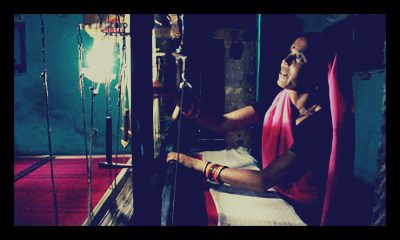
A single NGO and India’s foremost energy research institute, Teri, has single-handedly provided solar-powered lights to over 500,000 homes throughout rural India.
No less than five years ago, much of rural India had no access to electricity, instead using kerosene lamps that were not only dangerous but also bad for the environment. These 400,000 people had no access to any form of electricity, and another 100,000 had only an inconsistent and unreliable connection.
In the last five years, Teri has provided these people with a much better alternative – solar-powered, LED lamps using solar panels and batteries.
As part of the Lighting One Billion Lives initiative, started in 2007, the NGO coordinates the distribution of lamps to some 2,000 villages, works with vendors and manufacturers to lower the price of lamps, trains personnel and provides tech support, and works with various other organizations to help run the charging stations. Each charging station provides around 50 solar-powered LED lamps that also double as phone chargers.
Teri has already seen a huge improvement in the cost and efficiency of the lamps. When started, the lamps costed around $100 each, however, the price is now down to $15-30 per lamp, and the battery life has tripled.
Teri, other NGOs, Bollywood stars, and individuals sponsor villages to provide the lanterns initially, after which a local villager becomes in charge of renting each lantern, for no more than the price of kerosene, on a daily basis.
The benefits of the program have been huge, including increased health benefits and cleaner air, more light for children to continue their schooling after dark, benefits for medical practices and shops, and entrepreneurship that villagers learn by manning the charging stations. At the current rate that Teri is coordinating villages to receive charging stations, soon almost every Indian village may have a clean, renewable light source.
Although India has been aiming to improve and increase its energy grid, the priority has been on cities and businesses, with rural villages not expected to receive electricity infrastructure for years, if at all.
Teri plans to expand their system of charging stations and LED solar lamps to various other countries including Afghanistan, Burma, Pakistan, Kenya, Ethiopia and Sierra Leone.
– Christina Kindlon
Source: The Guardian

NGO Brings Light to Rural India with Solar Lamps
A single NGO and India’s foremost energy research institute, Teri, has single-handedly provided solar-powered lights to over 500,000 homes throughout rural India.
No less than five years ago, much of rural India had no access to electricity, instead using kerosene lamps that were not only dangerous but also bad for the environment. These 400,000 people had no access to any form of electricity, and another 100,000 had only an inconsistent and unreliable connection.
In the last five years, Teri has provided these people with a much better alternative – solar-powered, LED lamps using solar panels and batteries.
As part of the Lighting One Billion Lives initiative, started in 2007, the NGO coordinates the distribution of lamps to some 2,000 villages, works with vendors and manufacturers to lower the price of lamps, trains personnel and provides tech support, and works with various other organizations to help run the charging stations. Each charging station provides around 50 solar-powered LED lamps that also double as phone chargers.
Teri has already seen a huge improvement in the cost and efficiency of the lamps. When started, the lamps costed around $100 each, however, the price is now down to $15-30 per lamp, and the battery life has tripled.
Teri, other NGOs, Bollywood stars, and individuals sponsor villages to provide the lanterns initially, after which a local villager becomes in charge of renting each lantern, for no more than the price of kerosene, on a daily basis.
The benefits of the program have been huge, including increased health benefits and cleaner air, more light for children to continue their schooling after dark, benefits for medical practices and shops, and entrepreneurship that villagers learn by manning the charging stations. At the current rate that Teri is coordinating villages to receive charging stations, soon almost every Indian village may have a clean, renewable light source.
Although India has been aiming to improve and increase its energy grid, the priority has been on cities and businesses, with rural villages not expected to receive electricity infrastructure for years, if at all.
Teri plans to expand their system of charging stations and LED solar lamps to various other countries including Afghanistan, Burma, Pakistan, Kenya, Ethiopia and Sierra Leone.
– Christina Kindlon
Source: The Guardian
Mexico’s First Midwifery School
Guadalupe Maniero, the school’s director, explains that in Mexico, “hospitals are oversaturated, and so it’s a big problem.” Since the 2011 law that grants midwives a place among the country’s legally accepted medical professions, age-old stigmas have begun to fade. By helping to deliver babies, doctors have much more time to spend focusing on dangerous births in which the child and/or mother are in danger.
The four-year program grants its graduates certificates that allow them to practice in legitimate health centers. By interweaving longstanding cultural traditions with modern-day needs and practices, Mexico’s first midwifery school has the potential to benefit the entire country for years to come.
– Jake Simon
Source: NPR
Take a Quiz – Feed a Family in Syria
The questions range from the cost of living expenses to refugee status. One question asks, “Of all the refugees now living in Jordan how many are women & children?” Answer: of this particular Jordanian population of 60,000 refugees – 75% are women & children. The WFP provides nutritious ready-to-eat meals for anyone in need.
The UN has just counted the one-millionth refugee coming out of Syria. More than 70,000 people have died and two million have been internally displaced since the conflict began almost two years ago. Starting as demonstrations against the government of President Bashar al-Assad, the protests quickly turned violent as opponents of Mr. Assad took up arms against the brutal crackdown coming from the authorities. There is still no resolution in sight.
Find out more – and feed a family in Syria for a day.
– Mary Purcell
Source: WFP, BBC
Photo: unostamps
Early Marriage as a Form of Violence
These numbers are based on current rates of early marriage, according to the UN.
Most child marriages occur in sub-Saharan Africa and South Asia. In fact, nearly half of all young women are married before the age of 18 in South Asia. In Africa, this percentage drops, but only to one-third.
In light of International Women’s Day, whether child marriage should be considered a form of violence against women and children is up for debate. According to UN Women, early marriage increases a girl’s chance of becoming a victim of sexual violence in the home. It also limits a girl’s access to education because she is often expected to have children and take care of her husband and household. It is also associated with increased health risks due to early pregnancy and motherhood.
The Commission on the Status of Women (CSW) was recently presented a petition by the World Young Women’s Christian Association (WYWCA) that urged CSW to help end child marriage by 2030.
Yet, fighting early marriage will be an uphill battle. In many countries and cultures, marrying at a young age is traditional and is not seen as a problem. In some areas, particularly poorer countries, there are not enough resources for girls to continue in school as their male counterparts. Marriage serves as an easy way to justify girls abandoning their education to stay at home. Another issue plaguing poorer countries and people is the practice of a “bride price.” Some fathers will marry their daughters off for the price of a cow, especially during difficult times. According to Catherine Gotani Hara, Health Minister of Malawi, “Someone will come in and give a father a cow for a girl when they are eight or nine years old and when they reach puberty they will give another cow.” Out of need or necessity, a daughter may be worth two cows.
Getting around the barriers surrounding child marriage will require the support of governments and the passing of legislation that raises the legal age of marriage, as well as provides more resources for schools so that girls can reach the same level of education as their male counterparts. Currently, this is what happening in Malawi. The rate of child marriage in Malawi is currently 50 percent but by 2014, the age of legal marriage will hopefully have moved up from 15 to 18. Only time will tell if these steps will help eradicate child marriage.
– Angela Hooks
Source: Guardian
USAID Funding Power Station in Pakistan
The first phase of construction on the Tarbela Hydel Power Station, located in Lahore, Pakistan, has been completed. The project, which is being financed by the United States Agency for International Development (USAID), allowed the Water and Power Development Authority (WAPDA) to add 128 megawatts of electricity to the station.
U.S. Ambassador to Pakistan, Richard Olson, visited the power station and was briefed by WAPDA Chairman Syed Raghib Shah. Shah said that the WAPDA appreciates the United States’ aid in updating Pakistan’s energy sector, and also stated that these upgrades will allow more consistent electricity to be provided to the people of Pakistan for a very affordable price.
Along with upgrading current power stations throughout Pakistan, WAPDA is also using funds from USAID to construct brand new power stations.
Ambassador Olson stated, “The United States understands that Pakistan is facing an energy crisis and we are committed to doing our part,” and also said that the recent upgrade at the Tarbela station will contribute enough power to provide electricity to 2 million people, and to ensure a consistent source of electricity to avoid blackouts and outages.
As part of a larger project, USAID is providing WAPDA with $16.5 million to repair three additional power stations and to train employees that will finish the Tarbela Hydel Power Station in Pakistan. Besides these three power plants, USAID is also funding additional hydropower projects throughout Pakistan – these efforts include the construction of two dams that will provide an extra 35 MW of power and irrigate 200,000 acres of land.
– Christina Kindlon
Source: The News
Photo: Pakistan Today
What Elections in Kenya Mean to the United States
Uhuru Kenyatta is slated to be the next President of Kenya. The elections in Kenya on Monday were a monumental and happy moment because they were one of the most peaceful elections the country has ever had. And now, as ballots are being counted, Kenyatta has the lead.
For the United States, while the peaceful elections are celebrated, Uhuru Kenyatta becoming President may lead to some serious problems. Kenyatta has been indicted by the International Criminal Court (ICC) for a long list of heinous crimes. He has been accused of stirring up the local militia to conduct retaliation attacks in the previous election that killed numerous people, including innocent women and children.
The United States has invested a lot in Kenya, serving as an important ally to the region. Even more, Kenya has become a crucial center on Terror.
Yet, the United States is dedicated to justice. And supporting or working with a president that has been indicted by the ICC for crimes against human rights, against women and children, would not be living up to this value. President Obama’s administration, as well as the administrations of many of its allies, are faced with the very tough decision to either completely distance themselves from Kenya, because even small things like diplomats shaking Kenyatta’s hand could be problematic, or figure out a way to work with Kenyatta and still put forth a message of justice.
Jendayi Frazer, former Assistant Secretary of State for African Affairs, said, “This is going to pose a very awkward situation. Kenyatta knows he needs the United States, and the United States knows it needs Kenya.” Some even say that the United States needs Kenya more than Kenya needs the United States.
The Obama Administration has refused to talk about the situation, only saying, in the words of President Obama, “The choice of who will lead Kenya is up to the Kenyan people.” Once Kenyatta is announced President, the United States, and its allies must proceed very cautiously.
– Angela Hooks
Sources: NY Times, CNN
Photo: Forbes
USDA Invests Heavily in Global Food Security
This amazing opportunity towards bolstering global food security is also, in part, thanks to the National Institute of Food and Agriculture (NIFA) as well as the Agriculture and Food Research Initiative’s (AFRI) Food Security program. Recently, much interest has been shown in developing the United States’ wonderfully rich topsoil and varied growing climates in order to maximize yields while maintaining the soil’s nutritional efficacy. Considering that many countries around the globe are continuing to experience severe shortages and food insecurity, the US has adopted a mutually-beneficial policy that will attempt to ameliorate any and all future global food security challenges.
Source Agri-Pulse
Photo University of California
Green Energy Can Fight Poverty and Pollution
The study, released by the Institute for Atmospheric and Climate Science, warns that the widespread use of clean energy, as opposed to fossil fuels, is the only way to prevent further damage to the environment and to eradicate poverty throughout the world. The World Bank, International Energy Agency, and other major institutions have also given similar warnings.
The UN has implemented a program called the Sustainable Energy for All Initiative (SE4All) that aims to “double the rate of improvement in energy efficiency” by 2013, double the amount of renewable energy used, and bring electricity to more of the world’s poor. Joeri Rogelj, who worked on the study, says that meeting these goals and also preventing widespread deforestation is the only way to prevent a climate crisis.
Rogelj’s study confirmed that the SE4All initiative’s funding would actually cost less than the current subsidies the fossil fuel industry is given, which are estimated to be about $523 billion in 2011 alone. Comparatively, the funding for SE4All is slated to be around $30 to $40 billion per year. The study also asserts that the conversion to clean energy would also aid in making the Millennium Development Goals of downsizing poverty and promoting international development.
Thus far, several countries are on track to switch much of their energy sources to renewables – Iceland uses 81% clean energy and Scotland has a mandated 100% clean energy by 2020. Denmark is also following suit to become 100% dependent on renewable energy in the near future.
The study concludes that “achieving the three SE4ALL objectives could put the world on a path toward global climate protection,” and that getting rid of fossil fuels would eliminate the health hazards associated with pollution in many developing countries and low-income communities, as 1.5 billion people worldwide still live without electricity.
– Christina Kindlon
Source: Business Mirror
Mental Illness Affected More By Poverty Than War
The citizens of Afghanistan have now weathered a 12-year war in the country and, as U.S. and as NATO forces prepare to pull out by the end of 2014, a new study confirms that poverty and vulnerability are more significant to the development of mental illness and anxiety than exposure to war.
The study, focusing on war and mental health in Afghanistan, says that war is undoubtedly an identifiable precursor to mental illness, but that poverty and vulnerability are actually “stronger and probably more persistent risk factors that have not received deserved attention in policy decisions,” said Dr. Jean-Francois Trani.
The study elaborates on the origins of mental illness and political violence, saying that unemployment and lack of access to resources contribute to the absence of one’s place in a social hierarchy, which leads to mental anguish that, in turn, can cause young people to act violently towards any government or institutions of authority.
The study calls these social and cultural predetermined factors “social exclusion mechanisms,” and maintains that these factors were in place before war began, but are exacerbated by military conflict. The researchers recommend that policymakers take into account all factors of these at-risk groups to create a more stable and self-sufficient Afghanistan.
– Christina Kindlon
Source: Washington University in Saint Louis
Photo: Trends Updates
Poverty and Poaching
Ambassadors from nearly 180 countries convened at the Trade in Endangered Species of Wild Fauna and Flora Conference in Bangkok last week to discuss new ways to stop poaching and other illegal hunting practices. Water and Environmental Affairs Minister Edna Molewa believes that the international community should do more to fight poverty and that addressing poverty will help lessen the frequency of poaching.
The Minister Molewa and many of her colleagues believe that poverty is the main reason that people turn to poaching for their income. Many animal’s pelts or horns can bring in a hefty bit of change that can make all the difference to families living in extreme poverty. Hopefully, as the fight against poverty continues, there will be less poaching around the world. Southern Africa is the region that has been experiencing the greatest problem with illegal hunting and is currently moving forward in their efforts to fight the trafficking of illegal animals and animal products with many Asian countries such as China and Vietnam, where large markets exist for illegal animal products.
So, while fighting poaching by itself may only work to protect the endangered animals of the world, fighting severe poverty may one day remove the incentive for poaching, thus helping the impoverished communities and the animals as well.
– Kevin Sullivan
Source: Times Live
Photo: WHO ZOO