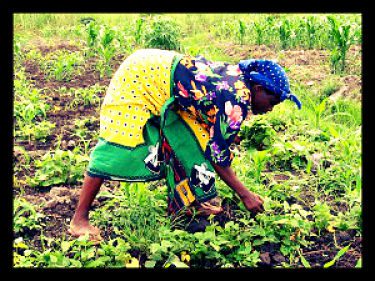
 Food is one of the most basic human rights and needs: without adequate, nutritious food, people are unable to work and, in some cases, live. Almost a billion people in the world today are chronically undernourished, and many more are food insecure, meaning that they do not know where their next meal will come from. About three-quarters of those in Africa that live off of $1 a day are subsistence farmers. Helping subsistence farmers grow more food is key to lifting rural communities out of poverty. The following are some of the methods the Millennium Villages Project uses to help poor farmers, in its pursuit of the Millennium Development Goals in Africa. Here are 10 ways to help poor farmers.
10 Ways to Help Poor Farmers and Their Communities
1) Protect and preserve the natural environment: Without a healthy natural environment where native flora and fauna live productively, long-term sustainable agricultural practices will fail. Farms must be developed in conjunction and cooperation with local ecology, not at its expense.
2) Implement community – specific programs: Every region has unique characteristics and therefore unique needs. Individualized programs that meet the needs of specific regions are more likely to succeed. This is the approach used by the Millennium Villages Project.
3) Teach and implement sustainable farming techniques: Farming techniques such as agroforestry, organic agriculture, and permaculture are more sustainable and practical on a small, rural scale. Poor farmers need to learn about these techniques and have access to the resources they need in order to implement them.
4) Build and maintain soil productivity: Healthy soil is the foundation of a healthy farm and leads to increased crop yields. Rebuilding soil after intensive cultivation is necessary to maintain soil productivity. Essential soil nutrients can be replenished through techniques such as fertilization, composting, inter-planting, and crop and field rotation.
5) Sustainable water access: A consistent water source is necessary for growing crops and for human survival. Rainwater harvesting systems and wells can provide water to a community, while drip irrigation systems give farmers access to water for their crops.
6) Increase sustainable crop production: Increasing crop yields is important to improving food security and fighting undernourishment. Farmers need access to high-quality seeds of appropriate crops, as well as information about planting, growing, harvesting, and crop management.
7) Economic organization: Farmers need a way to connect with customers in nearby communities in order to sell their products. Additionally, small-scale farmers can benefit from farmer cooperatives, wherein all the farmers in a community combine their resources in order to receive a better price for their crops. Aid organizations need to invest in the infrastructure and education necessary to create viable economic systems for farmers.
8) Supplement programs for newborns and their mothers: Even with an adequate food supply, pregnant and nursing mothers and their young children have unique nutritional needs. They need more protein, folate, calcium, and iron, as well as more calories.
9) End subsidies to wealthy US farmers: One Oxfam study showed that ending subsidies to wealthy US cotton farmers would do more to help Africa’s poor than the amount of aid they receive now. Farm subsidies drive down the prices of US-grown crops, making it impossible for small-scale farmers abroad to compete.
10) Improve food security: This means making sure that everyone in the community, including farmers, consistently has adequate calories and nutrition. Food security can be improved in many ways, including building food storage facilities, providing access to fuel-efficient cookstoves, and sourcing food locally, just to name a few.
– Kat Henrichs
Sources: Borgen Project
Photo:

Seed Monopoly In India Creates Poverty
This video of environmental activist Dr. Vandana Shiva explains how a seed monopoly in India creates poverty and destroys farming’s previous self-reliance on seeds.
First, a big corporation comes into a community and tells the local farmers that their seed is no good, “primitive,” and that they offer a better option. Companies even pay farmers to try the new seed – thus seed replacement starts. Gradually they go to every farmer in the area and do the same. The farmer no longer uses their own seed, the local small companies that did sell seed no longer have customers and go out of business, and now the corporation has a monopoly on providing seeds for an entire region.
Monsanto, the cotton seed supplier in this one case, then increases the cost of the seed by 8,000%. Of course a small farmer cannot afford these prices. The corporation then promises to provide seed that will make the farmer rich by producing huge harvests. The farmer barrows the money from the corporation to buy this new seed, mortgaging their land against the loan. And when the crop does not produce as promised, the farmer goes into debt and eventually loses her/his land – no income, no assets, no home, extreme poverty.
This is why Dr. Shiva started Navdanya, a network of seed keepers and organic producers, spread across 17 states in India. They have set up 111 community seed banks, trained over 5,000,000 farmers in seed sovereignty, food sovereignty and sustainable agriculture over the past two decades. They have helped set up the largest direct marketing, fair trade organic network in the country, and run a learning center on biodiversity conservation. Navdanya is a women-centered movement actively involved in the rejuvenation of indigenous knowledge and culture. They keep the power of self-reliance in the hands of the farmer.
– Mary Purcell
Source: Vimeo, Navdanya
The 2013 Kenyan Election
In the minds of every Kenyan election is the violence that occurred in 2007. After incumbent President Mwai Kibaki was re-elected, riots erupted all over Kenya. Supporters of the opposition candidate, Raila Odinga, were enraged by allegations that the election was rigged by supporters of Kibaki. Ethnic violence erupted between members of the Kikuyu, Kibaki’s tribe, and the Luo and Kalenjin tribes, as opposed to the Kikuyu. Eventually, an agreement was reached wherein Kibaki would hold the position of President and Opposition leader Raila Odinga would be Prime Minister. Up to 1,000 Kenyans were killed and 600,000 displaced during the riots which lasted for more than a week. In light of the violence caused by the disputed and controversial election of five years ago, Kenyatta, Ruto, and other major politicians have urged voters to “keep the peace.”
In preparation for this recent election, people stocked up on supplies, food, and fuel, in case of riots did break out. Stores were closed and the roads were empty of cars. People strayed from ethnically-mixed urban areas fearing violence. There was a heavy security presence with trucks of police patrolling polling stations. Unfortunately, the day was not without some incidents of violence. In Kilifi, Mandera, and Changamwe, several people, civilians and police officers alike, were killed. A group of armed men attacked a police post in Mombasa killing at least ten people, including two police officers. The separatist Mombasa Republican Council has denied accusations that they were responsible for organizing some of these attacks. It is uncertain whether the violence that did break out is connected to voting. Police were critiqued as being “ill-prepared” for violence that occurred near polling stations.
The weather was hot and the voting process was slow with faulty biometric voting kits at some stations causing delays. In Nairobi and Kibera, lines stretched for more than a kilometer and people waited up to nine hours in sweltering heat complaining about the slow process to cast their vote. Despite these technical glitches and occurrences of violence, the underlying theme seemed to be the determination of the Kenyan population to cast their votes. People began lining up at five in the morning, an hour before polls opened, and many of the 30,000 polling stations remained open an hour after the official closing times with long lines of people refusing to leave until they vote. At two in the morning in Kisumu, people were blowing vuvuzelas, an alarm to call people to the polling stations early. Thousands were already in line at four in the morning, two hours before the poll opened. This election was commented as being the most complicated election that Kenya ever held, but also one of the most peaceful. It was a vast improvement from the process of the previous election that showed many discrepancies.
Last Monday truly was a “historic day” for Kenya. In Kibera, a man was seen painting “Peace Wanted Alive” on the walls and roads. “We have been waiting for this for the past five years,” said Anthony Wachira, a Kenyan who had been waiting in line for hours to vote. “Above everything we want to vote for peace.”
– Rafael Panlilio
Source: BBC, BBC, CNN, NY Times
10 Ways to Help Poor Farmers and Their Communities
10 Ways to Help Poor Farmers and Their Communities
1) Protect and preserve the natural environment: Without a healthy natural environment where native flora and fauna live productively, long-term sustainable agricultural practices will fail. Farms must be developed in conjunction and cooperation with local ecology, not at its expense.
2) Implement community – specific programs: Every region has unique characteristics and therefore unique needs. Individualized programs that meet the needs of specific regions are more likely to succeed. This is the approach used by the Millennium Villages Project.
3) Teach and implement sustainable farming techniques: Farming techniques such as agroforestry, organic agriculture, and permaculture are more sustainable and practical on a small, rural scale. Poor farmers need to learn about these techniques and have access to the resources they need in order to implement them.
4) Build and maintain soil productivity: Healthy soil is the foundation of a healthy farm and leads to increased crop yields. Rebuilding soil after intensive cultivation is necessary to maintain soil productivity. Essential soil nutrients can be replenished through techniques such as fertilization, composting, inter-planting, and crop and field rotation.
5) Sustainable water access: A consistent water source is necessary for growing crops and for human survival. Rainwater harvesting systems and wells can provide water to a community, while drip irrigation systems give farmers access to water for their crops.
6) Increase sustainable crop production: Increasing crop yields is important to improving food security and fighting undernourishment. Farmers need access to high-quality seeds of appropriate crops, as well as information about planting, growing, harvesting, and crop management.
7) Economic organization: Farmers need a way to connect with customers in nearby communities in order to sell their products. Additionally, small-scale farmers can benefit from farmer cooperatives, wherein all the farmers in a community combine their resources in order to receive a better price for their crops. Aid organizations need to invest in the infrastructure and education necessary to create viable economic systems for farmers.
8) Supplement programs for newborns and their mothers: Even with an adequate food supply, pregnant and nursing mothers and their young children have unique nutritional needs. They need more protein, folate, calcium, and iron, as well as more calories.
9) End subsidies to wealthy US farmers: One Oxfam study showed that ending subsidies to wealthy US cotton farmers would do more to help Africa’s poor than the amount of aid they receive now. Farm subsidies drive down the prices of US-grown crops, making it impossible for small-scale farmers abroad to compete.
10) Improve food security: This means making sure that everyone in the community, including farmers, consistently has adequate calories and nutrition. Food security can be improved in many ways, including building food storage facilities, providing access to fuel-efficient cookstoves, and sourcing food locally, just to name a few.
– Kat Henrichs
Sources: Borgen Project
Photo:
3 Ways Aquaponics Encourage Urban Food Sustainability
1. It’s self-contained – Unlike the traditional agricultural method of crop or fish production requiring thousands of acres of land or huge tanks and logistical support, the Aquaponic growth method requires little more than a storage container size of available rooftop space. Additionally, the growth system simply requires daily maintenance, a little electrical power, and labor, enabling an apartment building or home to produce their own organic food and fresh fish supply anywhere in the world. This method has the potential to eliminate the environmental damage of topsoil runoff and over-fishing and promote long term urban food sustainability.
2. It’s affordable – As previously stated, the cost of purchasing the land, equipment, and labor resources necessary for commercial farms is extremely expensive and often prohibitive to nations establishing their own urban food sustainability programs. However, the start-up cost of an Aquaponic system starts at only 3,000 dollars for a beginner package to 7,000 dollars for a package able to significantly impact a family’s annual food costs. Furthermore, the construction of a simple rooftop greenhouse is extremely cheap, and necessary for both environmental protection and the maximum fish and production yield of the Aquaponic system.
3. It provides a source of income – As an added incentive, the market for organic produce and fresh fish is in high demand and given the relatively low start-up costs of the technology and accompanying greenhouse, the Aquaponic system can serve as a viable source of income. Even better, by forming a co-op among buildings tenets for the construction of several Aquaponic greenhouses on a rooftop, the fresh fish and produce can be sold at local farmer’s markets and to fishmongers, generating a passive source of income. Given the ability of the Aquaponic technology to be deployed anywhere in the world, building tenets from Manhattan to Moscow can enjoy the income generated from fresh, year-round fish and products which not only enriches the inhabitants’ wallets but also encourages urban food sustainability.
– Brian Turner
Source: Aquaponics.com
Photo: Aquaponicsfaq
George Clooney’s Tequila Aid for Sudan
Well known philanthropist, humanitarian, and actor George Clooney has recently launched a line of high quality tequila whose profits will be entirely donated as aid for Sudan.
The tequila, know as Cosamigos, is unique in regards to the long distillation process and copper pot fermentation process that helps set it apart from many of the other premium brands. Cosamigos – aged in refurbished whiskey barrels – has garnered rave reviews thus far, which along with George Clooney’s celebrity status, has helped boost sales and will no doubt help to generate some much needed aid for Sudan.
For the past several years, George Clooney has been personally funding a satellite imagery project over South Sudan to serve as a pair of eyes watching over the current President Omar Al- Bashir and hopefully preventing any further ethnic violence. Recently, Clooney made headlines with a testimony he gave to the US Senate outlining the severity of the humanitarian crisis he himself witnessed in a trip he made back in 2012, further highlighting the immediate need of aid for Sudan.
Unlike many other high priced spirits, the value of Cosamigos goes well beyond smooth taste – available as both Blanco and Reposado – but instead in the intended humanitarian mission as a source for greater aid for Sudan. In regards to his charitable donations, Clooney remarked, “I have a satellite over South Sudan that I’m trying to keep some people alive with. It costs me a lot of money every year so now I’m getting it paid for.”
– Brian Turner
Source: Snuff
Photo: USA Today
Hilary Swank Spotted in Ethiopia
Hilary Swank’s recent trip to Ethiopia was marked by revelation and promotion. UNICEF flew Swank to visit various schools and education centers that received donations directly from the organization. The funding for this project will come directly from a new campaign launched in partnership with UNICEF and legendary watch and jewelry maker Montblanc.
The campaign encompasses Montblanc’s ‘Signature for Good’ collection which premiered earlier this month. The collection includes leather products, jewelry, and pens ranging from $220 to $810. For every product sold from the collection between now and March 2014, Montblanc will donate part of the proceeds to UNICEF’s education programs, funding schools that Swank visited.
According to Hilary Swank, the chance to visit Ethiopia and see first hand the benefits of the money being donated renewed her appreciation for organizations such as UNICEF and their efforts. She commented that seeing the books and learning material that the schools were able to accumulate due to these donations was “pretty extraordinary.”
For celebrities, it seems almost too easy to make their way over to a developing country, whether its because they’re already there on set or making a charity trip. Since their every move is already accounted for by the paparazzi who wait for them at gas stations and fast-food restaurants, a trip of such a scale would most definitely create a bigger buzz in the media. For causes big and small, piggy-backing off of a celebrity’s Google search carries no shame. It gives an opportunity for the world to find out more about these corners of the world even if that wasn’t their initial intention when searching for “Hilary Swank’s teeth”.
– Deena Dulgerian
Source:Star Pulse
Youth Fight Climate Change With Music
At the offices of the World Bank, 19 young people from 14 countries were honored at the “Connect4Climate: Right Here, Right Now” event for their photographs, videos, and podcasts about climate change. Chosen from more than 1000 entries from 116 countries, these 19 winners of the global Voices4Climate awards were celebrated in an event hosted by Connect4Climate centered on how youth fight climate change utilizing the power of creativity.
Coming in first place was Stephon Gabriel from Trinidad with his music video, “A Changing World.” Connect4Climate had also worked with Artists Project Earth (APE), a UK environmental and arts organization, to organize a charity album consisting of music by Eminem, Beyonce, Coldplay, Bruno Mars and other artists in support of climate change projects. Live performances were given by two of the album’s artists, award-winning Malian musician Rokia Traore and Kenyan rappers TSI, during the event organized by Connect4Climate in collaboration with MTV and TerrAfrica.
Speaking at the event was World Bank President Jim Yong Kim who encouraged young people to help fight climate change emphasizing the need to listen to and engage the youth. Also in attendance were Nobel Peace Prize laureate Betty Williams, co-founder of Community of Peace People in 1976, and Italian Minister for the Environment, Corrado Clini. Clini supported Connect4Climate’s mission of providing the youth a platform to tell their stories about climate change and bring their voices to the global conversation about climate change. Clini commented that Italy was proud to be a supporter of the project and that effective change is only possible when the voices of the youth are heard.
CEO and Chairperson of the Global Environment Facility, Dr. Naoko Ishii, spoke of the efficacy of youth to change the “business-as-usual approach” that has contributed to climate change. “Young people will inherit our environment, and Connect4Climate seeks to give them a voice,” said Dr. Ishii.
Working with leading media networks and academic institutions, Connect4Climate and TVN Media group have launched their next competition, i°Change, to find the best original video message addressing climate change issues and action. Winners will receive a scholarship, recognition at the Grand Prix of Advertising in Milan, and exposure at film festivals in Cannes, New York, and Beijing.
Founded by the World Bank, Italian Ministry of Environment, and Global Environment Facility in 2011, Connect4Climate is a global partnership dedicated to climate change communication and action. Connect4Climate is made up of a coalition of more than 150 partners and an online community of nearly half a million followers. Through social media and the web, C4C works to amplify the voices of local stakeholders who have stories to tell about climate change.
– Rafael Panlilio
Source: World Bank
Death of Hugo Chavez Impacts US Aid
The first time that Chavez met President Obama, he gave him a copy Eduardo Galeano’s book “Las Venas Abiertas de America Latina”, a history of colonial rule over the Americas that focuses on how the United States became the colonizing power of modern age in Latin America, especially in Central America where American corporations and military interventions created the infamously titled “banana republics.” That first meeting is the perfect anecdote to represent the relationship between the two countries over the last five years. Chavez had always been extraordinarily outspoken against the United States and, because of that tense relationship, the U.S. has given very little to Venezuela with the exception of small amounts of disaster relief assistance. It is important to note that Venezuela, the founding member of OPEC, is one of the wealthiest countries in the Americas, yet nearly 32% of the country’s population lives below the poverty line.
In order to begin building a more amicable relationship, the U.S. may begin giving more to causes that aren’t related to politics and focus more on job creation and training. Providing this type of aid would not only benefit Venezuela, but it may also help build a much less tense relationship with a resource-rich country that has significant pull in international oil markets and price control. A well-executed increase in aid could end up being very beneficial for both parties as Venezuela changes leadership.
– Kevin Sullivan
Sources: The New York Times, CIA World Factbook
Photo: Biography
US Baby Cured Of HIV
Last Sunday at the 2013 Conference on Retroviruses and Opportunistic Infections in Atlanta, doctors reported that an infant in Mississippi has been cured of HIV. The baby’s mother was HIV positive, and in hopes of controlling the virus, the baby was treated with high doses of three antiretroviral drugs within 30 hours of birth. Treatment was ongoing for 18 months. Two years later, there is no trace of HIV in the child’s blood. Early intervention with antiretroviral drugs seems to be the key to this “miracle cure.”
In the world of medicine, this is groundbreaking as this child is the first to be “functionally cured” of HIV, the virus that causes AIDS. Emphasis is being placed on the timing of intervention rather than the particular drug or number of drugs used. Dr. Hannah Gay, a pediatric HIV specialist at the University of Mississippi who treated the infant and mother, stated that the current hypothesis is that through “early aggressive therapy” they were able to prevent reservoirs or “hiding places” from being seeded with the virus. Doctors will continue to follow the unidentified baby girl’s progress but as of now, she is off of treatments and assessed by doctors as “perfectly healthy.”
In the US, 100 to 200 babies are born infected with HIV every year. Around the world, nearly one thousand babies are born infected with HIV or more than 300,000 a year. As of last Sunday, one has been cured. This is just the start of a lot of work and research that has to be done but without a doubt these findings give great hope in the possibility of a cure for HIV.
– Rafael Panlilio
Source: CNN, Reuters, You Tube
USAID Fighting Terrorism With Wool
To help with this dilemma, USAID has funded an agricultural project in which Australian shepherds, who are among the world’s finest, instruct a best-practices workshop which teaches Mastung farmers current techniques and educate the farmers on how to use current technologies. These new techniques have been combined with direct marketing practices and, with the two disciplines combined, the result is an 80% growth of income for farmers in the communities where these practices have been implemented.
While this type of growth does help border communities in Pakistan, the strengthening of these communities has an unforeseen effect on U.S. national security and global security as a whole. It is no secret that extremist groups target poor communities by offering financial assistance and other forms of aid. In a region that has been plagued with extremist groups such as the Taliban, contributing to the economic growth of communities and helping them remain stable prevents the spread of terrorism and extremist ideology. For the Mastung, fighting terrorism with wool production is a win-win situation.
Not only do these contributions help create a better life for those in the border communities of Afghanistan and Pakistan, but they also help these communities as a means to furthering global security as a whole.
– Pete Grapentien
Source: TheNews.com
Photo: Pakistan Today