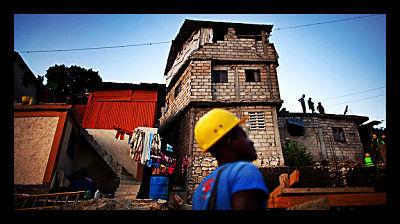
 A controversy with foreign aid does not always relate to misuse but the reality of the numbers and figures after the aid is delivered. A popular example of this has been the $9 billion in donations made to the Haitian government since the 2010 earthquake.
Last week, National Public Radio (npr) interviewed Jonathan Katz, the author of The Big Truck That Went By: How the World Came to Save Haiti and Left Behind a Disaster. This new book focuses on the damages to both the Haitian government and its people due to communication issues, lack of coordination, and the general failure of donor countries to follow-through on their promises.
After reading the interview, it is important to keep in mind that foreign aid is not a waste. There have been thousands and thousands of completely successful large-scale and small-scale transactions and projects throughout the centuries. Governments, however, need to really sit down and review their policies. In this review, one would hope they would seriously consider making more use of direct aid. As Katz briefly touches on in his interview, there is the uncommon but possible option of paying victims of the earthquake (or any crisis) and removing the middleman. Perhaps not handing them a band of cash exactly, but focusing the energy and time spent on drafting contracts, debt relief plans, and the such to send volunteers and individuals who are willing and passionate about making small but immediate and tangible changes, such as Syrian-American Omar Chamma has been doing in Syria.
The transcript of the interview follows:
Aid pledged to Haiti — $9.3 billion worth from 2010 to 2012 — is about a third of all global health aid donated in 2012. What happened to the money that was supposed to go to Haiti?
Katz: Money did what money tends to do in most foreign aid situations. That is, rather than being a model in which a rich country gives a poor country a big bag of cash and says, “Here spend this on fixing things up from whatever the latest crisis was,” what actually happens is that very little of the money actually leaves the donor countries. First of all, you’ve got billions of dollars that are promised but just never delivered. You’ve got billions of dollars more that were sort of creative accounting. Donor nations say they’re providing debt relief, yet those debts were never realistically going to be paid back. So some of the money is sort of fictive.
So how much actually made it into Haiti?
Even among the real money, if you look at what was labeled as humanitarian relief, in the months right after the quake, that amounts to about $2.5 billion.
Ninety-three percent of that money either went to United Nations agencies or international nongovernmental organizations, or it never left the donor government.
So you had the Pentagon writing bills to the State Department to get reimbursed for having sent troops down to respond to the disaster.
If we’re talking about reconstruction, it’s really a misnomer to think that relief aid was necessarily going to have the effect of rebuilding a country in any shape or form.
So what was that money spent on?
Band-Aids. Literally bandages. Short-term relief. Tarps to put over your head. Food to fill emergency gaps in supply.
But food gets eaten. Tarps wear out. Band-Aids get pulled off. And ultimately, all that money is spent, but people aren’t left with anything durable.When you hear about all these billions of dollars [in aid donations], the imagination is that they’re going to go and rebuild the country after the earthquake. They were never intended to do so and, lo and behold, they didn’t.
There are often complaints after big disasters about waste and inefficiencies. Was the Haiti earthquake different from any other international disaster or is this typical?
What is interesting about Haiti is the extremes.
There are lots of places that have weak governments, but Haiti’s government is weak in a special way. It’s the product of so many years of aid going around the government and international efforts to undermine the government. Presidents being overthrown and flown out on U.S. Air Force planes and then reinstalled and then overthrown again. That left the Haitian government in such a weakened state.
Then the disaster itself was also so much more extreme. It was so concentrated. It hit the capital city. Whether your estimates for a death toll is in the 80,000 range or closer to the government’s estimate of 316,000 — in a city of 2.5 million people — it’s just an extraordinary number.
It was an incredibly horrific disaster. It hit the country right at its heart and destroyed a government that was already weakened.
But beyond that, the attitude that so many foreign aid groups have regarding Haiti is that you can basically come in and do whatever you want. So there was no accountability, no coordination.
People were just running around doing what they thought was best or what they thought was best for them. And it really created a mess.
– Deena Dulgerian
Source: npr

How Desalination Can Prevent a World Water Crisis
A study from NASA and the University of California – Irvine shows that the Middle East is losing its fresh water reserves. From 2003 to 2009, around 144 cubic kilometers of water have been lost from the Middle East. The study utilized observations from the Gravity Recovery and Climate Experiment (GRACE) satellite mission to evaluate trends of freshwater storage in the Middle East. The “lost water” comes from water resources below the Earth’s surface that are drilled for and relied on in times of drought. This recent news reminds us that water, like oil, is a finite resource. However, Qatar seems to have found a way to manage through this water crisis.
In a TED talk earlier this year in Doha, Qatar, Fahad Al-Attiya, Chairman of Qatar’s National Food Security Programme, delivered a talk on his job, maintaining food security in a country that has no water and imports 90% of its food. Qatar is a country that is rich in oil, boasts strong economic growth, and has a rapidly expanding population. And with a rapidly expanding population comes rising levels of water consumption. The population of Qatar has grown to 1.7 million in less than 60 years. Water consumption levels are at 430 liters a day, the highest in the world. Qatar has gone from having no water to consuming water to the highest degree. Regardless, the country has maintained consistent growth of 15% every year for the past five years without water. This, Al-Attiya says, is “historic.”
The answer to the question of how this was possible is desalination. The process of desalination consists of removing salt from seawater, allowing for Qatar to compensate for depleting water levels in the aquifers. This is a revolutionary change, leaving Qatar in a state of “structurally-induced water abundance.” Utilizing reverse osmosis and solar desalination technologies, desalination presents a very sustainable solution to a country that receives less than 74 millimeters of rain a year. Through desalination, Qatar is able to produce 3.5 million cubic meters of water. This water will go to farmers that will be able to supply the country with food. Al-Attiya calls it “the best technology that this region could ever have.” For the next year, this will be Al-Attiya’s work. His goal is for Qatar to become a millennium city.
March 22 marks World Water Day and the International Year of Water Cooperation. Around the world, many will participate in World Walks for Water and Sanitation, a global event aimed at addressing the world’s water crisis. More than 780 million lack access to clean water. More than 3 million die every year due to the scarcity of this resource. Qatar, along with the UAW and Saudi Arabia, are working on large-scale desalination projects. In India, farmers are looking into System of Rice Intensification (SRI) to reap record breaking harvests of rice. Through investing in projects and innovations like desalination and SRI, we can more efficiently and more effectively manage the world’s most important resource.
– Rafael Panlilio
Sources: CNN, TED, Water.org
Dupont Invents Life Saving Packaging
DuPont, in collaboration with Simonalbag, recently launched “MixPack,” the first flexible package in Mexico capable of combining high-and-low resistance seals. This new technology is proving to be a life saving solution to malnutrition in rural communities.
Between 1,000 and 3,000 Tarahumaras indigenous people live in the remote caves of Chihuahua, Mexico. They are isolated and poor, when droughts come they have no access to drinkable water, and no water for farming – thus unable to feed themselves.
The MixPack product is a bag with two compartments, which are separated by an internal seal made of DuPont Surlyn®. This solution prevents the mixing of the milk powder with the purified water that is contained within the same packaging unit. Then, when needed, by squeezing the package, the inner seal breaks mixing the ingredients – resulting in a nutritious and healthy drink for children.
Dupont has started a program that provides milk for children living in these areas. CEO Alvaro Navarro states that MixPack was the result of a dream to help people nourish their children but have no way to refrigerate baby milk or do not have a source of drinking water. He projects MixPack will revolutionize flexible packaging around the world.
“I have a dream and a mission to alleviate hunger through science and innovation,” said Navarro
– Mary Purcell
Source:Youtube
Will Capping Charity Deductions Hurt?
Despite Congress’ efforts in January to increase the tax savings for charitable donations, Obama’s newest proposal will lower it from the current 39.6% to 28%. A cap on itemized deductions basically means that when someone makes a charitable donation, the amount that they can claim on their itemized tax deduction is now about 10.8% less than before. For example, say a person who earns about $450,000 a year makes a donation of $1000 to UNICEF. Originally, they would be able to write off $396 but with the change in charity deductions, can only write off $280.
This change, however, will only affect those in the top 35% tax bracket (those who make more than $335,000). For Obama, this is a major source of money that he would use to help pay for the $447 billion job plan he introduced a few years ago. It is also a way to make sure that the rich are paying a higher share of taxes and eliminating the loophole of writing-off thousands and thousands of dollars.
But what does this mean for nonprofits? And aside from them, what does the fact that this is even an issue mean about society and giving in general? To tackle the first question, Philanthropy.com referred to a study by economists John Bakija and Bradley Heim that concludes that for every 1% decrease in savings (in this case, about 10.8%), there is an equal 1% decrease in the amount given. They do, however, mention that there are many other factors that affect how much donors give and that this change will affect each charity in a different way.
The second question seems to be the elephant in the room. It is not naive to assume that people choose to give from the heart. Yes, we live in a country that allows those who donate to receive some sort of benefit for doing so, but at a time where our passions for a cause should be the driving cause of our actions and charity, why would receiving only 11% less on a donation make the wealthy hesitate when giving to a cause?
Perhaps the charted out reductions in total donations is frightening to some charities. They should still remain hopeful that there are those in the 35% tax bracket who will continue to donate at the rates they have previously, regardless of this new change in policy. Obama’s intent to bridge the income gap and require the wealthy to pay more taxes is understandable; but so is the fear of many nonprofit organizations.
– Deena Dulgerian
Source: The Chronicle of Philanthropy
Photo: Times Union
The ‘Harlem Shake’ as a Form of Protest
The ‘Harlem Shake’ has become a viral video craze in the last few weeks. A typical ‘Harlem Shake’ video consists of a single person dancing crazily in a space while many other people are acting normal and seem oblivious to the dancing person. Then, all of a sudden the video cuts to the entire group of people dancing crazily in extravagant, yet often silly, costumes. Looking on youtube, you can find videos of swimwear models dancing in speedos, the entire Miami Heat basketball team dancing in their locker room, Norwegian army officers dancing in camouflage, and various college students dancing in college libraries, college houses, and classrooms.
You can also find videos of protestors partaking in the ‘Harlem Shake’ video craze. Yet, their videos are not just for fun but have become a new form of Middle East protest. Outside of the Muslim Brotherhood in Cairo, a large group of protestors danced. In a Tunisian town plagued with uprisings in the Arab world, students utilized the ‘Harlem Shake’ video craze to clash with Salafists, super conservative Islamists.
The videos were streamed live, recorded by activists and later appeared on Egyptian news channels. They’ve made their way into other social media sites, such as Twitter and Facebook, spreading awareness and bringing attention to governmental clashes occurring in Tunisia and Egypt, leading to the arrest of at least 4 students in Egypt.
For many, the ‘Harlem Shake’ craze may seem like nonsensical fun but in the Middle East, the dance has become politicized as police and Islamist groups try to prevent these videos from happening and students and protestors stand up for their right to free expression and defy officials.
-Angela Hooks
Source: The Lede- NY Times, The Verge
Photo: The Lede- NY Times
Joe Biden’s Role in Foreign Policy
With old Senate mates and close confidants gaining power and moving up the ranks in government administration, Vice President Joe Biden’s talent of using personal relationships to gain influence within the Obama administration is helping him take on a larger role in foreign policy.
Recently, Biden was essential in ensuring that Syrian opposition leader, Moaz al-Khatib, met with a former Senate mate, Secretary of State John Kerry. He also helped in easing tensions over another former Senate mate, Chuck Hagel, becoming Defense Secretary. His role in both of these situations was simple. He made phone calls and his credibility and stature in the U.S. government did the rest.
Because of Biden’s connections and personal ties to top government officials – the above just being a couple of examples – Vali Nasr, a former State Department official, believes “it’s not so much that he [Biden] intends to expand his influence, but his stature will rise by default.” He has also built specific relationships with influential leaders around the world, such as slated President of China Xi Jinping.
Biden taking on a larger role in foreign policy would help the White House have more control on this issue area, which seems to be their intent. Biden bringing his whole team up, vis–à–vis Drake’s song “Started From The Bottom”, seems to be key to the White House having this control. Considering Biden’s ability to take on specific issues and build key relationships, an increased role in foreign policy for Biden seems to be on the horizon.
– Angela Hooks
Source: NY Times
Photo: Huffington Post
Alternative Spring Break: Helping Out
Mid-March is coming. This is a special time of year that college students around America know as Spring Break. For many people, the words “Spring Break” trigger images of a wild party of hooligans drinking as if it were the end of the world, moshing about in an endless sea of lacrosse shirts and Oakley glasses. Many students will spend their spring breaks doing just that in Panama City, Daytona, and most of the state of South Carolina, but more and more students are doing something else during their week off.
The idea of an “alternative spring break” has been around for quite some time. These are usually programs that allow students to spend their week away from school helping victims of disasters and poverty around the country and the world. Many of these programs are led by local churches and other faith-based organizations and more and more student-run groups are being started to create rewarding, safe, and productive opportunities for American college students to volunteer their time. Hundreds of students are already helping rebuild homes and clear debris from Superstorm Sandy on the Jersey Coast while more will soon be on their way. Other groups have organized trips to help in schools and community centers around the Americas.
Alternative spring breaks became very popular after Hurricane Katrina hit New Orleans and the trend doesn’t look like it will be going away anytime soon. Seeing the nation’s young students getting involved in efforts to help the poor in our country and abroad is a fantastic sight, and is something to be thankful for. Volunteers in a multitude of organizations around the world continue to take all the little steps that make a real difference, and their importance cannot be understated.
– Kevin Sullivan
Source: CBS
Photo: University of Pennsylvania
Aid to Haiti: What Lessons Can We Learn?
Last week, National Public Radio (npr) interviewed Jonathan Katz, the author of The Big Truck That Went By: How the World Came to Save Haiti and Left Behind a Disaster. This new book focuses on the damages to both the Haitian government and its people due to communication issues, lack of coordination, and the general failure of donor countries to follow-through on their promises.
After reading the interview, it is important to keep in mind that foreign aid is not a waste. There have been thousands and thousands of completely successful large-scale and small-scale transactions and projects throughout the centuries. Governments, however, need to really sit down and review their policies. In this review, one would hope they would seriously consider making more use of direct aid. As Katz briefly touches on in his interview, there is the uncommon but possible option of paying victims of the earthquake (or any crisis) and removing the middleman. Perhaps not handing them a band of cash exactly, but focusing the energy and time spent on drafting contracts, debt relief plans, and the such to send volunteers and individuals who are willing and passionate about making small but immediate and tangible changes, such as Syrian-American Omar Chamma has been doing in Syria.
The transcript of the interview follows:
Aid pledged to Haiti — $9.3 billion worth from 2010 to 2012 — is about a third of all global health aid donated in 2012. What happened to the money that was supposed to go to Haiti?
Katz: Money did what money tends to do in most foreign aid situations. That is, rather than being a model in which a rich country gives a poor country a big bag of cash and says, “Here spend this on fixing things up from whatever the latest crisis was,” what actually happens is that very little of the money actually leaves the donor countries. First of all, you’ve got billions of dollars that are promised but just never delivered. You’ve got billions of dollars more that were sort of creative accounting. Donor nations say they’re providing debt relief, yet those debts were never realistically going to be paid back. So some of the money is sort of fictive.
So how much actually made it into Haiti?
Even among the real money, if you look at what was labeled as humanitarian relief, in the months right after the quake, that amounts to about $2.5 billion.
Ninety-three percent of that money either went to United Nations agencies or international nongovernmental organizations, or it never left the donor government.
So you had the Pentagon writing bills to the State Department to get reimbursed for having sent troops down to respond to the disaster.
If we’re talking about reconstruction, it’s really a misnomer to think that relief aid was necessarily going to have the effect of rebuilding a country in any shape or form.
So what was that money spent on?
Band-Aids. Literally bandages. Short-term relief. Tarps to put over your head. Food to fill emergency gaps in supply.
But food gets eaten. Tarps wear out. Band-Aids get pulled off. And ultimately, all that money is spent, but people aren’t left with anything durable.When you hear about all these billions of dollars [in aid donations], the imagination is that they’re going to go and rebuild the country after the earthquake. They were never intended to do so and, lo and behold, they didn’t.
There are often complaints after big disasters about waste and inefficiencies. Was the Haiti earthquake different from any other international disaster or is this typical?
What is interesting about Haiti is the extremes.
There are lots of places that have weak governments, but Haiti’s government is weak in a special way. It’s the product of so many years of aid going around the government and international efforts to undermine the government. Presidents being overthrown and flown out on U.S. Air Force planes and then reinstalled and then overthrown again. That left the Haitian government in such a weakened state.
Then the disaster itself was also so much more extreme. It was so concentrated. It hit the capital city. Whether your estimates for a death toll is in the 80,000 range or closer to the government’s estimate of 316,000 — in a city of 2.5 million people — it’s just an extraordinary number.
It was an incredibly horrific disaster. It hit the country right at its heart and destroyed a government that was already weakened.
But beyond that, the attitude that so many foreign aid groups have regarding Haiti is that you can basically come in and do whatever you want. So there was no accountability, no coordination.
People were just running around doing what they thought was best or what they thought was best for them. And it really created a mess.
– Deena Dulgerian
Source: npr
Grasshoppers are the Food of the Future
Overpopulation is a real concern for the planet and for “quality of life standards” for every person on the planet. It is estimated that the global population will reach 8 to 10 billion in the next few decades, and with this, a whole new way of life will have to be adopted to meet our needs.
A major transition will have to occur in regards to the food we eat and how food is grown, managed and distributed. Current habits will not be able to keep pace with growing demands. One thing that will have to be downsized is the cattle industry. It is simply not sustainable and efficient for feeding beef to more and more people, and its environmental effects will become even more of a liability.
The solution? Farming and harvesting insects. It takes very little water and transport fuel compared to livestock, grains and even vegetables. It is also far more efficient than raising cattle. One hundred pounds of feed produces 10 pounds of beef. The same amount of feed would produce more than four times that amount in crickets. They are high in protein, iron and calcium, making them a logical food choice; it is already utilized in many regions of the world.
– Mary Purcell
Source: The Borgen Project, howstuffworks.com
Photo Source: thejackieblog.com
What Would an HIV Cure Mean for the World’s Poor?
Doctors have already achieved a 98-99% success rate in the US in preventing the passage of HIV from pregnant mothers to their newborn children. This is accomplished through aggressive retroviral drug treatment during pregnancy and continued treatment of the newborn after birth.
In the United States, about 0.3% of the population, or 1.1 million people, is living with HIV/AIDS. In sub-Saharan Africa, nearly 5% of the population is living with HIV/AIDS. That’s 22.5 million people: the combined population of Iowa and New York states.
In sub-Saharan Africa, the virus is particularly widespread among women and children. There, 387,500 children under the age of 14 were receiving anti-HIV drug treatment in 2010. The number of children who needed treatment but weren’t receiving it was estimated to be about 2 million. While African HIV infection rates have been dropping over the last decade as a result of better health care and education, the virus remains an epidemic.
What would an HIV cure mean for the world’s poor? Being able to cure babies and children of the virus, as well as stopping the spread of HIV from mothers to children, would eliminate the majority of new cases in sub-Saharan Africa. Curing newborns of HIV worldwide would mean a significant decrease in infant and child mortality, and healthier and easier lives for families. It would also eliminate the need for a lifetime of costly anti-viral drugs for those children cured.
– Kat Henrichs
Sources: Guardian, Avert, CDC
Photo:
Can Charter Cities Help Eliminate Poverty?
Cities such as the ones Romer has tried to establish around the world were somewhat common during the period of industrial growth in the western world. When new factories would pop up, communities were built around them providing homes, schools, and other institutions for the workers. Romer, however, stresses that his cities are nothing like these. “A city built solely by a private business will just become a modern company town — a corporate city, not a charter city”.
His latest attempt was in Honduras. In partnership with the U.S. investment group MGK, Romer was hoping to create a city that would lure in businesses to revitalize the city and provide jobs. President Profirio Lobo Sosa cooperated, thereby facilitating the process of creating the city. However, in the fall of 2013, major issues began to rise. There was a lack of a solid independent ‘big brother’ for the city. There was no way the city was going to exist alone alongside the corruption in the Honduran government. Aside from that, the Honduran Supreme Court overturned the law that would create the charter city. Romer left the project in September with the investment group shortly abandoning it 2 months later.
Why did this project fail? Was it the concept or the lack of requirements that were being met? Paul soon found out that perhaps his venture’s foundation was too broad. Creating a city out of almost nothing (“Rome wasn’t built in a day” they say) requires confidence from numerous sources, especially given the participants required for charter cities. Of course, the external countries need to provide revenue and training, but if they do not trust the government of the country they are working with, the projects will fail.
Perhaps Honduras was not ready for a charter city. Charter cities have to be in countries that are ready for change; whose governments are willing to take on a drastic idea and let it redefine their communities. Countries such as those affected by the Arab Spring.
Tunisia and Morocco, where Romer is currently expanding his ideas to, have few preexisting symptoms that would make charter cities such a good fit for them. For one, they have a large population of unemployed and consequently agitated, youth. Their political leaders are desperate for a change both politically and economically, something charter cities can achieve.
There are those however who believe Romer’s approach is too complex and can create more problems than it solves. Michael Strong of MGK sees the involvement of the outside countries as too much. He believes that the charter city’s country should focus on developing a relationship with the private investors of the city and keep all affairs internal.
All in all, the use of charter cities offers a novice approach to create semi-autonomous patches of peace and economic success within countries that are slowly trying to reinvent themselves whether it’s out of political upheaval or recession. Even though there are some projects that have not had too much success such as the Georgian city of Lazika, the energy and thought put into building these cities, whether from scratch or renewing a fallen one, will not go wasted and unnoticed.
– Deena Dulgerian
Photo:The Economist