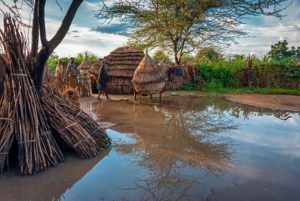
 Severe floods are damaging communities across Africa, displacing families, submerging entire villages and damaging critical infrastructure. The 2024 rainy season has caused Africa’s flooding crisis and countries like Chad, Niger, Nigeria and South Sudan endure some of the worst impacts, with communities suffering from destroyed homes, lost livelihoods and rising food insecurity. In response, several nongovernmental organizations (NGOs) are working swiftly to deliver life-saving resources such as food, shelter and medical care.
The Scope of the Crisis
The United Nations Office for the Coordination of Humanitarian Affairs (OCHA) reports that floods in 2024 have affected 7.1 million people across the Sahel region. The death toll and number of injuries from Africa’s flooding crisis have risen sharply, with 1,526 people reported dead and 4,499 others injured so far this year.
The relentless rainfall has destroyed more than 639,000 homes, affecting 645 schools and 169 health facilities across the region. In South Sudan alone, nearly 380,000 people have been forced to flee as floods submerge entire villages, leaving families without shelter or basic resources. Chad remains the worst-hit country, with 1.9 million people affected by the flooding.
Economic and Health Impacts
Agriculture, a vital economic driver in many African regions, has been severely impacted by the flooding. In Chad, the natural disaster has wiped out 880,000 acres of farmland and killed nearly 70,000 cattle. This has intensified hunger risks in a country where 3.4 million people already face acute food insecurity. Nigeria has also suffered catastrophic losses, with more than 300,000 acres of farmland destroyed. The loss of crops exacerbates food insecurity and undermines economic stability in regions heavily reliant on agriculture as a primary source of income.
The floods have also triggered hazardous health conditions, especially in displacement camps where overcrowding and inadequate sanitation are contributing to the spread of waterborne diseases. In July 2024, the World Health Organization (WHO) reported 1,094 cases of cholera in Nigeria alone. Meanwhile, in South Sudan, by September 2024, up to 400 children per week were being hospitalized for severe malaria. The scale of the crisis underscores the urgent need for coordinated aid efforts to help displaced communities and rebuild essential health infrastructure, restoring stability to affected regions.
IFRC
The International Federation of Red Cross and Red Crescent Societies (IFRC) is actively supporting flood-stricken communities in Chad, Niger, Nigeria and South Sudan. Red Cross teams are distributing essential aid, including shelter, food and sanitation facilities, to those affected by the floods. The organization has also launched a relief fund to help flood victims, providing essential supplies and tackling disease risks in overcrowded camps. Efforts include distributing mosquito nets and hygiene kits to prevent malaria and cholera outbreaks. This protects vulnerable communities from additional health threats caused by the floods.
UNICEF’s WASH Programs
UNICEF is ramping up its Water, Sanitation and Hygiene (WASH) programs across Africa, delivering crucial support to flood-affected communities. In Chad, UNICEF responded swiftly within the first 48 hours of the floods by constructing latrines for 2,200 people and restoring water points for 3,000 individuals. Additionally, the team distributed essential household items to 1,000 people. It also offered therapeutic food to children younger than 5 years old to address immediate nutrition needs.
In Nigeria, UNICEF is partnering with local authorities to register 5,000 households for emergency cash distributions to support those in urgent need. Teams are distributing water purification tablets, setting up portable toilets and running hygiene campaigns to keep families safe from waterborne diseases.
The World Food Programme
After floods submerged 50% of Maiduguri, Nigeria, the World Food Programme (WFP) swiftly set up food kitchens in four camps. These kitchens provide flood-affected families with nutritious meals, including rice and beans, as they seek refuge from their homes. WFP is also delivering emergency food and cash support to Chad and Niger. This critical aid helps families meet their urgent food and nutrition needs while they work to rebuild their lives.
Building Resilience for Long-Term Recovery
Africa’s flooding crisis highlights an urgent call for both immediate aid and sustainable recovery initiatives that can help communities withstand future disasters. As Bob Kitchen, Vice President for Emergencies at the International Rescue Committee (IRC), explains, “Anticipatory action is crucial to how we respond to climate shocks. It enables us to provide earlier and targeted assistance to help populations caught up in the vicious cycle of poverty, conflict and displacement challenges” heightened by climate instability.
While immediate aid response is essential, long-term recovery plans are equally crucial for sustainable change. In partnership with the WFP in Nigeria, the African Development Bank has proposed a $1 billion infrastructure recovery plan for Africa, prioritizing flood-resistant roads and reinforced housing to withstand future disasters. Indeed, these recovery efforts prioritize sustainable agriculture and stronger health care systems to help communities fully recover and better withstand future flooding. Ultimately, these resilience measures are vital to reducing the long-term impact of natural disasters in impoverished African communities.
– Nour Mostafa
Nour is based in Gloucester, UK and focuses on Good News and Global Health for The Borgen Project.
Photo: Flickr

Continued Transition: Cambodia’s Renewable Energy
*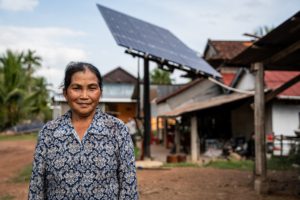 Cambodia is continuing its promising transition towards renewable energy as the most committed country in the region in the global move towards green energy. In Cambodia, 59.2% of the current energy supply already comes from renewable sources, with the government having intense plans to reach its 70% target by 2030. International cooperation and ventures with social power provide hope for Cambodia in its green energy transition.
Hydropower, Solar and Wind Energy
The country has focused on building hydropower and solar infrastructure to support its transition, aiming to move away from importing fossil fuels dependent on global markets, according to Energy Tracker Asia. The Sesan-II Dam was a key development in its transition; this is a facility in Stung Treng Province which opened in 2017 with eight turbines. The dam is the longest in Asia with the ability to produce 1,970 GWh per year to Cambodia’s national grid – 20% of the country’s total electricity generation in 2020.
Beyond its impressive expansions in the hydropower industry, Cambodia is also focusing on the solar energy and wind department. Although solar arrays currently only provide 5% of the country’s electricity supply, there are predictions that this could reach 30% by 2040 as a less expensive source. Cambodia is already building solar mini-grids to provide accessible energy in rural areas but the potential for these schemes is immense considering the country’s strong daily solar irradiance
Cambodia still has 245 villages that do not have access to electricity due to their remoteness, solar power may be the key to solving their problem. Solar mini-grids have become the most cost-effective way to bring 24/7 electricity to remote communities – a renewable and cheap solution to the holes in Cambodia’s energy system.
For the wind energy industry, Cambodia is planning to connect wind power to its national grid by 2026. Energy Minister Keo Rattanak made clear that six projects have already been approved in Mondulkiri which will generate 900 MW. This investment already supersedes past predictions of up to 500 MW potential energy production by Blue Circle.
International Partners
An important aspect of renewable energy in Cambodia has been its commitment to international cooperation to meet its aims. Australia has become a key partner in promoting green energy with a recent visit to EnergyLab Cambodia, a non-profit that is supporting the growth of green energy markets within the country.
The EU has also made key commitments to work with Cambodia towards its green goals; the European Commissioner for International Partnerships, Jutta Urpilainen, launched four new initiatives this year to promote renewable energy among other sustainable goals.
Although there seems to be a committed effort towards the transition to renewable energy in Cambodia, there is still a significant need for private investment in the sector. This involves the government ensuring an economy that remains attractive to foreign investors – something that cheaper energy will hopefully lead to. Phoumin Han, an energy economist for ASEAN and East Asia, argues that promoting investment in rooftop solar paneling can be a key area for continuing development without relying on government expenditure.
The Future
EnergyLab is an organization that continues to support Cambodia’s transition towards renewable energy and providing electricity to the rest of Cambodia’s population. The organization guides policy decisions while also promoting private investment in the sector. Founded in 2018, it consults across the world but has particular success in hosting Clean Energy Week.
Renewable energy in Cambodia has opened doors for energy independence without fears of global market shifts in fossil fuels – while also allowing the country to provide electricity to 98% of its population in 2022. The continuing growth in solar and wind energy paves their path to meet future energy goals, although still dependent on international cooperation and private investment.
– Charley Dennis
Photo: Flickr
Harnessing Solar Energy in sub-Saharan Africa
This lack of energy infrastructure hampers economic growth. It severely hinders the scope of education and health care development, making it a pivotal obstacle to job creation. However, solar energy may be emerging as a formidable player in the fight against poverty in the region. With sub-Saharan Africa having abundant renewable energy resources such as sunlight and wind, the area is more than well-positioned to harness solar power and try to transform its energy landscape.
The Energy-Poverty Nexus
Without electricity, the mundane daily processes of society come to a halt. Businesses struggle to operate, health care services are unequipped and education is limited to daytime hours. Access to electricity, therefore, is at the core of any society aiming to meet economic and productivity goals. Yet, in sub-Saharan Africa, more than half of the region’s population does not have regular access to electricity. Energy poverty is linked to the deepening of economic disparity in this region due to limited access to essential services.
Solar energy offers a promising solution because sub-Saharan Africa has abundant sunlight and wind. Solar energy is a clean, renewable and widely available resource. It can be harnessed to provide electricity in off-grid and remote areas. The region receives enough solar energy to meet its demands several times over, making solar energy a solid contender for addressing energy poverty.
Furthermore, solar power systems are scalable. This means they can be installed in smaller areas, such as individual homes and across larger territories, such as villages and entire communities. These systems are often a more affordable option in addition to being easier to maintain than traditional energy grids that are fossil fuel-based. This quality makes them particularly suitable and easily adaptable for rural communities.
Current Solar Energy Projects Transforming Lives in sub-Saharan Africa
Several organizations and solar energy initiatives are showcasing the potential behind this effort to alleviate poverty in sub-Saharan Africa. Some of them include:
Conclusion
In sub-Saharan Africa, solar energy holds immense potential to combat poverty while simultaneously driving sustainable development. By harnessing the region’s copious amounts of sunlight, solar energy can be the key to accessible electricity. Indeed, advances will improve job opportunities and further growth in the health care and education sectors. As more governments, businesses and local communities add to the effort, investing in solar energy shows a path toward a more equitable future for the region.
– Mashal Aman
Photo: Pexels
Urgent Humanitarian Aid for Africa’s Flooding Crisis
The Scope of the Crisis
The United Nations Office for the Coordination of Humanitarian Affairs (OCHA) reports that floods in 2024 have affected 7.1 million people across the Sahel region. The death toll and number of injuries from Africa’s flooding crisis have risen sharply, with 1,526 people reported dead and 4,499 others injured so far this year.
The relentless rainfall has destroyed more than 639,000 homes, affecting 645 schools and 169 health facilities across the region. In South Sudan alone, nearly 380,000 people have been forced to flee as floods submerge entire villages, leaving families without shelter or basic resources. Chad remains the worst-hit country, with 1.9 million people affected by the flooding.
Economic and Health Impacts
Agriculture, a vital economic driver in many African regions, has been severely impacted by the flooding. In Chad, the natural disaster has wiped out 880,000 acres of farmland and killed nearly 70,000 cattle. This has intensified hunger risks in a country where 3.4 million people already face acute food insecurity. Nigeria has also suffered catastrophic losses, with more than 300,000 acres of farmland destroyed. The loss of crops exacerbates food insecurity and undermines economic stability in regions heavily reliant on agriculture as a primary source of income.
The floods have also triggered hazardous health conditions, especially in displacement camps where overcrowding and inadequate sanitation are contributing to the spread of waterborne diseases. In July 2024, the World Health Organization (WHO) reported 1,094 cases of cholera in Nigeria alone. Meanwhile, in South Sudan, by September 2024, up to 400 children per week were being hospitalized for severe malaria. The scale of the crisis underscores the urgent need for coordinated aid efforts to help displaced communities and rebuild essential health infrastructure, restoring stability to affected regions.
IFRC
The International Federation of Red Cross and Red Crescent Societies (IFRC) is actively supporting flood-stricken communities in Chad, Niger, Nigeria and South Sudan. Red Cross teams are distributing essential aid, including shelter, food and sanitation facilities, to those affected by the floods. The organization has also launched a relief fund to help flood victims, providing essential supplies and tackling disease risks in overcrowded camps. Efforts include distributing mosquito nets and hygiene kits to prevent malaria and cholera outbreaks. This protects vulnerable communities from additional health threats caused by the floods.
UNICEF’s WASH Programs
UNICEF is ramping up its Water, Sanitation and Hygiene (WASH) programs across Africa, delivering crucial support to flood-affected communities. In Chad, UNICEF responded swiftly within the first 48 hours of the floods by constructing latrines for 2,200 people and restoring water points for 3,000 individuals. Additionally, the team distributed essential household items to 1,000 people. It also offered therapeutic food to children younger than 5 years old to address immediate nutrition needs.
In Nigeria, UNICEF is partnering with local authorities to register 5,000 households for emergency cash distributions to support those in urgent need. Teams are distributing water purification tablets, setting up portable toilets and running hygiene campaigns to keep families safe from waterborne diseases.
The World Food Programme
After floods submerged 50% of Maiduguri, Nigeria, the World Food Programme (WFP) swiftly set up food kitchens in four camps. These kitchens provide flood-affected families with nutritious meals, including rice and beans, as they seek refuge from their homes. WFP is also delivering emergency food and cash support to Chad and Niger. This critical aid helps families meet their urgent food and nutrition needs while they work to rebuild their lives.
Building Resilience for Long-Term Recovery
Africa’s flooding crisis highlights an urgent call for both immediate aid and sustainable recovery initiatives that can help communities withstand future disasters. As Bob Kitchen, Vice President for Emergencies at the International Rescue Committee (IRC), explains, “Anticipatory action is crucial to how we respond to climate shocks. It enables us to provide earlier and targeted assistance to help populations caught up in the vicious cycle of poverty, conflict and displacement challenges” heightened by climate instability.
While immediate aid response is essential, long-term recovery plans are equally crucial for sustainable change. In partnership with the WFP in Nigeria, the African Development Bank has proposed a $1 billion infrastructure recovery plan for Africa, prioritizing flood-resistant roads and reinforced housing to withstand future disasters. Indeed, these recovery efforts prioritize sustainable agriculture and stronger health care systems to help communities fully recover and better withstand future flooding. Ultimately, these resilience measures are vital to reducing the long-term impact of natural disasters in impoverished African communities.
– Nour Mostafa
Photo: Flickr
Green Jobs and Economic Growth in Low-Income Countries
Green Jobs as a Catalyst for Economic Opportunity
In many low-income countries, poverty as a result of unemployment is a widespread issue, particularly in rural areas. In this case, the green economy presents itself as an occasion to diversify job markets and offer employment opportunities in areas that have not yet been brought to mainstream industries. By expanding into sectors such as renewable energy, sustainable agriculture and waste management, green jobs create a stronger bond with the social sphere of communities instead of just an environment-based one.
The renewable energy sector alone could offer significant job creation potential as the installation, operation and maintenance of solar power systems, wind turbines and hydroelectric systems require skilled workers in both urban and rural communities. These jobs could provide stable income and improve the lives of many by reducing dependency on costly alternatives such as imported fossil fuel-based energy and thus, increasing energy affordability on a larger scale. In the past decade, employment in renewable energy has nearly doubled, reaching a whopping 13.7 million in 2022, an increase from a total of 7.3 million in 2012.
Sustainable Agriculture
For many low-income economies, agriculture is the backbone of society. Smallholder farmers produce at least one-third of the world’s food, yet many of them continue to face poverty due to escalating issues such as outdated farming practices, environmental degradation and poor yields. In Rwanda, projects such as Land Husbandry, Water Harvesting and Hillside Irrigation (LWH) have positively contributed to a wider socioeconomic understanding of the need for agroforestry projects. The LWH has improved crop yields and land degradation, leading to an increase in incomes for smallholder farmers. This has also significantly alleviated poverty concerns as well as strengthened food security in local areas.
Thus, for the agriculture sector, green jobs can provide solutions to these issues by creating and encouraging sustainable farming methods that raise productivity and prevent environmental degradation. Investing time and effort into methods such as organic farming, agroforestry and soil conservation as well as into training smallholder farmers the value of these practices is a step towards improving long-term land fertility and crop yields.
Boosting Local Economies
Increasing interest in eco-friendly industries offers another opportunity to reduce poverty in low-income countries as these industries focus on sustainable manufacturing and construction. Activities such as these are labor-intensive and difficult to outsource, meaning they create local job opportunities.
With the right training, green industries require a diverse range of skills that workers—from technicians and engineers to managers and urban planners—can develop to adapt to the demand for environmentally responsible products. An example of this is the World Bank’s Energy Efficiency Improvement in Commercial and Industrial Sectors (VEEIE) project based in Vietnam. This project works towards helping local factories to adopt energy-efficient technologies to reduce costs and increase productivity. This project contributes to the creation of green jobs that have employed local workers to carry out installation and maintenance-related services in this industry.
Economic Growth in Low-Income Countries
Green jobs have already shown considerable success in addressing unemployment-driven poverty. In Kenya, for example, solar energy projects such as the Green Mini-Grid Program have successfully used incoming investments to create jobs in rural areas. By employing local workers who are in charge of installing, operating and carrying out maintenance for the solar energy products, this initiative provides affordable access to energy as well as employment opportunities for those in need.
Green jobs have the potential to significantly contribute to economic growth in low-income countries by providing a wider range of economic opportunities at the local level. Sectors such as renewable energy, sustainable agriculture and eco-friendly industries hold the potential to contribute to long-term economic growth, job creation and providing relief for those that live under poverty. With the appropriate policies, training programs and investment in the green economy, low-income countries can stimulate local economies and play a central role in economic well-being, environmental preservation and poverty reduction.
– Mashal Aman
Photo: Flickr
Troglodyte Homes in Libya and Tunisia
Troglodyte Homes
Troglodyte homes, extraordinary underground residences sculpted from rock exemplify a blend of cultural heritage and environmental adaptation. The term “troglodyte,” from the Greek for “cave dweller,” scarcely captures the sophistication of these structures. Historically, the Amazigh people of North Africa, particularly in Tunisia and Libya, have constructed these homes to endure the harsh desert conditions. Ideally suited for the region’s dry, fluctuating climate, these homes stay cool during the intense summers and warm in the winters.
Like those in Libya, the troglodyte houses in Tunisia’s Matmata region feature large central courtyards that serve as communal grounds, enhancing airflow and providing shared space for families. Similarly, notable troglodyte sites exist in Libya, particularly in the city of Gharyan. These traditional homes remain a vital part of the Amazigh people’s heritage despite the rapid pace of globalization. However, as more people relocate to urban areas, the troglodyte dwellings in Tunisia and Libya face risks of abandonment and degradation.
Tourism: A Lifeline for the Region and its Inhabitants
For decades, the troglodyte homes in Libya and Tunisia have historically attracted tourists eager to experience the heritage and ingenuity of ancient Amazigh communities. Tourism provided crucial support for local communities, including artisans, guilds and homeowners.
In Matmata, tourism has been a foundation of the local economy, with many families transforming their homes into guest accommodations and museums. Conversely, tourism in Libya has traditionally been limited. Nevertheless, it has allowed communities in the Nafusa Mountains to share their heritage with the world and fellow Libyans. Some structures in the area, more than 2000 years old, have been largely abandoned due to instability. Despite Libya’s wealth of historical sites, including Roman ruins and coastal landmarks, tourism struggles to flourish amid the ongoing political and economic turmoil.
The Challenges and Decline in Tourism
In recent years, factors have contributed to the decline of tourism in these regions:
Efforts by International Organizations
International organizations such as UNESCO and various NGOs are focusing efforts on raising awareness and providing funds for cultural heritage preservation. While UNESCO has not designated the Troglodyte homes in Libya as World Heritage sites, it does protect other Libyan sites like Leptis Magna and the old town of Ghadames. In Tunisia, local communities have tried to preserve troglodyte homes by converting them into guest houses, although these ongoing efforts often fall short without sufficient funding. Meanwhile, the Tunisian government is actively promoting tourism in areas like Matmata through government-led campaigns.
Looking Ahead
The troglodyte homes in Libya and Tunisia, architectural treasures, face the risk of neglect and oblivion. With tourism affected by political, economic and global challenges, the urgency for sustained international and local preservation efforts grows.
– Gufran Elhrari
Photo: Flickr
USAID in Angola: Impacting Poverty
Historical Background
Since 1992, USAID has been engaged in relief and development programs in Angola, initially focusing on immediate health interventions like immunization campaigns and emergency feeding. Following the end of the civil war in 2002, Angola made strides in rebuilding its infrastructure and economy. However, challenges such as poverty, inadequate health care and limited education remain. In response, USAID expanded its efforts to address these critical areas for recovery. By 2011, USAID celebrated its 50th anniversary and 15 years in Angola, providing support across agriculture, economic growth, health and governance.
Health Care Assistance
USAID’s health programs in Angola focus on improving health care services and addressing high maternal and child mortality rates. Collaborating with the Government of Angola (GRA) and various stakeholders, USAID supports initiatives like the President’s Emergency Plan for AIDS Relief (PEPFAR) and the President’s Malaria Initiative (PMI) to combat malaria, HIV/AIDS and other communicable diseases in the nation.
Despite these efforts, Angola faces significant health challenges, with nearly one in five children dying before age 5 and a maternal mortality ratio of 199 deaths per 100,000 live births. The country also has a high fertility rate of 5.8 births per woman, straining health care resources. The Angolan National Health Development Plan (2012-2025) aims to reduce malaria morbidity from 21% to 12%, maintain HIV/AIDS prevalence at 2%, triple the number of doctors per 10,000 citizens, improve skilled birth attendance from 49% to 70% and increase access to family planning services from 6% to 45%.
Food Assistance
Angola is highly vulnerable to recurring climatic shocks, such as droughts and floods, which have severely limited agricultural production and exacerbated food insecurity. Moreover, inadequate access to safe drinking water and essential health care services has led to increased morbidity and mortality rates. According to the World Food Program (WFP), as of September 2021, more than 1.3 million people in the Cunene, Huíla and Namibe provinces required emergency food assistance.
In response to this crisis, U.S. Ambassador Tulinabo S. Mushingi issued a redeclaration of humanitarian needs on November 29, 2022, highlighting the widespread food insecurity affecting the country. In light of these challenges, USAID continues to provide critical support in food, nutrition, water, sanitation and hygiene assistance to improve food security and nutrition outcomes for at-risk populations in Angola.
Environmental Protection
USAID’s Regional Environmental Activities prioritize the conservation and sustainable management of the Cubango-Okavango Basin, one of Africa’s most biodiverse ecosystems, which supports more than one million people who depend on its water for drinking, fishing, agriculture and tourism. However, changes in land use, water diversion and urbanization threaten these unique ecosystems and their vital resources. In response, the Ecosystems, Communities and Climate – Cubango-Okavango (ECCO) initiative has been launched, funded by USAID and bolstered by private sector support.
This initiative focuses on enhancing community governance of water and sanitation services while promoting cross-sector collaboration for biodiversity conservation. USAID’s efforts in Angola also include supporting national forest inventories, implementing community forestry pilot projects, conducting fire management capacity assessments and evaluating Angola’s protected area network. These initiatives complement regional programs aimed at safeguarding Angola’s natural resources, enhancing economic opportunities and promoting sustainable development across Angola, Namibia and Botswana.
Economic Development
Furthermore, USAID has developed a five-year Country Development Cooperation Strategy (CDCS) that acknowledges Angola’s growing economy, rising regional status and ongoing development challenges. This strategy aims to transition Angola from a donor-recipient relationship to a partnership model, where the country will take the lead in financing and managing its economic and social development with targeted technical assistance from USAID.
Recognizing agriculture as the backbone of the economy, USAID fosters economic growth and trade by mobilizing private sector investments. Collaborating with companies like ExxonMobil and Azule Energy, USAID supports rural women farmers through initiatives that enhance land rights, literacy and agricultural productivity, such as the Women in Angola Farming project. Additionally, USAID’s Africa Trade and Investment program under the Prosper Africa initiative boosts trade and investment between Africa and the U.S., addressing energy poverty and promoting sustainable innovation.
Conclusion
The USAID program in Angola represents a commitment to supporting the country’s development journey. Through targeted interventions in health care and food assistance, environmental protection and economic development, USAID has made a positive impact on the lives of many Angolans. Continued collaboration between the U.S. government, Angolan authorities and local communities will be essential to address ongoing challenges and promote sustainable development in the years to come.
– Hoi Ieng Chao
Photo: Flickr
Poverty in Tuareg Communities
Environmental Challenges
The difficulties of Tuareg life could only increase with changing weather patterns bringing more droughts to the Sahel region. Largely dependent on animal agriculture, Tuareg must migrate seasonally in search of water springs, arable land, game and wood. However, since the series of droughts that hit the Sahel region from 1968 until 1985, livestock yield has drastically decreased. These dry years resulted in the death of over 100,000 people from lack of food and disease.
In 2021, southern Mauritania, central Mali, southern Niger and central Chad, crops received less than half the amount of water they needed. With the population of the Sahel set to reach approximately 500 million by 2050, the onset of extreme weather patterns threatens to exacerbate the already existing poverty in Tuareg communities.
Moreover, the wells in the Sahara are few, and far between and highly dangerous. They are handmade by Tuareg, and at high risk of collapse. One elderly Tuareg man reported, “Digging a well that can collapse on you is like facing the barrel of a gun.”
Mali and Niger
The largest populations of Tuareg live in Mali and Niger, where they make up around 10% of the population. However, they do not necessarily have citizenship in the countries in which they reside. In Mali, tensions with the Malian population stem from the fact that Tuaregs enslaved black Africans in the 18th and 19th centuries when they had control over northern Mali, according to Refworld. For their part, Tuaregs are aggrieved by the lack of representation and government support they receive in their remote Northern territories, Al Jazeera reports.
In Libya, many Tuareg joined Gaddafi’s army on the promise of a salary and the potential for citizenship. However, bureaucratic obstacles prevented Tuareg from achieving legal citizenship. Gaddafi’s government required people seeking citizenship to show proof of residence in Libya 10 years before the country’s independence in 1951. But many nomadic Tuarge lacked these written records. Without citizenship, their rights are not protected and they can be denied medical aid. Additionally, they cannot travel or find stable employment.
Organizations Helping
Although many Tuareg are politically marginalized, there are currently many NGOs working to further their interests. Jump4Timbuktu, for example, is a charity working in Mali to economically empower the Tuareg community there. The charity works with local Tuareg, helping them sell their handcrafted jewelry. All profits go towards funding community development schemes.
Bambini nel Desserto is another organization that focuses on providing relief for people in Africa, including Tuareg communities living in the desert. The charity has recently helped Mohamed Ag Abasse, a Tuareg man from Mali, set up his own artisanal workshop so he can sell his handmade jewelry.
Conclusion
Initiatives like those mentioned above help Tuareg communities slowly to diversify their economy beyond agriculture. This will be a vital step if the indigenous people of the Sahara are to survive the changing and increasingly hostile environment of the Sahel.
– Io Oswald
Photo: Flickr
How Zanmi Lasante is making an impact in Haiti
Zanmi Lasante: HIV Initaitives
Established in the 1980s, Zanmi Lasante has impacted many Haitians. It supports many causes including HIV/AIDS reduction, mental health, nutrition and water sanitation.
In 1990, Zanmi Lasante created an HIV Equity Narrative to supply antiretroviral drugs to poor, rural areas. Patients who have been diagnosed with HIV early on can receive these drugs to prevent its replication. The organization also employs many community workers who distribute medicine to patients and care for them at home. The program also holds screening programs to detect the virus. So far, the program has tested more than 100,000 for HIV this year and an estimated 15,000 people have received antiretroviral drugs during the same period.
Mental Health
Zanmi Lasante expanded its range in 2005 and started focusing on alleviating mental health issues in Haiti; it improved its services in 2012 and now employs community health workers, nurses and psychologists who support patients with depression, epilepsy, psychotic disorders and children with psychological issues. The organization has also created the Zanmi Lasante Depression Symptom Inventory, which is a depression assessment tool manual written in Haitian Creole.
Zanmi Lasante held more than 9,000 therapy visits annually. From July 2023 to June 2024, it held 385 community outreach programs and 408 learning seminars regarding psychological issues.
Malnutrition and Hygiene
Furthermore, since 2013, Zanmi Lasante has been producing the food item Nourimaba, which is an extremely nutritious paste that it distributes for free among Haitians suffering from malnutrition. The organization makes Nourimaba from peanuts, milk powder, canola oil, sugar and vitamins. Consuming this for less than two months consistently can restore a severely malnourished child to health. Today, Zanmi Lasante successfully produces more than 120 metric tons of Nourimaba each year.
In order to improve Haiti’s water sanitation, the NGO provides soap to numerous hand-washing areas and improves old plumbing infrastructure by putting in newer pipes that connect to pure water reserves. The organization targets more than 50,000 people with these activities per year.
Partners In Health and Zanmi Lasante are making big changes in Haiti and increasing the country’s living standards daily. This non-profit’s work is likely to make even more improvements for Haitians and drastically reduce poverty, hunger, and sickness rates in the future.
– Mustafa Tareen
Photo: Unsplash
Flooding in Sri Lanka: Building Resilience
Building Colombo’s Flood Resilience
Colombo, situated within a river basin, faces regular flooding during the monsoon season. However, the city benefits from an extensive network of wetlands, which play a vital role in flood management by absorbing approximately 40% of floodwaters. Wetlands—areas of water-saturated land—serve as natural flood defenses by absorbing excess water and slowing down its flow, which mitigates flood intensity and associated damage. This natural buffer within Colombo helps alleviate the impacts of heavy rainfall and reduces the risks of flooding in Sri Lanka.
Urban expansion, however, has drastically reduced Colombo’s wetland areas, draining and infilling these ecosystems to accommodate growth. The World Bank revealed that Colombo’s wetlands had declined by about 40% over three decades. Wetlands like the Thalangama Wetland, just outside Colombo, suffer from degradation and misuse as dumping grounds. These direct and indirect effects of urbanization intensify Colombo’s vulnerability to flooding.
In response, the government, with support from the World Bank-funded Metro Colombo Urban Development Project, launched the Metro Colombo Wetland Management Strategy in 2016. This initiative prioritizes wetland restoration and integrates these ecosystems into urban planning to prevent further losses. These efforts led Colombo to become the first capital city to earn international Wetland City accreditation from the Ramsar Convention on Wetlands in 2018, which promotes international protection for its wetlands.
Today, Colombo’s wetlands receive stronger protection. According to BBC, efforts to rehabilitate degraded areas, including the Thalangama Wetland, have turned these spaces into biodiverse tourist attractions while maintaining their role as critical flood defenses. The government has also suspended all activities involving the filling or destruction of wetlands in 2018.
Looking Forward
Colombo has successfully revitalized its degraded wetlands, transforming garbage-filled areas into ecosystems that boost biodiversity and protect against flooding. Community-led cleanups and government initiatives, such as the 2016 Metro Colombo Wetland Management Strategy, have enhanced wetlands’ ability to boost environmental resilience and improve urban quality of life. The Ramsar accreditation has curbed further encroachment by raising awareness. However, rapid urban expansion still threatens these ecosystems, BBC reports. Sustained cooperation between residents, authorities, and organizations remains vital to safeguarding these wetlands, which are crucial to Colombo’s sustainability and flood defense.
Asian Development Bank (ADB) report emphasizes the rising frequency of El Niño events, which intensify monsoons and contribute to flooding in Sri Lanka. Restoring and protecting wetlands is just one of many essential steps to strengthen the country’s flood resilience.
– William Pickering
Photo: Flickr
A Healthier Future: YEDI Is Empowering Adolescents in Nigeria
These challenges include mental health issues, accessing sexual and reproductive health and rights (SRHR) information and services and a lack of quality information about SRHR. YEDI’s commitment to empowering young people is evident through its partnerships and programs, advancing adolescent health and well-being across the country. Through its various programs, YEDI has impacted more than 458,560 young people across Lagos, Kano, Abuja, Akwa Ibom and Rivers State.
The SKILLZ Program
Since 2012, YEDI has partnered with Grassroot Soccer (GRS) to implement the SKILLZ program in Nigeria. The program is delivered through fixed and outreach sites, which serve as safe spaces for young people aged 10-24, as well as the broader population in underserved communities. YEDI’s interventions provide comprehensive sexual and reproductive health education and services, equipping young people to make informed decisions about their health and future. The SKILLZ program also promotes gender equality, empowering young women and girls, as well as young men and boys, to become leaders and advocates within their communities.
The SKILLZ program has impacted at least 370,000 adolescents by providing comprehensive information and services related to SRHR, gender-based violence, gender equality, mental health and substance abuse prevention and treatment. YEDI collaborates with partners across diverse thematic areas, including gender-based organizations, to ensure that survivors of abuse and individuals in need of health care services, such as those requiring HIV/AIDS care, receive adequate counseling, support and treatment. Through its programs, YEDI has referred more than 56,000 people for proper care and treatment, helping them along their recovery journey.
Cultivating Safe Spaces for Young People
YEDI was also part of the consortium that implemented the USAID-funded Youth Powered Ecosystem for Adolescent Health (YPE4AH) project. This initiative aimed to improve the health and well-being of urban, underprivileged, out-of-school and unmarried adolescents aged 15–19 in Kano and Lagos. As part of the project, YEDI established and managed six youth-friendly centers in these cities, which played a crucial role in developing life skills for more than 66,000 out-of-school adolescents in Nigeria.
In addition, YEDI has extensive experience in creating safe spaces for young people. Since 2015, YEDI has managed seven Hello Lagos Youth Friendly Centers in partnership with the Lagos Ministry of Health and the United Nations Population Fund (UNFPA), benefiting about 1,000 young mothers and 100,000 adolescents in Lagos State.
Using Soccer to Engage Adolescents
YEDI uses soccer as a natural hook to engage adolescents on issues related to their health and relationships, identifying innovative ways for them to become champions within their communities. YEDI’s programs are designed to reflect the needs, interests and behaviors of young people while strengthening their SRHR and life skills. Both trained female and male “near-peer” coaches deliver the evidence-based and age-appropriate SKILLZ curriculum, which integrates soccer language, metaphors and activities to promote reflection on gender norms, goal setting and achievement.
The BEAT NTD Project
To combat neglected tropical diseases (NTDs) in Nigeria, YEDI implemented the “BEAT NTD” project in Lagos and Rivers states. This initiative resulted in a 45% increase in awareness and knowledge about NTD prevention and mitigation, improved access to health care and a 10% reduction in the prevalence of NTDs. The project successfully reached a total of 3,101 adolescents in the targeted communities, contributing to better health outcomes in these areas.
Furthermore, the organization actively participates in key networks and community bodies, including the Lagos State Adolescent Health and Development Technical Working Group, the Child Protection Network and the Society for Adolescent and Young People’s Health in Nigeria. These engagements strengthen YEDI’s capacity for impactful collaboration, advocacy and knowledge-sharing, all aimed at advancing adolescent health and well-being across the country.
Conclusion
YEDI plays a vital role in improving the health and well-being of adolescents in Nigeria. By creating safe spaces and engaging youth in meaningful discussions, the organization empowers the next generation to become advocates for their health and communities, paving the way for a brighter and healthier future.
– Staff Reports
Photo: Unsplash