Poverty in Tuareg Communities
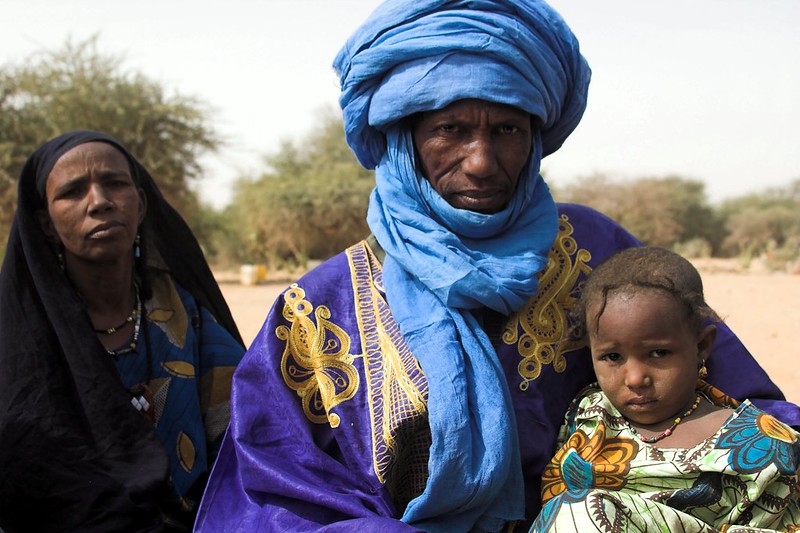 The Tuareg are a traditionally nomadic people living in Northern Africa. Many have now settled because of the harshness of the nomadic lifestyle. Moreover, the introduction of state boundaries by the French during their colonial occupation of Northern Africa has made Tuareg mobility difficult. French colonial powers also dispossessed Tuareg of their grazing land and conscripted Tuareg men into their army. Cut off from their traditional ways of living and coping with the inhospitable conditions of the desert, poverty in Tuareg communities is widespread as they live in places such as Niger, “one of the poorest nations in the world,” according to USAID.
Environmental Challenges
The difficulties of Tuareg life could only increase with changing weather patterns bringing more droughts to the Sahel region. Largely dependent on animal agriculture, Tuareg must migrate seasonally in search of water springs, arable land, game and wood. However, since the series of droughts that hit the Sahel region from 1968 until 1985, livestock yield has drastically decreased. These dry years resulted in the death of over 100,000 people from lack of food and disease.
In 2021, southern Mauritania, central Mali, southern Niger and central Chad, crops received less than half the amount of water they needed. With the population of the Sahel set to reach approximately 500 million by 2050, the onset of extreme weather patterns threatens to exacerbate the already existing poverty in Tuareg communities.
Moreover, the wells in the Sahara are few, and far between and highly dangerous. They are handmade by Tuareg, and at high risk of collapse. One elderly Tuareg man reported, “Digging a well that can collapse on you is like facing the barrel of a gun.”
Mali and Niger
The largest populations of Tuareg live in Mali and Niger, where they make up around 10% of the population. However, they do not necessarily have citizenship in the countries in which they reside. In Mali, tensions with the Malian population stem from the fact that Tuaregs enslaved black Africans in the 18th and 19th centuries when they had control over northern Mali, according to Refworld. For their part, Tuaregs are aggrieved by the lack of representation and government support they receive in their remote Northern territories, Al Jazeera reports.
In Libya, many Tuareg joined Gaddafi’s army on the promise of a salary and the potential for citizenship. However, bureaucratic obstacles prevented Tuareg from achieving legal citizenship. Gaddafi’s government required people seeking citizenship to show proof of residence in Libya 10 years before the country’s independence in 1951. But many nomadic Tuarge lacked these written records. Without citizenship, their rights are not protected and they can be denied medical aid. Additionally, they cannot travel or find stable employment.
Organizations Helping
Although many Tuareg are politically marginalized, there are currently many NGOs working to further their interests. Jump4Timbuktu, for example, is a charity working in Mali to economically empower the Tuareg community there. The charity works with local Tuareg, helping them sell their handcrafted jewelry. All profits go towards funding community development schemes.
Bambini nel Desserto is another organization that focuses on providing relief for people in Africa, including Tuareg communities living in the desert. The charity has recently helped Mohamed Ag Abasse, a Tuareg man from Mali, set up his own artisanal workshop so he can sell his handmade jewelry.
Conclusion
Initiatives like those mentioned above help Tuareg communities slowly to diversify their economy beyond agriculture. This will be a vital step if the indigenous people of the Sahara are to survive the changing and increasingly hostile environment of the Sahel.
– Io Oswald
Io is based in Paris, France and focuses on Politics for The Borgen Project.
Photo: Flickr
