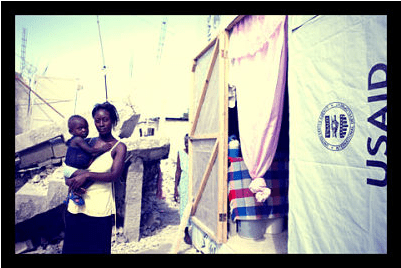
While there are numerous questions regarding world poverty and why we should protect it, here are three big questions and three simple answers that make eliminating poverty a foreseeable future.
Question 1 – Is the Problem too big to address?
In the case of poverty, no action is too small to make a lasting impact. Food, water, and shelter are basic human needs and when teaching people that are living in poverty how to provide these basic needs for themselves, the solution is very simple. Something small, such as installing a well in an impoverished village can improve the lives of hundreds of people by reducing illnesses caused by dehydration and poor sanitation and creating a source of water for crops to grow.
Question 2 – Doesn’t the US do enough already?
In general, most Americans believe that 25 percent of the United States’ federal budget is allotted to foreign aid. In reality, only one percent of the budget goes to funding programs that provide aid and reduce poverty. To give a bit of perspective, $30 billion goes to foreign aid and $663 billion goes to military spending. When it comes to foreign aid and wealthy countries that can afford to give, the United States ranks among those who give lowest percentage of their GDP, in line after Sweden, Norway, Luxemburg, the United Kingdom, and Ireland. The United States allots only 0.2 percent of gross national income to programs that fight poverty across the world while the highest ranking countries give between 0.5 percent and one percent of their national incomes.
Even so, over the years, there have been many successes in poverty reduction. Today poverty remains as one of the biggest problems in the world, however, according to USAID the number of people living in poverty has been reduced by 50 percent in the last 20 years, smallpox has been eradicated worldwide and since 1990, 800 million people have gained access to improved water supplies and 750 million to improved sanitation. If the U.S. only allots 0.2 percent of the gross national income to foreign aid focused programs, there could be tremendous gains and millions more people would benefit if the U.S. allotted another 0.2 percent or more of the federal budget.
Question 3 – Does corruption in developing nations prevent aid from reaching the most impoverished people?
Yes, corruption exists everywhere, but it is not a justifiable excuse for ignoring the billions of people in developing countries that continue to suffer. In fact, experts have developed strategies of transparency that eligible countries must address before receiving aid. These strategies ensure that the aid coming from the United States goes directly to the people and programs that need it the most.
There it is; three big questions and three simple answers when it comes to world poverty. Eliminating poverty is not too big, and funding to end poverty is increasingly protected from supporting corruption. Advocating for foreign aid from the United States, does not simply eradicate illnesses or provide food and knowledge, but lifts men, women, and children out of poverty and assists in establishing long-term development.
– Kira Maixner
Source: The Borgen Project, USAID
Photo: Global Communities

Nafundi and Open Data Kit: Organizing the World
As Bill Gates discussed in his 2013 letter, data collection and maintenance is an important aspect in running nonprofit organizations in developing countries. This is especially important when it comes to using that data to help make better decisions and analyze trends and successes. Gates encourages a focus on training staff members, clinicians, and volunteers on how to meticulously keep such records.
Open Data Kits, or ODK, was started as a google.org project in 2008. ODK is an enormous mobile, web, and cloud based resource that simplifies and organizes data collection through various tools and applications. With interns and researchers from the University of Washington’s Department of Computer Science and Engineering, the project grew into a full scale organization with multiple members, companies, developers, and users.
Two of the interns, Yaw Anokwa and Carl Hartung, started their own company, Nafundi, that extends these services to individual clinics, companies, or other nonprofits that work in developing countries. Not only does Nafundi provide these services and the mobile devices to use them, they spend a significant time training users so that they can handle any issues and gain a deep understanding of what is going on with all their data.
For example, a health clinic in rural Kenya needs to record the number of patients, their illnesses, drugs prescribed, and follow-ups. After collecting all this information, there needs to be a safe way to store this information; safe from natural distress, purposeful destruction, or faulty handling from staff. Users can create forms and surveys, including images, audio recordings, videos, and most importantly mapping locations. This data is then aggregated and can be illustrated as graphs and maps, showing specific locations where there is a decline or increase in a disease.
While the initial cost of the technology to use ODK may be expensive, looking into the future cost-benefit analysis, detailed visuals of successes or failures of a clinic’s or organization’s efforts will better help them decide how to move forward. These final products could also greatly affect the willingness and understanding of donors to see how their money is being put to use.
– Deena Dulgerian
Source: opendatakit.org
Source: nafundi.com
Sugar Does Not Sweeten Nigerian Economy?
When seeing the productive land for sugar, northern Nigerian farmers have expressed frustration because they say that productivity is wasted without big-time local buyers. Farmers sell sugar cane as snacks on the street while the country imports 97 percent of the sugar it consumes.
Mallam Usman Abdu Gubuci describes himself as one of the sugar-farming “giants” in his area, with five hectares of land. He states that his part of northern Nigeria could be a major supplier of sugar to West Africa, but that farmers no longer even bother to grow sugar that can be refined. “There is special sugar cane for that sugar, which we were introduced with. But when we planted it, there was no buyer… so we ended up wasting our money,” said Gubuci.
Sugar officials say Nigeria spent $620 million on sugar imports in 2012, and they do not expect that number to decline soon.
Hajiya Bilkisu Mohammed, who heads the Association of Women Farmers in northern Nigeria, asserts that part of the reason local farmers cannot sell sugar for refining is that factories in this part of Nigeria have to battle constant electrical shortages. The factories must rely on expensive generators, driving up costs and making their products more expensive.
The Nigerian government also has announced plans to reduce imports of other food products in recent months. In January, President Goodluck Jonathan promised to increase food production by 20 million metric tons by 2015. He announced that increased food production will create 3.5 million jobs and reduce Nigeria’s dependence on imports.
Lack of electricity may be just one reason for the heavy costs of production. Local areas may also need more advertisements. Furthermore, the lack of proper and efficient infrastructure does not allow sugar to be transported effectively within Nigeria.
Potential for economic success is usually accompanied by challenges. For the Nigerian sugar industry, government support and intervention are needed. The local sugar industry needs to help from different directions. To start, it would be advantageous if the government were able to solve the shortage of electricity for factories and give some strategic policy and financial support to cut down the cost of sugar production. Additionally, it is important for the government to strengthen sugar and trade facilities, and transportation infrastructure. Offering more benefits and welfare to workers would attract more investment and encourage more people to get involved. In this way, local factories and farmers become more profitable and can expand their businesses. In this way, Nigeria would have the capacity to become a net exporter of sugar.
– Caiqing Jin(Kelly)
Source: VOA
Photo Source: ROPAfrica
U.S. AID Puts Fighting Terror Into Afghan Hands
On February 1, USAID finalized the transition of the Learning for Community Empowerment Program 2 (LCEP) into the Farah Directorate of Education in Farah City program in Farah, Afghanistan. Much more than a title change, this transition puts the task of promoting literacy, providing vocational training, and supporting the development of banks into Afghan hands.
Over the program’s five years in existence, more than 13,000 students had completed the literacy portion of the program. This not only strengthens Farah as a community but also increases the ability of the people of Farah to take over the program and help their fellow residents in creating more opportunity for the city.
One of the ways which the program improved opportunity within the community was through the vocational program. The program helped by teaching necessary skills, but also by providing the tools to pursue specialized crafts or even the knowledge with how to start a business. This worked in conjunction with the banking system which lent out microloans to assist in small business development.
The transition of the LCEP into the Farah Directorate of Education in Farah City falls in line with the goals of USAID to decrease its global footprint and equip the members of impoverished communities with the skills needed to develop their community.
By developing communities in this way, USAID and the Farah Directorate of Education in Farah City work towards decreasing the threat of terrorism. Communities with higher literacy rates and higher standards of living have been proven to be more resistant to terrorist persuasion. By helping educate the residents of Farah, USAID has helped strengthen global security.
– Pete Grapentien
Source dvids.net
Cody Belew of The Voice Fights World Hunger
Cody Belew of The Voice released his single “Say Love” on April 1. Proceeds from the song will benefit the non-profit anti-hunger organization Heifer International.
Cody Belew was raised on his family’s farm in Arkansas, near the Heifer International headquarters in Little Rock. As an adult he realized that Heifer had a tangible solution for ending world hunger, and decided to use his voice to support its goals.
“Say Love” is written as a call to action for everyone to become involved in the fight against hunger. Belew recently traveled to Ecuador to meet project families, and has also visited Heifer beneficiaries in his home state of Arkansas.
Heifer International fights poverty and hunger through sustainable contributions to struggling families and communities. Heifer International empowers families to become self-reliant by providing agricultural training and donations of livestock. In exchange for livestock and training, families who receive assistance from Heifer then pass on the animal’s offspring to another family in need. This strategy, known as Passing on the Gift, is at the heart of Heifer International’s mission to spread peace and security.
For information about how to help end world poverty and hunger through Heifer International, visit the organization’s Get Involved page. Click here to watch the video for “Say Love” by Cody Belew.
– Kat Henrichs
Source: Broadway World
Photo: Heifer International
Syrian Children Fed and Educated in Refugee Camps
While most reports about Syria the past week have discussed the casualties of what has been the deadliest month to record in the three-year long civil war, hope through education remains in the face of strife and depravity.
Of the thousands of children who have fled to Jordan and Iraq, some have been fortunate enough to continue their education. More recently as well, these children also began receiving consistent meals and snacks at their schools.
On March 24, the World Food Programme, a branch of the United Nations, began a special program to feed children attending schools in refugee camps. Their goal was not only to increase the children’s nutritional intake but to also ensure that they continue to attend school. In a matter of two weeks, World Food Programme has already seen a 20 percent increase in attendance throughout the camps they worked in.
World Food Programme partnered with five different schools; two schools in the Zaatari refugee camp in Jordan (run by UNICEF) which services 6,000 children and the Domiz refugee camp school and two schools in Al-Qaim, located in Iraq, reaching 4,500 children.
The main snack that is distributed is a date biscuit, an already popular and familiar snack in the Middle East. This version however is fortified with three minerals and 11 vitamins, providing students with 450 calories to help sustain them through their day.
With plans to help an additional 24,000 children in Zaatari and 1,500 throughout Iraq, World Food Programme would need to raise $780,000 to run the program through the end of the year. Aside from the millions of dollars needed to feed all refugees, and not just children attending schools, this particular project has hopes of being able to create a stable routine and lifestyle for children who have already encountered so much.
– Deena Dulgerian
Source: UN News Centre
Improving Water Access in Namibia
According to a recent Namibia Population and Housing Census Basic report, approximately 80 percent of all Namibian households have access to clean drinking water. However, a great disparity is seen when urban and rural areas of Namibia are separated. Access to clean drinking water in urban areas rises to about 98 percent whereas the percentage of households with such water access drops to about 59 percent in rural areas.
The government of Namibia is now working on bridging this disparity, spending 2.6 billion Namibian dollars, which is approximately 283 million USD, to improve rural water access and sanitation. This will be done by providing households in rural areas access to toilet facilities (like flush toilets), as well as building a second desalination plant along the coast. A desalination plant removes the salt from seawater making it a useable water source.
As of now, approximately 16 percent of rural households utilize unsafe water from local water supplies, such as streams and rivers, while another 13 percent utilize unsafe water from wells. Lowering or eliminating these percentages is the goal and primary subject of the $2.6 billion Namibian investment into improving rural sanitation and water supplies. Through improving access to safe water, improvements in health and the decrease in the spread of disease will also occur. Eliminating these conditions will lead to major improvements in health, even helping combat the prominence of diseases such as diarrhea and cholera.
Source: AllAfrica
Photo: Guardian
World Poverty: Three Big Questions and Three Simple Answers
While there are numerous questions regarding world poverty and why we should protect it, here are three big questions and three simple answers that make eliminating poverty a foreseeable future.
Question 1 – Is the Problem too big to address?
In the case of poverty, no action is too small to make a lasting impact. Food, water, and shelter are basic human needs and when teaching people that are living in poverty how to provide these basic needs for themselves, the solution is very simple. Something small, such as installing a well in an impoverished village can improve the lives of hundreds of people by reducing illnesses caused by dehydration and poor sanitation and creating a source of water for crops to grow.
Question 2 – Doesn’t the US do enough already?
In general, most Americans believe that 25 percent of the United States’ federal budget is allotted to foreign aid. In reality, only one percent of the budget goes to funding programs that provide aid and reduce poverty. To give a bit of perspective, $30 billion goes to foreign aid and $663 billion goes to military spending. When it comes to foreign aid and wealthy countries that can afford to give, the United States ranks among those who give lowest percentage of their GDP, in line after Sweden, Norway, Luxemburg, the United Kingdom, and Ireland. The United States allots only 0.2 percent of gross national income to programs that fight poverty across the world while the highest ranking countries give between 0.5 percent and one percent of their national incomes.
Even so, over the years, there have been many successes in poverty reduction. Today poverty remains as one of the biggest problems in the world, however, according to USAID the number of people living in poverty has been reduced by 50 percent in the last 20 years, smallpox has been eradicated worldwide and since 1990, 800 million people have gained access to improved water supplies and 750 million to improved sanitation. If the U.S. only allots 0.2 percent of the gross national income to foreign aid focused programs, there could be tremendous gains and millions more people would benefit if the U.S. allotted another 0.2 percent or more of the federal budget.
Question 3 – Does corruption in developing nations prevent aid from reaching the most impoverished people?
Yes, corruption exists everywhere, but it is not a justifiable excuse for ignoring the billions of people in developing countries that continue to suffer. In fact, experts have developed strategies of transparency that eligible countries must address before receiving aid. These strategies ensure that the aid coming from the United States goes directly to the people and programs that need it the most.
There it is; three big questions and three simple answers when it comes to world poverty. Eliminating poverty is not too big, and funding to end poverty is increasingly protected from supporting corruption. Advocating for foreign aid from the United States, does not simply eradicate illnesses or provide food and knowledge, but lifts men, women, and children out of poverty and assists in establishing long-term development.
– Kira Maixner
Source: The Borgen Project, USAID
Photo: Global Communities
Top 5 Neglected Refugee Crises of 2012
Most refugee crises continue long after public interest and media attention have dissipated. Many others never receive international attention in the first place. However, many displaced people remain in temporary camps for much longer than anticipated. Without international awareness or support, aid organizations and the UN’s Refugee Agency struggle to meet the basic needs of refugees, forced migrants, and internally displaced people (IDPs).
The United Nations identified some of the most neglected refugee crises around the world in 2012:
1. Sudanese refugees in Chad: Ongoing conflict in Sudan’s western Darfur region has displaced almost 2 million Sudanese. Over 250,000 of these refugees fled to Chad, one of the world’s poorest countries. Lack of infrastructure and resources in Chad have made it extremely difficult for residents to support themselves. Many rely exclusively on humanitarian aid for survival.
2. Eritrean refugees in eastern Sudan: The Eritrean refugee presence in eastern Sudan continues to grow each year. Due to political instability and military conscription, so far over 60,000 Eritreans have migrated to some of the poorest parts of Sudan. Human traffickers and smugglers target the refugees, who are unable to legally possess land or property in Sudan.
3. Sudanese refugees in South Sudan: The conflict between the Sudanese government and the Sudan People’s Liberation Movement has been receiving increased international attention. But in 2012, aid organizations were urgently requesting an additional $20 million to meet the needs of the 170,000 refugees flooding into South Sudan. Lack of infrastructure makes aid delivery difficult and expensive.
4. IDPs in Democratic Republic of Congo (DRC): Over 300,000 people were displaced from their homes in DRC in 2012 as a result of military violence. The majority remains within the Congo, while others have fled to Uganda and Rwanda. Insufficient funding and attacks on aid workers have hampered humanitarian efforts. Prior to the 2012 displacement, DRC was already home to 1.7 million internally displaced people.
5. Rohingya refugees in Bangladesh: Muslims from western Myanmar, mainly from the state of Rohingya, have faced systemic discrimination and widespread abuse for the last fifty years. Thousands have fled to Bangladesh, where the government has prohibited international agencies from providing aid to undocumented refugees: of an estimated 200,000 Rohingya refugees in Bangladesh, only 30,000 are documented.
Many more displacement and refugee crises across the globe continue to take place under the radar of mainstream media. The UN Office for the Coordination of Humanitarian Affairs has much more information and analysis on forced and unforced migration, displacement, and related human rights concerns.
– Kat Henrichs
Source: IRIN News
Photo: Wikipedia
Unilever’s New Model of Capitalism
Citizens of the world are less and less supportive of capitalism solely based on maximizing short-term profits. More and more companies are acknowledging their obligation to all the participants in their business, from the shareholders, to the employees, to the communities they operate in. Unilever is one such company, realizing and owning their need to contribute to the societal welfare and environmental impact for the countries it operates in. They want to propose a new model of capitalism that focuses on the long term, in which companies try to solve social and environmental problems and give equal importance to the needs of communities, as well as their shareholders.
Unilever has over 400 brands worldwide under its umbrella, ranging from foods to household cleaners, including Lipton, Knorr, Dove, and Ben & Jerry’s ice cream; sold in almost every country, with two billion people using a Unilever product every day. Their huge distribution network enables them to make huge changes on a massive scale.
They have developed a range of initiatives that both help people as well has support their business’s growth. One focus is on hygiene, where public health specialists advise that the most effective intervention is to encourage hand washing at key times of the day – before and after eating, etc. Unilever developed the brand Lifebuoy with a marketing strategy based on campaigns to educate mothers and children to adopt this simple gesture. Trial programs in Mumbai, India have shown that, compared to control groups, those who benefited from the change in behavior were 25% less likely to suffer from diarrhea and were less absent from school for medical reasons. The campaign is now being expanded to Southeast Asia and Africa. It has a triple advantage – the consumer is healthier, the company sees a decline in health care costs for its employees, and Unilever benefits from increased sales of soap.
Unilever’s greatest impact is within the agricultural sector. Worldwide, the company purchases 12% of the world’s black tea, 3% of the tomatoes, and 3% of the palm oil. They have committed to halve their environmental footprint by 2020, and source 100% of their agricultural raw materials sustainably while enhancing the livelihoods of people across their value chain.
A third sphere of influence is in economic development through engagement and strengthening of their small-business affiliates. Unilever is connected with more than one million small farmers alone. They are able to work directly with the farmers to improve their productivity through a partnership with local and international organizations, expand their distribution efficiency, and train them in new techniques. Oxfam estimates the number of small-businesses that Unilever touches is more than half a billion, and improving their lives and businesses is an effective way to reduce poverty.
And, this April 9th – you can get free ice cream from Ben & Jerry’s, as they “give back” to their communities all over the world.
– Mary Purcell
Source: UN ITC
Top 4 Ways to Address Food Security
The UN and other aid organizations are working to address food security in the world’s poorest countries. According to the UN Development Program’s (UNDP) African Human Development Report, food security is key to improving the lives of many of the world’s poorest people.
At the heart of eradicating extreme poverty is addressing the widespread hunger and malnutrition that kills hundreds of children every day. Food production is a determining factor in the achievement of other human development goals such as education and health care. Without adequate nutrition, people lack energy to pursue economic activities.
A productive approach to addressing food security is more complex than simply growing more food. The chief economist for the UNDP Regional Bureau for Africa, Pedro Conceicao, argued that economic growth does not necessarily reduce poverty and food insecurity. This suggests that accessibility, empowerment, and purchasing power drive change, and that a strategic, interdisciplinary approach is necessary to address food security. The Report focused on four ways to address food security:
Sustainable progress does not happen overnight. As the Millennium Development Goals demonstrate, long-term coordinated efforts in multiple sectors are needed to improve food security. In order to achieve sustainable rather than short-term food security, development organizations also need to address environmental conservation, natural resource management, and the often opposing influences of big agribusiness and local ecology.
– Kat Henrichs
Source: IRIN News
Photo: Security and Sustainability Forum