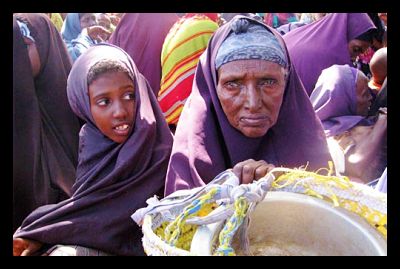
The failure of wages to keep pace with rising food prices is putting a strain on families and communities worldwide, according to a report titled ‘Squeezed’ by OxFam and the International Development Studies. The food price spike of 2011 alone increased the numbers of people living in poverty by an estimated 44 million. The study focused on rural and urban consumers in 10 developing countries: Burkina Faso, Ethiopia, Kenya, Bangladesh, Guatemala, Zambia, Bolivia, Indonesia, Pakistan and Vietnam.
Leaders continue to disregard the specific impacts the food system has on low income households. The authors of the report write, “Many people are earning more, but this is often illusory: wage rises rarely match rises in the cost of living. People have to cope in time-honoured ways by cutting back, substituting, shopping around, and growing and gathering more. The impacts are felt in homes, relationships, communities and work places, changing the way people think about themselves and others.” More often households are being forced to resort to riskier ways of getting income, for example, gold mining in Burkina Faso; sex work in Kenya; and jungle fishing in Bangladesh, despite the risks posed by tigers and pirates. The numbers of migrants has also increased as people must travel to find work. And the stress to food insecurity often leads to increased levels of domestic violence, and alcohol and drug abuse.
The types of food that people consume represent the single best indicator of their well-being. The research from this report uncovered a familiar hierarchy of hardship whereby the poorest people eat too little and lose out on vital nutrients. Even some better-off urban communities are struggling to afford basics, and have begun eating less diverse diets and substituting foods. Latest estimates suggest one in eight of the world’s population suffer from undernourishment and that nearly one in five face food “inadequacy”.
The rising costs of fuel, rent, and agricultural inputs make it more difficult for people to become farmers, despite the need to produce cheaper food. Without relatively large land assets, capital and the capacity to store produce and hedge their cultivation decisions, contemporary farming in the 10 developing countries surveyed will remain very difficult. Furthermore, agriculture is less appealing for young people to enter into due to of unpredictable returns, high input costs, and high costs of living. Education is perceived as a ticket off the farm, and agricultural aspirations are rare.
Societies, too, are changing in response to the food price crisis. Customary cooperative labor arrangements are being replaced with wage labor. The urgent need for cash takes priority over collective social life and values. The high price of essentials translates into a decline in public social life, with families becoming more inwardly focused and people less willing or able to socialize or help each other.
The report recommends that national social protection policies aim to provide routine protection for the poorest and most vulnerable communities, with the understanding that it is too late to start developing schemes when a price spike occurs. Policymakers should design social assistance policies aimed at protecting against spikes in the form of temporary cash or food transfers, or by providing subsidies that are automatically triggered by price rises. And economic leaders should adjust to real changes in needs by linking social protection to inflation.
– Maria Caluag
Sources: Guardian, OxFam-IDS
Photo: Politico

Effective Public-Private Partnership
A significant challenge to the work of nonprofits and NGOs is finding funds and negotiating with private companies to provide goods and services. The GAVI Alliance, however, does just that. Founded by the Bill & Melinda Gates Foundation, the GAVI Alliance (formerly the Global Alliance for Vaccines and Immunizations) has taken public-private partnerships to a new level in the years since 2000.
The GAVI Alliance focuses on negotiating prices for vaccines against such diseases as yellow fever, measles, Human Papillomavirus (HPV), and diphtheria. The vaccine industry often provides these life-saving vaccines at prices far too high for anyone in the developing world to afford, but with the help of the GAVI Alliance, vaccines can be provided at a significantly lower cost.
This practice of public-private partnership allows monoliths in the vaccine industry to provide large amounts of vaccines at manufacturing cost. The high volume of demand can also minimize production costs that contribute to the significantly higher normal costs in the developed world. And while vaccine prices remain high in the developed world, “in a sense,” journalist Gary Stern writes, “wealthier people [in industrialized countries] are subsidizing the lowered prices for poorer people.”
Lower costs can mean life or death for those in the developing world. For example, a recent agreement between GAVI and two HPV-vaccine providers Merck and Glaxo-Smith-Kline brought the price of a $130-dose vaccine to $4.50 a dose for developing countries. These vaccines against HPV — a major risk factor for cervical cancer — are expected to be administered to over 30 million girls by 2020.
The GAVI Alliance also focuses on strengthening health systems in the host country. Instead of GAVI immunization programs operating independently in the midst of poorly developed healthcare systems, the Alliance also provides funding for health system strengthening (HSS) for health service delivery and the establishment of permanent health centers.
With these two focuses, the GAVI Alliance not only contributes where the need is greatest — providing vaccinations for high-risk populations — but strengthens host-countries’ capacity to help themselves in the future, maximizing its effectiveness through a public-private partnership.
– Naomi Doraisamy
Source: GAVI Alliance
Photo: GAVI Alliance
Berhane Hewan: Ethiopia Gives Girls a Future
In 2004 the Berhane Hewan project was established in one community in Ethiopia to empower adolescent girls. The program is now considered award-winning by the U.N. Population Fund (UNFPA) and has expanded into 36 communities in Northern Ethiopia. Child marriage is a major issue in the Amhara Region of Northern Ethiopia and the Berhane Hewan project seeks to educate girls about the dangers associated with early marriage and their rights as women. Almost half of the female population of this region is married before they are 15 years old and many girls are also deprived of the chance of attending school because their families cannot afford to send them.
Child marriage can lead to girls being forced to have sex at too young an age, which causes health issues including premature pregnancy, high infant mortality, and difficult or even dangerous births. It also has many psychological ramifications as girls are forced into marriages with older men whom they do not know and have the traumatic experience of being forced into sex as adolescents.
The Berhane Hewan program addresses the issues associate with child marriage at multiple levels. Community-wide talks are held that encourage everyone to participate and learn about the ramifications of early marriage and health issues associated with young pregnancies and STDs. The program also provides financial assistance for girls to encourage them to stay in school and avoid early marriage. Informal educational groups have also been established so that girls unable to attend school can still receive schooling.
Girls are becoming aware of their rights and leaving isolated lives to join an empowered community of women. Zufan Fentahun’s marriage was annulled and with the help of Berhane Hewan, she was able to begin attending school and supporting herself with the sale of several animals and keeping a garden. Almost 12,000 girls have become involved with the project in some capacity and there is the potential to reach many more as it continues to expand. UNFPA has passed the program over to the U.K.’s Department for International Development who has increased funding and has ambitious plans to increase the number of communities involved.
– Zoë Meroney
Source: UNFPA
Photo: Take Part
Polio 101
Poliomyelitis, commonly referred to as polio, is a highly contagious viral disease that, despite being deemed as a problem of the past by the Western world, remains a very current problem in other parts of the world. Though its remnants are seen in the stunted limbs of the survivors, polio’s worst effect is no disfigurement.
Polio is a potentially fatal disease of the nervous system that causes paralysis. After infection, the organs can stop functioning within a matter of hours. Fatalities normally occur if the virus affects the respiratory system, preventing the victim from breathing. In some cases, polio leaves an individual with permanent paralysis, typically in the lower body.
In the majority of cases, polio shows no symptoms. Although anyone can contract the disease when they come in contact with it, the disease mainly affects children under five. Currently, there is no cure for polio once it has been contracted. Programs to eradicate polio work solely through prevention by vaccinating children at a young age.
As a result of a huge global effort to eradicate the disease, it has largely disappeared and has become one of the global health’s success stories. Only 223 cases were reported in 2012 (down from an estimated 350,000 in 1988). According to the World Health Organization, only three countries in the world still report polio as a problem: Afghanistan, Nigeria, and Pakistan.
At the Global Vaccine Summit in the United Arab Emirates in April 2013, a five-year plan was presented to ensure the eradication of all forms of polio, backed by contributions of 75% of the 5.5 billion necessaries for implementation.
– Farahnaz Mohammed
Source: WHO
Photo: Cyrusdurant
Big Business: Promoting Unhealthy Lifestyles
As our world works towards the eradication of all infectious diseases we have seen a rise in non-communicable diseases such as obesity, cancer, and COPD. These unhealthy lifestyles are promoted by big businesses that sell items such as unhealthy foods and tobacco. Margaret Chan, the Director-General of the World Health Organization (WHO) said, “Economic growth, modernization, and urbanization have opened wide the entry point for the spread of unhealthy lifestyles.” The efforts to regulate unhealthy lifestyles are not in the interest of most big businesses.
Big businesses are able to lobby for favorable policies in the government. They use tactics such as front groups, promises of self-regulation, and lawsuits to shift the focus away from the unhealthy lifestyles they are promoting. These businesses also gift and give grants to worthy causes to look admirable in the public eye. The main tactic these businesses use is the argument that an individual is responsible for their own health, and that the government has no right to interfere with a person’s free choice.
“This is formidable opposition. Market power readily translates into political power, few governments prioritize health over big business. As we learned from experience with the tobacco industry, a powerful corporation can sell the public just about anything,” stated Dr. Chan.
Dr. Chan is most concerned about two recent trends that have emerged. The first is governments being taken to court over measures to protect the health of their citizens. We saw this happen recently in New York City where the law regulating soda size was deemed illegal by the court. The second trend is industries having influence in shaping “public health policies and strategies that affect their products.” Dr. Chan argues, “When industry is involved in policy-making, rest assured that the most effective control measures will be downplayed or left out entirely. This, too, is well documented, and dangerous.” Dr. Chan urges governments to keep big businesses out of health policy formation because it only distorts the real issues. Dr. Chan and the WHO are working diligently on identifying and pursuing processes that limit big businesses in public health decision-making.
– Catherine Ulrich
Source: UN News
Photo: Los Angeles
The Social Costs of High Food Prices
The failure of wages to keep pace with rising food prices is putting a strain on families and communities worldwide, according to a report titled ‘Squeezed’ by OxFam and the International Development Studies. The food price spike of 2011 alone increased the numbers of people living in poverty by an estimated 44 million. The study focused on rural and urban consumers in 10 developing countries: Burkina Faso, Ethiopia, Kenya, Bangladesh, Guatemala, Zambia, Bolivia, Indonesia, Pakistan and Vietnam.
Leaders continue to disregard the specific impacts the food system has on low income households. The authors of the report write, “Many people are earning more, but this is often illusory: wage rises rarely match rises in the cost of living. People have to cope in time-honoured ways by cutting back, substituting, shopping around, and growing and gathering more. The impacts are felt in homes, relationships, communities and work places, changing the way people think about themselves and others.” More often households are being forced to resort to riskier ways of getting income, for example, gold mining in Burkina Faso; sex work in Kenya; and jungle fishing in Bangladesh, despite the risks posed by tigers and pirates. The numbers of migrants has also increased as people must travel to find work. And the stress to food insecurity often leads to increased levels of domestic violence, and alcohol and drug abuse.
The types of food that people consume represent the single best indicator of their well-being. The research from this report uncovered a familiar hierarchy of hardship whereby the poorest people eat too little and lose out on vital nutrients. Even some better-off urban communities are struggling to afford basics, and have begun eating less diverse diets and substituting foods. Latest estimates suggest one in eight of the world’s population suffer from undernourishment and that nearly one in five face food “inadequacy”.
The rising costs of fuel, rent, and agricultural inputs make it more difficult for people to become farmers, despite the need to produce cheaper food. Without relatively large land assets, capital and the capacity to store produce and hedge their cultivation decisions, contemporary farming in the 10 developing countries surveyed will remain very difficult. Furthermore, agriculture is less appealing for young people to enter into due to of unpredictable returns, high input costs, and high costs of living. Education is perceived as a ticket off the farm, and agricultural aspirations are rare.
Societies, too, are changing in response to the food price crisis. Customary cooperative labor arrangements are being replaced with wage labor. The urgent need for cash takes priority over collective social life and values. The high price of essentials translates into a decline in public social life, with families becoming more inwardly focused and people less willing or able to socialize or help each other.
The report recommends that national social protection policies aim to provide routine protection for the poorest and most vulnerable communities, with the understanding that it is too late to start developing schemes when a price spike occurs. Policymakers should design social assistance policies aimed at protecting against spikes in the form of temporary cash or food transfers, or by providing subsidies that are automatically triggered by price rises. And economic leaders should adjust to real changes in needs by linking social protection to inflation.
– Maria Caluag
Sources: Guardian, OxFam-IDS
Photo: Politico
3 Ways the G8 is Fighting Superbugs
What do we do when our own medicine becomes our greatest threat? For the world today, this question is becoming more and more significant. G8 leaders met in London on Wednesday, June 12 to discuss the global threat of antibiotic-resistant microbes, or superbugs.
In a statement published on Thursday, the G8 science ministry said that they consider antimicrobial drug resistance as one of the major health security challenges of the twenty-first century. “Across the G8 we should regard the spread of antibiotic resistance as a global challenge that is up there with climate change, water stress and environmental damage, and there are genuine policy consequences that follow from that,” said science minister Mr. Willetts.
As usual, those living in extreme poverty are most at-risk. As bacteria develop resistance to widespread antibiotics in humans, animals, the soil, and water sources, they become more dangerous to humans—and especially the most vulnerable sectors of the world’s population.
To combat the development of superbugs and protect those most vulnerable to them, G8 leaders decided to make sweeping changes in the medical and pharmaceutical community. These included:
1. Limiting the use of antibiotics in humans, animals, and plants.
2. Investing in more research about the evolution of resistance and in developing better diagnostics for precise prescription.
3. Improving international collaboration on surveillance of bacterial strains.
The need for steps like these is urgent, and the G8’s decision was hailed with applause from the humanitarian community. If the world continues support these decisions, health security will continue to improve.
– John Mahon
Source: The Independent, Agripulse
Photo: The Independent
Vaccine Could Limit Cattle Deaths in Africa
A research group in Belgium is developing a new type of vaccine against bovine malignant catarrh fever (BMCF). BMCF is a virus that kills thousands of cattle across the world and specifically has been a major problem for cattle herders in East Africa. In East Africa wildebeest carry the virus and spread the infection to cattle. The disease is often fatal and can infect up to 40% of a heard in any sporadic outbreak. The Maasai people of East Africa, who herd large numbers of cattle, have been hit hard by this disease, losing seven to ten percent of their cattle to BMCF every year.
No vaccines have been found so far, however, researchers at the Faculty of Veterinary Medicine’s Immunology Vaccinology lab at the University of Liege, claim they have altered the BMCF virus so that it does not develop after infection. The original virus causes an uncontrollable division of white blood cells, much like cancer. In the genetically engineered virus, the researchers have managed to stop the production of the protein that leads to this uncontrollable division. Researchers exposed the new virus to rabbits who did not show signs of BMCF and were protected against any other strains of the BMCF virus they came in contact with. Research leader Benjamin Dewals claims, “…we have generated a virus that does not induce BMCF, does not persist in the infected host and protects against a subsequent infection with a virulent virus.”
This study shows promise for the future eradication the BMCF disease, however Dewals recognizes it may take 5 to 10 years to develop a vaccine for cattle specifically. George Russell, a specialist in cattle infections, states, “…such a vaccine will need to be demonstrated in cattle and the protection conferred will need to be evaluated in terms of dosage and duration of protection…” Despite the challenges that lie ahead, this discovery represents a big step forward in the effort to ultimately find a cure for this disease.
– Catherine Ulrich
Source: AllAfrica
Photo: Hope4Africa
Nationalism and Genocide: The Bosnian War
The Bosnian War was an ethnic conflict that ravaged the former Yugoslavia from 1992-1995. The Bosnian War was marked by the systematic mass rape and murder of Bosnian Muslims by Serbian nationalists. In order to understand the genocide in Bosnia, however, one must first examine the recent history of the torn Balkan region.
At the conclusion of World War II, Bosnia became a federal republic of Yugoslavia when Yugoslavia was united under the authoritarian dictator Josip Broz Tito. Under Tito, strict policies were instituted that dampened tensions between the three main ethnic groups in the newly formed republic: The Bosnian Muslims (or Bosniaks), the Catholic Croats, and the Orthodox Serbs. When Tito died in the early 1980s, Yugoslavia disintegrated, fanning the fire of ethnic hostility.
The Serbian President Slobodan Milošević was the driving force behind the genocide. Milošević ascended to power in 1989 on a platform of emotional rhetoric that appealed to his supporters. Milošević propagated a message of extreme Serbian nationalism, calling for the expansion of the Serbian state into Bosnian territory. In a 1988 Belgrade speech, Milosevic identified Bosniaks as the “internal enemy,” a gesture eerily similar to Hitler’s pre-WWII demonization of the Jews in Germany.
Wary of Serbia’s aggressive ambitions, Bosnia declared independence in 1992. A Serb army was quickly formed in Bosnia by Radovan Karadžić with the support of Milošević in Belgrade. The purpose of this army was to cleanse Bosnia of “non-Serbs” who were predominantly Bosniaks. After Bosnia’s declaration of independence, Serbian forces sieged Sarajevo and began the extermination of thousands of Bosniaks that continued for three years.
NATO intervened in 1995 and conducted military strikes that decimated the Serbs, forcing them into a disadvantageous position. In November of the same year, the presidents of Bosnia and Herzegovina, Serbia, and Croatia signed the Dayton Accords, formally bringing the war to a close. The number of Bosniaks killed is estimated at about 100,00. The population was dramatically reduced through ethnic cleansing.
How could seemingly normal human beings commit such heinous acts of violence in the name of the state? Surely nationalism was the driving force behind the genocide in the Bosnian War, but loyalty to one’s flag should never result in atrocities of this magnitude. History, however, has proven that nationalism has the ability to motivate average people to do terrible things. In the case of the Bosnian War, the Serbian commitment to ethnic cleansing and state expansion resulted in the genocide of innocent men, women, and children.
– Josh Forgét
Sources: Wikipedia, Gendercide.org, Love Thy Neighbor: A Story of War, The Three Yugoslavias
Photo: Military Photos
3D Printers to End World Hunger?
NASA recently invested $125,000 in a project aimed to solve the challenges of supplying food in space missions. The project would astronauts to create their own food in space by utilizing 3D printers.
Just as a paper printer shapes ink to form letters, a 3D printer uses different materials to create a 3D object. To produce food for its astronauts in space, NASA is looking to print edible materials with 3D printers, including powdered forms of carbohydrates, proteins, and other nutrients. 3D printers could be beneficial for long space voyages because powdered substances could last up to 30 years.
While NASA may be looking to use 3D food printers for space travel, there is great potential for the use of 3D printers here on Earth, namely to end world hunger. With the long shelf life of food produce by 3D printers, the concern of food being wasted due to spoilage disappears. The powdered forms of the nutrients are also easier to transport because they exist in a more compact state.
The nutrients used in a 3D printer can also be retrieved from unconventional sources. For instance, insects could be used as a source of protein, which the UN has noted recently as a way to fight world hunger. Insects are rich in protein, emit less greenhouse gases than livestock, and are easy to harvest. Whether or not insects are used as the protein source of printed foods, the 3D printer could allow for better transportation and longevity of nutrients, which would help considerably in the fight to end world hunger.
– Jordan Kline
Source: Food and Agriculture Organization of the United Nations,National Geographic,Time Magazine
Photo: Wikipedia
Meet Owen Benko
Name: Owen Benko
Location: Colorado Springs, CO
Title: Chief Cuteness Officer
Why I joined The Borgen Project: “I believe everyone deserves life, liberty and a binky. I happened to enter the world in America, but for my fellow toddlers who entered the world in places like Somalia and Sudan, life is extremely difficult. Let me be frank, many don’t have binky’s or play time. I find this unacceptable. I joined The Borgen Project to help right this preventable wrong… And because my Aunt Kate gave me this awesome T-Shirt.”