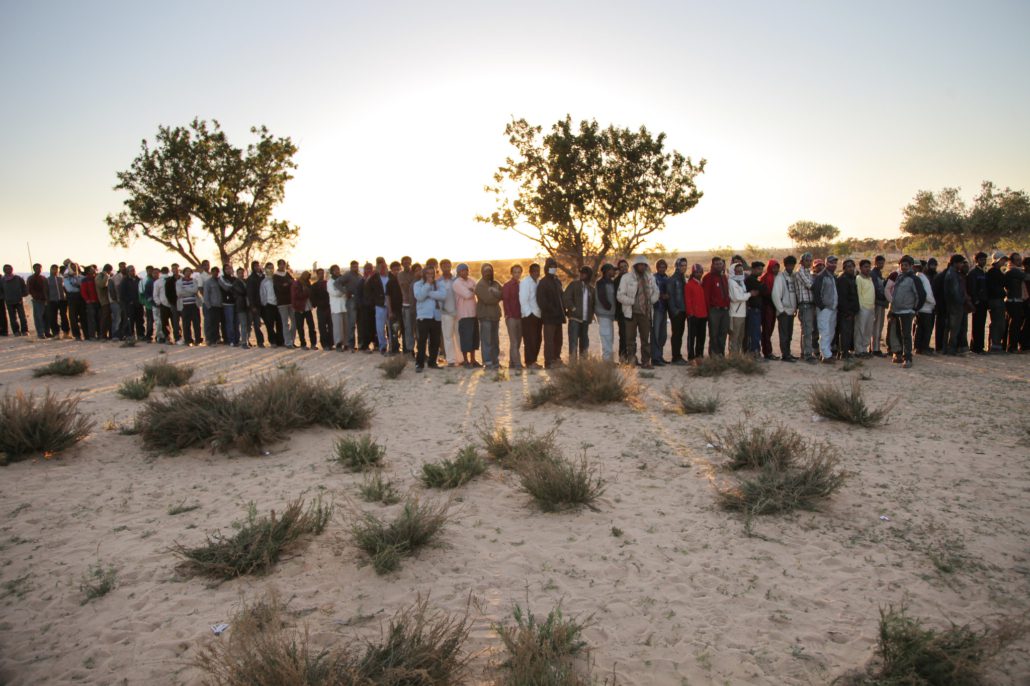
Libya has been embroiled in conflict for more than a decade, leaving millions of its citizens in poverty. The ongoing violence has crippled the economy, with limited access to essential services like food, clean water and health care. The World Bank estimates that more than 1.3 million Libyans live in poverty, struggling to meet basic needs, as of 2017. Economic instability, food shortages and inflation have worsened living conditions for those already vulnerable. Many families rely on humanitarian aid for survival, while education and job opportunities remain scarce, particularly in rural areas. Poverty in Libya is not just a lack of resources but a consequence of enduring instability and the breakdown of social and economic systems. In response, several charities are operating in Libya to alleviate poverty and create long-term solutions.
Organizations like the Libyan Red Crescent and WeWorld-GVC focus on providing immediate relief through food, medical assistance and shelter, while also investing in sustainable development projects. These efforts aim to rebuild infrastructure, improve access to clean water and health care and offer educational opportunities. By addressing both immediate and underlying issues, these organizations are working to uplift communities and restore hope for a stable future. Here are five charities operating in Libya.
Libyan Red Crescent
The Libyan Red Crescent (LRC) provides essential health care, emergency relief and psychosocial support throughout Libya. The LRC has been instrumental in responding to natural disasters such as floods and droughts, providing clean water and sanitation services to prevent disease outbreaks like cholera, benefiting many Libyans.
LRC’s collaboration with the International Federation of Red Cross and Red Crescent Societies (IFRC) amplified their efforts. This partnership has allowed for broader outreach through health and hygiene awareness campaigns, particularly aimed at reducing waterborne diseases. These efforts ensure that Libyans receive the support they need to survive during times of conflict and crisis.
WeWorld-GVC
WeWorld-GVC (WW-GVC) is focusing on addressing Libya’s crumbling water infrastructure. The civil war has damaged much of the water supply, leaving many without access to clean drinking water. WW-GVC has repaired and restored water treatment plants and wells, providing safe water to more than 60,000 Libyans. This effort has drastically reduced the spread of diseases that contaminated water causes, such as cholera and dysentery.
In addition to physical infrastructure, WW-GVC is educating communities on hygiene practices. Its hygiene awareness programs have reached more than 20,000 Libyans, providing essential knowledge that has contributed to better public health. Its work ensures that vulnerable populations in conflict zones receive life-saving resources.
Doctors Without Borders
Doctors Without Borders (MSF) has been at the forefront of medical aid in Libya, particularly for refugees and migrants in detention centers and conflict zones. MSF provides mobile medical clinics, which offer essential health care, including maternal services and treatment for chronic diseases.
MSF has been crucial in providing medical aid to those who are most vulnerable, especially refugees living in detention centers, where medical services are nearly non-existent. Its mental health services also help individuals cope with the long-term psychological effects of conflict and displacement.
Tawergha Foundation
The Tawergha Foundation focuses on helping displaced families from the Tawergha minority, many of whom were forced to flee during the civil war. Tawergha Foundation promotes employment and educational services to these families, providing financial support and training. The organization has also helped shine a light on the plight of the Tawergha people through activism and awareness campaigns.
Tawergha Foundation’s main goal is the resettlement of the Tawergha people, as well as this however, they are focusing on long-term development. The organization works with local authorities and international companies such as Microsoft and Samsung to secure resources, infrastructure and skills helping displaced Libyans begin rebuilding their lives.
The National Democratic Institution
The National Democratic Institution (NDI) is working to equip the nation’s youth with the skills necessary to contribute to Libya’s recovery. Through programs focused on promoting peace through art, advocating for the rights of people with disabilities, supporting environmental protection and combating bullying in schools, NDI has reached many young Libyans. These initiatives aim to develop leadership and community-building skills that will be essential in rebuilding Libya’s infrastructure and promoting peace.
NDI’’s focus on youth empowerment serves as a crucial investment in Libya’s future. By offering projects aimed to empower young people to make a positive impact on their communities, the organization is ensuring that young Libyans prepare to lead the country toward stability and prosperity.
Conclusion
The ongoing conflict in Libya causes immense suffering, but the charities operating in Libya like the Libyan Red Crescent, WeWorld-GVC, Doctors Without Borders, the Tawergha Community Association and the Libya Youth Forum are bringing hope to millions. Through efforts in health care, clean water access, education and support for displaced families, these organizations are making a meaningful impact. Their work helps address Libya’s immediate needs while laying the foundations for long-term recovery and stability.
– Harriet Conway
Harriet is based in London, UK and focuses on Good News and Global Health for The Borgen Project.
Photo: Flickr

Global Health as a Political Priority
Why Is Global Health Care a Political Priority?
Global health is more than a humanitarian concern. It is a critical component of political stability, economic resilience and international security. The enforcement of the World Health Organisation (WHO), as well as frameworks and initiatives like the International Health Regulations (IHR) and the Global Health Security Agenda (GHSA), ensures that nations are capable of responding, mediating and detecting health threats efficiently.
Cooperative efforts between health nongovernmental organizations (NGOs), intergovernmental organizations (IGOs), governments and law enforcement have proven successful in dealing with global breakouts like COVID-19. Simply put, global health care is a priority because:
The Global Polio Eradication Initiative
The Global Polio Eradication Initiative (GPIE), launched in 1988, aimed to prevent any child worldwide from being paralyzed by poliovirus. As a result, polio has decreased by 99.9% globally. The GPIE is a public-private partnership led by six partners and national governments. According to GPIE, an estimated 20 million people today would have been paralyzed; now, the risk of contracting polio is extremely low. The GPIE continues addressing challenges like reaching children in conflict zones and vaccine hesitancy.
AIDS Relief (PEPFAR)
Since the PEPFAR initiative started in 2003, more than 25 million lives have been saved. Prior to 2003, an HIV diagnosis was considered a death sentence for many across the globe. PEPFAR works with partner countries to control and prevent the spread of AIDS and HIV. PEPFAR focuses on providing life-saving antiretroviral treatment (ART), prevention programs and support for individuals and communities affected by HIV/AIDS, particularly in low-resource settings.
GAVI, The Vaccine Alliance
Established in 2000, Gavi aimed to save lives, reduce poverty and protect the population from pandemics. This vaccine alliance has immunized more than 1.1 billion children in 78 countries. GAVI works with governments and organizations to reduce vaccine costs and ensure equitable distribution.
COVAX
COVAX was a multilateral effort co-led by GAVI, WHO, UNICEF and the Coalition for Epidemic Preparedness Innovations (CEPI) to develop the COVID-19 vaccine. Launched in 2020 in response to the pandemic, COVAX worked to manufacture and secure vaccines guaranteed for global use. Its mission was to ensure that all countries, regardless of economic status, can protect their population, especially the most vulnerable. By 2023, COVAX had delivered millions of vaccine doses to countries worldwide, reducing global health inequities and aiding in the fight against the global pandemic.
The Partnership for a Lead-Free Future
Launched by UNICEF and USAID, this initiative is dedicated to tackling lead exposure in low-income countries. According to USAID, more than half a billion children in the world have a percentage of lead in their blood. Key efforts include phasing out lead in products like paint, batteries and fuel while also raising awareness about lead hazards. Therefore, by 2040, the partnership has committed to creating a lead-free future for all the world’s children. This initiative aims to create a healthier and more sustainable future for all.
Global Alliance for Hunger and Poverty
Proposed by Brasil’s G20 presidency, this initiative is focused on reducing poverty and eliminating hunger worldwide. The alliance emphasizes sustainable agricultural practices, access to nutritious food and innovative financing mechanisms to support vulnerable populations. Through collaboration with IGOs and governments, the initiative aims to address global inequalities, create flourishing livelihoods and strengthen food security. The official launch of the Global Alliance was during the G20 Leaders Summit in November 2024 and has gained the support of more than 80 countries.
Conclusion
Making global health a political priority is necessary for creating a resilient, equitable and secure world. From the integration of health and security to international funding collaborations, governments can adopt strategies that integrate health with security, promoting prosperity and stability.
– Gufran Elhrari
Photo: Flickr
5 Charities Operating in Libya
Libya has been embroiled in conflict for more than a decade, leaving millions of its citizens in poverty. The ongoing violence has crippled the economy, with limited access to essential services like food, clean water and health care. The World Bank estimates that more than 1.3 million Libyans live in poverty, struggling to meet basic needs, as of 2017. Economic instability, food shortages and inflation have worsened living conditions for those already vulnerable. Many families rely on humanitarian aid for survival, while education and job opportunities remain scarce, particularly in rural areas. Poverty in Libya is not just a lack of resources but a consequence of enduring instability and the breakdown of social and economic systems. In response, several charities are operating in Libya to alleviate poverty and create long-term solutions.
Organizations like the Libyan Red Crescent and WeWorld-GVC focus on providing immediate relief through food, medical assistance and shelter, while also investing in sustainable development projects. These efforts aim to rebuild infrastructure, improve access to clean water and health care and offer educational opportunities. By addressing both immediate and underlying issues, these organizations are working to uplift communities and restore hope for a stable future. Here are five charities operating in Libya.
Libyan Red Crescent
The Libyan Red Crescent (LRC) provides essential health care, emergency relief and psychosocial support throughout Libya. The LRC has been instrumental in responding to natural disasters such as floods and droughts, providing clean water and sanitation services to prevent disease outbreaks like cholera, benefiting many Libyans.
LRC’s collaboration with the International Federation of Red Cross and Red Crescent Societies (IFRC) amplified their efforts. This partnership has allowed for broader outreach through health and hygiene awareness campaigns, particularly aimed at reducing waterborne diseases. These efforts ensure that Libyans receive the support they need to survive during times of conflict and crisis.
WeWorld-GVC
WeWorld-GVC (WW-GVC) is focusing on addressing Libya’s crumbling water infrastructure. The civil war has damaged much of the water supply, leaving many without access to clean drinking water. WW-GVC has repaired and restored water treatment plants and wells, providing safe water to more than 60,000 Libyans. This effort has drastically reduced the spread of diseases that contaminated water causes, such as cholera and dysentery.
In addition to physical infrastructure, WW-GVC is educating communities on hygiene practices. Its hygiene awareness programs have reached more than 20,000 Libyans, providing essential knowledge that has contributed to better public health. Its work ensures that vulnerable populations in conflict zones receive life-saving resources.
Doctors Without Borders
Doctors Without Borders (MSF) has been at the forefront of medical aid in Libya, particularly for refugees and migrants in detention centers and conflict zones. MSF provides mobile medical clinics, which offer essential health care, including maternal services and treatment for chronic diseases.
MSF has been crucial in providing medical aid to those who are most vulnerable, especially refugees living in detention centers, where medical services are nearly non-existent. Its mental health services also help individuals cope with the long-term psychological effects of conflict and displacement.
Tawergha Foundation
The Tawergha Foundation focuses on helping displaced families from the Tawergha minority, many of whom were forced to flee during the civil war. Tawergha Foundation promotes employment and educational services to these families, providing financial support and training. The organization has also helped shine a light on the plight of the Tawergha people through activism and awareness campaigns.
Tawergha Foundation’s main goal is the resettlement of the Tawergha people, as well as this however, they are focusing on long-term development. The organization works with local authorities and international companies such as Microsoft and Samsung to secure resources, infrastructure and skills helping displaced Libyans begin rebuilding their lives.
The National Democratic Institution
The National Democratic Institution (NDI) is working to equip the nation’s youth with the skills necessary to contribute to Libya’s recovery. Through programs focused on promoting peace through art, advocating for the rights of people with disabilities, supporting environmental protection and combating bullying in schools, NDI has reached many young Libyans. These initiatives aim to develop leadership and community-building skills that will be essential in rebuilding Libya’s infrastructure and promoting peace.
NDI’’s focus on youth empowerment serves as a crucial investment in Libya’s future. By offering projects aimed to empower young people to make a positive impact on their communities, the organization is ensuring that young Libyans prepare to lead the country toward stability and prosperity.
Conclusion
The ongoing conflict in Libya causes immense suffering, but the charities operating in Libya like the Libyan Red Crescent, WeWorld-GVC, Doctors Without Borders, the Tawergha Community Association and the Libya Youth Forum are bringing hope to millions. Through efforts in health care, clean water access, education and support for displaced families, these organizations are making a meaningful impact. Their work helps address Libya’s immediate needs while laying the foundations for long-term recovery and stability.
– Harriet Conway
Photo: Flickr
Global Alliance Against Hunger and Poverty
At the annual G20 Leaders’ Summit in Rio de Janeiro in November 2024, representatives from 19 countries gathered to address global challenges. While the summit originally focused on macroeconomic issues affecting their respective nations, its agenda has expanded to include sustainable development, health, trade, climate change and anti-corruption efforts.
Key Goals and Objectives of the Alliance
Brazil’s G20 presidency proposed the Global Alliance Against Hunger and Poverty, with its finalization and launch following the 2024 summit. The Alliance’s founding documents acknowledge previous efforts to address hunger and poverty but emphasize the multidimensional impact poverty has on children and adults, creating a cycle that requires effective intervention, with a focus on country-level policy action and knowledge sharing.
The Alliance identifies eradicating all forms of poverty as “the greatest global challenge” and reminds governments that social protection is a universal right and a key component of the Sustainable Development Goals (SDGs).
Its primary goals include increasing funding for household and government initiatives, raising awareness of poverty’s effects and solutions and integrating sustainable agricultural development into the fight against hunger and poverty. The push for countries to address these ongoing issues stems from slowing progress toward the 2030 targets.
The Alliance projects that 622 million people will still live in extreme poverty by 2030—nearly double the targeted number. To tackle this, it plans to match countries’ needs with donors and technical support, helping fund and implement solutions to hunger and poverty.
The UK’s role in the Alliance
The 2024 G20 Summit marked Prime Minister Keir Starmer’s first appearance, where he expressed admiration for Brazil, stating, “Your culture and your commitment to working people, more than just their right to be free from exploitation, but their right to be lifted, to enjoy greater opportunities and to enjoy life.” Aligning with the Alliance’s goals, the U.K. joined as a founding member and now serves on its Board of Champions to fight hunger and poverty.
The U.K. has announced a £70 million support package to tackle food insecurity and climate challenges. This includes up to £50 million for the new Resilience and Adaptation Fund, which will help food-insecure countries like Bangladesh, Ethiopia and Chad develop sustainable agriculture to strengthen food resources amid changing or extreme weather. An additional £25.5 million will support Commercial Agriculture for Smallholders and Agribusinesses, focusing on protecting rural communities and agriculture-dependent populations from the effects of climate change.
At the summit, Prime Minister Keir Starmer emphasized the U.K.’s commitment to “delivering practical support for communities to keep food on the table.” Indeed, these funds align with that promise as the U.K. and the Alliance advance proposals and projects to reduce global hunger and poverty.
Looking Ahead
The Global Alliance Against Hunger and Poverty seeks to drive meaningful progress in eradicating food insecurity and extreme poverty worldwide. Furthermore, by uniting nations, mobilizing funding and prioritizing sustainable agricultural solutions, the Alliance aims to support communities most affected by economic and climate pressures. With renewed commitments and collaborative efforts, the initiative offers a path toward building resilience and improving livelihoods for millions globally.
– Caitlin Mulholland
Photo: Flickr
The Connection Between Poverty and Mental Health
It finds that those on lower incomes are three times more likely to suffer from depression, anxiety and other mental illnesses. Although the World Health Organization (WHO) has declared mental health a basic human right, 11% of the world’s population suffers from a mental illness.
Poverty Increases the Risk of Mental Health Conditions
Poverty creates psychological distress and, therefore, causes mental illness. Economic insecurity, job insecurity or poor-quality jobs, unemployment and underemployment (that is, being forced to work part-time due to lack of full-time employment) and less access to green spaces are all conditions of poverty that are proven to create stress. People experiencing poverty are additionally less likely to contact psychiatric services.
Social stigmas and self-stigmas (a negative perception of oneself that lowers self-esteem) also make it harder for people with mental illnesses to get a job and housing and to form supportive social networks. Stigmas likely play a part in the unwillingness of public policymakers to invest in tackling mental health issues.
Africa Institute of Mental and Brain Health
Based in Kenya, this organization provides affordable and accessible mental health services. Several of its current projects focus on tackling both mental illness and poverty. For example, the initiative’s HOPE project aims to improve the outcomes of those who are homeless and have severe mental health in Kenya, Ghana and Ethiopia.
Strong Minds
StrongMinds provides free, community-based therapy in low-income areas, with a primary focus on Africa, in its mission to radically expand mental health care for people with depression globally. It currently operates in four countries but has been in Uganda since 2013, providing therapy to women, children, refugees and incarcerated populations. About 16% of treated women report increased work attendance and 30% say their children are less absent from school.
WHO
Since 2014, the WHO has endorsed group interpersonal psychotherapy as a treatment for mental illness in vulnerable people in low-income regions. It has provided more than 160,000 women and children in Uganda and Zambia with group talk therapy. More than 80% of those treated were depression free after treatment and remained so for six months.
Final Remark
The report identifying the contributors to the cycle of poverty and mental health recommends more investment in mental health care. It also suggests the implementation of social protection schemes to support people in need. The charities carrying out this work are already seeing a massive difference.
– Georgia de Gidlow
Photo: Wikimedia Commons
5 Innovative Solutions to Reduce Poverty in Developing Nations
Blockchain for Transparent Aid Distribution
Blockchain is revolutionizing aid distribution in developing nations by ensuring transparency and reducing corruption. Example of Impact the United Nations (U.N.) World Food Programme (WFP) introduced the Building Blocks initiative in Jordan in 2017 to distribute aid to Syrian refugees. This blockchain-based system tracks cash assistance for more than 100,000 refugees monthly, cutting fraud and saving $1.5 million in banking fees in 2018 alone. Blockchain creates a secure and trackable digital ledger, ensuring that every transaction is transparent and reliable. It has the potential to be scaled to other developing nations where corruption and inefficiencies hinder aid effectiveness.
AgriTech for Urban Food Security
Urban food insecurity in developing nations can be addressed with AgriTech innovations like vertical farming and hydroponics. Hydroponic farming in Kenya’s Kibera settlement is helping residents grow vegetables in small urban spaces. These systems use less water, no soil and minimal space. As of 2022, the initiative has benefitted thousands of households, reducing food costs and improving nutrition. The benefits hydroponics allows families in urban areas to grow fresh produce while generating income from surplus crops. This model addresses food insecurity and unemployment, two significant challenges in densely populated areas.
Biogas Plants for Rural Clean Energy
Biogas plants are providing clean, renewable energy to rural households in developing nations, reducing reliance on harmful cooking fuels. Barefoot College has installed biogas plants in more than 600 villages across India since its establishment in 1972. These plants turn animal and agricultural waste into clean energy. By 2020, the initiative reached more than 100,000 rural families, reducing respiratory illnesses and saving money on fuel. Biogas systems are environmentally friendly, economically beneficial and easy to maintain, making them ideal for rural areas. They reduce deforestation, indoor air pollution and household fuel costs.
Indigenous Knowledge for Climate Resilience
Indigenous knowledge systems are helping communities in developing nations adapt to climate challenges while preserving cultural traditions. Ethiopia’s Sustainable Land Management Programme (SLMP), launched in 2008, incorporates traditional terracing methods to combat soil erosion. By 2020, this approach had restored 1.9 million hectares of degraded land and improved food security for 6 million farmers. These traditional practices are cost-effective and promote community participation, ensuring sustainable agricultural practices while preserving local ecosystems.
Social Franchising for Women Entrepreneurs
Social franchising models are empowering women in developing nations, creating economic opportunities and addressing community needs. Solar Sister, a program launched in 2010, operates in Nigeria, Uganda and Tanzania. By 2023, it had trained 9,000 women as entrepreneurs selling solar-powered products, bringing clean energy to more than 4 million people. Women participating in the program reported a 40% increase in household income. Social franchising provides women with business training, mentorship and sustainable supply chains. These businesses contribute to gender equality while driving local economic growth.
Looking Ahead
These five innovative solutions to reduce poverty—blockchain, AgriTech, biogas, Indigenous knowledge systems and social franchising—are making a difference in developing nations while empowering communities. Each strategy has demonstrated measurable success, with scalable potential to benefit millions more. By investing in innovative and proven methods, governments, NGOs and private organizations can accelerate poverty reduction and build a sustainable future for the world’s most vulnerable populations.
– Fiza Meeraj
Photo: Flickr
How Mothers2mothers is Improving Health Care
Mothers2mothers: Improving Health Care in Africa
Dr Mitch Besser established Mothers2mothers in 2001 as a small local NGO in Cape Town. Little did its founder know that within 20 years the organization would bloom into one of Africa’s most prominent multi-national non-profits, functioning in 10 countries in the region including Angola, Ghana, Kenya, Malawi and South Africa; receiving numerous certifications and partnerships from other firms equal to its calibre and importance such as USAID, The Johnson & Johnson Foundation and MULAGO.
Mothers2mothers works with women living with HIV and hires them as Mentor Mothers who go to households to provide health education and emotional support for those burdened with the illnesses they also are affected by. They also work with medical professionals to provide health care according to an individual’s needs.
So far, the NGO has created more than 12,000 jobs for women living with HIV. This strategy proves effective as HIV-positive clients are more comfortable opening up and seeking help from those in the same place as them.
Educational Programs
The target demographics for mothers2mothers are women, children, adolescents, male spouses of patients and sexual minorities. The firm runs educational programs in which they explain the causes and symptoms of diseases such as HIV, Tuberculosis and Malaria, and link potential patients to testing and treatment centers. In 2023, the organization tested 100% of the people referred for TB and all positive individuals received treatment, according to its website.
Moreover, in the same way, Mentor Mothers track infants and children who may be susceptible to HIV transmission and help provide testing facilities to them. They also work with the children’s parents and give guidance on how to raise them to be healthy and mentally active. According to mothers2mothers, 99% of children enrolled in these early childhood development programs achieved their full developmental milestones by their first birthday.
In an interview with Wowwire, Robin Smalley, a co-founder of the organization, shared the inspiration behind mothers2mothers, “When the (HIV) test would come back there would be no one to tell the mother-to-be that she had options. This young woman would be terrified, convinced she and her baby were going to die. These young women were continually falling through the cracks in the medical system. Realizing that the greatest resource we have in Africa is the women themselves, Mitch (Besser) came up with the idea for mothers2mothers.”
Mothers’ Ball
In addition to working through Mentor Mothers, mothers2mothers also runs fundraisers and awareness activities. On November 20, 2024, the organization hosted its second “Mothers’ Ball” in London to spread the word on what they do and raise funds to finance their activities further. Over 300 people attended this event.
Mother2mothers has reached 16 million people who did not know their health issues beforehand or have any idea of how to get help. In 2023 alone it treated 774,307 clients. The Mentor Mother system has been so successful that it became an official South African government policy in 2012.
This system benefits not only the client but the Mentor Mother herself. A mother working for the firm Irene Nkosi stated in Make Mothers Matter, “My job at mothers2mothers has given me peace of mind. Being part of their family brought back my self-esteem and confidence. Sharing what I have learned there about HIV with my family has played a massive role in removing the stigma they had placed on me.”
– Mustafa Tareen
Photo: Flickr
Global Poverty Reduction: A Century-Long Challenge
The report reveals that nearly 40% of the global population lives below $6.85 a day, with recent economic setbacks worsening this outlook. Limited access to education, job opportunities and resources creates significant barriers to economic advancement for many individuals, hindering global poverty reduction progress.
Global Poverty Reduction: Challenges
Recent economic challenges have disproportionately affected low-income countries, impacting global poverty reduction efforts. Inflation and rising public debt have limited essential investments in social services. The World Bank reports that 26 of the poorest countries are in their worst financial shape since 2006.
Conflict-prone regions, particularly in sub-Saharan Africa, face persistent disruptions that prevent consistent social services and undermine economic resilience. These challenges make it difficult for affected populations to achieve stability and progress, hampering global poverty reduction efforts.
Debt Relief Efforts and Direct Support Programs
The World Bank, in partnership with the International Monetary Fund (IMF), continues to implement the Heavily Indebted Poor Countries (HIPC) Initiative and the Multilateral Debt Relief Initiative (MDRI). These programs have provided around $99 billion in debt relief to 37 countries since their inception. In December 2023, Somalia reached the HIPC Initiative Completion Point, receiving $4.5 billion in debt relief.
The World Bank supports various cash transfer and social safety net programs. For example, the Debt Management Facility (DMF) is a multi-donor trust fund that assists low-income countries in developing sustainable debt management frameworks.
Education, Workforce and International Collaboration
The World Bank invests in human capital development through various education projects. While specific examples aren’t provided in the search results, the World Bank emphasizes the importance of education and skill development in breaking the cycle of poverty.
It also works closely with other international organizations to address poverty. For instance, the Common Framework, endorsed by the G20 and Paris Club in November 2020, aims to deliver long-term, sustainable solutions to lower-income country debt vulnerabilities.
Positive Developments
While the overall projection is concerning, there have been notable successes in poverty reduction efforts:
Between 2015 and 2018, the number of people living in extreme poverty globally fell from 741 million to 689 million. Several countries, including Bangladesh and Kenya, have made significant progress in reducing poverty rates through targeted interventions and economic reforms.
Innovative technologies and digital solutions are emerging to address various aspects of poverty, from mobile banking to agricultural improvements.
Global Poverty Reduction: The Future
The World Bank’s findings highlight the need for significant, coordinated global action to address poverty. While the challenge of global poverty reduction is immense, there are reasons for optimism. With targeted investments, strategic policy shifts, and international cooperation, progress can be accelerated. Organizations worldwide are committed to ensuring that every individual has the opportunity to rise out of poverty, working towards a more equitable and prosperous future for all.
– Isabel Gallagher
Photo: Flickr
Hunger in The Netherlands
1940s Hunger Winter
Yet, 80 years ago, the Netherlands faced a food scarcity experience that left an indelible stamp on its history. This was the Dutch famine of 1944-45, remembered as the “Hunger Winter,” and was one of the major European famines of World War II. The famine occurred in late 1944 and early 1945 in the urban west of the country, after the southern part of the country had been liberated by the Allies. And it affected “probably the wealthiest, best educated and most mobile victims of any famine in history.” Although mortality was relatively low, the long-term effects were significant. Perhaps it was this experience that has framed today’s approach to hunger by the Dutch.
Poverty and Hunger Today
Since 2018, poverty has decreased in the Netherlands, from 7.1% to 5.1%. This decrease was due to COVID-19 support, compensation for higher energy prices, and an increase in the minimum wage. Nevertheless, in 2023, a third of the poor were in long-term poverty.
The Global Food Security Index 2022 reports that the Netherlands is in the top 5 of 113 countries: affordability (3rd), availability (14th), quality and safety (12th), sustainability and adaptation (13th). Similarly, the Global Nutrition Report indicates that the country is on course for most targets, but off course for childhood overweight and men’s and women’s obesity, and shows no progress or worsening for low birth weight and for anemia for women of reproductive age.
So, although poverty and hunger are not severe in the country, they still must be addressed.
Local Attention to Hunger
In 2002, a small garage-based initiative to address both food waste and poverty began in Rotterdam and has since grown into the Netherlands’ largest volunteer organization, Voedselbanken Nederland, with 14,000 volunteers supporting 178 local food banks. October 2024 was the Week of the Food Banks—coinciding with World Poverty Day and World Food Day. Voedselbanken Nederland estimates that it needs to reach approximately 400,000 more people who are eligible for assistance but have not yet gotten to a food bank. This is an activity of Schuttelaar & Partners, a corporation dedicated to a healthy and more sustainable agrifood system and food choices, and to accelerating the energy transition.
The Netherlands and Global Hunger and Health Initiatives
The Netherlands has thus built on its horrific WWII struggle with hunger to become a local and global force for change for food security.
– Staff Reports
Photo: Pixabay
Poverty in Palestine
Despite the fact that 40% of the Gazan population relied on humanitarian aid in 2023, Israel impedes organizations like the WHO and UNRWA from delivering essential assistance. Ilze Brands Kehris, the U.N.’s Assistant Secretary-General for Human Rights, stated that “the humanitarian and human rights situation for Palestinian civilians across Gaza is catastrophic” and referenced the “strong likelihood of famine.” Poverty in Palestine is, therefore, extreme and acute.
Blockade and Sanctions
Years of occupation and sanctions had already turned off the Gazan economy. Israeli settlements in the West Bank and Gaza appropriate Palestinian land and natural resources. Whereas Israeli settlements have access to high-quality water, only 10% of Gazans enjoy this human right. Additionally, Israel implemented a 300-meter buffer zone around the border of Gaza, which citizens are not allowed to access or cultivate. This means that Israel, in fact, controls 24% of the territory designated as Gaza.
Israel has exercised complete control over Gaza’s land, sea and air border since the beginning of the “blockade” in 2007. Under these sanctions, Israel has control over how much fuel, electricity, water and aid enters Gaza, as well as who is allowed to enter and exit. There are also reports that Israel engages in systematically spraying herbicide along the “buffer zone,” which is inside the territory of Gaza.
The practice started in 2014, resulting in further damage to the small amount of arable land left to Palestinians living in Gaza. Crosswinds carry the herbicides into Gaza, causing crop destruction miles away from the border buffer zone. Palestinian officials claim that the spraying of herbicides has damaged more than 420 acres of land in the Gaza Strip. The Israeli Defense Force’s (IDF) justification for the spraying is to “enable optimal and continuous security operations.”
Trade Restrictions
Restrictions placed on Palestinian trade by Israel mean that Palestinian goods and services are far less competitive on the market than their Israeli counterparts. The U.N. notes that the average trade cost per transaction for a Palestinian firm is nearly three times higher than for an Israeli firm. Barriers to trade with other countries mean that Palestine is overly reliant on Israel as its sole trading partner.
In 2022, 72% of Palestinian trade was with Israel. These measures imposed by Israel to contain and restrict Palestinian life contribute to the overall impoverishment of Palestinians. The U.N. found that, on average, for every eight cents a Palestinian earns, an Israeli earns $1. Even so, the currency union (the Israeli shekel is widely used in Palestine), customs union and geographical proximity tie living costs in Gaza with those of Israel, a much more advanced economy.
Impact on Education and Employment
Citizens of Gaza are well educated, with a literacy rate of 97.1%, yet the poverty of Palestine due to the occupation by Israel means that qualified professionals are unable to find jobs in Gaza or travel to look for work elsewhere. For instance, Said Lolo is a Palestinian man who holds a bachelor’s degree in public relations. Unable to find a job in Gaza, he is forced to work 14 hours a day selling coffee to support his family of nine. He sleeps at his cafe and only goes home once a week.
Conclusion on Poverty in Palestine
Despite the hostility between the Israeli government and Hamas, there are a number of Israel-based human rights groups. The groups are doing essential work in documenting Israel’s violations and advocating for Palestinian rights. B’Tselem, an Israeli human rights organization, has been working to monitor Israel’s activities for more than 30 years. It takes its name from an allusion to a passage in Genesis, meaning, “And God created humankind in His image. In the image of God did He create them.” The organization takes this reference to symbolize its commitment to “the universal and Jewish moral edict to respect and uphold the human rights of all people,” exemplifying the belief that there is no contradiction between being Israeli and advocating for Palestinian rights.
Adalah, an Arab human rights group based in Israel, focuses on promoting the rights of Arab citizens within Israel. The charity’s legal advocacy has enabled it to defend Bedouin rights to land in Israel and represent Palestinian victims of Israeli violence in court, among many other important victories. Without the advocacy of rights groups like these, Palestinians in Israel, the West Bank and Gaza would receive little visibility. It’s thanks to their work in advocating and documenting Israeli violations that the international community is apprised of the situation. These groups are essential in laying the groundwork for Palestinian representation that could lead one day to full Palestinian sovereignty.
– Io Oswald
Photo: Wikimedia Commons
Water and Sanitation in Indonesia
Poverty and Indonesia’s Water and Sanitation Crisis
In Indonesia, where 9.4% of the population lives below the poverty line, approximately 192 million people lack access to safe water and 14 million do not have access to safe toilets. UNICEF report reveals that nearly 25 million Indonesians practice open defecation and 89% of water sources are contaminated by faecal bacteria. Shockingly, only 7% of wastewater is treated.
This improper disposal and untreated sewage worsen water pollution, leading to unsafe water consumption. Exacerbated by poverty, these factors create a breeding ground for waterborne diseases like diarrhoea and cholera. For children, unsafe water and poor sanitation lead to chronic illnesses and stunt growth. Regarding this, 21 out of every 1,000 children in Indonesia die before their fifth birthday, according to the Asian Development Bank (ADB).
The water and sanitation crisis in Indonesia is not only a public health issue but also an environmental one. Improper waste disposal leads to severe pollution of rivers and lakes, many of which serve as primary water sources for local communities. Regarding this, four of Indonesia’s rivers, Brantas, Ciliwung, Citarum and Progo, rank among the 20 most polluted rivers in the world. This widespread pollution undermines biodiversity and poses a significant threat to agricultural productivity, further exacerbating the challenges faced by local communities.
International Help
Addressing these issues requires investment in infrastructure such as wastewater treatment facilities and clean water distribution systems. Several NGOs are working to address the root causes of poor sanitation and improve access to clean water in Indonesia.
Since 2014, Water.org has empowered more than 5.1 million Indonesians access to safe water and sanitation through innovative partnerships and financing solutions, according to its website. Its WaterCredit initiative collaborates with local financial institutions and community organizations to expand water and sanitation infrastructure. Water.org also strengthens local water utilities, offering technical assistance and cost-efficient solutions to expand sustainable services. These initiatives not only improve health and hygiene but also support Indonesia’s broader economic and developmental goals.
Indonesia and the UAE have partnered to address the pollution in Indonesia rivers, formalizing the agreement through Clean Rivers and the United Nations Development Programme (UNDP). Over the next three years, the initiative aims to clean up 5,000 tons of waste from five river areas, this project aims to prevent waste leaks into the ocean and promote sustainable water management practices. It also supports Indonesia’s goals to reduce marine waste by 70% by 2025 through collaboration with local governments and environmental organizations.
Additionally, the U.N. has facilitated $1.7 billion in financing for the Sustainable Development Goals (SDGs), including Goal 6, which ensures access to clean water and sanitation in Indonesia. This support plays a crucial role in advancing water and sanitation efforts across the country.
A Call to Action
Addressing water and sanitation in Indonesia is not just a public health issue, it is a path to breaking the cycle of poverty and unlocking the country’s full potential. Expanding wastewater treatment facilities, improving access to clean water and addressing open defecation are critical steps.
“We must ensure the U.N.’s collaboration with Indonesia continually promotes responsive and resilient policies and initiatives in the face of global crises,” says Suharso Monoarfa, Minister of National Development Planning and Head of Bappenas. Therefore, supporting organizations that improve water quality and sanitation infrastructure in Indonesia can ensure a healthier and safer future for its people.
– Nour Mostafa
Photo: Flickr