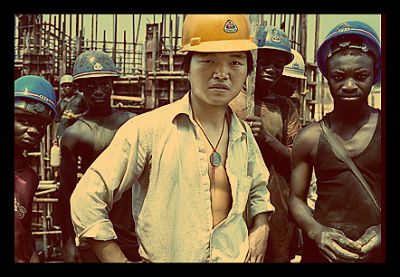
Many officials believe China investing in aid to Africa may be unethical, a form of misguided imperialism, or a way of taking advantage of Africa’s natural resources for the primary benefit of improving China’s economy. Regardless as to whether China’s motive behind widespread aid in Africa is good or bad, the collected data sure tells us one thing–Africa is certainly benefiting from China’s contracts, assistance, and investments.
Western cultures, such as the United States, take a different approach than China. China’s approach is very secretive, and it is difficult to track what exactly Chinese workers are doing in Africa. Fortunately, the U.S. is working hard to uncover that information.
AidData, a research organization funded at The College of William and Mary in the United States, is seeking to reveal the culturally hidden inner-workings of China’s International Development strategies. Based on AidData’s findings, 1,673 different international aid projects were launched and implemented in more than fifty African countries from 2000-2011. China has invested approximately $75 billion in these projects.
China’s international aid projects in Africa are heavily weighted in projects concerning infrastructure, communication, and various power projects. Benefiting from China’s infrastructure project aid, Africa now has an increased quality of transportation either within or outside of the continent. China has assisted in higher quality African roads, railways, and ports. Notably, China carried out a project in Angola that repaired a prominent railroad for the country’s citizens.
The quality of communication in Africa has also increased due to China’s efforts. In Tanzania, China undertook a contract to build a fiber-optic transmission backbone network in order to utilize Internet and telecommunication services. The overarching goal of this project is to connect people via communication vehicles in various areas of Tanzania.
China also has made big gains in Africa’s energy growth. In 2010, China began to build The Malabo Gas Plant in Equatorial Guinea. Once completed, Equatorial Guinea will have full service power supply. The project will boost irrigation systems in the country, as well as build ecological attention. Infrastructure projects in Africa will support and drive the African social and economic expansion. That said, China will continue to expedite progress in transportation projects, interaction services, and power systems.
Because China is working in a rather unregulated market, it will be important for Chinese enterprises to act accountably for their actions. By the same token, African government officials will need to take steps to protect the rights of the African people and the community as a whole.
– Laura Reinacher
Sources: China, Global Times, One
Photo: Shared Societies Project Blog

5 Foreign Aid Quotes from Democrats
Democrats and Republicans are different; we all know that. Throw out any social or economic topic, and bipartisan debate is sure to rage. Take foreign aid, for example. Republicans are notoriously opposed to foreign assistance, while Democrats usually favor it.
However, these perceived differences between the parties do not always hold true. Leaders of both parties have spoken openly in support of foreign aid. Foreign assistance is not a Democratic or Republican issue, but, rather, an American one.
Here are five quotes from notable Democratic leaders about this issue. These quotes can be compared to quotes from Republican leaders here.
Read global poverty quotes.
– Tara Young
Sources: Pew Research Center, InterAction
Photo: OhioBelle
The Global Poverty Mapping Project
The Global Poverty Mapping Project, run by NASA’s Socioeconomic Data and Applications Center (SEDAC) in collaboration with the Center for International Earth Science Information Network (CIESIN), is an attempt to increase the public’s general understanding of the global distribution of poverty. By creating maps that demonstrate the distribution of impoverished populations as well as the link of poverty to geographic and physical conditions, the project aims to assist policymakers and agencies in developing effective interventions to downsize global poverty.
Depictions of global poverty, either illustrative or written, tend to focus on economic representations based off of a country’s GDP or the percentage of a population that is living on less than a certain amount per day (for example, less than USD $1). Though these figures make the information easily accessible to a wide audience, such figures are not readily available at a sub-national level for many of the world’s countries. As such, the project utilizes five main data sets that were constructed by CIESIN: Unsatisfied Basic Needs, Small Area Estimates of Poverty and Inequality, Poverty and Food Security Case Studies, Global Subnational Prevalence of Child Malnutrition, and Global Subnational Infant Mortality Rates.
The child malnutrition and infant mortality rates are used to generate global and regional maps, while the mapping project synthesizes maps of smaller areas based on poverty and inequality. Each data set incorporates a vast array of variables, and as such, each has its own advantages and disadvantages. Nevertheless, all of the data presented are direct indicators of poverty levels.
All of the maps that have been created by the project are available on their website. They can be searched and sorted by geographic area, data sets involved, and themes – including infrastructure, sustainability, and everything in between. The maps themselves represent a significant step forward in the fight against poverty. Having knowledge of problem areas is the first step in creating policy to combat it. By providing a statistical representation of the specific issues that affect these poverty-stricken areas, the Project has also compiled an invaluable resource for policy makers.
Poverty mapping has since found its place in a wide variety of media. The data has been used to support arguments and demonstrate a need for change in everything from NASA publications to New York Times articles. It has been applied to studies that focus on issues ranging from the dangers faced by small schools in earthquake-prone zones of Pakistan to measuring economic growth based on light production. By synthesizing and condensing the vast amount of data, the efforts of the Global Poverty Mapping Project have proved instrumental in highlighting the need for intervention in the fight against global poverty.
– Rebecca Beyer
Feature Writer
Sources: SEDAC, NASA, New York Times
Photo: Info Chimp
Advertisers Without Borders Promote Social Causes
Advertisers Without Borders (AWB), founded in 2002 by Guillermo Caro, is an international network of advertising professionals who donate their time to promote global social causes. Through innovative public service campaigns, AWB brings awareness to issues like poverty, health, environmental care, and peace culture.
One of their recent campaigns, The Children Notwork, was designed to create awareness about global child labor. AWB created profiles on the professional network LinkedIn for textile, coffee, toy, and food companies. It then created dozens of fictitious profiles of children who supposedly worked for those companies. The “children” began to send direct messages to random LinkedIn professionals, executives, entrepreneurs, and leaders on the website. If these messages were read, AWB provided the recipient with a link to The Children Notwork website and detailed information about child labor.
This innovative campaign spurred conversation across the world, finally meeting AWB’s objective to create awareness about the 215 million children who are victims of exploitation and child labor.
Another of AWB’s campaigns, Whatever you do to the world you do to yourself, is composed of a series of four ads to promote greater care for the environment. The four images mirror each other in design, but depict four different issues, namely deforestation, littering, whale poaching, and pollution. Each ad contains a self-inflicted environmental wrong and the connection to the arm that commits it.
Each of AWB’s campaigns is designed to get the public engaged in the world’s issues through innovative, thought-provoking advertising techniques. Said best by anthropologist Margaret Mead, “Never doubt that a small group of thoughtful, committed citizens can change the world.” Advertisers Without Borders is doing just that.
– Tara Young
Sources: Advertisers Without Borders, The Children Notwork, The CreTimes
Deforestation Caused by Poverty
In the world today, forests make up 31 percent of the area of land. Forests are extremely important to the environment, animal life, and human health. In addition to providing a vital source of oxygen, forests offer many endangered animals shelter and help supply medicine, food, and water to people. The significance of forests to humans and the ecosystem overall has caused the act of deforestation to become a highly contested and widely opposed operation.
The 31 percent of forests alive today are being chopped and sliced away to an even lower number as deforestation continues to consume the world’s forests. Each year, nearly 46-58 square miles of forests are destroyed. In order to enact change and stop the deforestation crisis it is necessary to look at the cause.
Though poverty may not be the sole cause of deforestation it most definitely plays a role in it. Much of the world’s rainforests are located in some of the poorest areas on the earth. That said, underdeveloped and poverty-stricken communities are naturally going to go where there is some means of subsistence. Thus, forests become one of the main sources of survival for many poor individuals but at the forest’s expense. Forests are being forcefully scoured and cut through by those who simply have no other means of survival. When a forest no longer has anything to offer, people move on to the next area and the cycle continues.
Despite the significant impact that poverty has on the world’s rainforests, it is only one part of the bigger picture. Much of the deforestation is caused by the need to create cropland and expand agricultural systems. The building of roads is also another factor that fits into the deforestation equation. In fact, a variety of causes have come to have a hand in deforestation. Nevertheless, providing poor communities with the resources they need would keep them from foraging the world’s rainforests and affecting the entire ecosystem.
Education is one approach that many are taking to help save the world’s rainforests. Scores of people remain ignorant to the growing issue of deforestation. Even worse, many citizens of the U.S. have no idea the impact that their consumer lifestyle has on tropical rainforests and, ultimately, the environment. Educating in areas close to forests will prove highly effective, because there are people who don’t understand how significant forests are to personal and global health.
Deforestation provides another example of how the effects of poverty have gone beyond itself and beyond the individual. Poverty is literally affecting the entire world, and that should be enough to get the entire world not only caring but racing to put an end to it.
– Chante Owens
Sources: Mongabay, NASA, World Wildlife
Photo: The Guardian
Significant HIV/AIDS Funding in Myanmar by Global Fund
Along both the rural countryside and urban zones of Myanmar, HIV/AIDS ravages many people who are unable to access proper treatment. Fortunately, the Global Fund to Fight AIDS, tuberculosis and malaria will disburse a US$160 million funding package to Myanmar to specifically combat HIV/AIDS. The Global Fund, an organization working towards the eradication of the three major pandemics of our generation-AIDS, tuberculosis (TB), and malaria-will be distributing US$160 million over the course of 2013-2016, according to the Myanmar’s Ministry of Health.
Previously one of the most isolated and oppressive states in the world, Myanmar now has begun reform efforts and started to open up to Western influences. When it was uncooperative with the international community, it received limited funds and relied heavily on organizations like Doctors Without Borders (MSF) to carry out health care treatment and other assumed government functions.
Despite continuing to rely on MSF, Myanmar has been receiving incremental increases in funds, most notably from 2009 onward. A correlation between recent reform efforts and funding as total disbursements can be seen in the jump from over US$10 million in 2009 to more than $47 million in 2010. This increase has risen steadily up to nearly $161 million in the following three years, growing over 16 times its budget from just four years prior. The sudden jump in funding for Myanmar’s HIV victims comes from the Global Fund’s pull-out in 2005 after government restrictions and its resumption in 2010 following an easement on restrictions.
This influx of HIV/AIDS funding in Myanmar is more than welcome as only 43 percent of the population that needs treatment received it in 2012. To truly understand how low this is, Myanmar’s regional neighbor, Cambodia, has properly provided antiretroviral therapy (ART) for over 94 percent of its citizens eligible for the treatment. The most effective response, ART, is provided by MSF and other healthcare organizations and consists of a minimum of three antiretroviral medications that will suppress and stop the spread and progression of the HIV virus.
While some claim this funding will help Myanmar treat all of its citizens affected by the virus, the head of MSF’s mission in Myanmar, Peter Paul de Groote views it through a more realistic lens. According to de Groote, despite Global Fund’s money improving financial capabilities, “the overall availability and capacity for enrollment needs to improve – by looking into better treatment models and implementing increased, decentralized care and treatment.”
– Michael Carney
Sources: Al Jazeera, The Global Fund, Medecins Sans Frontieres (MSF)
Photo: Cody Romano
Is the MPI a Better Measure of Poverty?
Experts from the Oxford Poverty and Human Development Initiative (OPHI) are urging members of the United Nations to adopt a multidimensional poverty index (MPI) that could present a more distinctive picture of global poverty. For each individual or family, the MPI collates economic data along with information related to health, education, and living standards. This information is then used to assess where people are experiencing deprivation of basic needs, which determines their overall level of poverty.
Director of OPHI, Sabina Alkire, says that the MPI provides a measure of poverty that will answer not only who is poor but also why they are poor. “The real value of multidimensional measures is not having one number,” Alkire told The Guardian, “but it is that we can bring that number to bear…in different ways to understand poverty and trends in reduction over time.”
The current extreme poverty threshold—developed by the World Bank and used by the United Nations—is $1.25 per person per day. This number is thought to reflect an amount that each person needs to maintain his or her basic needs. But many activists believe that $1.25 per day is hardly enough to address basic needs. A report released by Action Aid suggests that $10 per day is a more realistic threshold and also points out that the number of people living on less than $10 per day has actually increased by 25% since 1990.
Though countries may be making progress with regard to the Millennium Development Goals, questions remain whether $1.25 per day reflects a proper poverty threshold. While some individuals may earn more than that amount, they may not have access to healthcare, education, or shelter. Failing to account for these factors creates an inaccurate portrait of global poverty.
There also appears to be a disparity between the UN’s threshold for extreme poverty and the perception of people actually living in poverty. In a meeting with UN officials, OPHI researchers reported that nearly 60 percent of Nigerians are in poverty, using the $1.25 per day threshold. But when asked their opinions, an astounding 95 percent of Nigerians said they were living in poverty. Such disconnects reveal that certain elements of poverty are not being accounted for with current measurements.
Eradicating extreme $1.25-per-day-poverty is a fair goal and developing countries should continue striving to achieve the MDGs. But with 2015 quickly approaching, the United Nations and the World Bank will be exploring new ways to define poverty and refine their stated development goals. That being said, the MPI is a likely candidate to replace the current poverty threshold.
– Daniel Bonasso
Sources: The Guardian, OPHI
Photo: Photopin
The Location of Syria and Its Importance
The conflict that has ravaged Syria since March 15, 2011 has had worldwide ramifications. The civil war started as a response to the Arab Spring, government corruption, and the abuse of human rights. The government responded to this uprising with lethal force, and as of June 2013 the death toll has been suspected to surpass 100,000 casualties. By late April 2013, President Bashar al-Assad began launching full-scale military operations upon city enclosures, officially opening the country for civil war. The Middle Eastern country’s conflict could potentially rock the entire world, and for one seriously misunderstood fact: the location of the country.
The location of Syria holds significance not because of the country’s resources, but of the countries located around it. The Middle East is the oil production giant of the world, and is a sensitive spot for intervention. The location of Syria brings out legitimate reasons to be wary of intervention, as the civil war must be contained at all costs. The addition of a foreign power may allow the war to spill over into neighboring countries, inciting a deadly Middle Eastern war that would be devastating.
Not only is Syria close to the Middle Eastern oil titans, but the continent of Africa lays not far away. Africa is one of the most vulnerable places on earth, one rocked by poverty, hunger, and disease. The feeble economies of the poverty-stricken Africa could not take the outcome of a war spilling into its borders. Containing the war to the country of Syria is a precaution that must be taken carefully. If the conflict somehow spreads to Africa, the continent and its emerging countries will face the fallout of a war they had no stake in.
The majority of citizens in the United States do not support military intervention in Syria. Citizens do not want another drawn-out affair like the wars of the previous Bush administration. Whether military intervention is agreed upon or not, the effects of the decision upon Syria could be monumental. The civil war has reached a deadly number, as evidenced by the 100,000 casualties already listed. This number could exponentially increase, regardless of intervention. If the United States does intervene, it could potentially lose control of the situation, or allow the other Middle Eastern to beef up their weaponry with Western troops in such cl0se proximity. But by leaving the conflict to fester on its own, the United States takes any convincing power out of its hands. Not having a say in which way the conflict heads could be as potentially dangerous as being directly involved. By not intervening, the neighboring countries and poverty-racked Africa could be left in the fray.
The Syrian situation has become one of great interest. Understanding the location of the country, and what ramifications the location could have, is crucial to fully comprehending the condition. Not only will the war have complications upon the Syrian government, the neighboring countries and Africa could become involved. Stay tuned, because the land is hot with anger and strife, and only time will tell where these emotions will take the warring country.
– Zachary Wright
Sources: dailyprincetonian, Maps of World
Photo: Al Hdhod
China Investing in Aid to Africa: Infrastructure, Communication, Energy Initiatives
Many officials believe China investing in aid to Africa may be unethical, a form of misguided imperialism, or a way of taking advantage of Africa’s natural resources for the primary benefit of improving China’s economy. Regardless as to whether China’s motive behind widespread aid in Africa is good or bad, the collected data sure tells us one thing–Africa is certainly benefiting from China’s contracts, assistance, and investments.
Western cultures, such as the United States, take a different approach than China. China’s approach is very secretive, and it is difficult to track what exactly Chinese workers are doing in Africa. Fortunately, the U.S. is working hard to uncover that information.
AidData, a research organization funded at The College of William and Mary in the United States, is seeking to reveal the culturally hidden inner-workings of China’s International Development strategies. Based on AidData’s findings, 1,673 different international aid projects were launched and implemented in more than fifty African countries from 2000-2011. China has invested approximately $75 billion in these projects.
China’s international aid projects in Africa are heavily weighted in projects concerning infrastructure, communication, and various power projects. Benefiting from China’s infrastructure project aid, Africa now has an increased quality of transportation either within or outside of the continent. China has assisted in higher quality African roads, railways, and ports. Notably, China carried out a project in Angola that repaired a prominent railroad for the country’s citizens.
The quality of communication in Africa has also increased due to China’s efforts. In Tanzania, China undertook a contract to build a fiber-optic transmission backbone network in order to utilize Internet and telecommunication services. The overarching goal of this project is to connect people via communication vehicles in various areas of Tanzania.
China also has made big gains in Africa’s energy growth. In 2010, China began to build The Malabo Gas Plant in Equatorial Guinea. Once completed, Equatorial Guinea will have full service power supply. The project will boost irrigation systems in the country, as well as build ecological attention. Infrastructure projects in Africa will support and drive the African social and economic expansion. That said, China will continue to expedite progress in transportation projects, interaction services, and power systems.
Because China is working in a rather unregulated market, it will be important for Chinese enterprises to act accountably for their actions. By the same token, African government officials will need to take steps to protect the rights of the African people and the community as a whole.
– Laura Reinacher
Sources: China, Global Times, One
Photo: Shared Societies Project Blog
What is the G-20?
G-20 stands for “Group of 20 [nations]” that come together every year in a different place to discuss solutions to global issues, mainly economic issues. The 20 nations included in the G-20 summit are: Australia, Japan, South Africa, France, Turkey, the USA, Saudi Arabia, Russia, Mexico, Korea, China, Canada, Italy, Indonesia, India, the EU, Germany, the UK, Brazil, and Argentina.
At their summit once a year, these nations discuss various problems whose solutions can only be reached with international cooperation. The first G-20 session (conducted in Washington D.C., USA) dealt with the economic crisis of the time. Ever since then, the G20 has taken the responsibility of preventing further economic meltdowns with international cooperative measures. The G20 summit is also a great place to address poverty. Helping stabilize the economy and encouraging growth will result in a better economy even in poorer nations. It would help improve infrastructure, and allow smaller nations to build their nation and economy.
This year, the G20 summit, hosted by Russia, will again tackle financial and economic problems. Russia has organized its main priorities for growth in three main categories: Regulation; Jobs and Investment; and Trust and Transparency. One of the main recommendations to ensure economic growth is to confront corruption. Corruption effectively holds back progress. Especially in smaller nations, or nations where aid is necessary to build infrastructure and economy, corruption prevents funds from reaching their destination. The G-20 committee will address the issue of corruption in October. In a solution to, and an active fight against, corruption, lies the future of the fight against global poverty.
Solving economic problems will directly impact poverty; fighting poverty will result in a stronger global economy. Attempting to address economic issues with this in mind will help the international economy, and the national ones as well. The G-20 summit, which meets mainly to address these economic issues, has the potential to greatly impact the fight against global poverty.
– Aalekhya Malladi
Sources: G20, U.S. Department of State
Photo: Radio Netherlands Worldwide
Sandy River Foundation Aids Nonprofit Efforts
The Sandy River Foundation, founded in 2008, works to bring physical and spiritual wholesomeness to all nations. It achieves this by providing nonprofit organizations with funding in order to focus on their initiatives rather than on fundraising to keep the organization going.
Nonprofits that wish to receive this funding must meet the guidelines of the Sandy River Foundation and complete an application process, but only after being invited by the foundation itself. Some of the organizations that have accepted funding include Heifer International, the Long Island Community Foundation, Oxfam America, and Acción International.
The mission of Heifer International is to end both hunger and poverty by providing families with a cow. This provides a source of food to families from the milk the animal provides. The families can also sell the excess products to gain a reliable source of income, and after saving this income, can start a small business or even join an agricultural cooperative with other families nearby.
By providing small businesses with microfinancing, Acción International hopes to strengthen businesses with both financial and managerial support. Once those microfinance institutions have grown and become financially independent of donors, the economy of the surrounding area will increase and the jobs of those working at the company will be secured. Acción International has provided its support to countries across the globe including India, China, Nigeria, Tanzania, and Colombia.
The Sandy River Foundation donates
to nonprofits in order to create a positive impact across the globe.
– Alessandra Wike
Sources: Accion, Heifer International, Sandy River Foundation