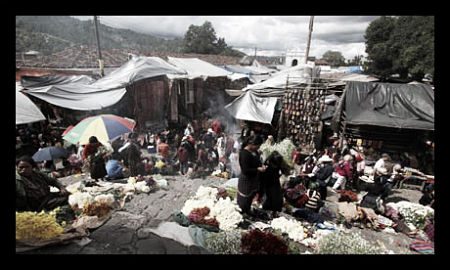
The population of Guatemala is 14.7 million and is ranked at 131 out of 187 in the United Nations Human Development Index. Also, the Gross National Income per capita in Guatemala is $2,740 and the Gini Index of Guatemala is 53.7, making this country one of the most unequal in the entire world.
There are 36 countries in the world that account for 90 percent of growth stunting and Guatemala is one of them. This is because the chronic undernourishment rate for Guatemalan children is 49.8 percent (about 2.5 million children,) the fourth highest in the world and the highest in the region.
Chronic undernourishment in the indigenous areas is at 69.5 percent; 53 percent of the population lives in poverty with 13 percent being in extreme poverty. Indigenous boys, girls, and women that live in the highlands are the most vulnerable groups to impoverished living conditions. The illiteracy rate in Guatemala is 31.1 percent in women that are 15 years of age and older, but that reaches as high as 59 percent among older indigenous women.
In the last few decades of the 20th century, Guatemala had multiple civilian and military governments which led to guerilla war. In 1998, its government signed a peace agreement that ended the conflict with nearly one million refugees and 200,000 deceased. Guatemala was able to get a non-permanent seat on the U.N. Security Council in January 2012. The country’s being in an extended drought is now met with the food insecurity and economic crisis.
The government’s unemployment and budget deficit has been increasing because of the global economic crisis reducing exports, revenue from tourism and foreign investment. Impoverished and food-insecure families are already struggling, but the combination of all these issues together restricts these families even more.
Unfortunately, the regularly occurring natural disasters in Guatemala do not make matters better for those living in poverty. They are prone to earthquakes, landslides, droughts, hurricanes and floods, which can severely damage the indigenous population, since they are almost completely unprotected.
Guatemala is full of social conflict right now, with NGOs and indigenous groups protesting to get equality. They are currently trying to block off the very mines that the government sees as essential to the country’s development because the indigenous see them as a threat to their safety since there have been massacres of hundreds of natives just to get certain resources from their land.
Also, people are trying to nationalize the electricity system, since poor households are unable to pay to keep their electricity due to the rising prices employed by private companies. Children are even being forced to assemble fireworks without any safety equipment because they cannot find any other way of making money. The Guatemalan people are pleading with the government to raise minimum wage by 47 percent simply so they can get enough money to cover the quickly rising prices of basic goods.
All of this injustice the Guatemalan government and private corporations are committing against their own people is leading to a lot of civil unrest. If someone wants to be safe in Guatemala, they must pay to be safe, and the only ones that can pay are the rich. It is clearly observable in most of the tourist destinations of Guatemala that there are uniformed guards in stores, hotels, and plazas to protect the outsiders/rich insiders; that is never a good sign.
There are actually seven private security officers for every public police officer. The non-rich Guatemalan people are unhappy and cannot protect themselves from those that are hurting them, so action needs to be taken to achieve social justice.
– Kenneth W. Kliesner
Sources: World Food Programme, CIA, The Guardian, IOL News
Photo: The Guardian

Clemson Engineers for Developing Countries
Last week the Institute for International Education (IIE) announced the winners of its annual Andrew Heiskell Awards for Innovation in International Education. Among the recipients was an innovative study abroad program called Clemson Engineers for Developing Countries (CEDC).
What makes the CEDC so unique is its focus on service-learning and community development abroad. The program promotes civic duty and international leadership through targeted civil engineering projects.
The CEDC allows its scholars to aid communities on and around the Central Plateau of Haiti in the design and implementation of sustainable infrastructure. These projects include the creation and improvement of water treatment facilities, road designs and waste management plants.
Each of these elements of infrastructure is essential to human health, quality of life and to the economic development of Haiti. The Central Plateau is one of the most impoverished and disaster-prone regions in the world and without the aid of programs like the CEDC, Haiti would have little opportunity to better the lives of its people.
Beyond development, the CEDC aims to prepare the peoples of Haiti to become integral to ensuring the success of this program. While Clemson University scholars and engineers receive the opportunity to gain hands-on experience in the developing world, many Haitian students in the area shadow the engineers and learn the skills necessary to continue their work.
For this reason the CEDC has garnered a lot of attention and created many strategic partnerships with NGOs, private industries and Haitian schools.
The Andrew Heiskell Awards recognize the CEDCs tremendous commitment to, and investment in, both education and community development. According to the IIE, the Heiskell awards are aimed at, “highlighting initiatives that remove institutional barriers and broaden the base of participation in international teaching and learning on campus.”
The award was created in 2001 and named after the former chairman of Time Inc., Andrew Heiskell. The prize has been given annually to innovative university programs in four different categories: Internationalizing the Campus, Study Abroad, International Partnerships and Internationalizing the Community College.
– Chase Colton
Sources: Digital Journal, Clemson
Photo: Clemson Engineering for Developing Countries
Norway Quality of Life Far Exceeds America
When it comes to quality of life, there are few countries that can supersede America in terms of luxury, comfort and overall well-being. Not even Canada or Britain exceeds the United States in quality of life. However, Norway, an oil-rich country situated in the Scandinavian Peninsula, undeniably outstrips the American standard of living.
The United States has a lower per capita GDP than Norway with a GDP of 51,749 compared to 99,558, respectively, and is also home to one of the most pressing income distribution gaps in any industrialized nation, surpassed in income inequality by only Russia and Mexico.
Due to America’s cavernous income inequality, the poorest 38% of Norwegians are better off than the poorest 38% of Americans despite an overall lower average per capita GDP. According to Syracuse University professor Timothy Smeeding, the United States relies heavily on the markets to an extent that social safety nets are neglected, unlike Norway, which focuses more resources on providing aid to the poor.
This is not to say that America completely disregards its poor. To clarify, the United States has initiated its portion of socially-oriented acts, such as its attempt to reform the welfare system during the past two decades.
However, while the number of individuals on welfare was reduced from 5 million to slightly over 2 million, the welfare poor were downgraded into the working poor. Although welfare reform was rooted in good intentions, the lack of government safety nets defeated the purpose of the entire act.
Although the discovery of oil on the land in 1969 had transformed Norway, more than just an abundance of the valued natural resource buttresses Norway’s economy. Norway’s success has been attributed to what many call the “Norwegian Model”– a model of running a welfare state in which resources are carefully monitored, preserved and kept up-to-date.
While the United States ranks among one of the wealthiest nations in the world, it has stayed remiss in establishing social safety nets, particularly for the less economically-advantaged subsection of the population. Due to the lack of social safety nets, America hosts one of the largest global income inequality gaps, and is ultimately surpassed by the tiny welfare state of Norway in terms of quality of life.
– Phoebe Pradhan
Sources: Infoplease, CS Monitor, World Bank, News in English
Photo: The Telegraph
Down Under the Poverty Line
Australia is known for gorgeous beaches, the Great Barrier Reef and incredibly attractive accents. Many people would be shocked to hear that according to the Australian Council of Social Service and the Social Policy Research Centre (ACOSS), almost 13 percent of the population is struggling with poverty.
Low income families can get assistance from programs like NewStart, an ‘allowance’ payment similar to the welfare system in the United States.
However, ACOSS has determined that the payment of thirty five dollars per week has fallen well below the cost of living. That allowance numeral has not been updated since its implementation in 1994. Per week, the allowance is about two hundred and fifty dollars and the poverty line income is three hundred and sixty as of today.
Families with children meet the poverty line at seven hundred and fifty dollars, which the allowance payment is obviously not qualifying. Critics are fighting for new policies and programs that address the real number needed to live above the poverty line, and a way to fix the outdated New Start allowance amount.
One idea is to increase the allowance immediately by fifty dollars per week and help families find sustainable incomes so that eventually they can support themselves.
One issue that is being brought to the fore-front of the fight against poverty in Australia specifically is climate change. The poor population of Australia spends a large chunk of their income on basic needs like water sanitation and energy. Both of these basic services are going to become more expensive as the world’s climate continues to change, and coming up with policies to deal with this change and prevent poverty from spreading is of the utmost importance.
It will cost the nation more if they do not act now than if they spend the necessary funds to create solutions to the problems that climate change will inevitably bring. Heating, insulation and more weather related activities are more costly to low income families than to wealthier ones.
Officials in Australia and United Nations are committed to making climate change a priority in order to help citizens of the outback better their quality of lives and their futures. Reintroducing the unemployed and underpaid into jobs with increased wages and lasting security of future employment will help pull families out from under debilitating circumstances.
Assistance programs and awareness of what needs to be done in Australia will help not only their own citizens but also the rest of the world as new wealth and innovation comes from the newly assisted people down under.
– Kaitlin Sutherby
Sources: The Australian, ACOSS, ACOSS
Photo: An Infinite Summer
The Legacy of Mahatma Ghandi
An oft heard phrase, some cynics go as far as to call the title of this piece, which is also a famous quote, corny, utopian or unrealistic. Yet the individual who said it would be defined by the antithesis of the spirit behind those words. As it stands, Mahatma Ghandi is remembered as the father of a nation, much like the way that we refer to our founding fathers: Thomas Jefferson, Benajmin Franklin and James Madison to name a few.
Gandhi is certainly one of those historic figures of the past that a great many people have at least heard of. Especially concerning his bravery and courage to stand up to an empire, beginning just with himself. His choices and principles inspired a people to rise up against authority. Few have truly come to understand how, and maybe even more importantly, why he choose to do what he did.
Mahatma Gandhi is, for the most part, unanimously regarded as the leader and motivational spearhead of the Indian Independence Movement that overthrew the British empire. Almost exclusively using his rights of civil disobedience, always grounded in non violence, he managed to topple one of the largest and most sophisticated military conquerors in history.
Born on October 2, 1869, to a prominent father in the local empirical government, and to a mother whom was the fourth wife of the former. At the age of 14, as was customary, he wed by an arranged marriage, and by 15 had his first child that died soon after birth.
In his early adulthood he moved to South Africa for a job prospect. What he experienced, through the Apartheid segregation system, profoundly affected him. Soon he began learning civil disobedience tactics, and became a social activist. In 1915 he returned to India, equipped with the knowledge and skills he would employ and later became revered for.
It was not long before Gandhi became deeply involved with the independence movement. Through his steadfast persistence in following the Sacred Male and Sacred Female behaviors, he became the figurehead and emotional leader of the campaign.
The Salt March is one of his hall mark actions, when he lead a walk through rural India, encouraging civil disobedience and non-compliance to the British Empire imposed salt tax. Though he was arrested many times during the action, it is considered a pivotal point in his rise to prominence amongst the Indian people.
Babo as the Indian people affectionately call him, achieved one of his major goals on August 15, 1947. That is to say, on this day, India became independent from the ruling British empire.
On January 30, 1948, Mahatma Gandhi was assassinated.
His legacy of forgiveness, non-violence in the face of overwhelming odds and his persistence have left a deep impression of the conscience of the world. We end this piece as we started. The brevity and truth behind his words cannot be improved upon.
“An eye for an eye leaves the whole world blind.”
– Mahatma Ghandi
Sources: Times of India, MensXP, PBS
Photo: Daily Photostream
Syrian Refugee Resettlement in the U.S.
The United States currently leads the world in refugee resettlement yet could fall short in the case of the crisis in Syria. With more than two million Syrians fleeing the country and another 6.5 million displaced within Syria’s borders, this is quite possibly the worst refugee crisis since the Rwandan genocide of 1994.
The demand for resettlement is huge.
In a Senate hearing on January 7, State Department Assistant Secretary Anne Richard stated that the United States expected to begin resettling more refugees, increasing referral acceptances to several thousand Syrians in 2014. Additionally, the United Nations a few weeks ago stated that the United States would be accepting around 30,000 vulnerable Syrians referred for resettlement.
Unfortunately, post-9/11 immigration laws may pose some difficulties.
Under U.S. laws, not all of these vulnerable individuals can be legally received. Those people who are considered to have given ‘material support’ in some form or other to rebels are considered to have possibly supported terrorism, even if the ‘material support’ was approved by the United States.
In this manner, Syrians who gave so much as a sandwich or a cigarette to a soldier fighting for the Free Syrian Army will not be accepted, according to Illinois Senator Dick Durbin.
Human Rights First has called for the U.S. to resettle some 15,000 Syrians per year. While this perhaps should be feasible for the world’s leader of refugee resettlement, it is a particularly lofty goal for a country that will have a tough time finding Syrians with no connection to either side of the conflict.
As such, the United States is working on easing the anti-terrorism laws to some degree with respect to Syria in order to support the global effort to take in and support Syrian refugees.
The United Nations calculates that Syria has lost at least 35 years of human development from the multitude of tragedies that have occurred in the past three years. The strongest nation in the world should be doing more to work with the international community in aiding the victims of such devastating circumstance.
– Jaclyn Stutz
Sources: Huffington Post, Wall Street Journal
Photo: Think Progress
Rising Need for Social Justice in Guatemala
The population of Guatemala is 14.7 million and is ranked at 131 out of 187 in the United Nations Human Development Index. Also, the Gross National Income per capita in Guatemala is $2,740 and the Gini Index of Guatemala is 53.7, making this country one of the most unequal in the entire world.
There are 36 countries in the world that account for 90 percent of growth stunting and Guatemala is one of them. This is because the chronic undernourishment rate for Guatemalan children is 49.8 percent (about 2.5 million children,) the fourth highest in the world and the highest in the region.
Chronic undernourishment in the indigenous areas is at 69.5 percent; 53 percent of the population lives in poverty with 13 percent being in extreme poverty. Indigenous boys, girls, and women that live in the highlands are the most vulnerable groups to impoverished living conditions. The illiteracy rate in Guatemala is 31.1 percent in women that are 15 years of age and older, but that reaches as high as 59 percent among older indigenous women.
In the last few decades of the 20th century, Guatemala had multiple civilian and military governments which led to guerilla war. In 1998, its government signed a peace agreement that ended the conflict with nearly one million refugees and 200,000 deceased. Guatemala was able to get a non-permanent seat on the U.N. Security Council in January 2012. The country’s being in an extended drought is now met with the food insecurity and economic crisis.
The government’s unemployment and budget deficit has been increasing because of the global economic crisis reducing exports, revenue from tourism and foreign investment. Impoverished and food-insecure families are already struggling, but the combination of all these issues together restricts these families even more.
Unfortunately, the regularly occurring natural disasters in Guatemala do not make matters better for those living in poverty. They are prone to earthquakes, landslides, droughts, hurricanes and floods, which can severely damage the indigenous population, since they are almost completely unprotected.
Guatemala is full of social conflict right now, with NGOs and indigenous groups protesting to get equality. They are currently trying to block off the very mines that the government sees as essential to the country’s development because the indigenous see them as a threat to their safety since there have been massacres of hundreds of natives just to get certain resources from their land.
Also, people are trying to nationalize the electricity system, since poor households are unable to pay to keep their electricity due to the rising prices employed by private companies. Children are even being forced to assemble fireworks without any safety equipment because they cannot find any other way of making money. The Guatemalan people are pleading with the government to raise minimum wage by 47 percent simply so they can get enough money to cover the quickly rising prices of basic goods.
All of this injustice the Guatemalan government and private corporations are committing against their own people is leading to a lot of civil unrest. If someone wants to be safe in Guatemala, they must pay to be safe, and the only ones that can pay are the rich. It is clearly observable in most of the tourist destinations of Guatemala that there are uniformed guards in stores, hotels, and plazas to protect the outsiders/rich insiders; that is never a good sign.
There are actually seven private security officers for every public police officer. The non-rich Guatemalan people are unhappy and cannot protect themselves from those that are hurting them, so action needs to be taken to achieve social justice.
– Kenneth W. Kliesner
Sources: World Food Programme, CIA, The Guardian, IOL News
Photo: The Guardian
Charity Through Hip-Hop
Rap and hip-hop music has a rich and diverse culture with its roots linked all the way back to the era of slavery within United States history. Hip-hop evolved into a music genre in the 1970s when DJs performed at block parties in the boroughs of New York City using the breaks of popular funk, disco and soul music. As the genre progressed, hip-hop became an outlet of artistic expression for the youths growing up in the inner cities.
Hip-hop blessed the world with popular artists such as 2Pac, the Notorious B.I.G., KRS-One and Eminem, among others. The lyrical content gave the rest of the world a lens in which we could try to understand and empathize with the people living in impoverished conditions within the inner city where kids had little to no economic opportunity, faced rampant drug infestations and constant battles with authorities.
As hip-hop music gained popularity, it gave some individuals a chance to make a living while creating work that inspired millions. Since the hip-hop genre is directly infused with the universal struggle of the worlds poor and underprivileged, it is always great to hear about those individuals that were able to escape that life and use their fame and fortune to benefit others. Here are a few prominent members of the hip-hop community that do just that:
– Sunny Bhatt
Sources: Look to the Stars, Konfidence Foundation, Omeid International, Culture Bully
Photo: DrJays
Indian Government Promotes Guns for Women
The Indian government recently commissioned a state-run gun maker to specifically produce guns for women. The lightweight .32-caliber revolver is called, “Nirbheek,” which means fearless in Hindi.
The gun weighs just 500 grams, and is the first handgun made of titanium alloy. The Indian Ordnance Factory in Kanpur has been working on the design for two years. Though there has been much talk around the innovative design of the gun, only a few people have purchased it. Within a few weeks of its release, the company received just 10 orders.
The government introduced this gun in response to outrage over a gang rape of a 23-year old woman referred to in the media by the alias, “Nirbhaya.” Nirbhaya was riding a bus when she was brutally raped and beaten by several men.
The Indian Ordnance Factory hopes the lightweight, compact design of the gun will encourage women to carry the firearm in their purse.
The gun maker hopes women carrying firearms will serve as a deterrent for men and give women a sense of security. However, the gun costs 122,000 rupees, or $2,000, which is far above the average per capita income in India. For poor women, or women with no access to their family income, the gun is unattainable.
Gun licenses are usually only granted to men, and more often to upper class men. Women’s rights groups are worried that corruption and gun restrictions will inhibit women from obtaining a license. Furthermore, the Allahabad High Court has banned new gun licenses due to corruption in the licensing process.
Despite the price and restrictions on gun ownership, the company says they have received 80 inquiries and over 20 bookings, with women making up 80% of their market.
While the government and gun manufactuers see this as a victory for women, many women’s rights groups have spoken out about the need for a cultural shift. Rather than creating an expensive firearm, the Control Arms Foundation of India suggests the government should prioritize security for women.
– Stephanie Lamm
Sources: CNN, Times of India, Al Jazeera
Photo: Pagunblog
Poverty in Nicaragua
Nicaragua is one of the poorest countries in Latin America, second only to Haiti. Most of the poverty in Nicaragua exists rurally (more than 80 percent,) but there are also very impoverished neighborhoods in the capital of Managua. In fact, 43 percent of the Nicaraguan population lives in rural areas and 68 percent of them are trying to survive off just over $1 per day. Overall, 46.2 percent of the population lives below the poverty line.
Implications of Poverty in Nicaragua
The poverty in Nicaragua has caused extremely poor health conditions. HIV and AIDS have been a big issue; there have also been frequent reports of violence against women. Many organizations have been working to prevent the spread of HIV and AIDS and provide support for those with it, to empower women in their fight for freedom from violence and to empower the youth to encourage them to change their society.
Over the last 40 years, there has been extreme inequality and the country has had to overcome a cruel dictatorship, a gruesome civil war and multiple natural disasters. Another big problem is that the central government has historically marginalized the areas with large populations of indigenous people. The gross domestic product (GDP) per capita has decreased to only one-third of what it was in 1977 because of the combined impact of continued civil strife, trade embargos, unsuitable macroeconomic policies and institutional changes that are leading toward an even and more centrally-controlled economy.
Unemployment across the entire country is at 12 percent, but among the poor rural families, it is over 20 percent, so many rural families are migrating to other countries or urban areas within Nicaragua to find work. Remittances are vital sources of income for one in every five families and account for 20 percent of the country’s GDP.
Fortunately, the Nicaraguan economy has been growing substantially and has recently received lots of attention, having grown 30 percent since 2006, when the Sandinistas came back into power. Also, the GDP per capita has increased from $1,239 to $1,582 in the past year alone. Also, the Nicaraguan government has signed a lucrative memorandum of understanding with a telecommunications company from China to fund and build an inter-oceanic canal that is said to rival the Panama Canal.
Nicaragua is presently importing oil from Venezuela at solidarity rates, so Nicaragua pays extremely low prices up front for the first half of the oil and then pays low-interest loans over time for the rest. The Central Bank has said that macro-business development and social programs are funded by 62 percent of the Nicaraguan oil revenue.
Because of all of this news in the last five years, extreme poverty (measured by a familial income of less than $1.25 per day) in Nicaragua has fallen from 11.2 percent to 5.5 percent. In 2011, Nicaragua was reported to have an economic growth of 5.1 percent, which was the highest in Central America. Despite all of this good news, a considerable amount of work still needs to be done before it can fully eradicate poverty.
– Kenneth W. Kliesner
Sources: World Bank, Rural Poverty Portal, Health Poverty Action, The Tico Times
Photo: Pacific Lots
So, You Think You Know Martin Luther King Jr.?
The name of Martin Luther King Jr. is synonymous with the civil rights movement in the United States. Here are five interesting facts about him.
– Caitlin Zusy
Sources: CNN, History
Photo: Seattle Times