Some stories are just too big to tackle in the newspaper – and global poverty is one of them. The past few years have seen an incredible amount of literature from authors who are experienced in the deeply embedded issue of poverty and are now putting their storytelling skills towards the fight against it. These three recently published texts provide a knowledgeable glimpse into the problems of the world today, and are perfect for a reader with a humanitarian mind.
1. This Is How You Lose Her by Junot Diaz
A love story is not the traditional plot line for a novel delving into issues of corruption, violence, poverty and racism. Pulitzer Prize winning author Junot Diaz, however, expertly intertwines these in his account of failed and messy romance, set against the backdrop of an immigrant neighborhood in New Jersey. The novel follows the narrator, Yunior, across various stages of his adult life, as he struggles to navigate the difficulties of human relationships, further complicated by his racial, economic, and gender identity.
Through Yunior, Diaz challenges what it means to be a young Latino man from the Dominican Republic now living in the United States. This means breaking down a range of stereotyped assumptions, as well as internalized insecurities. Additionally, Diaz sheds light on the depth of poverty in both of the narrator’s home countries, the U.S. and the Dominican Republic. Global poverty is a powerfully destructive force, which alters the characters’ lives in unexpected ways. Still, though, it cannot destroy Yunior’s strong emotional attachment to his Dominican heritage.
2. Claire of the Sea Light by Edwidge Danticat
Images of Haiti, the western hemispheres poorest nation, have flooded the media in recent years, showing a nation struggling with natural disaster, political turmoil, and horrible living conditions. In her new novel, Danticat presents an alternate and more insightful image of family, love and community.
Danticat’s characters are certainly not immune to the structural problems of poverty and corruption. The novel focuses on the heart-wrenching decision of one fisherman to give up his daughter, Claire, so as to provide her with a better life. However, it also portrays individuals eager to fight back against the outside injustices that have augmented their situation, through political activism. Overall, Danticat presents a beautiful story illuminating the humanity and agency of the Haitian community.
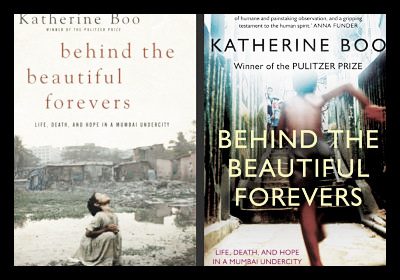
3. Behind the Beautiful Forevers by Katherine Boo
Poverty is often hidden in plain sight, as this non-fiction Pulitzer Prize nominee seeks to describe. Boo, a former journalist, gives a touching and tragic account of her time in Mumbai, where the poorest of the community live in direct contact with the most affluent, although their neighborhoods remain socially isolated.
The story is one of upward mobility, highlighting the unique hardships of a family from the Mumbai slums of Annawadi hindering their success. Boo describes individuals who have aspirations shared by many universally, such as finding a better job, wanting security for their loved ones and renovating the kitchen. However, the starkly divided social dynamic accompanying poverty in India is distinctively interpreted.
– Stefanie Doucette
Sources: New York Times, The Guardian, NPR
Photo: Extraordinary Experiences

Challenges to Development in India
Development in India faces many challenges despite being one of the fastest growing economies in the world. In fact, two-thirds of students in the government public schools in India cannot even read a simple story. To put it into a better perspective, the poverty levels across India can range from anywhere worse than Malawi to better than Mexico, so there is still a large range of development that can happen through foreign aid.
India has spent a large amount of its funds in an attempt to lower infant mortality rates, but has spent more and achieved less than Bangladesh. In 1980, India had much more infrastructure than China and now it has completely reversed, with China leading radically.
It is vital that the fastest growing economy in the world does not leave behind its youth. The majority of young people’s lives in India are hindered from progress by preventable health issues like malnutrition, lack of education about HIV and how to prevent it and restricted access to health care and reproductive/sexual health services. Also, the youth of India struggles with gaining a more influential role in the decision-making process. There are many issues with gender disparity in employment and education; in addition, there is a lack of career guidance for youth.
Development in India faces two main challenges today, the first being it needs to find a way of sustaining rapid growth while spreading its benefits more widely among the entire population. The best way to maintain the rapid growth that has been occurring in India for years is to invest in the infrastructure in order to create more jobs for the lower-class, which is comprised largely of less-educated, semi-skilled workers.
In doing this, policies need to be put into place to empower the poor to be a part of the market, to restore labor regulations, and to improve both infrastructure and agronomic technology.
The other main challenge facing India today is it needs to refine its core public services. It is crucial that the people of India empower their well-being so they can reform and create more operational systems of public sector accountability. By doing so, they can improve their education, power supply, water supply and overall health care. This can be done by producing reliable information for the general public, creating public-private partnerships or decentralizing to local governments.
A great way to kick-start this development in India is to get the news out there and get support. The former first lady of France, Valerie Trierweiler, visited the Dharavi slum in Mumbai, India on January 27. She was there working with the Nutrition Rehabilitation and Research Center and the Action Against Hunger (ACF) to advocate for human rights and combat undernourishment in children. She plans to commit herself to humanitarian work.
– Kenneth W. Kliesner
Sources: Restless Development, The World Bank
Photo: The Wall Street Journal
The Life of Albinos
United Kingdom native, Harry Freeland was inspired to spread awareness of albinism through a film documentary after his first encounter with the condition in Senegal. “A woman approached me in the street, held out her [albino] child and said ‘here, take it back, where it comes from.’ [B]ecause I’m white, she thought the child belonged to me in some way–her husband had left her for having a white child and accused her of sleeping with a white man,” said Freeland.
Albinism, a total lack of pigmentation in hair, skin and eyes, can affect people of every race, but is particularly prevalent in Tanzania and throughout East Africa, where it’s estimated that one in every 2,000 people are affected with it. The condition is passed to a child when both parents carry the gene, regardless of whether the parents have albinism themselves.
The real danger for those with albinism isn’t their heightened vulnerability to the sun, but the stigma that still exists concerning the potentially magical qualities of their body parts in potions and rituals performed by witch doctors. The miseducation and superstition surrounding individuals with Albinism has created a horrific market for their body parts in Eastern Africa. Many regions still believe that spells done with an albino’s hand, foot, breast or genitals will result in great wealth or miraculous healing.
Men with HIV/AIDS have been known to rape albino girls in the hope of curing their disease, and children with albinism are regularly kept home from school for fear that they will be attacked during their walk. Mothers are regularly blamed of sleeping with white men or devils to have produced a white baby, and many women prefer to kill or abandon their albino children rather than face the hardship of living with them.
Freeland’s film, “In the Shadow of the Sun”, follows Josephat Torner, a man with albinism, who has spent his life trying to break through the social stigmas surrounding his condition. Despite faces immense social injustice, Torner received his education, started a family, and climbed Africa’s tallest mountain, Kilimanjaro.
Torner and Freeland believe in fighting the mythologies of albinism by demonstrating to people the truth of the condition. The education and integration of albino children into society as working citizens, as well as the punishing of those who hunt them, is the only way to eradicate this dehumanizing practice.
– Lydia Caswell
Sources: Vice, CNN, UN News Center
Photo: National Geographic
4 Years After Earthquake, Haiti Tries to Rebuild
In January of 2010 Haiti was hit by a devastating earthquake that killed over 100,000 people. There was an immediate outpouring of relief for the beleaguered island nation, with supplies and relief workers pouring in to help rebuild. Four years later there is still a lot of work to be done in the nation and the aid relief that came in 2010 is not available now.
Immediately following the earthquake there were 1.5 million Haitians living in tent cities, and while that number is currently down to 146,000 people the country is hurting to relieve those displaced citizens. There is a sense that the United States and United Nations have failed the Haitian people considering the massive problems that still exist in the country and Haitians face on a daily basis.
Obviously one of the biggest issues facing post-earthquake Haiti was the shortage of safe housing with the million Haitians displaced. According to a Center for Economic and Policy Research (CEPR) study, only 7,515 houses had been built in Haiti out of a planned 15,000. This points to a lack of money gone directly through the Haitian government and being used as efficiently as it could be.
The lack of safe housing has kept many in the refugee camps that were set up for temporary use after the earthquake, but the pressure put on those administering the camps has caused the Haitian government to make some drastic decisions. In December of 2013 at least 54,000 people had been removed from camps in Canaan, a suburb of the capital of Port-Au-Prince, according to a CEPR report. That was the largest example of a series of forced evictions from these camps in 2013. The UN Refugee Agency has not extended Internally Displaced Person (IDP) protections to those in Haiti’s camps, leaving them at the whim of the government.
Part of the problem with the still-standing IDP camps is the risk for spreading disease compacted by unsanitary conditions. Cholera outbreaks have been pandemic over the last few years with thousands falling victim to the disease though it had never been reported in the nation prior to the earthquake. Over 8,000 people have died of cholera in Haiti during that that time, with 65,000 cases being reported in 2013 alone.
Since cholera had never been an issue in Haiti prior to the earthquake, there was no infrastructure to deal with the disease. While agencies and aid groups from other nations have been brought in to deal with these problems as they arise, some Haitians feel that they have just made the cholera crisis worse. In October the Institute for Justice and Democracy in Haiti (IJDH) filed a lawsuit against the United Nations claiming their practices inadvertently caused and exacerbated the epidemic. Over 5,000 Haitians were listed as plaintiffs in the suit.
There is still much work to be done in Haiti, a nation that was in dire straits even before the 2010 earthquake. There are clearly still many Haitians suffering in the aftermath of the quake, and it does not help that outside assistance has been at times hard to come by and misdirected. The situation in Haiti points to the importance of outside assistance and the need to sustain efforts well after an event like the earthquake happens. It goes to show that the events of today have far-reaching consequences and must be kept on aid agendas well after public shock has subsided.
– Eric Gustafsson
Sources: YouTube, Amnesty International, CEPR, Washington Post
Photo: The Washington Post
Roma Gypsies are being Persecuted
The Roma people—also vernacularly referred to as “gypsies”—have become a widely discussed topic in the European Union over the past few years. Despite being Europe’s largest, stateless ethnic minority (more than 10 million people), they are still mired in poverty and bereft of opportunity and political representation all across the continent.
With Romania and Bulgaria, two member states containing a considerably large Roma population, becoming party of the Schengen Area this year, some Western European politicians are deploying xenophobic rhetoric to their own advantages. Much of this xenophobia is targeting Romanian Roma immigrants.
Comprising somewhere between 5-10% of Romania’s total population, an estimated 80% of Romanian Roma population lives in poverty. With the rise of the far-right across Europe, the community has fallen target to racial discrimination and violent abuses; an extremist organization in Romania even suggested that Roma women should be sterilized.
The socio-economic tribulations that grip the Romanian Roma community stem from centuries of segregation and prejudice. Furthermore, the widespread prejudice to view them as unwilling to work and as free riders also contribute to the tension between the majority society and the Roma community.
In many parts of Europe—Western and Eastern alike—Roma people live in segregated communities with inadequate access to water and electricity. They are also at constant risk of forced eviction and hostility from surrounding majority population. The latter of which often manifests itself violently. In many cases, they are relocated to suburban landfills with no access to running water or electricity. With sometimes more than 13 people living in a single room, their hygienic wellbeing is greatly at risk. To make matters worse, being placed in remote locations also deprive the children of the opportunity to attend school since often times they are outside of school bus routes.
In 2012, the European Union Agency for Fundamental Rights conducted a survey whose findings were truly shocking for a continent that boasts some of the highest human development indexes in the world. In Romania alone, nearly a quarter of Roma children aged 7 to 15 do not attend school and nearly a third of respondents aged 20 to 64 are unemployed, in contrast to the average of 11% among the country’s non-roma population.
Since Romania has at last joined the Schengen Area and its people have finally received full rights as citizens of the EU, many politicians in more prosperous member states such as the UK have found the anti-immigrant discourse to be a convenient tool in winning over public opinion. Unfortunately, unless the EU soon finds measures to solve the millennium-old prejudice towards the community, the Roma will inevitably be exploited as the political bête noire within the politics of inter-Schengen migration.
– Peewara Sapsuwan
Sources: Amnesty International, Express, European Union Agency for Fundamental Rights, Romania-Insider, SPIEGEL Online International
Photo: March Inbetween
Global Poverty 3 Must-Reads
Some stories are just too big to tackle in the newspaper – and global poverty is one of them. The past few years have seen an incredible amount of literature from authors who are experienced in the deeply embedded issue of poverty and are now putting their storytelling skills towards the fight against it. These three recently published texts provide a knowledgeable glimpse into the problems of the world today, and are perfect for a reader with a humanitarian mind.
1. This Is How You Lose Her by Junot Diaz
A love story is not the traditional plot line for a novel delving into issues of corruption, violence, poverty and racism. Pulitzer Prize winning author Junot Diaz, however, expertly intertwines these in his account of failed and messy romance, set against the backdrop of an immigrant neighborhood in New Jersey. The novel follows the narrator, Yunior, across various stages of his adult life, as he struggles to navigate the difficulties of human relationships, further complicated by his racial, economic, and gender identity.
Through Yunior, Diaz challenges what it means to be a young Latino man from the Dominican Republic now living in the United States. This means breaking down a range of stereotyped assumptions, as well as internalized insecurities. Additionally, Diaz sheds light on the depth of poverty in both of the narrator’s home countries, the U.S. and the Dominican Republic. Global poverty is a powerfully destructive force, which alters the characters’ lives in unexpected ways. Still, though, it cannot destroy Yunior’s strong emotional attachment to his Dominican heritage.
2. Claire of the Sea Light by Edwidge Danticat
Images of Haiti, the western hemispheres poorest nation, have flooded the media in recent years, showing a nation struggling with natural disaster, political turmoil, and horrible living conditions. In her new novel, Danticat presents an alternate and more insightful image of family, love and community.
Danticat’s characters are certainly not immune to the structural problems of poverty and corruption. The novel focuses on the heart-wrenching decision of one fisherman to give up his daughter, Claire, so as to provide her with a better life. However, it also portrays individuals eager to fight back against the outside injustices that have augmented their situation, through political activism. Overall, Danticat presents a beautiful story illuminating the humanity and agency of the Haitian community.
3. Behind the Beautiful Forevers by Katherine Boo
Poverty is often hidden in plain sight, as this non-fiction Pulitzer Prize nominee seeks to describe. Boo, a former journalist, gives a touching and tragic account of her time in Mumbai, where the poorest of the community live in direct contact with the most affluent, although their neighborhoods remain socially isolated.
The story is one of upward mobility, highlighting the unique hardships of a family from the Mumbai slums of Annawadi hindering their success. Boo describes individuals who have aspirations shared by many universally, such as finding a better job, wanting security for their loved ones and renovating the kitchen. However, the starkly divided social dynamic accompanying poverty in India is distinctively interpreted.
– Stefanie Doucette
Sources: New York Times, The Guardian, NPR
Photo: Extraordinary Experiences
Geneva II Peace Talks and Hom Relief at Standstill
With humanitarian conditions dire in Syria, the Geneva II peace talks between the National Coalition and the opposing Syrian government largely lack progress.
Led by Bashar Al-Assad, the Syrian regime has been in violent conflict with the National Coalition since 2011. Claiming over 130,000 lives with nine million more displaced, the peace talks nestled in Switzerland’s town of Montreux are far from arriving at a solution.
The situation on the ground in Syria is sorely lacking in electricity, heat and most importantly of all, food and water.
A recent shipment of food relief arrived in the Yarmuk camp of Palestine, independent of the on going peace talks in Switzerland, yet blockades and the fear of “terrorists” in certain areas leave the greater population of Hom without the relief packages.
In fact, the continued presence of violence and the inadmissibility of evacuation resulted in over 1,870 people killed since the beginning of conflict mediation on Jan. 22. Of those, 498 were civilians.
The continued supply of armaments to the National Coalition from the United States and to the Syrian government from Russia continues to exacerbate the situation, reports Oxfam. A ceasefire, though proposed, is far from being executed. Lakhdar Brahimi, the United Nations mediator, arbitrates in Montreux, with reports stating that both opposite sides refuse to address one another.
The agenda is said to begin with the issue of humanitarian aid and the release of political prisoners. The real hard-hitting issue of a transitional government, however, is the stalling point.
Hom is located in the heart of Syria and has been a battleground since the start of conflict. For those in Hom living in starving conditions, people are turning towards growing radish and spinach indoors. The infrastructure is in ruin and little medicine available.
Though food envoys are ready to be released, neither side appears ready to allow humanitarian aid access to the famine-stricken city of Hom.
– Miles Abadilla
Sources: CBS News, Global Post, The Guardian, The Independent, Oxfam, Thomson Reuters
Photo: GuardianLV
After Years of Conflict, New Crisis in Mali
At this time last year, France had just lead an intervention into Mali as Al-Qaeda militants had control over much of the country. The French sent troops in after the government became alarmed by the direction Mali was going. Within three weeks, the French had driven out many of the jihadists that had once seemed like they would take hold of the country.
While there are still worries about a remaining Al Qaeda presence in the region, the tumult that ensued in the last few years has severely affected the nation’s food situation. Many residents were displaced from the fighting and harvests have been disrupted as well.
Thus, a number of food programs have stated that 800,000 people are in need of “immediate food aid,” and that “three million people nationwide are at risk.”
Food shortages have been an ongoing problem amid the tumult going back to 2012.
This looks to be the largest crisis facing the country at the present time, yet the help that came last year to fight the jihadists has not been there to fight hunger. According to the Thomson Reuters Foundation, “the ‘lean’ season… will start early this year. The late arrival of rains, the low availability of cereal stocks… mean that people have not been able to recover.”
These factors, along with the instability that has been much publicized, has brought Mali to the food crisis they are now facing. It is up to organizations like The Borgen Project to raise the proper awareness about the food crisis. The United Nations appeal for help in the food situation was only able to raise half the funds it set out for.
The Oxfam director in Mali said, “We have to invest in agricultural and pastoral policies that… make people less vulnerable to shocks.”
The next few months will be very important for the future of Mali. It is just this sort of food crisis that could cause the desperation that allowed the jihadists to come into Mali previously. If the Western world identifies the issue beforehand, they will be able to save the money and resources that another intervention would entail. Mali is a banner example for the importance of foreign poverty relief, and the background of the past two years should weigh heavily on the work the West can do.
– Eric Gustafsson
Sources: Trust.org, The Economist, ABC News, The Guardian
Photo: Voice of America
Climate Change Breeds Greed In Some, Dread in Most
For some, climate change means irreversible damage to Earth’s ecosystems and food insecurity. For others, it heralds a new way to turn a profit.
In his new book, Windfall: The Booming Business of Global Warming, journalist Mckenzie Funk reveals a problematic, if not entirely unsurprising, result of global climate change. During an interview on NPR’s Fresh Air Jan. 28, Funk discussed how corporations and countries alike are plotting how to best take advantage of the melting ice.
Countries near the Arctic such as the United States, Greenland, Canada and Russia may benefit financially from the ice melts. Newly created shipping lanes in the Northwest Passage could encourage Canada, the country most likely to claim their ownership to exact payments from ships while Greenland could tap into the mineral deposits exposed by ice melts.
Above all else, Funk believes Arctic countries will most benefit from increased exposure to oil-rich Arctic locations.
“The main benefit right now is oil and gas,” said Funk. “Up to a quarter of the world’s remaining oil and gas is in the Arctic and there’s been a major push to go get it.”
The same climate change that provides a longer drilling season for oil prospectors in the Arctic also destabilizes urban infrastructure. In places like Russia, which has particularly muddy soil, the Earth’s melting permafrost could potentially buckle roads break pipes, and weaken building structures.
The Intergovernmental Panel on Climate Change (IPCC), an internationally staffed organization charged with assessing the risk of human-induced climate change, predicts severe changes to the Earth’s continents.
In Latin America, the IPCC expects a gradual replacement of tropical forest by savanna in eastern Amazonia and a significant change in water availability for human consumption, agriculture and energy generation.
They also project that by 2020, between 75 and 250 million people in Africa will be exposed to increased water stress, and the yields from rain-fed agriculture could be reduced by up to 50% in some regions.
Overall, they warn that food security, including its accessibility and production, “may be severely compromised.”
Profiteering from climate change may decrease efforts to reduce it. Even worse, such profiteering may encourage beneficiaries to exacerbate the problem to reap any additional benefits. In the meantime, the world’s most disenfranchised wait, powerless to do anything else.
– Emily Bajet
Sources: NASA, IPPC, NPR
Photo: TED Oxbridge
The Tragedy of Climate Change
One of the great tragedies of climate change is that extreme weather events and unpredictable patterns disproportionately affect the world’s poor. This includes nations like the Philippines but also the poor in the United States. To understand why this happens we must examine the geography of climate change impacts.
Nations that are near or below the equator will experience desertification and extreme storms. Sea levels in these regions will also face an above average rise. Coastal areas that are already vulnerable will experience more frequent flooding. Northern Africa and parts of the Middle East will become even warmer.
Examining the demographics of these regions shows that it is the world’s poorest populations that are the inhabitants. The poor generally cluster around low-lying flood zones and dry rural areas. These places have poor drainage facilities, no storm surge protections and no public services.
Some estimates suggest that by 2050, 200 million people will have to migrate each year due to loss of land and hunger.
Not surprisingly, once these disadvantaged areas are hit with a major storm or drought, they are the least capable of mitigating and adapting. This pushes the developing country back down the ladder. For example, the Philippines loses 5% of their GDP every year due to storms.
The Climate Change Vulnerability Index (CCVI) created by Maplecroft analyzes social, environmental and economic factors to give a rating to 193 countries. Each country was assessed on criteria of climate change phenomena, adaptation capability and patterns in population migrations, development, agriculture, conflict and natural resources. The CCVI found that 9 out of 10 countries with extreme risk are in sub-Saharan Africa and East Asia.
Furthermore, by 2025, 31% of global economic output will be produced in countries with extreme or high-risk designations. This includes countries like India, China, Thailand and Vietnam who currently demonstrate significant growth. The economic impacts should provide incentive for the international business community to finally join with governments to create sustainable climate change solutions.
The developed nations must recognize that the people in these high-risk nations are future consumers. Preemptive investments in poor nations today will give these people a chance to adapt and become resilient against climate change threats. Instead of spending money to rebuild, these nations can continue to progress towards economic stability and better quality of life.
– Sunny Bhatt
Sources: New York Times, Maplecroft, Think Progress, Oxfam
Photo: United Nations Development Program
Afghanistan’s Mineral Wealth Remains Untapped
Afghanistan is a country trying desperately to recover from decades of conflict. From the Soviet invasion in 1979 to the United State’s invasion in 2001, Afghanistan has suffered a multitude of setbacks and developing world devastation to its people, culture and way of life. However, Afghanistan’s way forward is sitting right under its feet.
Afghanistan’s mineral wealth of gold, copper, iron and other rare metals is valued up to 3 trillion, according to NPR. This type of money could truly turn Afghanistan from an impoverished and suffering country whose largest export is currently heroin to a country that is the envy of its neighbors.
On top of this wealth comes a recent discovery by a small group of Pentagon officials and an American geologist, that there is an estimated 1 trillion dollars worth of the rare metal lithium in massive quantities as well. An internal Pentagon memo noted that Afghanistan could become the “Saudi Arabia of lithium” a New York Times article recently stated.
The un-mined potential of the mineral wealth is so great that many believe it will attract investors before any type of mining becomes profitable.
The issue of attracting companies to begin investing in the country is another matter entirely. Afghanistan’s current instability is of major concern, the NATO pullout of the majority of its troops at the end of 2014 has most major companies in a holding matter waiting to see what changes will occur once Afghanistan is virtually in charge of all facets of running itself.
Afghan officials have recently opened up a nearly 1 billion dollar cement tender which is in part due to the fact that as of right now, Afghanistan imports virtually all of its cement (which is a 1 billion dollar drain on the economy).
Another noted fear by many potential investors is the issue of corruption in any official dealings that outside investors may have with the Afghani government. Afghanistan is routinely noted for being one of the most corrupt countries in the world. In 2012, its corruption rank according to the Transparency International Corruption Perception Index placed Afghanistan at the bottom with North Korea and Somalia.
All three countries scored an 8 out of 100, 176 countries were studied in order to compile the full table. Afghanistan has long been a country that has endured conflict after conflict, and a multitude of hardships and struggles.
However, with a lot of hard work by both international and local Afghan institutions; the nearly limitless mineral potential under its feet could truly make Afghanistan one of the most important mining countries in the world. There is not been a real chance for a country to do so much good for itself in a long time, but if both the world and Afghanistan work together, this could be the turning point that this war ravaged country so badly needs.
– Arthur Fuller
Sources: Huffington Post, New York Times, Reuters, NPR, Huffington Post- 2
Photo: Global Post