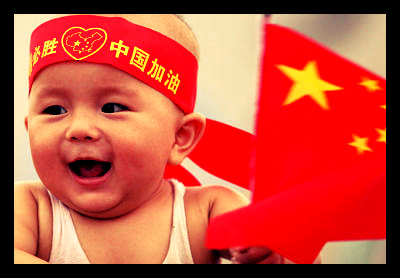
In late December 2013, China’s Standing Committee of the National People’s Congress formally introduced measures to ease its notorious one-child policy.
The major tweak of the one-child policy now allows parents to conceive a second child if just one of the parents is an only child.
Previously, parents were allowed a second child only if each parent was an only child. Rural couples on the other hand, were allowed a second child only if the first born was female.
The new measures will be implemented in a phased process at the local level. Furthermore, provincial leaders now have the authority to introduce the changes in accordance with local demographic needs.
While modest, the change will hopefully reduce the number of human rights abuses perpetrated against Chinese women since the policy’s inception in 1979. In the New York Times, OP-ED contributor Ma Jian details some of the horrific experiences Chinese women endure when authorities become aware of a second conception.
She describes the staggering amount of personal invasion local officials engage in to enforce the one-child policy. Family planning officers vigorously chart data regarding menstrual cycles and pelvic exams of every female of child bearing age within every village.
Many of these women are subjected to forced abortions and sterilizations if they are found within violation of the policy.
Probably one of the most egregious injustices of the policy is its disproportionate enforcement. The policy frequently targets poor citizens while bypassing wealthy individuals.
In fact, all violators can avoid the consequences of having a second child if they pay a fine that falls within the range of three times to 10 times the annual household income. It goes without saying that poor citizens, unable to pay the steep fine, either flee their home to avoid the authorities or become victims of forced abortions.
Many see the easing of the policy as a response to the looming demographic crisis that China now faces after 30 years of steadily implementing the one-child policy. Some say the change is too little, too late.
Nicholas Eberstadt reports in the Wall Street Journal, that even with the policy change, the Chinese government only expects one million extra births per year, resulting in only a six percent increase in the fertility rate.
He also discusses the lasting effect the one-child policy will have long after its easing. For instance, individuals born under the previous policy will be entering the workforce in 2030 and deciding to get married in 2035.
Demographers predict that at the end of the decade there will be over 24 million men incapable of finding a woman to marry. One can expect this number to increase by 2035.
The inability for many to reproduce will leave China with an aging population that will increasingly reduce the number of individuals who are able to work as well as government resources. By 2050, over one quarter of the Chinese population will be over the age of 65.
– Zachary Lindberg
Sources: BBC, The Wall Street Journal, The New Yorker
Photo: Dailystormers

Health Inequality in Europe
A new report from the European Union illuminates the staggering cost of untreated illness among Europe’s most poor. The report estimates that trillions of dollars a year are lost due to what it calls “health inequalities.”
As reported by The Guardian, the study shows that many avoidable costs are incurred as a result of sick individuals leaving the workforce due to illness or death. The loss of productivity alone may cause trillion dollar losses throughout the E.U.
Granted that these costs and conditions (along with other economic factors) vary widely from nation to nation in the E.U., the report signals a need for shared responsibility in dealing with public health.
From west to east, Europe has an obvious incline in disease and mortality. Many eastern European states report annual mortality rate that are nearly double that of the lowest western states. The fault line between the two halves of Europe appears to be primarily economic—a divide between rich and poor.
The report points to poverty as the central association to these varied health outcomes. The report claims to have “found many examples of associations between risk factors for health, including tobacco use and obesity, and socio-economic circumstances.”
A lack of education, employment, and social safety nets also help to account for a fairly substantial disparity between member states. The report, therefore, calls for broad, systemic changes for many nations. The solution has to be delivered on several fronts if the less fortunate states are to see positive change. Additionally, they are not likely to be able to accomplish these goals in the short term without significant aid from wealthier member states.
In the end, the report looks to put this issue in the public interest by appealing to economic consequences of allowing such inequality to exist. Further, it argues that these inequalities are mostly avoidable. In other words, something can be done on the part of member states to ensure the well being of the most poor.
– Chase Colton
Sources: The Guardian, EU
Photo: Shared Justice
China Eases One-Child Policy
In late December 2013, China’s Standing Committee of the National People’s Congress formally introduced measures to ease its notorious one-child policy.
The major tweak of the one-child policy now allows parents to conceive a second child if just one of the parents is an only child.
Previously, parents were allowed a second child only if each parent was an only child. Rural couples on the other hand, were allowed a second child only if the first born was female.
The new measures will be implemented in a phased process at the local level. Furthermore, provincial leaders now have the authority to introduce the changes in accordance with local demographic needs.
While modest, the change will hopefully reduce the number of human rights abuses perpetrated against Chinese women since the policy’s inception in 1979. In the New York Times, OP-ED contributor Ma Jian details some of the horrific experiences Chinese women endure when authorities become aware of a second conception.
She describes the staggering amount of personal invasion local officials engage in to enforce the one-child policy. Family planning officers vigorously chart data regarding menstrual cycles and pelvic exams of every female of child bearing age within every village.
Many of these women are subjected to forced abortions and sterilizations if they are found within violation of the policy.
Probably one of the most egregious injustices of the policy is its disproportionate enforcement. The policy frequently targets poor citizens while bypassing wealthy individuals.
In fact, all violators can avoid the consequences of having a second child if they pay a fine that falls within the range of three times to 10 times the annual household income. It goes without saying that poor citizens, unable to pay the steep fine, either flee their home to avoid the authorities or become victims of forced abortions.
Many see the easing of the policy as a response to the looming demographic crisis that China now faces after 30 years of steadily implementing the one-child policy. Some say the change is too little, too late.
Nicholas Eberstadt reports in the Wall Street Journal, that even with the policy change, the Chinese government only expects one million extra births per year, resulting in only a six percent increase in the fertility rate.
He also discusses the lasting effect the one-child policy will have long after its easing. For instance, individuals born under the previous policy will be entering the workforce in 2030 and deciding to get married in 2035.
Demographers predict that at the end of the decade there will be over 24 million men incapable of finding a woman to marry. One can expect this number to increase by 2035.
The inability for many to reproduce will leave China with an aging population that will increasingly reduce the number of individuals who are able to work as well as government resources. By 2050, over one quarter of the Chinese population will be over the age of 65.
– Zachary Lindberg
Sources: BBC, The Wall Street Journal, The New Yorker
Photo: Dailystormers
The Fight For Education Reform in Chile
The nation of Chile underwent significant change during the 1970s. At the time, General Augusto Pinochet established a military coup d’état (overthrow of the state) aimed at dismantling the Salvador Allende regime. By means of violence, warfare and eradicating opposition, Pinochet was able to come to power and eventually appoint himself as the President of Chile in 1974. Pinochet was a free market fundamentalist policy permeated throughout much of Chilean society.
In 1981, Pinochet privatized the educational system of Chile by slashing government support for public schools. Fearing that government funded schools were inciting social activism and communist ideals, schools became private under the contemporary military regime. Because of Pinochet’s private education policy, the educational system of Chile suffered greatly. Schools became for-profit institutions with extremely high tuition costs that people were unable to afford. Those who were able to afford private education were often forced to paying off years of debt.
The education policies stemming back to Pinochet’s authoritative rule are still largely in effect today, which has recently sparked a significant amount of civil unrest. Preceding the Chilean elections in November of 2013, tens of thousands of students took to the streets of Santiago to voice their protest against the current education system. Ultimately, about 80,000 people took part in the protest to call for progressive education reform in Chile that would make it both affordable and universal.
Popular polls indicate that the demands of the students protesting are supported by roughly 85% of Chileans and the current administration has certainly taken notice. Although they have been criticized for not making any considerable strides in education reform, former Head of State Michelle Bachelet stated that she would make college education free within six years. Many continue to be skeptical, but hope that Bachelet will follow through with her promises of education reform in Chile.
In December of 2013, Michelle Bachelet won the election to solidify her second term as the President of Chile and exclaimed in her victory speech that she would work to improve education and establish equality through her policies. As a nation with poor framework that perpetuates economic discrimination in education, Bachelet will have to address the pressing issues presented by the thousands of students protesting. On an international scale, nations are moving towards establishing systems that allow for affordable and universal education—and with Chile lagging far behind, the people hope to see significant changes made.
– Jugal Patel
Sources: CNN, BBC, Global Post, Merco Press
Photo: SuleKha
Hunger in Zimbabwe
Drought in Zimbabwe is reaching epic proportions as nearly one million people are at risk of food insecurity. According to the 2013 Zimbabwe Vulnerability Assessment Committee (ZimVAC,) food insecurity levels will affect roughly 2.2 million Zimbabweans at the peak of hunger season between January and March in the upcoming year. Zimbabwe already suffers from high poverty rates as approximately 72 percent of citizens currently below the poverty line and nearly 14.7 percent of the population is HIV prevalent.
Zimbabwe relies heavily on rain-fed agriculture, which has since plummeted since last season’s drought. As the need for food increases, maize, a primary source of food in Zimbabwe, continues to rise in price making it more difficult on a population who already lives on less than a $1 a day. Making matters worse, the World Food Programme (WFP) recently announced that their initial plan of providing support for 1.8 million people will be drastically reduced.
“We’d been hoping to have scaled up our seasonal relief operations to reach 1.8 million people in the coming months with distributions of food aid, in some areas, cash transfers. Despite generous contributions from donors such as (United States,) (United Kingdom,) Japan, Australia, ECHO and the central Emergency Relief Fund (UN CERF), it’s now looking like all this will not be possible because of a shortage of funds. In fact, we’ve had to cut rations for one million of our beneficiaries in recent months and there are likely to be deeper cuts as from next month,” said WFP in a statement to the media.
Of the $86 million funding dispersed by the previous listed countries, only half of it has been implemented into relief intervention. “Rising food prices are making matters worse — in some areas, they are as much as double what they were last year,” says WFP communications manager Tomson Phiri.
These rising prices in the market are heavily affecting food security and although WFP is short on funding, they are hoping to raise another $60 million over the next 6 months in an effort to implement relief and recovery operations.
– Jeffrey Scott Haley
Feature Writer
Sources: World Food Programme, World Food Programme, Zimeye
Photo: The Telegraph
Poverty in Russia
As the adage goes, the poor stay poor while the rich get richer. For years, Russia has been regarded as a nation fraught with economic inequality- a land where the rich accrue more and more wealth each year while the poor descend further and further into squalor. Even in the advent of the burgeoning middle class, the growing disparity of wealth has contributed to a widening economic gap between Russia’s rich and poor residents.
Although an astounding 18 million Russians, or roughly 13 percent of the population, live below the official poverty line, having a collective income of $12.4 billion, the 97 wealthiest Russians jointly own $380 billion- nearly 31 times the collective income of the nation’s poorest individuals.
While $18 million residents grapple with the challenges of poverty, Vladimir Putin consistently vaunts the exclusive wealth of Russia. In a sense, Russia has exhibited economic growth. For instance, Moscow now houses more billionaires than New York City, the iconic American city that has long been esteemed as the metropolis of wealth and power of the Western World.
Although Putin boasts about the economic prosperity of the few wealthy elites, little effective action has been taken to curb the growing rates of poverty in Russia. For example, the estimated cost of living in Russia is approximately $210. However, the nation’s minimum wage is wholly insufficient at $155 per month.
Despite this harrowing fact, it appears that the 2014 Winter Olympic Games, set to be hosted in Sochi, has taken prominence over the rampant poverty in Russia. In 5a Akatsy Street, located in a neighborhood with deteriorating infrastructure, a brand-new multi-million dollar highway brazenly cuts through the surrounding poverty.
The glossy highway stands in salient contrast to the squalor of 5a Akatsy Street, a locale in which residents have barely sustained themselves without running water or a sewage system. While the Russian government sanctions the construction of stadiums and highways, the majority of Sochi residents live in dwindling, contaminated and neglected villages.
However, the juxtaposition of the ostentatious Olympic preparations in Sochi and the prevalence of squalor surrounding the slinky stadiums and magnificent mega-malls highlights a general trend that has been observed in Russian society, a dangerous trend in which in which the poor are vastly overlooked while the most wealthy are needlessly glamorized.
– Phoebe Pradhan
Sources: Telegraph, Forbes, TribLive
Photo: AsiaOne
Obama and Poverty in 2014 State of the Union Address
United States President Barack Obama mentioned extreme poverty during the State of the Union address on January 28 while explaining that America’s leadership is in a better position than any other country to help the world.
The president said that the leadership of the U.S. is defined “by the enormous opportunities to do good and promote understanding around the globe – to forge greater cooperation, to expand new markets, [and] to free people from fear and want.”
Obama made these references roughly one hour into the State of the Union address when discussing his administration’s stance on foreign policy. He said that his administration is proud of the diplomatic relations between the U.S. and Iran and that he would not hesitate to use his power to protect America in case anything went wrong.
Although the U.S. is responsible for maintaining order and spreading democracy, according to Obama, the U.S. is also responsible when it comes to helping those in need.
“Across Africa, we’re bringing together business and governments to double access to electricity and help end extreme poverty,” said Obama.
But what exactly does this mean? Obama referred to is a USAID program named “Power Africa.”
USAID describes Power Africa as “a U.S. Government initiative that addresses one of the most pressing challenges to sustainable economic growth and development in sub-Saharan Africa – access to electrical power.” Obama announced this program during a visit to South Africa in 2013.
Under the program, the U.S. seeks to cooperate with African governments, the private sector, and international institutions such as the World Bank in order to “add more than 10,000 megawatts (MW) of clean, efficient electricity generation capacity.”
Obama also mentioned extreme poverty in last year’s State of the Union address. He said the U.S. would work to eliminate it within the next 20 years, according to an article by Think Progress.
Although Obama mentioned extreme poverty two years in a row, the contemporary U.S. Congress remains divided on many issues. Citizens may call their congressmen to help Capitol Hill unify and tackle the issue of poverty as well.
– Juan Campos
Sources: CBS News, Think Progress, USAID
Photo: Politico
Yemen Calls to End Drone Strikes, What Does That Mean for the U.S.?
In December 2013, the United States drone campaign in Yemen came under intense scrutiny when a drone meant for an al-Qaeda operative accidentally hit a wedding party, killing 15 civilians. In the month since that strike, there have been three more U.S. drone strikes in Yemen. In this most recent strike, another civilian was accidentally killed while walking through a village.
After the initial strike, the U.S. launched an internal investigation into how this mistake happened. The strike came a few months after U.S. President Barack Obama vowed to decrease the number of drone strikes and hold the program accountable to minimize the loss of civilian life. The U.S. has also faced increasing international criticism over its drone campaigns in countries across the Middle East.
Yemen’s Parliament issued a statement calling for an end to U.S. drone strikes within Yemen borders. The vote was nearly unanimous and issued a ‘strong warning’ to the U.S. Government and Yemen President Abdo Rabbo Mansour Hadi. A Yemeni government official was quoted saying, “The Yemeni public is angered by the drone strikes…the people’s representatives reflected on the tone of the streets.” Not only is the public outspoken against drone strikes, human rights groups on the ground have issued similar statements denouncing the action taken by the U.S.
Yemen and the US carry out some of these attacks as a joint program because the Yemeni military does not have the capability to reach some remote areas. The program is dedicated to combatting al-Qaeda, which has a strong presence in rural parts of the country.
It is estimated over 50 civilians have been killed by drone strikes in Yemen. Human Rights Watch in Yemen has said the drone strikes may be backfiring with the Yemeni public, especially in rural areas that see the most activity. They even go as far as to say drone strikes have help al-Qaeda turn formerly peaceful tribes who have been affected directly. With public opinion increasingly turning against the Yemen government working with the US drone campaign, the politically unstable country will continue to see major problems.
– Colleen Eckvahl
Sources: CNN, Long War Journal
Photo: Wall Street Journal
International Arts in the Congo
The Democratic Republic of Congo (DRC) often brings to mind images of conflict, famine, and disease. It is about as an unlikely home for the arts as one could find, and yet the Institute for Human Activities (IHA) aims to make it just that.
Its project is designed to bring art to the jungle and keep it there. As part of a partnership between Yale University, University College Ghent and the Akademie der Künste der Welt in Cologne, the Institute set up shop beside a palm oil plantation in the heart of the rainforest.
It calls the effort an experiment with gentrification. The problem as they see it is that the art created about (or for) disadvantaged areas of the world such as the DRC is shipped off to cosmopolitan Western cities like New York and London and is not received in its native land.
The IHA believes by keeping the arts in the community, a culture can be transformed economically and intellectually from the bottom up.
In five years, the IHA hopes to have created an international arts center for artists and thinkers from around the globe to study, work and grow. Additionally, it hopes to continue researching the affects of keeping art near its source as opposed to exporting it to the West.
They claim art has the economic power to power investment and business around areas of cultural capital such as galleries and theaters. For the DRC and nations like it, this means that starting with cultural and artistic development might lead the way to economic and political stabilization.
This, undoubtedly, is a unique approach to solving the economic crises developing nations face in the process of modernization. However, the reason for keeping art at its source is not all economics.
The IHA website offers political reasons as well, arguing that “Art may expose the need for change in Nigeria or Peru, but in the end it brings opportunity, improved living conditions, and real-estate value to Berlin-Mitte or the Lower East Side,” the point being that the political potency and relevance of the art is lost in the Western gallery.
The IHA may have only just begun its project in the DRC, but it is already grabbing international attention. If it proves to be successful, perhaps it will signal a new model in the development of some of the world’s poorest nations.
– Chase Colton
Sources: Institute for Human Activities, The Huffington Post
Photo: The Culture Trip
Foreign Aid: How It Works
Every year, the United States spends more than $30 billion on foreign aid. This figure appears to be substantial, but comparatively on average, Americans spend more than $45 billion on pet care and more than $30 billion on candy each year. Foreign aid accounts for only less than one percent of the federal budget. However, foreign aid is the combination of both diplomacy and development in other countries. The actual budget for poverty is only 0.55 percent of the federal budget.
Poverty is not only a concern in developing countries. Developing countries’ economies have direct effects on the world economy; if developed countries want to grow their incomes and expand to other parts of the world, erasing global poverty is the first step to achieve these objectives.
The objective of foreign aid is to fight poverty and to spur or speed up the growth of economies in developing countries. Foreign aid activities vary from providing clean water, helping local farmers, and supporting the healthcare systems, to increasing education level for the people in poverty. If the global economy is stable, the human race can help one another to reach higher goals.
Even though the success of foreign aid is different from country to country, the most successful stories generally come from countries that have low corruption levels and good political policies. In this sense, diplomacy plays an important role in helping these countries develop policies that will attract investment from around the world.
By increasing education levels and decreasing child mortality rates, foreign aid will help produce skilled workers who are ready to capture the opportunities in the promising but challenging environment.
The foreign aid budget is heavily influenced by the legislature, so legislators need to be aware of the real situation and garner support from the public. Our duty as American citizens is to bring these matters to the attention of legislators and give them our support for a better life, not only for poor people, but ultimately for all of us as Americans.
– Phong Pham
Sources: OXFAM America, NYT, The Guardian
Photo: New Security Beat
Top 5 Influential and Admirable Humanitarians
Dr. Martin Luther King Jr.
King is arguably one of America’s most influential civil rights activists of all times. He was able to achieve significant political change through his non-violent protests and demonstrations, which advocated for equality between all races. In 1964, King was awarded the Nobel Peace Prize for his work towards social justice and he selflessly donated all of the prize money of $54,123 to the civil rights movement. He is best known for his “I Have a Dream” speech, which has inspired humanitarians all over the world.
Harriet Tubman
Tubman was an African-American who overcame slavery just so that she could save others from the same fate. Tubman was born into slavery in Maryland in 1822 and was often beaten by her master until she was able to escape to Philadelphia in 1849. Even after escaping such a difficult life, she risked it all to return to Maryland, as well as multiple other states, in order to rescue others. Throughout her life, she led 13 different missions that rescued 70 slaves by using the Underground Railroad. She also spied on the Confederacy during the Civil War for the Union.
Bill Gates
Gates, Chairman and CEO of Microsoft, is one of the richest men in the world and virtually has been since 1995, but many people do not realize his immense wealth is nearly $80 billion. Exactly how much Gates has pledged is not known, but he has donated at least $29 billion of his fortune to charitable causes. He donates to multiple causes, but is very devoted to eradicating malaria and as part of the Bill and Melinda Gates Foundation; multiple awards have been presented to him because of his humanitarian efforts.
Mother Teresa
Mother Teresa was a devout Catholic trained by the Sisters of Loreto who started her career of serving others by traveling to India. There, she worked as a teacher, and having observed the extreme poverty existing in India, she started a new order called The Missionaries of Charity. The main goal of this order was to look after the people that nobody else was looking after. She spent 45 years of her life helping others and received the Nobel Peace Prize for actively helping the poor in every way possible.
Mahatma Gandhi
Gandhi moved from India to England to study law after the death of his father in 1888. There, he studied not only law, but also two religious texts: the Hindu Bhagavad Gita and the Bible. He remained committed to both scriptures for the entirety of his life because the Bhagavad Gita awakened a sense of pride for India in him and the teachings of humility and forgiveness from the Bible inspired him to lead India to independence from Great Britain.
For 30 years he advocated for peaceful protests and demonstrations to lead the British to relinquish India from their hold. He was also a recipient of the Nobel Peace Prize owing to his efforts and philosophy that inspired movements for freedom and civil rights around the world.
– Kenneth W. Kliesner
Sources: Biography Online, ATI, Biography Online, Better Get a Website, Biography Online
Photo: q99.info