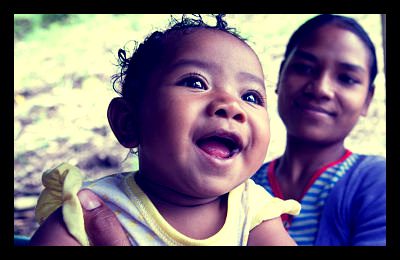
The fact remains that undernutrition is completely and indisputably preventable.
Yet this condition continues to claim the lives of 2.6 million children each year. This is more than any other disease, making malnutrition the leading cause of death among young children.
In September of 2010, U.S Secretary of State Hillary Clinton, and then-Irish Minister for Foreign Affairs Micheál Martin, took a stand to fight this deadly disease.
The two diplomats, along with a community of global leaders, launched the 1,000 Days Partnership. This movement promotes action and investment in nutrition during the 1,000 days from the start of a woman’s pregnancy until a child’s 2nd birthday.
Why 1,000 days? Leading scientists, economists and health experts all agree that the proper nutrition in the first 1,000 days of pregnancy and the life of an infant “have a profound impact on a child’s ability to grow, learn and rise out of poverty.”
When a woman is undernourished during pregnancy, her baby has a higher risk of dying in infancy and is more likely to face lifelong cognitive and physical deficits and chronic health problems.
Once the child is born, the first two years are critical to their chance at a healthy and productive life. Undernutrition weakens the immune system, and children not receiving nutritious foods are more susceptible to dying from common illnesses such as pneumonia, diarrhea and malaria.
According to The U.S. Agency for International Development (USAID), a nutrient deficiency is not only dangerous to early childhood health, but also to the long-term success of a child. Lower levels of educational attainment, reduced productivity later in life and lower lifetime earnings are all consequences of a lack of early-nutrition.
In a recent release, USAID reports that “undernutition robs the developing world of critical human capital and capacity, and undermines other development investments in health, education and economic growth.”
According to the 1,000 Days movement, the answer to improving nutrition lies in three strategic, affordable, cost-effect solutions: “ensuring that mothers and young children get the necessary vitamins and minerals they need; promoting good nutrition practices, including breastfeeding and appropriate healthy foods for infants; and treating malnourished children with special, therapeutic foods.”
Evidence shows that providing the proper nutrition to a mother and her newborn has extensive benefits. These advantages include significantly reducing the burden of diseases such as tuberculosis, malaria and HIV/AIDS, increasing a country’s GDP by at least 2-3 percent annually, and, most importantly, saving more than 1 million lives each year.
Since it was created in 2010, over 80 international relief and development organizations have partnered with the 1,000 Movement. Along with its efforts to encourage new actors to invest in maternal and child nutrition, 1,000 Days also encourages support for the Scaling Up Nutrition (SUN) movement. The two organizations work in tandem at a U.S.-based hub formed in June 2011 by InterAction, a coalition of U.S.-based international relief and development organizations and the Global Alliance for Improved Nutrition (GAIN) in collaboration with the U.S Department of State.
1,000 Days founder, Hillary Clinton, appropriately asserted, “Improving nutrition for mothers and children is one of the most cost-effective and impactful tools we have for poverty alleviation and sustainable development.”
— Grace Flaherty
Sources: Daily Times NG, 1,000 Days
Photo: Care

UN Undercounting World’s Poor
The Oxford Poverty and Human Development Initiative (OPHI) released a report on Tuesday, looking at the state of poverty in the world today. For more than a decade, the United Nations Development Program measured world poverty by its Human Poverty Index (HPI.) The HPI defined poverty as making less than $1.25 a day.
However, the HPI counted countries as one whole mass. Therefore it was unable to pinpoint different degrees of poverty within a country and locate the worst pockets. Also, it put all the importance on income, failing to consider other indicators like health and education.
The report from OPHI created a new index for counting those living in poverty around the world. The Global Multidimensional Poverty index (MPI) is designed to capture the severe deprivations that each person faces at the same time.
It reflects both the incidence of multidimensional deprivation and its intensity (how many deprivations people experience at the same time.) In order to classify a household as poor, the MPI requires that the household be deprived in multiple indicators at the same time.
The MPI identified overlapping deprivations and collected 10 needs beyond the ‘basics’ in three broad categories: nutrition and child mortality under Health; years of schooling and school attendance under Education; and cooking fuel, sanitation, water, electricity, floor and assists under Living Conditions.
The new index also allows for degrees of poverty, instead of focusing on one sole aspect.
One of the consequences of the new index is that the world is more impoverished than had been previously believed. Since the multidimensional poverty approach can be adapted using indicators and weights that make sense at the country level, it can be used as a guide to help governments tailor a poverty measure that reflects multiple local indicators and data.
Instead of 1.2 billion people living in poverty, as had been calculated under the HPI index, there are approximately 1.6 billion people.
More than half of the impoverished population in developing countries reside in South Asia, and another 29 percent live in Sub-Sahara Africa. A total of 71 percent of the poor in the MPI index live in what many consider to be middle-income countries, or countries where development and modernization in the face of globalization are in full swing, but some people are left behind.
Niger is home to the highest concentration of the multidimensionally poor, with almost 90 percent of the population lacking in MPI’s socioeconomic indicators. Most of the poor live in rural areas.
Even in light of this news, there are some bright areas. In five years, Nepal has reduced its MPI numbers from 65 percent of its population living in poverty to 44 percent. Other classically poor countries, like Rwanda, Ghana, Bangladesh and Cambodia, are also improving, both economically and in narrowing the gap between rich and poor.
Yet there are some drawbacks to the new index as well. The indicators that the MPI uses include both outputs (years of education) and inputs (cooking fuel) as well as one stock indicator, child mortality, which does not take into account how recent the death was because flow data is not available for all dimensions.
Another drawback is that the health data is relatively weak and overlooks some groups’ deprivations, especially for nutrition. In addition, under the MPI index, families must be deprived in at least six standard of living indicators to be considered poor. This system makes the MPI less sensitive to minor inaccuracies.
— Monica Newell
Sources: OPHI, The Atlantic
Photo: Kuldip
TransPerfect: The Perfect Donation
Many large businesses recognize the importance of philanthropic initiatives. They understand that all people, linked by common humanity, have a responsibility to help each other. However, all people are not linked by a common language. Language barriers can, at times, get in the way of global philanthropy. Fortunately, TransPerfect, a translation services company based in New York City, is contributing to the alleviation of this obstacle.
TransPerfect has offices in six different continents and provides translation and interpretation services in over 170 languages. Today, after 20 years in business, it is ranked as one of the Women Presidents’ Organization’s “50 Fastest-Growing Women-Owned/Led Companies” and received the 2014 Global Technology Award from World Trade Week.
TransPerfect also donates significant funds to disaster relief globally and programs benefiting underprivileged people in its home-state of New York.
The largest portion of the company’s charitable donations goes to Heifer International, a relief project that helps impoverished families by donating livestock and other resources. TransPerfect’s donations to Heifer International have helped the organization to supply people in 115 countries with sheep, pigs, chickens, bees and trees.
Even more important than its financial donations, however, are donations of its services.
Recently, TransPerfect announced that it has been chosen as the official language services partner of Oxfam Belgium. Oxfam Belgium is a regional sector of the larger Oxfam organization which seeks to end injustice and poverty in the world. Specifically, Oxfam Belgium focuses its efforts on encouraging people to buy fair trade products, shop in its second-hand stores and contribute to foreign aid in any way possible.
By engaging in this partnership, TransPerfect will donate translation services to the Oxfam Belgium organization. It will translate brochures and other public relations material into Dutch and French so that the Oxfam organization can make effective and engaging presentations to people in the Netherlands. Hopefully, these presentations will catalyze even greater foreign aid and humanitarian projects from this area of the world.
TransPerfect is highly effective in the fight against global poverty, not only because of the relief that it provides for so many charitable organizations, but because its services enable organizations to communicate across cultures. Its translation and interpretation services eliminate the language barriers that often get in the way of effectively explaining projects, goals and other causes. By teaming up with organizations such as Oxfam Belgium, TransPerfect empowers global philanthropists to better carry out their missions.
— Emily Walthouse
Sources: Fort Mill Times, Transperfect 1, Transperfect 2, Heifer International
Photo: AZ BIG Media
Nurses in Keralan Province the Future of India
In the thicketed tropical jungle of southern India is a burgeoning industry of female nurses. The Keralan province has garnered a reputation for the nursing programs that help create careers for the local women. According to the Indian Planning Commission, Keralan poverty rates are the second lowest in the entire country, and the statistics for infant mortality are among the lowest as well.
Part of the success is the educational training given to young women and girls to provide a sense of independence as well as financial stability. In speaking with a head nurse at a Keralan province hospital, she said that it is more common for someone to come in with car accident wounds than for people to arrive with tropical infections. She continued to say that though the cases did occur, they were still pretty rare. As medical advancements and accessibility increase, over time, the infant mortality rate has decreased and overall life expectancy has increased as well.
The hospital is near a nursing school, and after their shifts, the nurses in training gather in the dusty courtyard. These young nurses, most just around 20 years old, are the future of the Kerala economy. With the in-demand knowledge, young women in the nursing sector are becoming migrants in the Gulf region and Western nations. Contributing to the decrease of Keralan poverty, these immigrants often send back money to help the relatives that remain in Kerala.
The education of the nurses empowers them to be financially independent. The job opportunities for women in nursing are helping to decrease the margin of the gender gap in India. Additionally, women are more able to stand up to the existing patriarchy. They have the liberty to move to other Indian states or immigrate, if they choose.
Expanding the opportunities for women, as well as extending health care to the rural Keralan province, has helped changed the socioeconomic landscape of the state. With the movement of nurses to other states, the knowledge from these colleges goes with them. Proving that knowledge is power, the health care industry has been revitalized by this new generation of promising young nurses, and in turn gives hope for the ability of future generations of women to expand on these opportunities.
— Kristin Ronzi
Sources: The New Indian Express, InfoChange
Photo: The Hindu
2013 was Crisis Year for Refugees
A report released by the United Nations High Commission for Human Rights (UNHCR) detailed the global refugee situation for 2013. The news was bleak. 2013 was a crisis year for refugees, and saw more refugees than any year since the Rwandan genocide. The hardest hit areas are in the Middle East and Africa, but the United States is also experiencing its own refugee crisis along its Southwest border.
The Syrian Arab Republic contributed the most refugees for the year. In August of 2013, the 1 millionth Syrian refugee child was registered, while only a few weeks later the number of Syrian refugees passed the 2 million mark.
The crisis in Syria has prompted mass migrations, but the numbers still fall shy of the leading source country for refugees. Afghanistan, with its 2.56 million refugees spread across over 86 countries, remains the largest source country for the 33rd consecutive year. Afghanistan is the country of origin for one of every five refugees in the world. The brunt of the responsibility for Afghan refugees has fallen on neighboring Pakistan or Iran, who together hold 95 percent of Afghan refugees.
The UNHCR report makes it clear that most of the crisis is centered in the Middle East and Africa. The top three source countries — Afghanistan, Syria and Somalia — which account for 53 percent of the world’s refugees, as well as the top refugee hosting countries — Pakistan, Iran and Lebanon — are all located in the region. The U.S. comes in as the 10th largest host, with some 1 million less refugees than Pakistan — the largest host country.
However, the U.S. has recently been faced with its own refugee crisis. Abject poverty and violence in Central America has led to an unprecedented surge of unaccompanied child immigrants making their way across the U.S.-Mexico border. These children, some as young as 5 years old, make the dangerous journey across Mexico, where kidnappings and assaults of lone children are common.
Once they arrive in the U.S., conditions do not necessarily improve. Federal border housing facilities are established to take in children, but are not equipped to handle the recent surge. Built for around 7,000 children a year, the facilities have processed 47,000 in the last eight months. They are overcrowded, disease ridden and children lack beds and adequate meals.
President Obama has declared the trend of unaccompanied children crossing the border “an urgent humanitarian situation,” and it has caused lawmakers to think critically about U.S. immigration policy.
June 20 marked World Refugee Day, and, this year, provided a much needed time for reflection. As the refugee crisis around the world hits is lowest point in decades, leading officials and politicians recognize that something must be done. Antonio Guterres, the U.N. High Commissioner for Refugees, stated in the UNHCR report: “we are seeing here the immense costs of not ending wars, of failing to resolve or prevent conflict. Peace today is dangerously in deficit…political solutions are vitally needed.”
— Julianne O’Connor
Sources: NPR, UNHCR, Borgen Project, CNN
Photo: Huffington Post
Who Gives a Crap?
Presently, over 40 percent of the world’s population does not have access to a toilet. All over the world, open defecation is a way of life. This excretion runs into water, which is used for cooking, cleaning and washing.
Dirty water is a leading cause of diarrhea-related illnesses, which results in over 2,000 deaths per day across the globe for children under the age of 5. The Center for Disease Control and Prevention notes that 6.3 percent of all deaths worldwide would be preventable if access to proper sanitation were available to the 2.6 billion people who currently lack it.
Who Gives a Crap is an Australian toilet paper company that claims to be “The World’s Most Impactful Toilet Paper.” This innovative company donates 50 percent of its profits to WaterAid, a nonprofit that aims to improve access to clean water in the developing world by building toilets and improving sanitation.
In July 2012, the co-founder of Who Gives a Crap, Simon Griffiths, conducted a literal sit-in, bare-bottomed on a toilet, until enough pre-orders were made to begin production. And 50 hours and $50,000 later, Who Gives a Crap was launched.
Using 100 percent recycled post-consumer waste fibers in their product saves trees, water and landfills, meaning consumers help keep our planet great while promoting a great cause.
The toilet paper industry in the United States is a 7.6 billion industry each year. Capturing just 1 percent of the market in the U.S. means that Who Gives a Crap would help to provide toilets to about 2 million people living in developing countries each year. Griffiths believes that to remain competitive, companies must incorporate “goodness” into their products — that is, the way consumers value products is more than just quality and price, but what the companies do to make a difference.
Who Gives a Crap is an inventive company using a product that everybody needs to help those in need, and in that way, Griffiths says, he is “sitting down for what I believe in.”
— Ellie Malfaro
Sources: Vimeo, Who Gives a Crap, Huffington Post
Photo: Oilers’ Addict
What is 1,000 Days?
The fact remains that undernutrition is completely and indisputably preventable.
Yet this condition continues to claim the lives of 2.6 million children each year. This is more than any other disease, making malnutrition the leading cause of death among young children.
In September of 2010, U.S Secretary of State Hillary Clinton, and then-Irish Minister for Foreign Affairs Micheál Martin, took a stand to fight this deadly disease.
The two diplomats, along with a community of global leaders, launched the 1,000 Days Partnership. This movement promotes action and investment in nutrition during the 1,000 days from the start of a woman’s pregnancy until a child’s 2nd birthday.
Why 1,000 days? Leading scientists, economists and health experts all agree that the proper nutrition in the first 1,000 days of pregnancy and the life of an infant “have a profound impact on a child’s ability to grow, learn and rise out of poverty.”
When a woman is undernourished during pregnancy, her baby has a higher risk of dying in infancy and is more likely to face lifelong cognitive and physical deficits and chronic health problems.
Once the child is born, the first two years are critical to their chance at a healthy and productive life. Undernutrition weakens the immune system, and children not receiving nutritious foods are more susceptible to dying from common illnesses such as pneumonia, diarrhea and malaria.
According to The U.S. Agency for International Development (USAID), a nutrient deficiency is not only dangerous to early childhood health, but also to the long-term success of a child. Lower levels of educational attainment, reduced productivity later in life and lower lifetime earnings are all consequences of a lack of early-nutrition.
In a recent release, USAID reports that “undernutition robs the developing world of critical human capital and capacity, and undermines other development investments in health, education and economic growth.”
According to the 1,000 Days movement, the answer to improving nutrition lies in three strategic, affordable, cost-effect solutions: “ensuring that mothers and young children get the necessary vitamins and minerals they need; promoting good nutrition practices, including breastfeeding and appropriate healthy foods for infants; and treating malnourished children with special, therapeutic foods.”
Evidence shows that providing the proper nutrition to a mother and her newborn has extensive benefits. These advantages include significantly reducing the burden of diseases such as tuberculosis, malaria and HIV/AIDS, increasing a country’s GDP by at least 2-3 percent annually, and, most importantly, saving more than 1 million lives each year.
Since it was created in 2010, over 80 international relief and development organizations have partnered with the 1,000 Movement. Along with its efforts to encourage new actors to invest in maternal and child nutrition, 1,000 Days also encourages support for the Scaling Up Nutrition (SUN) movement. The two organizations work in tandem at a U.S.-based hub formed in June 2011 by InterAction, a coalition of U.S.-based international relief and development organizations and the Global Alliance for Improved Nutrition (GAIN) in collaboration with the U.S Department of State.
1,000 Days founder, Hillary Clinton, appropriately asserted, “Improving nutrition for mothers and children is one of the most cost-effective and impactful tools we have for poverty alleviation and sustainable development.”
— Grace Flaherty
Sources: Daily Times NG, 1,000 Days
Photo: Care
UN General Assembly Elects Prince Zeid
Prince Zeid Ra’ad Zeid al-Hussein of Jordan has unanimously been approved by consensus in the General Assembly as new High Commissioner for Human Rights. Zeid was nominated by Secretary-General Ban Ki-moon earlier this month to replace former Ms. Pillay, whose term ends in August. Prince Zeid is an experienced diplomat and an avid campaigner for international justice. Zeid is currently Jordan’s ambassador to the United Nations.
Zeid is highly qualified for the position from his experience serving as an officer in the Jordanian desert police and serving on the U.N. protection force in former Yugoslavia. He has been the ambassador to the United Nations twice as well as ambassador to the United States from 2007-2010.
The Office of the High Commissioner for Human Rights (OHCHR) is mandated to promote and protect the enjoyment and realization of rights for all people codified in international human rights law and treaties. It prevents human rights violations, promoting human rights and coordinating activities throughout the U.N. The Office leads an effort to integrate human rights in all U.N. agencies.
Zeid will be the first Human Rights Chief from the Asian continent and the first from the Muslim and Arab worlds. This is an enormous step forward for the international community.
“Needless to say this reflects the commitment of the international community towards this important dossier and its commitment to push it forward in this continent as well as in other regions of the world,” said Zeid.
Zeid stressed his commitment to the job and recognizes that it takes wisdom and high levels of coordination with different governments, civil society and all U.N. agencies. He has been a strong supporter of the International Criminal court and has spoken out against sexual violence.
— Catherine Ulrich
Sources: UN, ABC News
Photo: Alarab Alyawm
Women and Environmental Protection
Women suffer the most when it comes to climate change and natural disasters, yet in many areas around the world, women do not have a large say in the policies surrounding environment or how finances are used towards environmental protection. In areas where it has been tested though, empowering women can lead to better preparedness for disasters and better governance of natural resources. Overall, gender equality can lead to better environmental governance.
Rachel Carson created the modern day environmental movement with her book Silent Spring. Today women following her footsteps around the world are essential in the protection of our environment.
In Nepal and India, when more than the minimum threshold of one-third women participated in forest committees, it resulted in forest regeneration and a decrease in illegal extraction of forest resources.
Another success story took place in Kenya and Ethiopia, where women took a leadership role managing the risks regarding the 2005-08 drought cycle. The women generated income by diversifying livelihoods and then saved using women’s savings and loan groups. By doing this, women were able to preserve resources, which then lead to better food security.
Women also play an important role in protecting the environment because they can have a strong impact on the amount of carbon emissions in our atmosphere.
Due to gender norms that exist regarding labor in the household, many of women’s day-to-day tasks have a direct impact on carbon emissions. This means that when a goal is set to reduce carbon emissions, it is up to women to make environmentally friendly decisions regarding cooking, farming and what they purchase for their families.
Women’s decisions regarding cooking fuel, cooking technology and which foods they choose to buy have an impact on the amount of carbon emission released. Women also often have a say in agricultural practices that have an impact because they can determine whether carbon is released or stored in agricultural soils and above ground biomass. In many areas, women are the ones making household purchasing decisions at markets. Because of this women directly impact the amount of carbon emitted through the production, distribution, use and disposal of goods.
From leadership roles to every day decisions, women are an important component in protecting the environment for now and for future generations.
– Kim Tierney
Sources: World Bank, UN Women
Photo: Environment and Society
Ales Belyatsky Released from Prison Early
Yet Belyatsky, whose arrest was deemed “politically motivated,” never pleaded guilty for his alleged crimes, and attributed the funds in the bank account to years of supporting victims of human rights abuses in Belarus. In fact, there are at least seven other human rights activists in Belarus currently imprisoned, and while Belyatsky has been released early, many attribute his release to internal–and external–pressure toward the regime. The United States, among other countries, has commended Belyatsky’s release and urged Belarus to do the same for the rest of their prisoners.
Belyatsky claims he still feels part of the system, and while his release was unexpected, he has remained vigilant against the Belarusian regime. The regime, which has kept a tight authoritative control over the years, has consistently worked to eliminate human rights groups, squandering their political rights. While Belaytsky’s release may be seen from the West as a sign of improvement, those from the country fear this may be a political move to ensure a renewal of dialogue with the European Nation.
Despite his stint in prison, Belyatsky does not regret his activism. “I am not sorry for those three years spent in prison,” he said. “This is the price you pay for making Belarus a free and democratic country.” Belyatsky hopes other human rights prisoners, who often face extreme measures of psychological abuse under imprisonment, will be granted the right to follow suit.
– Nick Magnanti
Sources: KyivPost, Reuters, Charter97, Index on Censorship
Photo: Ozera
Entrepreneurs May Solve Global Poverty
According to the global entrepreneurship GEDI index, for the past 30 years almost half of all new jobs in the United States alone were created by businesses that are less than five years old. Globally, 65 million entrepreneurs each plan to create 20 or more jobs in the next five years.
Many of these start-up businesses offer products that are new to the market, according to a GEM report.
“Part of what we’re trying to do is sort of raise entrepreneurship to the level of the public policy agenda,” said Michael Dell. “If you look at what’s going on in the world today, in terms of where jobs are being created, we need more entrepreneurs. We need more risk-taking. High-risk entrepreneurs and bureaucratic U.N. officials might seem like a strange combination, but applying the problem-solving of a startup culture to global development is the idea.”
Around the world, over 565,000 small businesses start each month, and the products and profit they provide could be key to the recovery of the world economy as they create jobs, more global disposable income and new products. However, only 15 percent of entrepreneurs say that their country’s culture supports entrepreneurs, according to ey.com.
“Technology has enabled undeserved communities to get out of poverty,” said Ruma Bose, an entrepreneur, investor and philanthropist. “In the slums of India we saw a lot of hope and magic, there are thousands of new businesses there, and factories that generate millions in revenue and provide clean water. Even in the worst conditions the entrepreneurial spirit exists.”
Around 63 percent of women in the non-agricultural labor force are self-employed in the informal sector in Africa, a number which is twice the worldwide rate, according to the World Bank’s data — data which also shows that necessity is the main driving force behind female entrepreneurship in poor countries, not opportunity.
“Traditionally women would sit at home and wait for the man to return home with a bag of groceries, but this has been changing over time as women’s dependence gradually reduces,” said Thomas Bwire, an economist with Uganda’s central bank. “In a sign of the times, Ugandan women now even work at road construction sites.”
A report released earlier this year by Goldman Sachs stated that women’s “increased bargaining power has the potential to create a virtuous cycle” as women begin to spend more, thus fueling economic growth in the years ahead. According to the International Finance Corp. of the World Bank, an estimated $300 billion credit gap exists for female-owned businesses.
Other entrepreneurial companies, like Popinjay, have aided the advancement of many people around the world. Popinjay employs around 150 women who work four hours a day and at $3 an hour. “When I started Popinjay, my goal was really to get women to sustain themselves, but what I realized over time is that it wasn’t just about the money,” said Saba Gul, CEO and founder of Popinjay. “It was also about the fact that they gained so much dignity and pride in knowing that they were creating something with their own hands.”
— Monica Newell
Sources: Deseret News National, Epoch Times
Photo: Tadias