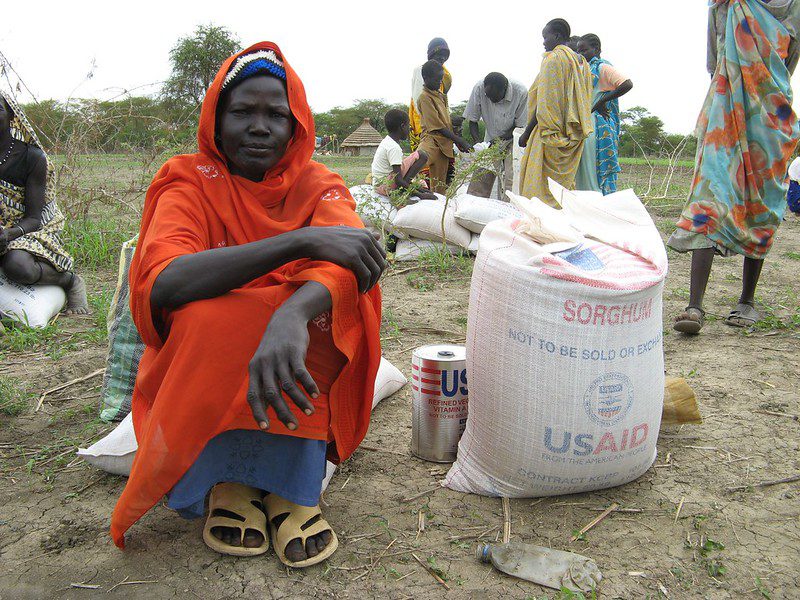
 As the Trump administration continues to shut down various foreign aid programs, the reverberations have been felt around the world. Sudan, in particular, has been thrust into a state of crisis following the closure of more than 1,000 USAID-supported soup kitchens and medical centers.
Crisis in Sudan
Sudan, a country of more than 50 million people located in East Africa, has been in a state of national emergency as war rages between the national army and the paramilitary group Rapid Support Forces (RSF). Thousands of families have been displaced due to the conflict, and humanitarian aid groups have reported malnutrition cases of millions of citizens, of which 3.2 million are children under 5 years old.
As of December 2024, more than half the population is experiencing high levels of acute food insecurity, a figure which has only worsened since the halting of U.S. foreign aid. The World Health Organization (WHO) has reported more than 50,000 cases of cholera in 11 states and mass exodus has put pressure on neighboring countries including Chad and South Sudan, which are already struggling with their own hunger crises.
USAID Levels Pre-Shutdown
Before the shutdown, USAID in Sudan was responsible for providing between 70% and 80% of funding for flexible cash programs, making it the largest single donor out of multiple countries and global organizations, according to BBC.
These programs consisted largely of an extended network of communal food kitchens— emergency response rooms (ERR)— which provided food, medicine and supplies for families located in regions out of reach from foreign aid workers.
Information regarding USAID in Sudan funding statistics is no longer available for viewing on the federal website, but archived reports have estimated that the U.S. has contributed more than $2 billion since the outbreak of the civil war in April 2023.
In 2024, the U.S. distributed $661 million of aid to Sudan through USAID. With this funding, USAID partners were able to reach nearly 6.7 million Sudanese citizens requiring emergency food assistance, in addition to providing safe drinking water to more than 8 million citizens as of April 2024.
Effects of the Shutdown
President Trump’s executive order to halt all foreign aid activity while conducting a 90-day review operates to cut all programs deemed extraneous to U.S. interests. Around 90% of USAID programs will be cut completely, consisting of $60 billion of foreign aid sent around the world.
This has halted many programs mid-transit, withholding crucial aid to those most in need. The federal government has granted an exception to emergency food assistance, but unclear guidelines have caused widespread confusion around implementation, BBC reports.
As funding disappeared overnight, an estimated 1,000 ERRs had to close, plunging the population deeper into crisis, according to NPR.
According to the BBC, around 2 million Sudanese citizens depended on these ERRs for food and medicine, and must now look elsewhere.
The United Nations Office for the Coordination of Humanitarian Affairs (OCHA) has outlined foreign aid requirements by country each year. In 2024, approximately 67% of the $2.7 billion required aid for Sudan was met, with the U.S. as the largest bilateral donor contributing 48% of committed funds. However, there are several other organizations that are working to help people in Sudan.
International Rescue Committee (IRC)
The IRC has operated in Sudan since 1981, delivering food and health services through six different offices located throughout the country. The range of programs are diverse, including water, sanitation, and hygiene services (WASH), gender-based services for women and children (GBV), health and nutrition, and multi-purpose cash aid.
Led by county director Eatizaz Yousif, IRC’s team in Sudan has opened and closed multiple offices and dispatched mobile medical teams. It also assembles and distributes “dignity kits”— packages containing hygiene products and basic supplies for women and girls
Save the Children
Save the Children is one of the largest NGOs operating in Sudan, providing life-saving medical and malnutrition care to millions of Sudanese citizens. Programs include health, nutrition, food security and livelihoods, hygiene, shelter, child protection, and education. Since the outbreak of war in 2023, Save the Children has reached 3.8 million people, including 1.7 million children.
Save the Children focuses on reaching children and families in the most remote or hard-to-reach areas of Sudan. Teams currently operate in 13 out of the 18 states.
The World Food Program (WFP)
The WFP is responsible for providing emergency food assistance or cash to vulnerable refugees, internally displaced residents, and shock-affected communities. The WFP focuses on a wide range of areas— child malnutrition programs, legislative assistance, vocational skills training, irrigation systems, and crop storage representing only a subset. Since April 2023, the WFP has reached over 11 million people.
The U.S. served as the largest single donor to WFP operations before the shutdown, which is likely to cause some scalebacks in the coming weeks. However, the WFP was granted an exception to resume food purchases and deliveries under existing USAID programs — specifically, the Title II Food for Peace Program, in which global NGOs purchase surplus crops from American farmers to assist in emergency food aid
The shutdown of USAID in Sudan has constituted a major blow to progress being made in health, food, and poverty programs assisting those most affected by conflict. As cuts continue to be made in the U.S., it will fall to other nations and NGOs to fill in the gaps amidst a deepening humanitarian crisis.
– Sadie Claps
Sadie is based in Seattle, WA, USA and focuses on Business and Politics for The Borgen Project.
Photo: Flickr

The East African Community and the Eastern Congo Crisis
This situation will likely worsen the DRC crisis due to funding shortages, including significant cuts from the United States, which accounted for 70% of the DRC’s aid in 2024. Despite these challenges, humanitarian organizations and regional neighbors like the East African Community (EAC) remain committed to fostering peace and delivering essential aid to the Congolese people.
First Congo War 1960-1965
Shortly after gaining independence from Belgium, chaos erupted as the Force Publique soldiers at the Thysville military base, marking the beginning of the DRC crisis. Congolese soldiers revolted against their white counterparts, demanding better wages. This unrest quickly escalated to other military bases, igniting widespread violence across the nation.
Just two days earlier, the provinces of Katanga and South Kasai had declared their independence from Congo. These post-colonial power struggles led to the assassination of Patrice Lumumba on January 17, 1961, which only deepened the chaos. On November 25, 1965, Mobutu Sese Seko seized power in a coup, renaming the country Zaire. He ruled until 1997 when he was ousted after decades of corruption and economic mismanagement.
The Rwanda Genocide and its Aftermath
When the Rwandan genocide ended in 1994, the Rwandan Patriotic Front (RPF) reclaimed the Rwandan capital, Kigali. The advance of the Tutsi-led rebels forced more than one million Hutu refugees to flee to the DRC (then Zaire), where they staged attacks against the Kigali government while being sheltered by Mobutu.
In 1996, the Rwandan Patriotic Army (RPA) and the Alliance of Democratic Forces for the Liberation of Congo-Zaire (ADFL), under the command of Laurent Kabila, conducted attacks on the camps. The war pitted the ADFL against Mobutu Sese Seko’s Zairian Armed Forces (FAZ), Interahamwe militia, Rwandan Armed Forces ex-FAR and mercenaries. This rebellion stoked ethnic tensions, particularly with the Banyamulenge Tutsis in eastern Congo and eventually led to the overthrow of Mobutu in 1997.
Second Congo War 1998-2003
After Mobutu fled to exile in Morocco, Kabila expelled all foreign soldiers, but the Hutu militias stationed in eastern Congo continued their attacks on Rwanda. In August 1998, Rwanda invaded eastern Congo with the support of Congolese Tutsi and rebel groups against Kabila. This marked the start of the Second Congo War, which drew in as many as 14 different armies, including troops from Angola, Namibia and Zimbabwe, who backed Kabila against Burundi, Uganda and Rwandan forces against Kabila.
The wars led to countless deaths, displacements and entrenched ethnic divisions and resource-driven conflicts in eastern Congo, leaving a legacy of instability that persists today.
The Role of the East African Community
The EAC is a regional intergovernmental organization comprising of Kenya, Uganda, Rwanda, Tanzania, South Sudan, Burundi, DRC and Somalia. The community has committed to maintaining peace and restoring stability in the DRC. Some of the interventions include:
Final Remarks
The East African Community has dedicated significant efforts to fostering dialogue and promoting peace in the DRC, from a conflict dynamic to peace initiatives. However, it has encountered various challenges and criticisms. The deployment and subsequent withdrawal of the EAC Regional Force underscored the need for a more effective approach to tackle the issues comprehensively.
The differing economic and political interests among member states complicate the mission to pursue peace, as these divergent priorities have prompted the DRC government to seek assistance from external parties, further exacerbating the country’s instability.
The DRC crisis is a complex weave of historical injustices, failed governance, external meddling and a lack of global concern. Achieving a lasting solution goes beyond ceasefires. It requires dismantling systems that favor resource exploitation at the expense of human dignity. It also calls for holding regional powers responsible for destabilizing and empowering Congolese communities to take charge of their recovery.
– Grace Ruria
Photo: Flickr
4 Facts about Hunger in Qatar
Despite its strong economy and high per capita income, Qatar still faces issues related to hunger. Here are four facts about hunger in Qatar.
Qatar’s Global Rankings
In 2024, Qatar ranked 30th out of 113 countries in the Global Food Security Index (down from 13th in 2019)—an international database that considers quality, affordability and availability of food. However, while Qatar is ranked 9th in availability and 21st in affordability, it is only 47th in quality and safety and 51st on sustainability and adaptation. Some of its weakest indicators are lack of a national policy or strategy to empower women farmers, extent of agricultural research and development and extent of disaster risk management. Qatar could not be comparatively ranked on the 2024 Global Hunger Index because of a lack of available data on undernourishment. But on the other GHI indicators related to hunger, the country’s statistics are very low: 6.2% of children under 5 stunted and 1.5% wasted, and 0.5% of children who die before their fifth birthday.
Dependency on Imported Food
Agriculture is a challenge in Qatar because of the arid climate, sandy soil and scarcity of water. Qatar therefore has imported 90% of consumed food, with imports providing as high as approximately 80% of the demand for perishable crops.
Qatar’s Large Migrant Worker Population
Qatar is home to a million person, mostly Asian, migrant work force, which is 95% of its total labor force, with half of these workers in construction. The high COVID toll in Qatar five years ago left many migrants jobless, and hungry. Subsequently, the FIFAWorld Cup 2022, hosted by Qatar, exposed “the vulnerabilities of and abuses faced by low-paid migrant workers and migrants in general.” During this same period, the Canadian-based Migration and Food Insecurity in Cities of the Global South project (MiFood Project) expanded its Hungry Cities Partnership research network to additional countries, including Qatar. This was a three-year project focused on migrant workers and food security.
Success and a New Strategy to Increase Food Security
Qatar’s successful National Security Strategy 2018-2023 strengthened Qatar’s food security infrastructure, with enhancements in cultivated areas, production capacity, and food marketing systems, as well as addressing climate change. Building on this success, in January 2025, Qatar announced its National Food Security Strategy 2030 to secure food supplies by significantly increasing local food production and making Qatar 55% self-sufficient in vegetable production, 100% self-sufficient in fresh chicken and dairy by the end of the decade, and 80% for fish and 30% for red meat.
Overall, hunger in Qatar is relatively low due to the country’s general prosperity and the government’s diligent efforts to improve food security. While the nation’s geographic location means the threat of food still exists, the country’s forward-thinking and proactive efforts are addressing this threat.
– Staff Reports
Photo: Wikimedia
DreamSave: Women in Kenya Combat Poverty
Barriers to Financial Access
Small and medium-sized businesses in Kenya face significant obstacles in obtaining credit from financial institutions. Many lack sufficient assets to provide as collateral, making commercial bank loans difficult to secure. As a result, business owners often turn to friends and relatives for financial support, which is rarely enough to sustain long-term growth. Without proper funding, enterprises are forced to rely on lower-cost and often inefficient technologies, limiting their potential for success.
How DreamSave Works
DreamSave, an innovative mobile app, is transforming how savings groups operate by digitizing financial management. The platform enables users to track savings, manage loans, build credit histories and set financial goals without requiring access to traditional banking services. By providing a reliable and structured approach to saving, the app is helping women gain financial independence and break the cycle of poverty. In addition, the platform simplifies financial management for savings groups in underbanked areas. The app helps users record financial data, conduct meetings and track credit histories, ensuring accountability and transparency. By automating these processes, DreamSave allows members to focus on growing their businesses and achieving their savings goals.
Key Features of DreamSave
DreamSave is designed to overcome common financial barriers in developing countries. Its offline capability ensures that users in remote areas with limited internet access can continue managing their finances without interruptions. Data automatically syncs to the cloud whenever a connection becomes available, maintaining continuity in record-keeping. The app also offers enhanced traceability and compliance by keeping detailed logs of all transactions, allowing users to track their financial activities with full transparency.
Recognizing the high cost of mobile data in its target markets, DreamSave has optimized its platform to minimize data consumption, reducing costs by up to 60% compared to previous versions. Faster data synchronization ensures that users with limited internet access can efficiently update their records, even during brief online sessions. Additionally, DreamSave’s near-real-time data processing allows savings groups to instantly access updated financial insights. To ensure continuity, the app is backward compatible, meaning users can seamlessly transfer their existing data when upgrading to newer versions.
Global Recognition and Impact
DreamSave’s innovative approach has earned it multiple awards. It was recognized as the Best Finance App and Best Developing World Technology at the Fast Company 2023 World Changing Ideas Competition. The app also won the Best Digital Banking Technology Award at the 2023 Worldwide Finance Awards and the Most Empowering Digital Banking Technology Award at the 2022 Worldwide Finance Awards.
Looking Ahead
DreamSave continues to expand its reach, enabling more women in Kenya and beyond to access secure financial services. By bridging the gap in financial inclusion, the app is empowering women to achieve economic independence and contribute to long-term poverty reduction.
– Taylor Naquin
Photo: Flickr
USAID in Sudan: What Does the Shutdown Mean
Crisis in Sudan
Sudan, a country of more than 50 million people located in East Africa, has been in a state of national emergency as war rages between the national army and the paramilitary group Rapid Support Forces (RSF). Thousands of families have been displaced due to the conflict, and humanitarian aid groups have reported malnutrition cases of millions of citizens, of which 3.2 million are children under 5 years old.
As of December 2024, more than half the population is experiencing high levels of acute food insecurity, a figure which has only worsened since the halting of U.S. foreign aid. The World Health Organization (WHO) has reported more than 50,000 cases of cholera in 11 states and mass exodus has put pressure on neighboring countries including Chad and South Sudan, which are already struggling with their own hunger crises.
USAID Levels Pre-Shutdown
Before the shutdown, USAID in Sudan was responsible for providing between 70% and 80% of funding for flexible cash programs, making it the largest single donor out of multiple countries and global organizations, according to BBC.
These programs consisted largely of an extended network of communal food kitchens— emergency response rooms (ERR)— which provided food, medicine and supplies for families located in regions out of reach from foreign aid workers.
Information regarding USAID in Sudan funding statistics is no longer available for viewing on the federal website, but archived reports have estimated that the U.S. has contributed more than $2 billion since the outbreak of the civil war in April 2023.
In 2024, the U.S. distributed $661 million of aid to Sudan through USAID. With this funding, USAID partners were able to reach nearly 6.7 million Sudanese citizens requiring emergency food assistance, in addition to providing safe drinking water to more than 8 million citizens as of April 2024.
Effects of the Shutdown
President Trump’s executive order to halt all foreign aid activity while conducting a 90-day review operates to cut all programs deemed extraneous to U.S. interests. Around 90% of USAID programs will be cut completely, consisting of $60 billion of foreign aid sent around the world.
This has halted many programs mid-transit, withholding crucial aid to those most in need. The federal government has granted an exception to emergency food assistance, but unclear guidelines have caused widespread confusion around implementation, BBC reports.
As funding disappeared overnight, an estimated 1,000 ERRs had to close, plunging the population deeper into crisis, according to NPR.
According to the BBC, around 2 million Sudanese citizens depended on these ERRs for food and medicine, and must now look elsewhere.
The United Nations Office for the Coordination of Humanitarian Affairs (OCHA) has outlined foreign aid requirements by country each year. In 2024, approximately 67% of the $2.7 billion required aid for Sudan was met, with the U.S. as the largest bilateral donor contributing 48% of committed funds. However, there are several other organizations that are working to help people in Sudan.
International Rescue Committee (IRC)
The IRC has operated in Sudan since 1981, delivering food and health services through six different offices located throughout the country. The range of programs are diverse, including water, sanitation, and hygiene services (WASH), gender-based services for women and children (GBV), health and nutrition, and multi-purpose cash aid.
Led by county director Eatizaz Yousif, IRC’s team in Sudan has opened and closed multiple offices and dispatched mobile medical teams. It also assembles and distributes “dignity kits”— packages containing hygiene products and basic supplies for women and girls
Save the Children
Save the Children is one of the largest NGOs operating in Sudan, providing life-saving medical and malnutrition care to millions of Sudanese citizens. Programs include health, nutrition, food security and livelihoods, hygiene, shelter, child protection, and education. Since the outbreak of war in 2023, Save the Children has reached 3.8 million people, including 1.7 million children.
Save the Children focuses on reaching children and families in the most remote or hard-to-reach areas of Sudan. Teams currently operate in 13 out of the 18 states.
The World Food Program (WFP)
The WFP is responsible for providing emergency food assistance or cash to vulnerable refugees, internally displaced residents, and shock-affected communities. The WFP focuses on a wide range of areas— child malnutrition programs, legislative assistance, vocational skills training, irrigation systems, and crop storage representing only a subset. Since April 2023, the WFP has reached over 11 million people.
The U.S. served as the largest single donor to WFP operations before the shutdown, which is likely to cause some scalebacks in the coming weeks. However, the WFP was granted an exception to resume food purchases and deliveries under existing USAID programs — specifically, the Title II Food for Peace Program, in which global NGOs purchase surplus crops from American farmers to assist in emergency food aid
The shutdown of USAID in Sudan has constituted a major blow to progress being made in health, food, and poverty programs assisting those most affected by conflict. As cuts continue to be made in the U.S., it will fall to other nations and NGOs to fill in the gaps amidst a deepening humanitarian crisis.
– Sadie Claps
Photo: Flickr
Education in Afghanistan: Barriers and Economic Impact
Poverty is widespread and natural disasters have compounded economic hardships. Afghanistan’s GDP declined by 24.3% between 2021 and 2022, leaving millions in financial distress. An estimated 96% of Afghan households fell below the poverty line in 2020 and farmers faced one of the worst droughts in recent history. In October 2023, several 6.3-magnitude earthquakes struck Herat province, further devastating livelihoods and worsening economic conditions.
Women’s Education Under Taliban Rule
Since regaining power, the Taliban has imposed strict regulations on women’s education, barring them from attending school past the sixth grade. These restrictions have affected an estimated 1.4 million girls, cutting off their access to formal learning. Women also face limitations on movement and employment, restricting opportunities for financial independence.
The Economic Impact of Education Restrictions
The exclusion of women from education has long-term economic consequences. Before 2021, women made up 22% of Afghanistan’s workforce, working in sectors such as health care, education and business. Restricting women from pursuing education reduces economic productivity and slows national recovery. Foreign aid previously accounted for 40% of the country’s GDP and with limited external support and half of the workforce excluded, the country’s economic outlook continues to decline.
Foreign Aid and Education Funding in Afghanistan
During the war, Afghanistan’s education system was a global priority. Between 2001 and 2024, the U.S. invested $1.4 billion in Afghan education, helping to establish schools and train teachers. However, since 2021, foreign aid has significantly declined, leaving many schools underfunded and understaffed. The country’s literacy rate remains one of the lowest in the world, at 34% overall and only 18% among women.
Efforts to Sustain Education Access in Afghanistan
Despite these ongoing challenges, organizations such as the Afghan Institute of Learning (AIL) continue to provide education for women and children in Afghanistan. AIL operates 44 learning centers across 11 provinces and has helped 500,830 students while training nearly 30,000 teachers over the past 25 years. These programs aim to equip students with literacy skills and critical thinking tools, offering hope for the country’s next generation. Community-based education initiatives have also emerged, allowing some girls to study in private homes or local centers. However, these informal programs do not offer official certification, which limits long-term opportunities for employment and higher education.
Looking Ahead
In Afghanistan, education could promote long-term stability and recovery. Ensuring access to learning opportunities for all Afghans—especially women—remains critical. Until broader reforms are implemented, organizations like AIL continue to bridge the gap by providing educational opportunities to those who need them most. The country’s future potentially depends on creating an inclusive education system that empowers all citizens to contribute to the country’s recovery and economic growth.
– Burke Bunyard
Photo: Flickr
High-Risk Diseases in Botswana and Their Impact
HIV in Botswana: Progress and Challenges
Human immunodeficiency virus (HIV) remains a critical public health issue in Botswana. HIV attacks the immune system by targeting CD4 cells (T cells), weakening the body’s ability to fight infections and diseases. If untreated, it progresses to acquired immunodeficiency syndrome (AIDS), increasing vulnerability to opportunistic infections.
To combat HIV, Botswana’s Ministry of Health (MOH) partnered with the U.S. Centers for Disease Control and Prevention (CDC) to expand testing, prevention and treatment services. This collaboration has resulted in an extensive network of more than 200 HIV prevention sites nationwide. The Botswana AIDS Impact Survey collects critical data on sexual behaviors and risk factors, allowing policymakers to tailor interventions effectively. Additionally, the country has invested in widespread antiretroviral therapy (ART) programs to ensure HIV-positive individuals receive life-saving treatment.
Efforts have yielded significant progress. By 2021, Botswana achieved a 97% viral suppression rate among HIV patients on ART. Additionally, more than 334,000 people received antiretroviral treatment, contributing to a 9% decrease in HIV transmission over the past decade. Despite these advancements, challenges remain, including stigma, treatment adherence and reaching remote populations.
Tuberculosis: A Persistent Public Health Threat
Tuberculosis (TB) is an infectious disease that primarily affects the lungs but can also spread to other organs. TB is airborne and spreads when an infected person coughs or sneezes, releasing bacteria into the air. Symptoms include persistent cough, chest pain, fever, fatigue and weight loss.
Botswana has seen a rise in HIV-related TB cases, as individuals with weakened immune systems are more susceptible to the disease. The government has taken several measures to address TB, including expanding screening programs at hospitals and clinics, increasing access to diagnostic tools for early detection and ensuring the availability of effective TB medications, including aminoglycoside antibiotics.
Despite these interventions, co-infection rates of HIV and TB remain high, making TB prevention and treatment more complex. Ensuring consistent medication access, early detection and public awareness campaigns are essential to further reducing TB cases in Botswana.
Kaposi Sarcoma: Botswana’s Leading Cancer
Kaposi sarcoma (KS) is the most prevalent malignancy in Botswana. It affects the lining of blood and lymphatic vessels and is strongly associated with human herpesvirus 8 (HHV-8). KS is especially common among individuals with weakened immune systems, such as those living with HIV.
Kaposi sarcoma presents significant health risks, causing purple or dark-colored skin lesions, swelling, enlarged lymph nodes and respiratory complications if the disease spreads to the lungs. To address KS, Botswana’s government has established four public oncology centers that provide cancer treatment services, including chemotherapy and radiation therapy. However, the country continues to face significant challenges, such as limited access to advanced diagnostic tools, shortages of experienced oncologists and delays in treatment due to resource constraints.
Increasing investments in cancer research, early detection programs and expanded health care infrastructure is crucial for improving Botswana’s ability to manage and treat Kaposi sarcoma effectively.
Strengthening Health Care Response in Botswana
While Botswana has made notable progress in combating HIV, tuberculosis and Kaposi sarcoma, challenges remain. Limited health care resources, economic instability and high co-infection rates continue to strain the public health system. Ongoing government initiatives and international partnerships—such as those with the CDC—are vital in ensuring continued progress in fighting diseases in Botswana. Expanding health care infrastructure, medical training programs and public awareness campaigns could be key to improving disease prevention and treatment outcomes. By addressing these high-risk diseases, Botswana can potentially enhance public health, reduce economic strain and improve the quality of life for its citizens.
– Hayden Reyes
Photo: Flickr
Disability and Poverty in Bulgaria
The Realities of Disability and Poverty in Bulgaria
In 2019, Bulgaria introduced the Persons with Disabilities Act (PDA), reaffirming its commitment to safeguarding the rights of individuals with disabilities. This legislation notably established an individual needs assessment to foster greater self-determination and active participation in society.
However, many individuals with disabilities in Bulgaria continue to face significant barriers to education, employment and health care. These challenges are particularly severe in rural and less-developed areas, where limited infrastructure, such as inaccessible transportation systems, exacerbates the difficulty of accessing essential services.
Despite the simultaneous adoption of the Personal Assistance Act, institutional care and dependence on family members remain prevalent among individuals with disabilities in Bulgaria, further isolating this group from community life. This ongoing lack of accessibility hinders personal growth and perpetuates a cycle of financial hardship and social marginalization. According to Eurostat, a staggering 42.4% of Bulgaria’s disabled population were at risk of poverty and social exclusion in 2023 – a significantly higher rate compared to the general population and other EU countries.
Disability and Economic Exclusion
Structural barriers in the labor market intensify disability and poverty in Bulgaria by preventing many people with disabilities from securing stable employment. Eurostat data from 2023 reveals that Bulgaria’s disability employment gap stands at 39.5%, nearly double the EU average of 21.5%. The inclusivity deficit in the education system contributes significantly to this disparity, leading to higher early school leaving rates among young people with disabilities. As a result, there is a shortage of skilled professionals with disabilities entering the workforce.
To address these challenges, the Persons with Disabilities Act (PDA) prioritizes equal access to employment, mandating that companies with 50 or more employees meet quotas for hiring permanent disabled personnel. However, organizations are failing to consistently implement these obligations, resulting in a low number of individuals being hired. Discrimination, inadequate workplace accommodations and an inflexible labor market continue to hinder job prospects for persons with disabilities.
Progress Toward Inclusion for People With Disabilities
The National Strategy for Persons with Disabilities 2021-2030 seeks to break the cycle of disability and poverty in Bulgaria. This comprehensive initiative aims to ensure equal opportunities for people with disabilities by prioritizing inclusive education, accessible public spaces and labor market activation—key drivers in reducing poverty and income inequality for people with disabilities. The strategy places a key emphasis on digital skills training to open up new employment opportunities for people with disabilities across the country, providing specialized programs to develop key competencies and increase both productivity and employability.
The Social Future Foundation, founded in 2017, is an NGO that actively connects job seekers with disabilities to employment opportunities in Bulgaria through its JAMBA Career for All initiative. Since its inception, JAMBA has built a talent pool of more than 2,500 candidates, established multidisciplinary training programs for more than 600 individuals, and provided diversity and inclusion training to 60 partnering organizations to help them effectively integrate employees with disabilities into their workplaces. JAMBA also runs awareness campaigns, reaching more than two million people, to combat social stereotypes and shift public attitudes toward disability inclusion.
Looking Ahead
Both governmental and non-governmental efforts are actively working to dismantle the deep interconnection between disability and poverty in Bulgaria, highlighting a strong commitment to advancing inclusivity and accessibility. Nevertheless, to effectively combat poverty for this vulnerable community, these initiatives must go beyond addressing the shortage of sustainable employment opportunities.
– Charlotte Codd
Photo: Pixabay
Spotlight: The Peace Center
Empowering Bukinda’s Children Through Education
The Peace Center is situated in Bukinda, a town in southwest Uganda, where limited access to education is one of the most pressing challenges residents face. Without proper schooling, many children struggle to escape the cycle of poverty that has affected their families for generations.
According to the CIA World Factbook, the actual fertility rate in the country at large is more than twice the desired rate, suggesting unmet contraceptive needs. This, in turn, contributes to ongoing poverty and educational barriers. The Peace Center’s core mission is to educate children in need, helping break this cycle.
The PEACE Program
To accommodate the children’s varying needs in its program, the organization has implemented two distinct programs. The PEACE (Providing Education and Community Empowerment) program focuses on orphaned children who may have relatives to live with but do not have the resources to provide for the children’s schooling.
The PEACE program provides these children with school attendance fees and a uniform to help them gain an education. In return, these children must maintain a minimum attendance record and grade score each semester.
1-To-1 Sponsorship
For children without immediate family who require full-time support and care, The Peace Center offers a 1-to-1 sponsorship program. The nonprofit provides children in this program with “housing, schooling, three meals a day, school uniform as well as basic health and sanitary care.”
Through this program, the organization encourages families in other countries to provide both financial and emotional support to the child. This sponsorship fosters a connection between the child and the sponsor’s family through letters, photos and other forms of correspondence.
Impact
In the past 10 years, The Peace Center has worked tirelessly to provide the neediest children in Uganda with stability, safety and a place to call home. Indeed, several current and former program students have provided testimonies, expressing their gratitude to the organization.
Some children have attributed their college success to The Peace Center, sharing how the organization helped them with leadership, communication and other essential life skills. Furthermore, The Peace Center provides these children with a lifelong sense of belonging, with many students saying they have kept in touch with the staff and other students years after leaving the program.
Summary
Since its founding, The Peace Center has offered holistic care to those in greatest need, supporting orphaned children in Uganda with nowhere else to turn. It has two programs oriented toward empowering children to break generational cycles of poverty and gaining education and emotional support throughout their lives.
The Peace Center is always looking for more opportunities to help children in need and is looking toward the future and more chances to provide this much-needed support.
– Lizzie Mazzola
Photo: Flickr
Child Soldiers in Burkina Faso: Why Child Recruitment Is a Crisis
Brief Background of the Burkina Faso Conflict
The ongoing conflict in Burkina Faso escalated on August 23, 2015, when a rebel Islamist group affiliated with an Islamist insurgency movement attacked multiple government posts, resulting in numerous civilian deaths and injuries. According to U.N. reports, nearly 10 years of war have killed at least 10,000 civilians and combatants, not including regular kidnappings. The statistics on political instability, the rise of new hotspots and the increase in existing ones are disheartening. An analytical report by Al Jazeera showed that the number of hotspot locations increased from 303 in 2018 to 2,216 locations in 2019, representing an approximate rise of 631.3% in just one year. The most vulnerable groups in these conflict zones remain women, the elderly and children, who suffer not only from the humanitarian crisis but also from the widespread practice of child soldier recruitment, a practice that the Burkina Faso government strictly prohibits.
Where Does Child Soldier Recruitment Take Place?
Since the practice of child soldier recruitment is widespread and often beyond state control, its origins remain unclear. Some of the most significant instances of child soldier use throughout history occurred during the Vietnam War, World War II and in modern times, within Russian Army forces in the Russo-Ukrainian war. However, the regions that suffer the most from the practice of child soldier recruitment are primarily in Africa. According to the U.N. annual report, countries such as the Central African Republic, North Sudan, Sudan, Nigeria, Somalia, Mali and the Democratic Republic of Congo (DRC) are among the hardest-hit territories. The report indicates that armed groups recruit between 100 and 2,000 children as soldiers annually in these areas.
Child Soldiers in Burkina Faso and Child Abuse
While the humanitarian crisis and war crimes continue to be major issues, the statistics on child abuse in the country during this period are also rapidly worsening. Given the unstable position of the government, the vulnerability of civilians, particularly women and children, has become a deeply challenging issue to resolve. According to UNICEF, up to 93% of children in the country lack access to public health services, hygiene, nutrition and education. Additionally, UN Trade and Development reports that “nearly four out of 10 people live in extreme poverty.” This situation is caused by insufficient production capacity for goods and services, the challenging transition from a highly centralized state economy to a market economy, major political instability, the geographical disadvantage of being landlocked and external debt.
Another significant issue is the regular recruitment of child soldiers by extremist military groups. The charitable organization Theirworld, dedicated to ending the global education crisis, reports on the causes of child soldier recruitment. In many cases, extremist groups kidnap children and force them into service, while social and economic pressures in their country drive others to join. Lacking proper access to education and humanitarian aid, and struggling with poverty, these children become more vulnerable to the influence of terrorist groups that promise them money or drugs in exchange for their service. As a result, those who join the military often commit war crimes, including killing civilians, or become victims of sexual abuse. Reuters reports that some of these children even participate in massacres.
The World’s Response
In response to the recruitment of child soldiers, some of the world’s largest organizations, such as UNICEF and Save the Children, have established multiple charitable programs that receive donations from volunteers worldwide. UNICEF’s reintegration program for former child soldiers has helped more than 8,700 children escape armed groups and reintegrate into civilian life. Through its partners, UNICEF provides these children with full access to education, health care, counseling services and a safe place to live during their recovery period.
Additionally, Save the Children delivers child rights protection and education services in African regions, while also creating petitions and securing ongoing donations to support the cause. It provides education to war-affected children, including former child soldiers, by offering accelerated learning programs and psychological support. Its efforts resulted in 4,000 children receiving education and becoming empowered, and 62,000 children receiving protection from harm.
Furthermore, the UN Integrated Strategy for the Sahel (UNISS), together with key partners such as UNICEF, UNHCR and the Office of the Special Representative of the Secretary-General for Children and Armed Conflict (OSRSG-CAAC), works with governments and armed groups to sign and implement action plans aimed at ending the recruitment and use of child soldiers.
A Call to Action
While the recruitment of child soldiers remains one of the most devastating and persistent issues in Burkina Faso, driven by severe economic and political challenges, powerful global organizations like the UN and UNICEF are uniting for a common goal: to combat poverty and protect the vulnerable. Through impactful campaigns such as UNICEF’s program for Children Associated with Armed Forces and Armed Groups (CAAFAG), they are working to protect children in conflict zones and ensure their reintegration into society in African regions including Burkina Faso.
All the programs mentioned are working in Sahel conflict zones, where Burkina Faso is included, so far none of the specific branches to work only in Burkina Faso was created. Additionally, child soldiers receive the same help as other vulnerable children in Sahel conflict zones.
– Liubov Linnyk
Photo: Flickr
Women Entrepreneurs in Saudi Arabia: Economic Empowerment
If the gender gap were closed entirely, the impact would be even more significant, potentially raising GDP in these nations by an average of 23%. Empowering women economically fosters greater income equality and diversification, contributing to more inclusive and sustainable growth. Overall, closing the gender gap could add $7 trillion to the global economy.
Gender Disparity and Poverty in Saudi Arabia
Saudi Arabia has made significant strides in gender equality, but disparities remain, particularly in economic participation. While the country has seen significant progress in recent years, women still face challenges accessing capital, business networks and certain industries. One in every 10 women globally is living in extreme poverty and economic barriers in Saudi Arabia have historically contributed to gendered income disparities.
Despite these challenges, Saudi Arabia’s recent economic reforms have drastically improved opportunities for women in the workforce and entrepreneurship. “Between 2017 and 2021, the Saudi female labor force participation rate doubled from 17.4% to 35.6%,” surpassing the Vision 2030 target of 30%. These numbers indicate a shift in economic priorities, but further policy support is needed to ensure long-term sustainability and equal access to financial resources.
Legal Reforms
Over the past decade, Saudi Arabia has implemented key legal reforms that have removed barriers for women in business. The World Bank’s Women Business and the Law 2024 report states that Saudi Arabia now scores a perfect 100 in laws affecting women’s decisions to work, pay equity, business ownership and pensions. These reforms include:
These legal changes have fostered an environment where female-led businesses can thrive, further accelerating Saudi Arabia’s economic diversification goals.
Women Entrepreneurs Leading Economic Transformation
As a result of these reforms, Saudi women are increasingly shaping the country’s startup ecosystem. According to the 2021-2022 Women’s Report for Saudi Arabia by the Global Entrepreneurship Monitor, 95% of Saudi women consider entrepreneurship a good career choice, 93% see viable opportunities for new businesses and 90% believe it is easy to start a business.
One standout entrepreneur is Mounira Jamjoom, cofounder of Aanaab, an online professional development platform for teachers across the Middle East and North Africa (MENA) region. Aanaab collaborates with local and global institutions to offer short courses, qualifications and licensing programs that assist educators and strengthen the education sector.
Another trailblazer, Bayan Linjawi, launched Blossom, Saudi Arabia’s female-focused accelerator, which supports women-led startups in securing funding and scaling their businesses. Today, initiatives like Monsha’at, Saudi Arabia’s Small and Medium Enterprise (SME) authority, promote female entrepreneurship by providing grants, training and business development support.
A Future Driven by Women Entrepreneurs
The rise of women entrepreneurs in Saudi Arabia signals a transformative shift in the country’s economic landscape. With legal reforms, social acceptance and government-backed initiatives, the path for women in business is auspicious. However, sustained efforts are required to ensure that all women, including those in rural areas and lower income brackets, have the same opportunities.
As Saudi Arabia progresses toward its Vision 2030 goals, empowering women entrepreneurs will be crucial in driving economic diversification and long-term prosperity. The momentum is strong, but the journey toward full gender equality in business is far from over. By continuing to invest in policies that support female-led enterprises, Saudi Arabia can set a global example of economic inclusion and sustainable growth.
– Linnéa Matlack
Photo: Flickr