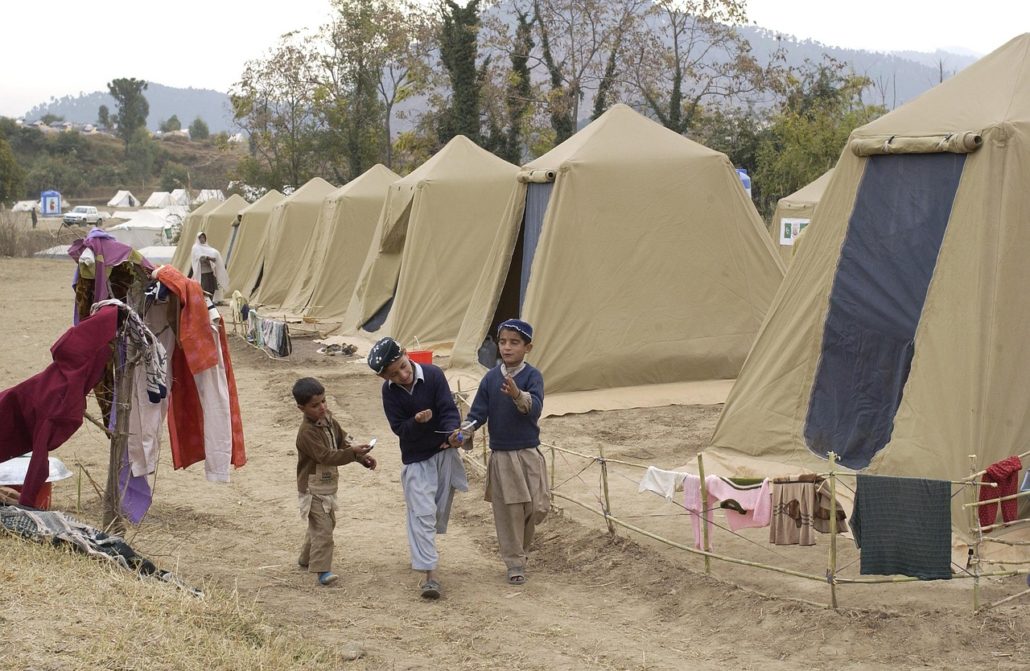
 Pakistan has been a longstanding host to Afghan refugees, providing asylum for over four decades. Migration to Pakistan continues to be a necessity for many Afghans seeking safety and stability.
About Migration to Pakistan
As of October 2024, Pakistan shelters approximately 1.35 million registered Afghan refugees, while the government estimates an additional 600,000 Afghans have entered the country since the Taliban’s return to power in 2021. This influx has placed immense pressure on Pakistan’s economic and social infrastructure, as the country struggles with rising inflation, political instability and security concerns.
Since October 2023, the Pakistani government has tightened its policies, announcing the Illegal Foreigners’ Repatriation Plan (IFRP), which aims to expel undocumented foreigners, primarily targeting Afghan refugees. Nearly 600,000 Afghans have already returned to Afghanistan, fearing arrest or deportation. The situation raises serious humanitarian concerns, as many returnees face poverty, unemployment and insecurity in Afghanistan.
Pakistan’s Role as a Host Country
Pakistan has been one of the largest refugee-hosting countries in the world. Afghan refugees migrated to Pakistan in multiple waves, beginning with the Soviet invasion in 1979, followed by the civil wars of the 1990s, and the U.S.-led war on terror in the 2000s. The most recent crisis emerged after the Taliban’s takeover in 2021, prompting many Afghans—particularly women, journalists and activists—to flee due to threats of persecution.
For decades, migration to Pakistan has been a safe refuge for Afghans escaping conflict and oppression in Afghanistan. Despite its economic struggles, Pakistan has facilitated education, health care and work opportunities for many Afghan refugees. Several international organizations, including the United Nations High Commissioner for Refugees (UNHCR), have collaborated with the Pakistani government under the Solutions Strategy for Afghan Refugees (SSAR) to provide legal protection, assistance and voluntary repatriation programs. Pakistan Poverty Alleviation Fund (PPAF) and the UNHCR launched the UNHCR-PPAF Empowerment Initiative in 2019. This program aims to support Afghan refugees in Pakistan by improving their livelihoods. Since its inception, the initiative has provided vocational training to more than 11,000 refugees and host community members, supported 900 Afghan refugee families through the Poverty Graduation Programme, and helped 2,000 refugee women develop artisanal skills. However, increasing domestic challenges have led Pakistan to reconsider its long-term refugee policies.
Deportation and Legal Complexities
Pakistan is not a signatory to the 1951 Refugee Convention or its 1967 Protocol, which means it has no legal obligation to grant asylum under international refugee law. However, the principle of non-refoulement, a core aspect of international humanitarian law, prohibits states from forcibly returning refugees to a country where they face persecution or harm.
The Pakistani government argues that security conditions in Afghanistan have stabilized, and many refugees do not face a “serious or credible” threat upon return. Additionally, Pakistan’s strained economy and security concerns—including the rise in cross-border terrorism—have contributed to harsher policies against undocumented Afghan nationals. This has led to mass deportations, which human rights organizations, including Amnesty International, have criticized as inhumane and unlawful.
Challenges That Afghan Refugees are Facing
Afghan refugees in Pakistan struggle with economic hardship, discrimination, and legal uncertainty. Many lack official documentation, making it difficult to access formal employment, education and health care. Women and children, in particular, face higher risks of exploitation and poverty.
As negative perceptions regarding refugees in Pakistan become more prevalent, fears of unforeseeable arrests and harassment by police are increasing among the Afghan refugees. Various reports suggest that under the threats of deportation, many refugees left for Afghanistan after selling their possessions at low prices, returning to a life of poverty and insecurity. While inadequacy of basic services in Afghanistan persists, forced repatriation in the absence of sustainable reintegration plans further debilitates Afghanistan’s humanitarian crisis.
International Response and the Way Forward
UNHCR and other humanitarian organizations have questioned Pakistan for its forced expulsion of the Afghan refugees. Voluntary repatriation and long-term integration policies have been the key aspects of UNHCR’s proposals, which offers economic and logistical assistance to both refugees and host populations.
Although the international community, inclusive of European Union and the United States, has partaken in the provision of financial assistance to the Afghan refugees in Pakistan and adjacent nations, the fundraising effort have been insufficient in meeting the actual funding requirements, restraining the success of the humanitarian efforts. In order to address the dire Afghan refugee situation mindfully, a regional scheme incorporating Pakistan, Afghanistan, and the international stakeholders is needed more than ever.
Conclusion
Even though Pakistan is increasingly challenged by its economic and security issues, tackling the Afghan migration to Pakistan situation humanely and diplomatically remains essential for its stability. Afghan refugees are more than uprooted individuals – they possess the skills and resilience to contribute to both their sponsoring nations and their native land.
With investment in education, labor force and legal channels, the regional and international stakeholders will likely be able to provide enduring solutions that improve the conditions of the refugees and the indigenous communities.
– Syeda Khadija Zafar
Syeda is based in Karachi, Sindh, Pakistan and focuses on Business and Technology for The Borgen Project.
Photo: Pixabay

Multidimensional Approach to Reducing Poverty in Thailand
Understanding Multidimensional Poverty
Multidimensional Poverty is an indicator that assesses poverty across three categories: monetary poverty, education and basic infrastructure services. The MPI measures the intensity of poverty by evaluating how individuals experience deprivation. Within these categories, specific indicators include nutrition, housing, clean water, education and sanitation. In the 2024 MPI report, the United Nations Development Programme (UNDP) and the Oxford Poverty and Human Development Initiative (OPHI) chose not to classify countries as rich or poor. Instead, they identified 10 ways people experience poverty within the categories of monetary poverty, education and infrastructure. This approach allows officials to implement targeted reforms based on regional needs.
Challenges in Addressing Poverty
Poverty reduction strategies vary based on regional disparities. While Thailand has lowered poverty rates nationally, poverty remains concentrated in rural and remote areas. In urban centers, challenges include job insecurity and the high cost of living, whereas in rural areas, limited infrastructure and access to quality education are key concerns. Recognizing these differences, Thailand has adopted a multidimensional approach to poverty alleviation, tailoring programs to regional needs.
Strategies for Reducing Poverty in Thailand
Looking Ahead
Thailand’s commitment to poverty reduction has yielded significant progress, but ongoing efforts are needed to ensure long-term economic stability. Expanding cash transfer programs, improving infrastructure and refining data-driven policy strategies could be key to sustaining these gains. The country’s multidimensional approach serves as a model for other nations striving to reduce poverty through holistic, targeted interventions.
– Ella Burke
Photo: Flickr
How Tahea Mwanza Relieves Poverty in Tanzania
Early Childhood Education
While access to education has improved in recent years, 1.2 million children in Tanzania have still never attended school. Tahea Mwanza addresses this issue by expanding early childhood education opportunities for children aged 0 to 8 years. The organization has established 30 community centers, providing play-based learning environments that support cognitive and language development. These centers also serve as childcare facilities, enabling mothers to work and support their families while ensuring their children receive a strong educational foundation. In addition to early childhood education, Tahea Mwanza trains community counselors to support parents in nurturing their children’s cognitive, language and social skills. By focusing on parental involvement, the organization aims to strengthen early childhood development efforts and prepare children for formal schooling.
Affordable Housing
Limited access to affordable and livable housing remains a significant challenge in Tanzania, particularly in rural areas. Poor housing conditions disproportionately affect women and youth, limiting their economic opportunities and overall well-being. Tahea Mwanza helps address this challenge by facilitating access to land and property ownership through saving and lending programs. The organization has played a pivotal role in establishing housing cooperatives and has contributed to the construction of more than 1,800 homes, providing safe and affordable housing to thousands of families. In addition to its housing initiatives, Tahea Mwanza collaborates with local communities to advocate for policy solutions that promote affordable housing for all.
Health and Nutrition
Malnutrition and food insecurity remain major public health concerns in Tanzania. Nearly 53% of children aged 2 to 5 experience developmental delays due to poor nutrition and limited access to essential food resources. Tahea Mwanza combats these ongoing issues through health and nutrition programs focused on child development. The organization provides community-based nutrition education for pregnant women and young mothers, teaching food preparation, preservation and storage techniques. Additionally, Tahea Mwanza promotes the cultivation of nutrient-rich and climate-resilient crops, such as sweet potatoes, equipping local farmers with training on best agricultural practices. By integrating sustainable farming methods with nutrition education, the organization helps reduce food insecurity and improve overall health outcomes for families.
Looking Forward
Tahea Mwanza’s initiatives have directly benefited nearly 80,000 people and indirectly impacted more than 283,000 across the Mwanza region. Through early childhood education, housing assistance and nutrition programs, the organization has contributed to tangible improvements in local communities. With more than 800 active projects, the organization continues to expand its impact by empowering local communities and strengthening economic resilience. Continued funding and support could allow the organization to broaden its reach, helping more families break the cycle of poverty and build sustainable futures in Tanzania.
– Matthew Wornom
Photo: Flickr
Recent Efforts to Improve Water Quality in the Philippines
Water in The Philippines
Home to nearly 115 million people, the Philippines consists of more than 7,000 islands in Southeast Asia. Surrounded by oceans and with stunning rivers running throughout, it is especially troubling that the Philippines struggle with water quality and pollution. In fact, the Philippines is the world’s leading plastic polluter of the ocean. Of the country’s major bodies of water, 56% are polluted, alongside 43% of rivers.
More than half of the country lives without access to clean drinking water. While some regions have access to safe water, this access is not widespread, and only 48% of the nation has safe drinking water at home. Easy access to safe, clean drinking water is important, as it can prevent many waterborne diseases. Between 2010 and 2019, almost 50,000 people were diagnosed with a waterborne disease each year, according to Energy Tracker Asia.
Efforts to Improve Water Quality in The Philippines
There have been many efforts to improve water quality in the Philippines in recent years. The Sustainable Development Goals Fund (SDGF) recognized that poor water quality in the Philippines is a result of pollution, poor sanitation and open defecation, and also significantly impacts socioeconomic development. According to the SDGF, more than 30% of rural communities in the Philippines practice open defecation, which disproportionately affects women and girls who utilize water for sanitation and hygiene.
SDGF aims to improve water access, sanitation, and hygiene in six provinces in the Philippines with significantly low water-access rates. Its program, Integrated Safe Water and Hygiene (iWaSH), approaches these issues at the local level. Since its launch in 2015, iWaSH has been a priority in water safety by local governments. In 2015, 46% of The Philippines had access to clean water. In 2017, 91% had access to basic water services.
WASH Master Plan
More recently, the Philippine government has made strides in addressing the inequities in water access throughout the country. In the Philippine Water, Sanitation, and Hygiene (WASH) Master Plan, the government aims to achieve WASH access universally by 2028. To do this, it has an integrated approach that is creating and improving pre-existent sanitation facilities to combat open defecation, promoting hygiene and sanitation, and creating safe water management.
The Philippine government has also made several efforts to infrastructure to improve both water quality and access throughout the Philippines. For example, it has introduced new standards that regulate the release of untreated waste from treatment facilities into rivers and other bodies of water, to preserve clean water and reduce pollution.
Rainwater Harvesting
The Philippines has up to more than 4,000 millimeters of rain each year. To collect safe, clean water (and prevent flooding,) local governments have turned to rainwater harvesting. There are different ways rainwater harvesting may occur. There are large tanks that may be placed by the government to collect rainwater, but it can also occur on a much smaller, but still effective, scale.
Gutters on a roof can direct rainwater into a storage system on the ground where rainwater will collect. Simple mesh filters may be placed in the storage containers to prevent contamination. Individuals gain access to this water through a tap on one of their storage containers, or in more complex setups, the water will flow directly into their home’s plumbing.
In many efforts, the Philippines has worked to improve water quality and access throughout the country by implementing new initiatives, integrated programs and new infrastructures. The WASH Master Plan and iWaSH have both effectively increased access to safe water across the Philippines. New infrastructure, such as new sanitation buildings and rain harvesting systems, have also played a positive role in combatting the water access inequities that plague the Philippines.
– Hannah Pacheco
Photo: Flickr
How Footprints Family Is Transforming Lives in Shimba Hills
Primarily, the youth of Shimba Hills face a lack of quality schools, limited access to health care and essential medications, poor infrastructure and inhumane living conditions. The primary catalyst of these issues is the lack of government support. Both at the local and national level, there is little to no federal interference to resolve these life-threatening matters.
Poverty in Kenya
The overall poverty rate of Kenya in 2022 was 39.8%, according to the Kenya National Bureau of Statistics. In Kwale County, the child poverty headcount rate is 51.1%, with almost 1,000 children below the poverty line.
Rural areas are also hit at an unequal rate compared to urban areas, forcing them into a more difficult cycle of poverty. In 2022, the hardcore poverty rate in rural Kenya was 9.3%, affecting around 3.2 million people. Along with being hit at an unfair rate, rural areas such as Shimba Hills also show weaker recovery from poverty rates yearly, especially post-COVID-19.
Footprints Family
In 2007, Kerry Watson visited East Africa. Her trip turned from simply volunteering to a widespread child poverty activism project in Kwale County. That same year, Watson bought land and created the U.K.-based charity Footprints Family. After opening its doors in 2010, Footprints Family has profoundly helped more than 200 people in the Shimba Hills community.
After nearly two decades, Footprints Family has achieved numerous milestones in supporting Kwale’s most vulnerable children. Hundreds have benefited from free education programs, secure on-site accommodations during school terms and improved access to education through dedicated transportation services.
Along with nurturing relationships among families facing unfortunate situations, Footprints Family offers three programs to target specific problems at home.
Mama Kerry’s Home-Based Care
Introduced in 2019, Mama Kerry’s Home-Based Care program offers essential support tailored to the unique dynamics of children’s families. In partnership with the Children’s Welfare Society of Kenya, the program conducts assessments and provides financial assistance and food packages to those in need. As a result, most children are successfully reintegrated into kinship care, with regular follow-up visits ensuring continued support.
The Mkwakwani Stepping Stone Youth Program
The Mkwakwani Steppingstone Youth Program supports children in their transition to adulthood, equipping them for a brighter future. Upon completing formal education, participants receive continued assistance through counseling, educational programs, cyberlearning centers and more.
The Early Years Academy
In 2021, the nonprofit introduced Early Years Academy to address education and learning poverty by creating a school accessible to children ages 4-11. The staff consists of trained educators and transportation is provided to and from schools in surrounding villages. The extensive grounds allow each child to learn hands-on and make the most of the nature surrounding them.
Conclusion
Footprints Family remains a lifeline for vulnerable children in Shimba Hills, filling the gaps left by inadequate government support. Through education, family reintegration and youth empowerment programs, the organization transforms lives and creates lasting change. With continued support and donations, Footprints Family can expand its impact and provide a brighter future for the children of Kwale County.
– Rachael Wexler
Photo: Pexels
The State of Lebanon’s Medical System
Impact on Medical Infrastructure and Personnel
The conflict has resulted in repeated strikes on hospitals and medical centers across Lebanon. Between October 2023 and November 2024, 226 health workers and patients lost their lives, while another 199 suffered injuries. Although international humanitarian law protects medical facilities during armed conflicts, Lebanon’s health care workers have endured significant casualties and disruptions. The Rafik Hariri University Hospital in Beirut, the city’s largest medical facility, sustained heavy damage from an airstrike. Reports indicate that 13 people were killed and more than 60 others injured, further diminishing Lebanon’s ability to provide critical medical care.
Health Care System Under Economic Strain
A weakened economy had already placed Lebanon’s health care system under significant pressure before the war escalated. As of May 2024, 44% of the population lived in poverty, with rates reaching 70% in Akkar, one of the country’s poorest regions. A prolonged liquidity crisis devalued the Lebanese pound, making it increasingly difficult for hospitals to purchase essential medicines, retain medical staff or maintain equipment. Many public hospitals struggle to function due to a lack of financial resources.
International Aid Organizations
Several international organizations continue to provide medical aid, transport and disease prevention programs, working to preserve access to health care across the country.
Future Prospects
At the beginning of 2023, Lebanon’s Ministry of Public Health introduced Vision 2030, a long-term strategy aimed at revitalizing Lebanon’s medical system. However, the ongoing conflict has severely hindered its implementation, making immediate health care recovery efforts more urgent. International organizations and humanitarian groups continue to provide critical support, but Lebanon’s health care sector remains under immense strain. Rebuilding medical infrastructure, securing funding and addressing the long-term psychological and physical health consequences of the war remain significant challenges. Continued international aid, government intervention and economic recovery efforts could play a crucial role in determining the future of Lebanon’s medical system.
– Charley Dennis
Photo: Flickr
Mica Mining in Madagascar: Ending Child Labor
What Is the Issue?
Mica mining is dangerous as there is a risk of “landslides, burial, physical injuries from falling into holes, respiratory infections, suffocation, ocular infections and blindness due to mica particles.” Beyond the physical dangers, child labor in the mines also deprives children of education, limiting their future opportunities.
The mica mining industry in Madagascar lacks the legal frameworks that help protect its workers and sustain the business. The volumes of mica collected in Madagascar “are exported to China at relatively low prices that lead to uneven value distribution.” This means that the people working in mines get paid lower wages and are forced to send their children to work.
Solutions
The financial burden placed on these families helps explain why it was “found that cash transfers were the most effective basis among various programmes that aim to improve access to education.” Having the finances to send children to school could significantly reduce the number of children forced into mica mining in Madagascar.
The Madagascar Shines project is a program dedicated to improving the mica mining industry in Madagascar and reducing child labor. It aims to help communities “through community engagement, coordination and capacity building.” The program was funded by the U.S. Department of Labor. Its strategy targets improvement through various areas such as households and livelihood services, officials, organizations, public awareness and more.
Empowering Women
Women’s income has been shown to have a direct positive impact on their families. Building on this approach, Pact, a nonprofit organization committed to reducing child labor in mining, implements its WORTH community banking program to empower women by helping them save money, generate income and develop new skills. The program also provides key information on positive parenting, the importance of education and the dangers of child labor. By supporting women, these efforts can ultimately help reduce the number of children working in Madagascar’s mica mining industry.
Providing child care services is a crucial way to support women and their children. The nonprofit Pact is exploring two child care program models to ensure children have a safe place to go. One model involves services promoted by the private sector and local authorities. At the same time, the other would be supported by mica processing centers committed to offering safe child care options for their employees.
Good News
Positive changes are already being made to improve mica mining in Madagascar. Some mica processing centers have already agreed to undergo an analysis to implement child care centers. Additionally, “parents of 265 children in four mining communities have agreed to enroll their children in child care centers.” These are promising signs of these centers’ need for and future success.
Targeting women to reduce child labor is also showing results, as “approximately 200 women from mica households are now members of WORTH groups.” Women are being taught how to use their wages best to support their families. This will decrease the need to send children to mines. They are also learning about the importance of education for their children and the best ways to take care of their futures.
The lives of children are already being impacted, as “about 500 children are now out of mining and supported with direct educational services.” “Approximately 1,500 children from mica communities are also maintained in school.” Mica mining in Madagascar is still a significant issue impacting many families. However, there is hope for progress to be made. Continued support and awareness of this issue is vital to its continued success.
– Sydney Morrow
Photo: Flickr
Poetry in Somalia: Using an Age-Old Art Form to Build Peace
The Somali Storytellers
The Somali Storytellers is a group of young poets who have banded together in hopes of reaching the people of Somalia, particularly the younger generations who will be shaping the future of the country. The group produces influential works of art and performances that bring out the nation’s history and ancient culture but also get a touch of modernity.
The UNDP founded a Digital Storytelling Bootcamp that took 20 young Somalis and trained them on how to share their meaningful stories around the world using whatever technology they had available such as smartphones or computers. After the training, the poets went on a field trip to Mogadishu where they could record and create stories in public with their community.
Zahra Abdihagi
There were 400 candidates, including Zahra Abdihagi. Although she faced fierce competition from other applicants, her remarkable accomplishments as a writer and storyteller, along with her efforts to promote social change, helped her to rise to the top.
Zahra received a high school education in Canada, and before she had even graduated, she had succeeded in publishing a book of short stories. Since graduating and returning to her home, she has won several awards for her poetry writing. In her efforts to write poetry in Somalia, she has won awards such as placing third in a Somali-language international poetry competition.
After she and the other 20 applicants went through a six-week course on the introduction of storytelling creation using smart technology, Zahra is now a part of other creative workshops, aiding in training 30 other young Somali people in the art of fables. Once the COVID-19 pandemic hit and everyone became isolated, she encouraged the youth to express themselves and share messages with the people to stay safe.
Digital Shelter
In 2020, Digital Shelter asked the women of Somalia to share their stories about these incidents which became a story and a media-driven campaign called the Without Fear project. In 2021, on International Women’s Day, Digital Shelter launched The Cabsi La’aan – The Without Fear Project. Zahra wrote a story that ended up across social media worldwide, reaching also thousands of women in Somalia.
Her poem speaks to the issues she and other Somali women experience online and in their communities. Every day online, women receive attacks on several different fronts including account hacking, blackmailing and various other forms of online bullying. By creating this poetry in Somalia, women can fight back against cyber attacks.
The Somali Storytellers are currently in the process of forming their own company as well. Zahra said, “I see a great future for us. Lots of young people are already asking how they can become storytellers themselves.” Many people are also donating to their cause via their website.
The Future of Poetry in Somalia
Many young Somali Storytellers are currently making their debut as filmmakers. They have recently screened a digital story collection called “Me and My Somalia,” a series highlighting the innovation, resilience, and challenges that Somali communities face. In their ideal future, digital storytelling will be widely available, Somali culture will be accurately portrayed and the media will be crucial in fostering constructive community transformation.
– Taylor Naquin
Photo: Flickr
Disability and Poverty: Barriers to Education and Health Care
How Disability and Poverty Intersect
Families caring for children with disabilities often face higher costs for medical treatment, assistive devices and specialized education. In low-income countries, where disability resources are limited, these families struggle to meet their children’s basic needs. The lack of accessible schools forces many disabled children into isolation, depriving them of an education and future employment opportunities. Estimates suggest that 10% of children with disabilities do not receive basic rights such as education, health care or legal protection. In many cases, government policies fail to address these needs, leaving families without adequate support. Without systemic intervention, these children remain trapped in cycles of poverty, unable to access opportunities that could improve their quality of life.
Global Efforts to Address Disability and Poverty
International organizations play a crucial role in advocating for children with disabilities. The World Health Organization (WHO) leads initiatives to educate the public on disability rights and push for policy changes that promote inclusion. WHO also supports the United Nations Disability Inclusion Strategy (UNDIS), implemented in 2019, which provides a global framework for integrating disability rights into development efforts. In addition to global advocacy, nongovernmental organizations (NGOs) address disability and poverty at a local level.
Accomplish Children’s Trust, a United Kingdom (U.K.)-based nonprofit, focuses on medical intervention, education access and income generation for children with disabilities in Uganda and Malawi. Many of these children previously lacked access to health care and schooling, but the organization works to integrate them into support systems that improve their long-term well-being.
The Role of NGOs in Reducing Disability Inequality
The Importance of Awareness and Policy Change
Governments and international organizations have begun increasing efforts to address the challenges faced by children with disabilities. While progress has been made, raising awareness remains critical to ensuring disability rights receive sustained attention. Increased public engagement could drive policy changes, secure funding and expand successful programs to reach more children in need. Addressing disability-related poverty requires coordinated efforts from governments, NGOs and the global community. Investments in accessible education, health care and employment programs could not only improve the lives of children with disabilities but also contribute to broader economic and social development.
– Kaleb Monteith
Photo: Flickr
Addressing Food Insecurity in Haiti
Food Insecurity in Haiti and the Malfety Canal
A variety of reasons make it hard for Haiti to feed itself, one of them being its reliance on imported goods. Improving infrastructure could be beneficial in lessening dependence on other countries’ goods and ensuring a more sustainable way for Haiti to feed itself in the future. Different organizations, such as P4H Global, raise money to support community-led building for canals, bridges and various other infrastructures that allow Haiti to become self-sufficient and feed itself.
According to the P4H Global, the Malfety Canal will allow the water located at the border between the Dominican Republic and Haiti to be distributed to the Malfety community. The Mafety Canal will irrigate about 7,000 agricultural land leading to a consistent water supply during dry seasons, and improved crop production by providing controlled water. The controlled water supply will then lead to more diverse crop production and better economic growth for Haiti because it will provide a more stable income for farmers and better prices for consumers. The water will allow the Haitians to start producing food for their people and start the end of the substantial imported goods.
How WFP Is Fighting Food Insecurity in Haiti
The United Nations World Food Programme (WFP) is currently helping feed people in Haiti. The WFP first started helping Haiti back in 1969. It then partnered with the World Bank back in 2019 to maximize its impact on countries struggling with food insecurity. With food insecurity in Haiti getting worse, the WFP, the World Bank and local NGOs have been providing food assistance for hot meals, cash transfers and school feeding programs to ensure that the people are being fed.
Combating Climate Challenges
The World Bank is working tirelessly to help Haiti combat climate issues through climate-smart agriculture. The organization first started helping Haiti through the Emergency Resilience Agriculture for Food Security project in March 2022. The World Bank claims that practicing climate-smart agriculture such as irrigation systems helps minimize the damage of natural disasters which overall leads to the Haitian community not having to rebuild every time there is a catastrophe. The project developed in 2022 has currently led to irrigation and drainage on 2,244 hectares. The World Bank is also funding 115 all-inclusive agricultural schools to teach the Haitians about farming impacting 21,739 farmers (44% of whom were women), covering an agricultural area of 11,113 hectares.
Looking Ahead
In response to food insecurity in Haiti, organizations around the globe are helping Haiti. P4H Global, an organization run by Haitian citizens and descendants, is building infrastructure like the Malfety Canal to provide a reliable water supply for agriculture. Meanwhile, the WFP and the World Bank are working together to feed the Haitian people through hot meals, cash transfers and school feeding programs. Climate challenges have also impacted Haiti but organizations like the World Bank are working with the Haitian people by teaching and providing them with climate-smart agriculture. Hopefully, these efforts will reduce food insecurity in Haiti moving forward.
– Naysa Saint Fleur
Photo: Flickr
Migration to Pakistan and the Afghan Refugee Crisis
About Migration to Pakistan
As of October 2024, Pakistan shelters approximately 1.35 million registered Afghan refugees, while the government estimates an additional 600,000 Afghans have entered the country since the Taliban’s return to power in 2021. This influx has placed immense pressure on Pakistan’s economic and social infrastructure, as the country struggles with rising inflation, political instability and security concerns.
Since October 2023, the Pakistani government has tightened its policies, announcing the Illegal Foreigners’ Repatriation Plan (IFRP), which aims to expel undocumented foreigners, primarily targeting Afghan refugees. Nearly 600,000 Afghans have already returned to Afghanistan, fearing arrest or deportation. The situation raises serious humanitarian concerns, as many returnees face poverty, unemployment and insecurity in Afghanistan.
Pakistan’s Role as a Host Country
Pakistan has been one of the largest refugee-hosting countries in the world. Afghan refugees migrated to Pakistan in multiple waves, beginning with the Soviet invasion in 1979, followed by the civil wars of the 1990s, and the U.S.-led war on terror in the 2000s. The most recent crisis emerged after the Taliban’s takeover in 2021, prompting many Afghans—particularly women, journalists and activists—to flee due to threats of persecution.
For decades, migration to Pakistan has been a safe refuge for Afghans escaping conflict and oppression in Afghanistan. Despite its economic struggles, Pakistan has facilitated education, health care and work opportunities for many Afghan refugees. Several international organizations, including the United Nations High Commissioner for Refugees (UNHCR), have collaborated with the Pakistani government under the Solutions Strategy for Afghan Refugees (SSAR) to provide legal protection, assistance and voluntary repatriation programs. Pakistan Poverty Alleviation Fund (PPAF) and the UNHCR launched the UNHCR-PPAF Empowerment Initiative in 2019. This program aims to support Afghan refugees in Pakistan by improving their livelihoods. Since its inception, the initiative has provided vocational training to more than 11,000 refugees and host community members, supported 900 Afghan refugee families through the Poverty Graduation Programme, and helped 2,000 refugee women develop artisanal skills. However, increasing domestic challenges have led Pakistan to reconsider its long-term refugee policies.
Deportation and Legal Complexities
Pakistan is not a signatory to the 1951 Refugee Convention or its 1967 Protocol, which means it has no legal obligation to grant asylum under international refugee law. However, the principle of non-refoulement, a core aspect of international humanitarian law, prohibits states from forcibly returning refugees to a country where they face persecution or harm.
The Pakistani government argues that security conditions in Afghanistan have stabilized, and many refugees do not face a “serious or credible” threat upon return. Additionally, Pakistan’s strained economy and security concerns—including the rise in cross-border terrorism—have contributed to harsher policies against undocumented Afghan nationals. This has led to mass deportations, which human rights organizations, including Amnesty International, have criticized as inhumane and unlawful.
Challenges That Afghan Refugees are Facing
Afghan refugees in Pakistan struggle with economic hardship, discrimination, and legal uncertainty. Many lack official documentation, making it difficult to access formal employment, education and health care. Women and children, in particular, face higher risks of exploitation and poverty.
As negative perceptions regarding refugees in Pakistan become more prevalent, fears of unforeseeable arrests and harassment by police are increasing among the Afghan refugees. Various reports suggest that under the threats of deportation, many refugees left for Afghanistan after selling their possessions at low prices, returning to a life of poverty and insecurity. While inadequacy of basic services in Afghanistan persists, forced repatriation in the absence of sustainable reintegration plans further debilitates Afghanistan’s humanitarian crisis.
International Response and the Way Forward
UNHCR and other humanitarian organizations have questioned Pakistan for its forced expulsion of the Afghan refugees. Voluntary repatriation and long-term integration policies have been the key aspects of UNHCR’s proposals, which offers economic and logistical assistance to both refugees and host populations.
Although the international community, inclusive of European Union and the United States, has partaken in the provision of financial assistance to the Afghan refugees in Pakistan and adjacent nations, the fundraising effort have been insufficient in meeting the actual funding requirements, restraining the success of the humanitarian efforts. In order to address the dire Afghan refugee situation mindfully, a regional scheme incorporating Pakistan, Afghanistan, and the international stakeholders is needed more than ever.
Conclusion
Even though Pakistan is increasingly challenged by its economic and security issues, tackling the Afghan migration to Pakistan situation humanely and diplomatically remains essential for its stability. Afghan refugees are more than uprooted individuals – they possess the skills and resilience to contribute to both their sponsoring nations and their native land.
With investment in education, labor force and legal channels, the regional and international stakeholders will likely be able to provide enduring solutions that improve the conditions of the refugees and the indigenous communities.
– Syeda Khadija Zafar
Photo: Pixabay