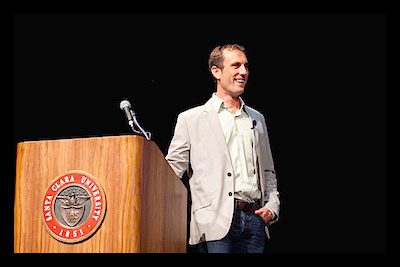
From August 14th to the 22nd, Santa Clara University will be hosting the 12th annual Global Social Benefit Institute (GSBI) Accelerator program. Each year, the GSBI Accelerator invites a group of well-established “social enterprises,” nonprofit organizations or for-profit businesses, that focus on addressing social and environmental issues. The organizations’ objective is to showcase their businesses to potential investors.
The 10-month program started in February, pairing one leader from each enterprise with start-up experienced Silicon Valley executives. These executives mentor the leaders on how to overcome business challenges like ‘scalability’—the ability to grow a business by reaching new clients and capacity to handle the growth, without a decline in service quality.
For six months, the organizations’ leaders and their mentor partners (two for each enterprise) work closely with GSBI staff who tutor and advise the enterprises in preparation for the investor showcase, which is being held on August 21st.
This year’s cohort of 16 enterprises is being touted as one of the best yet. They include several enterprises that are using new innovative technologies to help their target markets alleviate poverty. Among these are:
Buen Manejo del Campo, dba Sistema Biobolsa
Revolutionizing small-scale agriculture with ‘biodigester technology,’ which converts animal and organic waste into natural gas and organic fertilizer.
Eco-fuel Africa Limited
Empowering African communities using ‘green charcoal’—a cooking fuel made from converted, locally-sourced, municipal waste.
Ecofogão Ltda
Created to serve low-income markets with innovative, ecologically clean and efficient stoves that will replace woodstoves for daily cooking.
IkamvaYouth
Enabling young disadvantaged South Africans to educate themselves and each other with after-school tutoring three times a week.
iKure Techsoft Private Limited
A chain of rural health centers that are using innovative technology to ensure patients are receiving high quality, primary healthcare in their communities. They do so by affording community members access to doctors and medicine.
ITA Social Business Bangladesh Limited
Empowering women through networks of enterprises that create more employment opportunities and access to markets.
Komaza
An agro-forestry enterprise that provides African dry land farmers with training, maintenance and planting inputs “to cultivate a life-changing income for farmers, curb rampant deforestation and earn investor returns.”
Mali Biocarburant SA (MBSA)
The first company in West Africa to produce biodiesel, empowering farmers by making them shareholders in the company and helping develop local economies.
Medical Technology Transfer and Services (MTTS)
Developing, manufacturing and distributing intensive newborn healthcare devices, focused on the needs of low-resource countries.
One Earth Group Ltd. (Brand Name: One Earth Designs)
Collaborating with governments and corporations to deliver renewable energy solutions with their solar cooker designs, developed alongside nomads in the Himalayas. The organization helps combat fuel scarcity and air pollution.
The mentors are as equally impressive as these enterprises. The group includes venture capitalist and Netflix board member Time Haley, President of An Hour and A White Board Taia Ergueta, VP of Finance and Administration for Ion Torrent Jamie Kole and CEO of Officer Pie Digital INC John Orcutt.
One of the most impressive elements of the GSBI Accelerator program is that the mentors are as enriched by the experience as the mentees. Says Time Haley, “The obstacles that [the social entrepreneurs] have to overcome and the dedication required to succeed, compared to what we have here…the contrast is incredible. It’s pretty inspiring.”
In the coming weeks, the Borgen Project will feature several more articles on the GSBI Accelerator program, including spotlights on several of the entrepreneurs and comments from the investors about what brings them to the showcase. Stay tuned.
– Pedram Afshar
Sources: Santa Clara University, Business Wire
Photo: Flickr

Five Current Global Issues
In the 21 century, the world has made great strides in reducing poverty, eliminating diseases and improving the quality of life for all. However, this progress rests on shaky foundations. Current global issues threaten to undermine humanity’s attempts to better the world and damage all of society.
According to the Nautilus Institute for Security and Sustainability, global issues are those that potentially affect everyone on earth, not just large groups of people. Similarly, solutions to global issues require all people to cooperate in order to meaningfully change the status quo. Since they pose a fundamental risk to society as a whole, global issues require much attention.
Here are just five examples of current global issues. Many of them are interconnected, but any one of them could have serious consequences for everyone if left unchecked.
1. Terrorism
International terrorist organizations can cause conflict anywhere, thus terrorism is a global issue. The expansion of attacks by terrorists hurts many people in developing countries; according to the U.S. State Department, terrorist attacks killed over 11,000 and wounded 21,000 in 2012.
Terrorism also had wide-ranging economic impacts. Former U.S. Ambassador Francis Taylor found that global airline industries lost $15 billion and global insurance industries lost $50 billion in the wake of the 9/11 attacks. World governments will need to strengthen their relations and promote democratic principles to reduce terrorist threats.
2. Lack of International Labor Laws
Weak international labor laws are a global issue because they hurt workers in the developing world and the economies of developed nations. Laws must exist to protect workers’ rights while allowing multinational firms to do business. The World Bank urges countries to cooperate and strengthen labor laws to prevent abuses and ensure fair wages; at the same time, the laws must facilitate wealth creation. Without optimal rules, the world economy weakens and workers face terrible conditions.
3. Climate Change
Climate change affects all of earth’s environments and is thus a global issue. A report from the Organization for Economic Cooperation and Development (OECD) found that droughts and extreme weather would intensify globally, leading to poor crop yield, water shortages and even desertification. The worst-affected areas, Sub-Saharan Africa and South Asia, will have trouble adapting because per capita GDP is low; millions will be unable to grow or afford food and will starve.
As entire regions face food crises, global economic production becomes much lower, and nations have to care for hungry refugees that flee inhospitable conditions. To prevent the situation from becoming worse, the world must adopt more sustainable energy policies and waste management practices.
4. Antibiotic Resistance
Antibiotic resistance is another global issue that threatens the health of millions and the progress of modern medicine. In 2014, the World Health Organization (WHO) announced the discovery of drug-resistant E. coli, staph and pneumonia-causing viruses all over the world; it also found that 20 percent of previously treated tuberculosis cases were drug-resistant.
The emergence of antibiotic-resistant disease is extremely dangerous. Antibiotics that people use to treat serious infections will stop working and disease fatalities will increase. The global community will need to implement stronger restrictions on antibiotic use to curb drug resistance in deadly diseases.
5. Poverty
While many of the above problems exacerbate poverty in many world regions, poverty itself is a global issue because it leads to social problems that affect even the richest people. According to the research site Poverties.org, poverty leads to higher crime rates, more instances of substance abuse and greater susceptibility to infectious disease. This hurts economic productivity and can lead to instability. Poverty also is linked to terrorism. Consequently, the world must fight poverty to address other global issues.
The world’s current global issues are complex, interconnected problems that require concentrated action for systemic change. Any single global issue could become a crisis with huge economic and human costs. Only with strong international cooperation can the world solve global issues.
-Ted Rappleye
Sources: U.S. State Department 1, U.S. State Department 2, World Bank, OECD, WHO, Poverties, Nautilus Institute
Photo: Flickr
Hunger in The Gambia
The smallest country in continental Africa,The Gambia, is among the continent’s least developed and poorest nations. Over half of Gambians live on less than two dollars a day, which makes it very difficult to acquire adequate food provisions for themselves and for their families.
Making that quest even more difficult is the fact that The Gambia’s economy relies on agriculture, yet food production only accounts for 60 percent of the population’s estimated need. The government imports large amounts of food to meet the remaining need of its people, but an agricultural economy vulnerable to the effects of subpar harvests and unpredictable weather means that the government often cannot import enough food to meet 100 percent of the need.
The Gambia is surrounded on three sides by Senegal, thus the limited coastline lends to a lacking fishing industry. Because of a lack of fish processing and a selling of infrastructure, fish are typically sold to companies who have the capacity to keep them fresh and the facilities to sell them, rather than using the fish to feed the Gambian population.
However, the tourism and nut industries are growing in The Gambia, giving the country a bit more wealth with which to take care of its people. Unfortunately, rates of hunger remain high. In at least one of The Gambia’s five geographical regions, three-quarters of the population face the effects of severe malnutrition due to long-standing hunger.
International humanitarian efforts, such as those orchestrated by the United Nations’ World Food Programme, have been somewhat successful in working with the Gambian government to implement sustainable feeding programs.
By assessing what methods have been successful in other countries and modifying them to fit The Gambia’s unique needs, those who have established food aid in this country have created programs that have not only provided food to the hungry, but have also completely prevented hunger within some families.
What’s most important about food aid in The Gambia, though, is that humanitarian organizations have been careful to transfer their knowledge and to teach necessary skills to the Gambians themselves. If aid continues to be this sustainable and effective, hunger in The Gambia has potential to decline measurably.
– Elise L. Riley
Sources: World Food Programme, World Bank, All Africa
Photo: Action Aid
Erdogan Wins Election in Turkey
Turkey’s Prime Minister, Recep Tayyip Erdogan, won the presidential election on Aug. 10 — defeating rival Ekmeleddin Ihsangoglu with 52 percent of the votes and a difference of 13 points. Despite a December corruption investigation and massive protests last year, the leader has won his ninth consecutive election since coming to power in the early 2000’s. His time in office has been marked with considerable economic growth and questionable regard for freedom of speech and transparency.
“Today is the day we open the doors to a new beginning, the day we establish a new Turkey,” Erdogan vowed in a victory speech that referred often to new cooperation opportunities among old political foes.
But one concern the opposition has already voiced is that the Turkish presidency has traditionally been a ceremonial office with limited power, and Erdogan has already promised to be an active president. Should the Justice and Development Part, to which Erdogan belongs, regain control of Parliament, a new constitution could emerge with increased presidential powers.
Critics, who often compare Erdogan to Russian President Vladimir Putin, see this proposed expansion of power as another example of Erdogan’s authoritarianism. His opposition would suggest his politically active presidency would conflict with Turkish law mandating the president act impartially without partisanship.
In May 2013, 3.5 million Turks partook in demonstrations throughout the country, protesting the governments limits on civil rights and environmental issues stemming from construction projects. Police reacted with tear gas and water guns in the Gezi Park protests, for example.
Yet, as evidenced by his election, Erdogan remains popular among a significant portion of the Turkish people. This popularity is largely due to the economic growth Turkey has experienced with Erdogan’s leadership. The Turkish middle class grew twenty percent from 2002 to 2011 and the Gross Domestic Product per capita rose to almost US$11,000 – freeing millions of Turks from the clutches of poverty.
The Turkish economy grew steadily since Erdogan’s first term with only a slight setback in the wake of the Global Financial Crisis. Erdogan, with sharia law’s ban on usury in mind, enacted policies centered on lowering interest rates.
The lower rates have fostered consumer spending that led to immense growth, but have also, according to certain economists, risked an economic bubble as this spending requires the Turkish population to increase its debt. The growth also depends on a steady influx of foreign capital, which has faltered recently as investors have begun to doubt whether Turkey can sustain its economic growth.
Analysts consider Erdogan’s future popularity at risk as younger generations, accustomed to a steadily improving national economy, question his leadership in a slowing economy. While Erdogan promises to grow the Turkish economy from the 18th to the tenth largest in the world within the decade, observers contend his power will peak with economic growth.
Still, Erdogan remains the most powerful man in Turkey, with the a positive economic track-record and widespread popular support. To balance power and democracy while addressing faults in the economy, will be the new President’s challenge for the world to watch.
– Erica Lignell
Sources: Le Monde, New York Times, TIME, Forbes, Foreign Policy
Photo: En.Qantara
Aquaculture, Poverty and Food Security
For over 40,000 years, humans have developed techniques to breed, rear and harvest animals in water environments. Today, the process is called aquaculture, but only until recently have researchers been able to find the link between aquaculture and poverty reduction.
In a recent study published in the peer-reviewed journal World Development, researchers looked at Bangladeshi fisheries in the period between 2000 and 2010 and found that the growth of aquaculture led to greater consumption among the extremely and moderately poor in Bangladesh.
The “expansion of commercial aquaculture has tended to stabilize or reduce the price of fish, which has become relatively more affordable as incomes have risen,” the study found.
In those ten years, Bangladesh saw a substantial reduction in poverty. Those living below the upper poverty line shrunk from 48.9 percent to 31.9 percent, and those living in extreme poverty decreased from 34.3 percent to 17.6 percent, according to the study. Rising wage rates during this time led to poverty reduction and the increased aquaculture production led to cheaper fish prices.
For Bangladesh, combating food insecurity and malnutrition is remarkably important. The country ranks poorly for food and nutrition security and malnutrition is estimated to cost the economy $1 billion annually. Changes in the supply and consumption of fish, the study argues, have “major public health implications.”
More and more households were able to afford the consumption of fish and the added nutritional value helped make households more food secure. Fish are an excellent source of protein, fatty acids and vital micronutrients that maintain and support health.
The success of Bangladeshi fisheries in alleviating poverty over the past decade brings greater attention to the role of aquaculture in helping the poor meet their nutritional needs. Farming fish efficiently means the cost of fish is cheaper and stable fish prices mean the poor are better able to meet their nutritional needs.
Advancing aquaculture techniques in low-income countries is important insofar as it can help the poor meet basic needs. Bangladesh has had tremendous success in recent years reducing the share of its citizens that live in poverty, but governments can learn from the country’s success by adopting policies that favor the expansion of capture fisheries to most effectively meet the needs of the poor.
– Joseph McAdams
Sources: Science Direct, Daily Link, National Oceanic and Atmospheric Administration, World Fish Center
Photo: Banglabox
Sustainable Agriculture Basics
Most organizations who train farmers in impoverished countries champion ‘sustainable agriculture,’ and who wouldn’t? Self-explanatory though it may sound, ‘sustainable agriculture’ encompasses a variety of techniques that benefit people economically and physically while still protecting the environment. Here are some sustainable agriculture basics:
1. Crop Rotation
Crop rotation is one of the earliest methods of sustainable farming, and has been employed since the mid-19th century. A farmer who plants fields of corn year after year eventually depletes his soil of essential nutrients. Because these are required for healthy corn to grow, the farmer must replenish his fields with fertilizers that contain elements like nitrogen, potassium and phosphorus.
This is a problem for farmers in countries without developed infrastructures. Because transporting the fertilizer becomes so labor intensive, the price skyrockets.
Crop rotation is the natural solution to this particular conundrum. Studies have shown that corn grown biennially, with soybeans grown in the same fields on the off years, yields 5 to 20 percent more harvest.
But it’s not just soil health that crop rotation affects. It is an essential part of another technique called ‘Integrated pest management.’
2. Integrated Pest Management
The same crop planted year after year provides a reliable food source for insects that prey upon it. Replacing that food source with another breaks down the reproductive cycle of the insect population, ultimately controlling the insects’ numbers.
Integrated Pest Management also advocates the reintroduction of insects’ natural predators. Bats, birds and spiders all play a role in managing pests, though they are often killed off by insecticides.
3. Water Conservation
One of the most important aspects of sustainable farming is water conservation. Nearly 70 percent of the world’s water consumption goes to the agriculture sector. This amount can be minimized by ensuring that irrigation systems are in order and effective and by preventing water evaporation using cover crops and mulch.
The greatest way to conserve water is to plant crops in regions similar to that of their native climates. Transporting large amounts of water to sustain non-native plants is, at least, uneconomical. It is commonly practiced in the industry, nonetheless. In Spain, ‘summer crops’ like tomatoes and melons are grown during the winter at the cost of terribly water-intensive irrigation systems.
On the other hand, many varieties of amaranth and barley are drought-resistant; they thrive in areas with very little rain.
4. Weeds
Weeds are perhaps the obstacle sustainable farmers can say the least about. On small farms, some advocate removing them by hand. On larger farms that is implausible. Other people propose burning fields after harvest to prevent weeds from spreading seeds. This, though effective, is a source of pollution and a potential health hazard to farmhands.
5. Sustainable is not Organic
A sustainable farm is not always an organic farm. Often, the only way to deal with pests, weeds and the like is to use commercial products. In practice, sustainable farming seeks to make farms healthier for people and their environment. They are not meant to bankrupt the farmer in the pursuit of a totally ‘green’ enterprise, nor are they meant to be advertised by those who make minimal effort to be sustainable.
Sustainable farming is an endeavor requiring moderation, effort and strategy, but the benefits are worth it.
– Olivia Kostreva
Sources: Discovery, National Geographic, Agriculture Sustainability Institute
Photo: The Atlantic
Poverty in Dakar
On a hill overlooking the Senegalese capital of Dakar stand a bronze man, woman and child. The statue, called the “African Renaissance Monument” was commissioned by then-President Abdoulaye Wade in 2006 both as a potential tourist destination and as a symbol of liberty and learning.
It was controversial. Members of the rather conservative community found it at best unrepresentative of their culture, at worst, a violation of the Muslim restrictions on depicting the human form. Many considered it a complete waste of money. The monument cost $27 million, a sum sorely needed in Dakar’s city streets.
As the capital, Dakar is one of Senegal’s richer cities. It houses the National Assembly of Senegal, as well as the Presidential Palace. It is a center for West African financial institutions and NGOs. Half of its residents have never experienced poverty, but the third of Dakar’s population living in chronic poverty is concentrated in the slums.
Families in the city are relatively large. A World Bank survey of nearly 2,000 households determined an average household size of 9.6.
Though slum conditions could never be called ‘good,’ Dakar’s poorer areas are relatively so.
Most residents, over 90 percent, live in homes with permanent walls built of brick, stone or concrete. The majority of people own their houses and about 76 percent of people have access to running water and electricity.
Garbage and sewage disposal services are available for most residents, and access to telecommunications has improved greatly over the past years. Now as many as half of the households in Dakar’s slums have a mobile phone.
The fact that there is so little difference in the living condition’s of the slum’s poor and non-poor is an amazing accomplishment. But the differences that remain are crippling to many.
There are very few roads and minimal public transportation in Dakar. Less than half of the people there report feeling safe.
According to the World Bank report, six percent of the labor force is unemployed. This would be remarkable if more than eight percent of adults in Dakar were regularly employed. Small businesses are the greatest source of income for many who live in Dakar, a reported quarter of whom report running microenterprises.
A strong correlation exists between poverty in Dakar and a lack of education. While over half of people have access to public education, only one third complete elementary schooling and very few finish a secondary education. In Senegal, 84 percent of people living in chronic poverty have not had schooling. Education may be the key to their advancement.
– Olivia Kostreva
Sources: NPR, World Bank 1, World Bank 2, The Guardian
FAO: World Food Prices Falling
Global food prices fell to a six-month low in July, according to the United Nations Food and Agriculture Organization.
The FAO’s Food Price Index – which measures price shifts according to the average price of a basket of over 50 food products – measured the average international price of food at 2.1 percent lower than in June. Current levels are the lowest they’ve been since January 2014 and 1.7 percent lower than in July 2013. While global meat prices rose due to higher demand in Asia, prices for grains, oil-seeds and dairy fell. The expected crop production of the United States and South American surpluses drove down the value of soy oil.
“The lingering decline of food prices since March reflects much better expectations over supplies in the current and forthcoming seasons, especially for cereals and oils, a situation that is expected to facilitate rebuilding of world stocks,” says top FAO economist Concepcion Calpe.
The global average price of cereals has dropped 36.9 points since July 2013 while vegetable oils dropped 5.6 points and dairy 17.5 points during the same time period. Sugar and meat prices have risen, however, by 20.1 points and 25.4 points, respectively.
The release of this data comes as Russia has declared a year-long ban on Western food imports in retaliation for Western sanctions against Russia over the Ukrainian conflict. Russia imports 40 percent of its food, and prices within the Federation will likely rise without food imports from the U.S., the European Union and Norway.
Prices in the EU could lower as the ban will decrease overall demand.Yet Calpe does not believe the ban will significantly affect global food prices, saying, “The big losers in this case would be more the consumers in Russia themselves because it means they would pay higher prices. It would increase prices internally in the Russian Federation, but for the rest of the world it would tend to depress the quotations.”
The conflict in Ukraine brought a brief spike in global food prices in March, but experts remain skeptical that the fighting could affect food prices to the extent of the 2008 world food crisis. From 2005 to 2008, global food prices increased by 83 percent – a drastic change that rendered 40,000 million more people unable to afford food. Tens of thousands of citizens found themselves suddenly unable to afford the new prices, demonstrated throughout sub-Saharan Africa, Egypt and parts of Asia.
Economists have since blamed the crisis on decreased levels of production, higher demand from emerging economies, higher energy costs and a new demand for safer agricultural stocks in the wake of the housing bubble.
Still, the decrease in prices comes as good news to those in developing nations who spend a significant portion of their income on food. As the FAO points out, 842 million people worldwide still suffer from chronic hunger, but the organization continues to strive “…to make sure people have regular access to enough high-quality food to lead active, healthy lives.”
– Erica Lignell
Sources: UN 1, Bloomberg, FAO 1, UNCTAD, FAO 2, The Guardian, FAO 3
Photo: Business Insider
Narendra Modi Stands Up for Women’s Rights
During a speech on India’s Independence Day, India’s recently elected Prime Minister, Narendra Modi, called for gender equality.
In the past year, India has been plagued with a string of highly publicized gang rapes and violence towards women. As the country has been criticized by domestic and foreign critics for its safety and equality, Modi’s comments come at an unsurprising time. His words reveal the legacy Modi wants to create during his term as India’s Prime Minister. Modi is not particularly well known for women’s rights advocacy, but he has begun to align himself with activism groups recently.
Tackling long-standing patriarchal attitudes, Modi has encouraged parents to raise their sons and daughters alike.
Additionally, directing his attention specifically towards boys, Modi encourages families to raise their sons to respect women.
Though Modi’s advice is promising, the attitudes of many generations will not change after one speech.
Compared to the rest of the world, India’s gender gap is among the largest. With many sexual assault cases being improperly handled and survivors being blamed, attitudes toward violence have reflected India’s patriarchal culture.
Modi has described the violence as “India’s shame,” and has underscored the double standard of female and male children. Parents rarely scrutinize their sons to the same extent as they do to their daughters. While the law convicts the criminals, Indian society can help prevent the attacks.
The hope of women’s rights advocates and sexual assault survivors is that Modi will pursue justice for women in India. With his first Independence Day speech including comment on the struggle for women’s rights, it will be interesting to see how Modi rectifies the situation.
– Kristin Ronzi
Sources: India Times, The Guardian
Photo: Forbes
GSBI Accelerator: Meet the Enterprises
From August 14th to the 22nd, Santa Clara University will be hosting the 12th annual Global Social Benefit Institute (GSBI) Accelerator program. Each year, the GSBI Accelerator invites a group of well-established “social enterprises,” nonprofit organizations or for-profit businesses, that focus on addressing social and environmental issues. The organizations’ objective is to showcase their businesses to potential investors.
The 10-month program started in February, pairing one leader from each enterprise with start-up experienced Silicon Valley executives. These executives mentor the leaders on how to overcome business challenges like ‘scalability’—the ability to grow a business by reaching new clients and capacity to handle the growth, without a decline in service quality.
For six months, the organizations’ leaders and their mentor partners (two for each enterprise) work closely with GSBI staff who tutor and advise the enterprises in preparation for the investor showcase, which is being held on August 21st.
This year’s cohort of 16 enterprises is being touted as one of the best yet. They include several enterprises that are using new innovative technologies to help their target markets alleviate poverty. Among these are:
Buen Manejo del Campo, dba Sistema Biobolsa
Revolutionizing small-scale agriculture with ‘biodigester technology,’ which converts animal and organic waste into natural gas and organic fertilizer.
Eco-fuel Africa Limited
Empowering African communities using ‘green charcoal’—a cooking fuel made from converted, locally-sourced, municipal waste.
Ecofogão Ltda
Created to serve low-income markets with innovative, ecologically clean and efficient stoves that will replace woodstoves for daily cooking.
IkamvaYouth
Enabling young disadvantaged South Africans to educate themselves and each other with after-school tutoring three times a week.
iKure Techsoft Private Limited
A chain of rural health centers that are using innovative technology to ensure patients are receiving high quality, primary healthcare in their communities. They do so by affording community members access to doctors and medicine.
ITA Social Business Bangladesh Limited
Empowering women through networks of enterprises that create more employment opportunities and access to markets.
Komaza
An agro-forestry enterprise that provides African dry land farmers with training, maintenance and planting inputs “to cultivate a life-changing income for farmers, curb rampant deforestation and earn investor returns.”
Mali Biocarburant SA (MBSA)
The first company in West Africa to produce biodiesel, empowering farmers by making them shareholders in the company and helping develop local economies.
Medical Technology Transfer and Services (MTTS)
Developing, manufacturing and distributing intensive newborn healthcare devices, focused on the needs of low-resource countries.
One Earth Group Ltd. (Brand Name: One Earth Designs)
Collaborating with governments and corporations to deliver renewable energy solutions with their solar cooker designs, developed alongside nomads in the Himalayas. The organization helps combat fuel scarcity and air pollution.
The mentors are as equally impressive as these enterprises. The group includes venture capitalist and Netflix board member Time Haley, President of An Hour and A White Board Taia Ergueta, VP of Finance and Administration for Ion Torrent Jamie Kole and CEO of Officer Pie Digital INC John Orcutt.
One of the most impressive elements of the GSBI Accelerator program is that the mentors are as enriched by the experience as the mentees. Says Time Haley, “The obstacles that [the social entrepreneurs] have to overcome and the dedication required to succeed, compared to what we have here…the contrast is incredible. It’s pretty inspiring.”
In the coming weeks, the Borgen Project will feature several more articles on the GSBI Accelerator program, including spotlights on several of the entrepreneurs and comments from the investors about what brings them to the showcase. Stay tuned.
– Pedram Afshar
Sources: Santa Clara University, Business Wire
Photo: Flickr
Universities Fighting World Hunger
By 2050, nine billion people in this world will be living in hunger. Universities Fighting World Hunger is dedicated to ending the current poverty situation and preventing it from recurring in the future.
The organization was first established in 2004, when Auburn University was invited to participate in a campaign to mobilize students to fight against hunger, along with the U.N.’s World Food Program , the world’s largest humanity agency. In its first ten years, UFWH has been established as an organization that integrates multi-disciplinary academic with grassroots activities, spread out over 300 campuses.
The following are some of the major activities UFWH is involved in:
· Raising hunger awareness and consciousness.
· Advocating for and teaching students how to get more involved into the campaign.
· Providing a Hunger Studies Minor and other research opportunities in the university
· Partnering with major humanity organizations such as WFP and Food and Agriculture Organization (FAO).
Universities provide breeding grounds for innovations. One of the ideas of the organization is bringing people from all disciplines together to solve the hunger problem. UFWH holds an annual summit, inviting people from all areas to discuss cutting-edging research and solutions.
In addition to its convocations, UFWH has launched an international campaign, called “Why Care.” A group of students are called to ask themselves and the peers around them why they should care about global hunger. The question pushes the responders to develop personal and ingenuous answers. The purpose of this campaign is to make people realize that poverty is not far away from us, and the first step in solving it is saying “we actually care.”
– Jing Xu
Sources: Auburn University 1, Auburn University: War on Hunger 1, Auburn University: War on Hunger 2, Auburn University: War on Hunger 3, Universities Fighting World Hunger
Photo: Auburn