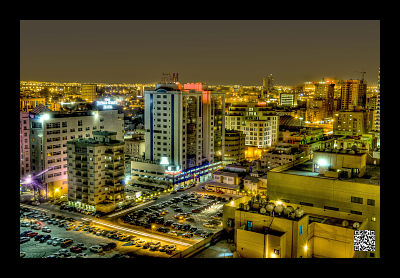
Generations of business have been driven by one bottom line: profit. Cash at any cost, be it man or nature. Based in Bahrain, 3BL, or Triple Bottom Line, Associates has deemed this to be an unsustainable business model. 3BL advises for many to consider another business model that takes into account three bottom lines: people, place and profit.
3BL Associates refer to itself as “Bahrain’s first social impact and sustainability consultancy and think-do-tank.” It works with innovative companies that seek to grow harmoniously with the people within the MENA region. The idea of a triple bottom line was coined by academic John Elkington, who proposed “that business goals are inextricably linked to the societies and environment in which they operate, and that business practices utilized to achieve short-term economic gain but fail to consider social and environmental impacts are ultimately unsustainable.”
Established in 2010, 3BL now teaches these business principles to businesses large and small looking to “do well, do good.” They offer services such as sustainability audit and needs analysis, benchmarking and research as well as smart partnering. 3BL advocates for Corporate Social Responsibility.
Maintaining good CSR is growing a company while keeping in mind the social equity: Is it good for the people of the area or are you abusing the locals? Good CSR takes into account environmental sustainability: Does this company deplete the natural resources of the area or does it replenish them after use? This capitalization of sustainability is “an opportunity to generate social, environmental and economic prosperity, in tandem.”
3BL Associates took its business agenda to the next level when it published its own findings on Bahrain sustainability in a report entitled Bahrain Responsible Business Survey. In the survey the respondents were asked a variety of questions, in efforts to determine their perceptions of healthy CSR and what the role the government should be in keeping companies accountable.
It was found that 87 percent of respondents understood CSR to be “community engagement.” It was found that CSR tactics such as community engagement, employee wellness, transparency, corporate governance, health, gender equality and diversity were practiced already, but only in about one-third of the respondent’s organizations. The study also found that only 55 percent of respondents cared whether their organizations were working environmentally responsibly. Only 26 percent of the organizations in Bahrain currently meet these standards.
3BL Associates co-founder and managing director Leena Al Olaimy said, “CSR and sustainability have far more value than just “doing good,” and have the potential to simultaneously contribute to national socio-economic development, and to raise Bahrain’s rankings on a number of indices such as the Global Competitiveness Index.”
The report, compiled by Al Olaimy and her associates, also revealed popular sentiments when it found that 80 percent thought the government should regulate CSR practices. In addition, 95 percent felt there should be government incentives for those organizations implementing CSR, while 83 percent felt there should be some kind of government subsidy for the programs.
3BL Associates has only been in business for four years, but has already gained the trust of its people. Khamis Al Muqla, honorary chairman of 3BL Associates, further noted, “The intersection of social and environmental issues in business has become an international topic of concern for corporations and countries alike.”
– Frederick Wood II
Sources: 3BL, AME Info, CSR Middle East
Photo: Flickr

Nigeria’s Economic Growth a “Hot Prospect”
Despite the latest focus on the Ebola virus in West Africa, there has been a major growth in the economy and middle class, according to Nigeria’s finance minister, Ngozi Okonjo-Iweala. It was only two decades ago that Africa was dubbed as the world’s economic “basket case,” and since then the growth of the middle class has almost tripled.
In a speech given by Okonjo-Iweala, she said that the country’s economic growing has been increasing at an average of 7 percent per annum and that this is due to the strong influence of growth that the non-oil sectors have. She also said that Nigeria should not be seen as just an oil and gas economy now, but rather a strong and diverse economy.
Things that have helped grow the economy are building essential administrative functions, like computerized land registries, that permit the sale of a plot of land within a week rather than what it was prior, months or even years. New highways have been implemented for trade, which has helped by cutting down travel time between Benin City and Lagos, approximately cutting six hours off. Another big factor of the economic growth goes to a developing national program that offers mortgages, and this helps by boosting the housing sector, which in turn gives millions of Nigerians a stable home and investment for the future.
According to Okonjo-Iweala, there are still many obstacles that Nigeria has to overcome, and one of those is that the governance is still too corrupt, which includes the theft of the oil produced by the country. Another challenge blocking the growth is that there are serious security issues due to the militant Islamist militia that continues to take over land in northeastern Nigeria.
World Bank has proved through research that improvement in agriculture is three times more impactful in ending poverty than any other thing. With that being said, Anglo-Dutch giant Unilever as well as Minnesota-based Cargill have both financed developments to process Nigeria’s cassava crop. Nigeria is home to 173.6 million people with a GDP of $521.8 billion, Okonjo-Iweala believes that it has become an “economic powerhouse” and has achieved a level that should be a member of things like the G20.
– Brooke Smith
Sources: Atlantic Council, World Bank
Photo: Flickr
Food Shortages in Somalia
Three years ago, Somali residents experienced one of the worst famines in history. The devastating epidemic resulted in over a quarter of a million deaths across the country. With severe droughts currently plaguing the nation, officials are concerned that more lives will be lost as the country spirals back into famine.
Al-Shabab, a militant terrorist group based in Somalia, has been preventing aid and relief services from reaching those in need. The group has blocked roadways, prohibiting standard trade from reaching millions of people. In addition, extreme droughts have wiped out a great percentage of livestock and local crops. In some areas, including the province of Bakool, residents state that it hasn’t rained since last October.
“Lack of food and water is our biggest challenge now,” says Bakool Commissioner, Mohamed Abdi Mohamed. “Food is too expensive even for those with money. The town is under a blockade.”
Since al-Shabab began erecting blockades, prices for food and other basic necessities have more than tripled. This has caused many to plunge further into poverty and over a million people have been forced to leave their homes. A large number of people have set out in search of food and water themselves, though, with the continuous drought, many have died along the way. Others have transferred to refugee camps where they often receive little to no assistance.
Rebels have intercepted food deliveries intended for thousands of starving people in Somalia. They are currently keeping food products locked away in warehouses in the capital city of Mogadishu. Now, the only way that relief services are able to reach people in these areas is through deliveries of airlifted goods. Though this form of distribution is costly, many international organizations are doing their best to continue relief services.
An estimated 1.6 billion dollars is needed to save the 2.9 million lives at stake. As of yet, only half of this amount as been reached. The UN is currently urging international aid groups and individuals to raise awareness of the situation and to help in funding relief efforts.
– Meagan Douches
Sources: The Guardian, The Huffington Post, UN
Photo: Flickr
Ending Global Poverty By 2030
Videos and pictures of malnourished children play on TV screens in between reality TV shows and donation envelopes arrive in the mail, sometimes to be barely glanced at. A supporter of The Global Poverty Movement said, “Everything that has a beginning has an end,” but what is the world doing to end global poverty?
Two people who are aware of and trying to combat this issue are Hugh Evans and Simon Moss. These two men erected The Global Poverty Movement in 2008 during a “High Level meeting on Millennium Development Goals” and within a year launched in Australia. It is their hope that through this project, global poverty can be eradicated by 2030 through the use of government changes and business and consumer action, along with developing a movement that will inspire and educate people to move to action to affect change.
Since landing in England, New Zealand and the United States, the Project has increased in numbers by the thousands and secured funding for their initiatives, such as Live Below the Line, The End of Polio and Global Citizen, to eradicate poverty by the billions.
The Global Poverty Project has made use of multimedia to reach those all over the world in support of their campaign of ending global poverty through video presentations to recruiting celebrities such as Hugh Jackman to enlist in the cause to free ticketed concerts to spread their mission.
By using these methods, people of all ages—about 250,000 so far—are becoming members of Global Citizen, becoming more conscious of the less fortunate and moving to action by simply using the Internet.
In late September, the organization hosted their third annual Global Citizen Festival with popular singers Jay Z, Carrie Underwood, fun. and The Roots, to name a few. In order to obtain tickets, the organization created an incentive program; sign petitions, email world leaders and share content on social media. By doing so, “fans [became] active participants in campaigning for positive change.” These campaigners earned points to put in a raffle to win tickets to the concert.
With the help of activists lobbying for change, a change will come, even if it’s through sharing an article online or signing a name to a petition because like one Global Citizen said, “What we do in one place effects someone on the other side of the world.”
– Kori Withers
Sources: Global Poverty Project, Global Poverty Project 2, Global Poverty Project 3
Photo: UN Seattle
Malnutrition in the Solomon Islands
The Solomon Islands consists of a scattered archipelago located in Oceania, just east of Papua New Guinea and northeast of Australia. Based on the Human Development Index, the country ranks 143 out of 187, meaning that the standard of living is extremely low in the country.
A majority of the population lives in rural areas and relies heavily on subsistence gardens and the sea to supply food. Recently, there has been increased access to imported foods high in carbohydrates and fat, consequently making the islanders’ diet less nutritious. Additionally, due to an increase in global food prices, preferred items such as canned tuna and fresh marine fish are becoming harder to come by.
The global financial crisis beginning in 2007 created a heavy burden for Solomon islanders. Food prices increased by 53 percentage points. Staple foods such as rice, noodles and flour were affected the most by the increases. Islanders living in urban areas have been worse off than their rural counterparts since they do not have the land to grow their own crops.
Children under the age of five are greatly affected by malnutrition in the Solomon Islands. About one-third of kids are stunted and roughly five percent are emaciated.
Since more children are lower in height for their age group compared to lower in weight for their height group, it is evident that this young population attains their daily energy requirements, but that the foods consumed are lacking in nutritional value. Stunting is a result of chronic malnutrition and inadequate food intake. There is a clear deficiency in essential nutrients and vitamins that leads to slower development and reduced growth.
Malnutrition in the Solomon Islands also precipitates many infectious diseases in the young population. In a Demographic and Health Survey, it was found that 21 percent of diarrheal episodes were among children ranging from 12 months to 23 months of age. There is also a problem of tuberculosis and malaria among children, although the numbers have been decreasing over the years.
Malnutrition is persistent, slow acting and leads to harm and death for children on a large scale. It has serious implications on a child’s mental and physical development.
Local government officials need to promote behavioral changes and empower caregivers to take responsibility for the nutritional rehabilitation of children. By maintaining the quality and quantity of foods a person eats and ensuring adequate healthcare, the threat of malnutrition can be reduced and eventually eliminated.
– Leeda Jewayni
Sources: World Fish Center, WHO
Photo: The Travel Word
Caterpillar Foundation Donations
Founded in 1952, Caterpillar Foundation dedicates itself to transforming lives within the international communities where Caterpillar works. It has been the champion for programs that support education, environment and emergency relief.
The program has donated over 550 million dollars to organizations that put poverty onto the path of prosperity “by investing in those proven to yield the best results – women and girls.” Last year the foundation committed itself to a three year 29.2 million dollar commitment. Partnering with Opportunity International the joint venture looks to service 16.7 million people across Asia, Africa and Latin America.
The Caterpillar Foundation’s commitments will be leveraged through Opportunity International via microfinance loans, savings and financial training. Due to Caterpillar’s strong commitment to women and girls, most of the money will be financed to women, or groups of women, looking to form working relationships.
As of August 2014, Caterpillar Foundation announced the allocation of an additional 11 million dollars to help with Africa’s water and energy needs. Five million dollars have been distributed to help programs that address public policy needs and lack of access to energy. Five million dollars will be used to extend an already existing water line in Tanzania and Ethiopia. The last million will help teach women and girls about the dangers of traditional cookstoves and the benefits of adopting clean cooking solutions.
Most recently Caterpillar has committed itself to another generous contribution of 2.5 million dollars to The Poverty Project. This nonprofit organization has received wide acclaim since the implementation of its new strategy unveiled in 2012. Global Citizen is an online platform that serves as the basis for all the work performed by the registered Global Citizens. There are more than 250,000 global citizens that have partaken in 1.75 million actions that have contributed to more than 35 campaign victories and announcements.
The Poverty Project has since released a new strategy as of January 1 of this year. The strategy focuses on ending extreme poverty by 2030. With its announcement of a new vision, The Poverty Project has also put forth a new theory of change and an updated framework. These proposals are all designed to create a movement of unstoppable Global Citizens.
This dynamic and effective strategy is what caught the eye of the Caterpillar Foundation. Since the three main goals of this foundation are education, environment and emergency relief, the money given to The Global Poverty Project has all been earmarked for specific projects.
The Global Poverty Project has determined that universal sanitation brought into impoverished areas will increase the chances for women to receive an education, get a job or run a small business. This is where the bulk of the money will go. It will also be used to put restrooms inside homes and provide them with running water. The remainder of the money will be used to help educate the 31 million girls who currently do not attend school around the world.
– Frederick Wood II
Sources: Peoria Public Radio, Caterpillar, Global Poverty, Peoria Public Radio 2
Photo: Urban Times
Domestic Violence on a Global Scale
October is Domestic Violence Awareness Month. According to the U.S. Department of Justice, 25 percent of women and 8 percent of men have been raped and/or physically assaulted by a spouse, friend or acquaintance. This means that “each year about 1.3 million women and 835,000 men are physically assaulted by an intimate partner.”This issue is severely under-recognized. The National Association of Social Workers does its part to both prevent and find solutions for domestic violence.
Social workers are directly involved with victims, whether it be through counseling individuals, aiding in the judicial process or finding new homes for those abused. The issue of domestic violence exists outside of the U.S. There are countless foundations all over the world aimed at providing a support system to those affected by domestic violence. For example, the Global Foundation to Eliminate Global Violence (GFEGV) is a nonprofit aimed to both eliminate domestic violence and to support those who have already been claimed as a sufferer. Trying to escape the throngs of violence can be the hardest part for most victims, who may either rely on their abuser for financial stability or may have emotional ties to them. Having the courage to escape can often result in not only loneliness, but also poverty. According to the GFEGV’s website, the annual cost of health-related domestic violence issues in the U.K. is $23 billion. In the U.K., one in four women will be abused, while men have a one in six risk.World Bank data reports that “women aged 15-44 are more at risk from rape and domestic violence than from cancer, car accidents, war and malaria.”Here are some quick facts from the U.N.’s UNITE website about domestic violence:
The dowry-related murders mentioned above involve the murdering of a new wife, or wife-to-be, if she fails to meet the dowry requirements of her husband’s family. It is a practice that occurs in various cultures worldwide.
Donating money to organizations and becoming educated is important to improving and ultimately eliminating domestic violence worldwide.
– Kathleen Lee
Sources: National Association of Social Workers, EDV, UNiTE
Photo: Trade Arabia
IBM’s Solar Sunflower Unveiled
IBM has worked with Swiss company Airlight Energy to create an advanced solar electricity generator called the High Concentration PhotoVoltaic Thermal (HCPVT) system. The prototype was officially unveiled in Zurich in September 2014.
The system looks like a solar sunflower, shooting 33 feet into the air and topped off with a massive dish consisting of 36 wafer-thin aluminum mirrors and a lattice of tubes carrying coolant throughout the device. What is especially notable about the system is that not only can it produce electricity, but it can also desalinate water for sanitation and drinking purposes.
Featuring an advanced sun tracking system that angles the dish to optimize its solar capacity and an effective hot-water cooling system, the device can convert up to 80 percent of the sun’s radiation into electricity. Each chip produces up to 57 watts and each generator about 12 kilowatts of electricity, up to 20 kilowatts on a sunny day; enough energy to supply numerous homes. In comparison, typical flat panel photovoltaic solar systems, also known as solar panels, have conversion efficiency ratings of only 15 to 20 percent.
Currently approximately 1.3 billion people lack access to electricity and while 2.5 billion people have no access to proper sanitation. What is even more alarming is that the number of people who lack access to proper sanitation is estimated to increase by nine percent each year.
IBM’s solar sunflower can combat both issues by making electricity while also providing clean, drinkable water. The cooling system is particularly useful for the desalination of water. The device utilizes hot water in combination with the desalinators to boil salt water and distill the liquid into potable water. As such, an installation featuring several generators is estimated to be able to provide enough desalinated water to supply an entire town.
Areas of interest for the device include southern Europe, Africa, the Middle East, the Southwestern part of North America, South America, Japan and Australia. In addition, the system could be used at remote hospitals and medical facilities, and even for commercial purposes such as for hotels, holiday resorts and shopping centers.
Designed to keeps costs low, manufacturing costs will be a third of the cost for similar current solar converters and, because many of the materials will be sourced locally, the device can provide work for local communities. The device is projected to be released by 2017. IBM has announced that it will install the first two devices for free in 2016 and has asked for towns around the globe to submit their names for consideration.
– William Ying
Sources: IBM, The Guardian, Forbes, Computerworld NewScientist
Photo: Flickr
3BL Associates: Sustaining People, Places and Profits
Generations of business have been driven by one bottom line: profit. Cash at any cost, be it man or nature. Based in Bahrain, 3BL, or Triple Bottom Line, Associates has deemed this to be an unsustainable business model. 3BL advises for many to consider another business model that takes into account three bottom lines: people, place and profit.
3BL Associates refer to itself as “Bahrain’s first social impact and sustainability consultancy and think-do-tank.” It works with innovative companies that seek to grow harmoniously with the people within the MENA region. The idea of a triple bottom line was coined by academic John Elkington, who proposed “that business goals are inextricably linked to the societies and environment in which they operate, and that business practices utilized to achieve short-term economic gain but fail to consider social and environmental impacts are ultimately unsustainable.”
Established in 2010, 3BL now teaches these business principles to businesses large and small looking to “do well, do good.” They offer services such as sustainability audit and needs analysis, benchmarking and research as well as smart partnering. 3BL advocates for Corporate Social Responsibility.
Maintaining good CSR is growing a company while keeping in mind the social equity: Is it good for the people of the area or are you abusing the locals? Good CSR takes into account environmental sustainability: Does this company deplete the natural resources of the area or does it replenish them after use? This capitalization of sustainability is “an opportunity to generate social, environmental and economic prosperity, in tandem.”
3BL Associates took its business agenda to the next level when it published its own findings on Bahrain sustainability in a report entitled Bahrain Responsible Business Survey. In the survey the respondents were asked a variety of questions, in efforts to determine their perceptions of healthy CSR and what the role the government should be in keeping companies accountable.
It was found that 87 percent of respondents understood CSR to be “community engagement.” It was found that CSR tactics such as community engagement, employee wellness, transparency, corporate governance, health, gender equality and diversity were practiced already, but only in about one-third of the respondent’s organizations. The study also found that only 55 percent of respondents cared whether their organizations were working environmentally responsibly. Only 26 percent of the organizations in Bahrain currently meet these standards.
3BL Associates co-founder and managing director Leena Al Olaimy said, “CSR and sustainability have far more value than just “doing good,” and have the potential to simultaneously contribute to national socio-economic development, and to raise Bahrain’s rankings on a number of indices such as the Global Competitiveness Index.”
The report, compiled by Al Olaimy and her associates, also revealed popular sentiments when it found that 80 percent thought the government should regulate CSR practices. In addition, 95 percent felt there should be government incentives for those organizations implementing CSR, while 83 percent felt there should be some kind of government subsidy for the programs.
3BL Associates has only been in business for four years, but has already gained the trust of its people. Khamis Al Muqla, honorary chairman of 3BL Associates, further noted, “The intersection of social and environmental issues in business has become an international topic of concern for corporations and countries alike.”
– Frederick Wood II
Sources: 3BL, AME Info, CSR Middle East
Photo: Flickr
Romanian Roma Children
Often referred to as travellers or gypsies, the Romani or Roma, people constitute one of the largest minority groups in Romania. However, they are not welcomed. Originating from India, Roma people are vastly discriminated against and face a multitude of disadvantages in education, health, living conditions and job opportunities.
Approximately 90 percent of Roma people live below the poverty line, while almost 33 percent are unemployed. Unfortunately, there has been a purposeful exclusion of the Roma population from mainstream society.
Roma children continually face violations of their basic human rights all across Europe. Additionally, a Roma child is three times more likely to be born into poverty than all other Romanian children.
Health issues that often occur from poor nutrition in early childhood have been exacerbated by the lack of access to treatment and medical clinics. Marginalization and extreme poverty have also hindered the children’s ability to gain equal access to services, including schooling.
Families are not only unable to send children to school due to financial reasons, but also because parents cannot afford clothes or school supplies. There is also growing concern for the stigma and violence the Roma children may endure. For the small percentage of Roma children that do attend school, they face extreme prejudice and segregation. Much of the disapproval stems from the perception that all Roma people are thieves and crooks.
Children and young people make up a large portion of the Roma population, yet their voices are rarely heard. Many European governments overlook the existing policies and legislation that exist to protect minority populations, further reducing their participation in society.
While the Roma in Romania experience discrimination from the people around them, the Roma children bear the greatest burden.
– Leeda Jewayni
Sources: Roma Children, CNN, World Bank
Photo: Caritas
Global Citizen Festival Raises Awareness
In many ways, Global Citizen reflects the mission of The Borgen Project by uniting American citizens in the fight to end global poverty. Global citizen is a website and mobile application that was developed to help the general population find ways to tackle extreme poverty. It is a tool to draw attention to the suffering of the 1.2 billion people in the world who live on less than $1 per day and to act upon this injustice.
A Global Citizen is one who “identifies with being part of an emerging world community and whose actions contribute to building this community’s values and practices”. It is up to the citizens of the globe to request change for the most vulnerable populations. The systems that perpetuate a cycle of poverty must be brought to light.
Although Global Citizen does not ask for donations or charity, they work to learn more about pertinent issues that relate to extreme poverty and ways we can overcome them. Initiated by the Global Poverty Project, the Global Citizen Festival kicked-off this past September in New York City for its third annual gathering.
Accompanying United Nations Secretary-General Ban Ki-moon and Indian Prime Minister Narendra Modi were stars such as Jay Z, No Doubt, Sting, Foo Fighters, John Legend, the Roots and many more. Almost 60,000 people joined the celebration of global unity and aspiration to address the world’s most urgent problems. Tickets were free for all audience members, who assisted or volunteered in some way to help spread awareness about global poverty.
This year’s Global Citizen Festival efforts were aimed in improving access to education, vaccination and sanitation. Although not an official event for the U.N. General Assembly, the Global Citizen Festival has assembled a host of world leaders who have voiced their commitment to focus and address the issues of extreme poverty, climate change and sustainable development.
With less than 465 days to achieve all eight of the Millennium Development Goals, Ki-moon reassured the crowd that “a better world was around the corner.”
– Leeda Jewayni
Sources: United Nations, Global Citizen, MSNBC, Kosmos JournalE
Photo: MSNBC