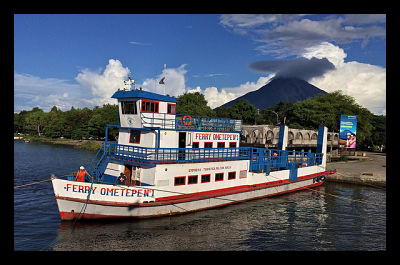
Last year, Nicaragua awarded a Chinese firm a 100-year concession to construct a channel to rival the Panama Canal. Construction for the proposed 178-mile waterway is expected to begin in December, with $50 billion in funding from the Hong Kong Nicaragua Canal Development Investment Company, or HKND.
However, Danish NGO Forests of the World has criticized both the Nicaraguan government and the HKND for failing to involve the indigenous residents of the region in the planning process, especially considering in the devastation of the forests and in the mass displacement the project will cause.
According to Forests of the World, the proposed canal will fragment the Rama and Kriol territory, dividing the region into two parts, and will plough through two UNESCO biosphere reserves that include a number of endangered species, including jaguars, great green macaws, tapirs and sea turtles.
Claus Kjaerby, the Central American representative for Forests of the World, has stated that the canal will cause negative impacts on “protected wetlands vital to migratory birds, the Central American biological corridor, destruction of freshwater habitat, deterioration of drinking water reserves and the inevitable pollution of Lake Nicaragua.”
Environmentalists are particularly worried about the traffic that the canal could inevitably bring to Lake Cocibolca. As the largest body of freshwater in Central America, Lake Cocibolca is at high risk of salinization as well as the added maintenance of disposing of excavated dirt. Moreover, the potential seismic activity from nearby active volcanoes is a further concern for the canal.
In addition to hundreds of Nicaraguan farmers protesting the construction, Nicaragua’s indigenous groups have contacted the Inter-American Commission for Human Rights for legal advice, arguing that they will be forced to relocate with little support from the government, which violates Nicaraguan law and international labor standards.
The Nicaraguan government stated that while it did inform the indigenous people of the canal, it did not have any formal discussion regarding the project. The company managing the canal, the Great Inter-Oceanic Canal Commission, has said it would provide landowners with fair compensation.
The government has also alleged that businesses and political leaders considered five different routes before settling on the current route, which they consider to be the least damaging route. Paul Oquist Kelley, executive secretary of the Nicaraguan Grand Canal Commission, stated that the route, despite it not being the cheapest option, was chosen because the path has the lowest environmental and social cost.
The NGO has urged Danish firm Maersk, one of the world’s largest shipping companies, to influence the canal construction to prevent environmental damage and protect indigenous rights.
On the other hand, President Daniel Ortega has indicated that the project would provide enough work to help alleviate poverty in the second poorest country in the Western Hemisphere, where poverty affects more than half of the population.
The Panama Canal generates approximately $1 billion in revenue annually to Panama, and a Nicaraguan Canal could generate a similar stream of revenue.
A Nicaraguan Canal would also have several benefits comparable to the Panama Canal, such as in reducing the length of trips. For example, a journey from Los Angeles to New York would have approximately 800 km less to travel. The canal would also be able to accommodate ships up to 250,000 tons, more than double the freight limit of the Panama Canal.
Nonetheless, the lack of discourse between the government and the indigenous people residing in the proposed canal land reveals a troubling lack of transparency and agreement regarding the project.
– William Ying
Sources: The Guardian, The Guardian 2, The Guardian 3, Verdens Skove, Tico Times, Journal of Commerce, LA Times
Photo: Flickr

mHero and Mobile Phones Help Stop Ebola
With more and more people in danger of contracting Ebola, officials believe that information is key to preventing the spread of the disease. Mobile phones and new technologies such as mHero (Health Worker Electronic Response and Outreach) are now playing a big role in the fight against Ebola.
Even in some of the poorest regions, many people have access to mobile phones. Because of the presence of mobile phone users, data scientists believe that this may be the easiest and most efficient way to distribute health information to people in West Africa. Officials are now using phones to collect activity data from citizens in disease-prone areas.
Mobile data allows organizations like the CDC to determine where citizens are making the most health service calls and therefore the best locations to assemble treatment centers. The data has also helped officials with traveler screening in order to prevent the spread of Ebola.
Additionally, user data has played a large role in helping to track population movements and foresee how the virus might spread. In the past, analysts only had access to on-the-ground surveys and police and hospital reports to determine the movement of diseases. However, mobile data has been a tremendous help in tracking Ebola and predicting its movement. Many believe that this is the most effective way to keep Ebola contained.
mHero is a new form of communication for Ministry of Health personnel that uses mobile phones to send important information to healthcare workers. The system works by releasing text message reports on Ebola diagnosis, treatment and prevention in addition to caretaker safety information. mHero also allows those working on the frontline and in remote areas to stay in contact and receive important Ebola updates.
mHero provides instantaneous access to health workforce data such as mobile phone numbers. “Officials can use mHero to conduct real-time monitoring, complex multi-path surveys and detailed analyses,” says IntraHealth Technical Advisor, Amanda Puckett. mHero launched in Liberia last month and currently has over 8,000 Ministry of Health members connected through its system.
Healthcare workers are also beginning to use mobile phones for interactive voice response technology. Systems such as these allow for higher user content limits and also provide solutions for literacy and language barriers that many healthcare workers face in foreign nations.
Mobile phones and technology are extremely beneficial tools that have been helping citizens and healthcare workers in the fight against Ebola. Researchers hope that this technology combined with other current methods will help to prohibit the spread of the virus and to provide infected patients with necessary care.
– Meagan Douches
Sources: The Guardian, VITAL, BBC
Malala Wins Nobel Peace Prize
By the age of 17, if a teenager has secured a part-time job, a driver’s license and takes home a good report card, they typically feel pretty accomplished. But 17-year-old Malala Yousafzai has already experienced and accomplished more than most do in a lifetime. On October 10, she added another accomplishment to her list: the youngest person to ever receive the Nobel Peace Prize.
Yousafzai was awarded the Nobel Peace Prize along with Kailash Satyarthi, “for their struggle against oppression of young people and children and children’s right to education,” Chairman of the Norwegian Nobel Committee Thorbjorn Jagland said.
To get to this monumental point in her life, Yousafzai has been through incomprehensible trials, including threats against her life. But through it all, this young girl has been a beacon to the girls in undeveloped countries, in particular Pakistan.
Yousafzai’s story began in 2009, when the young girl took to a blog to transcribe her thoughts and feelings of the world around her, in her native home of Swat Valley in northwestern Pakistan. The Taliban announced an edict that no girls were to be educated. Yousafzai, whose father is a schoolteacher, knew the value of education and chose to attend school, even after the edict was issued.
While journaling her days online, Yousafzai started to receive death threats from the Taliban. On Oct. 9, 2012, the threats came to life.
CNN reported of her attack, “[Gunmen] halted the van…demanded the other girls in the vehicle to identify her…she was pointed out. At least one gunman opened fire, wounding three girls.” The two girls survived the shooting and Malala sustained shots to the head and neck.
Malala underwent a surgery to remove the bullets, and doctors had to remove a part of her skull to reduce brain swelling. She was eventually taken to Queen Elizabeth’s Hospital in the U.K. via helicopter. This young girl who fought for her right to be educated now was fighting to recover from what could have been life-ending injuries. After close to three months, Malala was released from the hospital to rehabilitate in her family’s new home.
Word spread globally of the young heroine, resulting in the United Nations creating a global education campaign entitled, “I am Malala,” even proclaiming November 10 to be Malala Day, focusing on “’Malala and the 32 million girls like Malala not in school.”
Yousafzai recovered from her wounds and returned to school at Edgbaston High School for Girls in Birmingham, England. Since the ordeal, she has become a light for girls all over the world.
Yousafzai has created the Malala Fund, which focuses on educating girls in Pakistan, Kenya, Nigeria and the girls who are Syrian refugees in Jordan. She has also published a book entitled “I am Malala.”
This advocate for education and most recent recipient of the Nobel Peace Prize still has work cut out for her. A CNN infographic from 2012 showed over 4.5 million girls are still out of school in Pakistan.
Even though the statistic is staggering, Yousafzai’s influence can be seen in young girls in her home country. Ahmad Shah, who was an aide to Yousafzai’s father and an educator himself, asked a young girl what she wanted to be when she grew up. Her reply? “I want to become Malala Yousafzai to work for education and peace,” Shah recalled.
The world has its eyes on Malala Yousafzai for now and for the foreseeable future because she is sure to change the world, one little girl at a time.
– Kori Withers
Sources: CNN, CNN 2, The Washington Post, Nobel Prize
Photo: Flickr
Infant Death from Malnutrition
Malnutrition can originate from all sorts of sources: lack of funds, lack of access to food or even negligence. According to the World Health Organization, 45 percent of infant deaths are caused by a lack of nutrition. And malnutrition may not always be the direct cause of death in these children. Often they may pass from things like malaria, pneumonia and diarrhea, all of which stem from a lack of nutrition.
In areas like South Africa, malnutrition is an issue affecting 64 percent of infants. UNICEF has made significant efforts to pervade the country and educate mothers on the benefits of breastfeeding. It seems the primary source of a lack of nutrition has been mixed-feeding practices. In these cases, supplemental food is certainly less than enough from a nutritional standpoint. Nevertheless, 53 percent of infants in South Africa under six months of age are mix-fed.
UNICEF has taken initiative by directly corresponding with the Department of Health in South Africa in order to improve policies and education. They have also taken the approach to focus malnutrition on HIV transmission. With babies more severely undernourished, they are much more apt to receive HIV from their mothers because they are weak and unable to grow.
Deaths under the age of five occur in very specific regions, precisely sub-Saharan Africa and Southern India. The good news is that the rest of the world has seen a drop from 1990 from 32 percent to 18 percent in the percentage of infant deaths under the age of five.
While infants in certain parts of the world suffer from malnutrition due to a lack of finance or education, it seems almost everywhere in the world malnutrition can happen as a result of negligence. For example in 2010 a baby died in South Korea after only a three months of life at a mere 5.5 pounds. CNN reported that the couple was too engaged in online gaming to have paid attention to their newborn. Ironically the game they were playing involved raising a virtual child.
In northern France this year, an infant died of malnourishment at 11 months of age. Parents magazine reported that the vegan couple was only breastfeeding the infant. At this age babies should be introduced to more solid foods, and especially in the case of a vegan couple. Because the infant’s mother was not receiving enough protein, she died with both a Vitamin A and B12 deficiency.
Regardless of what may cause malnutrition in infants, it is something that clearly needs to be monitored. It gives us hope that certain statistics are falling, but the world needs to send its focus more so to the problem areas. We can give our donations, but best of all we can give our wisdom and our health knowledge to prevent more infants from unnecessarily leaving this earth.
– Kathleen Lee
Sources: WHO, Parenting, CNN, UNICEF
Photo: Flickr
Education in Togo
Bethesda Lutheran Communities Advocate for the Disabled
Nearly one and a half out of every 10 people in the United States has difficulty living independently and a similar ratio of the population is categorized with cognitive difficulty. The disabled community in America totals roughly 46 million people and generally receives far too little attention and assistance from the general public. But fortunately, there are groups that labor to create a better life for the disabled. Among these unsung heroes is Bethesda Lutheran Communities.
Since 1903, Bethesda Lutheran Communities have been playing an active role in housing, educating and advocating for women and men “living with intellectual and developmental disabilities.” As far back as the early 1960s, Bethesda has been playing an active role in providing musical, occupational, physical and speech therapy. These invaluable resources facilitate personal growth for many who have been forgotten.
Deriving its name from a biblical story of healing waters, the word Bethesda is Aramaic for “House of mercy,” and over the years the organization has extended their particular mission of mercy to 14 states. Bethesda Lutheran Communities has also diversified its offerings to the disabled, operating 20 thrift shops that serve not only as a fundraising arm, but as a place for the disabled to work and further their involvement in the greater community. The organization also runs a unique summer camp that is fully accessible for women and men with disabilities.
This fall, in conjunction with Concordia University Wisconsin, Bethesda is offering its first college level classes to the disabled. President and CEO John Bauer explains the philosophy behind this bold venture by saying, “People with developmental disabilities often find it very challenging to discover postsecondary opportunities. Bethesda College will provide choices and opportunities that are responsive to each student’s unique learning style as well as help prepare them for future growth and success.”
While there are many challenges ahead in their pursuit to offer a better range of choices for their people, Bethesda Lutheran Communities points to a bill that has been introduced in Congress. The ABLE Act of 2013 (H.R.647) would make it possible for disabled persons to pursue work and education while still receiving government aid, which is currently hindered by the Internal Revenue Code. While the bill has nearly 400 cosponsors in the House of Representatives, there has yet to be a vote to move it forward to the Senate.
True to their legacy as humanitarian innovators, the leadership of Bethesda Lutheran Communities is pushing forward in hopes that the law will catch up and help to improve the future of the disabled in America.
– Casey Hobbs
Sources: U.S. Census, Bethesda Lutheran Communities, BizTimes Milwaukee, U.S. Congress
Photo: Bethesda Blog
Boko Haram and the Taliban
Nigeria’s militant Islamic group, Boko Haram, has created havoc in Africa’s most populous country. The militia, whose name translates to “Western education is sin,” has kidnapped over 200 schoolgirls in the village of Chibok and has threatened to sell them as child brides. Their primary objective is to create an Islamic state that would forbid Muslims to abide by or be influenced by Western culture. Thus, schools have served as a common battlefield. Additionally, battles have occurred in churches, police stations and all those opposed to the ideas of the militants. Without a proper education, these girls will continue to suffer the consequences of extreme poverty and related health risks.
Similarly in Afghanistan, the Taliban imposed strict restrictions on women during their rule from the late 1990s to 2001. They banned women from studying in schools, working outside the homes and took away most of their behavioral and personal freedom due to an extreme interpretation of the Koran. Women were pressured into adhering to their traditional roles, being forced to stay at home to take care of the children and the house. The Taliban also was opposed to Western influence, and it banned music, movies, cosmetics and brightly colored clothing, creating laws to punish those who did not wear the proper clothing, such as the burqa, for women.
In both situations, women’s rights have been and still are on the road to being taken away. Boko Haram has been accused of having communications with and training from Al-Qaeda in the Arabian Peninsula and Islamic Maghreb. This is also true for the Taliban, who have had immense support and imported fighters from Al-Qaeda. Both groups want to see a change in government and have Shari’a law implemented in their respective countries.
In a divided country of Christians and Muslims, Nigeria has faced many problems, despite the abundance of oil and natural resources that exist in the country. The militia mainly blames the modern and secular government for bad governance and underdevelopment. In Afghanistan, the Taliban rose after the invasion of the Soviet Union to bring back stability into the country and instill rule of law in place of corruption. The strict restrictions on women were an effect of Shari’a law.
Without education for women, the countries’ development will be hindered and the population’s health will dramatically decrease. Afghanistan already has one of the lowest Human Development Indexes in the world and suffers from a complete lack of healthcare providers and facilities. Unfortunately, both Afghanistan and Nigeria face severe challenges and a future that does not seem as bright as it could be.
– Leeda Jewayni
Sources: CNN, CFR 1, CFR 2
Photo: Flickr
How to Help Fight Ebola
With the current Ebola outbreak, it is no wonder people are in a rush to help fight the treacherous disease. Although no known cure has been found, there are preventive measures one can take to halt its transmission.
Ebola is often transferred to humans from wild animals and can spread in the population through human-to-human contact with bodily fluids. Fruit bats are common vectors that transfer Ebola to humans through contact with blood, sweat and secretions.
Further, health workers are at great risk of contracting the disease when they treat patients with Ebola without proper protective gear. The average case fatality rate is at about 50 percent, but past outbreaks have had an average fatality rate of 90 percent. In 1976, the first outbreaks of the disease were recorded in the outskirts of Sudan and the Democratic Republic of Congo. Ebola has since moved on to urban and rural areas of West Africa, as we are witnessing currently.
But how can we help fight Ebola? The World Health Organization claims that community participation is key in controlling outbreaks. There needs to be clear interventions set in case of rapid progression throughout the country, such as case management and surveillance, an adequate laboratory and effective burial methods.
Health care providers that are in close contact with the virus should wear gloves, masks and goggles, in turn diminishing chances of infection. In addition, people should stay clear of highly infected areas or restrict travel to countries with high prevalence of Ebola.
Since symptoms can take up to three weeks to manifest, it is crucial that people are aware of the risk factors for infection. Interaction with wildlife increases one’s chance of infection, and so to help fight Ebola, limit contact and always wear gloves and masks if working with animals. Also, if living in high-risk areas in Africa, make sure meat is cooked properly and thoroughly before consumption. Furthermore, when coming in contact with patients with Ebola, wash hands regularly. This includes contact with the living and the deceased. Thus proper and safe burial is essential for affected persons.
As the recent cases of health care workers in Dallas demonstrate, strict infection control measures and following protocols from the Centers for Disease Control and Prevention must be followed to help fight Ebola. Community engagement and education is also key in successfully controlling the outbreak. While an approved vaccine does not yet exist, the virus can be contained through protective measures that can effectively reduce human transmission.
– Leeda Jewayni
Sources: WHO, NLM
Photo: Flickr
Pathfinder International Addresses Overpopulation
Clarence Gamble was born in 1894 in Cincinnati, Ohio and proceeded to attend a slew of universities including the likes of Princeton and Harvard University, where at the latter he received his M.D. degree. Following, he became heavily involved in birth control organizations and research. He worked alongside Planned Parenthood and initiated projects to study population growth in countries such as India and Japan.
In 1957, Gamble founded the Pathfinder Fund, an organization dedicated to providing a wider audience of people with access to safe, efficient and helpful reproductive health services. The fund is donation-based, which came into play as early as the 1960s. In fact in the 1960s the USAID and Office of Population donated $10 million to the organization, thus proving the government’s support of the discussed issues.
Pathfinder was already operating globally in the 60’s and 70’s opening offices in Latin America, Indonesia, Egypt, Chile, the Philippines and actively participating in population schemes in various African countries. Over the decades, the Pathfinder Fund continued to grow and, by the 90’s, it was the Pathfinder International.
In 1996, Pathfinder won the UN Population Award, an award given to someone who has raised awareness of population issues and solutions. And more recently in the 2000’s Pathfinder began the African Youth Alliance program aimed toward people 10-24 years of age in African countries like Botswana and Ghana. It was formed in order to assist with reproductive health.
Nowadays, Pathfinder International continues their hunt for better sexual and reproductive health care for all. They have six main focus areas: Adolescents, HIV/AIDS, Contraception and Family Planning, Advocacy, Abortion and Maternal and Newborn Health.
For example of their comprehensive care, as part of their abortion focus, Pathfinder not only supports a woman’s right to an abortion, but also advocates for safe abortions and rigorous post-abortion care. The organization accomplishes this in a number of ways one being through legislation, and another by funding an expanded number of professionals who can provide the medical and psychological services needed.
Another focus area, the Contraception and Family Planning focus, is also a worldwide project for Pathfinder. Over the years, Pathfinder has involved itself in over 100 countries attempting to integrate family planning concepts and to provide contraception to those in need of it. Above all people need to be educated, and Pathfinder does their best to also take on that responsibility.
Pathfinder International encourages the public to do its part as well. People can host fundraisers and events of that nature to provide contraceptives to people. One of the easiest ways to support the cause is for people to use their voices. People can become a part of their advocacy network or even start a conversation about reproductive health on a public forum. And lastly, Americans can vote for legislation to continue this type of focus. In an ever-growing population, it is important to be as conscious as possible of the world’s sexual and reproductive health.
– Kathleen Lee
Sources: Pathfinder International, Harvard Library
The Origin of AIDS Points to DRC
A group of international scientists have recently released findings that show the origin of AIDS to have been in the 1920s in Kinshasa, which is now the capital and largest city of the Democratic Republic of the Congo.
Senior author of the paper and from Oxford University’s Department of Zoology, Professor Oliver Pybus said of the study: “For the first time we have analyzed all the available evidence using the latest phylogeographic techniques, which enable us to statistically estimate where a virus comes from. This means we can say with a high degree of certainty where and when the HIV pandemic originated. It seems a combination of factors in Kinshasa in the early 20th Century created a ‘perfect storm’ for the emergence of HIV… ”
The study, led by Oxford University and University of Leuven scientists, gives three probable factors of how the disease spread: population growth, sex trade and railway access.
The population of Kinshasa grew rapidly in the 20s, as male laborers piled into the city for work, causing the ratio of men to women to raise two to one. Because of the rise in males, sex trade began to increase. Because HIV is primarily transmitted through sex, sex trade increasing from population growth can be seen as a highly probable cause.
The study also noted that by the end of the 1940s, millions of Africans were traveling through Kinshasa by way of railway. Once some became infected with the virus, it spread throughout the DRC, Africa and eventually the world.
This study comes after news broke that HIV strings from chimpanzees and their infected meat transmitted the disease to African hunters through “the hunting or handling of bush meant.”
Since the 1920s, the infection has spread rampant and as of today, has infected close to 75 million people worldwide.
– Kori Withers
Sources: BBC, AOL, EurekAlert
Photo: Flickr
Nicaragua Canal to Cause Displacement
Last year, Nicaragua awarded a Chinese firm a 100-year concession to construct a channel to rival the Panama Canal. Construction for the proposed 178-mile waterway is expected to begin in December, with $50 billion in funding from the Hong Kong Nicaragua Canal Development Investment Company, or HKND.
However, Danish NGO Forests of the World has criticized both the Nicaraguan government and the HKND for failing to involve the indigenous residents of the region in the planning process, especially considering in the devastation of the forests and in the mass displacement the project will cause.
According to Forests of the World, the proposed canal will fragment the Rama and Kriol territory, dividing the region into two parts, and will plough through two UNESCO biosphere reserves that include a number of endangered species, including jaguars, great green macaws, tapirs and sea turtles.
Claus Kjaerby, the Central American representative for Forests of the World, has stated that the canal will cause negative impacts on “protected wetlands vital to migratory birds, the Central American biological corridor, destruction of freshwater habitat, deterioration of drinking water reserves and the inevitable pollution of Lake Nicaragua.”
Environmentalists are particularly worried about the traffic that the canal could inevitably bring to Lake Cocibolca. As the largest body of freshwater in Central America, Lake Cocibolca is at high risk of salinization as well as the added maintenance of disposing of excavated dirt. Moreover, the potential seismic activity from nearby active volcanoes is a further concern for the canal.
In addition to hundreds of Nicaraguan farmers protesting the construction, Nicaragua’s indigenous groups have contacted the Inter-American Commission for Human Rights for legal advice, arguing that they will be forced to relocate with little support from the government, which violates Nicaraguan law and international labor standards.
The Nicaraguan government stated that while it did inform the indigenous people of the canal, it did not have any formal discussion regarding the project. The company managing the canal, the Great Inter-Oceanic Canal Commission, has said it would provide landowners with fair compensation.
The government has also alleged that businesses and political leaders considered five different routes before settling on the current route, which they consider to be the least damaging route. Paul Oquist Kelley, executive secretary of the Nicaraguan Grand Canal Commission, stated that the route, despite it not being the cheapest option, was chosen because the path has the lowest environmental and social cost.
The NGO has urged Danish firm Maersk, one of the world’s largest shipping companies, to influence the canal construction to prevent environmental damage and protect indigenous rights.
On the other hand, President Daniel Ortega has indicated that the project would provide enough work to help alleviate poverty in the second poorest country in the Western Hemisphere, where poverty affects more than half of the population.
The Panama Canal generates approximately $1 billion in revenue annually to Panama, and a Nicaraguan Canal could generate a similar stream of revenue.
A Nicaraguan Canal would also have several benefits comparable to the Panama Canal, such as in reducing the length of trips. For example, a journey from Los Angeles to New York would have approximately 800 km less to travel. The canal would also be able to accommodate ships up to 250,000 tons, more than double the freight limit of the Panama Canal.
Nonetheless, the lack of discourse between the government and the indigenous people residing in the proposed canal land reveals a troubling lack of transparency and agreement regarding the project.
– William Ying
Sources: The Guardian, The Guardian 2, The Guardian 3, Verdens Skove, Tico Times, Journal of Commerce, LA Times
Photo: Flickr