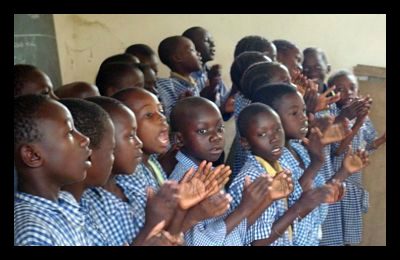
Located in west Africa, just slightly less than twice the size of Delaware bordering the North Atlantic Ocean and Senegal, lies the smallest country on the continent of Africa, the Gambia. Of the estimated 1,925,527 residents of the Gambia, 90 percent are of Muslim religion and the population can be deemed mono-ethnic with only 1 percent of the population reported as non-African.
The Gambia’s education expenditure was an estimated 4.1 percent of the GDP in 2012 and ranked 109th in comparison to the rest of the world. The Gambia’s literacy rate (defined as those who are 15 and over and can read and write) for the total population was estimated at a mere 51.1 percent in 2011 (male: 60.9 percent, female: 41.9 percent.) In comparison, the United States doubles this rate with 99 percent of the total population deemed as literate.
The school life expectancy, primary to tertiary education, in 2008 totaled to only 9 years— the U.S.’s school life expectancy totaled to 17 years. Contributing to low school attendance rates is the prevalence of child labor (children ages five to 14), which was estimated at 103,389 (25 percent) in 2006.
The Gambia’s Education Structure: Lower and Upper Basic School
The formal system of education in the Gambia operates on a 6-3-3-4 system. Basic education consists of six years of primary (lower basic) and three years of upper basic education, together totaling to 9 years of uninterrupted basic education.
Typically, gambian children start school at age seven. From ages seven to 13, the students are enrolled in a lower basic school. At grade six, students take a placement exam.
At age 13, students enter an upper basic school for three years until they are 16 years old. Upon completion the upper basic school, the students take a Basic Education Certificate Exam (BECE) in nine or 10 subjects and this completes their basic education. Depending on their performance on the terminal examination offered in the ninth grade, the student may attend a Senior Secondary School or other Vocational Training provisions.
According to the U.S. Embassy, “Until 2002, primary education lasted for six years and led to the Primary School Leaving Certificate (phased out). Secondary education was divided into junior secondary schools, which offered a three-year course leading to the Junior School Leaving Certificate, and Senior Secondary schools which offered a three-year course. Since 2002, a new unified basic education system was introduced covering 1-9 years, through an automatic transition with no examination at the end of the lower basic cycle. The cycle is divided into two cycles: lower basic (Grades I–VI) and upper basic (Grades VII–IX).”
In the Gambia, there are 368 lower basic schools and 89 upper basic schools. Another type of school system in the Gambia called the basic cycle schools is a combination of the lower and upper basic school.
Senior Secondary School (SSS)
Admission to Senior Secondary/High School is very competitive in the Gambia. 75 percent of Gambian students attend government schools. According to the U.S. Embassy, “Secondary schools offer a variety of subjects in science, arts and commerce. At the end of Grade 12, pupils sit for the West African Secondary School Certificate Examinations (WASSCE) conducted by the West African Examinations Council. Students in all the 55 Senior High Schools take a Core curriculum consisting of English language, integrated science, mathematics and social studies. Each student also takes three or four elective subjects, chosen from one of seven groups: sciences, ‘arts’ (social sciences and humanities) or commerce (visual arts or home economics).”
Collegiate Education
Like the United States, gambian students pursuing an undergraduate program at a university will typically study there for four years prior to receiving their bachelor’s degree. There is also a significant amount of Gambian students studying in the U.S. In the 2007-2008 academic years, 330 Gambian students were studying in the U.S. at various times. Also similar to the U.S., Gambian student may further their education at a university as a graduate student for over a year to obtain their Master’s degree.
– Eastin Shipman
Sources: U.S. Embassy, UNICEF 1, UNICEF 2, CIA 1, CIA 2
Photo: Access Gambia

Education in the Gambia
Located in west Africa, just slightly less than twice the size of Delaware bordering the North Atlantic Ocean and Senegal, lies the smallest country on the continent of Africa, the Gambia. Of the estimated 1,925,527 residents of the Gambia, 90 percent are of Muslim religion and the population can be deemed mono-ethnic with only 1 percent of the population reported as non-African.
The Gambia’s education expenditure was an estimated 4.1 percent of the GDP in 2012 and ranked 109th in comparison to the rest of the world. The Gambia’s literacy rate (defined as those who are 15 and over and can read and write) for the total population was estimated at a mere 51.1 percent in 2011 (male: 60.9 percent, female: 41.9 percent.) In comparison, the United States doubles this rate with 99 percent of the total population deemed as literate.
The school life expectancy, primary to tertiary education, in 2008 totaled to only 9 years— the U.S.’s school life expectancy totaled to 17 years. Contributing to low school attendance rates is the prevalence of child labor (children ages five to 14), which was estimated at 103,389 (25 percent) in 2006.
The Gambia’s Education Structure: Lower and Upper Basic School
The formal system of education in the Gambia operates on a 6-3-3-4 system. Basic education consists of six years of primary (lower basic) and three years of upper basic education, together totaling to 9 years of uninterrupted basic education.
Typically, gambian children start school at age seven. From ages seven to 13, the students are enrolled in a lower basic school. At grade six, students take a placement exam.
At age 13, students enter an upper basic school for three years until they are 16 years old. Upon completion the upper basic school, the students take a Basic Education Certificate Exam (BECE) in nine or 10 subjects and this completes their basic education. Depending on their performance on the terminal examination offered in the ninth grade, the student may attend a Senior Secondary School or other Vocational Training provisions.
According to the U.S. Embassy, “Until 2002, primary education lasted for six years and led to the Primary School Leaving Certificate (phased out). Secondary education was divided into junior secondary schools, which offered a three-year course leading to the Junior School Leaving Certificate, and Senior Secondary schools which offered a three-year course. Since 2002, a new unified basic education system was introduced covering 1-9 years, through an automatic transition with no examination at the end of the lower basic cycle. The cycle is divided into two cycles: lower basic (Grades I–VI) and upper basic (Grades VII–IX).”
In the Gambia, there are 368 lower basic schools and 89 upper basic schools. Another type of school system in the Gambia called the basic cycle schools is a combination of the lower and upper basic school.
Senior Secondary School (SSS)
Admission to Senior Secondary/High School is very competitive in the Gambia. 75 percent of Gambian students attend government schools. According to the U.S. Embassy, “Secondary schools offer a variety of subjects in science, arts and commerce. At the end of Grade 12, pupils sit for the West African Secondary School Certificate Examinations (WASSCE) conducted by the West African Examinations Council. Students in all the 55 Senior High Schools take a Core curriculum consisting of English language, integrated science, mathematics and social studies. Each student also takes three or four elective subjects, chosen from one of seven groups: sciences, ‘arts’ (social sciences and humanities) or commerce (visual arts or home economics).”
Collegiate Education
Like the United States, gambian students pursuing an undergraduate program at a university will typically study there for four years prior to receiving their bachelor’s degree. There is also a significant amount of Gambian students studying in the U.S. In the 2007-2008 academic years, 330 Gambian students were studying in the U.S. at various times. Also similar to the U.S., Gambian student may further their education at a university as a graduate student for over a year to obtain their Master’s degree.
– Eastin Shipman
Sources: U.S. Embassy, UNICEF 1, UNICEF 2, CIA 1, CIA 2
Photo: Access Gambia
The Ruble in the Rubble
In a conference held on December 15, Russian President Vladimir Putin placed the blame for the ruble’s collapse on Western embargoes. During the three-hour speech on his country’s current economic situation, Putin focused on two primary topics: foreign policy and the economy.
President Putin offered a unique metaphor connecting Russia’s foreign policy and where the country stands on global politics. He said, “Sometimes I wonder, maybe the bear should just sit quietly, munch on berries and honey rather than chasing after piglets … but they will always try to chain [the bear] up.”
With Russia playing the bear in his metaphor, President Putin provided a closer look at his primary goal: to put a fallen Russia back on top. However, since Russia can no longer borrow money from Western banks after the invasion of Ukraine, the Russian government has been forced to dip into other savings, such as foreign aid and reserves.
According to Mr. Putin, Russia “will overcome the current situation. How much time will be needed for that? Under the most unfavorable circumstances I think it will take about two years.” Mr. Putin has high hopes for oil prices to rise and the territories in Ukraine and Siberia to become huge assets to Russia. Mr. Putin also aims to knock out political opposition within Russia and create a resilient, independent economy for Russia.
President Putin’s words during the press conference failed to gain much support in the crumbling market. While it did see a slight increase the day after his speech, the ruble has since continued to weaken against both the dollar and the euro.
The Russian Central Bank reportedly spent more than $80 billion in foreign reserves to slow the ruble’s downfall in December, and this rush to revive the ruble is continuing into 2015. Russian savings could potentially depreciate and push Russia further into an isolated economy. Mr. Putin hopes that the depreciation of the ruble will “make Russia’s economy more independent,” as it is weaned off of Western influence. With Russia being such an influential nation in Northern Asia, its continued isolation could have devastating effects on global poverty.
As Russia further separates itself from the Western economies, the world feels the weight of Russian policies.
– Alaina Grote
Sources: The Economist, The Guardian, Foreign Policy, CBS
Photo: WordPress
Controversial Leadership: China’s Role in Africa
China is currently the continent’s largest trade partner. China and African nations exchange roughly $160 billion worth of goods every year, and one million Chinese have moved to Africa in the past decade.
China says that more than half of its foreign aid goes to Africa; between 2010 and 2012, China provided Africa with more than $14 billion in foreign aid. Additionally, China funded the building of the $200 million Africa Union headquarters in Addis Ababa, Ethiopia, as “a symbol of deepening relations.”
China also provides economic guidance in Africa. In a November 2014 conference, officials from China and the African Union met in Ethiopia to discuss how Africa can learn from Chinese industrialization practices. A joint-commissioned comparative study on Special Economic Zones in China was presented at the conference, with the goal of improving Special Economic Zones in Africa.
Many, including Ethiopian president, Dr. Mulatu Teshome, see China’s leadership role in Africa as a good thing: “Benchmarking China’s best practices in industrialization is essential, in that that it is almost unthinkable to realize the African dream of becoming an industrialized, united and prosperous continent by 2063 only through Africa’s own technology generation.”
It would appear that China is uniquely suited to provide development leadership in Africa. Much of China’s success in reducing poverty amongst its own people stemmed from agricultural and rural development. Similarly, rural poor account for over 70 percent of sub-Saharan Africans living below the poverty line. According to a World Bank study, roughly three-quarters of China’s overall poverty reduction between 1981 and 2001 came from gains to the rural poor.
Some, however, have accused China of “resource colonialism,” asserting that China is using Africa’s mineral wealth to spur its own economic growth — a charge that foreign minister Wang Yi has adamantly denied.
“In China’s exchanges and cooperation with Africa, we want to see mutual benefit and win-win results. I want to make clear one point, that is, China will never follow the track of western colonists and all cooperation with Africa will never come at the expense of the ecology, environment or long-term interests of Africa,” Wang asserted.
Others wonder whether China’s political role in Africa is expanding along with its economic role. China insists that its support is unconditional, and that it has no designs on interfering in the political affairs of African nations. “Politically, we always speak up for African countries and uphold justice. Economically, we help African countries to enhance development to achieve prosperity,” said Wang.
A recent article in the Economist argued that, while China’s win-win rhetoric is largely empty, China appears to have no designs on building its political influence on the African continent. “Some thought, after a decade of high-octane engagement, that China would dominate Africa. Instead it is likely to be just one more foreign investor jostling for advantage.”
– Parker Carroll
Sources: The Economist, The Guardian, International Fund for Agricultural Development
Photo: PxHere
Causes of Human Trafficking
There are numerous causes of human trafficking, but the root of most causes is money. Reaping approximately $150 billion and victimizing close to 27 million people, human trafficking is the fastest-growing illicit industry in the world. It includes sex trafficking, child sex trafficking, forced labor, debt bondage, domestic servitude, forced child labor and the unlawful recruitment of soldiers. The common factor lurking behind the different causes of human trafficking is the victim’s vulnerability to exploitation.
Characterized by low costs and high returns, human trafficking is an extremely lucrative enterprise. Harvard’s Siddharth Kara discovered that the cost of today’s slaves is, on average, $420 and modern slaves can generate more than 500 percent in annual return on investment. In comparison, the cost of slaves in 1850, after adjusting for inflation, was between $9,500 and $11,000. During the time, the return on investment from a slave was significantly lower, around 15 to 20 percent in annual return on investment. Furthermore, traffickers face low risks, although more governments around the world are actively penalizing human traffickers, and have a steady stream of vulnerable people to exploit.
Poverty & Causes of Human Trafficking
Although the world successfully reduced global poverty by 35 percent in the past 27 years, 767 million people still live in poverty and make up a portion of the pool of those vulnerable to human trafficking. The structural causes of human trafficking are poverty, lawlessness, social instability, military conflict, natural disasters, weak law enforcement and racial and gender biases. These structural causes represent the broader, necessary requirement for human trafficking to thrive: vulnerability.
Many times, poor families will give their children away to traffickers posing as agents promising their children better lives. Refugee camps are prime locations for this kind of exploitation. Where displaced people lack many forms of proper care, shrewd traffickers build relationships with corrupt officials and freely prey on the weak.
In a more recent example, migrants who cross the Sahara to escape war and terrorism are often captured by traffickers in northern parts of Africa. The International Organization for Migration reported that many of these migrants are falsely promised jobs and then are sold publicly in Libyan slave markets. Many do not make it to Europe.
Human trafficking can happen anywhere, as long as the environment contains vulnerable conditions. The New York Times estimates that one-fifth of homeless youth are victims of human trafficking in the U.S. and Canada. In West Africa, traffickers pose as teachers and enslave optimistic students to become beggars. In 2015, the Associated Press discovered that young migrants and impoverished Thais were forced to catch seafood that later ended up in the world’s seafood supply, including on the shelves of America’s major retailers and supermarkets. Thai agents recruited children and the disabled, some of the most marginalized and vulnerable groups in the world.
Today, many countries are collaborating together to reduce the causes of human trafficking. The U.S. State Department Trafficking-in-Persons Report is the world’s most comprehensive resource on anti-trafficking efforts, including 188 countries and territories. Countries that fail to meet the report’s minimum requirements fall to tier three status, which can result in sanctions on the country. In 2016, Thailand was recognized for making significant strides in eliminating human trafficking.
Locally, ordinary people and nonprofits are continually impacting their communities. Nonprofits, such as Mango House in Chiang Mai, Thailand or FOREFRONT in India, continue to address these structural issues that breed vulnerability.
– Andy Jung
Photo: Flickr
Winter Brings Health Risks for Syrian Refugees
As winter storms move into the Middle East, the most vulnerable populations will be the millions of Syrian refugees fleeing from a violent and long civil war. Perhaps the most affected areas are in the Beqaa Valley in Lebanon, where some 400,000 Syrian refugees live in temporary, informal tent camps under harsh winter conditions.
Temperatures in the Beqaa Valley have dipped well below freezing for long periods of time, compounding the unforgiving effects of a wet, windy winter. Snow and ice in recent weeks has led to the closure of roads surrounding the camps, making access for aid workers even more difficult. The UN reports that over 100 tents have collapsed under the weight of ice and snow. The UNHCR has set up six emergency shelters to try to negate the risk of collapse, but resources are running low around the camps.
Lebanon has no formal camps, but is now the home of 1.12 million Syrian refugees. This means that one out of every four people in Lebanon is now a Syrian refugee. Because the official policy of the Lebanese government is non–intervention in Syrian internal affairs, civic organizations have had to take the lead on caring for the millions of Syrian refugees now living in the country.
The UN estimates that there are approximately 3.2 million Syrian and an additional 7.6 million people displaced by the conflict still living in Syria. Most refugees are living in Turkey, Jordan, Lebanon and Iraq. This will be the fourth winter since the beginning of the war.
Other refugees affected by winter weather live in Jordan, Turkey, Palestine, Israel and Iraq. In Jordan, only 100,000 of a total 620,000 refugees live in formal camps. In Iraq, violence in the past year has displaced hundreds of thousands of people who are now are facing similar winter risks as Syrian refugees.
The winter months bring a whole new set of health risks to refugees, especially those living in tent camps. Besides cold-weather exposure risks like hypothermia, frostbite and chilblains, wet conditions lead to a higher risk of disease and low levels of resources and closed roads increase the risk of malnutrition and dehydration. Children and the elderly are the most vulnerable populations.
Winter also brings higher risk of accidental deaths, from collapsed tents and fire-related deaths from indoor flames and heaters.
This past November, two Syrian babies died because of winter conditions. In Palestine this month, a fire killed a refugee child. And two Syrian refugees crossing into Lebanon earlier this month, a 30-year-old man and a seven-year-old child, were killed in the mountains because of exposure to extreme cold.
A shortfall of 50 percent of international funding for U.N. assistance to refugees means that Syrian refugees are getting even less help this winter than in the past. There are no additional ration cards or oil for heaters. Even though the percent of refugees living in harsh winter conditions is small compared to the overall number of people displaced by the conflict, a disproportionate amount of funding is going to them, removing funding options for other refugee settlements.
– Caitlin Huber
Sources: The Guardian, Washington Post, NPR, The Weather Channel, National Resource Council, Center for Disease Control, Relief Web, Syrian Refugees
Photo: YouTube
Liberia’s Ebola Treatment Unit Design Could Save Lives
There are numerous reasons why Ebola has continued to spread and defy all attempts at containment. With widespread lack of vaccinations paired with unsanitary living conditions, it is no surprise that the disease has continued to thrive for most of 2014. At the beginning of 2015, new ideas for combating the Ebola spread are being implemented.
While U.S. advocates are providing as many vaccinations as possible right now, a new solution may offer a decline in mortality rates by changing one line of defense that may be a bit easier to control: clinic conditions.
African temperatures average in the upper 90 degrees Fahrenheit each day, and the intense heat is detrimental to patients losing precious body fluids from lying in the suffocating heat. Tents and tarps are set up in the typical Ebola clinic center, attempting to shield patients, volunteers and doctors from the intense heat. But as sweat, bugs and more people gather under the tents, patients and volunteers alike become quickly dehydrated and exhausted from the relentless sun.
A new Ebola treatment unit, or ETU, opened in Zwerdu — about 300 miles from Liberia’s capital of Monrovia — and is the first of its kind to feature bamboo-lined walls and a thin, tarp-like roof.
Thomas ten Boer of the German non-governmental organization Welthungerhilfe raves about the new structures. “I used bamboo because it is hollow and helps absorb the heat … Feel the plastic on the inside of the tent, it is cool to the touch,” he said. American aid organizations are excited about the new ETUs as well and USAID is set to build four ETUs in Liberia this year.
All construction materials, including the bamboo, are purchased locally, which also stimulates the economy while keeping costs down for the buyers. Local workers turned out to aid volunteers in the construction of the ETU. “You include the community and it helps them accept your project and gives them hope,” said ten Boer. For head engineer Daniel Dined, this project hit home. A Liberian native himself, Dined explained, “I have been working for humanitarian organizations … but to work for the Liberian people, that’s my dream and I love it.”
USAID hopes to have all four clinics open by Christmas, but as Dr. Elsie Karmbor of the Zwedru County Health Office said, “we pray that no patient will [have to go there].”
– Alaina Grote
Sources: Doctors Without Borders, USAID, YouTube, World Health Organization
Photo: U.S. Department of Defense
Poverty in Tehran
Nearly 40 years after the Iranian revolution, the nation’s leaders have yet to ensure equal distribution of wealth and opportunity to its citizens. Iran is currently home to seven million people living in absolute poverty, struggling to find enough food to eat each day.
Meanwhile, there are also five million people living in Iran who are tremendously wealthy, with Labor Minister Ali Rabiee deeming their financial statuses comparable to those of the wealthiest Americans. Nearly all of Iran’s national government officials are multimillionaires — a fact that the nation’s working class has protested over the years — and the country gains a considerable amount of wealth from its lucrative oil exports.
More detailed figures describing poverty data in Iran remain hard to come by, as news sources have criticized the government for withholding such information. This tendency to shy away from revealing relevant statistics is in no way a new trend; when former president Mahmoud Ahmadinejad was in office, the government similarly refused to comply with the United Nations’ requests for official data reflecting poverty levels in Iran. This remained the case despite the passage of Iran’s Fourth Development Plan, which required the Welfare Ministry to make such information accessible.
Despite the ongoing secrecy, current Iranian President Haxdsssan Rouhani has been vocal about making poverty a top focus since assuming office, declaring in an October speech that there was “no evil worse than unemployment and poverty.”
Since taking over the presidency in 2013, President Rouhani has implemented several measures intended to address the nation’s growing poverty problems. Some of these measures have proven successful in helping to curb rising inflation levels and bringing a timely end to two full years of negative growth. However, it remains to be seen whether the president will be able to address the issue as fully as it demands; critics point out that the largest parts of Iran’s economy are heavily controlled by the government or semi-private bodies that remain intricately linked with the nation’s power players.
Officials believe that unemployment will only grow in the years to come, as approximately four million new college graduates leave their universities and struggle to find employment, joining the four million people in Iran who are currently in need of jobs. In the last fiscal year, nearly one quarter of all households in the nation were entirely unemployed.
In Tehran, many of the poorest city-dwellers turn to establishing informal businesses on the streets as a means of survival. It is common to see such vendors setting up makeshift “shops” on sidewalks or simply carrying their goods for sale throughout the city, peddling items like balloons, hair ties and socks to passersby. These street peddlers face instability and even danger in the face of constantly changing city ordinances and brutal security officials who try to extort them for protection money. Some peddlers, when confronted by rogue officials, are forced to regularly pay them in order to avoid harassment. If they refuse, the officers simply take all of the sellers’ earnings.
The situational poverty in Tehran goes beyond an economic problem to a human rights issue.
– Shenel Ozisik
Sources: The Borgen Project, PBS, Al-Monitor, FIDH, The Guardian, The Baltimore Sun
Photo: Payvand
Private Sector Partners Further Development
According to Martin Sajdik, president of the U.N.’s Economic and Social Council, including non-state actors in the development agenda is a crucial step in making the post-2015 development goals more feasible. “Our economic life, our social life is not only determined by state actors, so if we want to have a development agenda that is for all countries of the world — both developed and developing—we cannot ignore the fact there are many more actors,” said Sajdik.
The new Sustainable Development Goals, or SDGs, place particular emphasis on the importance of building multistakeholder partnerships across sectors. While the U.N. has involved private sector partners to a greater extent than it did when crafting the MDGs, some believe that the private sector’s role in setting the post-2015 agenda could be expanded further.
“Ultimately, we in the [Community Service Organization] community and World Vision understand this is a governmental process, that the ultimate decision will be taken by member states of the U.N. but our role is to influence those member states,” said World Vision external relations director Chris Derksen-Hiebert.
In recent years, cross-sector relationships have become increasingly common. One advantage of such relationships is that they harness the valuable expertise, resources and distribution channels of private enterprises.
One example of this movement is ColaLife. In 2012, the U.K. based charity began sending medicine kits to Zambia in cases of Coca-Cola. Rohit Ramchandani, ColaLife’s principal investigator, explained the organization’s philosophy: “Our model looks specifically at how we can partner with and leverage private sector distribution channels, these companies that are able to get their product out to that last mile in the most remote parts of the world.”
More recently, President Barack Obama’s Power Africa initiative received over $20 billion in private sector commitments, which will create millions of jobs, and fast-track the development of sub-Saharan Africa.
Andrew Herscowitz, USAID’s coordinator for both the Power Africa and Trade Africa initiatives, believes that governments will need to draw on the vast resources of the private domain in order to establish the expansive infrastructure needed to power the African continent. “Energy is one of the key constraints to economic growth in Africa, and only the private sector has the sufficient resources to build the necessary infrastructure,” he wrote.
Herscowitz also believes that the partnerships being forged within the Power Africa initiative are representative of a changing paradigm in the development world. “Our African partners are now looking less for the high-priced expert, who comes into a country to opine on what reforms a country may need to drive development,” he explained. “Rather, they want the deals themselves to drive the development.”
He went on to connect the role of private sector partners and government organizations: “The role that development institutions play in driving infrastructure development is being redefined, and the Power Africa partners are excited to be driving this new model for development.”
As policymakers continue to forge the post-2015 development agenda, it appears they will begin relying more heavily on the private sector’s diverse and valuable resources.
– Parker Carroll
Sources: The Brookings Institution, Businessweek, Devex 1, Devex 2
Photo: Wave Partnership
Education in Sierra Leone
Top Five Projects for GlobalGiving
GlobalGiving is a charity fundraising website that has helped nonprofits and social entrepreneurs organize donors and raise money to improve their communities.
Since 2002, GlobalGiving has raised over $164 million to support around 11,000 projects, fulfilling their mission to catalyze a global market for ideas, information and money that democratizes aid and philanthropy.
GlobalGiving allows people to choose where they want their money to go, enabling funds to support any creative idea that might never have been funded through traditional approaches.
Here are the most popular projects:
1. “Send 8 Children to High School – Kibera, Kenya”
This project will provide one year of scholarship support for eight children (three girls, five boys) from Kibera to attend secondary school. Scholarships will cover school fees and supplies. In a country where only half of school-age children are enrolled in secondary school – and rates are even lower in Kibera where the population lives on less than $2 per day and few secondary schools exist in the community – support will give children an opportunity to achieve a unique goal.
2. “Help Baltimore Youth Achieve Their Business Dreams”
Network for Teaching Entrepreneurship’s students come alive when they have the chance to develop the mindset of an entrepreneur. NFTE Baltimore will use these funds to launch its program in a new classroom next year, bringing entrepreneurship education to 30 additional local youth in underserved communities.
3. “Christmas Gift – Donate For An Animal”
Even though the holidays are over, you can still make a donation to an orphaned wild animal on behalf of a loved one. With DAKTARI, you can choose the animal you want to spoil. This cherished animal will send you a personalized thank you photo, a certificate, and for more than $500 donated, a video.
4. “Provide New Clothes For Unfortunate Children”
This micro-project provides new dresses to underprivileged children. 40 abandoned orphan children between 5 to 15 years old can benefit from just two pairs of new dresses donated to them, helping them feel confident and more independent.
5. “Fund Vania’s Journey From A Shelter To Success”
Vania is extremely vulnerable to the pressures of trying to help raise her little sister who lives with her in a shelter. Vania also feels the pressures of knowing that her mother and brothers are living in Santa Cruz under difficult circumstances. There is no room or money to be part of her mother’s home. Next year, Vania will be homeless when she turns 18 because the shelter cannot house adults. Vania has a dream to live a better life for her and her family, but needs your help. This micro-project will help supply her living expenses.
In addition, each project states the issue at hand and how the project will help solve that issue with a potential long-term impact. Funding information is also included.
– Chelsee Yee
Sources: Global Giving, Fundraising UK
Photo: 3BL Media