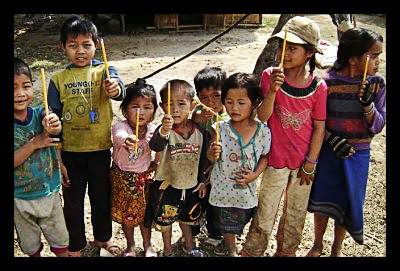
Pencils of Promise’s programs have impacted more than 300,000 lives. Its schools have served more than 31,240 students and its scholarship recipients are two times more likely to progress to secondary school than the regional average.
Founder Adam Braun was a college student backpacking across the globe when he asked a small boy begging on the streets of India what he wanted most in the world—the answer? A pencil. Braun reached in his backpack and handed him his pencil as ‘a wave of possibility washed over him.’ Over the next five years, Braun backpacked through more than 50 countries handing out thousands of pens and pencils across six continents.
These pencils led to powerful conversations with local parents and children across numerous cultures and languages. In October 2008, PoP was founded. What began with a mere $25 deposit has now built more than 200 schools, breaking ground on a new school every 90 hours.
“We’ve learned that education is a living, breathing entity that with the right nurturing, evolves into something spectacular,” Braun writes on the website.
“We’ve learned that every piece of its growth is a challenge and that each pencil, each dollar, each supporter is essential. Pencils of Promise is now a global movement of passionate individuals, many of which are the most dynamic and impactful leaders we have ever seen. They are committed to supporting a world with greater educational opportunity for all. Thousands have joined us, making contributions through acts both large and small.”
There are three main things that set PoP apart from other organizations. PoP is 100 percent for-purpose, 100 percent direct giving and has a 100 percent success rate. It is a unique organization because it blends the head of a for-profit business with the heart of a humanitarian nonprofit— by covering operational costs through private donors, events and companies, 100 percent of every dollar donated online goes directly into its programs to educate more children. Furthermore, it does not just “build a school and move on.” PoP monitors and evaluates every project it undertakes— ensuring that every school it opens is fully operational and educating students daily.
On its website, one can donate various amounts of money, each detailing exactly how much of an impact it would make— $100 to keep children healthy, $250 to educate a child, $500 to train a teacher and $25,000 to build a school.
Pencils of Promise is true to its word in terms of a functioning education system. PoP’s students score three times higher on language literacy tests than their peers and the teachers enrolled in PoP’s teacher training program attend school with 97 percent frequency. Additionally, 85 percent of PoP’s teachers report student literacy increases, 88 percent of the teachers report student numeracy increases and an astonishing 90 percent of the teachers report increases in student engagement due to its programs.
PoP can also be credited with being extraordinarily innovative. PoP works to provide schools with smartphones, e-readers, long-range radio and creative materials in order to reach the most under-served communities in the countries where PoP works. One e-reader provides a student with 50 books in both English and the local language. Smartphones deliver interactive audio lessons to provide expanded access to learning and a mobile learning kit contains books, phonic games and creative educational tools for teachers.
This organization not only trains teachers, but also teaches and trains students about WASH (water, sanitation and hygiene). Students miss 272 million school days due to preventable illness and the international WASH program has allowed PoP to train more than 5,040 students since 2009. Pop does this via a three-step approach: building bathrooms and hand washing stations, teaching students and tracking behavior change.
The Huffington Post reported that the program has brought hope to children around the world in the form of 10 million hours of education as of March 2014.
As Braun writes in his book, “Take the first small step, and chase the footprints you aspire to leave behind.” To take this first small step, visit https://pencilsofpromise.org/.
– Eastin Shipman
Sources: Pencils of Promise 1, Pencils of Promise 2, Pencils of Promise 3, Pencils of Promise 4, Huffington Post,
Photo: Pac For Kids

Chad: Highest Rates of Malnutrition in West Africa
Those who suffer from undernourishment are more vulnerable to infections and diseases like malaria. Due to the country Chad’s lack of health care, frequent droughts and lack of access to safe drinking water, 790,000 citizens need emergency food assistance, while three million are in need of humanitarian assistance in general. The country is believed to have the highest rate of malnutrition in West Africa compared to its other impoverished countries.
According to a SMART nutrition survey, the child malnutrition rates in 2014 were between 6.8 and 13.3 percent. Those living in the Sahelian area of Chad experienced the worst: five regions in that area exceeded a 10 percent rate, and six regions exceeded a 15 percent rate of malnutrition. Fifteen percent is considered the minimal rate needed to declare a hunger emergency. It should be noted that contributing to these malnutrition rates are refugees from the Central African Republic and Sudan. There are up to 450,000 who have pursued safety in Chad, and while there has been no official survey conducted yet, up to 14 percent of child refugees at just a few refugee sites have been screened as “acutely malnourished.”
Chad’s traditional health services are underwhelming, with less than one qualified person who can provide medical aid for every 1,000 people. The government allocates a mere three percent of its budget toward health initiatives. This has prompted outside help to intervene in this dire situation.
While there are a few programs to provide medical aid to those suffering in hunger, the problem will not be solved until the core issue of poverty is looked at. According to Richard Currie of Médecins Sans Frontières, or MSF, five percent of children die in their care—and those are the ones receiving treatment.
“It is tremendously rewarding to discharge a previously critically ill child from our program as ‘cured,’ but in the absence of adequate nutrition in the home and an improved food security situation in the community, the child remains at risk of falling back into illness later and eventually re-entering the program,” Currie explained.
Other organizations lending a hand are UNICEF and the U.N. World Food Programme, which are trying to distribute food and introduce programs that will help citizens before emergency medical treatment is required. WFP claims to have targeted 1.3 million citizens in 2014. Nourishment rates in 2014 showed improvement compared to previous years, and hopefully the intervention of all these organizations will improve the rates even more for 2015.
– Melissa Binns
Sources: Irin News, World Food Programme
Photo: UNICEF
Poverty in Indonesia
The economy of Indonesia has been steadily growing in recent years, causing the poverty rate to decline from 17 percent in 2004 to 12.5 percent in 2011. However, due to the financial crisis of 1997, poverty still dominates regions of Indonesia and separates the city of Jakarta into upper and lower classes. As the gap between the rich and the poor widens, many find it difficult to escape the harsh reality of poverty in Indonesia.
In order to recover from the economic crisis of 1997, a variety of urban alleviation programs were implemented, including social safety net programs. These programs have been able to reduce the number of poor people in Indonesia, particularly for those in urban areas.
It is a different story for those living in rural areas. Approximately 70 percent of the population lives in rural areas, where agriculture is the main source of income. Poverty tends to be higher in these areas; 16.6 per cent of rural people are poor compared with 9.9 percent of urban populations. Millions of small farmers, farm workers and fishermen are materially and financially unable to take advantage of the opportunities offered by the economic growth. They are often geographically isolated and lack access to agricultural extension services, markets and financial services.
According to the World Bank, approximately 65 million people in Indonesia live just above the poverty line, making them vulnerable to falling into poverty. Millions lack basic human needs, such as food, clean water, shelter, sanitary environments and education. In fact, few families living in poverty have their own bathrooms. Most communities share a communal bathing facility, often located miles from villages. Many of the poorest people cannot read or write.
Indonesian women in particular are vulnerable to poverty; they have less access to education, they earn less than men, and are subject to discrimination and exclusion. Many children are forced to stay home from school to tend to household duties or work at the family business.
The Indonesian government is working hard to reduce poverty and meet the United Nations’ Millennium Development Goals, which aim to cut the proportion of people living on less than one U.S. dollar a day by half by the end of 2015.
Kecuk Suhariyanto, the Director of Analysis and Statistic Development at Indonesia’s Central Bureau of Statistics, said that Indonesia’s poverty figure last year was a “significant improvement from the 39.3 million recorded in 2006, although the country has a different definition for poverty from most international agencies.”
– Alaina Grote
Sources: World Bank, Xinhuanet, Rural Poverty Portal
Photo: Flickr
Pencils of Promise
Pencils of Promise’s programs have impacted more than 300,000 lives. Its schools have served more than 31,240 students and its scholarship recipients are two times more likely to progress to secondary school than the regional average.
Founder Adam Braun was a college student backpacking across the globe when he asked a small boy begging on the streets of India what he wanted most in the world—the answer? A pencil. Braun reached in his backpack and handed him his pencil as ‘a wave of possibility washed over him.’ Over the next five years, Braun backpacked through more than 50 countries handing out thousands of pens and pencils across six continents.
These pencils led to powerful conversations with local parents and children across numerous cultures and languages. In October 2008, PoP was founded. What began with a mere $25 deposit has now built more than 200 schools, breaking ground on a new school every 90 hours.
“We’ve learned that education is a living, breathing entity that with the right nurturing, evolves into something spectacular,” Braun writes on the website.
“We’ve learned that every piece of its growth is a challenge and that each pencil, each dollar, each supporter is essential. Pencils of Promise is now a global movement of passionate individuals, many of which are the most dynamic and impactful leaders we have ever seen. They are committed to supporting a world with greater educational opportunity for all. Thousands have joined us, making contributions through acts both large and small.”
There are three main things that set PoP apart from other organizations. PoP is 100 percent for-purpose, 100 percent direct giving and has a 100 percent success rate. It is a unique organization because it blends the head of a for-profit business with the heart of a humanitarian nonprofit— by covering operational costs through private donors, events and companies, 100 percent of every dollar donated online goes directly into its programs to educate more children. Furthermore, it does not just “build a school and move on.” PoP monitors and evaluates every project it undertakes— ensuring that every school it opens is fully operational and educating students daily.
On its website, one can donate various amounts of money, each detailing exactly how much of an impact it would make— $100 to keep children healthy, $250 to educate a child, $500 to train a teacher and $25,000 to build a school.
Pencils of Promise is true to its word in terms of a functioning education system. PoP’s students score three times higher on language literacy tests than their peers and the teachers enrolled in PoP’s teacher training program attend school with 97 percent frequency. Additionally, 85 percent of PoP’s teachers report student literacy increases, 88 percent of the teachers report student numeracy increases and an astonishing 90 percent of the teachers report increases in student engagement due to its programs.
PoP can also be credited with being extraordinarily innovative. PoP works to provide schools with smartphones, e-readers, long-range radio and creative materials in order to reach the most under-served communities in the countries where PoP works. One e-reader provides a student with 50 books in both English and the local language. Smartphones deliver interactive audio lessons to provide expanded access to learning and a mobile learning kit contains books, phonic games and creative educational tools for teachers.
This organization not only trains teachers, but also teaches and trains students about WASH (water, sanitation and hygiene). Students miss 272 million school days due to preventable illness and the international WASH program has allowed PoP to train more than 5,040 students since 2009. Pop does this via a three-step approach: building bathrooms and hand washing stations, teaching students and tracking behavior change.
The Huffington Post reported that the program has brought hope to children around the world in the form of 10 million hours of education as of March 2014.
As Braun writes in his book, “Take the first small step, and chase the footprints you aspire to leave behind.” To take this first small step, visit https://pencilsofpromise.org/.
– Eastin Shipman
Sources: Pencils of Promise 1, Pencils of Promise 2, Pencils of Promise 3, Pencils of Promise 4, Huffington Post,
Photo: Pac For Kids
Correlation Between Gender and Poverty
As the United States grapples with the gender gap, countries abroad deal with an even larger one. Women abroad face economic, political, social and structural barriers that prevent them from succeeding in a competitive market, revealing a correlation between gender and poverty.
ONE, an international campaign and advocacy organization, has addressed an open letter to German Chancellor Angela Merkel and African Union Commission Chairperson Nkosazana Dlamini-Zuma. Both leading women will hold meetings at the upcoming G7 Summit in Germany and African Union Summit in South Africa. In both meetings, there will be one agenda: women’s empowerment.
This year, a blueprint will be drawn up for the new global goals, which will influence investments for the next 15 years. Known as the Sustainable Development Goals, the plan aims to target its efforts on eradicating global poverty by 2030. With this in mind, ONE’s goal to address gender and poverty is crucial. The letter addresses the critical need to raise awareness for women’s rights in regards to global poverty, especially in African governments.
“The poorest women are often barred from owning and inheriting land and other property, opening a bank account, or accessing education. Women in the developing world are far more likely to die giving birth, become child brides (and suffer abuse from their husbands), or suffer from chronic health problems,” ONE reports.
These issues also extend to women’s opportunities in agriculture, which has been reported to be the most effective at reducing poverty. According to the “Poverty is Sexist” report, agricultural productivity for females is 23 to 66 percent lower than males. With the lack of access to labor, tools, extension services and financing, these problems persist. However, if efforts were refocused on women and poverty, it is projected that agriculture could increase by 20 to 30 percent, feeding 100 to 150 million additional people.
How can efforts be refocused on this gender-sensitive subject? When women are placed at the forefront of the new development agenda, better targeted investments are made in health, education and economic empowerment. These investments have specific challenges and opportunities; however, by reducing the gender gap in poorer countries, strides can be made.
“Reducing differences in the employment rate between men and women by 2017 could generate an additional $1.6 trillion in global output,” says ONE.
In addition, stronger health systems that benefit women could decrease maternal and child deaths; reliable energy could allow women and girls to spend less time collecting fuel (increasing time for economic pursuits); and quality education could create an economic and social benefit for the entire world.
Influential women around the world have already signed ONE’s petition to raise awareness for women in poverty—including Beyoncé, Lady Gaga and Meryl Streep. The petition can be signed here.
– Briana Galbraith
Sources: Billboard, ONE 1, ONE 2, ONE 3
Photo: Miami Agent Magazine
How Discrimination Affects Global Poverty
Discrimination affects global poverty by breeding an environment of inequality that limits one’s access to fundamental rights and basic needs.
Discrimination against people or groups based on race, religion, ethnicity or other factors can foster segregation, which impoverishes the particular population who cannot obtain access to fundamental needs for basic living.
The groups discriminated against include minorities, indigenous people and migrants. Discrimination against these groups and poverty are connected in more ways than one. Being discriminated based on race or gender has a direct impact on one’s economic opportunity and makes it increasingly difficult to navigate familial, social and economic institutions. Additionally, one’s low economic status can be a target for discrimination causing a cyclical pattern between discrimination and poverty.
The link between discrimination and poverty is largely based on inequality in opportunity. In Burma, for example, widespread discrimination against minority groups such as Muslim minority groups has influenced the way in which that specific group lives. The marginalized minority group has been denied rights to citizenship, which restricts their access to employment, education, opportunity and fundamental living in general. Government forces also play an important role in the group’s limited access to equality, partly due to unfair, violent and sometimes abusive treatments of the group solely based on religion and ethnicity. The discrimination observed in Burma has pushed the minority group into poverty due to restricted social and economic rights.
Furthermore, discrimination hinders one’s ability to partake in government policies, especially policies centered on the development of strategies for poverty reduction. Limited justice then becomes more than an issue of inequality, but also an issue of poverty.
Discrimination can be a result of poverty and also an obstacle for ending global poverty. According to Human Rights Watch, two thirds of those living in poverty in low income nations reside in households led by an ethnic minority group specific to that country.
Lack of basic access to education due to discrimination, for example, serves as an important contributor and obstacle standing in the way of alleviating global poverty. According to Social Watch, a report revealed that among those who are illiterate, a vast majority belong to ethnic, religious or racial minority groups. Additionally, due to economic and social inequalities, minority groups are more likely to become exposed to health issues such as infectious disease.
The link between discrimination and poverty suggests that in order to completely eradicate global poverty, inequalities due to discrimination need to be addressed. Protecting minority groups from discrimination can help alleviate the number of people who fall or get trapped into poverty solely because of race, gender, ethnicity, religion or any other characteristic. Amending laws that pose a threat to minority groups as well as enacting laws that fight discriminatory policies can be a means of reducing discrimination, which will ultimately alleviate poverty.
– Nada Sewidan
Photo: Burma Times
Sources: Human Rights Watch, Social Watch
Let Girls Learn: US Initiative for Global Education
Let Girls Learn is a new U.S. government initiative aiming to help young girls across the globe receive an education. It recruits Peace Corps Volunteers—American volunteers who spend two years in developing countries addressing such issues as health care, infrastructure, agriculture and education—to work on community-centered projects around the world. These projects are designed to facilitate adolescent girls’ access to educational opportunities with direct help from federal funds. They consist of things like girls’ leadership camps and mentoring programs.
The Let Girls Learn initiative was inspired by a 2013 meeting with Malala Yousafzai, the Pakistani teenager whose powerful activism for girls’ education recently won her a Nobel Peace Prize. With approximately 62 million girls out of school around the world, and educational access growing scarcer for older girls, the government initiative is aiming to help adolescent girls receive the education they deserve.
An important way that Let Girls Learn is improving girls’ educational access is by combating early marriage and child pregnancy. In the developing world, one out of seven girls are married before the age of 15. Early marriage and childbirth too often signal the end of an adolescent girl’s education. However, girls who have received secondary school training are up to six times less likely to marry at a young age compared to girls who have not received such schooling.
In keeping with the Let Girls Learn initiative, USAID campaigns like the Advancing Youth Project and Best Schools for Girls are helping individual girls in countries like Bangladesh and Liberia overcome obstacles that would otherwise hinder their schooling. USAID encourages students, parents, educators and government officials in communities with high child marriage rates to encourage community-wide pledges against child marriage, and to discourage students from dropping out of school in order to marry. The organization has also developed a mobile tool that helps girls acquire English language skills as a means of improving their employment opportunities within the garment sector, which employs more than 4 million people in Bangladesh—90 percent of whom are women.
First Lady Michelle Obama recently embarked on a five-day journey in Asia, without the president or her daughters, to promote the global education initiative. In Japan, she joined Mrs. Akie Abe, the wife of Japanese Prime Minister Shinzo Abe, in order to formally announce the partnership between the United States and Japan in promoting girls’ education throughout the world. The partnership is between the U.S. Peace Corps and Japan’s International Cooperation Agency. In Tokyo, the first lady described the problem as “truly a crisis” and cited attitudes toward women as a heavily contributing factor to the worldwide failure to educate young girls. She also traveled to Cambodia, where she met with a number of Peace Corps volunteers who are currently working on projects meant to increase girls’ educational access, and visited a special school that is encouraging notable progress.
Mrs. Obama plans to ask leaders in other countries around the world to stand up for the Let Girls Learn initiative, fostering an international environment that will ultimately prove more support for girls’ educational and personal successes.
– Shenel Ozisik
Sources: Bloomberg, NBC News, USAID
Photo: JetMag
Providing Diagnostics to All
While medication treats an ailment, it is the rapid diagnosis of the ailment that is critical to saving many lives. With the rising rate of antibiotic-resistant infections, the need to diagnose quickly and correctly to facilitate accurate choice of medication has grown exponentially. The rapid diagnosis issue is compounded in resource-poor settings that are mired with lack of easy access to affordable healthcare and infrastructure.
Consider the example of tuberculosis (TB), a deadly infectious disease that can take up to six months or more to treat completely. In 2013, there were more than nine million new cases of TB. Most of these occurred in Africa and Asia. The standard-of-care diagnostic, a sputum smear, is slow and can take multiple health visits, which many people can ill afford. Additionally, the sensitivity of the test is variable and is worse when the patient is HIV positive, which almost 13 percent of TB patients are.
Now multiple-drug resistant TB (MDR-TB) infections, where most of the available antibiotics are no longer effective, are a huge concern. MDR-TB develops because of the incorrect use of antibiotics. The more rapidly TB is diagnosed and the more often correct treatment is prescribed, the less the incidence of MDR-TB and the less the chance of it spreading. As the ceiling of new antibiotic development is being pushed, drug-resistant infections urgently need to be controlled.
Rapid and accurate diagnosis is a necessity not just for TB but for everything ranging from malaria to diabetes. Both academics and the industry are hard at work to develop techniques that can provide results in a matter of hours. Some, especially those related to telemedicine like new iPhone blood glucose testing, can do this from the convenience of one’s home. However, the real conundrum has been how to make this cheap to manufacture, affordable to buy for resource-poor populations who need it and easy to use when there is no infrastructure in place.
Diagnostics For All is a nonprofit organization that aims to produce technology particularly for the 60 percent of the developing world that lack easy access to healthcare. Its projects range from a simple, easy-to-use liver function test to monitor the efficacy of HIV anti-retroviral therapy, to detecting micronutrient levels in children so that appropriate nutritional supplements can be provided. Its systems are based on a patterned paper technology developed at Harvard University. Since the paper takes up the test sample easily and micro channels made on the paper allow the sample to flow into tiny wells of chemical indicators, there is no need for any external power. The indicator changes color based on a component in the sample, allowing an easy read out. The patterned paper can be manufactured cheaply on large scale. Diagnostics For All supports its work with philanthropic grants and partnerships with the for-profit sector.
Foundation for Innovative New Diagnostics (FIND) is another international nonprofit organization that builds partnerships with enterprises and assists in developing novel diagnostic techniques through expertise and capacity building. It supports the discovery and scale-up of diagnostic tools bridging the gap between development and delivery, and ensures that these technologies are made available to high-burden countries at preferential pricing. It has developed several techniques among which are an HIV viral load detection system co-developed with California based, Cepheid and malaria and sleeping sickness diagnosis methods with Massachusetts based, Alere.
There are several other organizations out there, including those making strides in telemedicine, that are working to make diagnosis faster, cheaper and more accurate. As science makes progresses towards developing these new techniques, markets, nonprofit and for-profit business models, and governments all have to play their part in keeping up with strides being made and ensuring that these new methods are realized in practice.
– Mithila Rajagopal
Sources: Alere, NCBI, Sanofi, San Francisco Business Times, WHO 1, WHO 2
Photo: Fashion For A Cause
NIUA Helping Out Hyderabad
The capital city of the state of Andhra Pradesh in India is living with a rather stark problem. Poverty in Hyderabad is becoming a serious problem. Hyderabad has about 540,000 people—around 13 percent of the population—living under the poverty line. The city is characterized by its large number of slums.
The main issues of urban poverty reduction in Hyderabad are slum-based, some solutions would be to:
By addressing these problems, Hyderabad can start to see some turn around.
The National Institute of Urban Affairs, or NIUA, has created a special strategy just for the city of Hyderabad. The strategy is called the Urban Poverty Reduction Strategy, or UPRS. With this strategy Hyderabad can start having its problems recognized and diagnosed.
The broad objectives of the UPRS are to develop sub-sectoral strategies aimed at leveraging resources for addressing the needs of the urban poor, to promote participation of the urban poor in the UPRS and to promote pro-poor institutional reforms. Some of the pro-poor policies and programs include initiatives like the Slum Improvement Act and the Strategy Papers for Poverty Alleviation Andhra Pradesh.
These answer a lot of the problems of Hyderabad. Executing all of these functions would allow the city to have a sustainable functionality, which is what is sought after when fighting poverty. The community needs to be able to work for itself and be able to provide the basic needs, and then a little more, in order to grow.
The leveraging of resources that was mentioned above in the broad objectives refers to the actions of the UPRS that would allow the city to break some ground on the movement and then create momentum with these actions. Some of the actions that they believe will provide ample leverage are:
By bringing out these actions, poverty in Hyderabad can start to dwindle. The UPRS is basically planting a seed and then reinforcing the ways to make sure that seed will grow. If the seed receives the nourishment (all the leverage) it needs and does grow, poverty in Hyderabad may see the end of its days.
– Erik Nelson
Sources: Centre for Good Governance, RUAF, NIUA
Photo: Common Floor
Progress in Nicaragua’s Green Energy Production
Even though it is one of the poorest countries in the Western Hemisphere, Nicaragua’s green energy production is recreating the country as a regional leader. Nicaragua has quickly gone from being one of the most fossil fuel-dependent countries in the world to one of the least.
Since it has no fossil fuel reserves, Nicaragua used to have to import all of its energy resources. The lack of sufficient facilities to convert fossil fuels into electricity led to frequent and prolonged blackouts. That started to change in 2006, when rising oil prices placed a serious strain on the country’s economy. To combat the energy crisis, the government decided to make use of its natural energy resources.
Nicaragua has windy shores, rivers, waterways and numerous volcanoes which provide it with a wide array of resources to produce wind, hydro and geothermal energy. Since 2006, 1.5 billion dollars have been invested in clean and renewable energy. It now produces nearly 60 percent of its energy from renewable resources but has only tapped five percent of its clean energy potential.
The government is aiming to attract 4 billion dollars more in investment to tap more of its renewable energy resources. It is working on building solar plants to tap its solar energy potential. It is also working hard to make use of its geothermal energy potential, which is currently its biggest source of clean energy, followed closely by wind power.
Nicaragua is thought to have the highest levels of geothermal energy in Central America, being one of the most geologically active regions in the world. The Polaris geothermal plant is one of Nicaragua’s biggest energy projects. It is being built at the foot of an active volcano, and by the time it is finished, it is expected to produce 20 percent of the country’s electricity.
Government officials expect renewable resources to account for 80 percent of Nicaragua’s green energy production within a few years, and they are aiming for 90 percent by 2027. Many expect this target will be reached well before then. Nicaragua also has plans to export clean electricity to neighboring countries.
This could become an important source of revenue, through which clean energy could become a major economic industry for Nicaragua. Clean energy projects create more job opportunities, which is something the country needs. As the world drains its oil reserves, more countries are likely to look to clean energy producers like Nicaragua, which could become one of the world’s top suppliers of energy in the future.
– Matt Lesso
Sources: NPR, The Christian Science Monitor, The World Bank
Photo: Seeking Santosha
Hunger in Kiribati
In 2014, Kiribati was one of 13 countries recognized by the Food and Agriculture Organization for their progress in eradicating hunger. Through developing quality food systems, bolstering rural development and income, increasing production, improving food access and reinforcing social protection, the hunger target of halving the number of hungry people was achieved.
Additionally, social protection programs, along with agricultural intervention and development, have provided hunger relief to villages throughout Kiribati.
According to World Bank, Kiribati imports most of its food; however, high food prices have drastically affected hunger and poverty. In 2011, Kiribati received an emergency grant of 2 million dollars to aid with the existing food crisis. In recent years, similar funding projects have helped combat hunger in Kiribati; nonetheless, the issue of hunger as a result of climate change is fluctuating. Without financial support, the cost of food will continue to increase, leaving thousands of people at risk of food insecurity.
However, Kiribati is expected to face a much larger problem than hunger or poverty—climate change. With a total population of 102,400, Kiribati is still viewed as one of the least developed countries in the world. Eroding shorelines and flooding is causing extensive damage to the everyday lives of the people of Kiribati. Roads, utilities, villages and households as well as food and water supplies are being impacted. There has been and continues to be damaged crops and contaminated fresh water due to excessive salt-water. A consequence of the climate change is that it leads to serious food and water deficits, and thus increasing hunger in Kiribati.
Additionally, the concentration of resources has shifted from developing economic stability in Kiribati to building sea-walls in an attempt to fight the consequences of climate change.
For example, according to the government of Kiribati, an estimated two billion dollars is needed to protect the inhabited islands of Kiribati from the effects of climate change.
Unfortunately, a looming natural adversity threatens food supplies for people living in Kiribati. Contaminated crops, water and resources influence hunger and poverty in Kiribati.
Despite consequences of climate change on hunger and poverty in Kiribati, there is still good news: extensive aid programs are focusing on preserving water and food supplies as well as combating the threat of climate change.
Adaptation programs and rehabilitation projects, including the Rain Water Harvesting Contract—producing reserve fresh water supplies—and global aid of 23 million dollars provided by the European Union are some of the aid being implemented. These government plans and development aids are expected to alleviate hunger and poverty. Furthermore, through the Kiribati Development plan, arrangements are being made to continue enhancing economic growth, securing food and reducing poverty.
Although hunger in Kiribati seems to be fluctuating due to climate change, aid and assistance is being provided from around the world to combat climate change, hunger and poverty in Kiribati.
– Nada Sewidan
Sources: Food and Agriculture Organization, The Hungry Tide, The World Bank
Photo: Live Mint