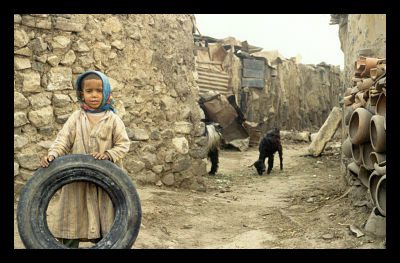
 Despite protests against inhumane living conditions, extreme poverty, government corruption and leadership, poverty in Alexandria, Egypt is still rising.
Overcrowded housing, bias urban development and limited access to food, water, quality health and education are among the root causes of poverty in Alexandria.
Although poverty rates in large urban cities such as Alexandria and Cairo remain high, it does not compare to the percentage of impoverished people in the rural areas of Egypt, also known as “upper Egypt,” and Egypt as a whole. In recent years, poverty rates in Alexandria have increased by one percent and is currently still rising.
According to the World Fact Book, Alexandria’s total population is approximately 4.4 million compared to Egypt’s total population of 86.9 million. Overall, 25 percent of Egypt’s population is in poverty, compared to 15.3 percent of the urban population of Egypt who live in poverty.
As one of the largest cities in Egypt, second to only Cairo, Alexandria’s urban development has caused an inequality of wealth distribution—the more money spent on development in urban cities, the less money spent on rural Egypt.
Essentially, Egypt’s developmental policies are focused in urban areas causing bias that has prompted a high rate of poverty in upper Egypt.
The agriculture sector represents a large percentage of Egypt’s population. These rural areas are home to 40 percent of the country’s population and about 70 percent of the country’s impoverished people. Focusing development in cities like Alexandria have allowed room for neglect in rural parts of Egypt where poverty remains one of the highest compared to other areas in Egypt.
The uneven distribution of development have caused people from rural parts of Egypt to migrate to urban areas such as Alexandria and Cairo. However, the migration only fuels the cycle of poverty and state of underdevelopment in rural areas. Instead of targeting Egypt’s root of poverty in rural areas, the efforts are being focused on urban development.
The inability to reduce poverty in Egypt is blamed on urban development.
A large difference between poverty in Alexandria and rural areas in upper Egypt is the public infrastructure such as electricity, education, health and water. Explaining poverty rates in Egypt is closely tied to the urban development in the metropolitan areas of Egypt, where a large percentage of Egypt’s manufacturing, trading and major constructions is concentrated.
Aside from urban development, education also impacts high poverty rates. There’s a known link between lack of education and poverty—the less education accessed, the higher the rate of poverty.
According to the World Bank, about 46 percent of Egypt’s poor is illiterate and 40 percent have a basic education, while the remaining population have advanced degrees. Fighting poverty in Egypt is not only about development in rural parts of Egypt, but also about education.
Ultimately, focusing efforts on improving education in Alexandria and redistributing development across Egypt can aid in the fight against poverty.
– Nada Sewidan
Sources: CIA World Factbook, Egypt Independent, Save the Children, World Bank
Photo: Flickr

Education in Turkmenistan
Education in Turkmenistan is now a national priority. By partnering up with UNICEF and the U.N., Turkmenistan has been able to provide structure to their education system. Since this team formed, the amount of schooling that children were required to attend has increased.
President Gurbanguly Berdimuhamedow also announced that in all five regions of Turkmenistan, there would be model schools built so that they could promote interactive teaching and learning methods.
Higher education has also been included in the spotlight. One of the primary objectives, underpinning the development and also the improvement of education in Turkmenistan, is the increase in the qualifications and profile of scientific personnel. Currently, young students have the opportunity to receive a professional education that meets international goals.
In 2008, research projects that were supported by the state commenced. Scientists involved in the projects have aimed to address important issues of social development. The goal is to develop and introduce technologies in industry. The advancements have lead to the decision to increase the amount of technology involved in education, which has provided support and a platform for the future of science education in Turkmenistan.
There is, however, some push back from citizens. The teachers feel that the amount of education that is forced may be too much and is producing overstressed students who haven’t grasped the concepts.
Though some of the policies that have been created aren’t perfect, education in Turkmenistan is headed in the right direction. “The conditions have been created in Turkmenistan for young people to receive a world-class education and for companies and organizations to be furnished with highly qualified cadres,” said the president.
– Erik Nelson
Sources: Eurasianet, European Commission, UNICEF
Photo: Turkmenistan Info
Poverty in Alexandria, Egypt
Overcrowded housing, bias urban development and limited access to food, water, quality health and education are among the root causes of poverty in Alexandria.
Although poverty rates in large urban cities such as Alexandria and Cairo remain high, it does not compare to the percentage of impoverished people in the rural areas of Egypt, also known as “upper Egypt,” and Egypt as a whole. In recent years, poverty rates in Alexandria have increased by one percent and is currently still rising.
According to the World Fact Book, Alexandria’s total population is approximately 4.4 million compared to Egypt’s total population of 86.9 million. Overall, 25 percent of Egypt’s population is in poverty, compared to 15.3 percent of the urban population of Egypt who live in poverty.
As one of the largest cities in Egypt, second to only Cairo, Alexandria’s urban development has caused an inequality of wealth distribution—the more money spent on development in urban cities, the less money spent on rural Egypt.
Essentially, Egypt’s developmental policies are focused in urban areas causing bias that has prompted a high rate of poverty in upper Egypt.
The agriculture sector represents a large percentage of Egypt’s population. These rural areas are home to 40 percent of the country’s population and about 70 percent of the country’s impoverished people. Focusing development in cities like Alexandria have allowed room for neglect in rural parts of Egypt where poverty remains one of the highest compared to other areas in Egypt.
The uneven distribution of development have caused people from rural parts of Egypt to migrate to urban areas such as Alexandria and Cairo. However, the migration only fuels the cycle of poverty and state of underdevelopment in rural areas. Instead of targeting Egypt’s root of poverty in rural areas, the efforts are being focused on urban development.
The inability to reduce poverty in Egypt is blamed on urban development.
A large difference between poverty in Alexandria and rural areas in upper Egypt is the public infrastructure such as electricity, education, health and water. Explaining poverty rates in Egypt is closely tied to the urban development in the metropolitan areas of Egypt, where a large percentage of Egypt’s manufacturing, trading and major constructions is concentrated.
Aside from urban development, education also impacts high poverty rates. There’s a known link between lack of education and poverty—the less education accessed, the higher the rate of poverty.
According to the World Bank, about 46 percent of Egypt’s poor is illiterate and 40 percent have a basic education, while the remaining population have advanced degrees. Fighting poverty in Egypt is not only about development in rural parts of Egypt, but also about education.
Ultimately, focusing efforts on improving education in Alexandria and redistributing development across Egypt can aid in the fight against poverty.
– Nada Sewidan
Sources: CIA World Factbook, Egypt Independent, Save the Children, World Bank
Photo: Flickr
Poverty in Suriname
Poverty in Suriname affects nearly one out of every two people. The official rate is 47 percent. Some of the issues contributing to Suriname’s poverty are health, education, child labor, sexual exploitation and violence.
The children of Suriname do not have equal access to health care, which results in the neglect of serious illnesses. AIDS is the number one killer of children who are five and older. Any child that is infected by AIDS often has to be hospitalized immediately because there is no chance of taking care of the child at home. Malnutrition further catalyzes the effects of disease and a large amount of children are often hospitalized because of this.
Education in Suriname is also in shambles. The country favors the development of schools in the capital, leading to severe education inequality. Many primary schools that are not in the capital have teachers that are poorly trained, giving little hope for any improvement over time.
The amount of poverty in Suriname has often led to children having to take on jobs. The fixed age at which a child can start working is 14; however, eight percent of children ages five to 14 work, often in the agricultural industry where they are exposed to toxins.
Due to discrimination, there is also a lot of violence among the inhabitants of Suriname. The country is composed of several ethnicities and those belonging to the smallest group of minorities often get slighted when it comes to basic rights. These marginalized groups are often subject to forced labor and sexual exploitation.
There are improvements happening in Suriname though. For one, Suriname’s stance on child labor has improved. In 2013, Suriname made a moderate advancement in efforts to eliminate the worst forms of child labor. Recently the age limit for employment increased to 18. Increasing the capacity to enforce all child labor laws is also a goal for Suriname.
Education is also seeing improvements. The Netherlands Institute for Curriculum Development, or SLO, has been actively participating in the development of the Surinamese basic education curriculum. Another sector in which we see the poverty in Suriname being addressed is the housing market. The Inter-American Development Bank supported Suriname by providing a single upfront subsidy for the poorest families to build new homes or improve an existing solution.
– Erik Nelson
Sources: Humanium, Inter-American Development Bank, Netherlands Institute for Curriculum Development, U.S. Department of Labor
Photo: Flickr
Hunger in Mozambique
Underlying causes include inadequate nutritional intake due to poor diet diversity, low meal frequency, poor breastfeeding practices, high levels of disease and teenage pregnancy. The high incidence of HIV infection further aggravates the malnutrition that people suffer.
The U.N., the World Food Programme and The Hunger Project have all come together to help fight hunger in Mozambique. Mozambique is a “Delivering as One” country meaning that all U.N. agencies, if logistically capable, contribute toward a U.N. Development Assistance Framework. The UNDAF and the WFP have aligned priorities in Mozambique, and Mozambique is benefiting from it.
The WFP has two distinct programs that are set to run this year: the Country Program, or CP, and the Protracted Relief and Recovery Operation, or PRRO.
CP pursues the WFP’s transition from food aid to food assistance, supporting and enhancing government programs to constitute sustainable, national solutions to food insecurity through prevention, protection and promotion. The program attempts to stimulate local economies using innovative delivery methods of payment such as cash, vouchers and mobile phone transfers.
The five main components of the CP are school meals, social protection, nutrition, risk reduction and market access.
WFP’s other program dedicated to fighting hunger in Mozambique, PRRO, provides food assistance in support of response and early recovery activities, targeting the disaster-affected as well as displaced persons who have sought refuge in Mozambique. CP is a program centered on sustainability and growth while PRRO is centered on disaster relief due to the surrounding circumstances of the location of Mozambique. The key approaches of the PRRO are relief activities (sudden onset emergency), early recovery activities (post-relief assistance) and capacity development.
WFP and the U.N. aren’t the only ones that are fighting the hunger in Mozambique; The Hunger Project is also on the front line. THP works to build sustainable community-based programs using their Epicenter Strategy. An epicenter is a dynamic center of community mobilization and action, as well as an actual facility built by community members. Epicenters bring together 15,000-20,000 people from rural villages and give the groups a voice that has more influence than if they did not band together.
In Mozambique, there are three epicenters. These epicenters serve a population of about 22,200 partners in 10 villages. With the epicenters functioning at full capacity, the local areas will see an increase in economic sustainability and, therefore, more food security.
The U.N., the World Food Programme and The Hunger Project have all been aiding Mozambique for the past decade. Together these organizations have been providing beneficial practices spanning from immediate emergency relief to sustainability to community building programs.
– Erik Nelson
Sources: The Hunger Project, World Food Porgramme
Photo: Flickr
Anti-Poverty Projects Win Nutrition Awards
The contest, known as Harvest Nutrition, was launched jointly by the Global Alliance for Improved Nutrition, or GAIN, the SecureNutrition Knowledge Platform—which is funded by the World Bank Group—and Save the Children UK.
In hosting the contest, the three organizations aimed to showcase projects that “showed the linkages between agriculture, nutrition, and food security,” and that addressed “the principal challenges of integrating a nutrition sensitive approach to agriculture and food security programs.” The awards were granted in three main categories: most scalable approach, most innovative approach and most impact on nutrition.
The three winning projects were awarded $5,000 each in grant funding and are listed as follows:
1. Impact on Nutrition (Zambia): Realigning Agriculture to Improve Nutrition (RAIN)
“Aiming to increase year-round availability of and access to high-quality foods at the household level, data from RAIN show encouraging results, with increased production of various micronutrient-rich crops, such as leafy green vegetables, and increased dietary diversity during both the hunger and post-harvest seasons. Rigorous data collection and analysis, conducted by the International Food Policy Research Institute (IFPRI), is integrated into the program design. Implemented by Concern Worldwide.” – World Bank
2. Innovation (Kenya): Shamba Shape Up
“A ‘make-over’ style reality television show targeting rural smallholder farmers, Shamba Shape Up is a clear standout as an innovative platform for presenting and disseminating nutrition messages. Shamba Shape Up, which is implemented by The Mediae Company, reaches more than 10 million farmers in East Africa with tools and information to improve productivity and income on their farms.” – World Bank
3. Scalability (West, Central, and East Africa Regions): N2Africa
“This large-scale multi-country ‘research to development’ project is promoting new technologies for improving productivity of legumes such as groundnut, cowpea and common bean—commonly regarded as women’s crops. N2Africa, which is implemented by Wageningen University, works with a wide variety of stakeholders across the value chain from seed to fork, and from field to market. A strong evaluation system provides the basis for ongoing feedback and learning.” – World Bank
– Katrina Beedy
Sources: Bill and Melinda Gates Foundation, World Bank
Photo: Flickr
Five Reasons People are Hungry in Equatorial Guinea
1. Ignorance
Many Americans are culturally illiterate when it comes to Africa as a whole. They do not know how many countries there are, much less the individual distinctions between those countries. When casually asked about the location of the 2010 World Cup, most of them shrug and reply, “Africa.” What follows is a fair amount of “voluntourism,” our second reason.
2. Voluntourism
“An act carried out by … hoards of … the great unwashed backpacker brigade descend on a place to do have a jolly nice holiday—usually at precious little cost to themselves—and do the occasional bit of good work.” The Urban Dictionary definition says it all. Voluntourists seldom go to Africa because they are dedicated to ending the suffering of African women or children. Instead, it’s become a social rite of passage and a booster for résumés and college applications.
Lauren Kascak—a three-time, self-admitted voluntourist herself—asserts, “Voluntourism is ultimately about the fulfillment of the volunteers themselves, not necessarily what they bring to the communities they visit … In Ghana … local people weren’t purchasing health insurance, since they knew there would be free foreign health care and medications available every few months. This left them vulnerable in the intervening times, not to mention when the organization would leave the community.”
3. Misplaced priorities
Closely related to voluntourism, many people who do come to Equatorial Guinea with a helpful mindset end up not helping in ways that have lasting impacts. It is said that if a man is given fish, he will only have food for one day. Many altruists are, sometimes literally, the fish-givers. For this reason, it cannot be stressed enough the importance of diversifying aid beyond handouts and freebies. Otherwise, the very “Others” whom altruists try to help become dependent upon the latter’s aid, eventually stunting economic growth on a grand scale.
4. The Paradox of Plenty
Equatorial Guinea is not a poster child nation of poverty; it struck oil in 1995 and is now perceived as relatively wealthy. However, its people remain stuck in poverty because the government also has misplaced priorities. While it has increased the annual amount spent on public works, less than half of Equatorial Guinea’s population has access to clean drinking water. Its child mortality rate remains near 10 percent. Why? That brings us to point five.
5. Corruption
Ahh, the old C-word is back. The leaders of Equatorial Guinea, since its independence in 1968, have ruled over the small country with a dictatorial, terroristic mindset. Its first leader following independence was Francisco Macias Nguema: a dictator who ordered the deaths of thousands of opponents, including some of his own family members. He remains known as “one of the most kleptocratic, corrupt, and dictatorial leaders in post-colonial African history.” His successor and nephew, Teodoro Mbasogo, may not be much better. Mbasogo may not be connected to a possible Bubi genocide, but Human Rights Watch maintains that he has used the oil boom to carry on the kleptocracy that his predecessor instituted.
– Leah Zazofsky
Sources: BBC, Urban Dictionary, The Society Pages, The Ottawa Citizen
Photo: Human Rights Watch
How to End Global Poverty Today
According to USAID, approximately 1.2 billion people around the world currently live in poverty. However, from 1990 to 2010, global poverty has been cut in half and continues to decline today. The ultimate goal in this fight against global poverty is to eradicate it until it is no longer part of the world.
Although ending global poverty is not an easy feat, it is possible. Providing impoverished countries with the necessary tools to create a self-reliant community is an essential step. Tools such as education, healthcare and water are important influences on poverty.
Building clinics, water sources such as wells and schools for education can reduce the economic instability that exists in impoverished countries. Workshops on effective farming methods and fundamental knowledge can influence the day to day lives of the poor. By providing these tools, people can begin to translate what they have learned into their livelihood, which will in turn break the cycle of poverty and create a community with economic security.
Answering the question of how to end global poverty then becomes a matter of how to obtain and provide these necessary tools. The answer: creating a community of advocates.
When people are aware, committed and active regarding an issue such a global poverty, change occurs.
One of the ways the public can contribute is by raising awareness in the local community. The more people who are aware of the cause, the higher the chance of impact.
People can use their power of speech and right to vote to make the efforts to end global poverty known. Calling or emailing senators and local representatives in support of poverty-reducing bills can influence the amount of help given to fight global poverty.
Donating money and volunteering time to organizations that aid in the fight is another way to effect change. The Hunger Project and The World Food Programme are examples of organizations that use unique and effective methods to act against poverty. Coming up with new and creative platforms that engages the community is also another method.
It’s not about how large the act, but about the amount of people who act alongside the cause. It can be a phone call in support of a bill or an open mic night performance to raise awareness. It can be as simple as investing or donating money to the cause or volunteering time with an organization. It can be using power of speech to raise awareness or using the freedom to vote in support of a bill.
It can be a large or small contribution, but it’s a contribution nonetheless. The goal of ending global poverty becomes reality when the community as a whole comes together to fight. It can make an impact, and it can move the cause forward until poverty is completely eradicated.
In the words of JFK, “One person can make a difference and every person should try.”
– Nada Sewidan
Sources: USAID, The Borgen Project
Photo: Productive Flourishing
Poverty in Bangladesh
Bangladesh is a striking success story in the fight against global poverty. The World Bank has called it a role model for the rest of the world. Between 2000 and 2010, Bangladesh lifted 16 million people out of poverty, a 26 percent reduction. It has also done a remarkable job at lowering its birth rate and slowing its rate of population growth, though its population is still growing and overpopulation and overcrowding remain serious problems.
The aid finances three new development projects. One of the new projects being financed will build 552 new public shelters to house storm victims. Another aims to raise primary school enrollment to 98 percent and raise graduation rates to 80 percent. The third provides income assistance to several million poor families and aims at improving child nutrition. Bangladesh still has one of the ten highest rates of child malnutrition in the world.
The government of Bangladesh aims for it to become a middle-income country by the end of the decade. The World Bank has played an important role in providing aid to help make this goal a reality. Since independence it has provided $19 billion to Bangladesh and is currently spending $7.5 billion to finance 32 development projects. The World Bank says that Bangladesh is “key” to the fight against global poverty because of its large population.
Despite all the progress and praise, there is still a long way to go. Bangladesh still has an estimated 47 million people living in poverty and raising their living standards remains a daunting task.
Bangladesh has a lot of work to do in terms of raising living standards and developing its economy before it can be called a middle-income country, but its government and aid donors are ready to rise to the challenge.
– Matt Lesso
Sources: World Bank 1, BBC 1, BBC 2, Finchannel, Reuters, World Bank 2
Photo: Water Aid
Helping the Marginalized Reduces Conflict
Violent extremism is perhaps the greatest present threat to world stability because terrorism has no borders; it is a global crisis. There is no definitive solution to violent extremism, which has recently caused thousands to move from their homes and even cost them their lives.
Conflict and global poverty are connected, and the more people are marginalized, the farther conflict will spread. People become marginalized when they are pushed to the edge of society instead of finding a place within it. An EQ Review article states that “some [people] can become skeptical, embittered or violent, and they often model and raise children to think and act similarly.” Violence and conflict become a way of life and a solution to unstable societies and difficult upbringings. The desperation for a “better” life pushes people to drastic measures, increasing marginalization, poverty and violent extremism.
According to an EQ Review article, “political and social turmoil in [many regions] has resulted in the abduction and recruitment of young soldiers, extensive socio-economic and cultural upheaval, and extreme poverty.” The Borgen Project notes “that investments, non-military tools of development, and diplomacy…strengthen our allies and fights the spread of poverty, disease, terrorism and weapons of mass destruction.” Halting the spread of conflict is vital in a new era of technology and transnational terrorism.
But there is hope. By educating the youth of impoverished nations, security and opportunities are both created. Ban Ki-moon states in the interview that the United Nations is doing everything it can to find a solution that will affect global politics as well as global poverty.
– Alaina Grote
Sources: PBS, USAID, The Borgen Project
Photo: Yemen Fox
Zimbabwe’s New Currency May Call for More Change
In 2008, inflation in Zimbabwe soared to nearly 80 percent, prompting the African country to opt out of the Zimbabwean currency and switch to the U.S. dollar. However, many Zimbabweans are finding themselves literally waiting for change—pocket change, that is.
There is little to no access to American coins, forcing shopkeepers and others sellers to give pens, sweets or chewing gum as change for American dollars. Zimbabwe now faces the opposite problem it had before: instead of money being worth too little, it is now worth too much.
To the average Zimbabwean, an American dollar is a lot of money. However, coins are more expensive to ship than dollars, and therefore it has proved a difficult task to get American coins to Zimbabwe. Last month, the national bank began issuing “bond coins,” denominated in American cents, to be used only in Zimbabwe.
Besides Zimbabwe, four other countries have adopted the use of the U.S. dollar, but also hang on to a national currency, even if it is not in circulation. Countries that use the dollar get around the “coin problem” by minting local coins. But that requires confidence in the local government, something that is in even shorter supply in Zimbabwe than coins. Zimbabweans say they want “no legal tender issued by their government.”
There have been many improvements provided by the currency change. Zimbabwe’s economy has been rocky; between 1990 and 2003, the poverty rate rose from 25 percent to 63 percent due to the political and economic crisis. By wiping out inflation, the U.S. dollar saved Zimbabwe from a potential economic collapse that would have plummeted the country even deeper into poverty. After inflation stopped and normal commerce resumed, importers experienced reduced transaction costs.
The economy may be growing, but it rests on a rocky foundation. The government has remained under the same leaders since the 1980s, and Zimbabweans receive very little from it. Even as education expands, employers receive improper training, funds and wages. Mining used to carry Zimbabwe, but now the government has adopted an indigenization policy, and deposits of gems and minerals are nearly exhausted. Commodity prices are falling and fewer investors are getting involved in Zimbabwe’s unstable economy.
If Zimbabwe sees no improvement in the economy, poverty will continue to rise throughout the country. Zimbabwean officials claim that the economic growth of the country fell in 2014 from six percent to three percent. However, as the country learns more about the U.S. monetary system, expands education and revises the government, Zimbabwe is on the track toward a brighter future, with enough change to go around.
– Alaina Grote
Sources: Economist, NY Times, Rural Poverty Portal
Photo: Go To Think Tank