The John D. and Catherine T. MacArthur Foundation is one of the largest independent foundations in the U.S. With $6.3 billion in total assets as of Dec, 31, 2013, the MacArthur Foundation had authorized more than $228.4 million in grants with operations in the U.S. and more than 50 countries worldwide in 2013 alone. Since 1978, the Foundation has made grants totaling an astounding $5 billion.
The Foundation supports creative people and effective institutions that are committed to building a more just, verdant and peaceful world. The foundation also “selects the MacArthur Fellows, works to defend human rights, advance global conservation and security, make cities better places, and understand how technology is affecting children and society.”
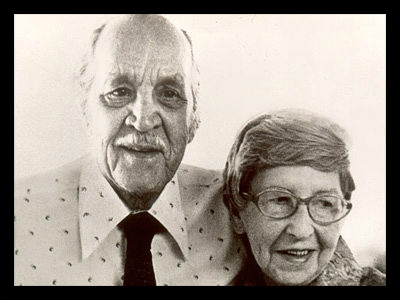
Founders and quiet philanthropists John D. (1897-1978) and wife, Catherine T. (1909-1981) MacArthur spent the majority their lives in Chicago and Palm Beach. Both of the MacArthur’s were extremely successful in their business and philanthropic endeavors. John MacArthur developed and owned Bankers Life and Casualty Company among other businesses and considerable amounts of property in Florida and New York. Catherine MacArthur held positions in many of his companies and served as the director of the Foundation.
The first decade of the Foundation posed many challenges. There were many debates over assets, good value responsibility, grant-making strategies, staff assembly and relationship establishment. The second decade saw a rapid expansion and held a lot of experimentation. Assets grew and John MacArthur’s real estate holdings were liquidated to fund new projects and ventures— mostly geared towards the Chicago area. During the third decade, the Foundation made their values clear, established a mission: committed to building a more just, verdant, and peaceful world, as well as deepening many other investments and holding many successes.
MacArthur’s Four Programs
Through the support it provides, the Foundation makes grants and loans through four programs. According to their website, “The Foundation fosters the development of knowledge, nurtures individual creativity, strengthens institutions, helps improve public policy, and provides information to the public, primarily through support for public interest media.”
The first of the programs focuses on international issues including human rights, international peace, justice, security, conservation, sustainable development, and many more. MacArthur grantees work in more than 60 countries and have offices in India, Mexico, Nigeria and Russia.
The second program addresses issues inside of U.S. borders including community and economic development, housing, juvenile justice reform, education and many more. This program also focuses a great deal on policy research.
MacArthur’s third program, Media, Culture, and Special Initiative, supports public interest journalism, including analytical and investigative news reporting and documentary films. Through this program, the Foundation awards grants to more than 300 theaters, museums, and music organizations in Chicago. The program also works to strengthen American democracy through “discovery grants” in an effort to advance innovative approaches to important social problems in various fields.
The final program, The MacArthur Fellows Program awards unrestricted $625,000 fellowships to talented individuals who have displayed an immense amount of originality and dedication in their creative pursuits and a marked capacity for self-direction.
2015 Recipients Announced
Recently, nine nonprofit organizations received the MacArthur Award for Creative & Effective Institutions grants for 2015. The grants ranged from $350,000 to $1 million. These awards have been given out since 2006 and are aimed at organizations that previously received help from the MacArthur Foundation. An interesting fact about this great organization is that the MacArthur Foundation does not seek or accept nominations for the awards.
– Eastin Shipman
Sources: MacArthur Foundation 1, MacArthur Foundation 2, MacArthur Foundation 3, ABC News
Photo: Mac Found

Growing Poverty in Hong Kong
According to a study conducted by Professor Maggie Lau of the City University of Hong Kong in the Department of Public Policy research shows that poverty in Hong Kong is vast.
Dr. Lau’s study aims to focus on various socio-economic groups in order to understand how poverty affects these different groups. The groups include lone parents, couples with children, those without children, single adults and the elderly. The research conducted on these different demographics serves to specify which groups in particular are facing the highest levels of poverty.
Recently, Hong Kong fell in the rankings for being a “livable city” due to the high cost of living and large population. With a widening inequality gap, the wealthier are accruing more while the poor are falling more deeply into poverty. Aid in the form of government services is relatively nonexistent.
“Some of the poor are moving from temporary poverty to chronic poverty and intergenerational poverty,” according to Liu Yuanchun, director of the National Academy of Development and Strategy at Renmin University of China.
Chronic poverty is linked to structural poverty meaning that they do not benefit from economic growth. This type of poverty is described as “chronic” because the affected populations are entrenched in poverty for the majority of their lives.
“This means that understanding the manifestations, attributes and social dynamics of chronic poverty to develop additional national and international interventions is crucial.” The underlying cultural and social context of poverty in Hong Kong must be understood in order to develop policies that are effective.
Poverty is becoming institutionalized in the city center where social services and government intervention is lacking. About one out of seven million of the inhabitants of Hong Kong are living in poverty.
The dynamic and rich culture that Hong Kong attracts money and professionals from all over the world. However, it’s falling in terms of its livability standards— there are other city centers that offer many of the same features flike Singapore and Tokyo.
The prices of property were raised to astronomical levels in 2003 when the price of housing went up over 300 percent. Although small government in business is a popular staple of life in Hong Kong, government intervention needs to be more urgent or people will begin moving to other places to do business.
– Maxine Gordon
Sources: Poverty and Social Exclusion in Hong Kong, China Daily 1, China Daily 2, Market Watch, Chronic Poverty Research Center
Photo: Daily Mail UK
MacArthur Foundation Quietly Leads Way
The John D. and Catherine T. MacArthur Foundation is one of the largest independent foundations in the U.S. With $6.3 billion in total assets as of Dec, 31, 2013, the MacArthur Foundation had authorized more than $228.4 million in grants with operations in the U.S. and more than 50 countries worldwide in 2013 alone. Since 1978, the Foundation has made grants totaling an astounding $5 billion.
The Foundation supports creative people and effective institutions that are committed to building a more just, verdant and peaceful world. The foundation also “selects the MacArthur Fellows, works to defend human rights, advance global conservation and security, make cities better places, and understand how technology is affecting children and society.”
Founders and quiet philanthropists John D. (1897-1978) and wife, Catherine T. (1909-1981) MacArthur spent the majority their lives in Chicago and Palm Beach. Both of the MacArthur’s were extremely successful in their business and philanthropic endeavors. John MacArthur developed and owned Bankers Life and Casualty Company among other businesses and considerable amounts of property in Florida and New York. Catherine MacArthur held positions in many of his companies and served as the director of the Foundation.
The first decade of the Foundation posed many challenges. There were many debates over assets, good value responsibility, grant-making strategies, staff assembly and relationship establishment. The second decade saw a rapid expansion and held a lot of experimentation. Assets grew and John MacArthur’s real estate holdings were liquidated to fund new projects and ventures— mostly geared towards the Chicago area. During the third decade, the Foundation made their values clear, established a mission: committed to building a more just, verdant, and peaceful world, as well as deepening many other investments and holding many successes.
MacArthur’s Four Programs
Through the support it provides, the Foundation makes grants and loans through four programs. According to their website, “The Foundation fosters the development of knowledge, nurtures individual creativity, strengthens institutions, helps improve public policy, and provides information to the public, primarily through support for public interest media.”
The first of the programs focuses on international issues including human rights, international peace, justice, security, conservation, sustainable development, and many more. MacArthur grantees work in more than 60 countries and have offices in India, Mexico, Nigeria and Russia.
The second program addresses issues inside of U.S. borders including community and economic development, housing, juvenile justice reform, education and many more. This program also focuses a great deal on policy research.
MacArthur’s third program, Media, Culture, and Special Initiative, supports public interest journalism, including analytical and investigative news reporting and documentary films. Through this program, the Foundation awards grants to more than 300 theaters, museums, and music organizations in Chicago. The program also works to strengthen American democracy through “discovery grants” in an effort to advance innovative approaches to important social problems in various fields.
The final program, The MacArthur Fellows Program awards unrestricted $625,000 fellowships to talented individuals who have displayed an immense amount of originality and dedication in their creative pursuits and a marked capacity for self-direction.
2015 Recipients Announced
Recently, nine nonprofit organizations received the MacArthur Award for Creative & Effective Institutions grants for 2015. The grants ranged from $350,000 to $1 million. These awards have been given out since 2006 and are aimed at organizations that previously received help from the MacArthur Foundation. An interesting fact about this great organization is that the MacArthur Foundation does not seek or accept nominations for the awards.
– Eastin Shipman
Sources: MacArthur Foundation 1, MacArthur Foundation 2, MacArthur Foundation 3, ABC News
Photo: Mac Found
Malaria No More
Every 60 seconds, a child dies from a preventable and curable disease that claims the lives of 453,000 children per year—90 percent of those in Africa.
Malaria is considered one of the top three causes of death for children worldwide. But there’s one nonprofit that’s taking on the challenge to slow down the clock and lower its global threat to about half the world at risk. Malaria No More is dedicated to bringing an end to malaria deaths by engaging leaders, rallying the public and delivering lifesaving tools and education to families across Africa.
With the rate of 13,000 children losing their lives to a mosquito bite everyday, it is a critical time for this nonprofit to do its work efficiently and effectively. They do this through two sectors: lifesaving commodities and health education.
Malaria No More has covered over five million people with mosquito nets in at least 17 African countries, which to date is the surest way to prevent malaria. In Senegal, the organization conducted the first universal coverage of mosquito net distribution. In Cameroon, they inspired over 500,000 people to sleep under mosquito nets with their education campaign.
In the Fall of 2013, Malaria No More launched a campaign to deploy rapid diagnostic tests and artemisinin-based combination treatments to reduce malaria deaths in children. Rapid-diagnostic tests help expand the world’s ability to confirm malaria cases in remote settings and ensure that people get the right treatment where they need it. Likewise, artemisinin-based combination therapies act as a powerful treatment for malaria with a full course costing just one dollar to buy and deliver, curing a child one to three days time.
In addition to these lifesaving commodities, Malaria No More offers health education, which plays a vital role to preventing, diagnosing and treating the disease. For example, their NightWatch initiative has reached at least 20 million Africans by engaging mobile platforms and African leaders, from international music icons to local sports heroes, to deliver lifesaving health education.
Malaria No More works on the ground to make sure that every family in Africa has timely access to the resources they need, whether it’s providing mosquito nets to sleep under at night or the one dollar full-course treatment.
Other solutions the nonprofit suggests include indoor residual spraying to help kill mosquitoes and reduce the rate of malaria transmission in addition to the development of more vaccines for malaria and support via government funding.
Though foreign aid represents less than one percent of the U.S. federal budget, all efforts make an impact on the ground. Bridging the current funding gap and helping countries deliver lifesaving resources will help bring down the rate of malaria deaths. Since 2000, malaria mortality rates have fallen about 60 percent among children under the age of five, but there’s still much more work to do.
Thanks to technology behemoth Google, Malaria No More is closer to reaching their goals. In December 2014, Google made a huge move toward fighting against malaria by announcing a $600,000 grant to help fund a mobile phone project to combat the disease.
So how does it work? Since many Africans communicate via mobile phones, there’s no better way to collect data and send them vital information that details preventative measures that can save those in targeted areas from one of the most deadly diseases. Malaria No More will partner with a Nigerian startup called Sproxil, which helps fight the counterfeit drug market by putting codes on authentic medicines. Anyone who purchases these can now text the codes to verify the drugs.
In addition, texting codes allows Malaria No More to receive data on what drugs people are taking in remote areas as well as track the spread and treatments for the disease.
– Chelsee Yee
Sources: Malaria No More, Geek Wire, Fighting Malaria
Photo: Malaria No More
Senate Subcommittee on Immigration Renamed
As the 114th Congress settles into a regular routine, committee and subcommittee chairs are being announced. Notably, Sen. Jeff Sessions (R-AL) was announced as the chairman for the Senate Subcommittee on Immigration, Refugees and Border Security.
Sen. Sessions expressed his desire for stricter immigration control in the past, saying that immigration reform is a term “reserved for proposals which benefit everyone but actual American citizens.” He also pushed back against President Barack Obama’s executive actions on immigration.
The Senate Subcommittee on Immigration, Refugees and Border Security, renamed the Senate Subcommittee on Immigration and the National Interest after Sen. Sessions took over, is a subset of Senate Committee on the Judiciary. Its jurisdiction encompasses immigration, citizenship and refugee laws and the immigration functions of the Department of Homeland Security, Department of Justice, Department of State, Department of Labor, Department of Health and Human Services Office of Refugee Resettlement and Immigration and Customs Enforcement.
On Jan. 26, 2015, Sen. Sessions released a 25-page guide entitled the “Immigration Handbook for the New Republican Majority.” The handbook covers executive amnesty, immigration economics and effects on welfare, concluding with questions about the immigration debate in the U.S.
The subcommittee handles refugee policy in the U.S., which is a foreign policy issue that receives little floor time in the House and Senate and even less funding and support. Refugee programs run through a complex system of departments and offices, including USAID, Department of Homeland Security, Department of State, Department of Health and Human Services and U.S. Immigration and Customs. The sheer number of hoops to jump through for funding, visas or support can be daunting for both advocates and refugees themselves.
Immigration debate in the U.S. took a rare humanitarian turn last year when reports revealed the staggering number of minors crossing over the Mexican/U.S. border out of Central America. Many of these minors are fleeing extreme poverty, violence and illegal economic activities.
Sen. Sessions’ subcommittee will likely decide the outcome of the dangerous journey many take to flee poverty and violence.
– Caitlin Huber
Sources: Politico, U.S. Senate 1, U.S. Senate 2, Breitbart
Photo: ProPublica
Education in Lesotho in Need of Improvements
Lesotho, a former British colony landlocked within South Africa, is lacking in a variety of statistical measures ranging from poverty to education. While new standards implemented in the past 15 years have brought about improvements in many of these areas, more remains to be done.
In 2010, 56 percent of residents in Lesotho lived on less than $1.25 a day, nearly one in ten infants died before the age of five, and 41 percent of the nation’s wealth was held by those in the top 10 percent of the national income bracket.
By 2013, economic circumstances had changed very little. Life expectancy was 48 years, GDP per capita was approximately $1,125, the nation had the third highest rate of HIV in the world, and 12 percent of the population remained orphaned.
While Lesotho’s education statistics fare slightly better than economic ones, Lesotho lags behind other nations. Moreover, in contrast to most developing nations, an educational gender gap exists that favors females over males in the early grades.
According to the World Bank database, in 2012, 82 percent of female children in Lesotho completed primary school, compared with only 64 percent of male children.
The gender gap appears to close in secondary school. In 2011, 75 percent of both males and females progressed to secondary education.
The gap seemingly widens again once the population reaches the labor force, this time in favor of the male population. According to the World Bank, the male unemployment rate in Lesotho stood at 3.6 percent in 2013, compared with 28.3 percent for females during the same period.
Beginning in the year 2000, the government of Lesotho has made efforts to reform the education system, offering free primary education for all students aged 6 through 13.
While implementing free and compulsory education for all students is an important first step, education officials are wary of the fact that a need for well-trained teachers, textbooks and better school infrastructure must not be overlooked.
The Education Act 2010 addresses these areas of concern, and makes special efforts to integrate orphaned, impoverished and HIV-affected children into the education system.
– Katrina Beedy
Sources: BBC, Lesotho Government, African Online News, World Bank 1, World Bank 2, World Bank 3, World Bank 4, World Bank 5, World Bank 6, World Bank 7, World Bank 8, World Bank 9,
Photo: Encyclopedia Britannica
Manifestations of Poverty in Surat, India
The city of Surat, located in the state of Gujarat near the western coast of India, has seen rapid population growth and development in recent years. Although India has also gradually seen a significant drop in poverty, overpopulation in regions like Surat contributes to the perpetuation of poverty.
According to reports from The Guardian, Surat ranks fourth in the world in terms of speed of development. A 2011 census placed Surat’s population at approximately 4.5 million, up from 2.8 million in 2001. As a result of the quick spike in population, many of Surat’s inhabitants now live in unsanitary conditions and face a dire economic situation.
Aside from the issues that arise from overpopulation, Surat may soon face harrowing consequences as a result of global climate change. Due to its proximity to India’s western coast, Surat is expected to face recurrent flooding sometime in the next few decades. Rapid urbanization has compounded the risks of flooding, blocking outlets for runoff. Higher temperatures associated with global climate change are expected to further exacerbate monsoon rains and flooding. With stagnant water and higher temperatures, conditions would be ripe for mosquitos, increasing the risk of malaria and other diseases.
The city has begun to implement proactive measures such as creating flood plans, building weather stations and hiring new “resilience” staff in order to better prepare for disaster. Along with increased urbanization, Surat faces high rates of unemployment and poverty.
Across India, unemployment disproportionately affects women. In 2013, only 27 percent of the female population aged 15 and over was active in the labor force, whereas 80 percent of the male population 15-years-old and over was working during that same period.
In Surat, financial instability prompts some women to turn to non-traditional methods of income, including surrogacy. According to a study carried out by the Centre for Social Research, 88.6 percent of surrogate mothers interviewed in Surat reported that poverty drove them to surrogacy. Another 94.1 percent of respondents cited unemployment as the main reason.
The study notes that cheap medical services coupled with lax regulations make Surat and other regions in India a popular destination for those seeking surrogate mothers. Whereas surrogacy costs can range between $59,000 and $80,000 in the U.S., these rates can be as low as $10,000 to $35,000 in India.
While non-traditional work provides some financial stability. Changes in climate and a growing population are causes of concern when considering sustainable poverty reduction methods.
– Katrina Beedy
Sources: Census 2011, The Guardian, Counterview.org
Photo: BBC News
Child Soldiers Freed in South Sudan
More than 250 children have been freed from a South Sudanese militant group called The South Sudan Democratic Army Cobra Faction. The militia has been fighting for four years, hoping to win greater rights for the Murle ethnic group.
After a peace agreement between the militia and President Salva Kiir’s government was finalized, the boys, ages 11-17, were released after years of toting AK-47s, raiding homes and cattle farms and taking part in deadly revenge attacks throughout South Sudan. Hundreds gathered in Gumuruk, South Sudan to watch the child soldiers be released back to their homes and families, although many have been displaced or killed.
The release of the 280 boys is the first of a series of releases that will eventually free an estimated 3,000 children from the militia. According to UNICEF, approximately 12,000 children have been forcibly recruited by armed groups to fight the civil war, which has increasingly worsened since December of 2013.
South Sudan has been riddled with violence and poverty for years, and the civil war has provided a cruel security for the young soldiers. One child soldier, 12-year-old Steven, said that he joined the militia willingly three years ago.
“There was nothing for me in Pibor – no roads or hospitals or even schools. Sometimes there was no food … But life in the faction was not good. There is no rest,” reported the child soldier.
Another boy, James, 13-years-old, said he joined after the deaths of his sister, uncle, grandfather and other family members. The military can provide shelter, water, purpose and a sense of safety.
Many of the freed children express their concerns of their unpredictable futures. With more than 1.5 million people displaced since the war, many of the boys have no way to contact their families, if they are even still alive.
At the ceremony on the day of the soldiers’ release, a former leader wiped tears from his eyes as the children recited their military chant for the last time. He said to the young children: “That song you sing, that is an adult struggle.”
UNICEF and many others are working to pave a path to success and peace for the young boys. After witnessing and participating in the horrors of the civil war, the boys are left with nightmares and instability. Counseling and social support will be provided to each child, depending on individual experiences and reactions. Family tracing units have been set up and hope to reunite as many children as possible with families. The most important thing to provide for these children is a sense of normalcy and a protective environment, free from violence and war. Many of the young boys are most looking forward to education.
“I don’t know how long I’ve lived in the faction— I don’t know how to count. I want to go to school now. I have never been to school,” said Joseph an 11-year-old.
The release of the child soldiers and the peace agreement gives a small sense of hope that the end of a civil war in South Sudan may be near.
– Alaina Grote
Sources: BBC, Euro News, The Guardian, Reuters, Thomson Reuters Foundation
Photo: Amazon AWS
Over Half of Russian Population at Poverty Line
According to a recent survey from the Moscow-based Financial University, more than half of the Russian population suffers from economic deprivation.
The study was not based on income. Rather, respondents were asked how far their earnings tend to go, on a scale from “just barely enough for food” to “enough for everything, including real estate.” Fifty-four percent of those surveyed said that they could not afford more than basic necessities.
According to the survey, which spanned 35 cities, the poorest respondents were concentrated in the central Volga region. Tolyatti, a city of 720,000 on the Volga River, was identified as the poorest of the 35 cities studied.
Tolyatti, home of Russia’s leading car maker AvtoVAZ, is a particularly interesting case because of its high proportion of ‘critically poor’ young men. The study argues that Tolyatti’s demographics puts the city at high risk for social upheavals, citing the link between unemployment in young men and uprisings in the Arab Spring.
Left reeling from nose-diving oil prices and combined U.S. and EU sanctions, Russia is heading into its biggest economic downturn since 2011, when economic contraction prompted the biggest protests of Putin’s 15-year-rule.
“The question of poverty has a major socio-political significance because of the risk of social unrest if citizens’ living standards decline,” said the report.
It is also important to note that while the survey identified cities in the central Volga region as the poorest of the 35 cities surveyed, Russia’s most impoverished people live predominately in small villages and towns that were not included in the study.
However, economic geographer and Moscow State University Professor Natalia Zubarevich believes that rural-dwelling Russians will be among the most resilient in the face of economic recession.
“People from villages and small towns survive on the land, so they will plant more potatoes and tomatoes,” Zubarevich said. “They will not have to change their way of life [as much].”
Conversely, Zubarevich believes that the rugged individualism of urban life will be conducive to social unrest in Russia’s major metropolises. “As a rule, people there [in big cities] always look individually for an exit strategy from their problems. They don’t tend to find cohesion the way that residents of smaller cities do,” explained Zubarevich.
– Parker Carroll
Sources: The Moscow Times, Russia and India Report, Toronto Star
Photo: Flickr
Poverty in Ankara, Turkey
Ankara is Turkey’s capital and its second-largest city, second only to Istanbul. As more refugees from Syria seek refuge in Turkey, poverty rates increase.
Ankara’s skyscrapers and views make it a popular tourist destination, yet, evidence of poverty is littered throughout the city. The poverty line for Turkey is $4 USD per day. The number of individuals and families living below the poverty line is increasing as more and more Syrians cross into Turkey. Food is scarce among the poor and sanitary living conditions are growing increasingly rare. Approximately 20 percent of people in Ankara are living in poverty.
Poverty is connected with the level of education a person has, and in Ankara, education is a rare opportunity for many, particularly girls and women. Women do not usually work in Ankara, and if they do, they are limited to low-paying jobs such as babysitting or housecleaning. Women’s duties are primarily childcare and taking care of sick or elderly family members. In many cases, mothers pass duties down to their young daughters, who are then forced to quit school in order to maintain the household. Poverty has become cyclical in Ankara.
In Ankara, 13.1 percent of women are illiterate, while 5.1 percent of men are illiterate. In nearly all cases of poverty and migration, the reasons why women migrated from rural to urban areas are due to marriage or husband’s job, while men mostly migrate because they are searching for a job.
The a lack of adequate shelters and sanitary environments in Ankara further contribute to the dire circumstances of the urban poor. Health is also a growing concern in poor neighborhoods, which are often overcrowded, allowing diseases spread easily among individuals.
For Ankara, Turkey, the key to reducing and eliminating poverty may lie in education. As children are educated, a stronger foundation for Turkey is laid, and the road out of poverty begins to be paved.
– Alaina Grote
Sources: NCBI, SESRIC
Photo: UNICEF
Cause for Economic Optimism in Latin America
According to the U.N., poverty-reduction in Latin America has hit a snag.
The U.N. Economic Commission for Latin America and the Caribbean, or ECLAC, recently put out an annual report, showing that 28 percent of the region’s population was living in poverty in 2014. Of those 167 million people, 12 percent were living in extreme poverty.
Economic growth in Latin America has slowed recently. The region registered 1.1 percent growth in 2014—its smallest growth rate since 2009. Alicia Barcena, head of the ECLAC, blamed ineffective policy for much of the region’s woes.
“It seems the recovery from the international financial crisis was not taken advantage of sufficiently to strengthen social protection policies that reduce vulnerability from economic cycles,” said Barcena.
ECLAC has called on regional governments to put mechanisms in place that would improve the region’s resilience in the face of global economic downturns.
“Now, in a scenario of a possible reduction in available fiscal resources, more efforts are needed to fortify these policies, establishing solid foundations with the aim of fulfilling the commitments of the post-2015 development agenda,” said Barcena.
While the regional poverty rate has stagnated, some countries, such as Paraguay (from 49.6 percent in 2011 to 40.7 percent in 2013) and Chile (10.9 percent to 7.8 percent), have made significant progress in reducing their poverty rates. Peru (25.8 percent to 23.9 percent), Colombia (32.9 percent to 30.7 percent) and El Salvador (45.3 percent to 40.9 percent) also made positive progress.
ECLAC’s latest report also showed that while the income-based poverty rate has languished in recent years, multidimensional poverty has indeed fallen significantly since 2005.
According to the report, the percentage of the Latin American population living in multidimensional poverty dropped from 39 percent in 2005 to 28 percent in 2012.
Despite the current state of relative economic stagnation, preliminary ECLAC projections for 2015 suggest that there is cause for optimism, forecasting a 2.2 percent regional increase.
The ECLAC’s Third Summit of the Community of Latin American and Caribbean States will be held in Costa Rica, January 28-29.
– Parker Carroll
Sources: Andina, El Universal, Mercopress, Reuters, Telesur 1, Telesur 2,
Photo: Huffington Post