• Link to X
  • Link to Facebook
  • Link to Instagram
  • Link to TikTok
  • Link to Youtube
  • About
    • About Us
      • President
      • Board of Directors
      • Board of Advisors
      • Financials
      • Our Methodology
      • Success Tracker
      • Contact
  • Act Now
    • 30 Ways to Help
      • Email Congress
      • Call Congress
      • Volunteer
      • Courses & Certificates
      • Be a Donor
    • Internships
      • In-Office Internships
      • Remote Internships
    • Legislation
      • Politics 101
  • The Blog
  • The Podcast
  • Magazine
  • Donate
  • Click to open the search input field Click to open the search input field Search
  • Menu Menu
Blog - Latest News
Education

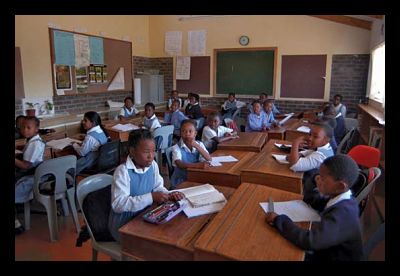
Education in Lesotho in Need of Improvements
education_in_lesotho
Lesotho, a former British colony landlocked within South Africa, is lacking in a variety of statistical measures ranging from poverty to education. While new standards implemented in the past 15 years have brought about improvements in many of these areas, more remains to be done.

In 2010, 56 percent of residents in Lesotho lived on less than $1.25 a day, nearly one in ten infants died before the age of five, and 41 percent of the nation’s wealth was held by those in the top 10 percent of the national income bracket.

By 2013, economic circumstances had changed very little. Life expectancy was 48 years, GDP per capita was approximately $1,125, the nation had the third highest rate of HIV in the world, and 12 percent of the population remained orphaned.

While Lesotho’s education statistics fare slightly better than economic ones, Lesotho lags  behind other nations. Moreover, in contrast to most developing nations, an educational gender gap exists that favors females over males in the early grades.

According to the World Bank database, in 2012, 82 percent of female children in Lesotho completed primary school, compared with only 64 percent of male children.

The gender gap appears to close in secondary school. In 2011, 75 percent of both males and females progressed to secondary education.

The gap seemingly widens again once the population reaches the labor force, this time in favor of the male population. According to the World Bank, the male unemployment rate in Lesotho stood at 3.6 percent in 2013, compared with 28.3 percent for females during the same period.

Beginning in the year 2000, the government of Lesotho has made efforts to reform the education system, offering free primary education for all students aged 6 through 13.

While implementing free and compulsory education for all students is an important first step, education officials are wary of the fact that a need for well-trained teachers, textbooks and better school infrastructure must not be overlooked.

The Education Act 2010 addresses these areas of concern, and makes special efforts to integrate orphaned, impoverished and HIV-affected children into the education system.

– Katrina Beedy

Sources: BBC, Lesotho Government, African Online News, World Bank 1, World Bank 2, World Bank 3, World Bank 4, World Bank 5, World Bank 6, World Bank 7, World Bank 8, World Bank 9,
Photo: Encyclopedia Britannica

February 8, 2015
Share this entry
  • Share on Facebook
  • Share on X
  • Share on WhatsApp
  • Share on Pinterest
  • Share on LinkedIn
  • Share on Tumblr
  • Share on Vk
  • Share on Reddit
  • Share by Mail
https://borgenproject.org/wp-content/uploads/borgen-project-logo.svg 0 0 Borgen Project https://borgenproject.org/wp-content/uploads/borgen-project-logo.svg Borgen Project2015-02-08 04:04:552024-05-27 09:23:17Education in Lesotho in Need of Improvements

Get Smarter

  • Global Poverty 101
  • Global Poverty… The Good News
  • Global Poverty & U.S. Jobs
  • Global Poverty and National Security
  • Innovative Solutions to Poverty
  • Global Poverty & Aid FAQ’s
Search Search

Take Action

  • Call Congress
  • Email Congress
  • Donate
  • 30 Ways to Help
  • Volunteer Ops
  • Internships
  • Courses & Certificates
  • The Podcast
Borgen Project

“The Borgen Project is an incredible nonprofit organization that is addressing poverty and hunger and working towards ending them.”

-The Huffington Post

Inside The Borgen Project

  • Contact
  • About
  • Financials
  • President
  • Board of Directors
  • Board of Advisors

International Links

  • UK Email Parliament
  • UK Donate
  • Canada Email Parliament

Get Smarter

  • Global Poverty 101
  • Global Poverty… The Good News
  • Global Poverty & U.S. Jobs
  • Global Poverty and National Security
  • Innovative Solutions to Poverty
  • Global Poverty & Aid FAQ’s

Ways to Help

  • Call Congress
  • Email Congress
  • Donate
  • 30 Ways to Help
  • Volunteer Ops
  • Internships
  • Courses & Certificates
  • The Podcast
Link to: Manifestations of Poverty in Surat, India Link to: Manifestations of Poverty in Surat, India Manifestations of Poverty in Surat, India Link to: Senate Subcommittee on Immigration Renamed Link to: Senate Subcommittee on Immigration Renamed Senate Subcommittee on Immigration Renamed
Scroll to top Scroll to top Scroll to top